Category Archives: State news

Water everywhere, not a drop to drink

Is there a more fitting context for the phrase about there being “water, water everywhere, but not a drop to drink” than what we’re witnessing in Beaumont, Texas?

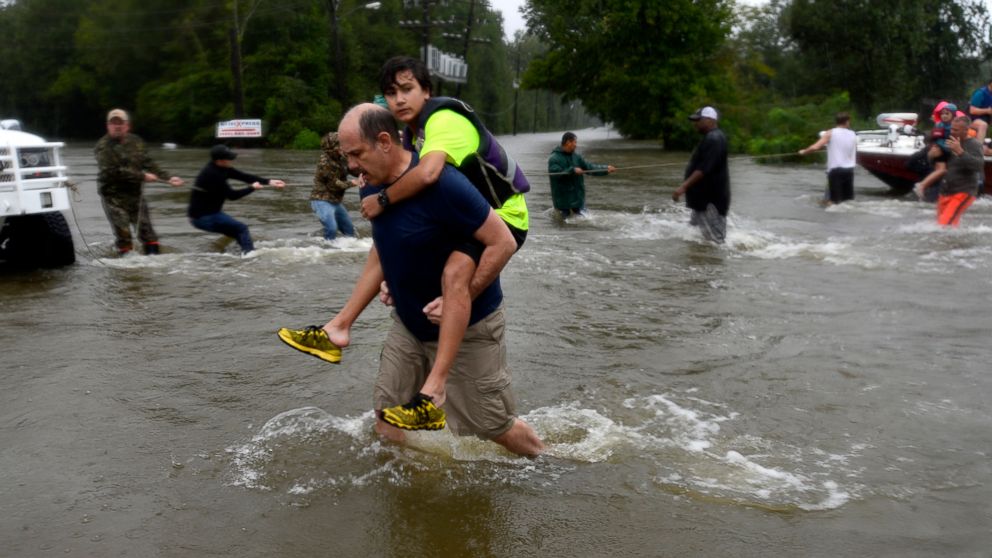
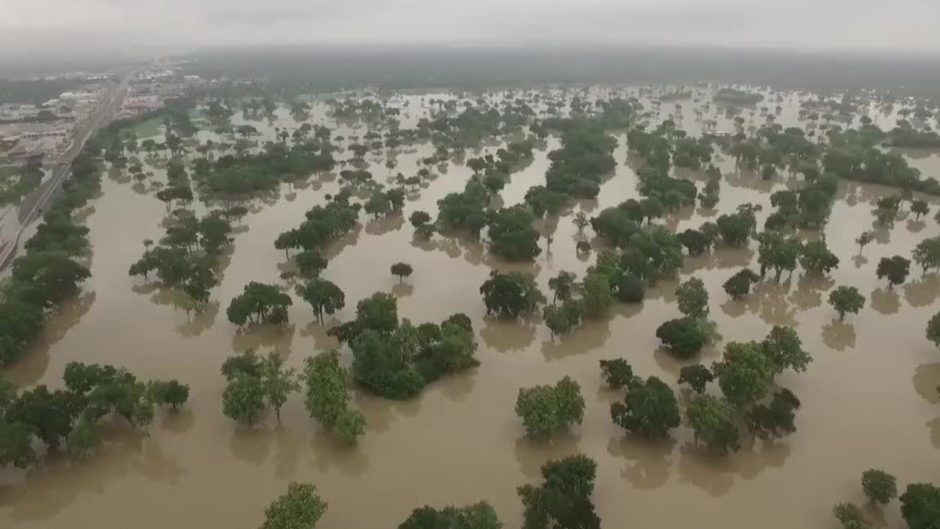
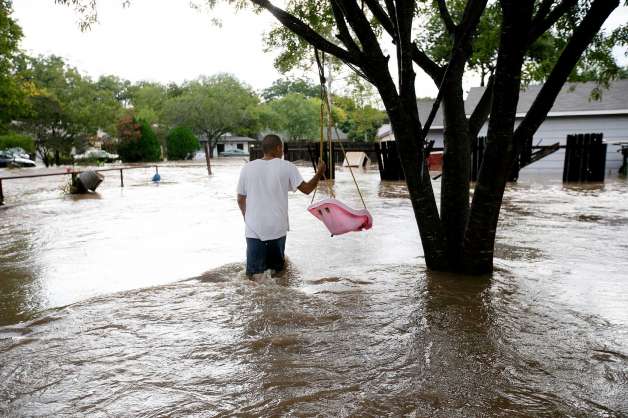
The horrific deluge in the Golden Triangle city of about 120,000 residents has damaged the city’s drinking water plant. Neighborhoods are waist-deep in water that flowed in from the Neches River or just fell from the sky as a result of Hurricane Harvey. But the folks who live in those ‘hoods cannot drink the water.

This is where those who “serve the public” really get to demonstrate their service.

My goodness, it is heartbreaking in the extreme.

Texas National Guard troops have been mobilized to bring water in to the stricken region. A young man I know has hauled a significant load of water from the Texas Panhandle to way down yonder in the Houston and Beaumont areas. I have heard he’s having difficulty navigating his truck into the region, trying to find passable roads and highways he can traverse to deliver the precious water.

Knowing this young man as I do, his intrepidity will see him through.

The scope of this tragic event is still playing out. The death toll is at 32; it’s likely to increase. You know, when you think about it, one must be amazed that so few victims have lost their lives. I am. No, it doesn’t minimize the grief of those who have lost loved ones and my heart breaks for them.

Meanwhile, those of us on the High Plains — so high and very dry — are left to pray and to send every bit of positivity and good karma to our stricken friends downstate.

Nature’s awesome power shows our human frailty

The ongoing drama playing out along the Texas Gulf Coast reminds me of what we all know already.

It is that no matter how we seek to control Mother Nature, she ain’t going to be controlled. Period. No way, not no how.

Beaumont utility officials built those detention ponds designed to catch rainwater runoff. The rain came as a result of Tropical Storm — formerly known as Hurricane — Harvey. Except that it came in volumes that far exceeded the detention ponds’ capacity. Houston got inundated first. And before that, Rockport and Corpus Christi felt the rage of storm surge and heavy, killer wind.

The storm has trudged on. It is doing damage now in Louisiana and I understand that Memphis, Tenn., sitting on the east bank of the Mighty Mississippi, if facing potential trouble.

No matter, though, how frail we humans appear to be as we face Nature’s awesome power we do have this capacity to rally and to band together to help our neighbors. My heart swells with pride as I watch first responders answer the call. It swells even more when I watch neighbors helping neighbors, offering valuable assistance to those first responders.

I watch Navy and Coast Guard pilots getting hugs and heartfelt expressions of gratitude from victims they have rescued from rooftops, attics and porches.

I’ve even watched media representatives — yes, those alleged “enemies of the people” — sloshing through muddy water to pull people and their pets out of harm’s way.

We humans cannot control Mother Nature’s awesome force. We try to build levees, dams, detention ponds. We erect sandbag barriers and seawalls along the beach. We hope for the best when Nature unleashes her fury, but also always must expect the worst.

When this storm arrived with its fury and rage, we got the worst — by God!

As the water recedes ever so slowly, though, we are delivering our best. It cannot prevent the destruction, but our best efforts do manage to lift our hearts.

That is no small feat.

This is how Texans respond

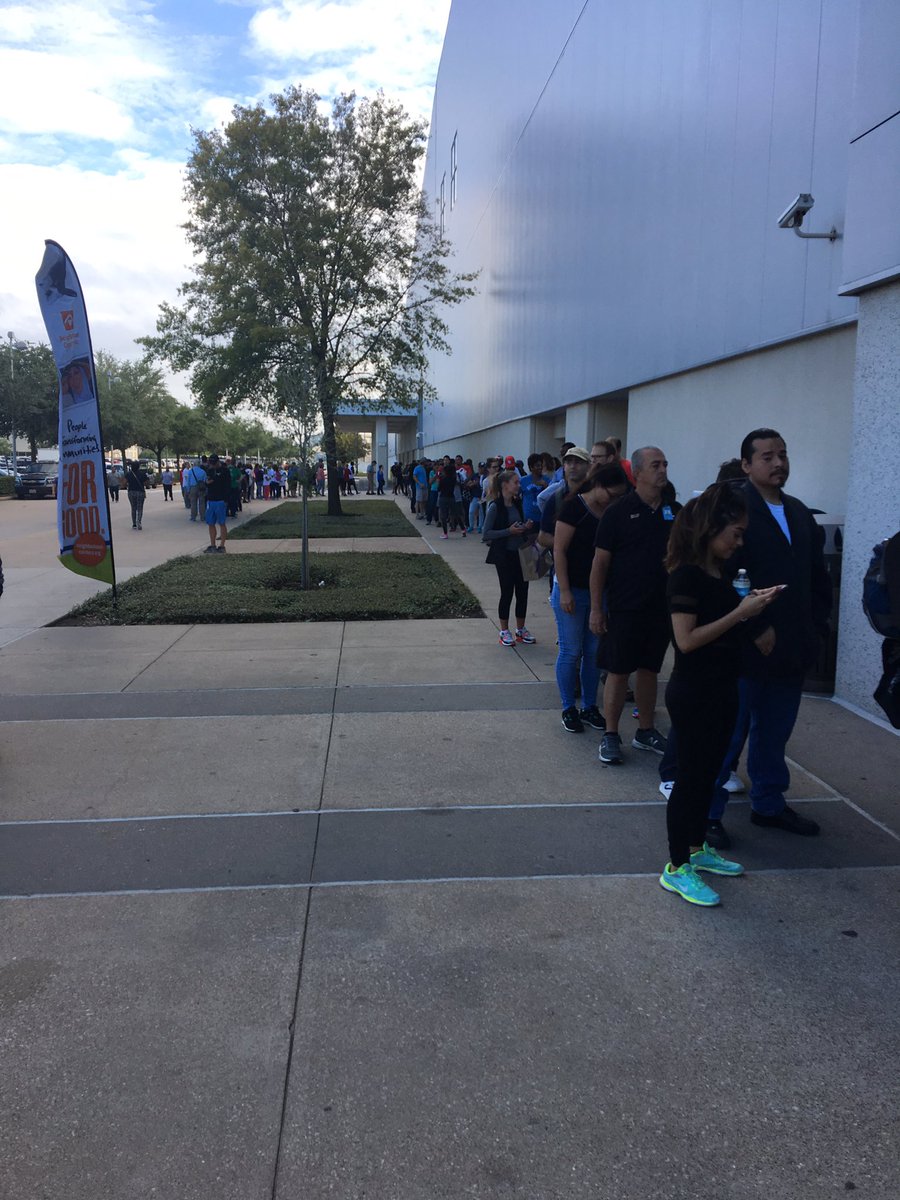
Take a good look at this picture.

It was taken in front of a building being used to shelter victims of Hurricane/Tropical Storm Harvey’s devastation.

Are the folks lined up around the building checking in as residents? Are they looking for help? Oh, no. They are lining up to volunteer to assist those in dire need.

I am in no mood to minimize the misery that Harvey is continuing to rain down on the Texas Gulf Coast from the Coastal Bend to the Golden Triangle. But there’s something positive to say about the reaction of Texans who are offering their strong backs and huge hearts for their stricken neighbors.

Gov. Greg Abbott tweeted this picture and wrote: “Look who’s waiting in line in Houston. This is how you get things done in Harris County.”

Have you seen the pictures of drivers in pickup trucks hauling watercraft en route to the Golden Triangle? Flat-bottom boats, speed boats, Jet Skis, kayaks, canoes. Boats of all kinds were being towed along U.S. Highway 90 between Liberty and Beaumont. Those folks were answering the call as well.

Indeed, that’s how you “get things done” in Texas.

It warms my heart, if only for as long as my attention is diverted from the heartbreak that’s still occurring throughout the community my family and I use to call home.

The people’s response to this epic, tragic event makes me proud to live in Texas.

Harvey now hits where it hurts

Harvey has stormed ashore again. This time, the storm has savaged my old haunts, my digs. It is hurting more of my friends.

The tropical storm is hitting me where it hurts — in a visceral sort of way.

I don’t know what to do. I might start by sending money to relief agencies that are hard at work trying to lend aid, comfort and safety to the residents of the Golden Triangle.

A career opportunity lured me to the Triangle in the spring of 1984. I spent nearly 11 years working for the Beaumont Enterprise. My family came a few months after I assumed my post. We carved out a good life in a community that seemed to flourish in a universe parallel to the one we left in suburban Portland, Ore.

We made friends for life. They are former colleagues of mine who remain close to my heart. They’re hurting now.

I’ve heard conflicting reports of Beaumont being totally “under water.” The same for Port Arthur, about 20 or so miles south on U.S. Highway 69. Orange — the third city in the Golden Triangle — sits along the Sabine River and it, too, is fending off Harvey’s savagery.

We left a lovely home in Beaumont in January 1995. I got word today from one of my friends — whose home has filled with about 5 feet of water in suburban Lumberton — that my old neighborhood in north Beaumont is likely in “rough shape.” He doesn’t know that with absolute certainty, given that the flood water has limited his mobility. I’ll accept his best guess that our former house is likely inundated.

Dammit, anyway!

The president came to Texas to give his support and to pledge the federal government’s commitment to repairing the devastation brought to our state from the Gulf of Mexico. Gov. Greg Abbott has mobilized the Texas National Guard — something on the order of 12,000 troops — and deployed them to assist local first responders.

The stories I’m seeing on TV and reading on the wires are heartbreaking in the extreme.

It was heartbreaking to see the coverage from Corpus Christi, Rockport, Port Lavaca, Aransas Pass and Port Aransas. We have some friends along the Coastal Bend, too, and my heart and prayers go to them.

Ditto for what we saw in Houston, where we have more friends and former colleagues. I spoke with one of them before Harvey delivered its heaviest blow; he talked of moving into the second floor of their home. Then the flood came. I called him back, but I haven’t gotten a response. I pray for the safety of this wonderful family. We have other friends scattered throughout greater Houston who are coping and we worry about them, too.

The Golden Triangle’s suffering is a bit different for us. We know the territory well. We know our way around Beaumont. It shatters my heart to see the damage being done — and to see the grief etched on the faces of the storm’s victims.

Social media have enabled us to keep tabs on many of our friends. But not all of them. I am awaiting news that they’re all OK.

I’m on the verge of shedding tears.

Setting the record straight on Harvey commentary

It turns out some social media friends and acquaintances have been bickering among themselves over the nature of this blog’s commentary on Hurricane/Tropical Storm Harvey.

Some of my acquaintances have accused this blog of being overly negative toward Donald Trump. Others have said that’s not so.

In the interest of full disclosure, I have attached a link to all the posts I’ve put out there about Harvey.

https://highplainsblogger.com/?s=Hurricane+Harvey

It’s all right there in the link right above this sentence.

I would like you to take a look at it.

This story has many diverse facets. We have the human suffering; there’s the political story relating to government’s response to it; we can discuss the quality of the first response; we can examine whether the cities and the state were sufficiently prepared; we can talk about the federal government’s role.

High Plains Blogger hasn’t yet touched all of those elements.

In my own defense — and I’m allowed to defend myself, correct? — I haven’t been totally negative, snarky or “bitter” (as one critic keeps reminding others) about certain elements of this on-going tragedy.

My family and I have a bit of skin in this game. We used to live in Beaumont. We all have friends who are suffering. We love them dearly and we wish them all the very best. We also wish we could pick everything up and go there to lend a hand — but the state highway department is telling us way up yonder to “avoid travel to the Texas coast.”

Just want to set the record straight. So there. I’ve done it.

Harvey getting set to deliver a second sucker punch

Here it comes … again!

Hurricane Harvey has been “downgraded” to a tropical storm. The beast delivered its havoc to Houston and is still punishing the nation’s fourth-largest city.

Then it decided to back up, move out over the Gulf of Mexico and pick up some more moisture from the overheated body of water. Now the storm is coming back ashore. Where it makes landfall again remains mostly a guess. It’ll be somewhere east of Houston. Possibly near Beaumont, where my family and I lived for nearly 11 years before moving to higher ground in the Texas Panhandle.

What are we to glean from this mayhem, this madness, the utter terror of our friends, neighbors and loved ones having to endure this wrath?

I am going to maintain faith that our fellow Texans are going to show the kind of strength and resolve they usually exhibit in times of terrible distress.

When the acclaimed PBS series on the Dust Bowl aired a couple of years ago, I learned a lot about the steel that runs up the spines of Texas Panhandle residents who survived that terrible time. The series, titled “The Dust Bowl,” recounted the horror that those survivors felt as they watched the ground beneath them blow away. They were children then. Now, quite obviously, they are much older — but their recollections were vivid and so very moving.

Through it all many of them stayed. They fought through the disaster. They rebuilt their lives.

Those earlier Texans have produced generations just like them today and those among us in real time in this moment are enduring another tragedy, brought by another form of nature’s rage.

The storm named Harvey is coming back in. It’s going to do more damage. That’s the terrible news. There can be no “blessing” to derive from this.

However, I anticipate that even after Harvey finishes its terrible task that our Gulf Coast brethren will find a way to rebuild their shattered lives.

God bless them all.

Climate change? Is it really and truly a ‘hoax’?

Believe it or disbelieve it if you wish. When the water recedes along the Texas Gulf Coast and when authorities can account for all the victims and the repair begins to reconstruct thousands of shattered lives from Corpus Christi to the Golden Triangle, there will be a need for a serious discussion.

We’ll need to discuss climate change.

As this item is being posted, Hurricane/Tropical Storm Harvey has just buried the Texas coast under more than 51 inches of rain. It’s the largest single-event amount of rain ever to fall on the continental United States of America. More is on the way.

For the life of me I am having difficulty understanding where all that water is going to go. The topography along the Gulf Coast is flat; the ground is full of water even when the air is dry; the land rises to a “height” of roughly 30 feet above sea level, meaning that the water isn’t going to travel rapidly toward the Gulf of Mexico or seep quickly into the ground.

The normal “steering currents” that guide these hurricanes over land didn’t materialize with Harvey. The storm crashed ashore and then stayed there. It then backed out over the Gulf of Mexico and is set to deliver another deluge farther up the coast.

It’s fair to ask: Did climate change — or global warming — contribute to this catastrophe?

The Gulf already is one of the warmest bodies of salt water on Earth. Its temperature reportedly was even warmer than it is historically, giving Harvey additional fuel to gather up to deliver to the victims awaiting the storm’s arrival.

Climate change deniers do not contribute to the discussion that needs to take place. The new head of the Environmental Protection Agency, Scott Pruitt, denies the existence of climate change. So does the president of the United States, Donald Trump, who calls it a “hoax.”

It is not a hoax, Mr. President. It’s real.

We can debate among ourselves about the cause of the changing climate. I happen to believe that human activity has contributed to it, but that’s just my opinion … for whatever the hell it’s worth.

We must not deny the existence of a change in Earth’s climate, or that the planet’s annual average temperature is warming up. These events have consequences. They are dire. They are tragic.

We’ll need to get to work in due course to put people’s lives back together after the storm clouds lift. The sun will shine again.

However, let us then take part in a meaningful international discussion about how humankind can repair what it has done to the only planet we have.

President disappoints again; imagine that!

Oh, how I wanted the president of the United States to say all the right things. I wished for Donald Trump to come to Texas to do what presidents are supposed to do.

In this case it would be for him to say publicly how his heart is broken over the misery being inflicted by the deluge left behind by Hurricane Harvey; how suffering Texans are in his prayers, his family’s prayers and that he stands behind them.

I wanted him to speak openly about how tragedy brings people together.

Yes, the president did well to visit Corpus Christi, San Antonio and Austin — and stayed away from Houston, which at this very moment is still battling the rising deluge that has swallowed the nation’s fourth-largest city. He did vow to commit federal resources to aid the stricken state. I’m glad he made that commitment.

But then he stood in front of that microphone in Corpus Christi and proclaimed “What a crowd! What a turnout!”

What an utterly idiotic thing to say!

New York Times columnist Frank Bruni, certainly no fan of the president, lays out well his own disgust at our head of state’s behavior in the wake of Harvey’s destruction. Read Bruni’s column here.

Bruni writes, in part:

“I keep hoping against hope that a new challenge will tease out a new Trump and that if he malingers in the presidency long enough, he’ll meander in the direction of eloquence, slouch toward poetry and tumble into inspiration. Stranger things have happened. I’ll have to get back to you on what they were.

“But Trump’s hurricane talk and hurricane tweets were like his fair-weather fare: childishly intent on superlatives, puerilely obsessed with size, laden with boasts and lavish with discordant asides.”

The president cannot help himself. He doesn’t seem to be wired in a way that allows him to set aside his self-aggrandizement.

Nothing gets in the way of his narcissism. Not even the unspeakable misery of his fellow Americans that is spread out before him.

Let’s cut Mayor Turner some slack, eh?

Imagine being in Sylvester Turner’s shoes … for just a moment or two.

You are the mayor of Houston, the fourth-largest American city. A killer storm is bearing down on you and your constituents, not to mention millions of other residents living nearby.

Do you order a mass evacuation, remembering what happened the last time a mayor issued such a call in your city? Or do you hope the storm might miss your city and then hope your city’s emergency response teams can react accordingly?

Mayor Turner has been getting a lot of grief of late from those who believe he should have shooed residents out of his city in the path of Hurricane Harvey.

I’m trying to give the mayor the benefit of the doubt.

Houston resident Kam Franklin, writing in Texas Monthly, has explained why she believes the mayor made the right call.

Read her article here.

Franklin recalls heading north on jammed-up freeways in 2005 as Hurricane Rita was drawing a bead on Houston. Rita was the second act in that terrible Gulf Coast twin-bill drama that featured the tragedy and devastation brought by Hurricane Katrina to the greater New Orleans area a month earlier.

The evacuation order didn’t go well as residents sought to flee Rita’s wrath. Franklin tells a story of horrific traffic jams (see the picture attached to this post) that kept people on highways for many more hours than was necessary.

She has no tolerance for those who live far from Houston but who think they know how to respond in the face of pending disaster.

As Franklin declares: “It’s very easy to judge people who are in a situation you’ve never been in. Right now isn’t the time to argue over who said what and when, because we’re still in the middle of this. Unless you’re here trying to help people, I don’t think you should be preaching about it. I’m know I’m going to try to help the best I can.”

When, oh when will the water recede … and to where?

I’m having what I guess you could call a 9/11 Moment as I watch the heartache associated with the cataclysmic flooding throughout Southeast Texas.

Over the years since 9/11 it has become harder for me to watch the Twin Towers collapse. Or to watch the jetliners fly into them.

It’s taken a fraction of the time for me to shudder at the sight of the flooding in Houston and in Beaumont. You see, I have this connection with that part of the world.

My family and I moved to Beaumont in 1984. I had taken a job as an editorial writer at the Beaumont Enterprise and my boss at the time me I would be sitting “in the catbird seat” in the midst of a great “news town.” He was right.

We stayed there for nearly 11 years. My sons graduated from high school and went off to college before my wife and I pulled up stakes and left Beaumont for Amarillo in early 1995.

I learned a couple of things about the Texas Gulf Coast rather quickly.

One is that it rains a lot there. We occasionally would get about 6 or 7 inches of rain in the span of about, oh, an hour. It would produce local flooding. Storm ditches would fill up and the water would run into ponds built for the purpose of holding rain water.

I also learned that the water table along the Gulf Coast is not far at all below Earth’s surface. I don’t know the precise measurement, but I became aware that it takes virtually no time at all for water to fill the spongy, goopy soil throughout the region.

All that is worth mentioning as we watch the horror that continues to play out in Houston and in the Golden Triangle today. Those folks are receiving epic amounts of water. Fifty inches are expected to fall on the region by the middle of the week.

I look at the video on TV and wonder: Where in the world is that water going to go? How long will it take to recede? How does that much rain water recede in a region that (a) sits only about 30 feet above sea level and (b) is as flat as it can possibly get? The Gulf of Mexico only is about 20 miles south of Beaumont; I believe Houston is a little farther inland, but not much.

The misery that is unfolding down yonder is far from over … and it is shattering my heart in a way it hasn’t been broken since 9/11.