Category Archives: State news

Partisan labels ought to go

democrat_republican

I arrived in Texas in the spring of 1984 with my eyes open about the state’s vigorous political climate.

Perhaps I should have opened my eyes just a little bit wider so that I could see something that got past me as I studied up on the way things would be done in my new home state.

I knew that Texans like to elect people to public office. We have more elected offices than I’d ever seen, for instance, at the county level.

What I didn’t quite grasp, though, were the partisan labels that we attach to all the candidates. Perhaps most fascinating is how we elect judges in this state — as Republicans or Democrats.

My new Texas home would be — for my first 11 years in this state — in Beaumont, where Democrats ruled. Indeed, the entire state was still controlled by Democrats, who held most of the elective office statewide.

What I couldn’t quite grasp, though, is why we elect choose Democrats and Republicans among candidates seeking public office.

I’m left now, 32 years later, to keep asking: Can someone identify for me the difference between a Democratic and a Republican tax assessor-collector, or county clerk, or district clerk, or treasurer? For that matter, does a sheriff or district attorney arrest and prosecute criminal suspects differently if they’re Democrat or Republican?

I posed these questions once in a column I wrote for the Amarillo Globe-News. I got an interesting response from a county elected official — a loyal Republican, naturally — who agreed with me. She couldn’t fathom the difference, either, between how individuals of one party would do the job she took an oath to do any differently from individuals of another party.

Judgeships have proved to be the most troublesome.

In the early to mid-1980s, solid Republican were getting booted out of office or were losing elections simply because they were of the wrong party. It was wrong then, just as it is wrong now to see more qualified Democratic candidates losing to Republicans for precisely the same reason.

I don’t intend — yet — to make this a major issue for this blog. I just feel inclined to suggest that a change to a more reasonable and logical election system would serve the state better than the system we have now.

State legislators, governors and other statewide officeholders — except judges — surely can make the case that partisan differences exist. I’m fine with that.

Judges? That’s another matter.

I’ve all but given up arguing for a retention system in which judges are appointed and then stand for retention at the ballot box. At this point, I’d settle for a change in the way we elect judges, simply by having them run on their judicial philosophy rather than on whether they belong to a certain political party.

How would we change all that? Through a constitutional amendment, which requires a vote of all Texans — and which is equally cumbersome, antiquated and nonsensical.

That, though, is a subject for another day.


Texas AG facing serious ethical probe

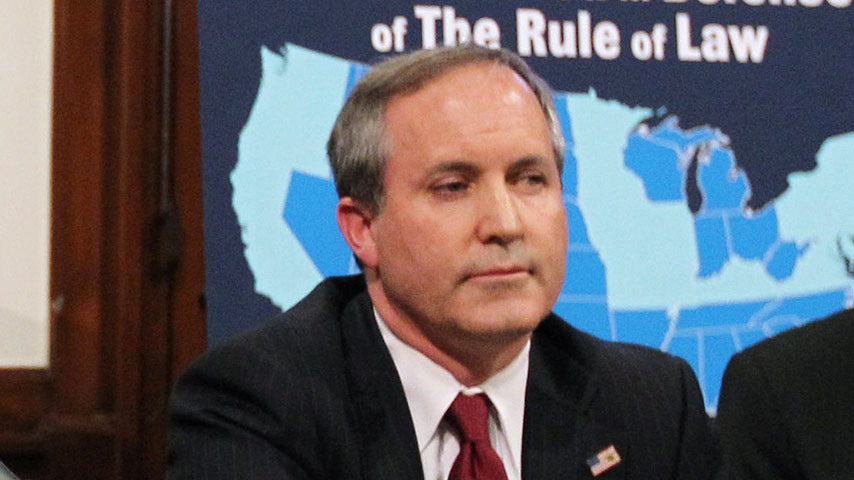
AUSTIN, TX - FEBRUARY 18: Texas Governor Greg Abbott (2nd L) speaks alongside U.S. Sen. Ted Cruz (R-TX) (L), Attorney General Ken Paxton (2nd R), Lieutenant Governor Dan Patrick (R) hold a joint press conference February 18, 2015 in Austin, Texas. The press conference addressed the United States District Court for the Southern District of Texas' decision on the lawsuit filed by a Texas-led coalition of 26 states challenging President Obama's executive action on immigration. (Photo by Erich Schlegel/Getty Images)

Ken Paxton took a serious oath when he became the Texas attorney general.

He put his hand on a Bible and vowed to preserve, protect and defend the Constitution of the United States and of the state.

Then the U.S. Supreme Court did something Paxton — I presume — didn’t expect. It ruled that gay marriage was legal in all 50 states. All of ’em. Including Texas.

How did Paxton react? He said county clerks weren’t bound by the court ruling, that they could refuse to issue marriage licenses to gay couples if the issuance of such documents violated their religious beliefs.

Oops! Can’t do that, said the State Bar of Texas.

It’s now going to launch an ethics investigation to see if Paxton — who’s already been indicted for securities fraud by a Collin County grand jury — violated his oath.

Well, of course he did!

If I were able to make a call on this, I’d declare that the AG broke faith with the oath he took. So did that county clerk in Kentucky, Kim Clark, who refused to issue marriage licenses to gay couples and who spent some time in jail because of that refusal.

What I can’t quite fathom is how these elected public officials feel they can get away with refusing to serve all their constituents. Paxton is a statewide officeholder, representing 26 million Texans. He won election in 2014 and then swore to follow the laws of the land. Not just those with which he agrees.

The Texas bar would seem to have an easy decision on its hands as it regards whether Paxton violated his oath of office. The tougher decision will be in the sanction it should level against him.

I am not going to say he should be removed from office.

Honestly, though, it baffles me constantly that these public officials — who get paid to represent every constituent — think they can select which laws to obey and which laws to flout.

That oath is clear. They cannot make that choice.

At all.


‘Size matters’ in this year’s primary campaigns

texas-primary-voters-to-get-more-say-in-2016-than-plannedb093ef659b7986d4659b

Texas is back in the big leagues of the presidential primary season.

The state goes to the polls on March 1 with both the Republican and Democratic presidential nominations very much in doubt . . . although the GOP nomination is more in doubt than the Democratic contest.

As the Texas Tribune’s Ross Ramsey notes in his excellent analysis of the upcoming Lone Star State primary: Size matters.

Texas is back in the game

It’s not clear yet whether the Texas primary, which occurs with several other states, will be decisive. Let’s just presume for a moment that it will be more decisive than, say, the New Hampshire primary that occurs Tuesday, or the Iowa caucus that took place this past week.

On the Democratic side, Vermont’s U.S. senator, Bernie Sanders, is basically running essentially as a favorite son in neighboring New Hampshire. He figures to win. He might even win big. Hillary Clinton hopes to carve into his lead in the final hours before voting starts and if she can finish anywhere near Sanders, she will look for a reason to declare some form of “victory.”

On the Republican side, Donald J. Trump appears headed to victory — if we are to believe those polls.

But none of it matters — truth be told — as much as the big Texas primary that’s about to take place.

Texans are going to cast many more ballots and will select huge delegations to the parties’ political conventions later this year.

In many prior election cycles, the contests were virtually decided by the time the primary caravans rolled into Texas. This year, by the grace of the state and national parties, we get an early shot at making this most critical political decision.

My own hunch is that the Republican primary will be much busier than the Democrats’ primary. One reason is quite obvious: Texas has many more Republicans than Democrats. The other reason is that the GOP primary will be up for grabs and with candidates like Trump and Texas home boy U.S. Sen. Ted Cruz garnering most of the attention, then the Republican polling stations are bound to get most of the election day business.

Still, as an avid political junkie, I happen to be glad to see Texas back in the thick of the presidential selection fight.


Perry to Texas: don’t panic over oil prices

IMG_8989_jpg_800x1000_q100

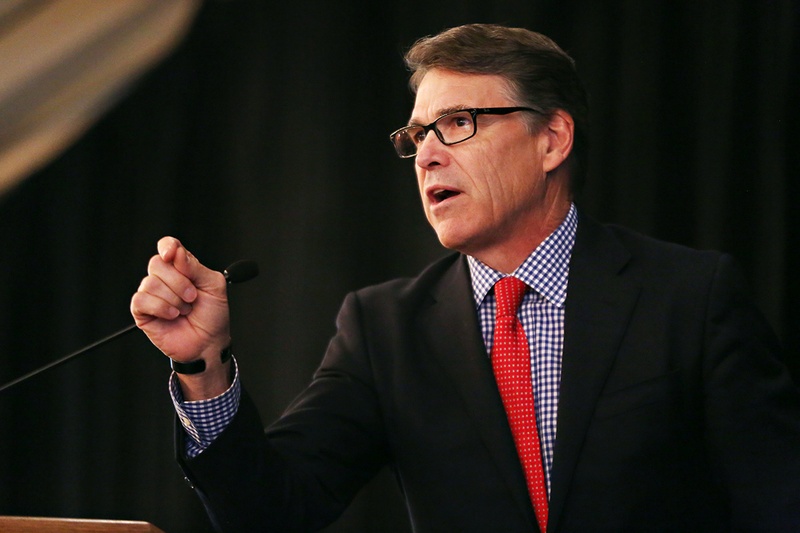
Rick Perry is mighty proud of the economic record he takes credit for building in the state he governed longer than anyone else in Texas history.

The former governor says Texans shouldn’t panic over the plummeting price of oil. West Texas crude now sits at about $32 per barrel.

The state’s diversification will help the state weather this economic storm, Perry said, citing what he called the “Texas miracle.”

I get that Perry wants to assure Texans that we’re going to be all right, unlike an earlier oil price crash that all but killed the state in the late 1980s.

Let’s get real here. The state still relies heavily on oil and natural gas to help fund state government at many levels.

Comptroller Glenn Hegar has been accused of offering what used to be called a “rosy scenario” with regard to the revenue the next Legislature will have when it convenes in January 2017. Perry is on the comptroller’s side.

Yes, the state has diversified significantly over the past 30 years. Amarillo and the Panhandle suffered grievously back then when the bottom fell out of the oil market. I was in Beaumont when it happened and witnessed the wholesale shutdown of petrochemical plants. That crash hurt. A lot.

Will this crash bring as much pain as the previous one? Probably not.

Amarillo’s burgeoning medical community will head off some of the misery. So will its growing service-sector economy. Pantex remains a top job provider.

Let’s not dismiss the pain and suffering that will befall public school systems — as well as public colleges and universities — that rely on funds generated by oil and natural gas royalties.

Gov. Perry says he knows what an economic downturn looks like.

The one that might be coming to Texas won’t look exactly like the previous one, but it’ll bring its share of hurt to Texans.


Iowa set to kick it off . . . but Texas awaits

texas-primary-voters-to-get-more-say-in-2016-than-plannedb093ef659b7986d4659b

OK, so the nation’s political junkies’ eyes are turning this morning to places like Ottumwa, Indianola and Dubuque.

Iowa goes to the polls today, sort of.

The rest of us will know sometime this evening who Iowans prefer to become the Republican and Democratic presidential nominees.

I don’t want to dismiss the importance of these caucuses, which both parties do differently. Republicans actually cast ballots; Democrats go into rooms and argue with each other.

It still just involves a single state. Iowa is a fine place. I’ve been there a couple of times. But it comprises a relatively small population and only a fraction of Iowans are going to take part in these caucuses.

The really, really big show starts on March 1.

New Hampshire next week? South Carolina the week after that? Pffftt!

Texas comes into play on that first day in March when we take part in what amounts to a national primary. We’ll join about 20 other states in selecting delegates to the party conventions.

I do not believe the Republican field will be quite as crowded as it is this morning. Some of the 11 candidates will pull out, perhaps after tonight’s caucuses, or after the New Hampshire primary.

The Democrats might still have a three-person race when the dog-and-pony show comes to Texas.

For those of us who like this process, Texas usually has been a sort of political backwater. We have conducted our primaries relatively late in this nominating process, making our votes meaningless.

Not this year.

There will be some real excitement this year that could rival the 2008 primary.

Eight years ago, the Democrats were engaged in a brass-knuckle fight between Sens. Hillary Clinton and Barack Obama. The primary occurred that year while the two of them were still battling for their party’s nomination.

A fascinating development occurred that year. Democrats drew far more attention in Republican-laden Texas. My wife and I live in Randall County, one of the most GOP-friendly counties in this state. The Democratic Party primary polling place was many times busier that day than the Republican polling station at the Baptist church where we vote.

Why? A lot of Republicans were crossing over to vote in the Democratic primary to cast their votes for who they thought would be the weakest candidate who would run against the GOP nominee.

Clinton won the Texas Democratic primary, but the nomination went eventually, of course, to Obama.

The rest is history.

Will there be a similar display of system-gaming this year? Might there be thousands of Democrats casting Republican primary votes to help nominate the person they think would be the weakest foe this fall? The state’s open primary system allows for that kind of tomfoolery.

If it happens, well, that’s how it goes.

Whatever happens on primary day in Texas will matter — a lot — in determining the next president of the United States.

I look forward to all the attention that will come to places like Marfa, Palestine — and perhaps even Amarillo.


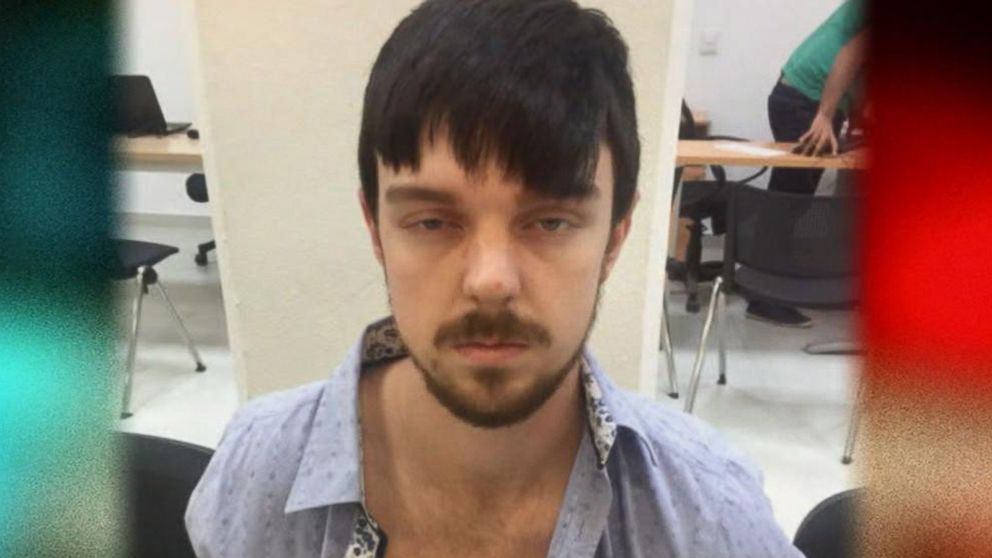
Ethan Couch back home . . . but what about his mother?

160101_2020_act6_16x9_992

Ethan Couch has returned from Mexico, having decided to forgo a fight against extradition back to the United States.

The 18-year-old Fort Worth resident whose trial for drunken driving brought us the term “affluenza” is likely to face a few more months in jail. He really ought to spend some years behind bars, but Texas law won’t allow it.

Couch killed four people two years ago — when he was still a juvenile — after getting roaring drunk and then driving his pickup. He got off with a probated sentence after his defense team brought in a shrink who said Couch’s upbringing by wealthy parents failed to teach him right from wrong.

Hence, came the term “affluenza defense.”

Couch then bolted to Mexico after violating the terms of his probation.

Who helped the kid? His mother. Tonya Couch already is back in Texas. She’s posted bail and awaits her fate.

No matter what happens to Ethan Couch, his mother deserves — and well might get — some serious prison time.

Given that state law won’t allow the court to throw Ethan Couch into the slammer for more than three or four months, it ought to look carefully at how complicit his mother was in enabling her bundle of joy to violate the terms of his probation and then flee to Mexico.

In a curiously ironic twist, Mommy Couch’s alleged complicity in this caper lends ghastly credence to what the shrink said at her son’s trial about how she and Daddy Couch didn’t teach their son about proper behavior.

It didn’t justify that ridiculously light sentence in the first place.

However, it does suggest that Tonya Couch needs to pay a stiff price if she’s convicted of aiding in her son’s flight from justice.


Speaking of endorsements . . .

1453708367667

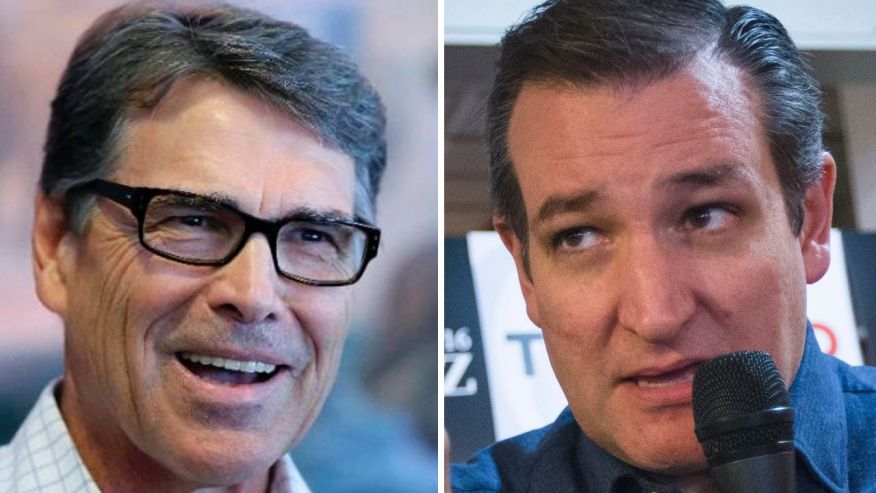
Rick Perry has weighed in.

The former Texas governor believes his fellow Texan, U.S. Sen. Ted Cruz, is the most “consistent conservative” running for president and, by golly, he wins the endorsement of the Pride of Paint Creek.

Is it a surprise?

Not even close.

You’ll recall, perhaps, when Perry — when he was still seeking the 2016 GOP presidential nomination — called Donald J. Trump a “cancer” on the conservative movement.

Not long after that, Perry dropped out, saying he was “suspending” his campaign. Trump laughed it off, as he does any time someone speaks ill of him.

I have no clue what kind of impact the Perry endorsement will have on this race. Indeed, whenever some former big hitter weighs in on this campaign, I keep hearing snarky comments from others — mainly on the right and far right — dismissing them as “has beens” or “losers.” Come to think of it, that’s what Trump calls them, too.

But ponder this for a moment.

Quite soon, the Republican presidential primary caravan will find its way to Texas, which has its primary on March 1.

Texas is where Perry’s views matter the most.

He was elected to several political offices: state legislator, agriculture commissioner, lieutenant governor and governor. He never lost an election. Why, he even was elected to the Legislature as a Democrat, for crying out loud.

It might not matter much in places such as New Hampshire or Iowa what Rick Perry thinks of the GOP contest.

It matters here, though. And the last time I checked, Texas still sends a lot of delegates to each party’s respective political convention.


Constables: Who needs ’em?

Constable_Flag

Chris Johnson’s campaign signs are popping up all over southern Amarillo.

He is spending a good bit of dough seeking re-election to one of the more curious public offices I’ve ever seen.

He won’t get my vote. It’s not that I have anything against Johnson. I don’t know him. I’ve never had any dealings with him.

He’s a constable in Randall County, Texas.

Constable. What is that? He’s a politician/cop whose duties include (a) serving papers, such as subpoenas and summonses and (b) providing security for justice of the peace courts.

Let me stipulate a couple of things here.

One is that I’ve had a longstanding antipathy toward the very idea of electing constables. Why? We don’t need them. My wish would be for the Texas Legislature to propose a state constitutional amendment to do away with the office. The duties done by the constable can be done by sheriff’s deputies or municipal police officers.

But no-o-o-o-o! We’ve got to have another elected official assigned to do these things.

The other thing is that during my nearly 32 years living in Texas, I’ve voted for one man as a constable. Jeff Lester used to hold the office that Johnson now occupies. Lester, who retired recently from the Amarillo Police Department, ran for the office with one pledge: to get rid of it.

He held the title of constable, but didn’t do anything. He didn’t get paid. He referred all the duties to the sheriff’s department. He wanted to keep the office inactive long enough to enable the Randall County Commissioners Court to abolish the office, which state law empowers it to do after a period of time had lapsed.

Then came reapportionment after the 2010 census had been completed. The county had to redraw political boundaries based on shifts in population as required by state law. County commissioners then reapportioned Lester out of the precinct he had served as constable, meaning he couldn’t run for re-election.

That’s when Johnson ran — and won.

I must reiterate that I have nothing personal against Constable Johnson. It’s the office he holds that bugs the bejeebers out of me.

I get that some counties have a need for constables. The experience in Randall and Potter counties, though, has been spotty at best. We’ve elected constables who haven’t done anything while drawing their salaries. One Potter County constable — who’s since resigned — would suit up in all the gear and the requisite hardware just to serve legal papers.

I’m digging deep trying to remember a time I’ve ever heard of a constable in this part of the state making an arrest, or being involved in a high-profile criminal activity. Have I been asleep all these years?

So, I guess that Constable Johnson will get re-elected this year. Good for him. I’ll kick in my piddling portion to help pay his salary, although I won’t like doing it.

In this era when people say they’re sick of government inefficiency, I keep wondering: Where is the anger over paying for a superfluous law enforcement entity that — from my vantage point — need not exist?

We have plenty of county and municipal law enforcement personnel who are quite capable of doing the constables’ job.


Bland jail death case still not resolved

bland

One can make at least this assumption about the arrest of a young woman.

It is that she well might be alive today if the Texas state trooper who arrested her had followed proper police procedure.

Sandra Bland, though, is dead after hanging herself in her Waller County jail cell. The Department of Public Safety trooper, Brian Encinia, has been indicted by a grand jury for falsifying the circumstances of Bland’s arrest.

DPS commander Col. Steve McCraw has told the Texas Tribune that the trooper blew it and that the agency is going to terminate the officer.

Now . . . is there cause for a wrongful death lawsuit, which Bland’s parents have filed against the state? I don’t know and I hate to speculate about that matter.

Bland was pulled over this past year in a traffic stop. She and Encinia got into an argument after Bland allegedly failed to signal properly prior to making a lane change. The trooper, rather than calming the young woman down, escalated the argument. She left her vehicle and, according to the trooper, struck him while he was taking her into custody.

To think that someone is thrown into the slammer for a lane-change violation. Good grief.

Well, the grand jury doubted the allegation that Bland had struck Encinia. Hence, the indictment.

This case drew national attention after corrections officers found Bland dead in her jail cell. I don’t believe she was killed by authorities in the lockup, which some had speculated. I believe she took her own life.

But the root cause of the entire tragic situation goes back to the arresting officer and his abject failure to follow proper policy.

I hope this incident has awakened police officers and their commanders to the dangers of every-day police work.

What’s more, I also hope it drives home the point that no traffic stop is never, ever routine.

***

See the video of Col. McCraw’s interview with Texas Tribune editor in chief Evan Smith.

http://www.texastribune.org/2016/01/19/video-a-conversation-with-steve-mccraw/


Open carry on campus? Please . . . no!

campus carry

State Sen. Kel Seliger, R-Amarillo, today made it clear that he opposes the notion of allowing anyone to carry weapons on college campuses in Texas.

More to the point, as I heard his talk today to the Rotary Club of Amarillo, he said that allowing guns into college classrooms is a particularly bad idea.

He noted a key foe of the idea of allowing such activity. That would be the chancellor of the University of Texas System. You’ve heard of him, perhaps. Former Navy Admiral William McRaven once led the nation’s special forces command. He is a Navy SEAL who, according to Seliger, “knows more about guns than just about anyone.”

McRaven thinks allowing guns on campus is a bad idea.

Seliger then presented a fascinating scenario to buttress the point about how bad an idea it is to let someone carry a gun openly into a university classroom.

Suppose a professor gives a student a bad grade, he said. Suppose, then, that the grade enrages the student so much that he wants to harm the professor.

I think you get the point.

I’m not going to oppose openly the idea of allowing Texans to carry guns in plain sight. The concealed carry law, enacted in 1995, hasn’t produced gunfights at traffic intersections, as some of us — yours truly included — had feared would happen.

But there ought to be some places where we ought to restrict the open display of these weapons.

Houses of worship are among those places.

So are college classrooms.

And none of that endangers the Second Amendment to the U.S. Constitution.