Category Archives: State news

Ryan: We’re heading for ‘divisiveness’ as a nation

90

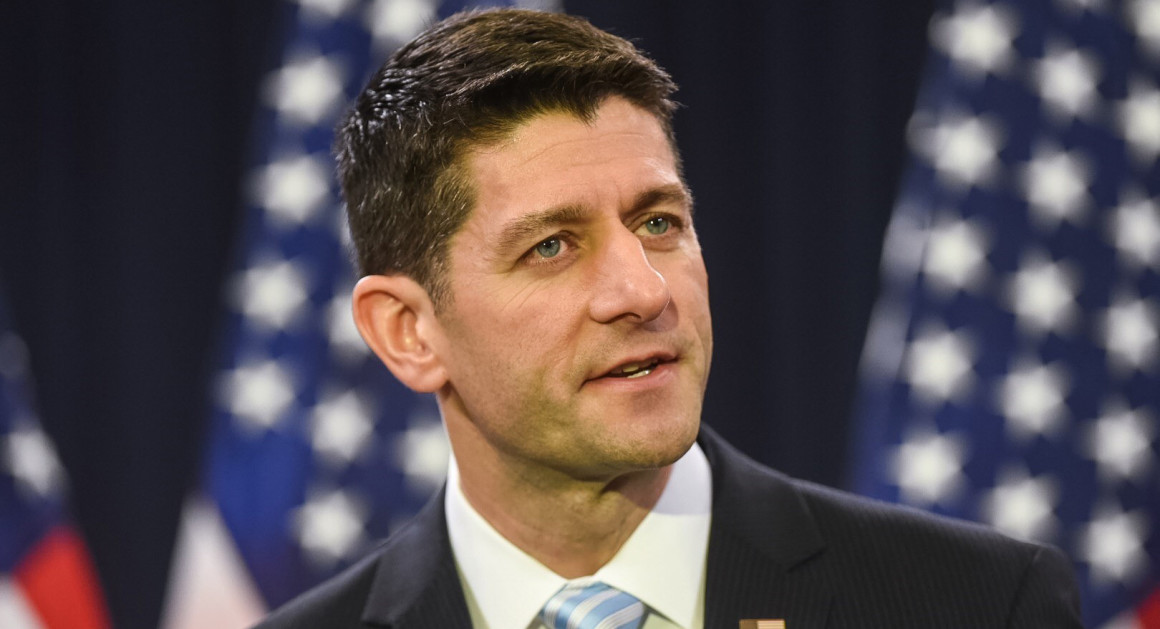
Speaker of the U.S. House of Representatives Paul Ryan is partially correct when he says the nation “is becoming divisive.”

I believe we’re already there, Mr. Speaker.

It’s not a condition that has just developed overnight, or certainly during the current election cycle.

It seems to my reckoning to have its roots in the 2000 election season, when a candidate for president was elected by the narrowest margin imaginable — and under circumstances that to this day hasn’t been accepted by many millions of Americans.

George W. Bush won the presidency after the Supreme Court stopped the recounting of ballots in Florida. The Texas governor had 537 more votes than Al Gore in that state. He won that state’s electoral votes, giving him the election — even though Gore had amassed more popular votes nationally than Bush.

For the record, I’ve never doubted the legitimacy of Bush’s election as president. The constitutional system worked.

But …

The spillover through the next several elections has seen a palpable division among Americans.

The current campaign has delivered an intense ratcheting up of the division that’s been there for some time now.

I’m not a fan of the speaker, but I do applaud him for speaking to our national idealism. He clearly was taking dead aim at the tone being delivered on the campaign trail by Donald J. Trump, who he didn’t mention by name. Everyone in the congressional conference room who heard Ryan knew of whom he was speaking.

As Politico described Ryan’s remarks: “He decried identity politics, criticizing those who pit groups of Americans against each other. He said the nation’s political system doesn’t need to be this bad. He accused both parties of staying comfortably in their corners, only talking to those who agree with them.”

Ain’t that the truth?

There once was a time when members of Congress — from both parties — talked openly with each other about how to legislate for the good of their states or the country. The Texas congressional delegation was known to have bipartisan breakfasts weekly, with House members breaking bread with each other and talking about issues that needed attention.

It doesn’t happen these days.

Instead, we’re seeing and hearing candidates and their rhetoric demonizing “the other side.” The No. 1 instigator of this campaign-trail anger is the GOP’s leading presidential candidate — Trump.

Ryan’s message will not resonate with the segment of the population that has bought into the Us vs. Them mantra that Trump and others are promoting. Ryan is now seen as a member of the hated “establishment.”

Ryan said: “What really bothers me the most about politics these days is this notion of identity politics. That we’re going to win election by dividing people. That we’re going to win by talking to people in ways that divide them and separate them from other people. Rather than inspiring people on our common humanity, on our common ideals, on our common culture, on things that should unify us.”

Is his message too sunny, too optimistic, too idealistic?

For the sake of our political future, I hope not.

An end to gerrymandering? Sure, let’s do it

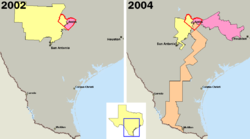
250px-TravisCountyDistricts

The Democratic Governors Association wants to back President Obama’s call for an end to gerrymandering.

I’m all for it. However, it’s not because the Democrats are for it. The practice has been used for political purposes since the beginning of the Republic. By both major parties.

The president was correct in his final State of the Union speech to demand an end to the practice of drawing districts to create a desired political outcome.

It’s just that Republicans who control most state legislators these days have turned the practice into an art form. Some of the congressional and state legislative districts in Texas, for example, simply defy all forms of logic.

There used to be a term used to describe how these districts should be constructed. It’s called “community of interest.” It means that all the residents of a particular district should have issues in common. They should be primarily rural or urban in nature. That’s how it’s supposed to go in theory at least.

But some of the districts in this state snake their way around street corners, winding their way from, say, Austin all the way to the Rio Grande Valley. What does someone living in, say, Laredo have in common with someone living in suburban Travis County?

Nothing!

There once was a time when Democrats ran the show in Texas. The 1991 Texas Legislature, thus, redrew congressional districts and created something of a monstrosity right here in the Panhandle. They split Amarillo in half, putting the Potter County part of the city into the 13th Congressional District and the Randall County portion into the 19th Congressional District.

The Legislature’s purpose? It was to protect Democratic U.S. Rep. Bill Sarpalius’s seat in Congress. The Legislature peeled off enough Republicans living in Randall County and put them into a district served by Republican U.S. Rep. Larry Combest, who lived in Lubbock.

The notion worked through one election cycle; Sarpalius was re-elected in 1992. Then came the 1994 Contract With America election. Sarpalius got beat by Republican Mac Thornberry.

There went the notion of protecting a Democrat.

The principle of gerrymandering really does stink, no matter who’s doing it.

There ought to be some rhyme or reason to the districts we create after every census is taking. The way it’s done now is meant to keep power in the hands of whichever party is in control.


Political conventions: raucousness with serious purpose

tumblr_m9876t6jRi1qeoxw2o1_1280

I won’t be attending either of this year’s political conventions.

Part of me wishes I could because — having been to three of them over the years — I’ve discovered how much fun they are for those who attend them and for those who report and comment on them.

This year’s Republican convention in Cleveland could be especially fun especially for the reporters lucky enough to get the assignment to cover it.

My first political convention was in 1988, when Republicans gathered in New Orleans.  I was part of the media team representing the Hearst Corp., which owned the Beaumont Enterprise, where I worked for nearly 11 years.

Any convention in The Big Easy was a serious blast, given that it’s, well, New Orleans.

Four years later, the Republicans gathered in Houston, about 85 miles in the other direction from Beaumont. That one produced its own share of memories. Chief among them was watching former President Reagan deliver his last major political speech in which he poked fun at the Democrats for nominating a young Arkansas governor who compared himself to Thomas Jefferson. “Well, I knew Thomas Jefferson,” the president said. “Thomas Jefferson was a friend of mine …” He brought down the house.

Four years ago, I had secured press credentials for the 2012 Democratic National Convention in Charlotte. I didn’t have the support of the Amarillo Globe-News or its parent company, Morris Communication. I applied for the credentials on my own and then received them. Then my world was turned upside-down when I got “reorganized” out of my job at the paper just as the convention was about to begin the following week.

I went to Charlotte anyway — with my wife; we enjoyed ourselves immensely. I attended the convention as a spectator and got to cheer as President Obama and Vice President Biden received their party’s nominations for re-election.

One of the major takeaways from all three events, though, is a visual one.

In New Orleans, Houston and Charlotte, I was struck by the sight of serious-minded men and women parading through the convention hall wearing goofy hats, festooned with campaign buttons, loud clothes, carrying signs — all while they shout slogans from the convention floor.

I had to remind myself of this fact: These people from all across the nation are gathered in one place to nominate a candidate for president of the United States of America. They are choosing the individual who will represent their political party in an election to determine who will be commander in chief of the world’s foremost military establishment; they will pick the head of state and government of the world’s greatest nation.

I’m telling you that when you are among these folks, it’s easy to forget the seriousness of the task they are seeking to complete.

This year — in Cleveland and in Philadelphia — it’ll be no different.

Except that in Cleveland, where Republicans are going to gather, the serious nature of their mission might be compromised by the individual who is poised to accept his party’s nomination as president.


Paxton gets no ‘love’ from hometown court

paxton

If the embattled Texas attorney general was expecting to get some favorite-son treatment in his home county …

He’s mistaken.

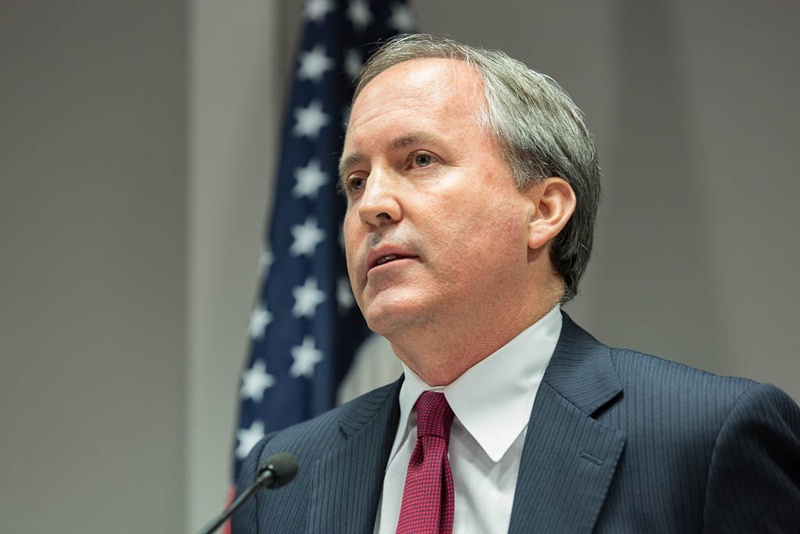
Ken Paxton faces a possible trial on charges that he solicited investment business without notifying the proper state authorities that he was being compensated. A Collin County grand jury indicted him on the felony charges, to which the McKinney Republican has pleaded not guilty.

Paxton represented the suburban community north of Dallas in the Texas Legislature before being elected in 2014 as the state’s top lawyer.

Now a judge — also in Collin County — has tossed aside a motion to cap the money being to the special prosecution team that’s been appointed to represent the state.

Paxton’s lawyer lacked jurisdiction to file the motion, according to Judge Mark Greenberg.

I’m not going to pre-judge this case. The proceedings to date, though, seem to suggest that AG Paxton might be in for rough ride if this case goes to trial in Collin County.

Perhaps the most fascinating aspect of this case so far has been that Paxton has been indicted by a hometown grand jury and has been delivered setbacks by a court in his hometown as well.

Remember when former Republican Gov. Rick Perry blamed the grand jury in Democrat-friendly Travis County of playing politics when it indicted him for abuse of power?

Paxton can’t make the same argument.

This case could get interesting.


Trump brings one positive: big voter turnouts

1407859219000-Election-3-

I am about to do something that gives me the heebie-jeebies.

I’m going to write something positive about Donald J. Trump.

The man has boosted voter turnout in these Republican Party presidential primaries. He’s boasted about it, which is no surprise.

As one who for decades as a print journalist bemoaned the lack of voter participation, I will say that the turnout we’ve seen in the GOP side of the primary battle has been inspiring.

Trump’s tapping into that voter anger has brought people to the polls, which is a good thing. Yes, it is a good thing!

None other than John Cornyn, has said so, too. The senior U.S. senator from Texas — who says he’s remaining neutral in the primary fight — has lauded the result produced by Trump’s presidential candidacy.

According to the Texas Tribune: “The Republican primary has been surprising in a lot of ways, but one of those ways is the tremendous voter turnout that we’ve seen across the country, while the turnout in the Democratic primary has been lackluster,” Cornyn said. “That’s going to be really important in November, and my view is that I will support whoever the nominee of the Republican Party is.”

Cornyn is right, as well, about the “lackluster” Democratic turnout so far. It’s worth speculating, though, that Democrats just might re-discover their turnout “luster” if Trump becomes the GOP nominee and we are going to decide between Trump and Hillary Rodham Clinton in the fall election.

Again, if the turnout this fall sets records and many millions more Americans go to the polls than ever before, we ought to thank Donald J. Trump for that, too.

That’s it. That’s all the niceness I can spare for this guy.


‘Rampant’ voter fraud in Texas? Not even close

7C2A3553_jpg_800x1000_q100

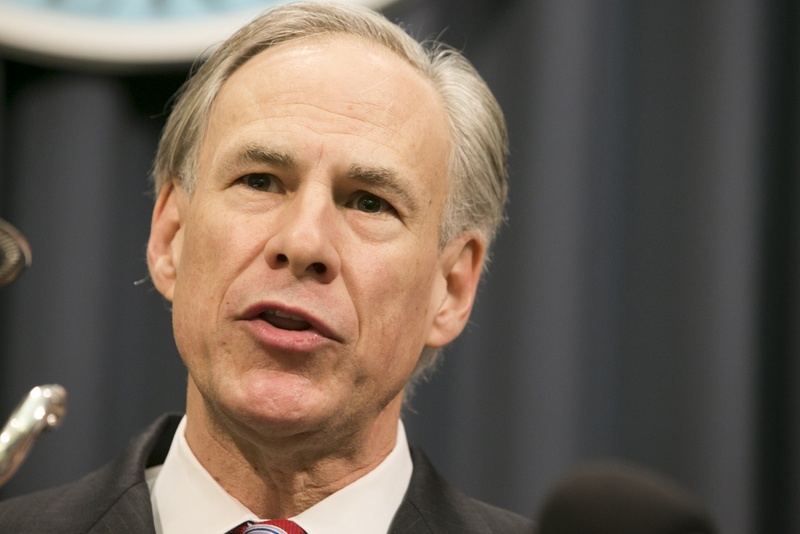
Texas Gov. Greg Abbott describes the instances of voter fraud in this state as “rampant.”

The state, he said, has sought to curb the epidemic of voter fraud by requiring voters to produce photo ID — driver’s licenses, passports, etc. — when they go to the polling place.

The Texas Tribune’s Ross Ramsey, though, has shot down the governor’s assertion with an interesting analysis of Abbott’s challenge to a President Obama’s critique of Texas’ historically poor voter turnout.

The evidence of fraud is “scant,” according to Ramsey.

Here’s part of what Ramsey writes: “A study done by News21, an investigative journalism project at Arizona State University, looked at open records from Texas and other states for the years 2000-2011 and found 104 cases of voter fraud had been alleged in Texas over that decade.

“Chew on this: If you only count the Texans who voted in November general elections — skipping Democratic and Republican primaries and also special and constitutional elections — 35.8 million people voted during the period covered by the ASU study.

“They found 104 cases of voter fraud among 35.8 million votes cast. That’s fewer than three glitches per 1 million votes.”

Does that fit the description of “rampant” voter fraud?

Not exactly.

Obama made the point at a fundraiser the other evening that Texas remains one of the nation’s poorest-turnout states. I am not going to blame the voter ID push for driving down the turnout. Suffice to say, though, that Texas can — and should — do more to promote greater turnout.

I’ve lived in Texas for 32 years. I have been watching, reporting and commenting on the political process here for that entire time. I have no recollection ever of the state — from the governor’s office on down — launching a concerted effort to drive up voter participation.

There has seemed over all that time to be a sense of complacency, that the state puts little emphasis on greater turnout.

“The folks who are governing the good state of Texas aren’t interested in having more people participate,” the president told The Texas Tribune’s Evan Smith at South by Southwest Interactive.

Abbott’s response? He trotted out the allegation of “rampant” voter fraud. The numbers don’t add up.


Obama: Trump is GOP creation

POTUS-Austin2016-003A_jpg_800x1000_q100

Count me as one American who was impressed with former Republican presidential nominee Mitt Romney’s brutal critique of Donald J. Trump’s rise to political power.

I listened the other morning to every word of Mitt’s 17-minute speech in Utah. (Yes, I’ll call him Mitt because I like the sound of the name.)

Mitt sought to stand for the GOP “establishment” in its effort to stop Trump’s nomination as the party’s next nominee for presidential of the United States.

It didn’t go over universally well, though.

Some folks wondered whether Mitt was the right guy to carry the message forward. After all, he lost fairly handily to President Obama in 2012 and, by the way, he did so even with the coveted endorsement of one Donald J. Trump.

One of the doubters happens to be the president his own self.

Obama said the GOP is just “shocked that there’s gambling” going on here.

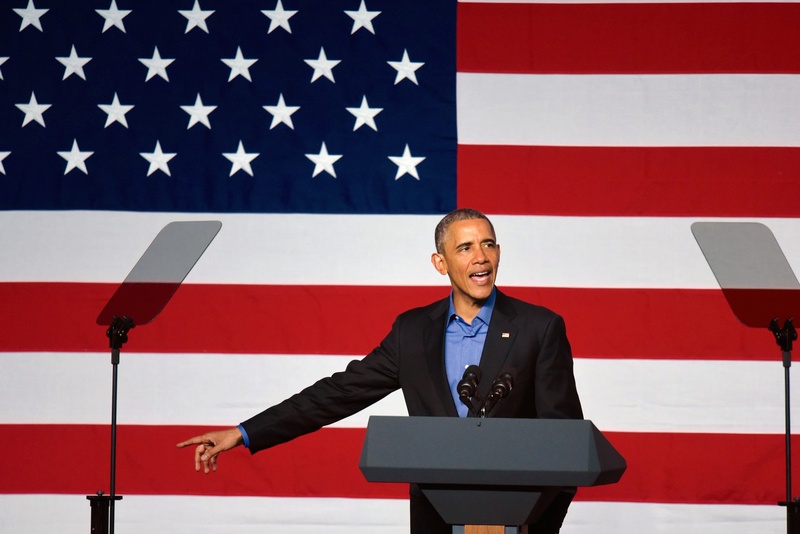
Speaking at a Texas Democratic fundraiser, Obama took particular pleasure in reminding donors that the GOP establishment stood by silently while Trump and others promoted the wacky notion that the president was born in a faraway land, that he was an illegitimate candidate for president.

“As long as it was directed at me, they were fine with it. It was a hoot,” Obama told the Austin crowd.

I understand where the president is coming from on this matter. Indeed, it continues to boggle my admittedly feeble mind that Obama’s place of birth was even an issue in the first place, given that his mother was an American citizen, which by my reading of the U.S. Constitution granted U.S. citizenship to Baby Barack the moment he took his first breath.

But the GOP brass didn’t care to silence the idiocy being spewed by Donald Trump and others.

So now they’re shocked and dismayed at what they’ve helped create?

I still stand behind Mitt’s criticism of Trump. If only, though, he would acknowledge the mistake he made in seeking Trump’s endorsement.


SBOE tranquility might be about to end

texas-education-hat

The 15-member Texas State Board of Education has been alternately a raucous body and one that seems to get along relatively well.

My strong sense is that if a runoff election way over yonder in the Piney Woods of deep East Texas turns out the way some folks fear it might, the era of raucousness might be about to make an unwelcome return to the SBOE.

This runoff is worth watching.

Mary Lou Bruner, a retired teacher — yes, that’s right — is in a runoff election along with fellow Republican Keven Ellis for a seat on the board that sets public education policy for the state’s 6 million students.

Bruner, shall we say, is a serious piece of work. She’s the individual who declared on social media that President Obama was at one time a gay prostitute.

She is a “social conservative.” Bruner is likely to fit in with other such conservatives on the SBOE who’ve battled with more moderate board members about curriculum issues, textbooks selection, investment of public money.

Bruner finished first in the three-person race for the SBOE seat and the word out of the Piney Woods is that she’s in good shape to actually win the runoff against Ellis. Why ? Well, her base of support is quite dedicated and those folks are more likely to return to the polls in the next few weeks to nominate her.

And, yes, she’ll become the prohibitive favorite against the Democratic nominee, Amanda Rudolph.

Candidates such as Bruner make me wonder why Texans decided years ago to return to an elected state education board. Texas experimented for a time with an appointed SBOE, but then amended the Texas Constitution to return to an elected body.

Thus, the majority decided it was better to entrust public education to politicians rather than to academicians.

We’ve elected some serious doozies as a result. There have been serious disputes among board members over whether we should teach Biblical teachings of Earth’s creation in science class.

Much of that argument has settled down in recent years. My fear is that it’s going to return to the front burner if East Texans elect a fire-breather such as Bruner to the state education board.

Hey, if she’s capable of making absurd assertions about the president of the United States, one only can imagine how she might engage in debates over the fate of public education.


Legislators remain neutral in presidential race

democrat_republican

The Four Horsemen of the Texas Panhandle legislative delegation are keeping their political powder dry.

According to the Texas Tribune, none of the four has endorsed any of the seven remaining candidates for president of the United States.

Silly me. I said “seven,” even though only the five Republicans still standing are what matters, given this region’s heavy GOP bent.

State Sen. Kel Seliger of Amarillo is neutral, as are state Reps. Four Price and John Smithee of Amarillo, and state Rep. Ken King of Canadian.

It’s an interesting twist to see so many legislators lining up for candidates in both party primaries.

I’ve been of two minds on whether elected officials should make endorsements in party primaries. If they remain neutral, then they can say they “support” the winner without having to demonstrate it. There won’t be any hell to pay if they back the “wrong” candidate. Their vote, of course, remains a secret and if they don’t want to disclose who gets their vote, they aren’t obligated to tattle on themselves.

Then again, why not lead? Why not show us your allegiance to give us a clue as to how you believe the country should be run, in what direction it should travel?

I, of course, fully endorse the secret balloting that’s one of the hallmarks of our representative democracy.

If they don’t want to tell us who they support, that’s their business.

Not ours.


Mischief possible on Election Day?

Texas-calendar

Texas’ open primary system is going to be on display.

As it should.

The state’s election system provides opportunity for polling-station mischief. There might be some of it played out Tuesday, but in this wacky, unpredictable, topsy-turvy election season it would seem to be the diciest of propositions.

Texans aren’t “registered” with political parties. We go to the polls with unmarked voter registration cards. We choose which primary to cast ballots: Democrat or Republican. We can zig or zag our way to the polling station of our choice.

How does the mischief come into play? There could be those who are loyal to one party but who might venture into the other party’s polling place to vote the candidate they believe will be the weakest against the candidate of their choice.

Parties are able to muster up concerted efforts in that regard, although it’s at times difficult to prove.

In 2008, heavily Republican precincts in Texas saw a huge spike in Democratic primary voter activity as Sens. Hillary Clinton and Barack Obama battled for their party’s nomination. Clinton won the primary and it was whispered that a lot of Republicans crossed over to vote for her hoping Democrats would nominate her to run against Sen. John McCain in the fall.

Indeed, I spoke to several Republican friends who actually admitted to doing precisely that: voting for Clinton and hoping she would be nominated.

It didn’t work out that way; Obama got the Democratic nod and went on to thump McCain in the general election.

Can such a thing happen on Tuesday? I keep reading about Republican Party “establishment” honchos sweating bullets over the prospect of Donald J. Trump winning their party’s nomination. Might that spur some Democrats to cross over to vote for Trump hoping to push the reality TV celebrity and real estate mogul toward the GOP nomination?

In another time and era, perhaps that could be the case. This  year? Well, it might be a case of being “careful what you wish for” if such a conspiracy materializes across Texas. Democrats wanted Republicans to nominate Ronald Reagan in 1980 — and look how that turned out.

I’ve never been one to “waste” a vote by playing that game. I tend to cherish my vote as something that gives me pride. I’m not seeking to sound righteous. I’m just saying that in my humble view, game-playing with one’s vote cheapens this rite of citizenship.

Of course, I cannot possibly pretend to speak for others.

Let’s just see how it plays out.