Category Archives: political news

Impeachment isn’t such a long shot after all

Let’s play out a possible scenario that could emerge from the 2018 midterm election.

Democrats think they have a shot at winning back the majority in the U.S. House of Representatives. They also believe their chances of winning a Senate majority are even greater.

I’m going to pose a question that well might provoke some angry response: Is it possible that we can learn just how much Democrats hate Donald J. Trump if they manage to achieve a majority in the House and Senate? Is impeachment a foregone conclusion if both congressional chambers flip next year?

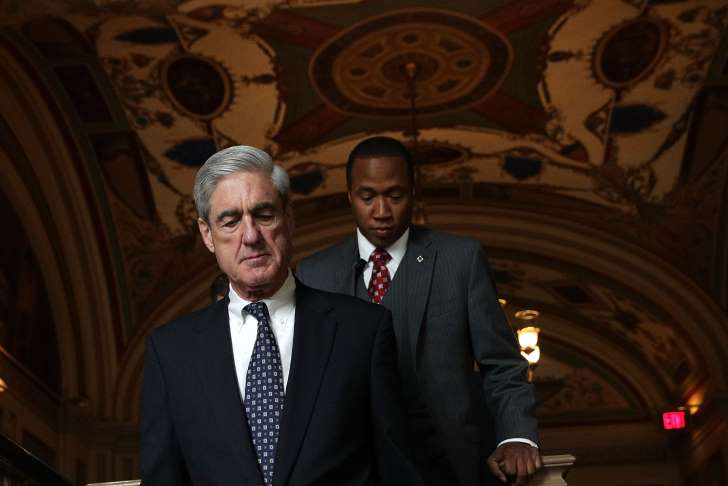
Special counsel Robert Mueller is hard at work collecting information — perhaps even evidence — concerning whether Trump’s campaign colluded with Russians who hacked into our electoral system. If they produce actual evidence and release it to the public, say, in the first quarter of 2018, then the impeachment talk is going to ratchet up to a very loud level. Then again, there might be perjury accusations coming forward, which also is serious enough to impeach a president; just ask Bill Clinton about that one.

The election will occur in November of next year.

Suppose the special counsel produces evidence of collusion. Suppose, too, that Democrats seize control of Congress.

I’ll now offer a brief explanation of presidential impeachment, which is a two-act drama.

It takes only a simple majority of House members to impeach a president. What might the “high crimes and misdemeanors” include? If there’s collusion, I believe that constitutes an impeachable offense.

If the House impeaches the president, it then merely files a formal complaint, an accusation. Then the House hands off to the Senate, which conducts a trial.

To convict a president, though, the bar is set much higher. Two-thirds of the Senate, 67 senators, must vote to convict. President Andrew Johnson came within a single vote of being tossed out of office; President Bill Clinton faced three counts in his Senate trial, and he was acquitted on all three by comfortable margins.

I wouldn’t dare to predict how a Trump trial would conclude. I am not even going to predict that Congress’s controlling majority is going to flip next year.

If it does, however, my sense is that impeachment becomes many times more possible than it is at this moment with Republicans in charge of Capitol Hill.

‘No’ on Hillary in ’20, but not a single regret over voting for her

I feel the need to clarify something I wrote about Hillary Rodham Clinton’s new book and my desire for her to end her public service career.

My strong sense is that the Democratic Party needs someone new, someone not on most of our radar screens, a fresh outlook and approach to public policy problem-solving.

Hillary Clinton needs to step aside.

That said, I want to restate with absolute clarity that I have zero regrets — not one, none — over supporting her candidacy in 2016. I would do so again and again and again — if the opponent were the same person who beat her. Hillary Clinton presented by far the clearest choice I had seen since I cast my first vote for the presidency in 1972.

I wrestled not one instant over whether I should cast my vote for Clinton over Donald John Trump Sr. My pro-Trump friends are entitled to stand my their man and I accept that they believe he’s the best thing to happen to American politics since pockets on shirts. I simply do not agree with them.

Was Hillary Clinton the perfect candidate for president in 2016? No. But compared to the man who stunned her — and many of the rest of us — she looks pretty damn perfect.

Congressional committees tried to pin “Benghazi” on her; they came up empty. The FBI looked for criminality in her handling of the e-mail matter; it, too, came up empty. Gossip mongers kept up the steady drumbeat of malicious rumors that were outright lies.

She worked beside her husband, Bill, while he served as a multi-term Arkansas governor; she served with honor as first lady of the United States; she learned how to legislate as a U.S. senator from New York; she represented U.S. diplomatic interests with competence and skill as secretary of state.

Trump brought zero public service experience to the job as president. I will remain baffled and mortified arguably for the rest of my life over just how this clown ever got elected to this most exalted, highly revered office.

Hillary Clinton’s time, though, has passed. She fired all her weapons in 2016 and missed the target. Trump beat her fairly and squarely where it counted: in the Electoral College. That’s how the U.S. Constitution sets forth how we elect presidents and I accept the 2016 outcome — even through gritted teeth.

Her book “What Happened” lays out her version of what went wrong in her supposedly inevitable march into the Oval Office.

From my way of thinking about it now, eight months after Trump’s inaugural, it all boils down to this basic truth: Hillary Clinton just didn’t wear well with those who wanted a radical change in direction in the White House.

And oh brother … did they get it.

I wish the outcome had been different. It’s time for Democrats to look deeply within themselves for an antidote to the absolute chaos that’s become the hallmark of governance in the world’s greatest nation.

It’s not going to be Hillary.

Hoping that Hillary calls it a career

Hillary Rodham Clinton is beginning to resurface.

Her book is out, the one that “explains” why she lost a presidential election she should have won. I’ll stipulate that I haven’t read “What Happened.” I have every intention of doing so. I’m curious as to what this candidate who should have been elected in 2016 says about her stunning election loss.

I’ll simply fall back to a position I took not long after Donald J. Trump got elected president of the United States.

My hope for the Democratic Party is that they find a fresh face, a novice to the national political stage, a rookie to run against whomever the Republicans nominate for president in 2020.

It shouldn’t be Hillary Clinton. And if the Republican Party honchos were to ask for my opinion, I’d say they shouldn’t renominate the incumbent president. Hey, I just told ’em that very thing. Imagine that!

Hillary will lay a lot of blame on FBI Director James Comey and his strange reopening of the e-mail probe late in the campaign. She’ll blame the Russians for hacking into our electoral system. She will blame the media for the way they covered her campaign. Sure, she also is going to take a lot of the blame herself.

From where I sit out here in Flyover Country, it’s that last element that deserves the bulk of the cause for her stunning loss.

Clinton was a lousy candidate. She spent too much time down the stretch in states she had no prayer of winning and too little time in those battleground states that flipped from supporting Barack Obama in 2008 and 2012 to backing Trump.

Yes, I also believe in that malady called Clinton Fatigue. We had two terms of her husband, President Bill Clinton; and along the way, we got a big dose of first lady Hillary Clinton, too. Do you recall when candidate Bill told us in 1992 if we elect him, we’d get her as well in a sort of two-for-one deal?

She ran for the U.S. Senate in 2000 as she and her husband were to leave the White House and she served her new home state of New York with competence and some level of distinction.

She challenged Sen. Barack Obama for the 2008 Democratic presidential nomination and took him to the wire. The new president’s payback was to appoint her secretary of state, a post she held for Obama’s first term.

Clinton won the 2016 Democratic presidential nomination believing the election was hers for the taking. She wasn’t alone. I was among the millions of pseudo-experts who thought she’d win in a record-setting landslide. I’ve been eating crow ever since.

Her time has come and gone. She’s yesterday’s heroine.

I do not want her to run again. She had my support once already. I’m not sure I can back her a second time.

Her book is likely to produce some interesting reading. That is it. However, the future of her political party, I believe, belongs to someone who’s going to emerge from nowhere.

Putin, Russians can declare: Mission Accomplished

If Vladimir Putin were so inclined, I might expect to see the Russian president unfurl a banner in Red Square that reads, in Russian of course, “Mission Accomplished.”

The Russians meddled in our 2016 election. They sought to influence its outcome. They attacked our electoral process. They declared a form of war against our democratic process.

U.S. intelligence agencies have concluded as much. I believe them. The winner of the 2016 presidential election, Donald John Trump, has yet to draw that conclusion.

Oh, no. Instead, he has disparaged our intelligence apparatus. He has sought to deflect criticism of the Russians through equivocation, saying that “it could be anybody” who meddled in our election.

Now, do I believe the Russians actually swung the election in Trump’s favor? Do I believe their meddling, by itself, resulted in a Trump victory? No. I believe the president defeated Hillary Rodham Clinton legally. I also believe Clinton made too many fatal mistakes down the stretch to salvage a campaign that she should have socked away long before Election Day.

But you see, the Russians have succeeded famously. They have thrown the U.S. political discussion into near hysteria. Accordingly, they have accomplished one of their primary missions, which is to cast doubt on our electoral process.

We’ve got congressional committees examining the interference. The FBI is examining it, too. The president fired former FBI Director James Comey over the “Russia thing,” and the Justice Department has appointed a first-rate special counsel, Robert Mueller, to conduct an independent probe of that Russia matter.

There might be indictments forthcoming. The president himself might find himself in a world of political hurt. Trump has been so consumed by this investigation that he cannot take the time he needs to fill critical spots within the nation’s executive government branch.

I cannot predict how all these investigations will conclude. I feel fairly confident in suggesting that no matter the outcome, that Vladimir Putin has succeeded wildly in undermining the electoral process of the world’s remaining superpower.

What do we make of this strange new alliance?

Donald J. Trump might have validated what some of us think about him: The president is a Republican In Name Only.

I’m shaking my noggin in disbelief at what happened in the White House today.

The president said in a room with congressional leaders of both parties. There was Senate Majority Leader Mitch McConnell and House Speaker Paul Ryan; also there was Senate Minority Leader Chuck Schumer and House Minority Leader Nancy Pelosi.

What does Trump do? In the presence of his fellow Republicans, McConnell and Ryan? He sides with Schumer and Pelosi, two of those dreaded Democrats in accepting a plan to fund the government for three months and providing immediate federal relief for Hurricane Harvey victims along the Texas and Louisiana Gulf Coast.

McConnell and Ryan were furious; Schumer and Pelosi were gleeful.

What does this mean for Trump’s ability to govern? Beats me, man.

Read the story from The Hill here.

I am a bit baffled, though, on why Trump accepted the Democrats’ shorter-term debt limit while Republicans had pitched a longer-term deal.

My own Democratic-leaning preference tells me the president is open to negotiate with the “other side,” which many hard-core GOP leaders have been unable or unwilling to do. That’s not a bad thing, in my humble view.

I’m left to wonder whether Donald Trump has just inflicted a potentially mortal wound in his already-tenuous relationship with leaders of his own party. I also wonder if he is able to mend the wound in time for the 2018 mid-term election.

Meanwhile, Donald Trump has become big-time pals with “Nancy and Chuck.”

Why run on partisan labels at City Hall?

A headline in today’s New York Times caught my attention and gave me a moment’s pause.

It reads: “Bill de Blasio — the best Democratic choice for mayor.”

It has occurred to me on more than one occasion during the many years I reported and commented on politics wherever I have lived and worked that it makes no sense for municipal candidates to run on partisan tickets.

Why in the world does it matter if a mayor or city council member is a Democrat or a Republican? Someone has to explain to me the validity of forcing these folks to run under the banner of any political party. Do elected municipal officials tend to the needs of constituents based on their party affiliation? They had better not.

I get that NYC is a heavily Democratic city. But if someone calls City Hall with a complaint about, oh, a barking dog or a troublesome pothole or a street light that needs repair, does the city staffer ask the caller whether he or she is a Democrat or Republican?

I realize these are issues to be settled within each community. Sitting out here in Amarillo, Texas, I shouldn’t really care about the politics of New York City. And, in fact, I don’t … not really.

It just sticks in my craw a little bit that some cities in America actually elect municipal officials on partisan ballots.

I prefer the way we do it in Amarillo, or in Beaumont, where we lived for a time before moving to the Panhandle, or in Portland, Ore., the city of my birth. They all elect their governing officials on non-partisan ballots.

I remember one year in Amarillo when a challenger to the incumbent mayor sought to urge “good Republicans” to vote for her. We slapped her down hard at the Amarillo Globe-News, where I worked as editorial page editor. She lost to the incumbent.

I’ve actually argued that county-wide offices need not be partisan, either. Someone needs to explain to me how a tax assessor-collector, or county clerk, or country treasurer, or district clerk, or a sheriff, or district attorney does his or her job on the basis of what’s “good for the party.”

We seem to elect everyone in Texas. We even elect constables — which in my view is the most useless public office any county can employ. I’ll save that argument for another blog post, though. Even constables, for crying out loud, are elected on partisan ballots.

And don’t even get me started on why we elect judges as Democrats and Republicans. I detest partisan election of judges perhaps most of all, given that so many good men and women are tossed off the bench simply because they belong to the “wrong political party.” It’s happened to stellar Democrats in Texas during the past two or three decades; and it happened to equally stellar Republicans back when Democrats were the party in power.

There. My morning rant against partisan politics is over. Nothing will change. I do feel better, though.

Trump and Kelly: no ‘bromance’ likely here

Donald Trump became president of the United States with so many shortcomings, it’s futile to list them here.

I’ll just mention one of them: He doesn’t know that running an executive branch of government requires order, discipline and a strict adherence to the chain of command.

So, he took office and hired a decent young man as White House chief of staff, Reince Priebus. The only problem Priebus had was that he couldn’t instill any of those qualities in the White House operation. Chaos erupted daily, if not hourly.

Then he was gone. In came another type of manager: John Kelly, a retired Marine Corps general, the former secretary of homeland security. Kelly instilled a ton of discipline and order. He booted “Mooch” Scaramucci from the communications director job; he showed chief strategist Stephen Bannon the door. Sebastian Gorka, the so-called “terrorism expert” was out the door next. He has limited access to the Oval Office. He has bossed the staff around like the good Marine he is.

But as the New York Times story notes, he grates on the president — and the feeling is quite mutual.

Read the Time story here.

I was hoping that Trump’s appointment of Kelly might turn things around, that the White House might function as it is designed to function. It’s looking more and more that Kelly might not make the grade.

The problem starts at the very top. As the Times reports: “It is inevitable that a guy who will not be contained and does not want to be handled or managed was going to rebel against the latest manager who wanted to control him,” said Roger Stone, the longtime Trump adviser, who believes Mr. Kelly represents a kind of management coup by “the triumvirate” of two powerful retired generals — Mr. Kelly and Jim Mattis, the defense secretary — and one general who is still in the Army, the national security adviser, Lt. Gen H. R. McMaster.

Trump simply isn’t wired to follow a protocol that is not of his own making. He boasted repeatedly along the campaign trail that his stellar business success would hold him in good stead as president. It ain’t working out so well.

And let’s remember how the president accepted the Republican Party’s presidential nomination and declared that “I, alone” can solve every problem from which the nation suffers.

Uhh, no. You cannot, Mr. President. The office requires teamwork. It requires cooperation. And order. I should add discipline.

Gen. Kelly is trying to do his job. If only his boss would allow him.

Stay true to plans to put Tubman on the $20 bill

Hold on a second, Steve Mnuchin. Many of us thought the switch from Andrew Jackson to Harriet Tubman on the $20 bill was a done deal.

The U.S. secretary of the Treasury now says he’s thinking about it.

Whoa!

Former Treasury Secretary Jack Lew got it done before he left office. He moved to take former President Jackson off the bill and replace it with Harriet Tubman, the heroic abolitionist who fought to end slavery in this country. It was hailed at the time of the announcement as historic for a couple of key reasons.

First, Tubman would be the first woman whose face would adorn U.S. currency. Second, and this arguably is the big one, she is the first African-American.

President Barack Obama signed off on the change. Many Americans cheered the change. Now it appears to be open for discussion.

“The No. 1 issue why we change the currency is to stop counterfeiting. So the issues of what we change will be primarily related to what we need to do for security purposes. I’ve received classified briefings on that. And that’s what I’m focused on for the most part,” Mnuchin said.

Is it just me or does that sound like he’s possibly tip-toeing around some secret issue?

I do hope Mnuchin isn’t backing away merely because this was an Obama administration initiative, or that the current president is seeking to curry favor with his “base,” which seems to detest anything associated with the name “Barack Obama.”

Tubman’s heroic efforts to end slavery should be honored. Meanwhile, Old Hickory owned slaves. Hmmm. One sought to end enslavement; the other was, well … you know.

Donald Trump offered his usual platitude during the 2016 campaign about Tubman. According to CNBC:

 I think Harrriet Tubman is fantastic.” He added: “I would love to leave Andrew Jackson and see if we can maybe come up with another denomination. Maybe we do the $2 bill or we do another bill.”

While Trump complimented Tubman, he said at the time that he didn’t agree with replacing Jackson on the denomination. “I don’t like seeing it. Yes, I think it’s pure political correctness. Been on the bill [Jackson] for many, many years. And, you know, really represented somebody that really was very important to this country.

If you can figure out what candidate Trump was saying, then you’re far smarter than I am — which likely isn’t saying much.

Back to my original point: Don’t derail this change in the currency, Mr. Secretary. You can figure out the counterfeiting/security angle while staying true to your predecessor’s pledge to  honor a true American hero.

No ‘allegedly’ about it; Arpaio is guilty

I have refrained from criticizing the editorial positions taken by the newspaper where my journalism career ended … but I’m going to make a brief exception here.

The Amarillo Globe-News published an editorial this week that questions the outrage expressed over the presidential pardon of former “Sheriff Joe” Arpaio. The editorial missed the mark on two important points.

First point: The AGN refers to the “alleged” crime for which Arpaio was convicted. Others have said as much already, but there’s no “alleged” or “allegedly” about it.

Arpaio was found guilty by a U.S. District judge of disobeying a lawful court order, which prohibited him from continuing his roundup of individuals he suspected of being illegal immigrants. He was waiting to be sentenced for his contempt of court conviction when Donald J. Trump intervened late this past week with his full and unconditional pardon of the former sheriff.

Furthermore, the former Maricopa County, Ariz., sheriff’s acceptance of the pardon confirms his guilt — as if it needed confirmation.

Second point: This gets more to the crux of the editorial’s misplaced ire. The AGN suggests that the judge’s ruling was dictated more by politics than the application of the law. U.S. District Judge Susan Bolton, the AGN notes, was appointed in 2000 by former President Bill Clinton. She’s a Democratic appointee; Arpaio is a Republican. Do you get it? Bolton’s decision was based on political considerations, according to the AGN. I guess I could suggest, too, that the Senate that confirmed Bolton was dominated by Republicans.

Let’s hold on here. The U.S. Constitution allows the president to make appointments to the federal judiciary. It makes no mention of partisan consideration. A judge who gets a presidential nod then is approved by the U.S. Senate. Then that judge is empowered fully to implement the law.

What the AGN has done with this argument is impugn the integrity of the federal judiciary, which is precisely what the president of the United States has done when the courts have ruled against him on other matters. He referred to a federal jurist in Washington state as a “so-called judge” when he struck down the president’s ban on Muslims traveling to the United States. He has questioned whether another federal judge could adjudicate a case involving Trump University because “he’s a Mexican.”

The AGN is now traipsing down that that dangerous path.

I don’t care if Jabba the Hut appoints federal judges. If they are qualified to serve and if the U.S. Senate signs off on the appointment, then they are given the full weight of the Constitution to do their job.

Check out the AGN editorial here.

I’ve said my piece about it. You can make up your own mind. I’m out.

A Texas Senate race may start smoldering soon

Well, well, well …

Not only are there three men setting up a stout challenge for a Randall County court at law judge this coming spring, it turns out that a veteran West Texas state senator is going to be “primaried” as well in 2018.

The potential Senate contest poses an interesting political dynamic worth watching verrry closely.

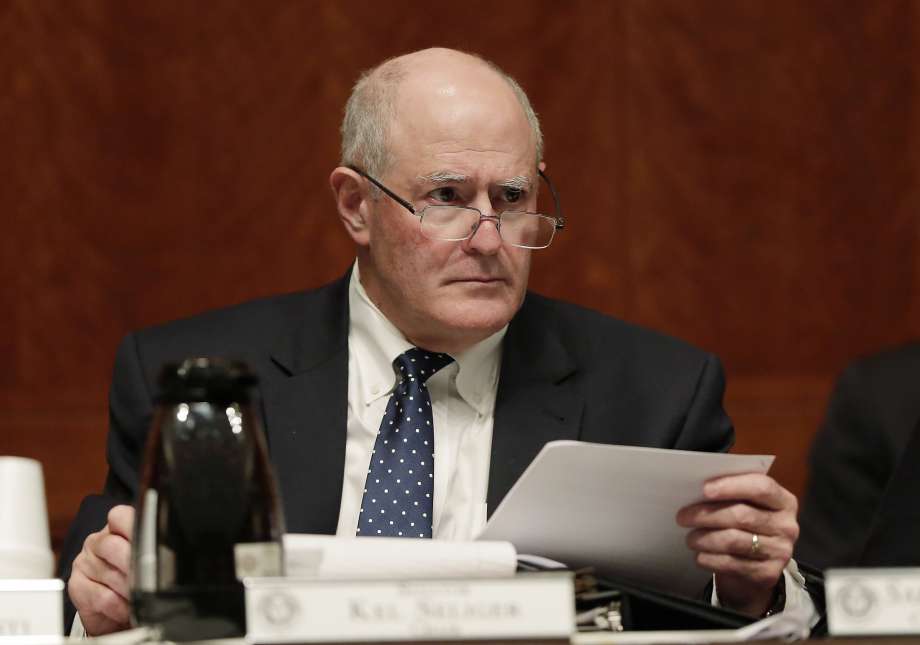
Republican state Sen. Kel Seliger has represented Senate District 31 since 2004. He is a former Amarillo city commissioner and mayor who once ran — with his brother — a steel company in Amarillo. Seliger has risen to a significant leadership position in the Texas Senate, chairing the Senate Higher Education Committee for the past couple of legislative sessions.

He’s a solid legislator who picked up the unique language of legislation right away upon his first election to the Senate. He is nuanced, detail-oriented and smart. Yes, he’s also a friend of mine. So there, I’ve laid out my bias.

He’s got two challengers — presuming he chooses to seek re-election next year.

One of them is former Midland Mayor Mike Canon, who ran against Seliger in the GOP primary in 2014. Canon’s a nice enough fellow. He’s a lawyer by training. I had a chance to visit with Canon prior to a Panhandle PBS candidate forum in the spring of 2014; I was among the journalists who questioned Canon and Seliger.

My primary takeaway from that forum was pretty straightforward: Canon’s TEA Party affiliation became apparent as he answered our questions with talking points, platitudes and clichĂ©s. Seliger’s answers were far more detailed and he exhibited a keen understanding of the complexities of legislation.

Still, Canon’s Permian Basin base stood behind him when the primary votes were counted and he came within fewer than 5 percentage points of defeating Seliger, whose Panhandle base turned out even more strongly behind the incumbent.

Enter another challenger to Seliger. That would be Victor Leal, an Amarillo business owner and a fellow with fairly high name recognition throughout a decent portion of Senate District 31. Why is that? He once served as mayor of Muleshoe. Plus, he ran for Texas House District 87 in 2011 in an effort to succeed David Swinford, who bowed out of a re-election campaign.

But an issue emerged with Leal’s candidacy. His residency came into question. He had resided for several years in Randall County, which is not part of House District 87. He rented a small house in Potter County, but there remained some question about whether he actually was residing in the Potter County dwelling.

Leal lost the GOP primary that year to Amarillo lawyer Four Price, who’s still serving in the Texas House (and who himself has a GOP primary challenger). The residency issue won’t come up in this Senate race, as District 31 includes both Randall and Potter counties.

I’m curious about the possible impact Leal’s candidacy is going to have on this campaign mix. Leal figures to bite a bit into Seliger’s Panhandle base of support. The question, too, is whether he’ll also be able to siphon enough votes from the Permian Basin to make life uncomfortable for Canon.

Seliger’s reputation as a GOP moderate just might — in Canon’s mind and perhaps in Leal’s too — present an inviting target for primary challengers seeking to appeal to the hard-core conservative wing of the Republican Party.

We’ll now wait for word on Seliger’s intentions. I’m a tiny bit anxious to know what the senator plans to do.