Category Archives: political news

Tax matters become our business

13firstdraft-trump1-tmagArticle

You’re running for president of the United States.

It’s a grueling event. It has required candidates to do things they dislike doing, but they do them anyway.

One of those things is to reveal to the public they intend to govern how much they pay in taxes to the federal government. Presidential candidates have been doing it since 1976. It’s not required by law; candidates just do it. Some do so more willingly than others.

So, when a media representative asks the candidate about his or her tax rate, how much they pay in taxes, how is the candidate supposed to respond?

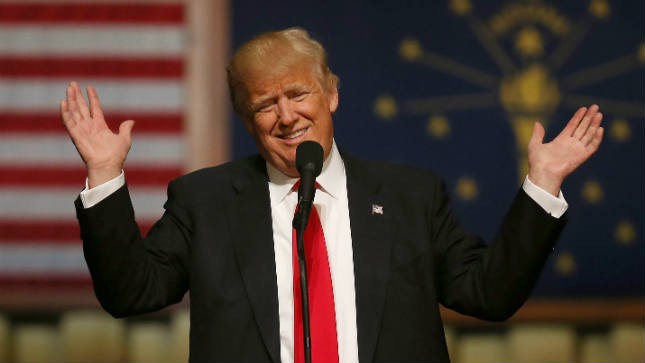
Donald J. Trump got that question this morning from George Stephanopoulos on ABC-TV’s “Good Morning America.” Trump’s response? “It’s none of your business.”

Well, actually it is.

The man now presumed to be the Republican Party’s next presidential nominee is throwing out tax plans left and right. He’s back-tracking, switching his views, telling us what he intends to do — before he changes his mind — about how much money he wants the rest of us to pay in taxes.

Trump has been less-than-forthcoming on his tax returns. He won’t release them for public review, contending that the Internal Revenue Service is in the midst of an audit. IRS officials respond with, “So what?” He still can release the returns.

Trump won’t do it.

Then he tells a network news anchor that the information is “none of your business.”

http://www.nytimes.com/politics/first-draft/2016/05/13/donald-trump-on-his-tax-rate-its-none-of-your-business/?_r=0

It is absolutely our business to know how much a man who wants to be president pays in taxes to the government — our government, the one financed by American taxpayers.

Of course, the president doesn’t set tax policy by himself — or herself. Tax legislation originates in the House of Representatives. As the saying goes, “The president proposes, Congress disposes.”

Still, if a president is going to propose tax policy to Congress — which might then become law that has a direct impact on every American’s household income — then the public has a right to know whether the presidential candidate is paying his or her fair share.

Who determines what is fair? We do.


Trump, GOP draw closer … still have a long way to go

90

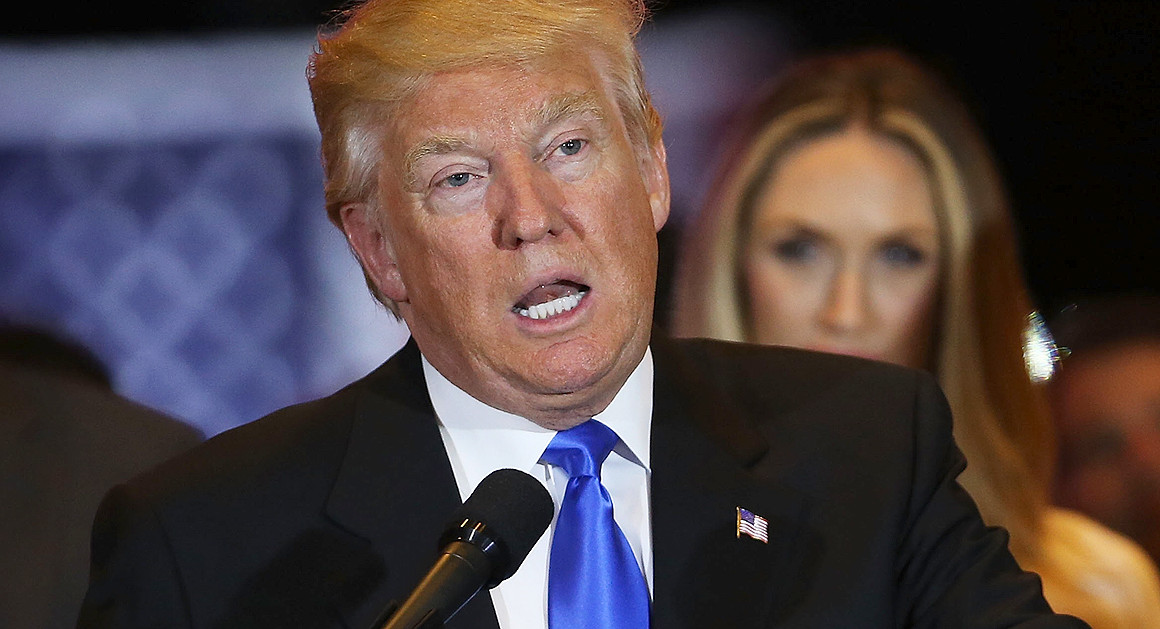
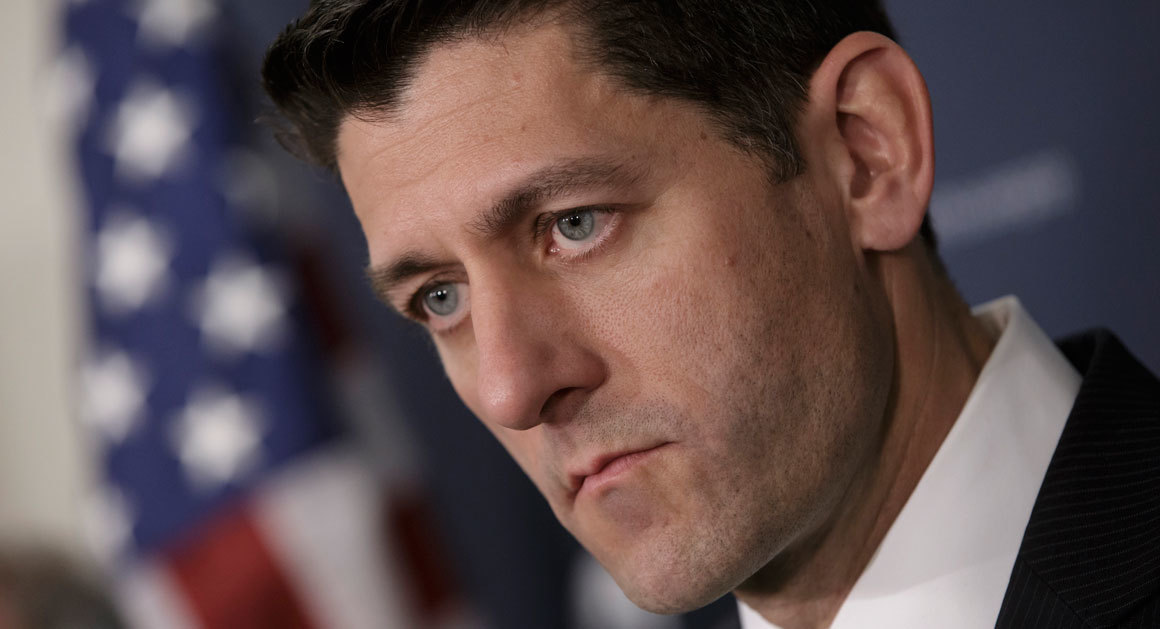
Now we hear that Donald J. Trump and House Speaker Paul Ryan have closed the rift between them.

Fine, if you’re a Republican. I guess.

Are they anywhere near closing the deal in the wake of their 45-minute meeting in Washington, D.C.?

Let’s see:

— Trump won’t touch entitlement spending, but he vows to erase the budget deficit quickly.

— Trump opposes trade agreements that allow for freer trade between the United States and our international partners.

— Trump wants to ban Muslims from entering the United States.

— Trump says he’s fine with Japan and South Korea developing nuclear arsenals.

— Trump says President Bush lied about weapons of mass destruction in a deliberate deception to start a war with Iraq.

— Trump wants foreign governments to pay us back for the assistance we give them.

— Trump is open to the United States withdrawing from the North Atlantic Treaty Organization.

— Trump says rich people should pay more in taxes.

I’m pretty sure that Speaker Ryan disagrees fundamentally with all those views. The presumptive presidential nominee’s view on tax policy and trade run completely counter to standard conservative Republican orthodoxy.

I know I’m missing a few examples. Those are the ones that come to mind immediately.

Trump has said “party unity” is overrated. Now he’s all in favor of it.

I will await the outcome of this run-up to the GOP convention in Cleveland along with the rest of the nation.

If Trump caves in to GOP policy, he risks ticking off his ardent followers.

If the “GOP establishment” surrenders to Trump, then the true-blue Republican faithful will be left standing in the rain.

Ryan today talked about standing firm on “core principles,” which I believe he possesses. Trump’s principles? I’m still waiting for him to reveal them.


‘No’ never really means no for VP hopefuls

Rob Portman Pictures12

U.S. Sen. Rob Portman of Ohio said “no” when NBC News asked him if he’d consider running as Donald J. Trump’s vice-presidential nominee this year.

Does that mean he would refuse to run with Trump if he asks him to do so? Does it mean the Republican will have none of it … ever?

Hardly.

It means only that he intends — at this moment — to seek re-election to the Senate.

How many times have these politicians  said “no” only to change their minds when the phone rings? A zillion?

I’m going to flash back for a moment to a conversation my colleagues and I had in Beaumont with the late, great U.S. Sen. Lloyd Bentsen.

It was 1988. The Democratic senator was running for re-election. He visited us at the Beaumont Enterprise to talk about that campaign. The presidential primary campaign was winding down. Massachusetts Gov. Michael Dukakis was pondering a VP pick. Bentsen’s name was being kicked around.

So … I asked him: Would you run for vice president if Dukakis asked?

I don’t recall precisely how Sen. Bentsen answered, but I do recall he said “no,” or words to that effect. He said he was focused only on his re-election campaign against Republican nominee U.S. Rep. Beau Boulter of Amarillo.

About a week later, his phone rang. It was Gov. Dukakis. The governor asked Bentsen to run with him on the Democratic ticket. His “no” turned to “yes.”

My memory of that conversation makes it difficult for me to accept a “no” at face value when the subject of running for vice president comes up.

In this election cycle, though, it strikes me as plausible that saying “no” to a presidential nominee as weird and unpredictable as Donald Trump actually might carry more weight.


Release the tax returns already!

tax-return-form

Here’s how you give birth to rumor.

You refuse to do something that others in your position have done for decades. You then offer lame excuses for the refusal, which then start to breed gossip around the country about the alleged real reasons for the refusal.

Presumptive Republican presidential nominee Donald J. Trump is refusing to release his tax returns. He says the Internal Revenue Service is in the midst of an audit; the IRS responds that an audit does not preclude someone from releasing the returns.

Other candidates for the presidency have routinely released their returns for public review. It’s part of the examination process to which the public is entitled as they consider who should become the nation’s head of state and government and commander in chief.

Trump should release the returns. Now.

I am not going to weigh in on what’s been said by those who think Trump might be hiding something. Such allegations have come from, say, 2012 GOP presidential nominee Mitt Romney.

This might seem like a diversion. It really isn’t.

The refusal to comply what’s been customary among presidential candidates speaks to the character of the candidate.

Recall that Democratic presidential candidate U.S. Sen. Bernie Sanders balked initially at releasing his returns, and he faced questions from an inquiring public. He said his wife prepared them and he described the findings as “boring.” He finally did.

Trump has been bellowing for decades about his immense wealth. He’s boasted about what a “world-class businessman” he’s been.

Well, OK. Let’s open up the books and let the public see for itself.

The world is chock full of equally world-class certified public accountants and tax lawyers who can parse the details for us.


Why aren’t we cheering this news?

federal-budget-2013

I am a lousy psychoanalyst.

I’m not educated in it. I’m not an expert at anything, truth be told. I just try to observe my surroundings and keep myself somewhat centered.

Still, I am inclined to believe that human beings are drawn more readily to negativity than they are to positive news.

That might explain the contents of this link:

http://www.msnbc.com/rachel-maddow-show/the-public-has-no-idea-the-deficit-shrinking

The writer suggests that Americans don’t know that the budget deficit is shrinking at a greater rate under the Obama administration than at any time in recent history.

Why don’t Americans know this? Why aren’t they cheering the news?

I think it’s because the naysayers have won the argument. How is that? Because human beings are drawn to their message.

Hey, I can relate to it. The TV Guide we get at our house has a “Cheers and Jeers” section in the back of the magazine. I am drawn instinctively to the “Jeers” the magazine gives before I read the “Cheers.” Do you know what I mean here?

Deficit spending used to be Republicans’ major bogeyman. They pilloried Democratic politicians in 1980 because the federal budget deficit exceeded $40 billion annually. Oh, to have a deficit that small these days.

The deficit exceeded $1 trillion when Barack Obama took office in January 2009. It’s now down to less than half that amount. Remember when we actually balanced the budget during the administration of another Democrat, Bill Clinton? A failed Republican president candidate this year, John Kasich, played a big role in making that happen, but he never was able to parlay that positive record into votes among GOP base voters … who are too enthralled by the negativity being sold by Donald J. Trump.

The negativity proponents are winning the national argument about the federal budget deficit.

It’s not the essence of their message. It’s that they’re outshouting those who know the truth, which is that it is shrinking.

How, then, do we get past humans’ instinct to embrace news that angers them?

Unity? It’s not necessary, according to Trump

12TRUMPMANDATE-master768

There once was a time when political unity spelled success for candidates who traded on it.

In 1968 and again in 1972, Democrats nominated candidates for president who sought to win with their party in shambles.

In 1976, Republicans nominated an incumbent president who had to fight for his political survival against an insurgent.

In every case mentioned here, the disunited party lost the election.

Is that going to happen in 2016? Those of us who’ve been proven wrong at almost every turn about the Republican primary campaign should hold our thoughts to ourselves.

http://www.nytimes.com/2016/05/12/us/politics/donald-trump-campaign.html?hp&action=click&pgtype=Homepage&clickSource=story-heading&module=first-column-region&region=top-news&WT.nav=top-news&_r=0

Donald J. Trump says unity isn’t a prerequisite for him winning the election this fall. The Republican Party is ripping itself into pieces over this individual’s pending nomination for president.

Big deal, says Trump. He has a “mandate” to keep doing what he’s been doing, Trump says. According to the New York Times:

“Mr. Trump, in a telephone interview, compared his candidacy to hit Broadway shows and championship baseball teams, saying that success begot success and that he would be foolish to change his behavior now.

“’You win the pennant and now you’re in the World Series — you gonna change?’ Mr. Trump said. ‘People like the way I’m doing.’”

Still, he’s going to meet Thursday with House Speaker Paul Ryan and some other leading Republicans to talk about, oh, unifying the party.

I’ve become more of a political traditionalist as I’ve gotten older. I once worked real hard to elect the late Sen. George McGovern in 1972. It didn’t work out for us.

I now believe unity is better for the candidate than disunity.

Trump needs virtually all Republicans — and a lot of Democrats and independents — to vote for him if he intends to take the presidential oath next January. My own sense is that he’s still got a gigantic hill ahead of him.

Far more women view him unfavorably than favorably; same with Hispanics and African-Americans. He’ll need far more of them if he has a prayer against the Democratic nominee, who likely will be Hillary Clinton.

Does he obtain majorities with those key voting blocs by leading a divided, disjointed and dysfunctional Republican Party?

For the life of me, I don’t know how he does that.

Then again, I don’t know how this clown finds himself on the doorstep of a major-party presidential nomination.


When did political spouses deserve the blame?

kennedys

A picture showed up on my Facebook feed with the caption: No one blamed Jackie for what Jack did.

Hmm. Interesting, yes?

Now we’re getting a lot of blame being tossed around at the wife of another president.

Times really have changed.

President John F. Kennedy was a seriously unfaithful husband. During the time he was president — from January 1961 until November 1963 — his transgressions went unreported by the media that knew about it, but kept it secret through an understanding: If it doesn’t affect his performance as president, it doesn’t matter.

Years later, long after JFK had been buried and his wife had remarried, the world knew of what he had done behind his wife’s back.

Have we blamed Jackie for what the president did?

No. Today, the calculus is different.

Republican candidate for president Donald J. Trump is now blaming Hillary Rodham Clinton for being an “enabler.” That’s a reason to vote against her for president, said Trump. Why? Because she was mean to other women who accused her husband, Bill Clinton, of being unfaithful to her.

The House of Representatives impeached President Clinton for lying under oath about his relationship with a young White House intern. The Senate acquitted him in the trail that ensued.

Does any of that have an impact on how Hillary Rodham Clinton would govern the country if she’s elected president this fall? No.

In fact, I saw another social media post that suggested that Hillary Clinton’s response to her husband’s transgression should be saluted, not condemned. The Clinton family stayed together. They worked through their anger and heartbreak.

Of course, none of us knows what they have said to each other in private. Nor should we know. It’s their business exclusively.

Perhaps the most ironic twist of all in this game of blaming a political spouse for her husband’s behavior is the reputation of the individual who’s leveling the blame.

Given his own highly publicized history of marital infidelity, Donald Trump has no standing — zero! — to challenge the moral rectitude of any other human being in public life.

Mayor to Trump: Thanks, but no thanks

Sadiq Khan

Sadiq Khan made history by becoming the first Muslim ever elected mayor of London.

He’s a distinguished man who apparently doesn’t like other politicians patronizing him.

So, when presumptive Republican Party presidential nominee Donald J. Trump offered to grant the mayor-elect an “exception” to a proposed ban on Muslims visiting the United States, Khan offered a terse “no thanks.”

This is precisely the kind of reaction Trump should have gotten in response to his ridiculous — and patently unconstitutional — proposal to ban people from entering the United States on the basis of their religious belief.

Trump issued the call in the wake of the Paris terror attacks. He said he would, if elected president, work to ban all Muslims from entering the United States. Why? He said the threat of Islamic terrorism coming to this country is too great.

Trump does not grasp the idiocy of this proclamation.

Mayor-elect Khan has rejected Trump’s offer to exempt him from the ban. He wonders about how other Muslims would react if they want to come to the United States “on holiday.” What if they want to go to Disneyland, Khan asked, but they can’t because “President Trump” says they aren’t welcome here?

The First Amendment to the U.S. Constitution allows absolute freedom to worship as one believes. It has been interpreted during the past two-plus centuries to mean that no one should be discriminated against because of their religious faith.

Trump has proposed something that utterly flouts one of the basic tenets on which this country was founded.

Sadiq Khan — the duly elected mayor of one of the world’s truly great cities — saw through it immediately.

He understands what it means to be an American more than the individual who is poised to be nominated to run for the presidency of the United States.


Why not Bernie for VP?

Cassidy-Bernie-Sanders-Loud-and-Clear-1200

The more I think about it, the more plausible it’s beginning to sound.

Bernie Sanders well might become Hillary Clinton’s running mate against Donald J. Trump.

I had been thinking all along that Clinton might look more toward someone with, say, a Hispanic background. Former San Antonio Mayor Julian Castro — who’s now housing secretary in the Obama administration — was a logical choice.

Sen. Elizabeth Warren’s name has popped up. That’s an interesting pick, too. An all-woman Democratic ticket? You go, girls!

But now it seems quite possible that Sen. Sanders — who’s been battle-tested and proven to be up to the fight — might be the right kind of No. 2 to challenge Trump and whomever he selects as his running mate.

Sanders already has pulled Clinton to the left on some of his pet issues: income inequality, war in the Middle East to name just two.

At one level, he’s already won the ideological fight within the Democratic Party. Indeed, if he’s not chosen, I truly can hear Sanders making a “the dream shall never die” speech at the Democratic convention, echoing the stirring address given by vanquished Sen. Ted Kennedy at the 1980 convention that re-nominated President Carter.

However, if Clinton picks Sanders as her VP nominee, then he’ll continue the fight forward.

One obvious drawback is his age. He’s 74. He’d be 79 at the end of a first Clinton term. There might be a commitment to serve just one term as vice president if a President Clinton were to seek re-election in 2020.

Of course, only the candidate knows who she’s going to pick.

As for Trump, he said he’s narrowed his list to “five or six” individuals. He vows to pick an actual Republican and someone with “political experience.” He, too, has a list of former rivals he might consider, although at least two of them — Sen. Ted Cruz and Gov. John Kasich — have all but told Trump to jump in the proverbial lake before asking either of them to run with him.

The mystery of who’ll be running for president in the fall has just about been solved.

Now we’ll await these important choices for the No. 2 spots.

I’m starting to “feel the Bern.”


Sanders yet to explain how ‘free college’ works

Democratic presidential candidate, Sen. Bernie Sanders, I-Vt,  and his wave Jane acknowledge the crowd as he arrives for his caucus night rally in Des Moines, Iowa, Monday, Feb. 2, 2016.  (AP Photo/Patrick Semansky)

I’ve had a busy day, which is rather strange, given that I’m supposed to be “semi-retired.”

Still, I’m winding ‘er down tonight and am listening to some cable news discussion of the day’s political events.

I heard the following: U.S. Sen. Bernie Sanders held a rally in Salem, Ore., in which he said that it’s time to provide free college education for every American who wants to get one.

I keep coming back to this question: How in the world are we going to pay for this?

Sanders’ pledge to provide free college education has helped him draw big support among young voters, who’ve added huge numbers to the rallies to which he’s been speaking.

Free college is a noble goal.

It’s also utterly unrealistic.

I have plenty of friends who are backing Sanders. Some of them are old folks … like me.

To be honest, I haven’t crossed paths with too many college-age students who are backing Sanders because of this pie-in-the-sky promise. I’ll need to catch up with some of them to get a better grip on how this free college pledge is resonating.

From my standpoint, though, a promise made from the campaign stump quite often doesn’t translate to responsible public policy.