C-SPAN worked miracles with this spot

cspan_bus

I want to share a moment regarding my one direct contact with the Cable-Satellite Public Affairs Network . . . aka C-SPAN.

I’ve already sung the praises of Brian Lamb, the founder of the one national network that covers politics and policy without a hint of bias.

Take another look.

But the folks who put together their video presentations are masters of editing, cutting, pasting and making subjects look a whole lot smarter than they really are. In my case, that’s not all that difficult.

I arrived in the Texas Panhandle in January 1995 to take my post as editorial page editor of the Amarillo Globe-News.

That spring, C-SPAN embarked on a project called the “School Bus Tour.” It was sending a yellow bus to every congressional district in the United States. All 435 of them would get a visit from the C-SPAN school bus. Its intent was to educate viewers on the members of Congress representing their constituents living in each of those districts.

The 1991 Texas Legislature had gerrymandered the congressional map in Texas to give Amarillo two House members. The 13th Congressional District comprised the northern portion of the city; the 19th District comprised the southern portion.

The lines were drawn that way to protect the Democrat — Bill Sarpalius — who represented the 13th District. Democrats controlled the Legislature back then, so they sought to rig the lineup to protect their own. The tactic worked until the 1994 election, when Republican Mac Thornberry upset Sarpalius.

But the 19th District remained strongly Republican and was represented by U.S. Rep. Larry Combest of Lubbock.

C-SPAN called one day and wanted to know if I would be willing to be interviewed by the network about the 19th District. I was to talk about Combest and the district he had represented for the past decade.

Holy crap! I thought. I didn’t know much about the district, or about Combest. I was brand new here. I’d lived for the 11 previous years in the Golden Triangle region of Texas, which was represented in the House by Democrats Jack Brooks of Beaumont and Charlie Wilson of Lufkin.

I accepted the offer, then cracked the books to learn more about the 19th Congressional District and about Rep. Combest.

C-SPAN’s school bus crew met me at the newspaper office one Saturday morning and I talked for about 30 minutes or so with a camera rolling. I stuttered, stammered, paused, stopped-and-started my way through it. Hey, I’m not a TV guy.

I was frightened by the prospect of how it would look on TV. The producer assured me, “Don’t worry. You did just fine. We’ll take good care of you.”

Well, they shot their B-roll video, showing scenes of feed lots, ranch land, wind mills and such from around the sprawling district, which stretched from Amarillo all the way to Lubbock, about 120 miles south of us.

They told me when the segment would air.

I waited for it. Sure enough, they managed to make me sound a whole lot more polished than I really am.

What’s more — and this is the real beauty of this kind of skill — they preserved the essence of every comment I made. There was not a single phrase that was aired during the three-minute segment that was out of context or didn’t convey my intended message.

I would have a similar experience later, during the 2008 presidential campaign, with National Public Radio. NPR wanted to interview two journalists about the state of that campaign between Barack Obama and John McCain. I learned once again about the talent and skill it takes to edit someone’s spoken words while preserving the integrity of what one says.

Believe me, it’s a remarkable skill, indeed.


Take a bow, Brian Lamb

maxresdefault

Brian Lamb is a genius.

He might the smartest journalist in America. Why do I say that? He founded a network that has managed — through all the revolutions and incarnations of other media outlets — to keep the organization he founded free of the partisanship that has poisoned the dissemination of news.

Lamb founded C-SPAN — which is an acronym for Cable-Satellite Public Affairs Network.

C-SPAN tweeted out a message with some testimonials from those who appreciate the contribution it makes to informing the public about politics and policy.

Count me as a huge fan.

Has anyone ever guessed the political leanings of Lamb and the team of reporters and talking heads he employs at the network?

Lamb has made it his policy to ensure that such questions never come up. When you listen to his interviews with public officials, you never know where he leans. Left or right? Doesn’t matter. It’s hidden.

Unlike the other cable networks — whether it’s Fox on the right or MSNBC on the left — viewers get a taste of the bias that spews from the commentators/pundits/talking heads.

They have bored me for years.

Lamb invented pure-bred public affairs programming when he launched C-SPAN in the early 1980s. He persuaded Congress to let his network televise the floor speeches from senators and House members and immediately the public learned a dirty little secret about both legislative chambers: Members quite often pontificate before an empty room. We didn’t need the C-SPAN staffers to tell us; they just broadcast it, without comment.

So it has been with C-SPAN. Brian Lamb’s creation has enlightened us simply by allowing us to look inside these institutions, hear our elected representatives speak for themselves and then giving us a chance to decide whether they’re full of wisdom . . .  or something that stinks to high heaven.


Iowa uncertainty brings new dimension of weirdness to race

Bible2

It’s been said repeatedly for many election cycles that evangelical voters are key to the success of candidates seeking to win the Iowa presidential caucuses.

Republican candidates play to the evangelical voter bloc, realizing the critical role that devout Christians play in the Iowa political process.

The 2016 caucuses are almost here and, as has been the norm this time, some political traditions have been turned upside-down.

Cruz in trouble in Iowa

Consider this: The one-time favorite of Iowa Republicans, U.S. Sen. Ted Cruz of Texas, is now essentially tied in that state by none other than Donald J. Trump.

Cruz is supposed to be the golden boy for evangelical voters. He’s their guy. He’s the self-proclaimed “dependable conservative.” But now his support has eroded as Trump has gained ground and as U.S. Sen. Marco Rubio has risen as well to compete with Cruz for the evangelical vote.

What’s staggering to me, though, is why Trump is faring so well among those deeply devout voters. Trump has demonstrated repeatedly that his expressions of faith sound, well, less than authentic. The “Two Corinthians” gaffe is a small, but still significant, demonstration of what I mean.

Trump talks about the Bible the way one talks about a Louis L’Amour western novel. “It’s a great book,” he says.

Well, I don’t know how this initial contest is going to finish on Monday. It’s only one vote, after all, in a long series of contests that candidates in both major parties will have to face as they fight among themselves for their parties’ presidential nomination.

But the idea that the vaunted evangelical vote is up for grabs with a candidate such as Donald Trump competing for it just boggles my mind.

I’m going to stay tuned for this one to play out.


‘Failed presidency’? Hardly

3003122896_6fc69cb06e_o-998x656

Ed Rogers’s bias is crystal clear.

The Republican operative, writing in the Washington Post, calls Barack Obama a “failed president.” The president’s alleged “failures,” Rogers asserted, has led to the rise of Donald J. Trump and the crippling of Hillary Rodham Clinton.

Read the essay here.

I am acutely aware that there are those who side with Rogers’s assessment of Barack Obama’s two terms in the White House. I also am aware that others disagree with him, who believe that the president’s tenure has been anything but a failure.

I happen to one of the latter.

I’m enjoying, however, listening to the field of Republican presidential candidates harp on the same thing. They decry American “weakness.” They blame the president for it. They say we’re weak militarily, economically, diplomatically, morally . . . have I left anything out?

I shake my head in wonderment at those assertions. Then I realize that they’re all politicians — yes, even Donald J. Trump, Carly Fiorina and Ben Carson — seeking to score points.

That’s what politicians do, even those who say they aren’t politicians.

Democrats do it as well as Republicans.

However, I am going to let history be the judge about whether this presidency has failed.

So far, I’d say “no.”

The economy is stronger than it was when Barack Obama took office; we’ve continued to wage war against terrorists; our military remains the most powerful in the world; we’ve scored diplomatic victories, such as securing a deal that prevents Iran from obtaining nuclear weapons — irrespective of what the critics allege; we’ve kept our adversaries in check; we’ve avoided a second major terrorist attack on U.S. soil.

Has this been a perfect seven years? No. Has any presidency skated to completion with a perfect score? Again, no. Not Ronald Reagan, FDR or Ike. All the great men who’ve held the office have endured missteps and tragedy.

However, this “failed presidency” talk comes in the heat of a most unconventional election year.

I will continue to keep that in mind as the rhetoric gets even hotter as the year progresses.


It’s just about the ‘worst case’ regarding those e-mails

hillary-emails

The worst case hasn’t yet arrived with regard to the Hillary Clinton e-mail controversy.

However, it’s a lot closer than the presumed Democratic Party presidential frontrunner would like.

I won’t yet call this matter a “scandal.” It would elevate to that level if we found out that the classified e-mails that went out on the former secretary of state’s personal server got into the wrong hands.

The Obama administration today revealed that 22 e-mail messages that went through Clinton’s server have been labeled “top secret.” Clinton had said she didn’t knowingly send out sensitive material on the server.

The administration now says it won’t release the e-mails to the public because — that’s right — they are top secret!

We won’t be allowed to see what’s in them, which is just fine by me.

Most troubling, though, is that the e-mail messages very well could have gotten into the hands of those seeking to do serious harm to this nation.

We’ll need to know the truth about how those messages traveled through cyberspace containing the highly sensitive national security information.

Of course, the political ramifications of this revelation ramp up the stakes for Monday’s Iowa caucuses, where Clinton is locked in a tight battle with Sen. Bernie Sanders; former Maryland Gov. Martin O’Malley is running a distant third, but suddenly he emerges as a potential spoiler.

Clinton is beginning to suffer from some trust issues with voters. The administration’s acknowledgment that the e-mails carried top secret information into potentially unsecured locations out there into the Internet universe could do serious harm to a candidacy once seen as unstoppable.


Rove: Trump as GOP nominee would be disastrous

karl-rove1

Karl Rove came to Amarillo to hawk a book and to speak to an organization called the Senate 31 Club, which is run by the office of state Sen. Kel Seliger, R-Amarillo.

Seliger inherited the club from his predecessor, the late Teel Bivins.

And today, he brought in the man known around the country as “Bush’s Brain,” as Rove helped elect George W. Bush twice as Texas governor and twice more as president of the United States.

Rove is considered one of the smarter political operatives around.

His view of the crazy race for the 2016 Republican presidential nomination?

He got right to the point today during a luncheon in the packed main dining room at the Amarillo Country Club in which he talked about his latest book, “The Triumph of William McKinley.” Seliger asked Rove to offer a comment on the current campaign

“If Donald Trump wins the nomination his chances of being elected president are slim and none,” Rove said.

The real estate mogul/reality TV star’s poll negatives are the highest among any of the remaining GOP candidates, Rove said. He continues to trail the still-presumed Democratic frontrunner, Hillary Clinton, in every poll taken.

I found it interesting that Rove would bring up Trump’s four bankruptcy filings, suggesting — to me, at least — that they will be factor that kills Trump’s chances of ever attaining the Oval Office.

The Democrats, Rove said, “will find every paint contractor, lawn care person, anyone who got screwed in these bankruptcies and put them on TV.”

If it’s Trump leading the Republican ticket this fall, the party stands a good chance of losing control of the Senate. The key race there? Florida, said Rove, which will have an open Senate seat because Marco Rubio — who’s also running for president — isn’t seeking re-election.

“If we don’t win Florida, we don’t keep the Senate,” Rove said.

Rove didn’t get into why Trump continues to lead the pack. He didn’t explain the candidate’s curious appeal to the “base” of a once-great political party.

I’m continuing to wonder whether that curious thing called “political gravity” will pull Trump back to Earth. However, given what’s transpired so far in this wild-and-crazy campaign, I’m not willing to wager that the Republican Party that many of us remember will be able to gather its wits in time to stop Donald J. Trump.

City seeks ‘change,’ but to what end?

downtownamarilloinc1

I understand full well what Amarillo voters intended when they voted to revamp the majority on their governing City Council.

They sought “change.” They got it. Some of it has been constructive, some of it has been, well, non-constructive. I won’t say “destructive,” because nothing has been destroyed.

Now comes perhaps the most significant change yet: the de-coupling of the city from Downtown Amarillo Inc., the non-profit agency set up to spearhead downtown’s redevelopment.

I look from my perch in the peanut gallery and keep asking: Why mess with a formula that has brought us significant positive movement?

DAI will continue to exist. It won’t get city money. It will operate as an independent agency. At this moment, it doesn’t have an executive director; Melissa Dailey, who led DAI in that position, quit early this week on the eve of the City Council’s decision to cut the city’s ties with the agency.

She saw what was coming and wanted out.

But the question in my mind remains: Have we enacted change just for the sake of fulfilling some general campaign promise?

I look back on my 21 years living in Amarillo and I see significant improvement in the city’s downtown district.

Polk Street, once the hub of social life in Amarillo, has begun showing signs of life again. New office complexes have sprouted up. The historic Fisk Building was emptied out and then re-cast into a first-class hotel run by Marriott. Southwestern Public Service has begun construction on a new office complex. The Chase Tower, which once was a decaying skyscraper, has been remodeled and modernized. We’ve seen the completion of loft apartments.

Did all this happen by itself? Well, no.

DAI had a hand in some — if not most — of the improvements we’ve seen.

I haven’t yet met the new interim city manager. Terry Childers seems like a mature, forward-thinking individual with a proven record of success. He’ll be running the City Hall administrative show until the council finds a permanent manager.

My hope is that he knows what he’s doing by recommending all these changes.

My fear is that he and the rest of governing machinery have tossed aside a winning formula without knowing what will take its place.

I am pulling for hope to override fear.


Bloomberg giving Democrats the jitters

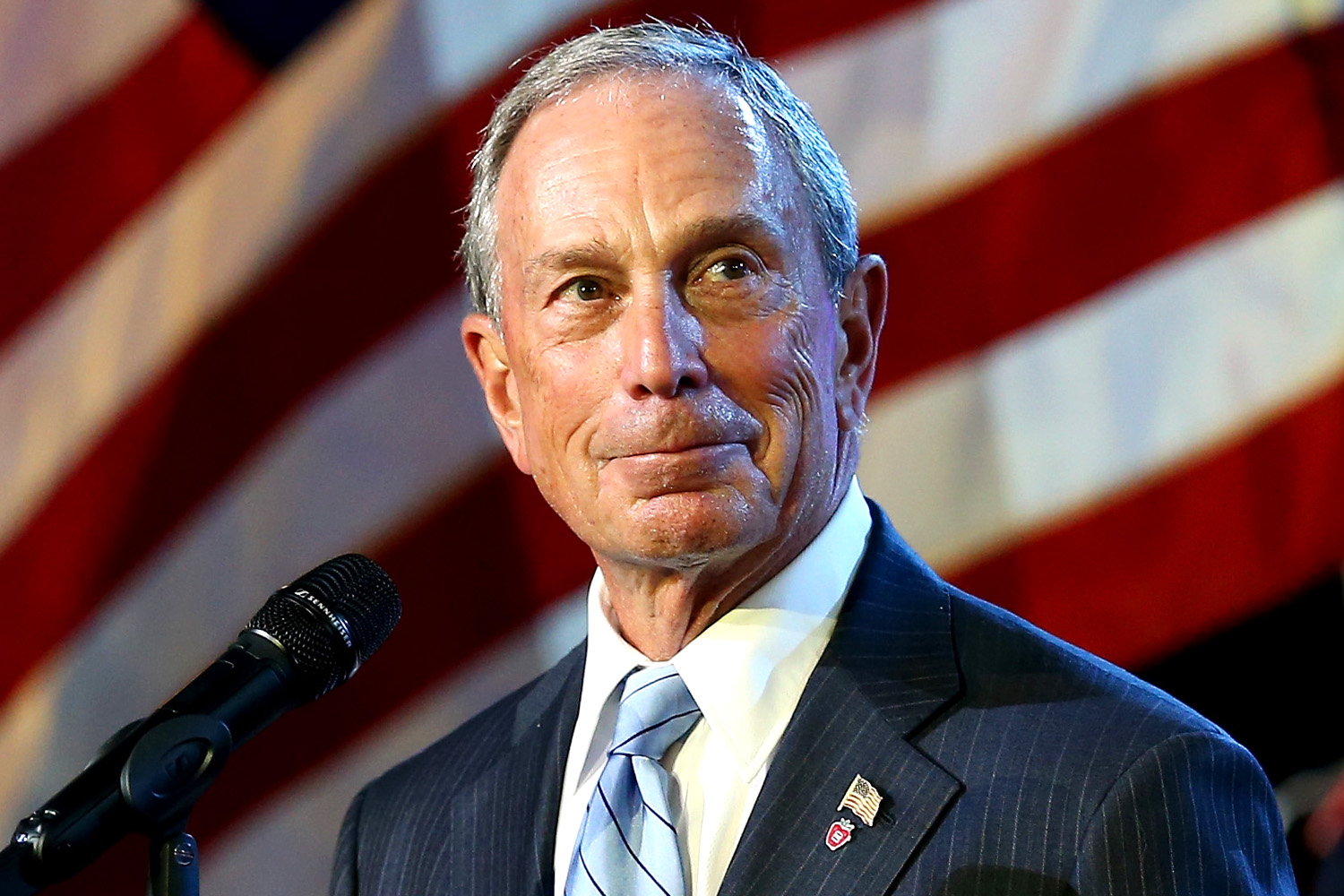
NEW YORK, NY - AUGUST 26:  Mayor of New York City Michael Bloomberg speaks on stage during the opening ceremony during Day One of the 2013 US Open at USTA Billie Jean King National Tennis Center on August 26, 2013 in the Flushing neighborhood of the Queens borough of New York City.  (Photo by Matthew Stockman/Getty Images)

Michael Bloomberg is creating a certain buzz as the presidential campaign starts to gear up.

The former New York mayor is pondering whether to run for president as an independent.

Not surprisingly, Democrats are trying to talk him out of it. Why? They consider him a potential spoiler in the party’s bid to retain control of the White House.

My own hunch is that Bloomberg won’t run if the Democrats appear set to nominate Hillary Rodham Clinton for president.

If it’s Sen. Bernie Sanders? And if the Republicans nominate Donald Trump? Well, then it becomes dicier for everyone involved in the election . . . in both parties.

This brings back memories of Ross Perot. Perot, the Dallas billionaire, ran twice for the presidency, in 1992 and 1996. Republicans keep saying that Perot’s strength decimated GOP President George H.W. Bush’s chances for re-election, handing the election to Arkansas Democratic Gov. Bill Clinton.

The jury, though, really is still out on that. I’ve seen plenty of evidence that suggests that Clinton would have defeated Bush that year without Perot on the ballot, that Perot attracted nominally more Republicans than Democrats, but that his candidacy wasn’t necessarily decisive.

See analysis here.

Bloomberg’s entry into this race as an independent is hard to gauge.

He’s a friend of Hillary Clinton. He once was a friend of Trump . . . before the two men got tangled up in some business deal.

Given the utter madness that has enveloped the 2016 campaign to date, I am not willing to assume a single thing about what Bloomberg might do and what effect it will have.

Let’s just chalk this up to one more nod to the craziness that’s brought us to this point.


Trump wins by not showing up

150915_POL_RepublicanDebate2.jpg.CROP.promo-xlarge2

And the winner of last night’s Republican Party presidential debate is . . . ?

The guy who wasn’t there.

That would be Donald J. Trump.

Why did he win? Because he’s the individual most of American political pundit class is talking about this morning.

This individual’s ability to manipulate the media, those in the know, the public is simply astonishing. It’s the sole reason he remains the Republican frontrunner for the party’s presidential nomination.

His ability to control the media narrative, of course, has not a single thing to do with any single idea he’s put forth. Trump’s showmanship is beyond belief.

He staged a rally for veterans while the rest of the GOP field was bashing each others’ brains in. Trump even lured a couple of his rivals from the “undercard” debate — Mike Huckabee and Rick Santorum — to the vets rally to yammer about how they, too, were going to be faithful to veterans’ concerns and needs.

The veterans rally, of course, was a plug for Trump and had little to do, really, with the issue of veterans care. Every American already wants to do all they can to care for the veterans who are returning home from war. It has become a mantra — as it should.

Trump’s manipulation of this event, though, is what is so astonishing and is what gives this guy his political staying power.

The record is full of events that would have doomed a candidate who didn’t have Trump’s self-promotion skill set. The insults he has hurled at his foes, at media representatives, at foreign leaders, at voters themselves would have sent any other candidate to the proverbial showers long ago.

Not Trump.

He’s still standing at the head of the line. He boycotted a GOP debate because he’s feuding with one of the moderators.

But we’re still talking about him.

The guy’s a genius at one thing . . . and it has nothing at all to do with becoming president of the United States of America.


In other news, Challenger blew up 30 years ago today

31734.ngsversion.1422031299027.adapt.768.1

Republican presidential candidates are debating at this very moment.

I’m a bit weary from listening to it all, so I’ll recall a tragic moment in U.S. history.

Thirty years ago today, the phone rang on my desk at the Beaumont Enterprise. I answered it. It was my wife, who worked down the street in downtown Beaumont, Texas.

“What’s going on? I just heard the shuttle blew up,” she said.

I turned to my computer, punched up the wire and saw the bulletin: “Challenger explodes.”

I blurted out a curse word and told her “I gotta go!”

I turned on the TV. The video was horrific.

Seventy-three seconds into a flight the shuttle Challenger blew up and seven astronauts were dead . . . in an instant.

We were stunned at our newspaper. We stood there, transfixed by what was transpiring. We heard over and over the radio communication to the Challenger, “Go at throttle up.” Then came the blast. It was followed by silence before the communicator told the world, “Obviously a major malfunction.”

I wouldn’t feel that kind of shock until, oh, the 9/11 attacks 15 years later.

But what happened next at our newspaper was that we would plan to do something the paper hadn’t done since the attack on Pearl Harbor. We decided to publish an “Extra.”

It contained eight pages of text and photos from that ghastly event. It contained an editorial page, which I cobbled together rapidly. I wrote a “hot” editorial commenting on the grief the nation was feeling at that very moment.

We went to press about noon that day and we put the paper in the hands of hawkers our circulation department brought in to sell the paper on the street. It went into news racks all over the city.

Through it all the tragedy reminded us — as if we needed reminding — of how dangerous it is to fly a rocket into Earth orbit.

Of course, it would be determined that a faulty gasket malfunctioned in the cold that morning in Florida. The shuttle fleet would be grounded for a couple of years while NASA figured out a way to prevent such tragedy from happening in the future.

We would feel intense national pain, of course, in February 2003 when the shuttle Columbia would disintegrate upon re-entry over Texas, killing that crew as well — including the mission commander, Amarillo’s very own Air Force Col. Rick Husband.

They both brought intense pain to our nation.

Challenger’s sudden and shocking end, though, remains one of those events where we all remember where we were and what we were doing when we heard the news.

And to think that some Americans actually thought those space flights were “routine.”


Commentary on politics, current events and life experience