Ryan: We’re heading for ‘divisiveness’ as a nation

90

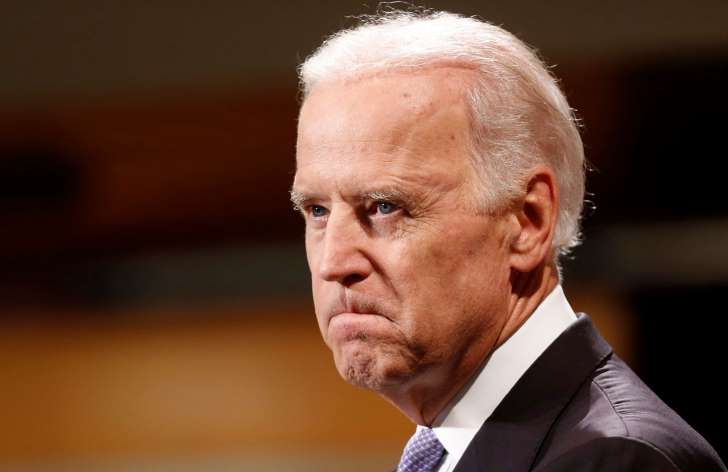
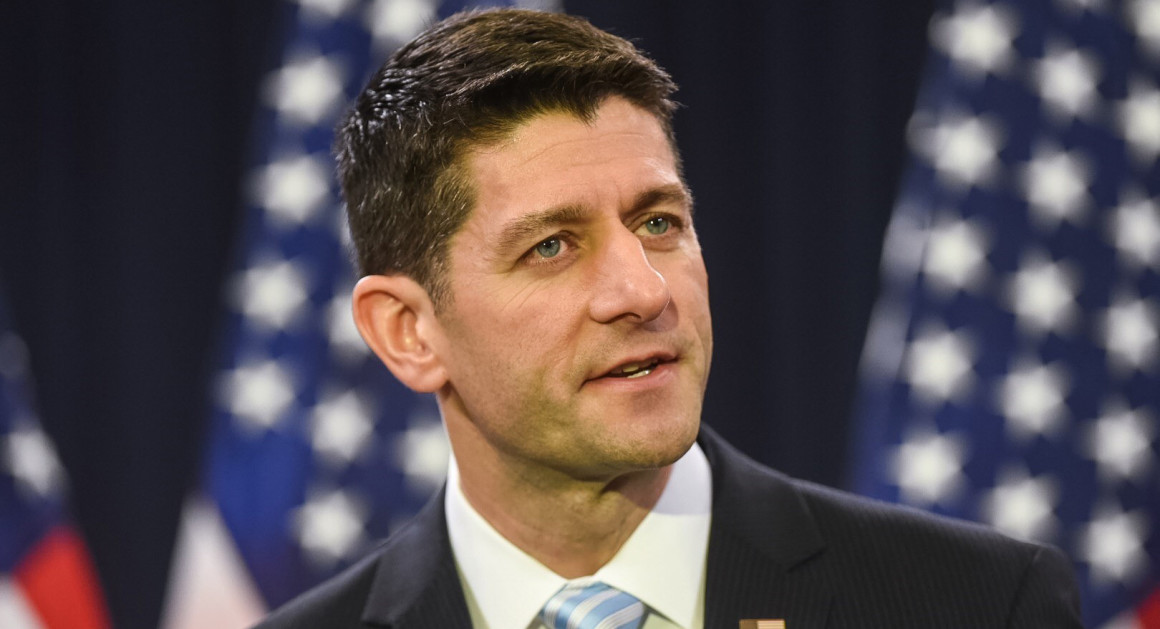
Speaker of the U.S. House of Representatives Paul Ryan is partially correct when he says the nation “is becoming divisive.”

I believe we’re already there, Mr. Speaker.

It’s not a condition that has just developed overnight, or certainly during the current election cycle.

It seems to my reckoning to have its roots in the 2000 election season, when a candidate for president was elected by the narrowest margin imaginable — and under circumstances that to this day hasn’t been accepted by many millions of Americans.

George W. Bush won the presidency after the Supreme Court stopped the recounting of ballots in Florida. The Texas governor had 537 more votes than Al Gore in that state. He won that state’s electoral votes, giving him the election — even though Gore had amassed more popular votes nationally than Bush.

For the record, I’ve never doubted the legitimacy of Bush’s election as president. The constitutional system worked.

But …

The spillover through the next several elections has seen a palpable division among Americans.

The current campaign has delivered an intense ratcheting up of the division that’s been there for some time now.

I’m not a fan of the speaker, but I do applaud him for speaking to our national idealism. He clearly was taking dead aim at the tone being delivered on the campaign trail by Donald J. Trump, who he didn’t mention by name. Everyone in the congressional conference room who heard Ryan knew of whom he was speaking.

As Politico described Ryan’s remarks: “He decried identity politics, criticizing those who pit groups of Americans against each other. He said the nation’s political system doesn’t need to be this bad. He accused both parties of staying comfortably in their corners, only talking to those who agree with them.”

Ain’t that the truth?

There once was a time when members of Congress — from both parties — talked openly with each other about how to legislate for the good of their states or the country. The Texas congressional delegation was known to have bipartisan breakfasts weekly, with House members breaking bread with each other and talking about issues that needed attention.

It doesn’t happen these days.

Instead, we’re seeing and hearing candidates and their rhetoric demonizing “the other side.” The No. 1 instigator of this campaign-trail anger is the GOP’s leading presidential candidate — Trump.

Ryan’s message will not resonate with the segment of the population that has bought into the Us vs. Them mantra that Trump and others are promoting. Ryan is now seen as a member of the hated “establishment.”

Ryan said: “What really bothers me the most about politics these days is this notion of identity politics. That we’re going to win election by dividing people. That we’re going to win by talking to people in ways that divide them and separate them from other people. Rather than inspiring people on our common humanity, on our common ideals, on our common culture, on things that should unify us.”

Is his message too sunny, too optimistic, too idealistic?

For the sake of our political future, I hope not.

Meanwhile, Boko Haram still terrorizes women

boko-haram

The world is reeling from yet another terror attack in a major European city.

Brussels is the latest city to be victimized by the Islamic State. Our hearts break for the loved ones of the 31 people killed in the blasts at the city’s airport and in a metro rail station.

However, I cannot help but think of another terror crisis that at one time also captured the world’s attention.

Remember the group called Boko Haram? It operates in Africa. It is a Nigeria-based cabal of radical Islamic terrorists.

It kidnapped an estimated 200 women, holding them captive in some unknown location.

Didn’t the world coalesce around the plight of those women? Weren’t there concerted efforts launched by African nations, the United States, European Union nations and others to find the kidnapers and bring them to justice?

I believe the women and girls are still being held by these terrorist monsters. I believe Boko Haram is still as despicable as it’s always been.

The outcry? It’s been muted … inexplicably.

Perhaps our global attention span needs to be expanded and enhanced to enable it to focus on more than one crisis at a time.

The Brussels attacks have captured the world’s attention, just as the Paris attacks had done just a few months earlier.

While the world focuses on those two events, a hideous terrorist group continues to bring havoc to women in Africa.

It, too, needs to be destroyed.


If only the VP hadn’t said what he said …

Supreme-Court-blue-sky

Vice President Joe Biden delivered a stern message today to some university students and faculty members

about the obstruction occurring in the U.S. Senate.

It’s threatening the core of our republic, he said. Senate Republicans must not obstruct President Obama’s effort to fill a Supreme Court vacancy; they must allow nominee Merrick Garland to have a hearing, then they must debate the merits of his nomination and they must then vote on it.

True enough, Mr. Vice President.

But what about those remarks you made in 1992 about whether President George H.W. Bush should be able to nominate someone to the high court in an election year? Today’s Republicans are seeking to block Obama’s pick because this, too, is an election year and they want the next president to make the selection.

The GOP has beaten the vice president over his remarks then.

What they don’t say is that Biden also declared that he would support a “consensus candidate” in an election if one were to be presented to the Senate Judiciary Committee, which Biden chaired at the time.

Biden told the Georgetown law students and faculty members: “Dysfunction and partisanship are bad enough on Capitol Hill. But we can’t let the Senate spread that dysfunction to another branch of government, to the Supreme Court of the United States.”

It’s fascinating to me that then-Sen. Biden’s remarks now have become known as the “Biden Rule,” which has never existed.

I won’t defend Biden for making his remarks in 1992. He was wrong to suggest that a sitting president shouldn’t be allowed to perform his job if he had been given the chance to do so. President Bush did select a Supreme Court justice in 1991, when he nominated Clarence Thomas to take the seat vacated by the death of Thurgood Marshall.

However, I won’t condemn Biden for holding that view. He did, after all, add the caveat that he would support a consensus candidate for the Supreme Court.

The here and now stands on its own.

The vice president is correct to insist that today’s Senate should stop its obstruction and allow the president to fulfill his constitutional duty — and do its own duty to give an eminently qualified nominee the fair hearing he deserves.


Social media have become a campaign curse

[ File # csp7860124, License # 1321135 ] Licensed through http://www.canstockphoto.com in accordance with the End User License Agreement (http://www.canstockphoto.com/legal.php) (c) Can Stock Photo Inc. / Blotty

I think I’ve discovered an undeniable truth.

Social media are to blame for the ghastly decline of intelligent political discourse in this great country of ours.

It’s not a big-time flash. Others likely have drawn similar conclusions and written about it.

I am now going to refer to the Twitter War that’s going on between Donald J. Trump and Rafael Edward Cruz. Donald vs. Ted. It’s getting childish in the extreme and it’s lending nothing whatsoever to any kind of intelligent discussion among Republicans over which of these men should be their party’s nominee for president of the United States.

The crux of the Twitter fight centers on their wives. Melania Trump and Heidi Cruz are now being kicked around like the proverbial footballs that they are not.

It’s sickening me.

A pro-Trump super-PAC put something out there about Mrs. Trump appearing in the nude. Trump tweeted some threats to Cruz about it, threatening to say something mean about Mrs. Cruz.

Ted Cruz denied having anything to do with the ad. Trump ain’t buying it. Now it’s Cruz calling Trump a “coward.”

Back and forth they go.

And voters are supposed to make intelligent decisions — based on this petulant patter — on which of them should carry the GOP banner forward against the Democratic nominee this fall?

Give me a break!

Maybe the mainstream media — and I don’t mean as the conservative epithet the term has come to mean — is responsible. By “mainstream,” I refer to the major broadcast and cable news networks and the print media who keep reporting this stuff.

Heck, bloggers all along the political spectrum have weighed in on it — as this blog is doing at this moment.

So … I’ll accept my share of the blame for this social media craze and its alleged “contribution” to the quality of our national political debate.

I’m not proud of myself.

My only recourse is to ignore this social media sniping.

Therefore, I will.


Listen to the VP, senators, about doing your job

biden

Vice President Joe Biden is going to lecture the U.S. Senate on something about which knows a thing or two.

He wants his former colleagues to do the job they took an oath to do, which is vote on whether to approve a nominee to the U.S. Supreme Court.

Biden will deliver his message in remarks at Georgetown University.

At issue is the nomination of Merrick Garland to fill the seat vacated by the death of Antonin Scalia. Senate Republicans — many of them, anyway — are digging in on the nomination. They don’t want to consider a Barack Obama appointment, contending that it’s too late in the president’s second term. He’s a “lame duck,” therefore, the task of appointing a justice should fall on the next president.

That, of course, is pure malarkey.

Barack Obama is president until Jan. 20, 2017. He wants to fulfill his constitutional duty and he’s urging the Senate to do so as well.

Oh sure. The balance of the court is hanging here. Scalia was a devout conservative ideologue — and a brilliant legal scholar. Garland is a judicial moderate; he’s also a scholar; a man viewed widely as supremely qualified.

How does Biden — who served in the Senate for 36 years before being elected vice president — figure in this?

As vice president, he’s the presiding officer of the Senate. Of course, he votes only to break ties. He doesn’t actually run the place. That task falls on the majority leader, who happens to be a Republican, Mitch McConnell of Kentucky.

It’s been McConnell’s call to obstruct this nomination.

Biden, though, does have a number of friends in both parties who serve in the Senate. Is there any hope that he can get through to them? Probably not, but when you’re vice president of the United States, you have the bully pulpit from which to preach an important message to those who need to hear it.


It wasn’t just a ‘war on drugs’

d4b7e386cc6a496090a245c74d94bd6c

I’m still trying to process this bit of news from our nation’s past.

John Ehrlichmann, one of President Nixon’s chief aides, reportedly told an author that the president’s “war on drugs” had a more insidious meaning within the walls of the West Wing.

Erhlichmann supposedly said the drug war was meant as a way to shore up Nixon’s “southern strategy” that curried favor with white voters while targeting African-Americans and hippies who were opposed to the Vietnam War in particular and to Richard Nixon’s presidency in general.

A lot of Americans remember Ehrlichmann. He was the president’s chief domestic adviser and a leading figure in the cover-up of the Watergate scandal that eventually brought down the Nixon presidency.

He died in 1999, so he isn’t around to defend himself against the remarks that are just now being published in Harper’s magazine.

A part of me believes that President Nixon was quite capable of concocting such a nefarious strategy. Another part of me wishes and hopes it isn’t true.

Ehrlichmann’s five children have said the statements attributed to their father are false. They stand behind his character and say they weren’t raised that way.

According to reporter Dan Baum, writing in Harper’s, Erhlichmann said: “You understand what I’m saying? We knew we couldn’t make it illegal to be either against the war or black, but by getting the public to associate the hippies with marijuana and blacks with heroin. And then criminalizing both heavily, we could disrupt those communities. We could arrest their leaders. raid their homes, break up their meetings, and vilify them night after night on the evening news. Did we know we were lying about the drugs? Of course we did.”

The war on drugs is still being waged. It produced mandatory sentencing policies that federal judges have to follow. It was supposed to get tough on those who produce, buy, sell and consume the hard drugs such as heroin and various hallucinogens.

Has it worked? Well, drug use hasn’t abated in the nearly 50 years since the feds declared war on it. Moreover, I’ve seen the studies that suggest that African-Americans have been imprisoned at far greater rates than the rest of the U.S. population.

As for the motives behind the declaration in the first place, it saddens me beyond belief — if they are true.

The late president’s views on minorities, anti-war protesters and anyone who didn’t support his foreign and domestic policies are well-known to historians. They have been revealed in those infamous recordings of the president speaking to his top aides.

And what about John Erhlichmann’s personal motives? Did he buy into a hideous effort to fight back against the president’s enemies?

My own hunch is that he was loyal to the boss — Richard Nixon. When the boss told him to do something, then he followed orders. Does that make Erhlicmann a racist? We can’t ask him directly, so we’re left to speculate.

This isn’t the first time Americans have heard from officials seeking to atone for their mistakes. The late secretary of defense, Robert McNamara, revealed in the mid-1990s that he thought the Vietnam War was doomed to failure, even as he counseled two presidents to keep escalating the fight.

If only Ehrlichmann was around to clear the air about these revelations …

Many of us who are, sadly, are left to think the worst.

No one likes tax increases, but eventually …

property-taxes1

Amarillo’s municipal leadership wears the minimal tax burden it imposes on property owners proudly.

I totally understand their reason for it. No one wants to impose tax increases on those who pay the bills. I don’t like paying more in property taxes any more than my neighbors.

The city tax rate is likely to become a talking point as city leaders talk among themselves — and to the public — about how to pay for the escalating cost of the proposed downtown multipurpose event venue.

The MPEV price tag has gone up since the November referendum in which residents agreed to proceed with the downtown ballpark at a cost of $32 million. Well, now it’s more than $50 million.

How does the city pay for it? Will it ask more from property owners who right now pay a little more than 30 cents per $100 assessed valuation for city services?

It could happen. Then again, it might not.

I’ve been a property owner in Amarillo for nearly two decades. We built our home and have paid our taxes gladly every year. We think we’re getting a pretty good deal for what we’ve paid since 1996.

But to be candid, I’m not wedded to that dirt cheap price. Since I consider myself a “good government liberal,” I am willing to dig a little deeper when the need arises — and if it is going to help my community grow.

That’s how I am viewing the MPEV as part of the comprehensive and wide-ranging effort to improve our city’s central business district.

At the time I took my post as editorial page editor of the Amarillo Globe-News, a new commissioners court took office in Randall County, led by newly elected County Judge Ted Wood. I remember the commissioners’ insistence that the county not raise taxes. They were intent on keeping the county rate low.

Then the demand for more service — caused by population growth — overcame commissioners’ ironclad commitment to fiscal restraint.

The commissioners then approved a tax increase that went far beyond the rollback rate mandated by state law. A petition came forward to roll those taxes back. It passed and the county had to reduce services as a result.

The pain was temporary, but it still hurt.

Amarillo shouldn’t be wedded forever to its famously low municipal tax rate. It’s something like the second-lowest municipal rate in Texas.

Stand tall, Amarillo!

When the time comes, though, for an increase — even a small one — to pay needed enhancements and improvements to the city we all cherish, then we should be ready to take ownership.

MPEV remains worth the city’s investment

MPEV

This is a bit of a non-surprise to many Amarillo residents.

The price of the proposed downtown multipurpose event venue/ballpark has come in a bit greater than originally thought.

Is it cause to toss the idea into the crapper? Not even close.

I’ll admit that I didn’t quite buy into the notion that the MPEV would cost more than the $32 million price tag attached to the non-binding referendum that voters approved in November 2015. I had some faith that the cost would hold up. It hasn’t, according to consultants who have delivered a $48.4 million price tag to the City Council to consider.

What’s the city going to do to cover the cost?

That is the $48.4 million question that the council has asked the Local Government Corp. to figure out. The LGC has received the directive and plans to deliver a report in April to the council.

The increased cost presumes that the city will hook up with a Double-A minor-league baseball team affiliated with a major league franchise.

Suppose the city does land an affiliated minor-league team for the city. Suppose as well that the city builds the MPEV for $48.4 million. Then let’s suppose what might occur if the baseball team fills up the MPEV with thousands of baseball fans every day or night.

Mayor Paul Harpole believes — and I think he’s correct — that the boost in sales tax revenue likely could more than offset any potential property tax increase that residents would have to bear.

“That regional money that comes into our city through sales tax has helped us keep property tax down,” said Harpole. “It’s important that we keep that growth as long as we can, but it has to make economic sense. It has to be something where it doesn’t put the city in too much debt. So we’ll look at that and see what it is and get an answer back and see what we’re going to do.”

Let’s not look askance at the job growth and economic impact created by the MPEV. The consultant that made the report to the City Council, Brailsford and Dunleavy, projects an estimated 341 permanent jobs associated with the MPEV and about $25 million pumped annually into the Amarillo economy.

Does the city issue certificates of obligation? Does it submit a bond issue to the voters, asking residents to approve it? Are there economic development grant funds available for the city to seek?

LGC officials and City Council members have committed to proceeding with exploring this issue thoroughly.

Count me as one Amarillo resident who maintains an abiding faith that the MPEV — even with its inflated cost — can bring a much greater economic return to the community than what it is likely to spend.


‘Retirement’ brings shelter from the wind

pooch in wind

This is another in an occasional series of blog posts commenting on upcoming retirement.

My wife’s wisdom is understated, but profound nonetheless.

I stuck my head out the front door late this morning and then told her about how the wind was howling like the dickens.

“Sometimes it’s really good to be retired … on days like this,” she said.

Indeed.

So, I’m not really and truly “retired” fully in the strictest definition of the word. But she’s right about this fact: Neither of us had to be anywhere today, reporting for work, doing things on other people’s behest.

It’s nice to be sort of semi-retired, to be sure.

The wind has been blowing dirt into the air all damn day! Fires have closed highways all across the Texas Panhandle. I’ve heard reports of potential danger to some homes in rural Randall County.

I had a brief conversation this morning with a news source with whom I will speak Thursday afternoon about a feature I’ll be writing for KFDA-NewsChannel 10’s website. I had called him; he called back a little later. I answered the phone. My source said, “It must be nice to work from home.” He laughed. So did I. “That’s the payoff for getting old,” I told him.

“But you’re not old,” he said. I don’t feel old, but I am older than he is, which is the point of why I said what I said.

Retirement has its benefits. I’ll experience all of them in due course.

It is rewarding, though, to enjoy being able to stay indoors today — and away from the raging wind that gives the Texas Panhandle its, um, special quality.


Meanwhile, Obama meets with dissidents

obama

In other news …

President Barack Obama took time during his visit to Havana, Cuba to meet with Cubans opposed to their government’s oppression of its citizenry.

How about that, folks?

Critics of the president’s visit to Cuba took him to task for failing to schedule a meeting with Cuban dissidents. Yes, I was one who said the president should do so as well.

What did the president do?

He met with several folks at the U.S. Embassy in Havana — how strange it is to make such a reference — and praised them for exhibiting “extraordinary courage” in the face of the communist government’s ham-handed approach to dealing with political dissent.

Can a U.S. president force the leaders of another sovereign nation to change its policies? Of course not. It’s not our call, or anyone else’s call, for that matter.

It’s still wholly appropriate for a visiting head of state — particularly if that head of state leads the world’s premier nation — to call attention to the courage of those who speak out against tyranny.

For doing so, Barack Obama should earn high praise from those who criticized his trip in the first place.

Will he get it? Something tells me the president isn’t exactly holding his breath.


Commentary on politics, current events and life experience