Millennial movement a plus for the city

Amarillo Millenial

Win or lose when the ballots are counted this fall on Amarillo’s proposed multipurpose event center, I see a victory in at least one important sense.

This campaign will have energized a voting demographic that historically is more prone to sit these events out than take an active role.

The MPEV has captured the imagination of a group calling itself the Amarillo Millennial Movement. It comprises young people who claim they are committed to supporting the downtown Amarillo revitalization project as it’s been presented.

AMM favors the MPEV design that currently includes a ballpark for minor-league baseball. It favors the downtown project’s three tiers — which also includes a convention hotel and a parking garage. The latter two items no longer appear to be in jeopardy, as the Amarillo City Council this week approved the go-ahead on the construction.

The MPEV remains an open question. But if AMM can get itself mobilized, it hopes to persuade enough of Amarillo’s voters to support the project as it stands.

Why is this a victory for the city? Because for longer than any of us can remember, young voters as a bloc haven’t been energized enough to organize into a positive force for change. It’s not just an Amarillo phenomenon. This voter lethargy has permeated communities all across the nation.

Many of us heard the naysayers suggest that the young adults are being used. They’re puppets of some well-heeled, deep-pocketed interest group that wants this project to proceed because of some mysterious enlightened self-interest.

My reaction to that? Big deal.

Have you tried to tell a young person to do something when he or she doesn’t want to do it or they lack at least some measure of commitment to the task? Anyone who’s ever reared children into adulthood knows that is a virtual impossibility.

AMM says it wants the downtown project to proceed. It has developed a campaign logo. It is using its members’ considerable social media expertise to spread the word.

That a group of young residents would take the time to become involved in the political process is good news for an old hand — such as yours truly — who occasionally has lamented young Americans’ seeming lack of interest in civic affairs.

Once this campaign ends, it will be my hope that members of the millennial generation keep their interests high … and stay involved.
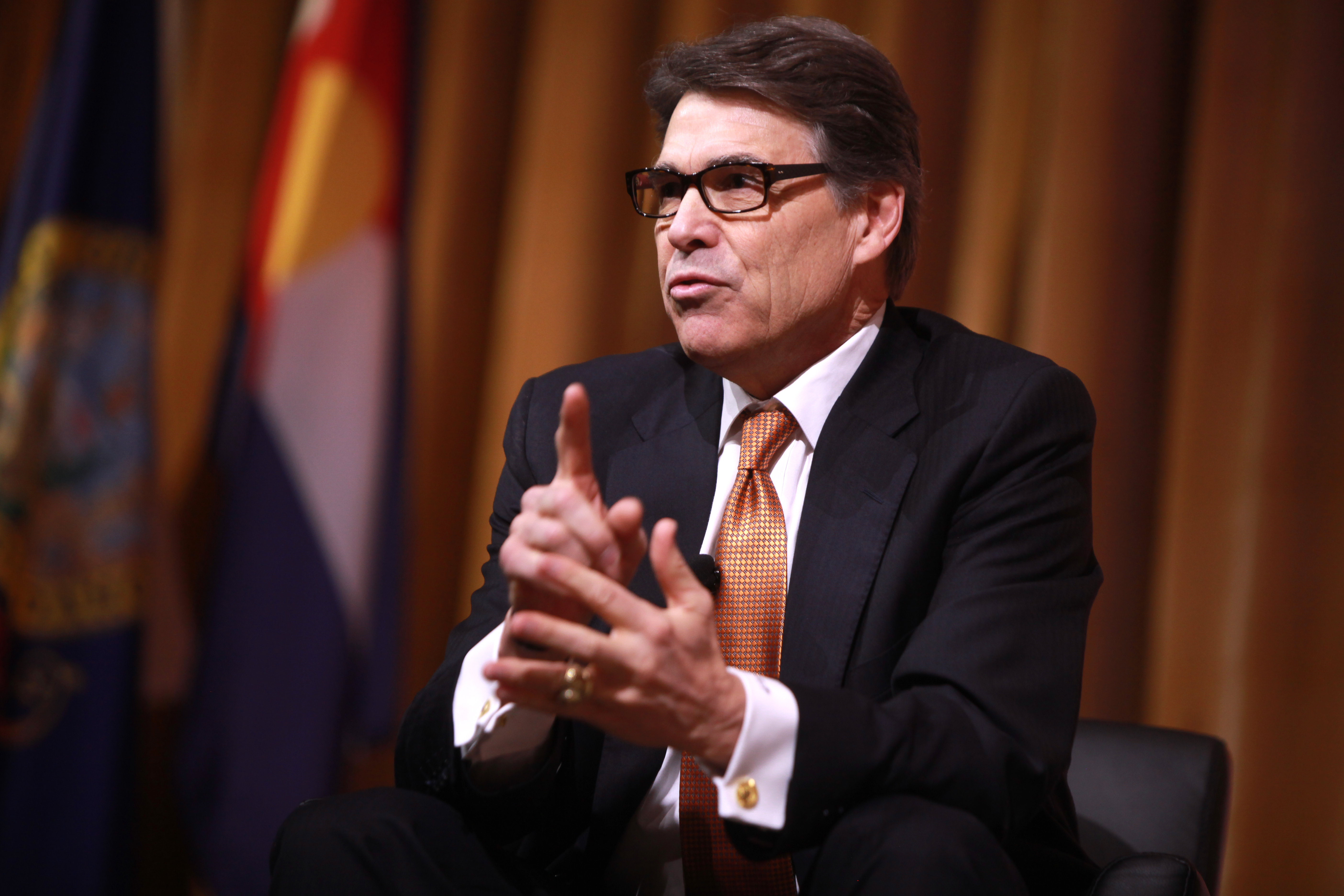


Turn out the lights, Gov. Perry

Rick_Perry_by_Gage_Skidmore_9

The late “Dandy Don” Meredith would sing, “Turn out the lights, the party’s over,” whenever a team was getting blown out on Monday Night Football telecasts.

It now appears that another Texan, former Gov. Rick Perry, may need to follow that advice, according to those who say they’re in the know.

Perry is out of money. He has quit paying his campaign staff. His second run for the presidency of the United States is likely to end perhaps before the first actual Republican Party primary contests in Iowa and New Hampshire.

A part of me wishes it wouldn’t end.

Perry worked quite hard in the period between his first presidential run and this one to rehabilitate his image. His first effort ended in early 2012 after the infamous GOP debate “oops” moment. This time, he was better prepared. But the primary faithful began tuning into other candidates. Indeed, there are 16 others running for the party’s presidential nomination.

Perry said this week he’s “in it to win it.” Sure he is. That’s what you expect him to say.

However, even after his blistering critique of GOP frontrunner Donald Trump’s bizarre pronouncements, his own well-defined message and the “retail political” skill he employs in meeting and greeting potential voters — a skill he honed to perfection while being elected to three full terms as Texas governor — he remains far back of the front tier of GOP candidates.

The winnowing of this large Republican field will begin in due course. It might be soon.

As one New Hampshire Republican said of Perry, “He is out of money and out of time.”

Is the party over? Looks like it from here.


Ballpark … or no ballpark?

I’m still trying to wrap my head around the debate over whether to put a ballpark near the heart of downtown Amarillo.

It’s called the multipurpose event venue. MPEV, for short.

It’ll be up for a key decision on Nov. 3. The city will ask voters if they want the MPEV to include the ballpark. If they say “no,” the ballpark won’t be built; a “yes” vote, of course, means what it says.

I believe the ballpark is a good deal. It can be a potentially great deal if we use our imagination, employ some creativity and relearn how we can enjoy the downtown district.

I keep hearing numbers about the cost of the MPEV. It’ll be around $32 million. The city plans to issue bonds to pay for it. It plans to retire those bonds with hotel-motel tax revenue and lease payments from the tenant who agrees to run the place. Bill Gilliland and Laura Street, a pair of big-hitter fundraisers, told the City Council they have received pledges totaling around $2 million from private contributors; there might be more in the wings.

Amarillo’s political/business/civic brain trust isn’t reinventing the wheel with this downtown ballpark concept. Cities all across the country — big cities and mid-sized cities, just like Amarillo — have enjoyed varying degrees of success with downtown ballparks.

There’s nothing particularly original or groundbreaking in the city’s effort to revive its downtown district.

Now, for the record, I’m not going to suggest that Amarillo can copy cities such as Oklahoma City in developing a downtown ballpark. The OKC project was paid for with a public tax levied specifically to raise money for the construction of that city’s ballpark in its Bricktown district. And I am acutely aware that OKC is a much larger city.

If we step back, though, we need to understand that no one with a lick of sense is suggesting that Amarillo’s downtown project can function on the same level as the one in OKC. It can, though, function nicely at its own level.

The MPEV as it’s been presented does represent a step forward for the city and presents a fascinating opportunity for the city to progress to some next, and perhaps largely still undefined, level.

Indeed, this project requires a leap of faith. I am prepared to take that leap.

Open White House race = many candidates

alGore_1515233c

Here’s a fact of political life in America.

When there’s no incumbent involved in a campaign, you invite all comers to seek the office that’s being vacated. Everyone, or so it seems, becomes interested in the office at stake.

Such is the case with the White House. A two-term president, Barack Obama, is prohibited from running again. He’s bowing out in January 2017. The Republican field is as full as I’ve seen it in more than four decades watching this stuff; 16 men and one woman are running on the GOP side. It’s becoming quite an entertaining spectacle — to say the very least.

The Democrats? Well, until about two, maybe three weeks ago, it seemed that Hillary Clinton had that nomination in the bag. She still is the heavy favorite.

But she’s not going to anointed as the party nominee next summer, or so it appears. Vermont U.S. Sen. Bernie Sanders has closed a once-huge gap. Former Maryland Gov. Martin O’Malley is taking aim at Clinton, as is ex-Rhode Island Gov. Lincoln Chafee. We haven’t heard much yet from ex- Virginia U.S. Sen. Jim Webb.

But now we hear of a couple of big names — as in really big names — possibly entering the Democratic Party primary field.

One of them is Vice President Joe Biden.

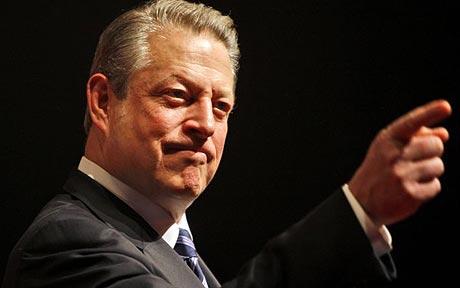
The other? Get ready: It might former Vice President Albert Gore Jr.

Some media outlets are reporting that “insiders” are discussing the possibility of a Gore candidacy. My reaction? Holy crap!

He damn near was elected in 2000, winning more popular votes than George W. Bush, who was elected because he won a bare majority of electoral votes. What many folks have forgotten about that election is this: Had the vice president won his home state of Tennessee in 2000, there would have been no recount controversy in Florida, no “hanging chad” examination, no narrow Supreme Court ruling to determine who won that state’s critical electoral votes. Gore lost his home state to Bush. There you have it.

This election already is shaping as the most entertaining in at least a couple of generations. The thundering herd of Republicans is being overshadowed by a billionaire hotel mogul/entertainer/wheeler-dealer. The Democratic field is being dominated by a self-proclaimed “democratic socialist” drawing huge crowds and a former secretary of state with growing problems stemming from her use of a personal email account to conduct State Department business.

Will two men who’ve served a “heartbeat away” from the presidency now join the field?

We know that Vice President Biden is considering it. As for Al Gore? Stay tuned and hang on … maybe.


Mayor Harpole hamstrung by state law

harpole

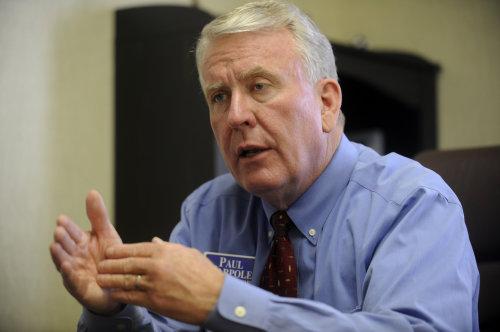
I had the distinct pleasure today of watching Amarillo Mayor Paul Harpole pull his punches so tightly he almost hit himself in the face.

He stood before the Rotary Club of Amarillo and talked about all the projects that are on-going throughout the city that have nothing to do with downtown redevelopment. But then he would remind Rotary Club members that, yes, there’s this thing called downtown revitalization that’s got him all fired up.

Indeed, he seemed wound tighter than a cheap watch today as he blazed through his luncheon program talking about highway access improvements, Loop 335 expansion, utility installations, drainage excavation, improvements to interstate access.

But you see, state law is kind of quirky. As mayor, he is not allowed to advocate for issues that are set to be voted on in an election. He presented himself today as mayor, which meant only that he could give us information about downtown revitalization.

You could tell — heck, it’s been all over the media — that he’s solidly behind the effort to revive downtown Amarillo. The package that’s been presented will proceed with a downtown convention hotel and a parking garage. During his presentation today at the Rotary Club meeting, Harpole showed slides of what the downtown district will look like when it’s done. He believes a key component to the city’s effort remains the multipurpose event venue — in its proposed configuration, which includes a ballpark.

But that state law prohibited him from proclaiming loudly and proudly what he really thinks of the MPEV.

That’s OK, Mr. Mayor. I got the message.

MPEV debate to turn on ballfield

Amarillo MPEV

It now appears that the Amarillo municipal election referendum this November is going to turn on a specific issue.

Should the city build a multipurpose event venue that includes a ballpark?

I say “yes!” With emphasis.

So, the MPEV-with-ballpark has at least one vote. I’m guessing it’ll get many more when the time comes to vote on it.

But the question came to me today from an Amarillo Millennial Movement member who wanted to know how they can sell the MPEV as it’s been proposed during the next 90 days. Honestly, I have never planned a campaign strategy and I don’t intend to do so now.

But I’ll just say that I am hearing from friends, acquaintances and others who want to talk about that they think the ballpark isn’t needed. They think the rat hole stadium at the Tri-State Fairgrounds is sufficient. It isn’t.

I happen to believe that a downtown venue for some minor-league baseball is a capital idea. And, yes, it can — and must — be used for other events. What might those events be? I will rely on the marketing geniuses around the city, the Panhandle and even the state to figure that out.

Outdoor concerts? Sure. A flea market … maybe? It’s been done.

Perhaps local high school teams could play ball during their regular season. There might even be an open date or two — or perhaps more — for the West Texas A&M University baseball team. Or perhaps the WT women’s softball team. Or maybe even some local high school softball teams.

I understand fully that these events don’t often draw more than a handful of fans. However, is that the way it has to be?

The world is full of opportunities.

I was heartened to hear from the newly elected City Council members this week that they favor an MPEV in some incarnation. They remain skeptical of the ballpark element.

I will continue to argue that a ballpark is a feasible attraction for downtown Amarillo. However, it’s going to require some creativity and some marketing genius to make it work as well as it can for the city.

If voters say “no” in November, my next-best hope is that the city can come up with a Plan B in a hurry and keep its downtown revival project moving forward.


Gasoline projected to drop … then it spikes up!

No sooner than I finished reading reports about projected steep declines in the price of gasoline in the United States …

Then the price of unleaded regular gas spikes up 15 cents overnight in little ol’ Amarillo, right here in the heart of the Oil and Natural Gas Patch.

What gives with that?

One of the reports I read said the price decline can be attributed to a number of factors:

* Automakers are making more fuel-efficient cars. My wife and I are driving one now, a Toyota Prius. We’re doing our part.

* There’s a glut of higher-quality gasoline that needs to be used up. Once that supply is gone, then refiners are going to start turning out lower-grade gasoline, which will sell for less than the better quality go-juice.

* Alternative energy sources are becoming more of the norm across the country. The wind and the sun are heating and cooling more homes, although Texas — one of the sunnier places in the country — needs to get more involved in the solar energy game.

I always have trouble trying to figure out the gasoline pricing structure in Amarillo and the Panhandle. A friend who owns a chain of convenience store/gas stations has tried to explain it to me. It has something to do with the price he pays wholesalers for the gasoline he sells at his stations.

I’ll admit, though, to being annoyed when I read about consumer price projections — only to watch the price of the commodity at issue going in the other direction.

I guess I just need to settle down.


Texas set to welcome grand jury reform

Grand juries do important work.

They determine whether individuals have committed a crime worth prosecuting. They receive criminal complaints, listen to evidence presented by prosecutors, occasionally call witnesses … and then grand jurors deliberate among themselves about the fate of the individual named in the complaint.

Do they prosecute or do they decide there’s insufficient evidence to follow through?

It’s important, but it’s not rocket science. It does not require special training. And to be chosen for a grand jury, one need not rely on judges picking jury commissioners, who then select their friends, acquaintances or professional associates to serve on the grand jury.

The state’s antiquated grand jury selection system is set to change effective Sept. 1. Texas will allow grand juries to be chosen by the same method it chooses trial juries.

The Legislature enacted a bill, which Gov. Greg Abbott signed into law, that eliminates the “pick a pal” system that critics said left the old system open to possible conflict of interest. If a judge wants to “get” someone, he or she can pick jury commissioners who then can look for individuals to serve on the grand jury who might be disposed to follow through with the judge’s desire.

Is such a scenario rampant in Texas? I haven’t heard of it. But the random selection method, where grand juror are picked from voter registration rolls, eliminates the possibility of stacking a grand jury.

“It sort of cancels out the previous system whereby the judges simply picked people that he or she knows or feels comfortable with, and I think we’ve seen the result of that,” said Douglas Smith, a policy analyst for the Texas Criminal Justice Coalition. “Grand juries tend to be white, they tend to be older, so they tend not to represent the broader perspectives in the community.”

And so, with a random selection method enacted, grand juries perhaps can more accurately reflect the communities they serve.

This is a needed reform of the Texas criminal justice system.


ISIL’s rise: It’s Obama’s fault?


Jeb Bush

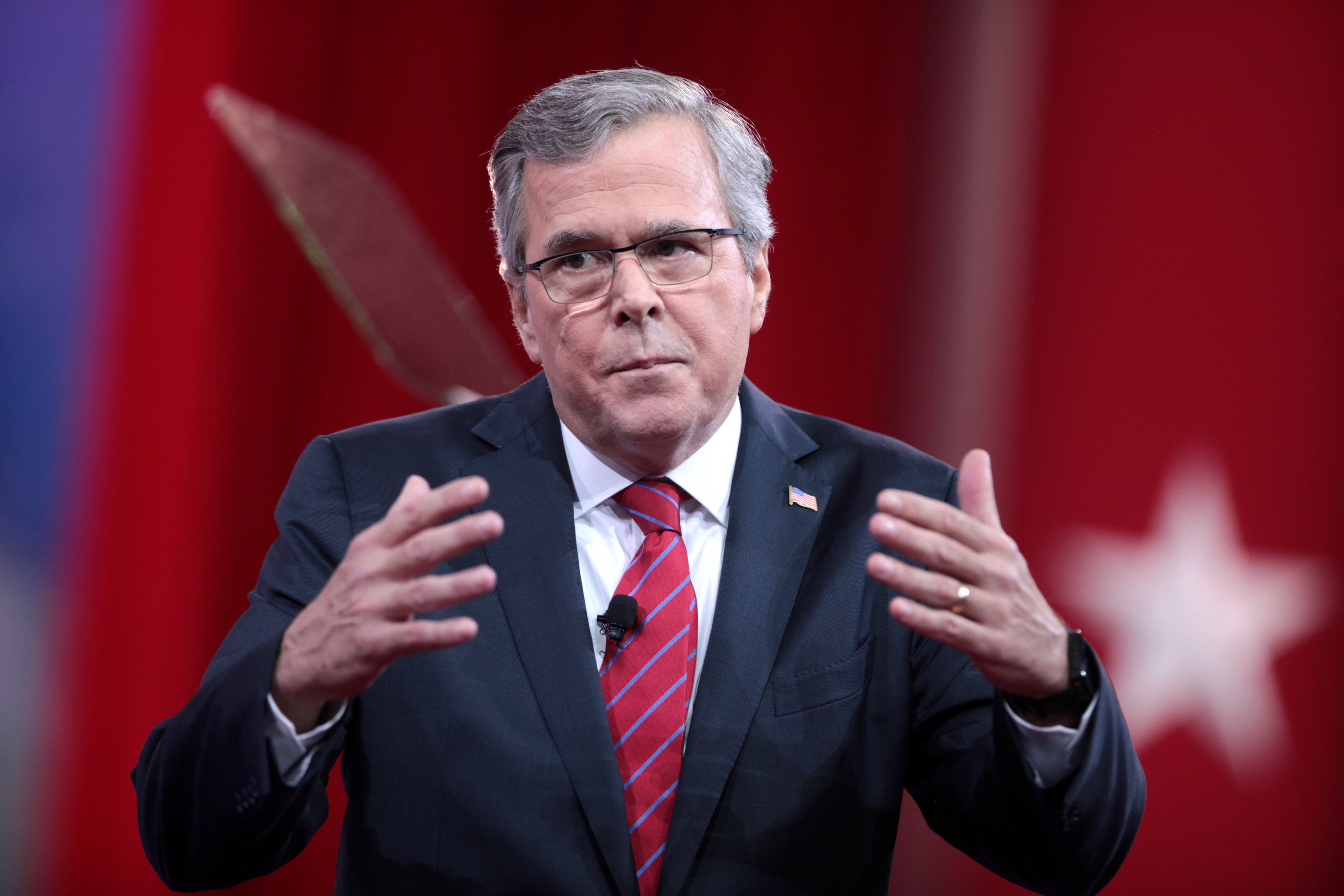
Jeb Bush is trying a remarkable misdirection play as he seeks the Republican Party’s presidential nomination in 2016.

The former Florida governor sought in a speech at the Ronald Reagan Presidential Library to blame former Secretary of State Hillary Clinton and President Barack Obama on the rise of the Islamic State in Iraq and, I presume, in Syria as well.

Well now. Let’s look at the record for a moment.

The Iraq War began in March 2003 when President George W. Bush launched the invasion of that country, which at the time was governed by a Sunni Muslim tyrant, the late Saddam Hussein. (Hang with me for a moment; the Sunni reference is critical.)

Americans were told by those high up in the Bush chain of command that we’d defeat the Iraqis easily and we’d be welcomed as “liberators.”

Didn’t turn out that way.

Yes, we defeated the so-called “elite” Iraqi forces. We drove Saddam from power. We caught him later in that spider hole, pulled him, jailed him, put him on trial, convicted him and then hanged him.

All of this was done on Jeb’s brother’s presidential watch.

Then came the new government. Iraqis elected a Shiite leader, who formed a Shiite government.

Oh yes. The Sunnis hate the Shiites and vice versa. The Islamic State — aka ISIL — is a Sunni cult.

Thus, ISIL was born — on President Bush’s watch.

Now, though, the next Bush who wants to be president, says it’s Obama’s fault. It’s Clinton’s fault.

Why? We didn’t maintain a sufficient troop garrison in Iraq to keep ISIL in check. I ought to mention that the Bush administration set the deadline for full withdrawal from Iraq.

Jeb Bush now says he would send troops back into Iraq, in effect restarting a war that we shouldn’t have fought in the first place. Weapons of mass destruction? Hideous chemical weapons? The threat of a “mushroom cloud”? It was bogus.

I’m not yet ready to declare that the pretext for war was concocted deliberately by the Bush administration high command.

Let’s just say for now that “faulty intelligence” isn’t much of an excuse for sending thousands of American service personnel to their death in a war designed to overthrow a sovereign leader who we had kept in check through a series of tough economic sanctions.

Jeb Bush is treading on some squishy ground whenever he mentions the words “Iraq War.”


Some sensibility returns to City Council

amarillo hotel

Well, just when some of us — me included — thought the Amarillo City Council had driven itself into the proverbial ditch, common sense reared its head at City Hall.

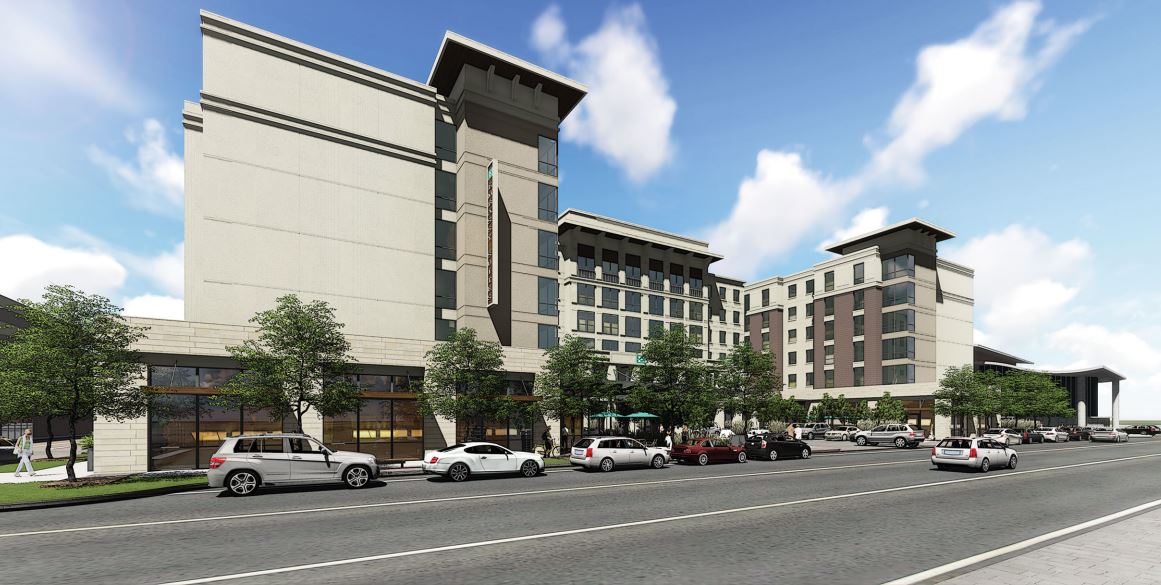
The council voted 3-2 Tuesday to proceed with construction of a downtown convention hotel and an adjacent parking garage.

I’m beginning to breathe a bit more easily with this news.

Joining the common-sense majority was new Councilman Elisha Demerson, who voted along with Councilman Brian Eades and Mayor Paul Harpole to begin work on the twin projects.

Councilmen Mark Nair and Randy Burkett voted “no” on the garage-hotel tandem project, saying they oppose the idea of using public money to compete with private, for-profit enterprise.

This, though, is a classic public-private partnership. Any major economic development effort ought to include some public investment. The city wants to kick in $5 million to help develop retail space in the parking garage — but it will get that money back when it fills that space with successful retailers.

Who benefits from the increased business and the revenue it generates? Let me think. Oh yeah … the public!

The biggest of the three-pronged downtown revival project, the multipurpose event venue, remains in question. Voters will decide on Nov. 3 whether to build an MPEV that includes a ball field. Interestingly, all five council members say they support the concept of a downtown MPEV, but three of them — Demerson, Burkett and Nair — disapprove of the ballpark being part of it.

Therein lies the crux of the disagreement … that and the idea that the city would issue public bonds to build it.

But here’s where — in my view — their anti-MPEV argument falls apart: The city will retire the bonds with revenue derived from guests staying at that downtown hotel, guests at other hotels all across the city and lease payments from whoever agrees to run the MPEV.

The vote Tuesday also provides Potter County with some much-needed parking space and opens up retail opportunities. Imagine for a moment the possibility that retail business could return to the downtown district. Doesn’t that possibility whet the appetites of those who seek to make downtown an attraction instead of a stop along the way to somewhere else?

I am somewhat encouraged by the reason that prevailed at City Hall.

Let’s proceed now with a reasoned, rational and responsible debate on the merits of the MPEV.

Commentary on politics, current events and life experience