How about a State of the City speech, Mr. Mayor?

Councilmen_2015

I’ve asked this before, and didn’t get much reaction to it.

Why doesn’t the Amarillo mayor deliver an annual State of the City speech?

Governors give State of the State speeches. And, yes, some mayors craft annual speeches on the state of the cities they govern.

Not here.

I once broached the idea out loud and then-Mayor Debra McCartt gave what I believe was a single speech. I can’t remember its content, which I guess might be why mayors here don’t bother with such speeches.

However, the city has gone through quite a lot of change in the past 10 months.

We elected three new City Council members, the city manager quit, as did the city attorney; the assistant city manager retired. We had a municipal referendum on the ballot this past November on whether to support construction of a $32 million multipurpose event venue/ballpark downtown; voters approved it.

A lot of work is ongoing.

State transportation department crews are digging up highways all around the city; we’re going to get a new western segment of Loop 335 installed; the southern portion of the loop also is under construction; streets are torn up.

We’re getting a new downtown hotel and parking garage.

Why doesn’t Mayor Paul Harpole — and then future mayors — make it part of their official duty to inform us at the start of every calendar year about the state of the city?

We’ve got a Civic Center that could serve as an appropriate venue. We have public access television provided by our cable network to televise such an event.

Amarillo residents keep getting battered by the media — and I include myself here — for failing to vote in sufficient numbers. Do we not care to know how our city is faring?

Consider this yet another request for the mayor to give us the nitty-gritty on how Amarillo is progressing. And I’m even open to hearing where the city has fallen short and how the mayor intends to make it right.
 

Penn fails to make the case

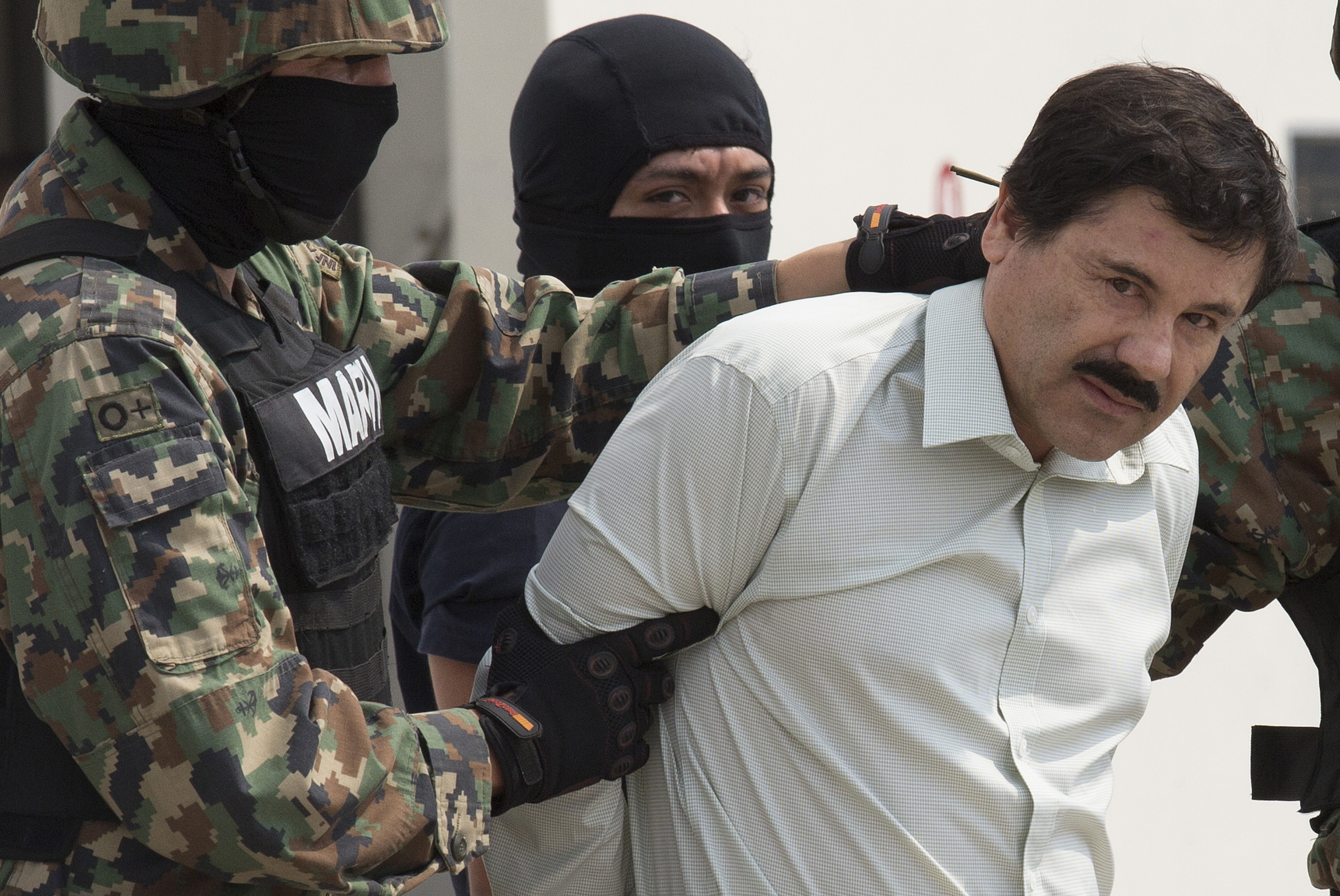
Bloomberg's Best Photos 2014: Drug trafficker Joaquin "El Chapo" Guzman is escorted to a helicopter by Mexican security forces at Mexico's International Airport in Mexico city, Mexico, on Saturday, Feb. 22, 2014. Mexico's apprehension of the world's most-wanted drug boss struck a blow to a cartel that local and U.S. authorities say swelled into a multinational empire, fueling killings around the world. Photographer: Susana Gonzalez/Bloomberg via Getty Images

Sean Penn invented a word last night on “60 Minutes.”

He called himself an “experiental” journalist.

I’ve been working with words for, oh, damn near 40 years. I consider myself a journalist. I worked at four newspapers in two states. I enjoyed some modest success during my career.

“Experiental”? What the . . . ?

Penn is a movie actor of some renown. He recently ventured to Mexico, where he shook hands with Joaquin Guzman, aka El Chapo, the then-fugitive drug lord; he had escaped in early 2015 from a maximum security prison in Mexico. Penn interviewed this supremely evil individual for a 10,000-word article he wrote for Rolling Stone.

I watched with considerable pain in my gut as Penn sought to explain to CBS News correspondent Charlie Rose what he hoped to accomplish by writing a story about El Chapo, who was recaptured by Mexican authorities the day after the magazine article hit the streets.

I think I heard a tinge of sympathy in this guy’s voice as he tried to relay Guzman’s reasons for peddling drugs, for delivering so much misery to so many millions of people, for being responsible for the deaths of thousands of individuals with whom he has come in contact.

I also believe I detected a look of incredulity in Rose’s face as Penn offered his explanations.

And then Penn would drop that hideous, made-up adjective that he put in front of the word “journalist.”

This thought doesn’t come from me, but I’ll pass on what a friend of mine said this morning on social media.

My friend, too, is a trained journalist. He wants to know if he can now seek to become an “experiental movie actor.”

***

This just in: I’m advised that “experiental” is a real word. I stand corrected on that particular point.


MLK Jr.’s dream still unfulfilled

gty_march_on_washington_martin_luther_king_ll_130819_16x9_992

Banks are closed today. We won’t get any mail. The nation is observing the birthday of one of our greatest Americans.

Dr. Martin Luther King Jr. would be 87 if he were alive today.

His life came to a violent end on April 4, 1968. Yet we remember him today for the message he left behind, which was to seek change through peaceful means.

His greatest moment during his brief time among us? It had to be that speech on Aug. 28, 1963, at the Washington Mall, under the shadow of Abraham Lincoln’s Memorial.

We know it as the “I Have a Dream” speech. It’s been reported before but I want to mention it once again here.

The guts of the speech — the part of it that resonates to this very day — was delivered extemporaneously.

The first two-thirds of Dr. King’s address was fine. It flowed nicely.

Then came the rhetorical riff that stands for all time. The part where he told us of his dream that black children and white children can play together, how the world could sing out “Free at last, thank God almighty, we are free at last!”

Watch it here.

The improvisation came reportedly at the urging of legendary gospel singer Mahalia Jackson, who was on the podium with Dr. King and others that day. “Tell them about your dream, Martin,” she urged the great man.

And he did. He delivered. The world cheered at that moment.

Yes, we’ve made great strides since then. Congress has passed laws guaranteeing all Americans their basic civil rights and the right to vote. We’ve witnessed symbols of racial oppressions taken down from public squares. We have blended public school systems that had been separated by the race of students.

More work remains. Perhaps there will always be work to do.

However, today we remember a young Baptist preacher whose soaring rhetoric took a nation a huge step forward to the day when our dreams indeed will come true.

Happy birthday, Dr. King.


Hillary says she’ll ask for Bill’s advice . . . duh?

hillary clinton

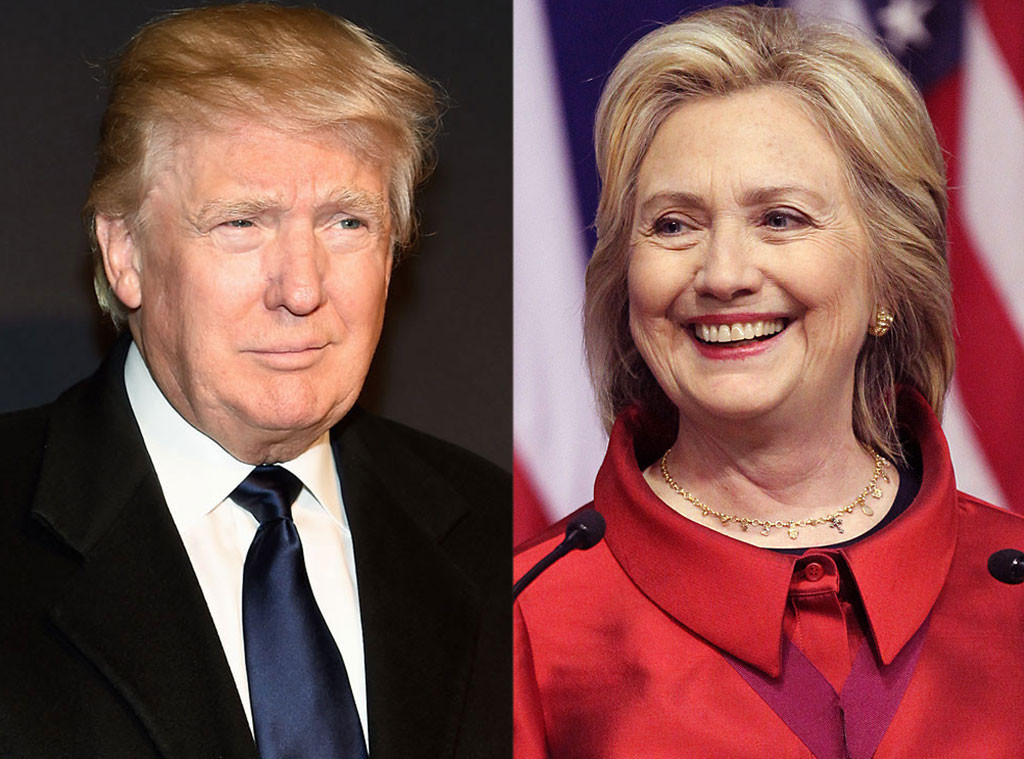
This might qualify is a dumb question.

It came Sunday night during the Democratic Party presidential debate and the questioner wondered whether Hillary Rodham Clinton would seek the advice of the 42nd president of the United States.

Wow! Do you think?

Why wouldn’t she? Bill Clinton left office in January 2001 with a 65 percent approval rating, and that was after he’d been impeached by the House of Representatives.

I totally understand that the former president had, um, some issues relating to a certain White House intern. I’m also aware of the official reason for the impeachment, that he committed perjury to a federal grand jury that asked him directly about the relationship.

But let’s get real here. Bill Clinton’s presidency was a rousing success. Was it totally free of tragedy? Of course not.

However, if the former first lady/U.S. senator/secretary of state is elected this November as the nation’s 45th president, she’d be stupid beyond belief not to enlist the advice of her husband.

Bill Clinton presided over eight years of superb economic growth in this country. The president — with support from Congress — managed to balance the federal budget and left office with the budget operating in the black for the first time since seemingly forever.

Is the former president’s advice worth obtaining?

Yeah, I kind of think so.


GOP contest is a two-man match race

rs-trump-cruz

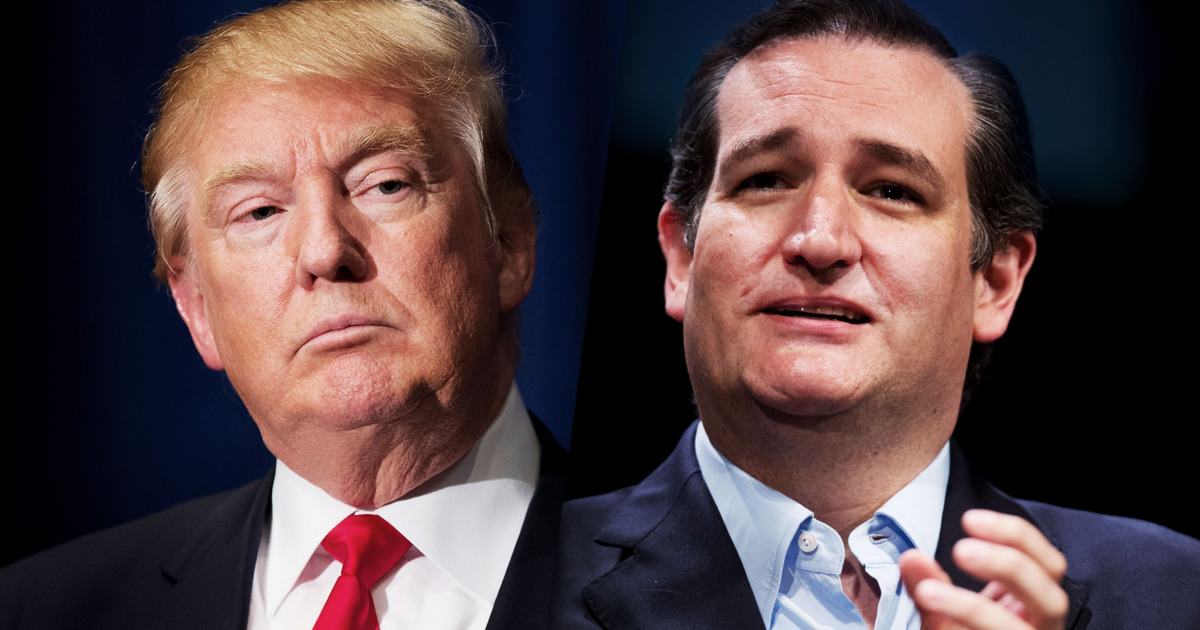
Will Rahn, writing for the Daily Beast, has concluded that the Republican Party presidential primary campaign has settled into a two-man race.

It happens to comprise perhaps the two unlikeliest candidates of the field . . . but there’s a third highly unlikely guy out there who’s been left in the dust.

Donald J. Trump vs. Ted Cruz.

That’s who the GOP has left to decide in this primary battle, Rahn writes.

A part of me is saddened  by that possibility. Another part of me wonders if either Trump or Cruz really and truly can defeat whomever the Democrats nominate.

It’s looking a bit dicier at this moment for one-time prohibitive Democratic favorite Hillary Rodham Clinton. She once was thought to be invincible. No longer.

Still, I am trying to grasp the notion of either Trump or Cruz being able to defeat Clinton in a national election. I cannot get there.

Both men represent the so-called “outsider” wing of the party, even though Cruz has been a member of the U.S. Senate since January 2013; I guess that means he isn’t an entrenched member of Congress.

The once-enormous GOP field had a number of highly qualified individuals seeking the presidential nomination. My favorites, if you consider their skill and experience, were John Kasich, Jeb Bush, Marco Rubio, Chris Christie and Rand Paul. They remain my personal favorites.

Then we had Ben Carson, the retired pediatric neurosurgeon seeking election to the only public office he’s ever sought. He isn’t qualified and that’s all I intend to say about that.

The rest of the field? I’ll just shrug.

We’re going to be left with Trump and Cruz fighting it out to the end, says the Daily Beast writer.

It appears to me at least that the Republican Party is morphing into a political organization that some truly great Americans — Dwight Eisenhower, Ronald Reagan and Barry Goldwater — wouldn’t recognize.


What’s with this ‘national poll’?

polls

More often than not I’m going to look carefully at public opinion poll results.

In this election season, we’re being inundated with them. Republican-leaning polls say one thing; Democratic-leaning polls say another. I prefer to look most closely at polls unaffiliated with either party, or certain ideological think tanks, or media outlets I know to have bias in either direction.

But one recent poll has me wondering: Is this one even relevant to anything?

Hillary Clinton leads Bernie Sanders by 25 percentage points nationally, according to a poll released by NBC News and the Wall Street Journal.

The relevancy issue?

Well, consider a couple of things.

They’re both running for the Democratic Party presidential nomination, which means that they’re not going to face each other in a national election. Therefore, they are battling state by state: Iowa, then New Hampshire, then South Carolina . . . and on it goes.

They’ll get to Texas in early March.

Therefore, whether Clinton beats Sanders by a single percent or a million percent in a national poll doesn’t matter one bit.

How are they faring in each state?

The poll does compare the candidates’ chances against a potential Republican nominee and it shows Clinton faring better against the GOP foe than Sanders.

That’s relevant, I guess.

However, these polls pitting one candidate against the other running in the same party primary simply doesn’t register with me.


So very wrong about Campaign ’16 . . . so far

rs_1024x759-150709052426-1024.Donald-Trump-Hillary-Clinton-JR-70915_copy

I’ve said it more times than I can remember, which is that I’m wrong far more frequently than I am right.

My political prognostication skill has been exposed for what it is: shaky . . . at best.

Thus, I am prepared to acknowledge how wrong I’ve been about the current campaign for the presidency. My wrongness tracks along both parties’ trails.

First, the Republicans.

Donald J. Trump’s candidacy has withstood the candidate’s own serious shortcomings as a presidential aspirant, let alone his actual ability to govern.

Never in a zillion years did I think he’d still be in this campaign — let alone leading the GOP gaggle of candidates — after the countless insults he has hurled along the way.

Sen. John McCain’s valor during the Vietnam War doesn’t make him a hero? The ridiculous back/forth with broadcast journalist Megyn Kelly during the first presidential debate? His assertion that he’ll build a wall along our southern border and force Mexico to pay for it? His revealing Sen. Lindsey Graham’s cell phone number? His proposal to ban all Muslims from entering the United States? His assertion that he witnessed “thousands of Muslims cheering” the collapse of the World Trade Center on 9/11?

OK, I’ve left some of ’em out.

Despite all that, this guy continues to lead the pack.

Anger among GOP voters? That’s what is moving this man forward? If that is the case, then the Republican Party “base” is lost its sanity.

During President Obama’s State of the Union speech, I tried to imagine Donald Trump standing at that lectern offering high-minded, soaring rhetoric designed to lay the groundwork for how he intends to govern. Imagine him as well standing on the steps of the U.S. Capitol next January offering his inaugural speech to the nation as its 45th president.

All I hear coming from this guy are blustering, blistering insults.

Is that really what we want in the next president of the United States? Our head of state? Our commander in chief?

Now for the Democrats.

I once thought Hillary Rodham Clinton’s nomination was a shoo-in. She had it locked up. Nothing, or no one, would derail the Hillary Express on its way to the nomination and to the White House.

Then came Bernie Sanders, the democratic socialist with a campaign theme that has resonated with his party’s base. Break up the big banks, de-fang the Wall Street power brokers, spread the wealth around, lift up everyone’s wages and reduce the income gap between the very rich and the rest of the country.

Republicans have made a lot of hay over Benghazi, which has become a form of political shorthand that means: Clinton lied about what she knew about the attack on the U.S. consulate in that Libyan city. There’s a congressional select committee that’s still looking for something to torpedo Clinton’s presidential campaign.

Meanwhile, Sanders — the independent U.S. senator from Vermont — is drawing huge, enthusiastic crowds. He’s ahead by a good bit in New Hampshire, the site of the nation’s first primary vote and is now virtually tied with Clinton in Iowa, which is about to kick off the voting with its caucuses.

Do I believe Hillary Clinton will be denied the nomination? No. But it sure ain’t the coronation I thought it would be when this campaign began.

Let me add, too, that I do not believe Donald Trump will be the Republican nominee. I have some faith — although it’s been hammered — that the Republican Party brass comprises reasonable, intelligent and sane men and women who understand the consequences of nominating someone whose main skill lies in his ability to insult anyone who disagrees with him.

I don’t like acknowledging how wrong I have been.

Still, I feel better now for saying so out loud.


Anger: It’s strewn all along the campaign trail

articleLarge

I guess you can sum up the tone of the 2016 presidential campaign with a single word.

Anger.

I might live in a dream world, although I doubt it. Donald J. Trump, the leading Republican presidential candidate, and Bernie Sanders, the surprising Democratic candidate, apparently have tapped a vein that neither of them would be able to find on my body.

Voters are angry with the status quo. They hate politics and politicians. So, many of them are turning to so-called “outsiders” for relief from what they say ails the nation.

Isn’t that interesting? Ironic, too, if you want my take on it.

Trump and Sanders by the very definition of the word are politicians. Never mind that Trump made his fortune selling real estate, developing ritzy hotels and appearing on reality TV. Or disregard that Sanders has been a small-town mayor, member of the U.S. House of Representatives and now is a U.S. senator. They’re not “politicians” the way we’ve understood the word.

To quote the great fictional TV character U.S. Army Col. Sherman T. Potter: buffalo bagels!

They both are pursuing the granddaddy of American political offices, the presidency. Thus, they are politicians. Let’s stop pretending they aren’t, OK?

I don’t know what’s fueling the anger. From my vantage point, I remain the eternal optimist. Our national economy has recovered; we remain the strongest nation on the planet — by a mile, maybe two; we have avoided another 9/11-style terror attack since that hideous event more than 14 years ago; the price of gasoline is falling; we’re making strides in protecting our environment; our budget deficit has been cut by three-quarters.

And people are angry?

I believe the gloom-and-doomers have won the national shouting match. They’ve out-yelled the rest of us who, by our very nature, are not inclined to rouse rabbles and raise hell.

So, people are sick and tired of politicians.

Well, all right then.

The nation will be hearing a lot more from those purporting to be outsiders and those who have some actual experience running a massive government.

You may choose to believe — or disbelieve — this final point. I am willing to listen to the outsiders. I want to hear their solutions. I also am willing to consider all they have to offer.

The late House Speaker Tip O’Neill used to say “all politics is local.”

I believe, though, that for me politics is personal. I am happy with my lot in life, with the direction my life is taking. I believe I have it within my power to guide my own destiny.

Government is not in the way. It does not threaten me or those I love.

I also know that there will be those who read this blog who will call me “naïve,” “Pollyanna,” “ignorant,” “bleeding-heart” . . . whatever. Fine. Go ahead.

I’ll let the shouters keep trying to drown out the rest of us. I also am awaiting to hear some semblance of a solution from any of them.

First, they need to persuade me that we need one in the first place.

I’m all ears.

Complicated relationship may get really testy

460x

The world is full of complicated bilateral relationships: Greece and Turkey, India and Pakistan, Israel and Egypt.

A pair of nations, though, may have witnessed an event that makes their stunningly complex relationship even more so.

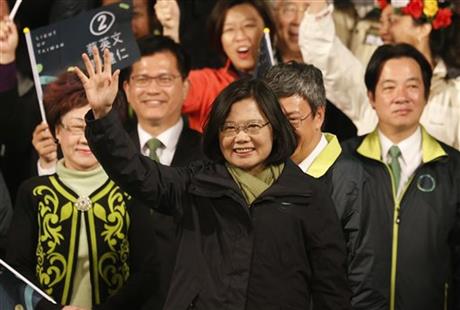
Taiwan has just elected its first female president, Tsai Ing-wen. It’s not her gender that complicates matters. It’s her longstanding support for something that sends government officials in the People’s Republic of China into orbit: Taiwanese independence.

Tsai leads the Democratic Peoples Party, which long has advocated that Taiwan declare its independence from the PRC.

However, there’s this tiny problem (actually, it’s huge). China considers Taiwan to be a “renegade province” that belongs to the mainland government, the communists who took over the country in a bloody civil war right after World War II.

The Kuomintang, which governed China, fled to Taiwan in 1949 and set up a new government.

For more than six decades, China has declared it wanted Taiwan back. Meanwhile, Taiwan grew into a powerhouse nation all on its own, independent of China.

Tsai’s victory isn’t likely to produce a declaration of independence in the next week, month or perhaps even a year from now.

However, it strains to the max a relationship that had been showing signs of thawing in recent years.

Allow me a bit of personal privilege here.

I’ve visited Taiwan five times as a journalist, dating back to 1989. I returned in 1994, 1999, 2007 and 2010. I have seen a country that has grown tremendously just since my first visit.

Taiwan had functioned under martial law until 1989. The ruling party felt it necessary to impose strict curfews and restrictions on its citizens, given the tremendous threat of violence posed by the giant neighbor on the other side of the Taiwan Strait.

The island has functioned famously since martial law was lifted.

But the threat of military action persists. The Taiwanese officials I have visited over many years have told me they take those threats seriously and have built a muscular military apparatus quite capable of inflicting damage on any nation in the world. The Taiwanese also have a defense pact with another significant nation: the United States of America, which has pledged to come to Taiwan’s defense in the event of war with, um, the PRC.

President-elect Tsai isn’t likely to do anything rash. At least that’s my hope.

Taiwan already is shut out of virtually all international associations: the United Nations evicted Taiwan in 1971 when it admitted the PRC; the United States severed official diplomatic relations with Taiwan when it recognized the PRC; the World Health Organization bans Taiwan’s participation.

The international community follows what’s called a “one-China policy,” meaning that the only “China” it recognizes is the big one, the PRC.

That’s all fine, except that Taiwan is, well, Taiwan. Most of its 24 million residents were born on the island and they have diminishing links with the mainland.

Yes, Taiwanese still speak Chinese. Their names look and sound Chinese. However, the country has developed into an entity that — for all intents — is independent already from China.

The problem remains, though, that it cannot declare officially its independence as long as those big, bad commies on the mainland keep threatening military action.

As China has shown over many years, it doesn’t like being lectured by other nations about how to conduct its affairs.

You want complicated? This Taiwan-China thing goes beyond my understanding of the word.

North Koreans ask for peace treaty?

BBofjOR

There might not a more untrustworthy nation on Planet Earth than the one that occupies the northern part of the Korean Peninsula.

North Korea says it will end its nuclear testing if two things happen: it gets a peace treaty with South Korea, and the South Koreans and the United States end their joint military exercises.

OK, let’s do it. Right now.

Well, that won’t happen. Nor should it, not without a bucket load of assurance from North Korea that it not only would end its nuclear testing, but that it would dispose of the nukes it has in its arsenal.

How does that occur when we’re dealing with someone as unpredictable, vain and utterly contemptible as Kim Jong Un, the guy who runs the world’s most secretive nation?

Kim Jong Un kills those who disagree with him. The people who live in his country are starving to death and yet he continues to pour money that North Korea doesn’t have into a nuclear arms program. He blusters about going to war with the United States of America.

North Korea has long wanted a peace treaty with South Korea. The Korean War, you’ll recall, ended in 1953 with a mere cease-fire. The two sides never formalized the end of the war that cost about 50,000 American lives. It was a brutal conflict involving many nations that came to South Korea’s defense after the Marxist North Koreans invaded the south in 1950.

China joined the fight and fought head-to-head with Americans on some of the most barren and desolate battlefields of the 20th century.

However, more than 60 years after most of the shooting stopped, the two nations — South and North Korea — remain technically “at war.”

Do we  relent and sign that treaty and pull back our military preparedness in South Korea? Not a chance.

If the North Koreans really mean what they say about ending their nuclear testing program, they need to go a lot farther than merely saying they’ll stop exploding nukes. Their record is replete with examples of how their words cannot be trusted.


Commentary on politics, current events and life experience