Downtown’s future takes a hit

downtownamarilloinc1

They’re messing with an agency with a mission to improve downtown Amarillo’s fortunes.

Just the other day came word that interim Amarillo City Manager Terry Childers is considering moving some of Downtown Amarillo Inc.’s economic development duties to an office in City Hall.

My question then was: Why mess with success, given all the good that has happened downtown while DAI has been on task?

Now comes the latest boulder to get tossed into the machinery. DAI executive director Melissa Dailey has resigned.

I’ll admit that I’m not privy to Dailey’s reasoning, but the timing of her resignation — which the DAI board accepted unanimously — suggests some relationship to what the city manager is considering.

DAI board president John Lutz saidĀ that downtown’s future is “bigger than one person.” Fair enough.

Still, this isn’t good news for the city.

I’m not entirely clear about all the issues surrounding Dailey’s tenure at DAI. I’d heard some of the grumbling from those who blame Dailey directly for the Wallace Bajjali fiasco. Yes, Wallace Bajjali turned out to be all hat and no cattle with regard to downtown revival efforts here, but the breakup of the master development company didn’t bankrupt the city.

The two company principals had a huge falling out. One of them, David Wallace, has filed for personal bankruptcy. So they’re gone. Good riddance.

Has downtown’s movement slowed? No. Does DAI deserve to be castigated over the work that’s been done so far? Hardly. It has done well — and so has Dailey. The proof can be seen throughout the downtown district.

However, the non-profit agency now appears to be a target. My strong hunch is that Dailey didn’t want to become collateral damage if the city decides to revamp DAI’s mission.

The city is messing with success.
 

Bernie channels Fritz Mondale

102694294-472283274.530x298

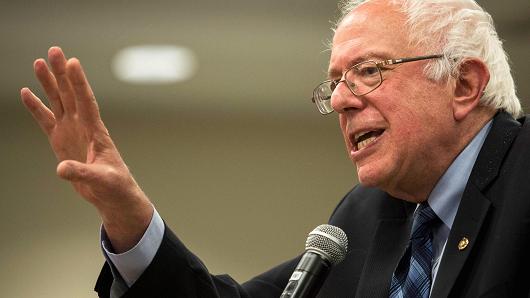
U.S. Sen. Bernie SandersĀ made a pledge last night at the CNN-sponsored Democratic Presidential Candidate Town Hall Forum.

The self-proclaimed “democratic socialist” said he will “raise taxes” to pay for his universal health insurance plan if he’s elected president of the United States.

Interesting, you know?

Here’s why.

The last national politician I can remember who made such a promise was the 1984 Democratic nominee for president, former Vice President Walter F. Mondale.

He stood before the party convention, accepted his party’s nomination and then said that President Ronald Reagan (against whom he ran that year) also will raise taxes. “He won’t tell you; I just did.”

I recall liking Mondale’s honesty at the time. It struck me that it was a bold statement to make.

But how well did it play with American voters that fall?

Not well . . . at all.

The president pulled in 59 percent of the popular vote; he beat Mondale by about 17 million ballots; President ReaganĀ won 525 electoral votes; what’s more, he came within about 2,000 votes of winning all 50 states, losing only Mondale’s home state of Minnesota.

Promising to raise taxes never is a good idea, Sen. Sanders.


Grand jury turns tables on Planned Parenthood foes

Law-Concept-300x270

Grand juries cannot always be depended on to do precisely what some folks want them to do.

Take the case of a Harris County panel that had been impaneled to investigate Planned Parenthood’s activities. The district attorney launched the investigation at the urging of state officials — starting with Lt. Gov. Dan Patrick — into whether Planned Parenthood “sold fetal body parts” in violation of state law.

Today, the grand jury cleared Planned Parenthood of wrongdoing — and instead indicted two anti-abortion activists on charges of “tampering with government records.”

It was a serious surprise.

Here is part of how the Texas Tribune reported the story today:

“The indictments — part of the county prosecutor’s investigation into allegations that Planned Parenthood was illegally selling fetal tissue — include charges against anti-abortion activists David Daleiden and Sandra Merritt for tampering with a governmental record, a second-degree felony that carries a punishment of up to 20 years in prison. The grand jury handed down a second charge for Daleiden for ‘Prohibition of the Purchase and Sale of Human Organs,’ according to the Harris County District Attorney’s office.Ā That charge is a class A misdemeanor that carries a punishment of up to a year in jail.

“The grand jury cleared Planned Parenthood Gulf Coast in Houston of breaking any laws.”

Planned Parenthood has become a whipping child for foes in Congress — and some Republican presidential candidates — over a heavily edited video that purported showing staffers talking about selling organs from babies.

Planned Parenthood, with a mission that goes far beyond assisting women who want to terminate their pregnancies, sees this no-bill from the grand jury as a significant victory in this public-relations campaign being waged against it by political adversaries.

Will this end calls to defund the organization? Probably not. It’s possible that we’ll hear complaints from those who consider this some kind of “political decision.”

Grand jurors lock themselves behind closed doors, listen to presentations by prosecutors and other witnesses. They are charged with weighing the evidence dispassionately and then deliver a decision based solely on what they hear in that room.

Unless I hear otherwise — and grand jurors are sworn to secrecy about what they say and hear during the presentation of evidence — I’ll presume the grand jury did its job properly.

View from atop the tower is quite revealing

MPEV

Amarillo’s downtown district boasts a single structure thatĀ you could call a “skyscraper.”

The Chase Tower looms 31 stories over the city and from that top floor one can get a breathtaking view of our spacious landscape.

When you look east from that tower, though, you don’t have to cast your gaze toward the horizon to see the sure sign of change that’s occurring.

Look down just a bit at the Civic Center, City Hall, at the Globe-News Center for the Performing Arts and you see some serious work being done.

You’ll see two vacant lots that have been cleared out. Look a bit south of those two lots and you’ll notice a new structure rising up from the dirt; that would be the new Southwestern Public Service office complex.

The two lots? They’ll belong to the Embassy Suites convention hotel and a parking garage. Site preparation has begun on those two sites.

Oh, and just a bit farther east, right across the street from City Hall, you’ll see another parcel of property. At the moment it contains some vacated buildings once occupied by the Coca-Cola Distribution Center; the CokeĀ operation has moved to a business park and soon the buildings left behind will be razed to make room for “the ballpark.”

I have the privilege of looking at all that change each week when I attend the regular Rotary Club of Amarillo meetings at the Amarillo Club atop the Chase Tower.

I do enjoy seeing the change from week to week that’s occurring on the sites. The SPS building seems just a tiny bit closer to completion; the convention hotel site and the parking garage lot are getting prepped to a little greater degree.

To be candid, I remain a bit surprised that so much work has been done on these downtown improvement projects. After the tumult associated with this past spring’s municipal election that brought us three new City Council members who didn’t seem as dedicated to the project as their predecessors, I feared the worst. I feared that the work would come to a halt.

It hasn’t.

The multipurpose event venue appears to be inching toward its start; the downtown convention hotel and the parking garage are about to take some form.

Amarillo’s downtown business district is going to reap the benefit of the change that’s coming its way.

As the center of the city improves, you can take my word for it: So will the rest of Amarillo.

Yes, the view from the top floor of the Chase Tower looks mighty grand.


‘2 Corinthians’ gaffe lingers

Bible2

The gaffe that Donald J. Trump committed at Lynchburg University just won’t go away.

Sen. Ted Cruz, Trump’s chief rival for the Republican presidential nomination, took a poke at Trump over the verbal blunder.

The Hill reports:

“Presidential hopeful Ted Cruz joked Monday about rival Donald Trump’s flub of a Bible verse.
“While on the campaign trail in Iowa, Cruz began referencing the biblical verse 2 Chronicles 7:14 (‘Second Chronicles’) before he was interrupted by someone in the crowd at the town hall whoĀ jokedĀ he meantĀ ‘Two Chronicles.’
“Cruz was making light of Trump’s gaffe during a speech at Liberty University last week where he referenced ‘2 Corinthians’ instead of ‘Second Corinthians,’ as it’s commonly known.
“Trump laterĀ blamedĀ evangelical activist Tony Perkins for the gaffe, saying ‘he actually wrote out the 2’ for his speech and adding that people in other places of the world ‘say 2.'”
And to think that President Barack Obama’s critics keepĀ criticizing him forĀ his expert use of the TelePrompter.

Speaking of endorsements . . .

1453708367667

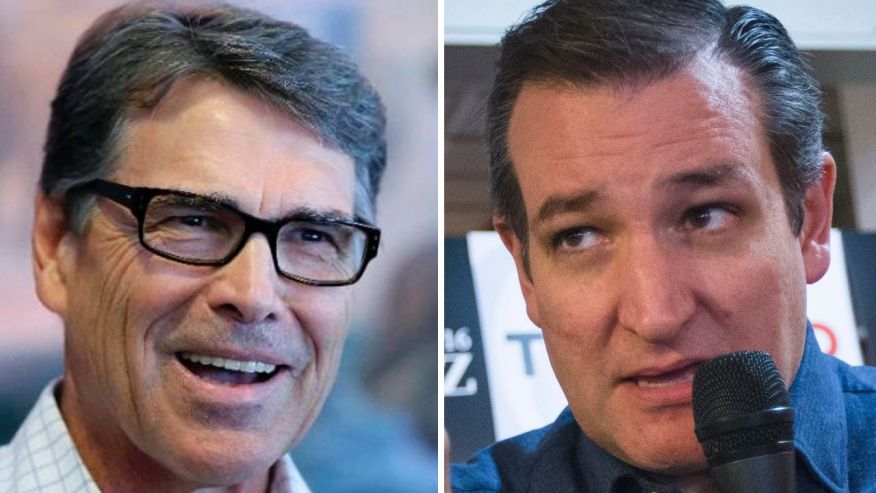
Rick Perry has weighed in.

The former Texas governor believes his fellow Texan, U.S. Sen. Ted Cruz, is the most “consistent conservative” running for president and, by golly, he wins the endorsement of the Pride of Paint Creek.

Is it a surprise?

Not even close.

You’ll recall, perhaps, when Perry — when he was still seeking the 2016 GOP presidential nomination — called Donald J. Trump a “cancer” on the conservative movement.

Not long after that, Perry dropped out, saying he was “suspending” his campaign. Trump laughed it off, as he does any time someone speaks ill of him.

I have no clue what kind of impact the Perry endorsement will have on this race. Indeed, whenever some former big hitter weighs in on this campaign, I keep hearing snarky comments from others — mainly on the right and far right — dismissing them as “has beens” or “losers.” Come to think of it, that’s what Trump calls them, too.

But ponder this for a moment.

Quite soon, the Republican presidential primary caravan will find its way to Texas, which has its primary on March 1.

Texas is where Perry’s views matter the most.

He was elected to several political offices: state legislator, agriculture commissioner, lieutenant governor and governor. He never lost an election. Why, he even was elected to the Legislature as a Democrat, for crying out loud.

It might not matter much in places such as New Hampshire or Iowa what Rick Perry thinks of the GOP contest.

It matters here, though. And the last time I checked, Texas still sends a lot of delegates to each party’s respective political convention.


Newspaper endorsements: do they matter?

newspapers

Near the end of my career in daily print journalism, I began to question the value of newspaper “endorsements.”

We didn’t really even like to refer to them out loud as endorsements. We preferred the term “recommendations.” We’d recommend a candidate of our choice while understanding that voters are independent thinkers — or so they say — and wouldn’t take whatever the newspaper said as gospel.

These days I’m beginning to wonder about voters’ independence. The plethora of social media and big-money advertising are having the kind of influence on voters’ thought process that, well, newspaper endorsements might have had a half-century or longer ago.

Former Texas Gov. Rick Perry perhaps demonstrated better than anyone in recent times how newspaper editorial endorsements’ value has diminished.

When he ran for re-election in 2010, Perry announced he wouldn’t even talk to newspaper editorial boards. He’d go straight to the voters. He didn’t need no stinkin’ newspaper editors’ approval.

How didĀ Gov. Perry do at the ballot box that year? He thumped Republican primary opponent Kay Bailey Hutchison — no slouch as a Texas politician herself — and then clobbered Democratic nominee Bill White that fall. White, by the way, garnered virtually every newspaper endorsement there was to get in Texas — including from the Amarillo Globe-News, where I worked as editorial page editor; it did him virtually no good at all.

So now, in this presidential election cycle, newspapers are weighing in. The “influential” Des Moines Register endorsed Republican Marco Rubio and Democrat Hillary Clinton in advance of the Iowa caucuses. Over the weekend, the Boston Globe endorsed Clinton as the neighboring New Hampshire primary approaches.

There will be others coming along as the campaigns proceed along the long and winding road toward the parties’ conventions. Newspaper editors and publishers will extend the invitation for the candidates to make their cases. Some of them will accept; others will follow the Perry model.

In the end, however, none of these endorsements — or recommendations — likely will be decisive.

Voters are getting their heads filled by ideologues on both sides of the divide. Their minds are made up.

What’s more, during the more than three decades I practiced my craft in daily journalism, I never heard first-hand any voter say they changed their mind on an election based on a newspaper endorsement.

Maybe they’re out there.

Back to my initial question: Do these endorsements really matter?


What about the rest of the GOP field?

rs-trump-cruz

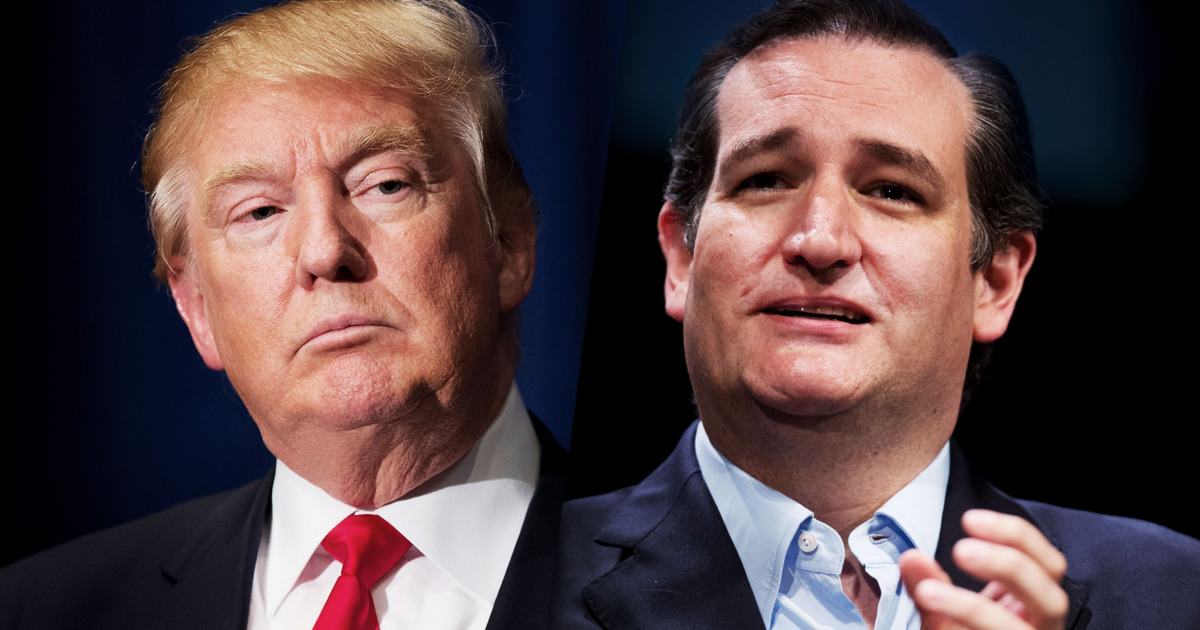
Donald Trump and Ted Cruz — to borrow a phrase — are “sucking all the air” out of the Republican Party primary campaign.

The two of them arguably are the most divisive, polarizing figures in the GOP. But here we are, watching them slug it out at the top of the primary field. What about the rest of the still-large gaggle of candidates? Huck, Carly,Ā Kasich, Marco, Jeb!, Rand Paul, Santorum, Christie . . . and let’s not forget Jim Gilmore?

Some of those also-rans are actually pretty interesting and experienced individuals. They have executive experience, legislative experience, tangible accomplishments.

They’re being left choking in the dust being kicked up by Trump and Cruz.

I won’t go into why Trump troubles me so much. For that matter, Cruz’s recordĀ in the U.S. Senate — such as it is — amounts to next to nothing; he’s been there just three years and began preening for the presidency almost from the moment he arrived.

It is becoming clearer by the day that the GOP race is turning into a two-man contest.

I can hardly wait for the two of them — Trump and Cruz — to begin truly detesting each other.

Is there a major surprise in the offing once Iowans finish their caucus?

Well, for those of us who’ve become addicted to the unpredictability of this campaign, we only can hope.


When presidents cherished using their power . . .

theodore-teddy-roosevelt-1a1

Theodore Roosevelt was not a timid man.

The 26th president of the United States took office as the youngest man ever to ascend to the White House; he was thrust into the office in 1901 when President William McKinley was shot to death.

How did the brash man treat his office? Like he owned it.

I’m reading a book, “The American President,” by historian William E. Leuchtenburg. It examines every presidency of the 20th century — from TR to William Jefferson Clinton.

TR had written a letter to the British historian George Otto Trevelyan near the end of his time in office, according to Leuchtenburg. He wrote:

“While President, I have been president, emphatically; I have used every ounce of power there was in the office and I have not cared a rap for the criticisms of those who spoke of my ‘usurpation of power.’ . . . The efficiency of this government depends upon possessing a strong central executive and wherever I could establish a precedent for strength in the executive, I did.”

Leuchtenburg writes also that Roosevelt boasted after leaving office in 1909 about how things “were done by me without the assistance of Congress.”

Holy smokes!

Try to imagine the current president — or any recent president, for that matter — bragging about going over the heads of another “co-equal branch of government.”

The 44th president, Barack Obama, has issued some executive orders that have sent his congressional critics into apoplectic shock.

Theodore Roosevelt has, over time, gained stature as one of this country’s greatest leaders. His face is on Mount Rushmore, for crying out loud, right along with Abe Lincoln, Thomas Jefferson and the original George W. — Washington.

How did he get there?

By using the power of his office.


Fuel price goes down; fares stay up

boom

This might be one of the more unsurprising back stories of the recent news regarding the falling price of fossil fuel.

Air fares — which shot up right along with the price of those fuels back in 2010 and 2011 — are staying right where they’ve been, even while the price of fuel falls through the floor.

Who knew?

Profitability matters.

I get that air carriers want to preserve their profit margins. But can’t they do so while providing a little bit of relief for those who want to fly somewhere?

It’s a bit like the gasoline dealers who fairly routinely jack the price of fuel up a dime, 12 or 15 cents at one pop when the price of oil ticks up — as it did near the end of last week; I’m waiting now for the gasoline price to reflect the increase.

When the prices of oil comes down, the dealers seek to maintain their own profit margins for as long as they can by inching the price of gas downward a penny or maybe two at a time.

I understand basic economics as much as the next guy. It just is a bit frustrating — as a potential consumer — to wait for air fares to decline at the same pace that they escalate.


Commentary on politics, current events and life experience