The culling of the fields is about to begin

Leader

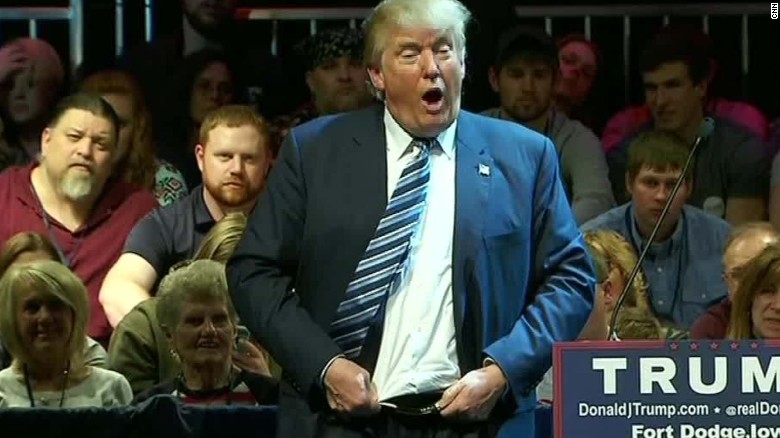
The American presidential nominating process is a grueling exercise.

It’s also a useful one.

The Iowa caucuses are about to begin in three weeks. Right after we’ll witness the New Hampshire primary elections.

The usefulness comes in the form of the culling of the fields that’s about to commence.

The candidates at the back of the Republican and Democratic packs have been able to retain their campaign viability by insisting that “no votes have been cast.” That argument ends in Iowa.

Who’ll pack it in?

Martin O’Malley will exit the Democratic Party race, leaving the field to just Hillary Rodham Clinton and Bernie Sanders.

On the Republican side, the outcome is a bit murkier.

It has become a battle for third place. The top two spots will go to Ted Cruz and Donald Trump. Third? It’ll be either Marco Rubio, Chris Christie or maybe Jeb Bush. After that, the rest of ’em ought to bail out.

Rick Santorum, Mike Huckabee, Ben Carson, Carly Fiorina, John Kasich, Rand Paul and Jim Gilmore (yes, the former Virginia governor’s still in the hunt) all need to exit the stage.

Of the also-rans, my biggest disappointment would be Ohio Gov. Kasich. He’s got a tremendous substantive argument to make: that he, as House Budget Committee chairman in the late 1990s, helped produce a balanced federal budget by working with President Bill Clinton.

That hasn’t worked with the GOP base, which lusts for the red meat being fed to it by the likes of Trump and Cruz.

The process, though, does produce winners. It’s often not pretty to watch. This year has been ugly, to be sure.

However, the process has worked every four years for as long as most of us can remember.

The serious winnowing of both parties’ fields will commence soon.

Let’s all stay tuned.
 

What? Discrepancies in Trump’s background?

CCm2tj

Karma can be a bitch.

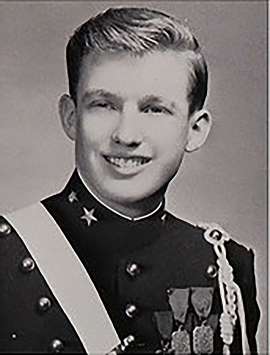
Donald J. Trump’s account of his years at a military academy is now being challenged.

The Republican presidential candidate has portrayed his years at the academy as sufficient preparation for making him commander in chief. Now come reports that Trump’s years in the New York military school weren’t nearly as rosy as he has portrayed them.

Trump had received medical and student deferments that kept him from serving in the military during the Vietnam War. Trump, though, has portrayed his enrollment at New York Military Academy as being the next best thing to serving in the military.

Some former classmates now say that Trump wasn’t nearly as attentive to the students under his command as he should have been . . .  and as he has portrayed himself as being.

Turnabout is fair play, yes? Trump and others have asked questions about Barack H. Obama’s past. His academic records at Columbia University; his birth records.

Now the proverbial shoe is on the proverbial other foot.

How will Trump answer these questions?

Others and I are waiting.


How would this guy do in the Internet Age?

Internet

My mind wanders occasionally into strange places.

I think of people I used to know and wonder things like, oh, how would they fare in today’s world?

The name of a one-time Amarillo gadfly came to mind today. His name was Michael Wyatt. He’s deceased now; he died in an automobile accident in the late 1990s at a fairly young age.

I came to Amarillo in early 1995 to become editorial page editor of the two papers published by the same owner: the Amarillo Daily News and the Amarillo Globe-Times.

One of the things I learned upon arrival was that the opinion section operated under a policy that I felt compelled to change immediately. It did not place any time restriction on the frequency of people submitting letters to the editor. Put another way: One could get letters published every day of the week if he or she were so inclined.

Michael Wyatt was a prolific letter writer. He had opinions on just about anything — and anyone — in public life. He was unafraid. He took on City Hall, the school districts, county governments, the chamber of commerce. You name it, he had something to say about it.

The frequency of Wyatt’s submissions, I would learn, had a chilling effect on others who had something to say about a public issue. Wyatt scared people off, kept them from expressing their views. “Why get into a public p*****g match with this loony bird?” they would ask themselves.

Well, we changed the policy right away, settling finally on a once-per-calendar-month rule.

He also would come engage us face to face, talk our ears off about this and/or that. He wanted to know what we thought about something and, of course, he would share his own view.

I’m wondering now how Wyatt would fare in this Internet Age.

I have to believe he’d be in hog heaven with the availability of venues, forums, platforms, websites — whatever — to express himself.

I wrote a column for the newspaper upon hearing of Wyatt’s death. I saluted him as someone who felt the calling to contribute to the public dialogue. He did so with gusto and demonstrated great courage in speaking his mind. A member of the Amarillo City Commission at the time called me to complain about the column paying tribute to Wyatt; he told me he “couldn’t stand him.” Why? “Well he was just so damn critical all the time.”

My reaction at the time, as best as I can remember, was “umm, too bad.” He sought to keep our elected officials on their toes.

To be blunt, Wyatt likely would put many of the individuals who respond to this blog to shame. I’ve got my share of “regulars” who like to comment on this or that; many of them get into arguments with each other on the social media outlets through which I channel these blog posts (and which will receive this one once I’m finished with it).

I find myself chuckling at the notion of Michael engaging in these seemingly endless exchanges. He was quite capable of devouring anyone rhetorically.

It’s too bad he didn’t live long enough to witness the dawn of this new “information/disinformation age.”

Michael Wyatt — wherever he is now — no doubt is wishing he could come back to take part. He would be right at home.


Rubio makes sense on immigration

Senator Marco Rubio of Florida speaks at the Conservative Political Action Conference (CPAC) at National Harbor, Maryland March 14, 2013. Two senators seen as possible candidates for the 2016 presidential election will address a conservative conference where Republicans will try to regroup on Thursday after their bruising election loss last year. REUTERS/Kevin Lamarque (UNITED STATES - Tags: POLITICS) - RTR3EZQO

Lo and behold . . . I heard Republican presidential candidate Marco Rubio make sense on one element of immigration policy.

When the young U.S. senator was serving in the Florida legislature, he backed a provision that would allow the children of illegal immigrants to be granted in-state tuition privileges.

Rubio today reaffirmed that view in an interview with ABC News’s George Stephanopoulos.

You go, Marco!

He was careful — naturally, given the nature of the GOP voter base — to say he doesn’t favor “amnesty” for those who are here illegally. He did say, though, that children who were brought here when they were young, say 5 years of age, and who grew up speaking English and whose only outward loyalty is to the United States of America deserve to be pay in-state tuition at public colleges and universities.

Does that sound familiar? It should. Two former Texas governors — Republicans George W. Bush and Rick Perry — stood tall on the same principle. Perry, though, was pilloried during the 2012 GOP primary campaign for standing on that notion; the TEA Party wing of the Republican Party would have none of it.

I’m no fan of young Marco. However, I was heartened this morning to hear him speak with a sense of humanity and compassion that has been lacking among many in the still-large field of GOP presidential candidates.

Donald J. Trump gets high-fives and hosannas from the base over his plan to round up all 11 million illegal immigrants and toss ’em out of the country.

Meanwhile, at least one of his Republican presidential candidate colleagues demonstrates that the Grand Old Party isn’t speaking with one voice on a critical national issue.


Trump gives ‘credit’ where it isn’t due

donald

World leaders of all stripes have said essentially the same thing about North Korean dictator/madman/goofball Kim Jong Un.

He’s nuts, unpredictable, dangerous.

Now comes Donald J. Trump, the leading Republican candidate for president of the United States, to give Kim “credit” for the ruthless manner in which he disposes of his political enemies.

Does the GOP White House hopeful include the way Kim had his uncle executed? There were reports that he fed his uncle to starving dogs, which then, well . . .  you know.

I’ll repeat once again: Being the leader of the world’s greatest nation requires a certain understanding of diplomatic nuance. Trump keeps revealing that he has no concept — none, zero — of that notion.

He wants to “make America great again”? How is he going to do that? By offering ill-timed words of encouragement to dangerous despots like Kim Jong Un?


El Chapo saga takes strange turn

CCkRgg

I’m trying to figure this one out and, so help me, this item has me puzzled to the max.

Joaquin “El Chapo” Guzman escaped six months ago from a maximum-security prison in Mexico. He is one of the world’s most notorious drug lords, responsible for dealing in death while peddling meth, heroin and assorted other killer drugs.

So, as one who practiced journalism for more than 36 years, I find myself asking tonight: If given a chance to interview this notorious criminal, would I accept the chance to do so or would I blow the whistle on his whereabouts to the authorities who are looking for him?

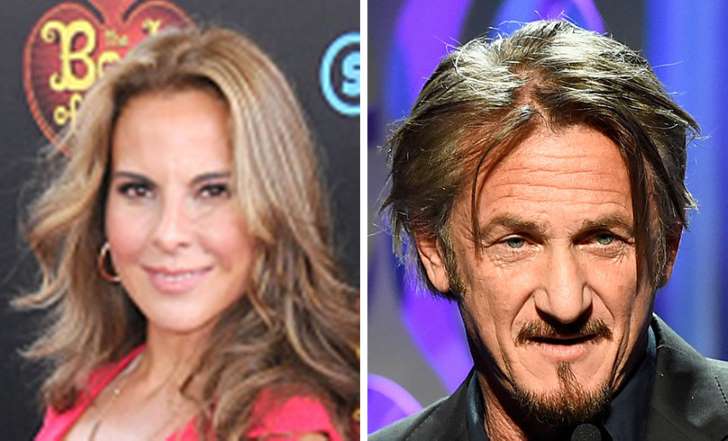
The actor Sean Penn took the former course. He interviewed El Chapo for a Rolling Stone interview several months ago.

I don’t think I would have done that.

Then again, Penn is an actor.

I’m also wondering tonight whether Penn has the same sense of outrage that El Chapo was on the lam that many others — such as yours truly — have had as he avoided capture by the authorities.

The Mexican police caught up with him and Guzman is now facing extradition to the United States.

I believe it’s fair to ask: What was Sean Penn thinking?

According to the New York Times: “Mr. Penn and Mr. Guzmán spoke for seven hours, the story reports, at a compound amid dense jungle. The topics of conversation turned in unexpected directions. At one stage, Mr. Penn brought up Donald J. Trump, the Republican presidential candidate; there were some reports that Mr. Guzmán had put a $100 million bounty on Mr. Trump after he made comments offensive to Mexicans. ‘Ah! Mi amigo!’ Mr. Guzmán responded.”

Perhaps there’s something about this story that goes over my head. I’ll admit that I’ve never been given a chance to interview one of the world’s most wanted fugitives . . . so I have no direct knowledge of how I’d respond to such an opportunity.

Still, I find it strange in the extreme that a celebrity of Penn’s stature — someone with no apparent experience as a journalist — would seemingly turn a blind eye toward the circumstances that led to an interview subject’s arrest and conviction while he is seeking to avoid being thrown back into the slammer.

Is it fair to question Penn’s loyalty?

Hmmm. I think I just did.


Not just ‘un-Republican,’ but un-American

hamid

A woman stood up to protest some comments from Donald J. Trump during a campaign rally for the Republican presidential candidate.

She was booed. Why? Was she being hateful? Did she try to shout down the candidate? Did she present a threat to anyone?

No. She was booed because was wearing a hijab, the traditional scarf that Muslim women wear to shield their hair in accordance with Islamic tenets.

The woman was escorted out of the rally. Kicked out. She left the venue to a chorus of catcalls.

It was a disgraceful display of intolerance.

What did the candidate do to tamp it down? Nothing.

Fellow GOP presidential candidate Gov. John Kasich of Ohio called the event “un-Republican.” Yes. It’s also un-Democratic and, I shall add, un-American.

Rose Hamid is a flight attendant who came to the rally to hear for herself some of the things she’d read about Trump, who launched into a tirade about Syrian refugees being terrorists.

Hamid said later that the characterization was improper and demonstrated the kind of intolerance and hatred we’ve been hearing toward people who practice the Islamic faith. It’s aimed at actual Muslims, not the perverted cultists who have twisted the religion into something unrecognizable to practicing Muslims . . . such as Rose Hamid.

Yet they are the individuals — the terrorists masquerading as Muslims — who draw the fire from political candidates, who use such rhetoric to inflame their supporters against others whose only transgression is to express their faith and to wear garments that give their religious identity away.

Kasich is right to condemn Trump, not just for allowing the ejection of the protestor, but for failing to calm down the haters scattered in his crowd of supporters.


Irony abounds in Cruz citizenship debate

ted-cruz-sexy-eyes

There’s no denying the irony in this growing discussion over whether U.S. Sen. Ted Cruz is constitutionally qualified to run for president of the United States.

To my mind — and to many others who know a whole lot more about constitutional law than I do — there should be no question about the Republican presidential candidate’s eligibility.

He is eligible to run. Period. End of discussion. The Constitution spells it out. He is a “natural-born citizen” whose mother is an American; thus, he is granted U.S. citizenship by birthright, even though he was born in Canada.

The irony?

Well, this issue came up regarding Barack Obama, except that some individuals didn’t believe what Obama had said, which is that he was born in Hawaii. They kept harping on his alleged birth in Kenya. So, what’s the big deal? The president’s mother also was an American citizen; his father was Kenyan.

If either Obama or Cruz — or both of them, for that matter — had been born on Mars, their citizenship shouldn’t be an issue.

The other irony is that Cruz is relying on the opinion of courts comprising unelected federal judges. He calls this matter a case of “settled law.” Strange, actually, that he would say such a thing, given the disdain he expressed for the federal judiciary after the Supreme Court ruled in 2015 that gay marriage is now legal throughout the country, that the Constitution’s equal protection clause in the 14th Amendment applied to gay citizens seeking to marry people of the same gender.

I happen to believe that Cruz is right about the citizenship issue.

It won’t go away as long as Donald J. Trump continues to raise it along the GOP presidential campaign trail. Other Republicans now are beginning to echo Trump’s questioning of Cruz’s eligibility — although this concern seems born more out of Cruz’s rising poll numbers than of actual doubt over whether he’s a qualified U.S. citizen seeking the highest office in the land.

The volume is rising among those who are seeking to stall the Texas Republican’s campaign momentum.

It’s entertaining, to be sure, to watch the irony build on itself as this (non)-issue continues to fester.

I’m wondering: How does President Obama feel about it?

Quitting while still ahead . . .

Lotto

I have a long and well-covered loathing for games of chance.

Such as the lottery . . .

While working as an opinion page editor for the Beaumont Enterprise, way down yonder in the Golden Triangle of Texas, I argued vehemently against the introduction of the Texas Lottery. I wrote personal columns against it; our newspaper editorialized against it.

The voters of our part of the state — not to mention the rest of Texas — didn’t heed our advice. Texans voted overwhelmingly in favor of the Texas constitutional amendment that allowed for the creation of the lottery in the early 1990s.

Well . . . I awoke this morning and decided to forgo purchasing a ticket for the $800 million Powerball jackpot that’s looming out there, tempting many of my fellow Texans way past their strength.

I’ll let other suckers lay down their money and hope they win the Big One.

But for the record, I need to make a full disclosure.

Despite my hatred of these games, I’ve played the Texas Lottery exactly twice.

Both times occurred early in the lottery’s existence in Texas.

I went to a convenience store in Beaumont, not far from where we lived. I purchased a ticket. I scratched it off. I won something! It was a paltry $3 payoff.

Cool! I was two bucks ahead of the game.

The next week, I bought another ticket. I scratched it off. Nothing.

Still cool. I was a dollar ahead.

I haven’t played since. I quit while I was in the black.

Good luck today . . . suckers!


Powerball jackpot hits $800 million!

635877522067343002-lotteryAP-Powerball-Jackpot

I’m going to bed tonight pondering whether I should buy a Powerball ticket sometime tomorrow.

The jackpot has hit $800 million. The one-time payout totals something more than $450 million, which ain’t exactly walking-around money.

I doubt that I’ll play tomorrow. But my staunch refusal to gamble in this manner has been shaken a bit by a story I heard about two weeks ago.

The story goes like this:

A good friend of mine told me of a young man — a mutual friend of ours — who decided one day to purchase a Texas Lottery ticket. I’m told he doesn’t play often. But he drove up to a West Texas convenience store the other day, got out of his car, walked into the store and bought a lottery ticket. He just had a wild hair, I guess, so he plunked down some cash.

He won a nice prize.

It totaled $1 million. My friend ended up walking away with nearly 700 grand.

Sure, the federal government got a nice chunk of change from my friend’s winnings. Big deal. He still pocketed a lot of dough. I’d settle for a tenth of that amount.

Am I going to lay down some cash tomorrow for a chance at the Powerball jackpot? Not likely . . . but I haven’t yet slammed the door shut.

Commentary on politics, current events and life experience