Tag Archives: Bernie Sanders

Bernie wins while losing

sandersclinton_040116getty

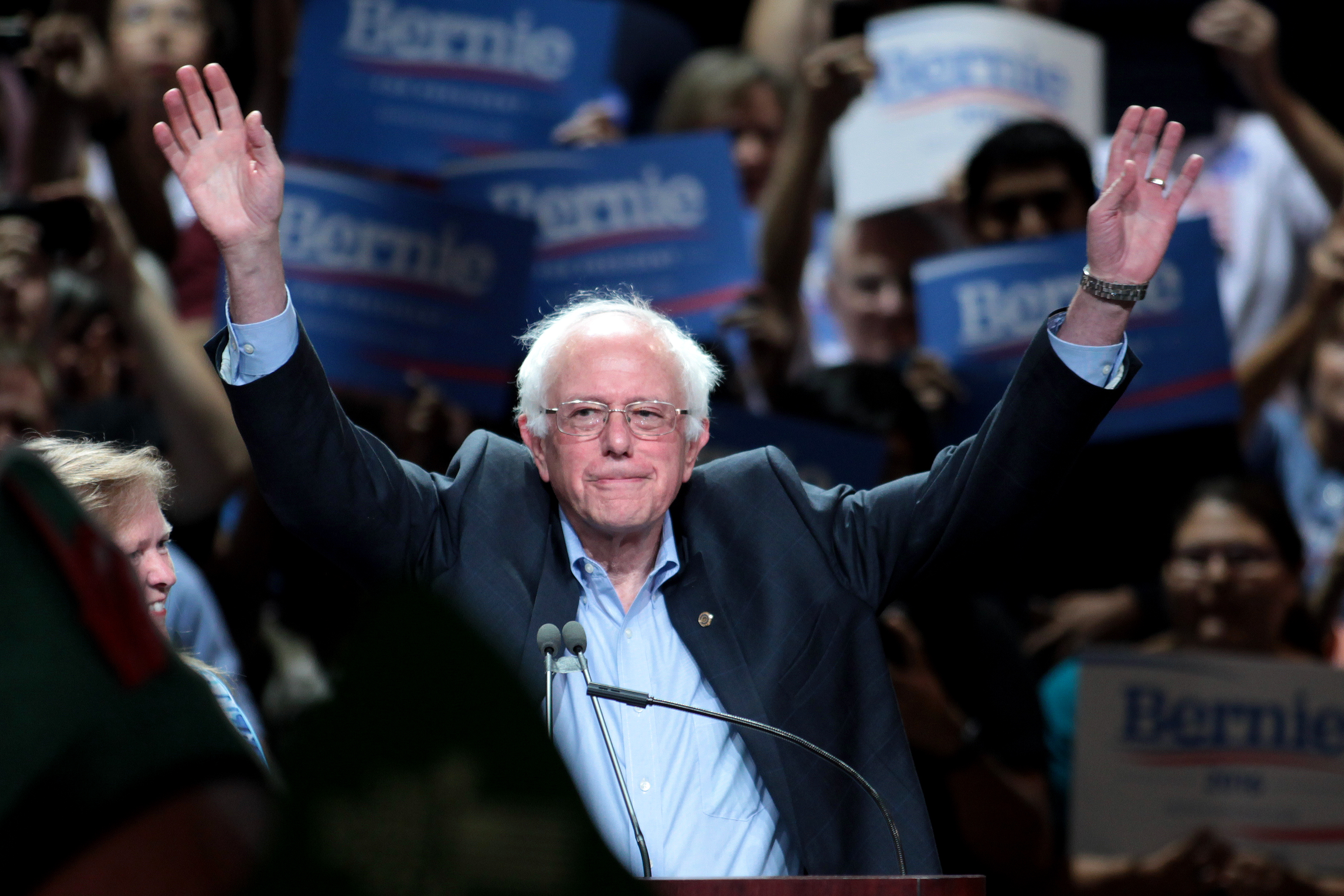
U.S. Sen. Bernie Sanders has lost the race for the Democratic presidential nomination.

However, he’s also won the argument within the Democratic Party.

How? By pulling presumptive nominee Hillary Rodham Clinton closer to his end of the political spectrum than she was at the beginning of this campaign.

Sanders is expected eventually to end his campaign. He’ll throw his support behind Clinton. He’ll join President Obama and other party dignitaries in campaigning hard for Clinton against Republican nominee Donald J. Trump.

Sure, he still says he’ll fight “all the way to the convention” in Philadelphia. That’s what they all say. Ted Cruz said it the day before he dropped out of the GOP race. So did John Kasich. It’s just brave talk.

Sen. Sanders will take away from this campaign the satisfaction that he’s not got Clinton talking about income inequality, corruption on Wall Street and stricter international trade policies.

Do not expect Clinton to declare herself a “democratic socialist,” which Sanders proclaimed throughout his campaign with great pride

What the defeated Democratic presidential candidate cannot determine, though, is whether a President Clinton would carry that message forward once she takes the oath in January.

As of today, though, he’s changed the dialogue within the Democratic Party.

That, folks, is no small victory.


Here’s a ‘Dave’-like solution to picking nominees

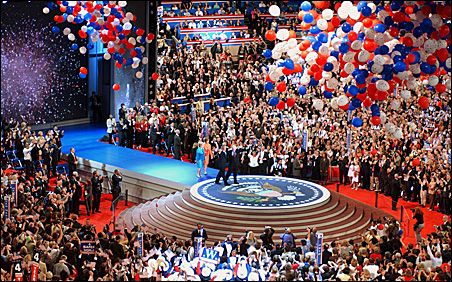
National%20Party%20Convention

In the film “Dave,” Kevin Klein portrays the owner of an employment agency who bears this startling resemblance to the president of the United States.

Fate thrusts Dave into the role of filling in for the incapacitated president.

During a Cabinet meeting, the “president” — Dave — must find ways to cut the federal budget sufficiently to pay for some needed programs. He whips out a pencil and tablet and goes through the budget department by department and — presto! — finds the money.

Cabinet officials are stunned.

How mightĀ such aĀ seemingly simpleĀ approach to problem-solvingĀ work in the real world of rough-and-tumble politics?

News organizations Monday night tallied up the delegates that Hillary Rodham Clinton has amassed and declared her to be the presumptive Democratic nominee for president of the United States. She joins Donald J. Trump, who already had become the Republicans’ presumed nominee.

Here, though, is the rub. Sen. Bernie Sanders isn’t going quietly into the night. He vows to continue fighting Clinton for delegates all the way to the party nominating convention.

Why? He doesn’t like the “super delegate” system used by the Democratic Party. The supers are those party big wheels — elected officials, mostly — who get to vote for whomever they wish. Sanders, who only recently joined the party after serving in the Senate as an independent, thinks it’s unfair to count those super delegates prior to the convention. They can change their minds and he intends to persuade enough of them to do exactly that.

The Republicans don’t have that problem. They don’t have super delegates. Frankly, I prefer the GOP method.

What might Dave do?

Let’s try this out.

Call a meeting of the two major political parties’ top brass, GOP boss Reince Priebus and Democratic chair Debbie Wasserman Schultz. Put them in a room along with their parties’ lawyers and pose the question, “How about making this process a bit more uniform?”

Priebus and Schultz aren’t close. Imagine that, right? They have serious disagreements.

It seems totally within reason, though, for the parties to adopt more uniform delegate-selection processes. To be frank, the super delegate system used by the Democrats seems a bit weird. Sanders is hoping to change enough minds between now and the convention that he could “steal” the nomination from Clinton. I think that, by itself, is unfair and underhanded.

If both parties’ leaders believe in developing fair and even-handed methods of choosing their nominees, is it too much to ask them to hammer out an agreement that works for both sides?

I get that none of this nominating process is prescribed in the U.S. Constitution. It’s strictly a party matter. Heck, the Constitution doesn’t even mention political parties.

I’d even prefer to see the national parties lay down rules simplifying the method of apportioning delegates. Do they prefer to award them on the basis of the candidates’ share of the popular vote? How about winner take all? It makes no never mind to me. Just make it uniform.

The hodge-podge we have now makes me crazy.

Politics need not be this complicated, man.
Here come the conspiracy theories

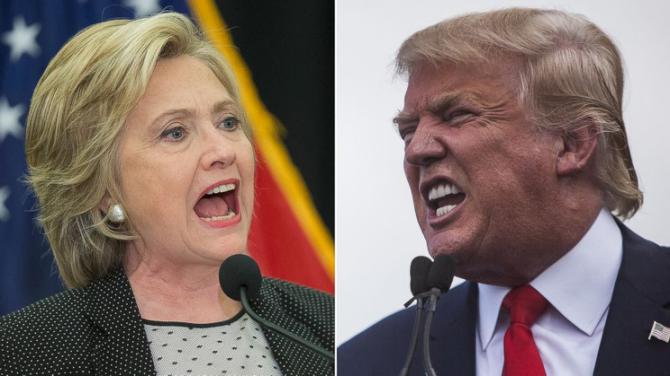
GTY_hillary_clinton_donald_trump_split_jt_150912_16x9_992

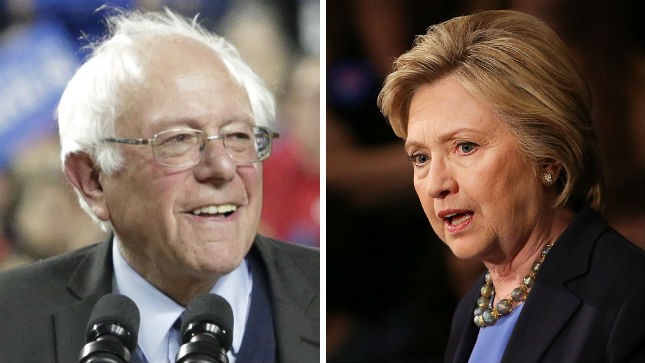
Hillary Rodham Clinton has been deemed the “presumptive presidential nominee” for the Democratic Party.

Wait for it. Here come the conspiracy theories from the supporters of Bernie Sanders, who are saying that the media should have waited to report the news.

Sure thing. I believe that’s one definition of “prior restraint.”

I do not think that’s doable in a society that supposedly prides itself in a media that isn’t controlled, manipulated or coerced into hiding news as it happens.

The Associated Press has tabulated the pledged delegates and the so-called “super delegates” that the Democratic Party uses to nominate its presidential candidates. AP has determined that, yep, Clinton has put the nomination out of reach.

Sen. Sanders has been pledging to take this fight all the way to the party nominating convention this summer in Philadelphia. Fine. That’s his right.

Sanders and his supporters have said the “mainstream media” are in cahoots with the party brass in wanting Clinton nominated.

I’m not crazy about this super delegate business. I’d prefer that Democrats followed the Republican model in apportioning convention delegates. The “supers” comprise elected officials or other power party bigwigs who are free to vote for whomever they want. Given that the U.S. Constitution makes no mention of political parties, this process is done strictly at the party level; it’s not written in law anywhere.

This, though, is how the Democrats do it. It’s worked so far.

So now we have a presumptive Democratic nominee to join the presumptive Republican nominee. It’s likely “game over” for Sanders, just as it’s over forĀ all of the 16 Republicans who ran against Donald J. Trump for that party’s nomination.

Let’s dispense with the conspiracy theories.

Now we get toĀ witness Clinton vs. Trump.

Oh, boy! Now, if only we could hope for a dignified and high-minded contest for the presidency of the United States of America.

If only …


Hillary might not win the nomination … really?

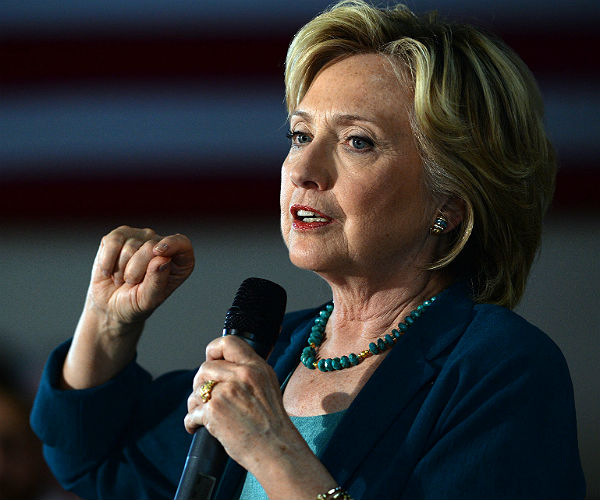
hillary

Is it entirely possible that Hillary Rodham Clinton — the one-time candidate of destiny for the Democratic Party — could lose here party’s presidential nomination after all?

Douglas Schoen — a former pollster for President Bill Clinton — thinks it’s possible.

His thesis is simple.

If U.S. Sen. Bernie Sanders wins the California primary next Tuesday, the Democratic brass is going to come down with a case ofĀ terminal heebie-jeebies at the prospect of nominating a badly damaged candidate for the presidency.

Where would they turn? Who would redeem the party’s political fortunes?

That would be the vice president of the United States of America, Joseph Biden.

The vice president has said repeatedly two seemingly contradictory things about his decision to opt out of running for the presidency.

One is that he believes he made the right call. Two is that he regrets making that decision.

You might ask: Huh?

If you are, I get it. I’ve asked the same thing.

http://www.newsmax.com/Politics/Doug-Schoen-Pollster-Democrat-Hillary/2016/06/01/id/731649/

Honestly, I don’t know what will happen after Tuesday. Everyone’s expectation is that Clinton will secure enough delegates to win the nomination on the first ballot when Democrats gather this summer in Philadelphia. In addition to California, voters in the Dakotas and New Jersey are going to the polls.

Clinton cancelled campaign events in Jersey to concentrate on California.

What does all this mean for Biden?

“Mr. Biden would be cast as the white knight rescuing the party, and the nation, from a possible (Donald J.) Trump presidency,” the Democratic pollster said in an op-ed published in the Wall Street Journal.

I’ve stated already my admiration for the vice president. I wish he would have run. I understand why he stayed out. His son, Beau, had just died. The man is still mourning his son’s death.

In every other political year, though, it would appear that Biden’s decision to stay out of the race would be cast in stone.

As we’ve seen at almost every step along the way in this election season, this ain’t like anything we’ve ever seen.


Really … a Sanders-Trump debate a bad idea

Negative

I feel compelled to make an admission.

I was kidding when I sent out tweetsĀ that cheered the thought ofĀ a potential debate between Democratic presidential candidate Bernie Sanders and presumptive Republican nominee Donald J. Trump.

Yeah, I know. I shouldn’t kid about such serious matters.

One of these guys will be nominated by his party to run for president. It won’t be Sen. Sanders. It’s going to be the showman/carnival barker/rumor monger Trump.

The very idea of one guy who won’t be nominated debating the other guy who will is frankly preposterous — were you to ask me for my opinion.

Trump backed out, if you believe one version of how it came unraveled. He supposedly wanted Sanders to pay several million bucks up front. I’m not sure who would have gotten the dough.

But these debates ought to be reserved now — at this point in the campaign — for the individuals who’ll be nominated by the major parties. And, yes, if a third-party candidate gets enough public support, then invite that individual to take part, too.

So many conventional rules have been broken during this primary campaign. They start with the fact that Trump has survived this far into the GOP primary, given his unending string of insults, innuendo, lies and hourly flip-flops on controversial public policy statements.

The Republican and Democratic debates have been watched by the public not so much for the information one can glean from them, but for the entertainment value they bring to the serious process of nominating a presidential candidate.

Trump now has enough delegates in his pocket to be nominated in Cleveland. Clinton will have enough in her pocket very soon to get her party’s nomination in Philly.

Let’s focus now on how these two individuals are going to prep for what promises to be a series of barn burner debates.


‘Damn e-mails’ return to center stage

mails

Back in the old days, when Sen. Bernie Sanders and Hillary Rodham Clinton actually were treating each other nicely, Sanders offered this often-quoted quip: “I am tired of hearing about your damn e-mails.”

I’ve got bad news for you, Sen. Sanders. We’re going to hear about those “damn e-mails” for a while longer.

The State Department’s inspector general has issued a report that says then-Secretary of State Clinton flouted department policy in her use of a personal e-mail server when communicating about State Department issues.

Does this doom Clinton’s assured nomination as the next Democratic Party presidential nominee? No. It’s going to damage her. Why? Republicans will make sure of it.

http://thehill.com/policy/national-security/281192-watchdog-agency-hits-clinton-top-aides-on-records-policy

I am not giving this report the short shrift. I get the concern about policy violations. What’s unclear to me, though, is whether any of the information Clinton passed on her personal server ever was captured by our nation’s enemies? Did any of them ever use that information to harm our national security?

What’s more, as Clinton has said in pushing back, other secretaries of state have used personal e-mail accounts. Colin Powell, Condoleezza Rice, Madeleine Albright? They did, too.

Did they ever compromise national security? I haven’t heard evidence of it regarding those officials, either.

http://thehill.com/regulation/national-security/281220-clinton-campaign-insists-email-setup-not-unique

I was troubled when word came out about the use of personal e-mail servers to convey public information. My major concern then was whether information actually compromised our national security. All the congressional inquiries and probes haven’t yet made that determination.

However, that won’t stop the chatter and the intense criticism. It goes with the political territory.

Bernie Sanders’ wish won’t come true any time soon.


It’s over, Sen. Sanders

Bernie_Sanders_by_Gage_Skidmore

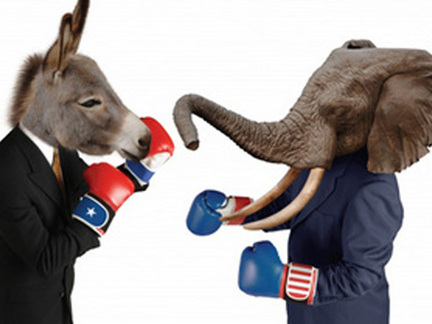
Democrats and Republicans seem to operate under differing rules of political combat … in this presidential election cycle, at least.

Republicans opened the presidential primary campaign with 17 individuals seeking their party’s nomination. One of them remains. He is likely the most improbable candidate you ever could imagine.

Donald J. Trump is a man with zero public service record, a scatter-shot approach to what passes as foreign and/or domestic “policy” and a checkered personal history.

He’s the last man standing among all those Republicans.

Democrats opened their season with just five candidates. Three of them are now off the grid. Two are left: U.S. Sen. Bernie Sanders and former Secretary of State Hillary Rodham Clinton.

Clinton’s all but got her party’s nomination in the bag. Sanders is hanging on, cheered on by those big rallies.

So, here’s what I believe should happen: Sanders needs to call it a campaign. He’s made his point — repeatedly — about income inequality and Wall Street corruption. He’s not going to be nominated president.

It’s time for him to clear the field for Clinton to run against Trump — head to head.

Democratic gurus are growing a bit restive. They see these polls that show Clinton and Trump in a close race. They fear that the longer Sanders continues his sniping at Clinton, the more damage he inflicts on her chances to become the nation’s 45th president.

My own view is that this contest shouldn’t even be close.

Trump is patently — at virtually every level one can name — unfit to become president. Yet he continues to win cheersĀ from those who think he “tells is it like it is.” They rally to his calls against what he calls “political correctness.” The man is a buffoon … yes, a wealthy one, but a buffoon nonetheless.

Clinton is far from the perfect candidate. But she’s been examined up close and personal for more than two decades. Her career — as first lady, U.S. senator and secretary of state — has been dissected more carefully than a laboratory frog.

She continues to fend off the challenge from the remaining other Democrat in this contest.

The primary season is over, Sen. Sanders. You lost. Hillary Clinton won.

It’s time for Sen. Sanders to “suspend”Ā his campaign and then start writing the fiery speechĀ he plans to giveĀ at theĀ Democratic Party’s presidential nominatingĀ convention this summer in Philadelphia.

As for Trump … well, uh, keep doing what you’re doing.

Release the tax returns already!

tax-return-form

Here’s how you give birth to rumor.

You refuse to do something that others in your position have done for decades. You then offer lame excuses for the refusal, which then start to breed gossip around the country about the alleged real reasons for the refusal.

Presumptive Republican presidential nominee Donald J. Trump is refusing to release his tax returns. He says the Internal Revenue Service is in the midst of an audit; the IRS responds that an audit does not preclude someone from releasing the returns.

Other candidates for the presidency have routinely released their returns for public review. It’s part of the examination process to which the public is entitled as they consider who should become the nation’s head of state and government and commander in chief.

Trump should release the returns. Now.

I am not going to weigh in on what’s been said by those who think Trump might be hiding something. Such allegations have come from, say, 2012 GOP presidential nominee Mitt Romney.

This might seem like a diversion. It really isn’t.

The refusal to comply what’s been customary among presidential candidates speaks to the character of the candidate.

Recall that Democratic presidential candidate U.S. Sen. Bernie Sanders balked initially at releasing his returns, and he faced questions from an inquiring public. He said his wife prepared them and he described the findings as “boring.” He finally did.

Trump has been bellowing for decades about his immense wealth. He’s boasted about what a “world-class businessman” he’s been.

Well, OK. Let’s open up the books and let the public see for itself.

The world is chock full of equally world-class certified public accountants and tax lawyers who can parse the details for us.


Why not Bernie for VP?

Cassidy-Bernie-Sanders-Loud-and-Clear-1200

The more I think about it, the more plausible it’s beginning to sound.

Bernie Sanders well might become Hillary Clinton’s running mate against Donald J. Trump.

I had been thinking all along that Clinton might look more toward someone with, say, a Hispanic background. Former San Antonio Mayor Julian Castro — who’s now housing secretary in the Obama administration — was a logical choice.

Sen. Elizabeth Warren’s name has popped up. That’s an interesting pick, too. An all-woman Democratic ticket? You go, girls!

But now it seems quite possible that Sen. Sanders — who’s been battle-tested and proven to be up to the fight — might be the right kind of No. 2 to challenge Trump and whomever he selects as his running mate.

Sanders already has pulled Clinton to the left on some of his pet issues: income inequality, war in the Middle East to name just two.

At one level, he’s already won the ideological fight within the Democratic Party. Indeed, if he’s not chosen, I truly can hear Sanders making a “the dream shall never die” speech at the Democratic convention, echoing the stirring address given by vanquished Sen. Ted Kennedy at the 1980 convention that re-nominated President Carter.

However, if Clinton picks Sanders as her VP nominee, then he’ll continue the fight forward.

One obvious drawback is his age. He’s 74. He’d be 79 at the end of a first Clinton term. There might be a commitment to serve just one term as vice president if a President Clinton were to seek re-election in 2020.

Of course, only the candidate knows who she’s going to pick.

As for Trump, he said he’s narrowed his list to “five or six” individuals. He vows to pick an actual Republican and someone with “political experience.” He, too, has a list of former rivals he might consider, although at least two of them — Sen. Ted Cruz and Gov. John Kasich — have all but told Trump to jump in the proverbial lake before asking either of them to run with him.

The mystery of who’ll be running for president in the fall has just about been solved.

Now we’ll await these important choices for the No. 2 spots.

I’m starting to “feel the Bern.”


Sanders yet to explain how ‘free college’ works

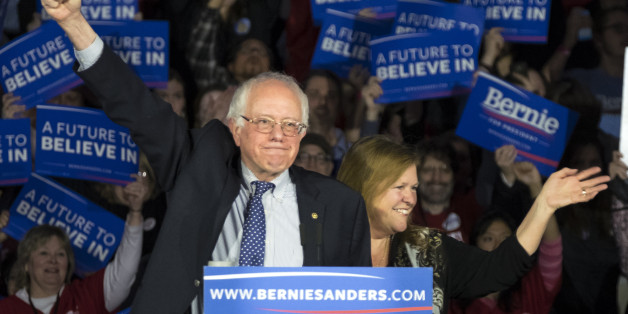
Democratic presidential candidate, Sen. Bernie Sanders, I-Vt,  and his wave Jane acknowledge the crowd as he arrives for his caucus night rally in Des Moines, Iowa, Monday, Feb. 2, 2016.  (AP Photo/Patrick Semansky)

I’ve had a busy day, which is rather strange, given that I’m supposed to be “semi-retired.”

Still, I’m winding ‘er down tonight and am listening to some cable news discussion of the day’s political events.

I heard the following: U.S. Sen. Bernie Sanders held a rally in Salem, Ore., in which he said that it’s time to provide free college education for every American who wants to get one.

I keep coming back to this question: How in the world are we going to pay for this?

Sanders’ pledge to provide free college education has helped him draw big support among young voters, who’ve added huge numbers to the rallies to which he’s been speaking.

Free college is a noble goal.

It’s also utterly unrealistic.

I have plenty of friends who are backing Sanders. Some of them are old folks … like me.

To be honest, I haven’t crossed paths with too many college-age students who are backing Sanders because of this pie-in-the-sky promise. I’ll need to catch up with some of them to get a better grip on how this free college pledge is resonating.

From my standpoint, though, a promise made from the campaign stump quite often doesn’tĀ translate toĀ responsible public policy.