Tag Archives: Hillary Clinton

Polls, polls … and more polls

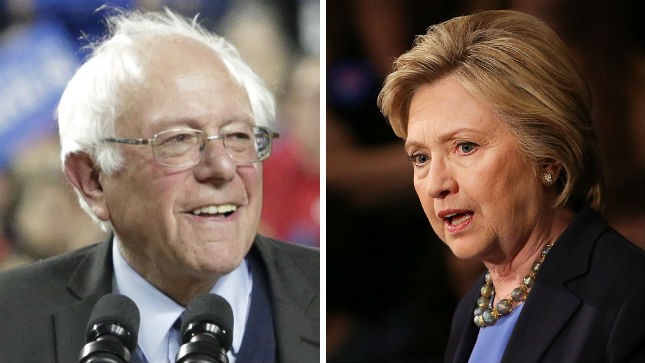
sandersclinton_040116getty

Is it me or have the media become more obsessed with poll coverage in this presidential election cycle than ever before in the history of mass media in this country?

Of particular interest to me are a certain type of intraparty poll that measures candidates’ relative strength against each other.

These surveys drive me nuts. Bonkers, man!

Why? They’re meaningless.

Here’s the latest: NBC says Hillary Rodham Clinton holds a nine-point lead over Democratic Party primary rival U.S. Sen. Bernie Sanders. That’s nationally.

What, I ask, does that mean? Does that mean if we had a national political primary that Clinton would beat Sanders by nine percentage points?

Maybe. Except that we aren’t going through a national primary election cycle. Candidates are trudging through these primaries state by bloody state, where the voters in each state have different perspectives, different worries and concerns, different philosophies.

Wisconsin is going to have its Democratic and Republican primaries today. Sanders is favored at this moment to win the Democratic primary; U.S. Sen. Ted Cruz is favored to win the GOP primary.

Still, the media keep reporting that Donald J. Trump holds a diminishing national lead over Cruz and Ohio Gov. John Kasich in a national poll of Republican voters.

I’m running out of ways to say this: I do not care about national intraparty polls. They are not relevant to anything.

Some TV pundits the other evening were saying that they perceive fewer “horse-race” questions coming from the media as the primary campaigns head toward the home stretch. They say they’re hearing more “policy-driven” questions … allegedly.

More policy and fewer polls, please.


C’mon, Bernie; show us your tax returns

berniesanders-61515-1434466786

Sen. Bernie Sanders tries to make a lot of hay about his authenticity, that he’s just one of us, that he’s campaigning for the little guy.

I get his message as he battles Hillary Clinton for the Democratic Party’s presidential nomination.

But this morning on CNN, the distinguished gentleman from Vermont fluffed a direct question from “State of the Union” host Jake Tapper: Why won’t you release your tax returns, as Secretary Clinton has done for the past eight years?

His answer? “My wife does our tax returns and I’ve been a little busy.”

OK, senator. Enough already.

Americans heard some kind of song-and-dance from Republican frontrunner Donald J. Trump, who said he couldn’t release his returns because he was being audited for the past 12 consecutive years. That, too, is a stretch.

However, these returns have become part of the effort to improve transparency among all the candidates running for president.

It seems to many of us that it’s especially critical to see the tax returns from candidates who keep purporting to be champions for “wage equality” and who keep blasting the “top 1 percent” of income-earners for getting rich while the rest of us are struggling to make ends meet.

Mrs. Sanders does his tax returns? They’ve been “busy”?

Get real, senator. If your returns are straightforward and uncomplicated as your campaign message would seem to imply, then releasing the records wouldn’t be that big a deal.

This, sir, simply goes with the territory. Candidates who ask voters to entrust them with governing the world’s richest and most powerful nation should expect demands to see if they, too, are living up to the high-minded rhetoric they espouse on the campaign trail.


Now … about the Democratic wackiness

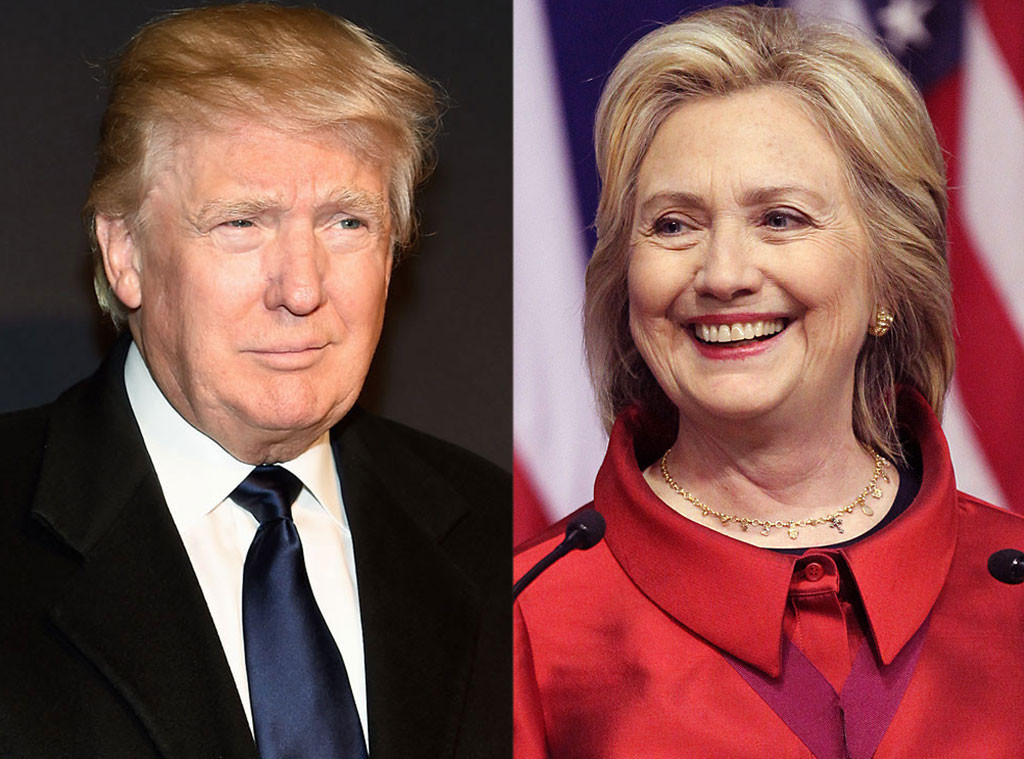
rs_1024x759-150709052426-1024.Donald-Trump-Hillary-Clinton-JR-70915_copy

Almost all the political chatter of the past, oh, six months has been about how Donald J. Trump turned his Republican Party primary presidential candidacy from a joke to a matter of serious discussion.

Who among you really thought this guy ever — in a zillion years — would achieve GOP frontrunner status when he declared his candidacy this past summer? I didn’t either.

He has. Trump is beginning to wobble, though, because his glaring lack of study of the issues is finally catching up to him. He’s likely to get hammered in Wisconsin on Tuesday. Then it’s on to New York, where he figures to do better, if not real well.

OK, enough of that.

Those Democrats have produced their share of campaign wackiness, too.

Let me ask you this one: Who out there really and truly thought at the beginning of her campaign that Hillary Rodham Clinton would be challenged as strongly as she’s been challenged by U.S. Sen. Bernie Sanders, the independent from Vermont, the “democratic socialist”? I’m with you. I thought she was a shoo-in.

She’s been hammered by the right — as expected — over Benghazi, those “damn emails,” as Sanders has described them, and over an alleged lack of “authenticity.

But she’s also been pounded by the lefties. Those kids who’ve climbed aboard Bernie’s bandwagon because of his pledge to provide college education for everyone has helped lift this guy’s candidacy to heights never imagined when he started out.

Bernie well might win in Wisconsin this week. Then he goes to New York, which Clinton represented in the U.S. Senate after she served two terms as first lady.

Clinton’s task in Wisconsin is to keep the result fairly close; a blowout win by Sanders might light a serious wildfire in his campaign that could cause some serious trouble for Clinton in New York.

Clinton now has to win big in her “home state.” I put that in quotes because, as you know, she really didn’t spend much time there before being elected to the Senate in 2000. It’s that authenticity thing, aka “carpetbagging,” that keeps nipping at her.

Clinton remains miles ahead of Sanders in the delegate count. If she wins yu-u-u-u-u-ge in New York, then she is on track to sew the primary campaign up by the time it rolls around to California.

If she stumbles there after getting beat in Wisconsin, well, then we’ve got a different game.

Yesterday’s sure thing, thus, becomes a candidate in for the fight of her life.

Go figure.

I’m telling you that when historians over the next generation or two try to examine the impact of strange and weird presidential campaigns in this great country, they’re going to hold Campaign 2016 up as their starting point.

I’m not sure how it can get any stranger than what we’ve witnessed on both sides of the divide.

It probably will.

Clinton, Sanders differ on SCOTUS approach

hillary

Democratic presidential candidates Hillary Rodham Clinton and Bernie Sanders differ on quite a bit these days.

One of the more intriguing differences is seen in how they want the vacancy on the U.S. Supreme Court to be filled.

Sanders would pull the nomination of Merrick Garland — who President Obama has appointed to replace the late Justice Antonin Scalia — off the table if he is elected president in November. He then would pick someone of his choosing.

Clinton doesn’t even think that’s a topic for discussion. She said this week that Obama is president until January and he deserves to have his pick for the court considered by the U.S. Senate.

She also takes sharp aim at the reason Senate Majority Leader Mitch McConnell gives for obstructing this nomination, for wanting the next president to make the choice. McConnell said “the American people deserve a voice” in determining who that person should be.

Fine, said Clinton. “I was one of the 65 million people who voted” for President Obama’s re-election in 2012, she said, adding that McConnell is now trying to silence her voice, along with tens of millions of other voters who choose Obama over Republican nominee Mitt Romney.

You got that right, Mme. Secretary.

I, too, am among the nearly 66 million Americans who cast their ballots for the president. I don’t like being silenced any more than Clinton does. Nor should the rest of those who cast their ballots for the president.

Don’t we operate in a system that grants power to the candidate who gets more votes than the other person?

Yes, we have one president at a time. The man in the hot seat right now still has all the power entrusted to him by the U.S. Constitution.

Let this nomination go forward, Mr. Majority Leader. Americans’ voices have been heard.

Abortion tempest erupts


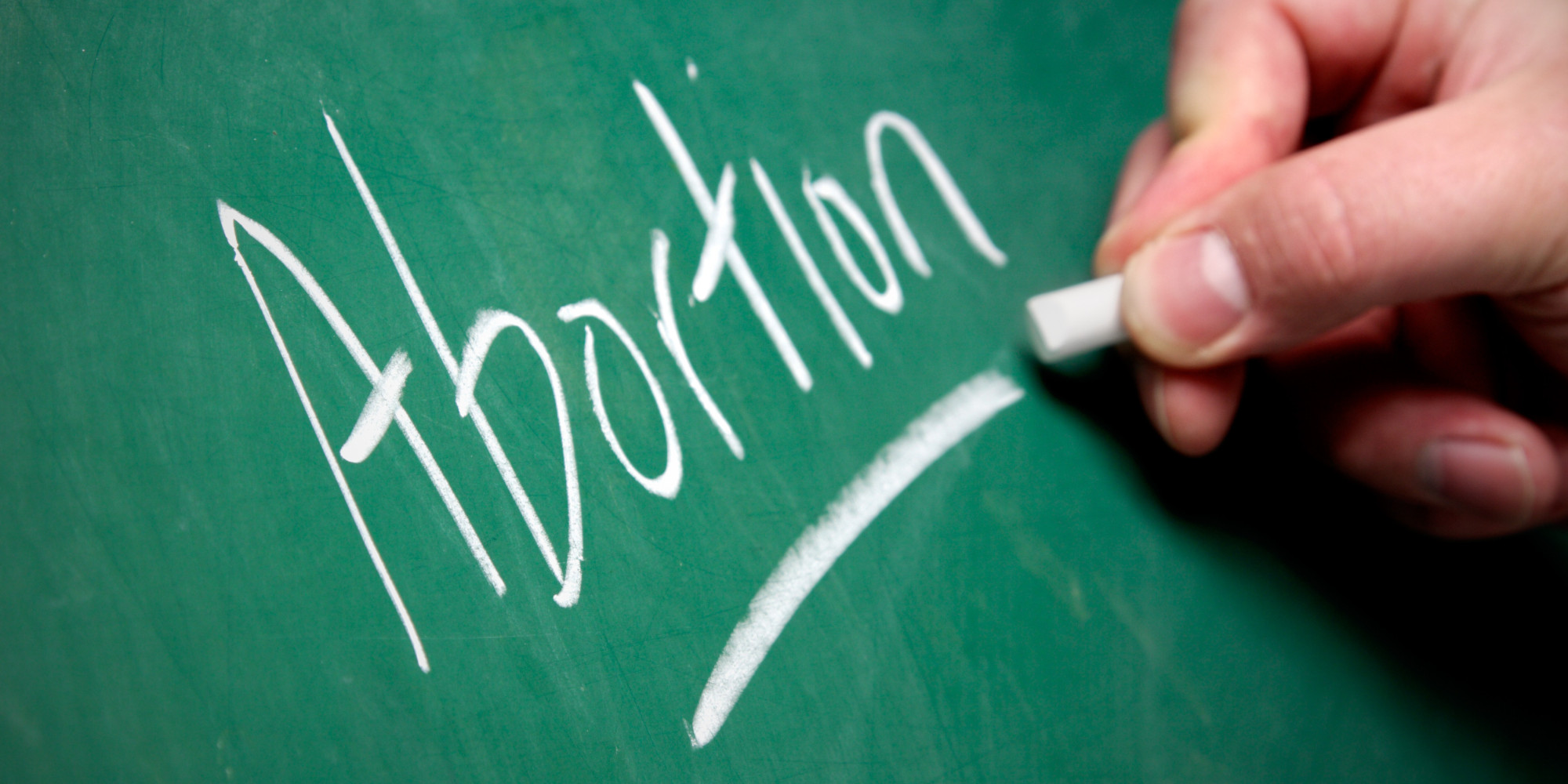
Chalkboard - Abortion

Donald J. Trump finds himself in the middle of a tempest over arguably the most contentious political issue ever.

Again!

The Republican Party presidential primary frontrunner said Wednesday — in response to some aggressive questioning by MSNBC’s Chris Matthews — that a woman should face “some punishment” were she to obtain an illegal abortion.

Yep. He said that. A woman should be punished.

Then the firestorm erupted. What in the world is he talking about?

Republican candidates Ted Cruz and John Kasich were quick to condemn Trump’s statement. Then came the fury from Democratic candidates Hillary Rodham Clinton and Bernie Sanders.

Within a couple of hours, Trump issued a statement that said the doctor should face the sanction, not the woman whose pregnancy was ended.

I won’t bother you with a dissertation on my own views of abortion, as you perhaps already know I remain pro-choice on the issue.

What is bothersome about Trump’s answer and then his recanting of his initial response is the non-preparedness the candidate keeps exhibiting when pressed for answers on these critical issues.

Abortion matters deeply to many millions of Americans. It seems, to me at least, that few of us have mild feelings about the issue. We’re either fervently pro-choice or pro-life. Trump’s view on the issue has evolved over time. He is seen on videotape telling an interviewer about a decade ago that he is “strongly pro-choice.” Then he told Matthews this week that he is “pro-life.”

I’d be curious to know what changed Trump’s view on this issue. How did he go from one firm position to another? Perhaps the only other major-party politician I can recall pulling such a dramatic switcheroo would be George H.W. Bush, who abandoned his pro-choice views immediately upon accepting Ronald Reagan’s invitation to join him on the GOP presidential ticket in 1980.

Donald Trump initial answer to the question of whether a woman should face punishment reveals what Sen. Cruz identified correctly as Trump’s utter lack of preparation to discuss these issues when confronted with them.

Somehow, though, I cannot escape the feeling that Trump will find a way to deny he ever said what millions of Americans already heard him say.

Most disturbing of all will be that many Americans will believe him.


Trump might be ready to retaliate

Donald-Trump_3372655b

Donald J. Trump more or less laid down the predicate for his candidacy when he announced it this past summer.

The Republican Party had better treat me nicely, he said, or else I’m going to make life miserable for the political brass.

I cannot help but wonder today if that prophecy is about to come true.

Trump and the other two surviving GOP presidential candidates are taking back their pledge to support the party nominee — no matter who it happens to be. Ted Cruz went back on his pledge, presuming the nominee is Trump; so did John Kasich, for the same reason.

Trump has more delegates than any other candidate. He’s in the best position as the primary campaign heads into its second half.

What happens, though, if he gets to Cleveland with a commanding delegate lead, but is still short of majority he needs to win the nomination on the first ballot outright?

This is where it might get real nasty for the Republican Party high command, which already detests the idea of Trump carrying the party banner into battle against the Democratic Party nominee.

Trump said he wanted to be treated “fairly” at the convention. I’m guessing by “fairly” he means that he gets his way. The other candidates would drop out and release their delegates to back Trump. He well might demand that the Republican National Committee insist that the others drop out. If it doesn’t, well, then what?

Trump then might have to decide if he’s going to carry through with his threat to run as an independent, which would guarantee the Democrats keep the White House.

What happens if he stays within his newfound party home, captures the nomination and then goes on to get blown out by the other party’s candidate who, I am going to presume, will be Hillary Rodham Clinton? You know as well as I know that Clinton’s camp is going to be loaded with ammo with which to launch a heavy barrage against Trump.

No matter which course Trump takes between now and the convention, the road ahead for the Republican Party appears to be strewn with land mines, sink holes, booby traps, crocs in the swamp … you name it.

I’ll hand it to the party’s presumptive nominee.

He gave the country — and his party — fair warning.


Speaking of polls, take a look at this

PollingFundamentals

Now that public opinion polls have become a staple of American political coverage, it’s good to look at the latest survey of Americans’ views of the job the president is doing.

RealClearPolitics posts a national average of polls daily.

The numbers are instructive.

President Obama now stands at 2.7 percent approval-over-disapproval in the average of polls that RCP posts.

Why is this important? It’s important because most of the remaining candidates for president — Republican and Democrat — keep talking about polls and their relative standing among them.

Donald J. Trump bellows constantly when the polls show him beating fellow Republicans Ted Cruz or John Kasich. Cruz counters with favorable poll reports when they suit his cause. Kasich keeps saying the polls show him as the only GOP candidate who can beat Hillary Clinton.

Oh yes. Bernie Sanders keeps talking about the polls that show him “closing the gap” for the Democratic nomination with Clinton.

Polls, polls, polls …

Remember when pols said “the only poll that counts is on Election Day”? Not only longer. They keep yapping about the polls and the media keep reporting it.

Thus, they have become important.

Back to the RCP poll average.

President Obama’s poll ratings had been in the tank for most of his second term. They weren’t necessarily horrible; just flat, lingering in the mid-40 percent range. What’s most interesting is that his favorable ratings were usually significantly less than his unfavorable ratings.

Today, though, it’s different. His favorability rating, according to the RCP average, stands at 49 percent, nearly 3 percent greater than his unfavorable rating.

Two more quick points.

One is that the RCP average takes into account all the major polling results done. Conservative polling outfits are measured, along with liberal polling companies. They’re tossed in altogether and you get the average of all the polls.

The second point is that RCP’s average of polls about the job Congress is doing shows a 14 percent job approval rating.


Al Franken for VP? Let’s think about this

franken

Al Franken for vice president?

Oh boy. It’s almost too hilarious to consider. Then again, so was Donald J. Trump’s presidential candidacy once thought of as a side-splitting joke.

Bill Scher, writing for Politico, thinks the political dynamics have been thrown into the drink with Trump’s frontrunning GOP presidential campaign.

So, according to Scher, Hillary Clinton needs to think seriously about appointing the man who gained fame as Stuart Smalley, the “Saturday Night Live” character who turned melodramatic modesty into an art form.

Franken now has a serious job, as a U.S. senator from Minnesota.

His committee hearing questioning of witnesses can be hilarious. He also makes serious points.

Franken is an unapologetic populist. He’s also backing Clinton, rather than Sen. Bernie Sanders.

Scher’s point in pushing Franken out front as a potential VP nominee is that Trump has changed the political calculus at every level. Franken would be seen as every bit as serious as Trump … which isn’t saying much, given that Trump’s circus act has turned the GOP campaign into a markedly unserious endeavor.

I am not in favor of promoting candidates for high public office for the sake of doing something brash and unthinkable. I like Sen. Franken. He’s a solid family man and a damn funny comedian. He writes great jokes, which he did for many years before becoming an on-camera sensation with “SNL.”

The question keeps popping into my head: Is Al “Stuart Smalley” Franken ready to become president if he is forced to assume that office?

My heart wants to say “yes.” My head says “no.”

As for Donald J. Trump, every fiber of my being tells me he is unsuited at every level imaginable for the office he is seeking.


Hey, Hillary … take a look at what these guys are saying

BudgetDeficit

Hillary Rodham Clinton may be the inevitable Democratic Party presidential nominee.

It’s not a done deal just yet, given Sen. Bernie Sanders’s big wins this weekend in Washington, Alaska and Hawaii. Clinton, though, still has the big lead in delegates and the primary campaign is heading into more Clinton-friendly territory.

But here’s the thing, according to Bill Moyers (yes, that Bill Moyers) and Michael Winship: She remains captive to the big-money interests that are poisoning the political system. It’s time for Clinton to stand up, spit into her palms and then do what she needs to do, they say, which is call for the immediate resignation of Chicago Mayor Rahm Emmanuel and Democratic National Committee Chairwoman Debbie Wasserman Schultz.

They ask a valid question: Is she the candidate of the past or of the future?

If it’s the latter, then she needs to demonstrate it. Forcefully.

These two figures — Emmanuel and Schultz — represent what’s wrong with the Democratic Party, say Moyers and Winship.

Emmanuel’s tenure as mayor has been rocked by controversy. The shooting death of an African-American teenager, Laquan McDonald, went unreported for months. Laquan was shot to death by Chicago police while he was strolling down the street. He presented no weapon; his hands were in the air. A cop shot him multiple times dead in the street.

Emmanuel then took responsibility for the shooting, given that he’s the mayor and the chief of police answers to him.

But before he became mayor he was a three-term Illinois congressman and White House chief of staff for President Obama. He is soaked in corporate money. Emmanuel, Moyers and Winship write, “chaired the fundraising Democratic Congressional Campaign Committee (calling on his Wall Street sources to get in on the gravy by electing so-called New Democrats over New Deal Democrats), and soon was back in the White House as Obama’s chief of staff. There, he infamously told a strategy meeting of liberal groups and administration types that the liberals were ‘retarded’ for planning to run attack ads against conservative Democrats resisting Obamacare. Classy.”

He’s a longtime ally of Hillary and Bill Clinton, which is why he continues to loom so large on the Democratic Party landscape.

Schultz is just as tainted by money, say Moyers and Winship, who write that “she embodies the tactics that have eroded the ability of Democrats to once again be the party of the working class. As Democratic National Committee chair she has opened the floodgates for Big Money, brought lobbyists into the inner circle and oiled all the moving parts of the revolving door that twirls between government service and cushy jobs in the world of corporate influence.”

Of the two essayists, Moyers — of course — is the better known. He’s an East Texan who came to prominence during the Lyndon Johnson administration, where he served his fellow Texan as White House press secretary. He then went on to become a fixture on public television.

The Sanders campaign has lit a fire all by itself with the candidate’s call for reform of the political financing system. His sole aim is to finance presidential campaigns solely with public funds, while seeking to overturn the Citizens United Supreme Court ruling that unleashes corporate donors.

Moyers and Winship make the case fairly persuasively that Hillary Clinton is too wedded to the deep-pocketed donor class that they say has corrupted the political system.

She well might want to consider seriously what these men are suggesting, which is to cut her ties to the past and demonstrate that she’s the Democratic Party’s best hope for the future.
 

Define whose ‘awful legacy,’ Mr. President

Bubba and The Worst President Evah

Former President Bill Clinton is paying the price for speaking without maximum precision.

So is the presidential campaign of his wife, Hillary Rodham Clinton.

The 42nd president, while speaking on his wife’s behalf, asserted it is imperative that voters erase what he called the “awful legacy” of the past eight years.

That’s it. Awful legacy. He didn’t identify whose legacy to which he was referring.

Pundits, politicians and just plain folks were left, therefore, to presume he meant the president’s “awful legacy.”

The borrow a term: Oops!

The Hillary Clinton campaign immediately sought to clarify what he meant, which was the legacy of the Republican-controlled Congress that, according to the campaign, has obstructed President Obama at every turn along the way.

OK, but he didn’t say it. He didn’t say “Congress’s awful legacy.” Then again, neither did he say “Barack Obama’s awful legacy.”

However, since the president is the Main Man in any political discussion, we are left to presume the former president was talking about his successor.

Right?

President Clinton, of course, has gotten into this kind of word-parsing mess before.

Recall his grand jury testimony during the Lewinsky Scandal when he sought to tell the panel, “It depends on what the meaning of the word ‘is’ is.” That verbal miscue has become embedded in U.S. political lexicon.

I doubt this one will endure quite as long.

Still, for a seasoned politician — which Bill Clinton certainly is — to speak so imprecisely in the heat of a critical campaign really does make some of us wonder: What in the world did he really say — or mean?

Perhaps he can blame it on jet lag.