Tag Archives: US Constitution

Garland the perfect choice for SCOTUS … normally

Caplan-Merrick-Garland2-1200

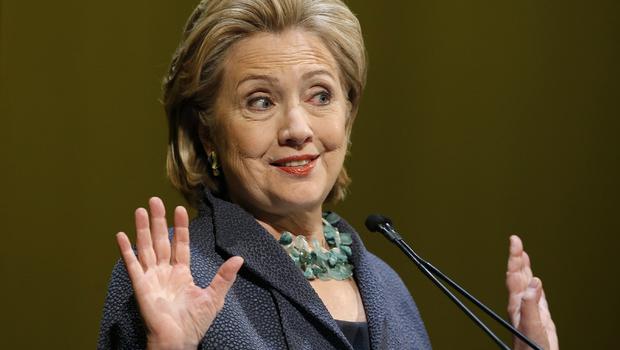
Under normal circumstances — without such historic potential consequences on the line — President Obama’s choice for the U.S. Supreme Court would be considered damn near perfect.

Merrick Garland fits the bill — to the letter.

Brilliant legal scholar; strict adherent to the Constitution; moderate judicial philosophy; meticulous writer; tremendous personal story; varied legal career in private practice and as a federal prosecutor; many years of experience on the federal bench; virtually unanimous admiration among his peers.

Then again, he’s got this particular problem that is not of his making.

He’s been chosen to the highest court in the land during an election year. That, by itself, isn’t a deal breaker. Except that Republicans who control the U.S. Senate, which must confirm the appointment, have made it one.

They’ve declared that Obama shouldn’t get to pick someone to replace the late conservative ideologue Antonin Scalia during the heat of a presidential election campaign. They want to hand that duty over to the next president who, they hope, will be a Republican.

They’ve declared that the current president doesn’t get to his job, which the U.S. Constitution says includes making appointments to the federal bench. He’s made a big choice. Garland is been named to fill some huge shoes on the Supreme Court.

His only drawback, if you want to call it that, is that he isn’t the rock-ribbed, ironclad conservative in the mold of Scalia. Oh, no. Garland is a moderate. He’s a mainstream, thoughtful jurist with a gleaming reputation for careful legal scholarship.

What, do you suppose, will be the American Bar Association’s rating of this guy, when the ABA decides to make that declaration? I’ll predict he’ll get the highest recommendation possible from the bar.

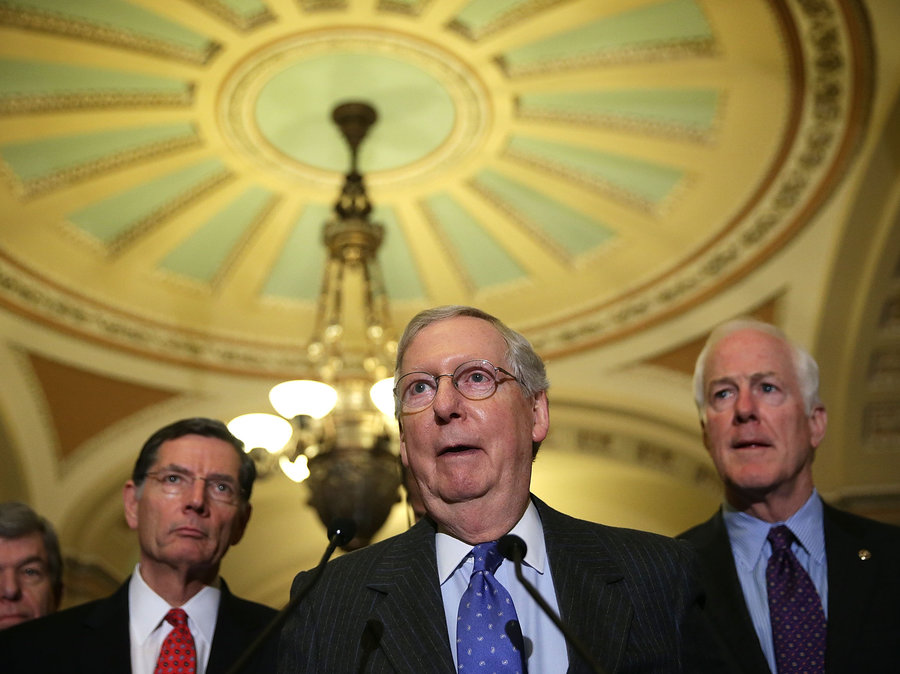
So what in the world is holding up his confirmation? It’s the obstruction of the Senate Majority Leader, Mitch McConnell, who vows to block any attempt even to conduct a confirmation hearing before the Senate Judiciary Committee.

And to think that McConnell had the brass to say that the president is “politicizing” this pick by criticizing Republicans’ effort to block it.

The stunning lack of self-awareness here is beyond belief. It’s McConnell and his Senate lieutenants who have politicized this process by stating that the 44th president of the United States shall not have his judicial appointment even considered for confirmation.

Why? Because they hope to get one of their fellow Republicans elected president this November.

Something tells me McConnell and his gang of Senate GOP obstructionists are flirting with political disaster if they insist on continuing to play this foolish game.


Obama: Trump is GOP creation

POTUS-Austin2016-003A_jpg_800x1000_q100

Count me as one American who was impressed with former Republican presidential nominee Mitt Romney’s brutal critique of Donald J. Trump’s rise to political power.

I listened the other morning to every word of Mitt’s 17-minute speech in Utah. (Yes, I’ll call him Mitt because I like the sound of the name.)

Mitt sought to stand for the GOP “establishment” in its effort to stop Trump’s nomination as the party’s next nominee for presidential of the United States.

It didn’t go over universally well, though.

Some folks wondered whether Mitt was the right guy to carry the message forward. After all, he lost fairly handily to President Obama in 2012 and, by the way, he did so even with the coveted endorsement of one Donald J. Trump.

One of the doubters happens to be the president his own self.

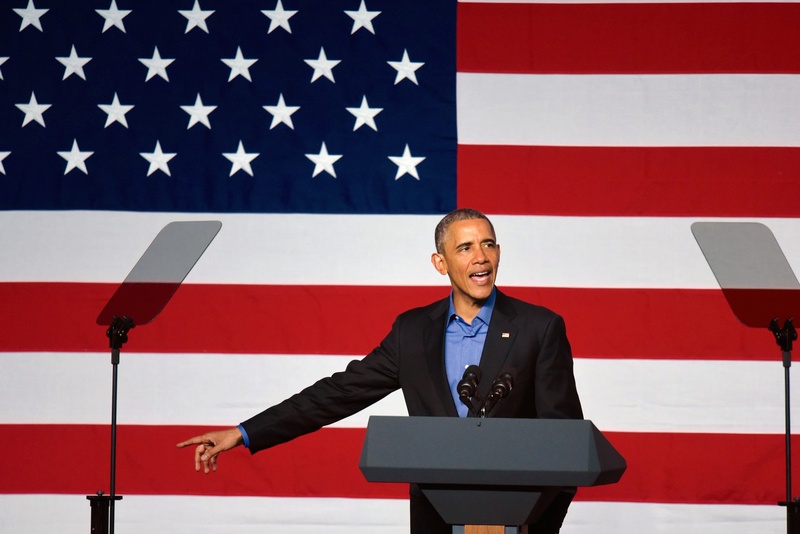
Obama said the GOP is just “shocked that there’s gambling” going on here.

Speaking at a Texas Democratic fundraiser, Obama took particular pleasure in reminding donors that the GOP establishment stood by silently while Trump and others promoted the wacky notion that the president was born in a faraway land, that he was an illegitimate candidate for president.

“As long as it was directed at me, they were fine with it. It was a hoot,” Obama told the Austin crowd.

I understand where the president is coming from on this matter. Indeed, it continues to boggle my admittedly feeble mind that Obama’s place of birth was even an issue in the first place, given that his mother was an American citizen, which by my reading of the U.S. Constitution granted U.S. citizenship to Baby Barack the moment he took his first breath.

But the GOP brass didn’t care to silence the idiocy being spewed by Donald Trump and others.

So now they’re shocked and dismayed at what they’ve helped create?

I still stand behind Mitt’s criticism of Trump. If only, though, he would acknowledge the mistake he made in seeking Trump’s endorsement.


Which religious liberties have we lost?

liberty religion

My wife and I are going to start our day tomorrow the way we usually start every Sunday.

We’ll get up. Have our morning coffee. We’ll eat a light breakfast. Read the newspaper. We’ll get cleaned up. Get dressed. Then we’ll go to church … more than likely.

We’ll pray. Sing a few hymns. Listen to the preacher deliver his message from Scripture. Pray some more. Then we’ll leave the church and go through the rest of our day.

I keep wondering in the context of this hyper-heated presidential campaign: Which religious liberties have my wife and I — as red-blooded, taxpaying, patriotic Americans — lost?

One of the remaining Republican candidates for president keeps insisting that our “religious liberties” are being peeled away.

Texas U.S. Sen. Ted Cruz keeps harping on the notion that “we are one liberal justice away from having our religious liberties” stripped away. That’s what he says. The crowds to whom he speaks eat it up. He says he won’t “compromise away our religious liberties.”

Thanks, Ted. From where I sit, young man, we’re still quite free in this country to worship as we see fit. Or not worship. The Constitution that Cruz and others say they revere spells it out quite clearly: Government shall make no law that establishes a state religion. That means, as most of us understand it, that we are free to adhere to any deity of our choice.

You want a real threat to religious liberty? How about banning individuals from entering this country solely because they happen to be Muslims? Yes, I know that Cruz opposes the idea put forward by his fellow Republican candidate for president, Donald J. Trump. But if he’s going to raise hell from the campaign stump, he ought to take his best shot at that patently idiotic and unconstitutional idea.

My family has made our religious choice. We did so all on our own. Our religious liberties are quite intact and I am quite certain they are as strong as they’ve ever been.

I thank God every day for those liberties.

So let’s quit dangling those dubious threats, Sen. Cruz, to the liberties that our Constitution’s very First Amendment guarantees for all of us.

Cruz and others suffering from some form of political paranoia might perceive those threats to be real.

I don’t.

Litmus tests: virtually unprovable

litmus-test-300x199

President Obama has a big decision to make.

Who’s going to become the next nominee to the U.S. Supreme Court?

Now comes the inevitable question: Uh, Mr. President, do you have a litmus test that a nominee must pass?

Gee, how does the president answer that one? “Of course not! I don’t believe in litmus tests. My nominee will be the most qualified person I can find. He or she must be able to interpret law, not make it, and they must be studious as they ponder the constitutional decisions he or she must face.”

Actually, it is my considered opinion that answers like that are full of so much mule dung.

Of course there are litmus tests! The issue facing the politicians doing the appointing is that they dare not call them such.

Does anyone in their right mind believe that when, say, a president of the United States looks across a conference-room table at a prospective nominee that he or she doesn’t ask them The Question?

In a case such as this it might be: “Would you vote to uphold the Roe v. Wade abortion decision?” Or, “would you stand behind the Affordable Care Act?” How about, “would you continue to uphold the ruling that gay couples are guaranteed under the 14th Amendment to the Constitution to be married?”

Do presidents ask those questions? Sure they do. You know it. I know. The presidents know it. The people they interview know it.

Let’s not be coy, either. Presidents of both parties ask them in search of the correct answer. Does anyone really believe, for instance, that President Reagan didn’t at least know in advance how Antonin Scalia would lean on, say, the Roe v. Wade decision when he considered him for a spot on the court? Do you think he might have asked him directly? I believe it would have been a distinct possibility.

Are all these meetings open to public review? Are they recorded for posterity? No and no.

That’s why the “litmus question” is a monumental waste of time. The answers mean nothing to me.

If only presidents would be candid. “Sure, I have tests that candidates must meet. Hey, I was elected to this office and most voters who cast their ballots for me knew what they were getting. Elections have consequences.”


Act on the president’s court nominee

gettyimages-505901208-6ba58e5bee050257b43c9d62a921035a661e4702-s900-c85

I remain strongly in support of presidential prerogative.

It’s been one of my core beliefs ever since I started thinking seriously about policy, politics and government.

When I read stories over the past few days about how Senate Republicans plan to block President Obama’s pick for the U.S. Supreme Court — before even knowing who it is — it sends me into deep orbit.

The GOP is digging in. So is the White House.

In my view, the president’s constitutional authority should override the Senate’s role in this decision.

I’ll reiterate here something I hope hasn’t been lost on those who read this blog. My belief in presidential prerogative crosses party lines. This isn’t a partisan issue with me.

In 1991, Republican President George H.W. Bush nominated Clarence Thomas to the high court to replace Justice Thurgood Marshall. I stood behind the president on that pick while working for a newspaper in Beaumont. Did the president overstate Thomas’s qualifications for the court by calling the “most qualified man” he could find? Yes, he did.

But that was his call to make. George H.W. Bush was our president, who had been elected decisively in 1988. He earned the right to select someone with whom he felt comfortable. As for the allegations of sexual harassment that arose late in the confirmation process, well, I didn’t buy entirely into what was being alleged.

Four years earlier, President Ronald Reagan selected Robert Bork to the court. Was he the kind of jurist I would have picked? Heavens no! But that wasn’t my call to make. It belonged to the president. The Senate saw it differently and rejected Bork’s nomination to the court — despite Bork’s well-known brilliance and knowledge of constitutional law — on grounds that he would fundamentally reshape the direction of the Constitution.

The process worked as it was intended, even though I believed then as well in the principle of presidential prerogative.

Barack Obama is equally entitled — just as any of his predecessors have been — to put someone forward to sit on the nation’s highest judicial authority. The death of conservative icon Antonin Scalia has shocked us all. The court won’t stop functioning with only eight justices.

The larger problem, though, might lie in the Senate, where Democrats are vowing revenge if Republicans follow through with their threat to block the president’s court nominee from even getting a hearing.

The Senate could shut down. Government could stop. The upper congressional chamber could become a logjam of legislation approved by the House, which cannot become law over a dispute that Senate Republicans will have started.

For what purpose? To deny the president of the “other party” a chance to fulfill his constitutional duty, to which a majority of Americans entrusted to him twice with their votes.

Republicans want to wait for the next president to take office. They are gambling that the 45th president will be one of their own. It’s a risky gamble, though, that threatens to stymie everything else that their own constituents elected them to do — which is to govern.

The Birther in Chief strikes again

trump-is-a-birther1

Here we go … one more time.

First, the target was Barack Obama, the 44th president of the United States. He was born somewhere other than the United States, the allegation went.

Second, the target was Ted Cruz, junior senator from Texas, who actually was born in Canada to an American mother and a Cuban father.

Now it’s Marco Rubio, the junior senator from Florida, who was born in the Sunshine State, but whose parents immigrated there from Cuba.

All three men allegedly are constitutionally ineligible to run or serve as president.

The man making the assertion? Donald J. Trump, the frontrunner for the GOP presidential nomination.

Trump now says Rubio might not be eligible. His parents’ aren’t American, Trump said. Oh, wait. Rubio was born on U.S. soil. U.S. law says he’s a citizen automatically. Doesn’t matter, Trump asserts. He questions the eligibility, just as he has done with Cruz, even though U.S. law granted young Ted citizenship because Mama Cruz is an American citizen.

And the president? Well, he was born in Hawaii. Trump hasn’t stopped questioning his eligibility, either, even though the president’s late mother also was a U.S. citizen.

Trump is relying on others’ assertions. He’s using social media to send out the doubts that he denies planting. Sure thing. He’s adding plenty of irrigation to the doubts, though, by continuing to provoke needless discussion and unfounded questions about one of his opponents.

Will this latest specious assertion do any damage to Trump? I’ve noted before that I am done predicting such things. This campaign has entered a parallel universe where the normal rules of decency and decorum no longer apply.


It’s all about the court balance

90

President Obama picked up the phone today and made a couple of important calls.

One of them went to Senate Majority Leader Mitch McConnell; the other went to Senate Judiciary Committee Chairman Charles Grassley. Both men are Republicans. The president is a Democrat.

The president informed the senators he intends to make a pick for the U.S. Supreme Court. And, according to White House press secretary Josh Earnest, Sens. McConnell and Grassley both voted in favor of President Reagan’s “lame duck” selection of Anthony Kennedy to join the court in 1988, which was just as much of an election year as 2016.

McConnell, though, says the current president should notpick the next justice. That task belongs to the next president, he said.

What has changed?

It’s the balance of the court. It means everything. Every single thing.

You see, the late Justice Antonin Scalia, the man Obama wants to replace, was a conservative stalwart on the court. The president is not a conservative; therefore, his appointee won’t echo the judicial philosophy of Justice Scalia.

The next justice — if he or she is approved by the current Senate before the end of this year — is likely to change the fundamental balance of the court, which has comprised a thin conservative majority.

Senate Republicans don’t want the court balance to change. They’ll do whatever they can to prevent the president from making the pick.

There’s just this one little issue that, by my way of thinking, should matter more than anything else. The Constitution grants the president the authority to make the appointment, which this president said he’s going to do. It also grants the Senate the authority to vote whether to approve or deny the appointment. It doesn’t require the Senate to act.

If the Republican-controlled Senate is going to stymie the president, then it faces a serious charge of obstruction. Senate Republicans keep denying the obstructionist label.

A failure, though, to act in a timely fashion on this appointment gives even the casual observer ample cause to suggest that, by golly, we have just witnessed a case of political obstruction.

If the president selects someone who is eminently qualified and who has a proven record of judicial moderation — which conservatives still will see a serious break with the conservative judicial record built by the late Justice Scalia — then shouldn’t the Senate give that nominee a fair hearing and a timely vote?

I would say “yes.” Without equivocation.


Court to rule on Cruz’s eligibility to run

IMG_0631_JPG_312x1000_q100

It won’t be the “big court” that will decide it, but a judge in Illinois has agreed to hear a case that’s been dogging a major Republican presidential candidate ever since he entered the race.

U.S. Sen. Ted Cruz of Texas was born in Canada; his mother is American, a U.S. citizen. His father is Cuban.

Cruz has maintained that because Mom is an American, he was a U.S. citizen the instant he was born. Thus, says the candidate,  he is eligible to run for president as a “natural born citizen.”

But a fellow who happens to support Ben Carson, another GOP presidential candidate, has filed a lawsuit to challenge Cruz’s assertion.

Of course, we have Donald J. Trump continuing to threaten to sue.

The Circuit Court of Cook County, Ill., has agreed to hear the case. I wish the U.S. Supreme Court would hear it; perhaps it will … eventually.

To be honest, I am tired of this kind of hatchet-job politicking on candidates. I do not want Cruz to become president of the United States. However, I believe he is right to say that he is fully eligible to run for the office.

Let the judge decide.

I’m not a legal or constitutional scholar, but the way I read U.S. law as it refers to citizenship, the senator has made his case.

I doubt a lower court decision is going to provide any closure. Still, I am glad that someone with legal authority — and presumably the educational background — to make an informed decision will take us closer to ending this ridiculous discussion.


Obama, GOP both spoiling for a fight to the finish

founders

Here’s where we appear to be standing with regard to that vacancy on the U.S. Supreme Court.

President Obama said today he intends to select an “indisputably qualified” person to fill the seat vacated by the sudden death of Justice Antonin Scalia.

U.S. Senate Republicans say they intend to block anyone the president nominates.

Who’s on the right side? In my view, it’s not even close.

The president is right. GOP senators are wrong.

Indeed, it’s looking now as though that no matter who gets the call from the president that he or she is going to face a serious fight.

My hunch now is that Barack Obama welcomes the fight. Why? He will wage it from a position of strength.

He’s got the Constitution on his side.

This appointment could change the makeup of the court, which has a slim conservative majority among its members.

Right there is the crux of Republican obstructionism.

Justice Scalia was the shining light among the conservatives serving on the court. He led what’s been called a “conservative renaissance.” His brilliance was beyond question. So was his commitment to conservative principles.

President Obama has another year left in his term. Some have suggested that if Republicans were to get their way, they effectively would eliminate the fourth year of the president’s term. They oppose — on some made-up principle — the idea of a lame-duck president making an appointment to the Supreme Court. They want the next president to make the call.

Well, as Obama said today, those who claim to adhere to strict constitutional principles are creating them out of thin air. The Constitution says the president should nominate people to the federal bench and that the Senate should vote up or down on those nominations.

Both sides are spoiling for a fight. So, let’s have at it.

Barack Obama is set to throw the first punch when he nominates someone to the highest court in the land.

Go for it, Mr. President.


It’s wrong now … and was wrong then

Sen. Chuck Schumer, D-N.Y., expresses his dismay at Russian Vladimir Putin leader granting asylum to American secrets leaker Edward Snowden, at a news conference at the Capitol in Washington, Thursday, Aug. 1, 2013. Defying the United States, Russia granted Edward Snowden temporary asylum on Thursday, allowing the National Security Agency leaker to slip out of the Moscow airport where he has been holed up for weeks in hopes of evading espionage charges back home. (AP Photo/J. Scott Applewhite)

I believe it was that great fictional Native American sidekick — Tonto — who said to the Lone Ranger, “Two wrongs don’t make a right.”

Thus, it amuses me when I hear critics of this blog and others take note of Democratic U.S. Sen. Chuck Schumer’s declaration in 2007 that the Senate shouldn’t approve any of President Bush’s Supreme Court appointments.

They bring that up to — more or less — justify a statement by Republican U.S. Sen. Mitch McConnell to do the same thing regarding the vacancy on the U.S. Supreme Court.

If Schumer can make a wrongheaded declaration then it’s OK for our guy to do it, they seem to suggest.

Schumer was wrong then and McConnell is wrong now.

Neither man has distinguished himself on this matter of constitutional authority and presidential prerogative.

So, Schumer’s assertion in 2007 got past me. He absolutely was wrong to say what he said. The U.S. Constitution gives presidents the authority to make appointments to the federal bench and I’ve long given deference to the presidents’ prerogative on these issues. If the president nominates a qualified individual to these posts, then the Senate should grant the appointee a fair hearing — and then vote.

George W. Bush was re-elected in 2004 with voters knowing he would appoint conservative judges to the federal courts. His final Supreme Court appointment came in 2006 when he selected Samuel Alito. Thus, Schumer’s ill-advised admonition a year later became a moot point.

It doesn’t give Senate Majority Leader McConnell any license to erect barriers to the current president doing what he was re-elected to do.