Tag Archives: US Constitution

Divest, Donald! Divest

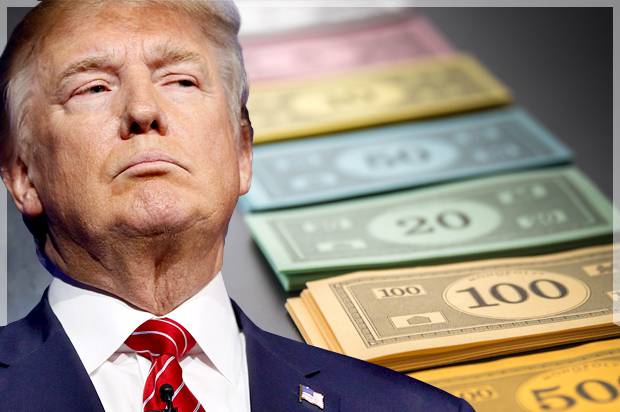
Of all the unexploded political ordnance laying in front of Donald J. Trump as he prepares to become president, one of them poses a seriously grave threat.

It’s this issue of divestiture … or Trump’s stubborn refusal to do what he should. That would be to divest himself fully of the enormous fortune he has acquired around the world.

He has chosen instead to hand all business operations over to his eldest son. Don Jr. is going to handle all the business dealings and Dad won’t have anything to do with it. None whatsoever.

That’s good enough for the president-elect to clear him of any potential conflicts of interest. Or so he says.

I am afraid it likely won’t provide nearly enough separation.

Indeed, this is just yet another demonstration of the non-traditional approach that Trump is taking toward his transition from fully private billionaire business executive to fully public leader of the free world/head of state and government/commander in chief.

The situation facing Trump is written in Article II of the U.S. Constitution. It’s called the “emoluments clause,” which has become common knowledge now among many Americans who before this election had never even heard of it.

The emoluments clause is founding father-speak that translates to “anti-bribery.” It prohibits a president from taking money from a foreign government, the acceptance of which opens the president up to being compromised as he conducts the affairs of state.

Trump is facing tremendous exposure, say, if Don Jr. consummates a business deal with a foreign government that deposits a few billion dollars into an account that has Daddy Donald’s name on the letterhead. The president-elect believes simply allowing his son do the transaction clears him of any suspicion. Wrong!

Divestiture of one’s assets is not a novel concept. My goodness, Trump’s team is going to make incredible sacrifice serving him and the government he will run. It is a reasonable expectation for the president himself to separate himself completely from his business holdings.

Short of complete divestiture, a much better option than the one Trump has chosen would be to put his holdings into a blind trust, to be operated and administered by someone with no ties at all either to the president-elect or his family.

The next president is playing a dangerous game of chicken with those who are waiting for a big mistake to occur.
Hold on, Rep. Lewis!

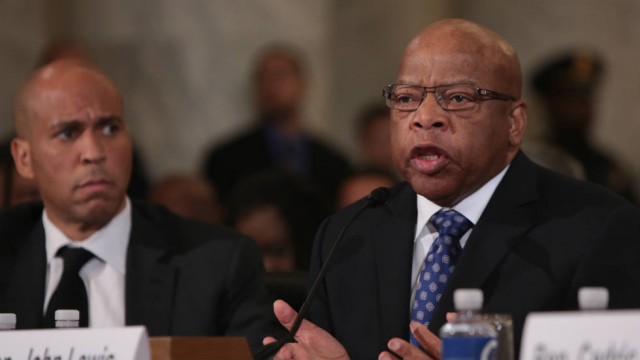
I have great respect and admiration for John Lewis, one of the most iconic members of the U.S. House of Representatives.

This brave and gallant man who was nearly beaten to death during the civil-rights marches of the 1960s, has not only survived, but he has become one of the great voices of Congress.

But he is getting way ahead of himself when he calls Donald J. Trump an “illegitimate” president.

Why is that? Rep. Lewis is concerned about the Russian involvement in our electoral process and allegations that Russian geeks/spooks sought to influence the outcome of the 2016 presidential election — in Trump’s favor.

http://thehill.com/blogs/blog-briefing-room/news/314234-john-lewis-trump-isnt-a-legitimate-president

Let’s hold on, sir!

I happen to share your distaste of Trump as a president. Believe me, I preferred the other major-party candidate over the Republican nominee. I also am concerned about the Russian involvement as confirmed by U.S. intelligence agencies.

However, nothing at all has been established about whether Russian hackers had any tangible impact on the outcome of the election. No one has proved that Russians tilted significant numbers of Americans to vote for Trump over Clinton.

I’ve never been prone to question the “legitimacy” of presidents elected in a controversial manner. I never once, not for a second, questioned President George W. Bush’s election in 2000 — even with the Supreme Court ruling and the fact that he got fewer popular votes than Al Gore. The U.S. Constitution worked as it was supposed to work in that election and Bush’s presidency was granted its legitimacy at that time.

Donald Trump won more Electoral College votes than Hillary Clinton. He, too, is a “legitimate” president-elect by virtue of collecting enough of the votes that count to be elected.

Unless someone can determine beyond a doubt that Russians — or some mysterious unknown intervener — actually had a tangible impact on the 2016 presidential election, then calling Trump’s presidency “illegitimate” is a major step too far.

Do I wish the outcome had been different? Absolutely! It wasn’t. Too bad for those of us who voted for someone else. I’m going to wait to see how this Russian-hacking probe plays out.

‘Our Constitution works …’

You want a feeling of dire straits in the greatest nation on Earth?

This 11-minute video ought to remind us all that we have a resilient nation, with a government cobbled together by a document that is as stout as ever.

I mention this because of those who insist we are about to enter an “unprecedented” era of crisis with the inauguration of Donald J. Trump as president of the United States.

Not so.

On Aug. 8, 1974, the nation watched one president resign and another one take office.

Gerald R. Ford ascended to the presidency after being appointed vice president less than a year earlier; the man he replaced as VP had pleaded no contest to corruption charges. Before that he was a congressman from Grand Rapids, Mich., whose No. 1 ambition was to become speaker of the U.S. House of Representatives.

Fate would steer Gerald Ford down an entirely different path.

As president, he told us that “our long national nightmare is over.” Richard Nixon was flying off to private life in California as President Ford took the reins of power.

And as the new president told us, “Our Constitution works.”

Indeed it does.

I harbor deep reservations and concern about whether the new president is up to the job he is about to assume.

However, I take comfort in the words that an earlier president, Gerald Ford, delivered as we sought to recover from a constitutional crisis the likes of which the nation had never before endured.

We certainly did recover. Whatever missteps the new president makes as he begins his term, I remain confident that our Constitution will continue to work just as our founders intended.

You have to keep the faith.

Still waiting for sign of hope for Trump

Of all the men who have become president of the United States without my vote, I’ve always harbored hope that they would do the right thing for my country, that they would rise to the occasion.

Until now, that is.

I cannot reach that level of hope and optimism for the 45th president.

Donald J. Trump takes office in 19 days. He’ll raise his hand on a holy book, swear to uphold the Constitution, defend the nation against its enemies and follow the laws of the land.

That’ll be his solemn, sacred promise.

So help me, I cannot yet make the leap that allows me to believe he’ll do all those things.

I’ve voted in 12 presidential elections. I have voted for five men won. Of the men who became president, I have relied on my optimistic nature and my belief in our political system to suspend my own misgivings about them.

I am waiting for that moment to arrive as I watch Donald Trump tweet himself silly over this issue and that. I await that moment when I can actually believe he is giving serious and thoughtful consideration to the myriad issues that await him.

Yes, I hope for the best but as of this moment — on the eve of a new year — I fear for a lot less. I won’t fear for the absolute worst, because the worst is too frightening to ponder.

Happy new year, y’all. Let’s all hang on together.

Give the smaller states a louder voice

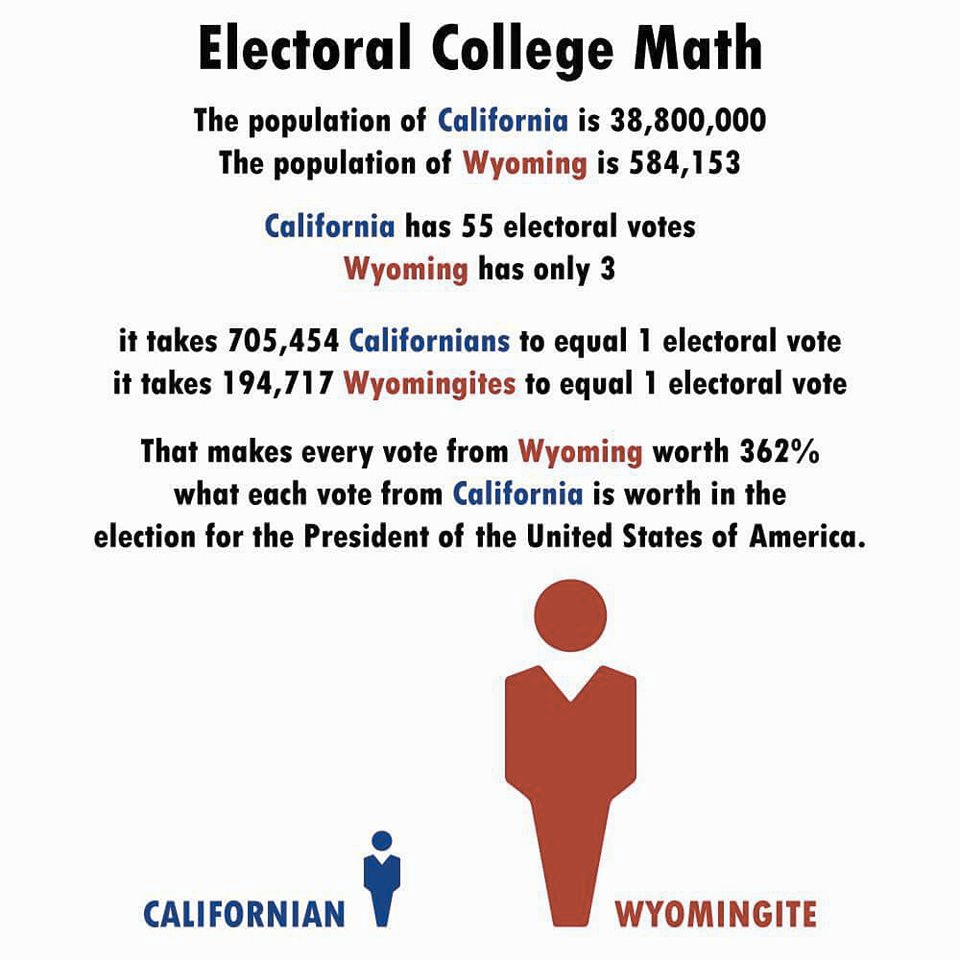
This graphic showed up on my Facebook news feed as a statement against the Electoral College.

I looked at it and then thought: Wait a minute! What’s so terribly wrong with giving smaller states, such as Wyoming, a greater voice in the election of the president of the United States?

California has those 55 electoral votes; Texas has 38 of them; Florida has 29.

I remain officially undecided about whether to toss the Electoral College aside. It would require an amendment to the U.S. Constitution.

But the more I think about it, the less inclined I am to support such a drastic measure.

The 2016 election ended with the “loser” winning nearly 3 million more popular votes than the “winner.” But the guy who won carried the Electoral College, which is what the founders intended.

I happen to be one who doesn’t begrudge little ol’ Wyoming the extra stroke it gets from the Electoral College.

When did power sharing become a bad thing?

U.S. Supreme Court: a victim of collateral damage

Elections have consequences … as the saying goes.

Nowhere are those consequences more significant, arguably, than on our judicial system. Which brings me to the point. The U.S. Supreme Court has suffered what I would call “collateral damage” from the election of Donald J. Trump as president of the United States.

A nearly perfect jurist, Merrick Garland, waited in the wings for nine months after President Obama nominated him to replace the late Justice Antonin Scalia. Sadly, Garland’s political fate was sealed about an hour after Scalia’s death when Senate Majority Leader Mitch McConnell declared that the Senate would refuse to act on anyone Obama would choose for the nation’s highest court.

It was a shameful, reprehensible display of political gamesmanship and yet McConnell and his fellow Senate Republicans had the temerity to accuse the president of playing politics.

McConnell took a huge gamble — and it paid off with Trump’s election this past month as president. Now the new president, a Republican, will get to nominate someone.

The New York Times editorialized Sunday that whoever joins the court will be sitting in a “stolen seat.” The Times, though, offers a pie-in-the-sky suggestion for Trump: He ought to renominate Garland, a brilliant centrist who Republicans once called a “consensus candidate” when he was being considered for the Supreme Court back in 2010.

That won’t happen.

Trump, though, could pick another centrist when the time comes for him to make his selection, the Times suggested. Frankly, I’m not at all confident he’ll do that, either. Indeed, with Trump one is hard-pressed to be able to gauge the ideology tilt of whomever he’ll select, given the president-elect’s own lack of ideological identity.

Scalia was a conservative icon and a man revered by the far right within the Republican Party. His death has put the conservatives’ slim majority on the court in jeopardy. But, hey, it happens from time to time.

President Obama sought to fulfill his constitutional duty by appointing someone to the nation’s highest court. The Senate — led by McConnell and his fellow Republican obstructionists — failed miserably in fulfilling their own duty by giving a highly qualified court nominee the full hearing he deserved.

Now we will get to see just how consequential the 2016 presidential election is on our nation’s triple-tiered system of government.

Will the new president administer some kind of conservative “litmus test” to whomever he chooses? Or will he look for someone who — like Judge Merrick Garland — has exhibited the kind of judicial temperament needed on the highest court in America?

I fear the worst.

Here comes the ‘holiday’; let’s enjoy it

I cannot let this time of the year pass without commenting on a typically ridiculous rant offered by the former half-term Alaska governor, Sarah Palin.

The 2008 Republican vice-presidential nominee just had to go off on the Obama family because it sent out “Happy Holiday” cards during this season. The card features a Christmas-like image of a fireplace and Bo, the Obamas’ dog sitting in front of the crackling fire.

http://latimesblogs.latimes.com/culturemonster/2011/12/sarah-palin-fox-news-attack-white-house-holiday-card-design.html

Palin ventured onto her favorite — and friendliest — venue, the Fox News Channel to spew her nonsense. As the Los Angeles Times reported: Palin told Fox News that she found it “odd” that the card emphasizes the dog instead of traditions like “family, faith and freedom.” She also said that Americans are able to appreciate “American foundational values illustrated and displayed on Christmas cards and on a Christmas tree.”

Sigh …

C’mon, Sarah! Didn’t you see the poinsettias in the picture? They’re universal symbols of Christmas, aren’t they?

As someone who grew up in the Christian faith — I was baptized in the Greek Orthodox Church and became a Presbyterian after I got married more than 45 years ago — I’ve never had a problem with someone wishing “holiday” greetings during this time of year.

And I have grown weary of those who keep getting their hackles raised when they see others do so.

As I keep noting on this blog, the Constitution declares that there shall be “no religious test” for anyone seeking public office. The Obama family, therefore, need not prove to anyone that they believe in the same God as most Americans.

But the “Happy Holidays” greeting is a simple reminder that the nation’s head of state recognizes that not every American celebrates Christmas. Yes, this remains a festive time of the year. So, the first family has chosen this year — as it has during their time in the White House — to celebrate the holiday in a more ecumenical manner.

Some first families have chosen to emphasize the religious aspect of the season. I honor that desire, too.

In this joyous season, though, I have to take mild umbrage — it’s not all that severe, given that it’s Christmas — at a politician yapping about the first family’s choice of message to send out during this holiday season.

Put another way: Zip it, Sarah!

***

This will conclude my snarkiness during the holiday season. I’ll be commenting on this blog throughout Christmas Eve and I might even add a comment or two after we see what Santa brought us during the night.

I’ll get back at it, though, after Christmas. The new year awaits and there will be so-o-o-o much fodder for us to ponder.

Yes, Trump’s presidency will be legit, unless …

I want to get something off my chest about Donald J. Trump’s pending presidency.

He will be the duly elected, legitimate president of the United States of America. The popular vote totals don’t matter. It won’t matter one damn bit to me — really and truly — that he got 46.1 percent of the vote compared to Hillary Rodham Clinton’s  total of 48 percent.

He will be as legit as Bill Clinton’s presidency was in 1992, when he won with 43 percent of the popular vote in that three-way race against George H.W. Bush and H. Ross Perot. His presidency will be as legit as Richard Nixon’s was in 1968, when he won also with 43 percent in another three-way contest with Hubert Humphrey and George Wallace.

I get that many on the left will say otherwise, just as many on the right tried to dismiss President Clinton’s 1992 victory as a fluke, given the presence of Perot on the ballot. It wasn’t. Nor was Trump’s victory.

The popular vote is not the issue that threatens Trump’s presidential legitimacy. It’s the other stuff involving the Russian hackers and whether they actually had a tangible impact on the election result.

Congress needs to get to the root of what happened there. The CIA needs to reveal — to the extent that it can without compromising its own intelligence-gathering capability — what it knows about Russian involvement.

I hope for the sake of the country that we learn the Russians did not actually affect the outcome. I have a serious fear, though, that we might learn something sinister.

But let’s steer away from this vote-total argument.

Trump won where it counted, in accordance with how the U.S. Constitution sets forth the election of presidents.

The case for un-electing Donald Trump

trump

I’m such a fence-straddler on this one.

Our nation’s presidential electors are meeting Monday to choose the next president of the United States. Do they proceed with electing Donald J. Trump, who 306 electoral votes — 36 more than he needs — or do they deny him the votes and throw the election either to candidate he defeated or to the House of Representatives?

The Albany (N.Y.) Times-Union has declared in an editorial that the electors should deny Trump the presidency.

http://www.timesunion.com/opinion/article/Electors-reject-Mr-Trump-10796574.php

Oh, man. I’ve read the editorial twice; I’ll read it some more. The paper makes a strong argument for the electors to yank the presidency away from someone who is wholly unprepared, unqualified and unfit for the job.

Electors from most of the states, though, are bound by state rules that require them to remain faithful to the will of their states’ majority. Other state electors — such as those from Texas — aren’t bound by those rules.

The U.S. Constitution allows such a rebellion to occur. It doesn’t quite address the chaos that would ensue if electors were to deny the Electoral College winner the presidency.

It’s never happened in the history of the Republic, although the House has chosen a president: John Quincy Adams in 1824.

So help me, I cannot yet take that leap.

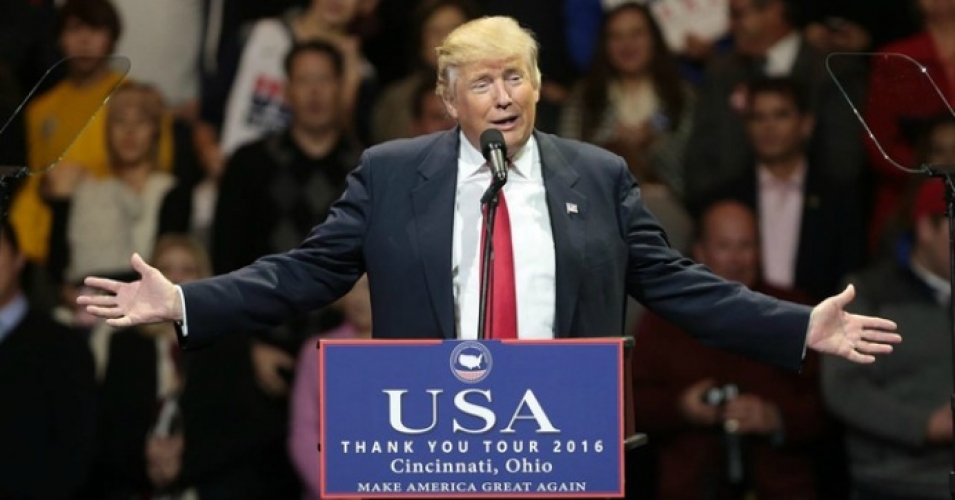
I agree with the Times-Union’s assessment of Trump’s ability to do the job. His campaign-style “thank you” rallies are troubling in the extreme; he should be spending his time learning about the details of governing a nation comprising more than 300 million citizens. He’s selecting a collection of individuals for his Cabinet who have limited experience dealing with the agencies they would lead and in some cases are openly hostile to the policies they are being asked to implement.

And we have this issue of alleged Russian tampering with our electoral process. Did the president-elect benefit directly from foreign interference?

It is true, as the editorial points out, that the founders set up the Electoral College to shield the nation against “foreign influence.”

The founders also set up a mechanism for Congress to act as a check against presidential overreach. It’s called impeachment. If a president crosses any one of the many boundaries set up to limit the power of the office, the House can intercede with articles of impeachment, followed by a trial in the Senate.

I’m going to give this some more thought. I might get to you later, before the Electoral College meets.

I’ve been watching the presidential electoral process closely for four decades and I’ve never seen questions like these raised prior to the transition of one presidency to another.

It’s beginning to stress me out.

Here’s a possible constitutional crisis of major proportion

electoral-college-banner

Those 538 men and women who are set to meet Monday to elect the next president of the United States are poised to make some serious history, one way or the other.

Most of them come from states that voted for Donald J. Trump, the Republican, over Hillary Rodham Clinton, the Democrat. They comprise the Electoral College, which the nation’s founders established in the 18th century to choose the person who would govern the country.

Here’s the big-time catch: some of them are “faithless,” which means they aren’t necessarily bound by the dictates of their states’ majorities. Add to that some major-league questions about whether Russian intelligence agents and computer hackers influenced the outcome the election and you have a situation of monumental proportions brewing … possibly.

Enough of those electors might decide they can’t vote for Trump and, thus, deny the president-elect the 270 electoral votes he needs to take office in January.

What happens then if, say, not enough of them switch their votes to Clinton, making her the next president? The U.S. House of Representatives, controlled by the GOP, then gets to pick the next president.

I don’t believe this will happen. I believe Trump will collect enough votes from the Electoral College to take the oath on Jan. 20. He will become the 45th president of the United States; Mike Pence will become the vice president.

Trump likely will have the Cabinet chosen by then. The U.S. Senate committees charged with recommending whether these nominees should be confirmed will get to work and make those critical decisions.

But some of the electors have asked to be briefed fully by the U.S. intelligence apparatus on what the Russians did and whether they actually influenced the outcome of the election. Just suppose the spooks tell the electors that, yep, the Russkies succeeded in getting their man elected. What happens then if you’re an elector from a state that voted for Trump and you can’t in good conscience cast your vote for the winner?

Lots of answers yet to come forward before the big day next week.

This could be the most fascinating supposedly pro forma electoral procedure in the history of the Republic.

It could be …