Tag Archives: US Constitution

Trump creates a ‘word game’ for some of us

Word games. We all play them. OK, some of us do. Maybe even most of us do.

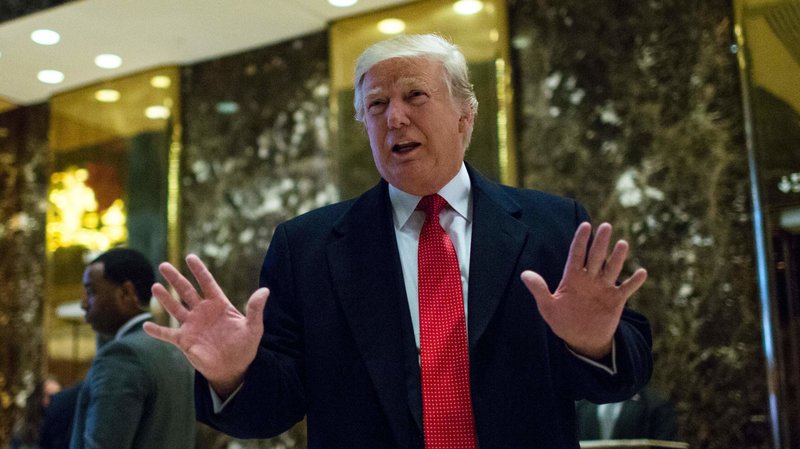
I have concocted a word game of my own. It involves the 45th president of the United States and it goes like this: I refuse, early in the presidency of Donald J. Trump, to type the words “President” and “Trump” consecutively. (Please note I didn’t do so just now.)

I am using High Plains Blogger as my insignificant form of protest over Trump’s election this past November.

Please do not misconstrue my intent. Nor should  you ascribe anything other than one voter’s displeasure at the outcome. I do not intend to launch any kind of public demonstration. I won’t carry a sign on the courthouse square or shout down a Trumpkin whenever I encounter one — and believe me, living here in the Texas Panhandle, they’re everywhere.

Moreover, my refusal to type those two key words consecutively does not mean I refuse to accept the fact that Trump is the duly elected president of the United States. I know how the U.S. Constitution works. Trump won the election. He got enough Electoral College votes to qualify him as president. He is a “legitimate president.” And as near as I can tell, he was born in the United States of America, too!

There. I’ve just repeated something I’ve stated already. So, those of you who are inclined to put words in my mouth, you are welcome to resist doing so now.

Back to my point.

It is quite possible I will grow weary of playing this word game. Given that I tire occasionally of playing games of any kind, I have given you some advance notice of what might transpire. I cannot predict when that will occur. I cannot predict when I’ll succumb to the temptation to attach the presidential title directly in front of Donald Trump’s name.

It might occur when the president does something that I can support with a full-throated cheer. I don’t know what that would be. It could occur if he declares that Vladimir Putin is a really bad guy and that he’ll add more anti-Russia sanctions on top of what his predecessor enacted; he might deliver a soaring State of the Union speech that hits many of the hot-button issues near and dear to my heart; he could nominate someone to the U.S. Supreme Court who isn’t a right-wing ideologue but instead is a mainstream centrist in the mold of, say, Merrick Garland — who got stiffed by Republicans when he was nominated by Barack Obama.

I don’t know. I’m waiting for the moment when my pique will pass.

In the meantime, I’ll keep playing my word game. Humor me.

Next up: Supreme Court nomination

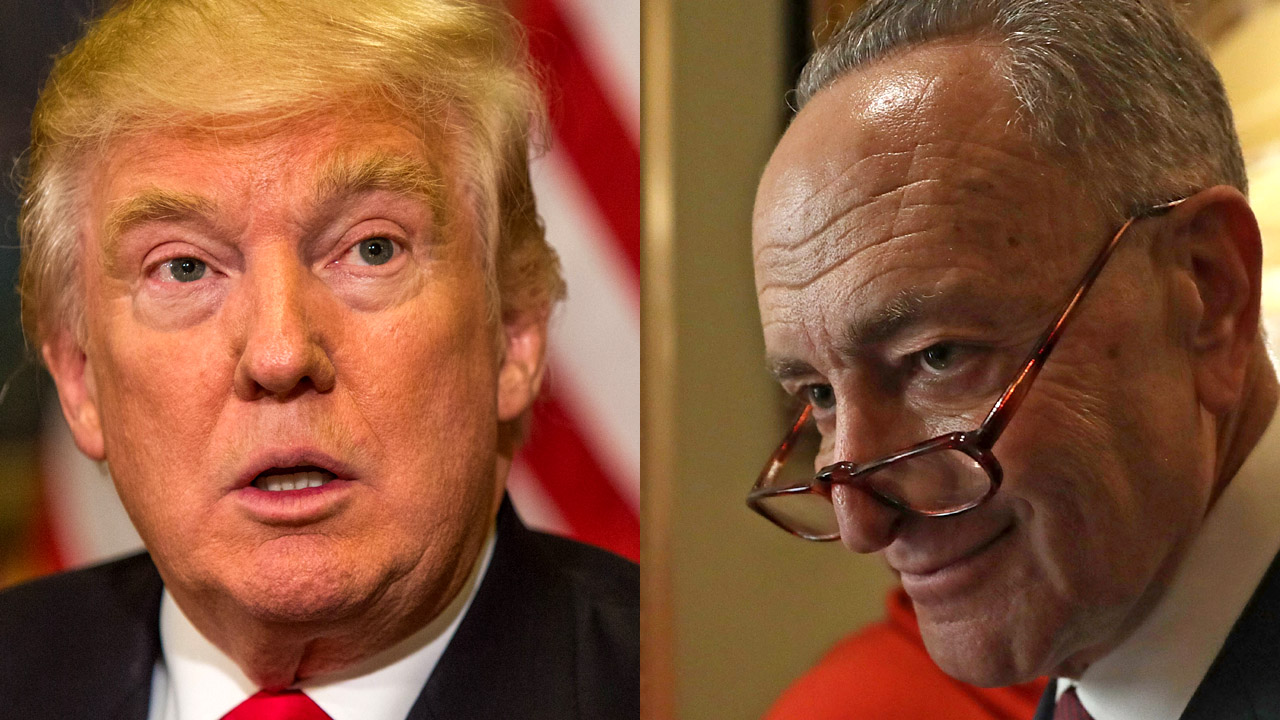
U.S. Senate Minority Leader Chuck Schumer has thrown down the gauntlet: He is prepared to fight to keep the vacancy on the U.S. Supreme Court unfilled for the next year, maybe longer.

Don’t do it, Mr. Leader.

The president is going to nominate someone to fill the vacancy created nearly a year ago by the death of Justice Antonin Scalia. President Obama nominated Merrick Garland to replace Scalia, but Senate Republicans blocked the nomination in a brazen display of petty partisanship by refusing to give Judge Garland a hearing and a vote.

They were as wrong and petty as could be.

We now have a new president and Donald J. Trump is as entitled to make his selection as Barack Obama was entitled. Thus, the Senate should proceed with confirmation hearings and then a vote.

I’ve noted many times already on this blog about my belief in presidential prerogative. Yes, the Constitution also grants the Senate the right to “advise and consent” to whomever the president nominates.

Schumer, though, should at least wait to see who the president nominates before deciding whether to block an appointment.

I agree with Schumer and Senate Democrats on this point: Trump should select a mainstream candidate. The president need not pick a fight with Democrats just for the sake of picking a fight. If he presents a nominee who is considered to come from the right-wing fringe of the judicial/political spectrum, then perhaps the Senate has grounds to protest the nomination.

Blocking a Trump nominee just for the sake of blocking someone — or to exact revenge — is no more acceptable than the idiotic effort to block an Obama nominee.

This isn’t ‘peaceable’ assemblage, folks

Protestors have every right to protest.

They have no right to damage or destroy personal property, which has been occurring today during the inauguration of Donald J. Trump as president of the United States.

I am going to submit that this is the most profoundly disappointing element of today’s events. No, it’s worse than that. It’s disgraceful.

Indeed, I get that many Americans are unhappy with what is transpiring today. I am one of them. Some members of my family are, too, along with some of my best friends.

I don’t believe any of them have burned motor vehicles or broken storefront windows or tossed things in the direction of others to voice their disagreement with public policy.

Those who are angriest are more than welcome to spare me the “this is free speech” malarkey. It’s nothing of the kind. It’s criminal mischief.

The First Amendment to the U.S. Constitution guarantees the right “… of the people peaceably to assemble, and to petition the government for a redress of grievances.”

Not a single word can be found in there that condones vandalism or violence.

Shame on those who have sullied a time-honored tradition.

Will the new president violate the Constitution right away?

An argument making the rounds for the past several months goes something like this: Donald J. Trump is going to be in direct violation of the U.S. Constitution at the moment he takes the oath of office as president of the United States of America.

The source of the violation? His myriad business interests.

This isn’t just a Democratic Party point of view. Republicans also are buying into a notion that Trump’s refusal to separate himself completely from his business dealings is creating a monstrous potential for conflict of interest.

http://www.npr.org/2017/01/19/510574687/ethics-lawyers-call-trumps-business-conflicts-nakedly-unconstitutional

According to National Public Radio: “A president is not permitted to receive cash and other benefits from foreign governments,” Norm Eisen tells Fresh Air‘s Terry Gross. “And yet, Donald Trump is getting a steady flow of them around the world and right here in the United States.”

The “emoluments clause” is front and center in this debate. It’s written into the U.S. Constitution. It should be called the “anti-bribery clause.” Trump has refused to divest his myriad business interests; he has refused to put them into a blind trust.

NPR, quoting Richard Painter, former ethics lawyer for President George W. Bush, reports: “The president needs to focus on protecting the United States and American interests in a very dangerous world,” Painter says. “I really hope that President Trump takes the steps he needs to, to be free of conflict of interest in that endeavor.”

There are questions about whether Trump’s business dealings abroad could interfere with U.S. policy. Trump refuses to release his tax returns. He declines to provide detailed financial reports. He keeps saying this discussion is a media creation.

Holy cow, dude! You’ve got some serious experts on this stuff suggesting you’re going to violate the Constitution you will swear to “defend and protect.”

Does a direct violation of that sacred oath create a reason for, um, impeachment?

Let’s all wait for this to play out.

Two men, same issue, different debate

I want to revisit — I hope for the final time — this issue of presidential citizenship and eligibility.

It has returned to the public discussion yet again. U.S. Rep. John Lewis questioned the “legitimacy” of Donald Trump’s presidency; Trump fired back a nasty response. Lewis’s friends and allies say he is justified to question Trump’s standing as a legitimate president because Trump made such an issue for so many years about whether Barack Obama’s presidency was legit.

The issue with the president’s legitimacy stemmed from bogus allegations that he was born outside the United States. His father was a black Kenyan; his mother was a white American. Trump demanded for years that the president produce a birth certificate to show he was born in Hawaii, as he has said all along. Still, Trump didn’t let up … until late in the 2016 presidential campaign.

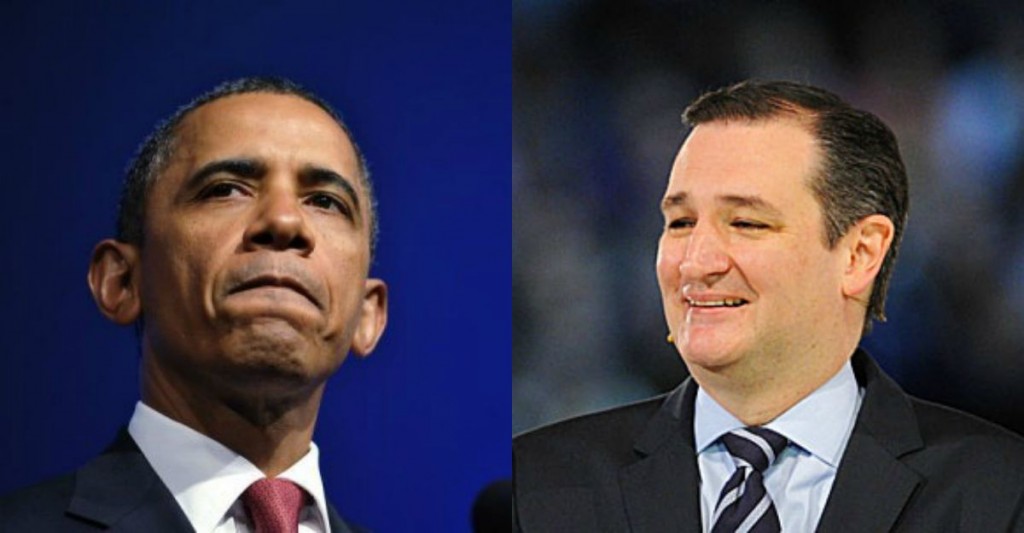
Another prominent politician also faced questions from Trump. U.S. Sen. Ted Cruz of Texas ran for the Republican presidential nomination this past year. Trump questioned whether he was eligible to run because Cruz, in fact, was born in Canada. His father is a Cuban native; his mother is an American.

Cruz’s answer to the equally bogus claim about his eligibility? He said his mother’s U.S. citizenship made him a U.S. citizen the moment he was born. U.S. law grants citizenship by birth status to anyone who’s born to U.S. citizens, no matter where the birth occurs. Cruz said his mother’s citizenship answers the question about whether he is a “natural born citizen,” as required under the U.S. Constitution for anyone seeking to run for president.

Problem solved. Yes? Not exactly.

I am puzzled about how it was that Cruz was able to settle this “birther” matter with an explanation that stuck while Obama’s assertion that he was born in Hawaii never was quite accepted by everyone.

Barack Obama and Ted Cruz both were born to American mothers. Both men were U.S. citizens the instant they came into this world. Why, then, would it even matter about Barack Obama’s place of birth if U.S. law grants him citizenship at the moment of his birth?

Would any of this disparity have anything at all to do with President Obama’s race? Hmmm?

Barack Obama will deserve a high presidential ranking

This is it, dear reader. The hand-off from one president to another is upon us. With that, I believe it is time to assess the performance of the guy who’s leaving office and perhaps try to compare what I believe he accomplished to what was projected of him when he took office.

Bear in mind, bias is implicit in everything anyone says … particularly when it regards political matters. I have my bias, you have yours. Some of our bias might mesh. Much of it might not.

How has Barack Obama done as the 44th president of the United States of America? I’ll give him a B-plus, which is a pretty damn good grade, given what he faced eight years ago.

Let’s start with the economy. We were shedding three-quarters of a million jobs each month when the president was sworn in. What did he do? He got his then-Democratic Party majority in both congressional chambers to enact a sweeping stimulus package. It pumped a lot of money into the economy. It helped bail out major industries, such as the folks who make motor vehicles. Banks were failing. The failures tapered off and then ceased.

Was this a bipartisan effort? Hardly. Republicans declared their intention to block everything he tried. The economy would collapse even faster, they said. The stock market, which had cratered, would implode. What happened? The Dow Jones Industrial Average has tripled since then.

Job losses? They disappeared, too. In the eight years of the Obama presidency, the nation has added 11 million or so non-farm-payroll jobs. Unemployment that peaked at 10 percent shortly after Obama took office, now stands at 4.7 percent.

Has the recovery been even? Has it been felt across the spectrum? Not entirely. It is that unevenness that sparked the populist movement led in large part by none other than the master of decadence Donald J. Trump, who parlayed people’s fear into a winning presidential campaign strategy.

All in all? We’re in far better shape today than we were when Barack Obama took office.

National security anyone?

OK, let’s try these facts.

A SEAL team killed Osama bin Laden in May 2011; we haven’t been victimized by a terrorist attack in the past eight years; we have killed thousands of terrorists around the world as our global war has continued; Obama and his diplomatic team negotiated a deal to prevent Iran from developing an nuclear weapon.

Yes, North Korea continues to pose threats. The president erred in saying he would act militarily if Syria crossed a “red line” by using chemical weapons and then failed to act on his threat. We did a poor job of managing the Arab Spring that erupted in Libya and eliminated Moammar Gadhafi.

Immigration reform remains in the distance. Barack Obama has been all-time champion of deportation of illegal immigrants, despite complaints from his foes that he is soft on that issue. And, of course, I believe he is correct to suggest that building a wall is contrary to “who we are as Americans.”

In an area related to national security, I would like to point out that we’ve all but eliminated our dependence on fossil produced in the Middle East. I don’t want to overstate the president’s role here, as much of that is due to private industry initiative. Federal tax breaks, though, have made alternative energy production more feasible, which has reduced our dependence on fossil fuels.

Domestic issues?

Obama’s foes said he would launch raids on Americans’ homes, seeking to take away our guns. It hasn’t happened. There was never any realistic threat that it would.

The president did a 180 on gay marriage and the U.S. Supreme Court — citing the equal protection clause in the 14th Amendment to the Constitution — made same-sex marriage legal in all 50 states.

And, oh yes, the Affordable Care Act has provided health insurance to 20 million citizens who couldn’t afford it otherwise. The ACA is in jeopardy as GOP members of Congress want to repeal it. They don’t have a replacement bill lined up. Obama has said he’d support any improvement to the ACA that would come forth. Is it perfect? No. The president admitted this past weekend that he and his team fluffed the launch of healthcare.gov, which was a huge error.

Barack Obama didn’t bridge the racial divide that splits Americans. The first African-American president perhaps misjudged the national mood; maybe he was too hopeful.

However, that this brilliant man was elected president in the first place in 2008 with substantial majorities in both the popular and Electoral College votes — and then re-elected — tells me that we’ve come a long way from the time when even his candidacy would have been considered unthinkable.

I’m proud to have been in his corner for the past eight years. I haven’t agreed with every single decision he has made … just the vast majority of them. He has made me proud, too, at the way he has conducted himself and the way his family has adjusted to living in that bubble known as the White House.

Millions of Americans will wish him well as he and his beautiful family depart on Friday.

As for the future, well … we cannot predict it with any more certainty than many Americans did when Barack Obama took the stage. Let’s just hope for the best.
Divest, Donald! Divest

Of all the unexploded political ordnance laying in front of Donald J. Trump as he prepares to become president, one of them poses a seriously grave threat.

It’s this issue of divestiture … or Trump’s stubborn refusal to do what he should. That would be to divest himself fully of the enormous fortune he has acquired around the world.

He has chosen instead to hand all business operations over to his eldest son. Don Jr. is going to handle all the business dealings and Dad won’t have anything to do with it. None whatsoever.

That’s good enough for the president-elect to clear him of any potential conflicts of interest. Or so he says.

I am afraid it likely won’t provide nearly enough separation.

Indeed, this is just yet another demonstration of the non-traditional approach that Trump is taking toward his transition from fully private billionaire business executive to fully public leader of the free world/head of state and government/commander in chief.

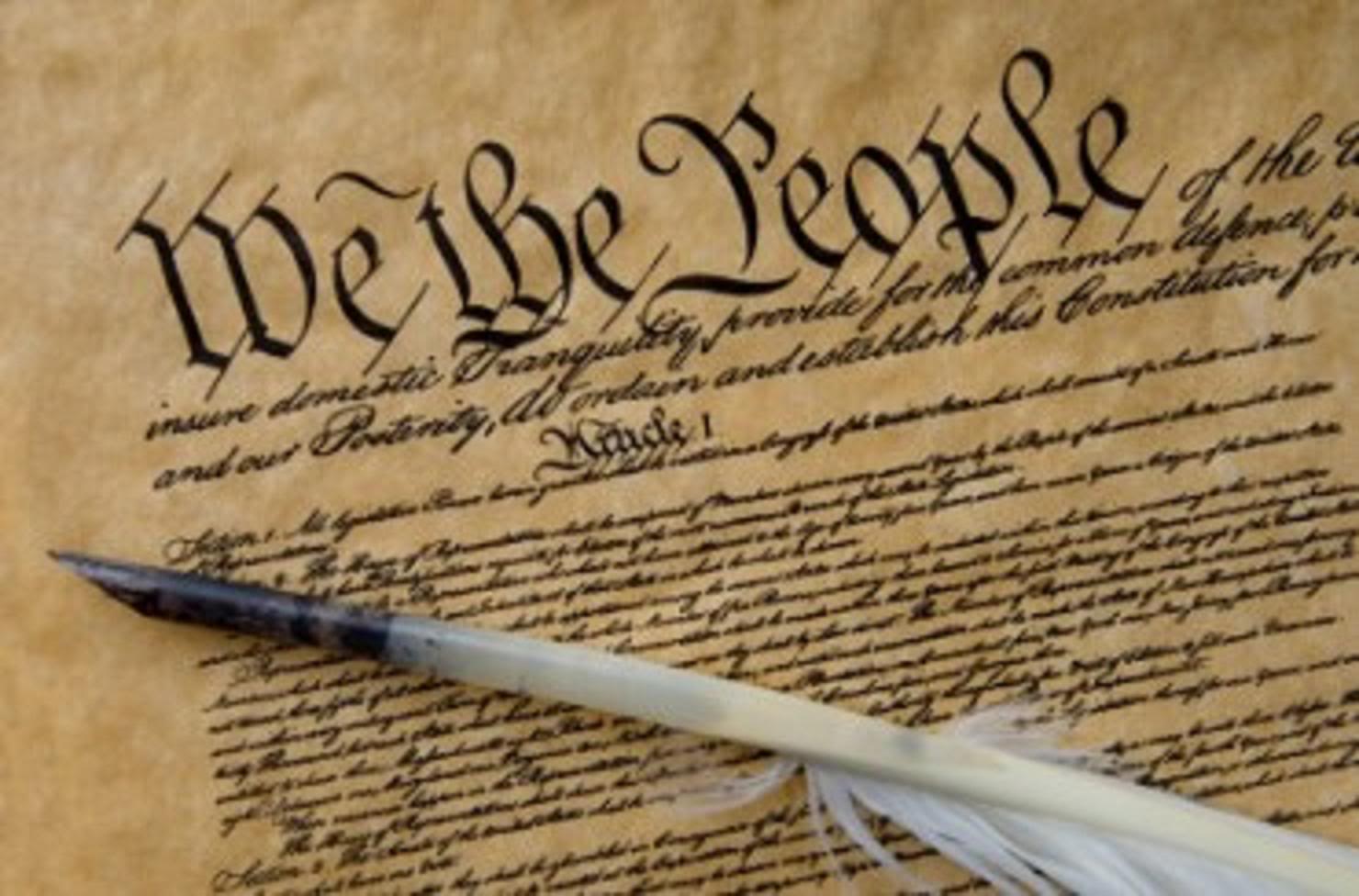
The situation facing Trump is written in Article II of the U.S. Constitution. It’s called the “emoluments clause,” which has become common knowledge now among many Americans who before this election had never even heard of it.

The emoluments clause is founding father-speak that translates to “anti-bribery.” It prohibits a president from taking money from a foreign government, the acceptance of which opens the president up to being compromised as he conducts the affairs of state.

Trump is facing tremendous exposure, say, if Don Jr. consummates a business deal with a foreign government that deposits a few billion dollars into an account that has Daddy Donald’s name on the letterhead. The president-elect believes simply allowing his son do the transaction clears him of any suspicion. Wrong!

Divestiture of one’s assets is not a novel concept. My goodness, Trump’s team is going to make incredible sacrifice serving him and the government he will run. It is a reasonable expectation for the president himself to separate himself completely from his business holdings.

Short of complete divestiture, a much better option than the one Trump has chosen would be to put his holdings into a blind trust, to be operated and administered by someone with no ties at all either to the president-elect or his family.

The next president is playing a dangerous game of chicken with those who are waiting for a big mistake to occur.

Hold on, Rep. Lewis!

I have great respect and admiration for John Lewis, one of the most iconic members of the U.S. House of Representatives.

This brave and gallant man who was nearly beaten to death during the civil-rights marches of the 1960s, has not only survived, but he has become one of the great voices of Congress.

But he is getting way ahead of himself when he calls Donald J. Trump an “illegitimate” president.

Why is that? Rep. Lewis is concerned about the Russian involvement in our electoral process and allegations that Russian geeks/spooks sought to influence the outcome of the 2016 presidential election — in Trump’s favor.

http://thehill.com/blogs/blog-briefing-room/news/314234-john-lewis-trump-isnt-a-legitimate-president

Let’s hold on, sir!

I happen to share your distaste of Trump as a president. Believe me, I preferred the other major-party candidate over the Republican nominee. I also am concerned about the Russian involvement as confirmed by U.S. intelligence agencies.

However, nothing at all has been established about whether Russian hackers had any tangible impact on the outcome of the election. No one has proved that Russians tilted significant numbers of Americans to vote for Trump over Clinton.

I’ve never been prone to question the “legitimacy” of presidents elected in a controversial manner. I never once, not for a second, questioned President George W. Bush’s election in 2000 — even with the Supreme Court ruling and the fact that he got fewer popular votes than Al Gore. The U.S. Constitution worked as it was supposed to work in that election and Bush’s presidency was granted its legitimacy at that time.

Donald Trump won more Electoral College votes than Hillary Clinton. He, too, is a “legitimate” president-elect by virtue of collecting enough of the votes that count to be elected.

Unless someone can determine beyond a doubt that Russians — or some mysterious unknown intervener — actually had a tangible impact on the 2016 presidential election, then calling Trump’s presidency “illegitimate” is a major step too far.

Do I wish the outcome had been different? Absolutely! It wasn’t. Too bad for those of us who voted for someone else. I’m going to wait to see how this Russian-hacking probe plays out.

‘Our Constitution works …’

You want a feeling of dire straits in the greatest nation on Earth?

This 11-minute video ought to remind us all that we have a resilient nation, with a government cobbled together by a document that is as stout as ever.

I mention this because of those who insist we are about to enter an “unprecedented” era of crisis with the inauguration of Donald J. Trump as president of the United States.

Not so.

On Aug. 8, 1974, the nation watched one president resign and another one take office.

Gerald R. Ford ascended to the presidency after being appointed vice president less than a year earlier; the man he replaced as VP had pleaded no contest to corruption charges. Before that he was a congressman from Grand Rapids, Mich., whose No. 1 ambition was to become speaker of the U.S. House of Representatives.

Fate would steer Gerald Ford down an entirely different path.

As president, he told us that “our long national nightmare is over.” Richard Nixon was flying off to private life in California as President Ford took the reins of power.

And as the new president told us, “Our Constitution works.”

Indeed it does.

I harbor deep reservations and concern about whether the new president is up to the job he is about to assume.

However, I take comfort in the words that an earlier president, Gerald Ford, delivered as we sought to recover from a constitutional crisis the likes of which the nation had never before endured.

We certainly did recover. Whatever missteps the new president makes as he begins his term, I remain confident that our Constitution will continue to work just as our founders intended.

You have to keep the faith.

Still waiting for sign of hope for Trump

Of all the men who have become president of the United States without my vote, I’ve always harbored hope that they would do the right thing for my country, that they would rise to the occasion.

Until now, that is.

I cannot reach that level of hope and optimism for the 45th president.

Donald J. Trump takes office in 19 days. He’ll raise his hand on a holy book, swear to uphold the Constitution, defend the nation against its enemies and follow the laws of the land.

That’ll be his solemn, sacred promise.

So help me, I cannot yet make the leap that allows me to believe he’ll do all those things.

I’ve voted in 12 presidential elections. I have voted for five men won. Of the men who became president, I have relied on my optimistic nature and my belief in our political system to suspend my own misgivings about them.

I am waiting for that moment to arrive as I watch Donald Trump tweet himself silly over this issue and that. I await that moment when I can actually believe he is giving serious and thoughtful consideration to the myriad issues that await him.

Yes, I hope for the best but as of this moment — on the eve of a new year — I fear for a lot less. I won’t fear for the absolute worst, because the worst is too frightening to ponder.

Happy new year, y’all. Let’s all hang on together.