Tag Archives: US Constitution

Establishment Clause derails latest refugee ‘ban’

The nation’s founders were wise men. They didn’t craft a perfect governing document, but they got it mostly right.

They established the seven Articles within the U.S. Constitution, then set about to fine-tune it, tinkering with amendments, the first 10 of which guaranteed certain civil liberties to the citizens of the day.

The First Amendment is under discussion today as the nation ponders this idiotic idea by the current president to ban refugees from six Muslim countries.

Two federal judges have suspended the new rule on the grounds that it violates the Establishment Clause set forth in the very first amendment.

Interesting, yes? I think so. Here’s why.

The First Amendment protects three civil liberties: religion, the press and the right to assemble peaceably. It’s fascinating in the extreme to me that the founders constructed the First Amendment to prohibit the enactment of laws “respecting an establishment of religion, or prohibiting the free exercise thereof … ” Of the three liberties outlined, the founders listed religion first.

Donald J. Trump’s Muslim Ban 2.0 does essentially the same thingĀ  — with a few modifications — as the first executive order that a federal judge struck down. It targets Muslims, discriminating against them as they seek to enter the United States.

Sure, the president insists he seeks only to protect Americans against terrorists.

Three federal judges, though, have said violating the Establishment Cause is illegal. Judges in Washington state, Hawaii and Maryland have concurred that such an order is discriminatory on its face.

No can do, Mr. President.

Therein perhaps lies the beauty of our form of government, the one crafted by the founders who knew the value of restricting the power of the executive branch. They did it by parceling out power equally to the legislative and, yes, the judicial branches of government. They allowed for lifetime appointments of federal judges ostensibly to liberate them from political pressure and to enable them to interpret the Constitution freely.

The judicial branch has exerted its rightful authority yet again. It did not commit, as the president said, an “unprecedented overreach” of judicial power.

It has recognized the importance of the Establishment Clause in the First Amendment, understanding that the founders thought enough of that clause and the contents of that amendment to enact it first.

Get ready for more impeachment talk

Impeaching a president of the United States isn’t for the faint of heart. It requires a stout gut among those who bring it, not to mention the target of such a drastic action.

The bar must be high. It must have a solid basis on which to make such a move.

Where am I going with this? I have this sinking feeling that the current president well might find himself in the crosshairs of those who want to bring such an action against him.

We’re hearing a growing — but still muted — rumbling in D.C. about the prospect of Donald J. Trump facing impeachment by the U.S. House of Representatives. I’m attaching an item from The Hill in which former Labor Secretary Robert Reich — an acknowledged political liberal — has lined out at least four impeachable offense already committed by the president.

Here it is.

Reich says that Trump’s accusation that Barack Obama ordered a wiretap of Trump Tower offices constitutes an impeachable offense, saying the president has recklessly accused his predecessor of committing a felony. He notes that the Constitution prohibits president from taking money from foreign governments; Trump, Reich alleges, has done soĀ by “steering foreign delegations” to hotels he owns. Reich contends that Trump violates the First Amendment’sĀ provision against establishing a state religion by banning travelers from Muslim countries into the United States. Reich also says the First Amendment bans any abridgment of a free press, but Trump has labeled the media the “enemy of the people.”

There’s a fifth potential cause, which Reich has asserted. It involves the possibility that Trump’s campaign colluded with Russian government officials to swing the election in the president’s favor. Reich said such activity, if proven, constitutes “treason.”

Will any of this come to pass? I have no clue.

Think of the politics of it. Trump is a Republican;Ā both congressional chambers are controlled by the GOP. Will the RepublicanĀ House majority bring articles of impeachment to a vote, no matter howĀ seriousness of whatever charges are considered?

The collusion matter strikes me as the most serious and the most likely to align Republicans along with Democrats in considering whether to impeach the president.Ā I am not suggesting there is, indeed,Ā proof of such collusion.

Remember as well that the GOP-led HouseĀ managed to impeach a Democratic president, Bill Clinton, in 1998 on three counts relating to his seedy relationship with that White House intern. Conviction in the Senate, though, required a super majority of senators; the GOP fellĀ far short on all three counts. Thus, the president was acquitted.

TheyĀ based that impeachment on the president’s failure to tell the truth under oath to a federal grand jury that questionedĀ him about the affair. He broke the law,Ā RepublicansĀ said. There was yourĀ “impeachable offense,” they argued.

My major concern aboutĀ the ClintonĀ impeachment was whether the president’s offense had a direct impact on his office. It did not. Any of the issues that Secretary Reich lists, however, certainly do have a direct impact on the president’s ability to perform his duties.

The barĀ for whatever might occur with the current president is set even higher than it was for President Clinton, given that the president and the congressional majorities are of the same party.

You might not believe this, but I do notĀ prefer an impeachment to occur. I do, though, want the unvarnished truth to be revealed about what the president thinks he can do with — and to — theĀ exalted office he occupies.

If the truth is as ugly as some of us fear, then Congress should know how to repair the damage.

Here comes the dreaded ‘I-word’

The “I-word” has entered the discussion of Donald J. Trump’s troubles involving the Russians, his use of Twitter and a scathing accusation he has made against his predecessor as president of the United States.

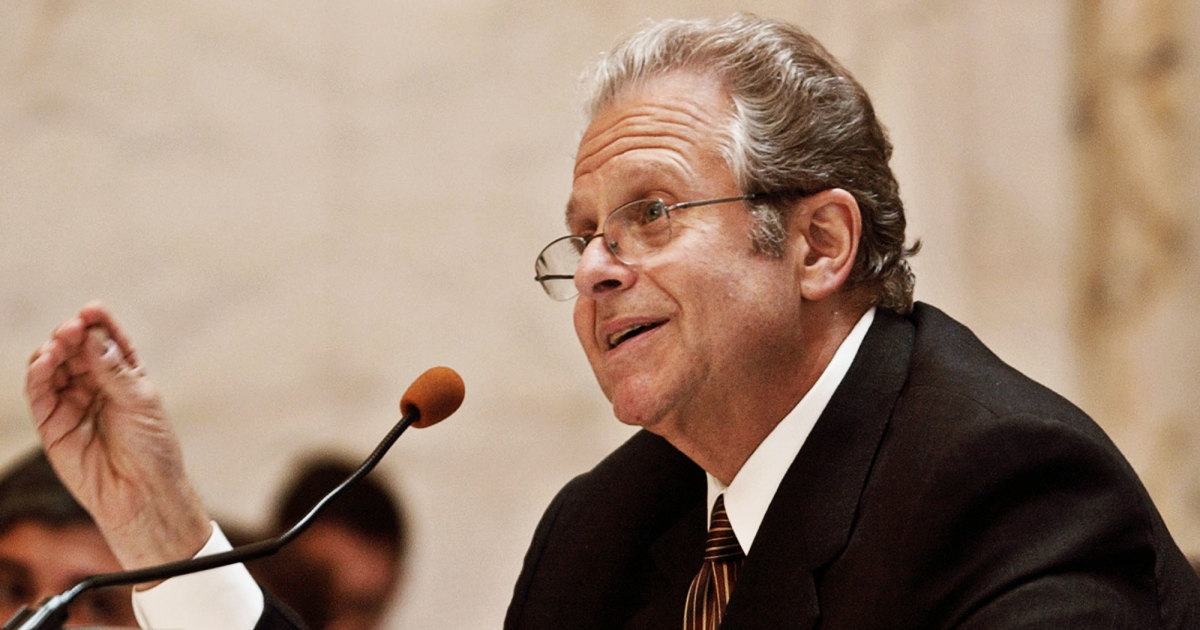
One of the nation’s foremost constitutional scholars, law professor Laurence Tribe, believes the president’s reckless use of Twitter to accuse Barack Obama of tapping his phones might be grounds for impeachment.

There you have it, correct? Not exactly.

Tribe, IĀ shall stipulate, is a liberal-leaning fellow who more than likely didn’t vote for Trump during the 2016 presidential election.

But he’s no dummy as it regards the U.S. Constitution and what it allows or disallows.

Tribe’s thesis simply is that the president’s use of a social medium constitutes a reckless disregard for due process and that it implies a certain unfitness for the office he occupies.

Readers of this blog no doubt know what Trump did. This past weekend, he awoke at his Mar-a-Lago estate early one morning and blasted out a tweet that accused former President Obama of “ordering” spooks to tap Trump’s offices at Trump Tower while looking for proof that Trump was colluding with the Russians to swing the 2016 presidential election in Trump’s favor.

Nasty stuff, right? You bet it is.

It’s also unproven. You see, Trump didn’t offer a shred of proof to back up that ridiculous contention. He has accused President Obama of committing a felony, given that the president cannot “order” a wiretap, which must come from a federal judge, who must have “probable cause” to issue such an order.

The rule of law doesn’t enter into Trump’s tendency to engage in these Twitter tantrums. He just fires this crapĀ into cyberspace. Consequences? Who cares about ’em?

Meanwhile, Republicans as well as Democrats in Congress are demanding Trump provide some basis for this ridiculous assertion. None has been forthcoming.

Spoiler alert: I don’t think we’ll ever see any such basis.

In the meantime, the I-word is out there.

I agree that the bar for impeachment must be kept high. President Clinton’s impeachment in 1998 was based on a sex scandal and his failure to adhere to his oath to be truthful to a federal grand jury that questioned him about it. I don’t believe those events met the standard for impeaching a president of the United States … but that’s just me.

This Trump story is far from being resolved. The president had better come up with something provable to back up his contention that President Obama broke the law.

Or else …

Great speech; waiting to hear specific solutions

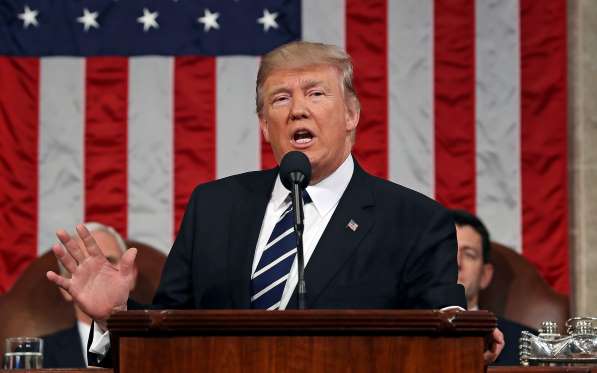
Well what do you know? Donald J. Trump can deliver a speech in a traditional “presidential” fashion.

He did so tonight. He hit a lot of high points, drew a lot of applause — mostly from fellow Republicans, which is no surprise to anyoneĀ — and resisted the urge to veer too far off the text written and displayed on the Teleprompter.

I’ll give him props for that.

He walked us through many of the points he sought to make. I had read something in advance of the speech that said it would be uplifting and optimistic.

Hmmm. I didn’t feel much optimism or lifting of spirits. I heard some of the stuff he had said about drugs and crime; about illegal immigration; about the alleged failure of the Affordable Care Act; about how our allies need to pay their “fair share” for us to defend them against our common enemies.

The president didn’t offer any specifics. He didn’t tell us:

How he plans to replace the ACA; how we’re going to afford the huge increase in defense spending; how he hopes to do better for our veterans; how he intends build that “great, great wall along our southern border”; how he plans to pay for massive infrastructure improvements.

I am hoping all of this will come in due course. His friends in Congress will demand it of him, which is their right and obligation under the Constitution’s co-equal branch of government stipulation.

No one expected him to deal with the myriad controversies that have plagued his first month in office. I’m quite sure others will bring all of that to the fore.

As far as speeches go, I hereby acknowledge that Donald J. Trump is able to rise to the occasion, to act very much like the president of the United States. There was none of that stump-speech shouting, which many of us have come to expect from this individual.

And, by golly, there were no disruptions provided by Democrats who are still stung by the very idea that Donald Trump is president of the United States.

But … I’m waiting to hear just how precisely the president plans to make all these grand promises a reality.

‘W’: Free press is ‘indispensable to democracy’

Maybe you remember the bumper stickers with President George W. Bush’s face on them, with the caption: Do you miss him?

The message was meant as a dig at President Barack H. Obama.

Well, I didn’t miss him then. I do miss him now that a new president is in charge … and who’s decided to wage open war against the media.

President Bush said on “Today” that a free and strong media are “indispensable to democracy.”

Trump doesn’t grasp the notion that the media play a critical role in assuring that public officials — even the president of the United States — always stay on the straight and narrow.

ā€œI consider the media to be indispensable to democracy. … Power can be very addictive,ā€ he told NBC’s ā€œToday.” Do you think?

George W. Bush is among a handful of men who have heldĀ those reins of power. He did so for two terms. While his record is a mixed one, he always seemed toĀ comprehend the limits inherent in the power of the presidency.

Two presidents later, we have a guy in the White House who is trying to manipulate the media in ways most ofĀ never have seen. He seeks to shut out major media organizations from press briefings; he seeks to curry favor with “friendly reporters”; he blasts reporters and organizations openly for being “dishonest” and purveyors of what he calls “fake news.”

The First Amendment guarantees a “free press.” It prohibits the government from interfering in the media’s effort to do their duty.

Trump doesn’t get it. President Bush does get it. “We need an independent media to hold people like me to account,ā€Ā “W” said.

Do I miss the 43rd president?

Yes. I do.

Democrats to grass roots: Cool it with the ‘I-word’ talk

The “I-word” might be gaining some traction among rank-and-file Americans who profess worry — even fear — of Donald J. Trump.

Democratic Party officials are issuing a wise word of caution. Avoid the rush toward an impeachment of the president of the United States.

I happen to agree with the Democratic Party elders/wise folks.

Impeachment is a serious matter. It’s only occurred twice in the 228-year history of the Republic. The 17th president, Andrew Johnson, came within a single vote in the Senate of being tossed out; the 42nd president, Bill Clinton, was acquitted by healthier margins on all three counts heard during his Senate trial. A third president, Richard Nixon, was on the verge of being impeached before he resigned in disgrace in 1974.

Trump has stirred plenty of enmity during his single month in office. To suggest that he ought to be impeached is at best far too premature an act to even consider; at worst, well, it might be a fool’s errand.

As Politico reports: ā€œ’We need to assemble all of the facts, and right now there are a lot of questions about the president’s personal, financial and political ties with the Russian government before the election, but also whether there were any assurances made,’ said California Rep. Eric Swalwell, a member of the House Permanent Select Committee on Intelligence. ‘Before you can use the ā€˜I’ word, you really need to collect all the facts.’

ā€œ’The ā€˜I’ word we should be focused on,’ added Pennsylvania Rep. Brendan Boyle, ‘is ‘investigations.'”

I happen to share the concerns of many of my fellow Americans about the questions that are looming large over the Trump administration. So soon after the president’s inauguration, Americans would be wise to give the guy some time to clear out some of the wreckage he has brought upon himself and his administration.

I want to offer a slightly conciliatory word here. Trump became president with zero experience in government. He hadn’t spent a singleĀ moment of his life in public service until he placed his hand on the Bible and took the oath of office of the presidency.

It might be too much to ask that a zillionaire businessman/TV celebrityĀ could know all the nuance and complexity of forming a government as massive as the one he now commands.

He has made some remarkable missteps in just a few weeks on the job. He has said some amazingly stupid things and made some ridiculous gestures. Are any of them impeachable? No.

But he’s got this personal enrichment matter he must clear up. That “emoluments clause” that bars presidents from profiting from relationships with foreign governments is pretty clear. The president hasn’t done nearly enough to clear himself of that mess.

He had better get busy.

The fired-up grass roots Americans who are hell bent on impeaching the president had best listen to the political elders who know about these matters.

Their advice? Cool it.

Media are ‘the enemy’? Seriously, Mr. President?

The unique aspect of social media forums — such as, say, Twitter — is that no matter how quickly you take something down the original expression remains embedded in the public mind.

Donald J. Trump tweeted a statement declaring that the “media is the enemy of the American people.”

The president deleted it almost immediately. But … oops! … it’s still out there.

Thus, we’ve gotten another look into the weird mind of our nation’s head of state.

The media aren’t the “enemy.” Trump might believe it simply because media representatives are asking sometimes-difficult questions. His senior White House political strategist, Steve Bannon, has encouraged the media to “keep quiet” and has called the media “the opposition party.”

What neither of these men quite get — or so it appears — is that the media are part of the American fabric. The Constitution guarantees a “free press” that shouldn’t be shackled or silenced by government pressure or coercion.

Yet that seems to be part of what is happening now with the new president, who’s been in office less than a single month.

Trump’s critics have lamented what they consider the “danger” that the presidentĀ  presents to our democratic system. I am beginning to believe a president who blurts out ill-considered statements about the media being the “enemy” of Americans is painting a frightening picture for the country he purports to lead.

‘Leaks are real, news is fake’ Huh? What?

I’m trying to digest the contents of Donald J. Trump’s press conference today.

It’s upsetting my stomach.

The president has declared all-out war on the media, which he calls “dishonest” and “fake.” The very men and women who cover the president’s statements and actions are told to their face that they are out to get the president, that they have an anti-Trump agenda.

One of them asked Trump today about the leaks that have allowed information to pour out into the public. Trump’s response is utterly mind-boggling on its face: “The leaks are real. The news is fake.”

I don’t even know what that means.

My media activity these days is confined exclusively to this blog. I did spend nearly four decades covering and commenting on local and state governments in two states — first in Oregon and then in Texas. I didn’t have the honor of covering the White House or politics at the highest level imaginable.

However, I do share a bit of empathy with the reporters who are doing their job in the face of withering attacks from the president of the United States.

He should seek to use the media to his own advantage. The president has a message to deliver, or so I am presuming. He must rely on the media to deliver it to the public. Why, for heaven’s sake, does he insist on the ad hominem attacks on the media? Why does he insult the men and women sitting in front of him with labels such as “dishonest” and “fake”?

This guy — the president — cannot remove himself from flat-out campaign mode. He used that tactic against his Republican Party primary opponents and then against the Democratic Party nominee, Hillary Rodham Clinton.

The media now have taken over the role political opponent.

I think I amĀ picking up the scent of Steve Bannon, the White House senior strategist, who has called the media the “opposition party” and suggested that the media should keep quiet.

The media are nothing of the kind. Nor should they keep quiet; the First Amendment to the U.S. Constitution protects the media’s right to pose probing questions of those in power.

If only the president of the United States could demonstrateĀ an inkling of knowledge of the media’s role in a modern society.

President gets real-time lesson on government limits

Donald Trump had zero government experience when he became president of the United States.

He seemed to think he could step into the presidency, assume the role of CEO and everyone would do his bidding.

He is now finding out that it doesn’t work quite that way. He is learning in real time that the founders established a government that limits presidential power. They created a government that allows two other branches to rein in an executive branch that could overstep its authority.

Congress is controlled by men and women who belong to the same political party as the president. Thus, the legislative branch might roll over. This leaves the final checkĀ to the judicial branch, which is flexing its muscles in this struggle over Trump’s executive order that restricts travel to the United States from those who hail from seven Muslim-majority nations.

The struggle now seems headed to the Supreme Court. The nation’s highest court likely will get to decide whether to uphold two lower-court rulings that have stalled the execution of Trump’s executive order.

If the Supremes uphold the earlier rulings — either with an actual ruling or a tie vote created by the unfilled vacancy — then the president will have to consider another way to “make America safe again.”

Perhaps the next tactic he employs will be considered more carefully and executed with more thought than the cluster-fudge he rolled out with this refugee ban.

Will any of this humble the president? Will it give him pause to consider his next action? Probably not, but it still gives me some comfort to know that the founders knew how to create a government that works.

And just for the record, if the Supreme Court rules in Trump’s favor and overrules the lower courts, then I’ll consider that — as well — to beĀ a demonstration of a functioning federal government.

However, my concern were that to occur would be that it would embolden a president to misread the limitations on power that the founders wrote into the framework that built this nation.

Who’s POTUS calling a ‘so-called judge’?

Donald J. Trump, meet your newest nemesis, U.S. District Judge James L. Robart.

The president hasĀ calledĀ Robart a “so-called judge” because he had the nerve to halt the president’s ban on refugeesĀ entering the UnitedĀ StatesĀ from Muslim-majority countries.

If I might be so brazen, my inclination is to wonder aloud — given Trump’s love of Twitter as his primary attack medium — whether he could beĀ labeled a “so-called president.”

Nah … I won’t go there.

There’s not a damn thing “so-called” about Robart, who was appointed to the federal bench in western Washington state by President George W. Bush.

According to NBC News: “He (Robart) suggested in court that Trump’s 90-day entry ban on people from the countries of Iraq, Syria, Iran, Libya, Somalia, Sudan and Yemen was not ‘rationally based,’ since no one from any those countries had been arrested in the U.S. on terrorism-related charges since 9/11.”

There’s more: “‘I’m sorry, there’s no other way to put it,’ Robarts said from the bench. ‘It’s Keystone Cops. It really is. And that’s not just me speaking, that’s Republican members of Congress.'”

The president doesn’t like being criticized by anyone. Not by the media, or political foes or by judges who disagree with his decisions. His mode of response? Twitter! He tweeted: “The opinion of this so-called judge, which essentially takes law-enforcement away from our country, is ridiculous and will be overturned!”

http://www.msn.com/en-us/news/politics/who-is-the-so-called-judge-trump-rips-over-ruling/ar-AAmCbUO?li=BBmkt5R&ocid=spartandhp

Judge Robart is doing what he believes his oathĀ requires him to do, which is to interpret federal law to see if it squares against the U.S. Constitution.

Robart is a Seattle native, he received his undergraduate degree in Walla Walla, Wash., got his law degree at Georgetown and practice law in Seattle from 1973 until 2004, when President Bush tapped for him for the federal bench; the Senate approved his nomination.

There’s nothing “so-called” about this fellow, Mr. President.

Pipe down and let the system play out.