Tag Archives: US Constitution

Long live the secular state!

Jon Mark Beilue has done it again. He has written a spot-on column for the Amarillo Globe-News that I want to share here.

I won’t restate my friend’s thoughts, other than to echo his notion that the founding fathers created a marvelous governing document that has withstood many challenges over time.

They knew that the nation’s European immigrants came here to flee religious persecution, so they wrote into the Constitution’s First Amendment that there should be no law that established a state religion; indeed, of all the liberties protected in the First Amendment, they mentioned religion first.

Here, though, is an additional point I want to make above Beilue’s excellent essay.

It is that the United States to this very day remains a significantly more religious country than virtually all the nations of Europe. Americans are more inclined to attend worship services than Europeans. I am aware that church attendance is declining in the United States, but it remains far greater than it is throughout Europe, where worship attendance has plummeted for decades.

Why is that important? Because many nations of Europe have state religions. The United States has none. The Church of England? A state religion. Catholicism is ingrained in the governing documents of several European nations.

I make this U.S.-Europe connection only because those original immigrants came across The Pond from Europe.

The Constitution stipulates that there must be “no religious test” applied to candidates for public office at any level. The word “Christian” does not appear in the Constitution.

Were the founders fueled by their personal religious faith when they wrote the Constitution? Certainly. I don’t doubt that for a moment. However, they knew better than to write their faith into the nation’s government document.

As Jon Mark Beilue writes: “Our Founding Fathers, they knew what they were doing.”

Yep, the founders got it (mostly) right

Two hundred forty-one years later, it’s good to look back on what the nation’s founding fathers signed.

They stated in that document of independence declaration that “all men are created equal.” They put their names on the Declaration of Independence, many of them picked up their muskets and then went to war against the British Empire.

The fighting stopped in 1781. Then the founders went to work crafting a governing document we now know as the U.S. Constitution.

Did they get it 100 percent right when they signed off on that framework? Not really. I can think of two egregious errors of omission in that document.

The founders did not grant “all men” equal rights. Black men were enslaved. They were considered to be three-fifths of a human being. All men were created equal? No. The Emancipation Proclamation would set the slaves free in 1863, but it would take the nation two more years to ratify the 13th Amendment to the Constitution that abolished slavery once and for all.

Nor did the founders grant women full rights of citizenship, although they likely thought they were doing so at the time. Women couldn’t vote. They were mere spectators. It took the government a good bit longer to correct that error. In August 1920, the 19th Amendment was ratified, granting suffrage to women.

Thirty or 40 years ago, I might be inclined to dwell on those negative elements of our nation’s history. Today, I choose to concentrate on what the founders did right.

Their forebears came to this new land to escape religious persecution. Thus, the founders created a secular Constitution. They granted every citizen religious freedom, which also means they were free to not worship if they chose.

The founders separated the government into three co-equal branches, granting equal power to each of them. The president proposes laws; Congress disposes of them; the courts ensure their constitutionality.

The great Winston Churchill famously declared that representative democracy is the worst form of government ever created, but is superior to anything else. The founders, of course, didn’t anticipate such wisdom coming from the British Bulldog.

I also am quite certain they would agree with him.

Therefore, I choose to salute the founders’ success today. Their government is being tested yet again. I remain confident it will continue to function as those great men intended.

Let’s enjoy the nation’s birthday … and wish ourselves well

I make no secret of my dismay and disgust at the state of our national government.

It starts at the very top of the political food chain.

Here’s the thing, though. We’re about to celebrate the 241st year of our nation’s existence, or at least when it declared itself to be independent of the English monarch, King George III. Our revolution already was underway when those men signed the Declaration of Independence on July 4, 1776.

It would be another decade before our Constitution would be written and ratified.

Over the many decades since then, we’ve been through hell as a nation. Four of our presidents have been murdered while in office; others have died from other causes. We endured the Civil War, two world wars, and various conflicts that tore at the nation’s soul.

We have been hit twice — real hard — on our soil by our enemies. We have mourned the deaths of Americans we did not know.

Two of our presidents have been impeached. One of our president was on the verge of impeachment — and then he resigned. Congress has suffered through myriad scandals of varying types.

Our economic life has been imperiled. We had the Great Depression and something that we recently have referred to as the Great Recession. 

All this turmoil and tumult we’re going through today only serves to remind me of something most of have known all along: We are a resilient nation; we are filled with resolve and grit.

On this national birthday, I am driven to think of who we are, the journey we’ve taken, the wounds we have suffered and the healing that has occurred.

I plan, therefore, to set aside my disgust for a day at what is unfolding at this moment in the halls of power. I plan to cherish what I know to be true: We continue to be the greatest, most indispensable nation on Planet Earth.

Are we perfect? Of course not. We’ve been through hell as a people and we’re still standing tall.

Those men who signed that declaration knew what they were creating. Despite all that has transpired since that signing, I am as certain as I am writing these words that those men would proud of what they created.

Get set to watch further politicization of federal judiciary

Now there are “reports” that Anthony Kennedy is considering an end to his judicial career.

The Supreme Court associate justice’s retirement, if it comes next week as some are thinking it might, is going to produce something I suspect the nation’s founders didn’t anticipate when they wrote the U.S. Constitution.

That would be the extreme politicization of the judicial selection process.

Those silly men. Sure, they were smart. They weren’t clairvoyant.

The present-day reality is that the process has become highly political. When did politics play such a key role in selecting these jurists? It’s hard to pinpoint the start of it all. Some might suggest it began with President Reagan’s appointment in 1987 of Robert Bork to succeed Lewis Powell, who had retired. The Senate would reject Bork largely on the basis of his vast record of ultraconservative writings and legal opinions.

Clarence Thomas’s nomination in 1991 by President George H.W. Bush also produced plenty of fireworks, owing to the testimony of Anita Hill, who accused Thomas of sexual harassment and assorted acts of impropriety.

On and one it has gone, through Democratic and Republican administrations ever since.

The founders wrote a provision into the Constitution that allows federal judges to get lifetime appointments. The idea was to remove politics from their legal writings. Indeed, some judges have taken seats on the U.S. Supreme Court with their presidential benefactors expecting them to toe a philosophical line, only to be disappointed when they veer along uncharted judicial trails.

It’s too early to tell whether Justice Neil Gorsuch will fall into that pattern. He was Donald J. Trump’s initial pick for the high court. The president might get to make another appointment quite soon. Then again, maybe not.

Whenever that moment arrives, you can take this to the bank: The next Supreme Court pick is going to ignite a whopper of a political fight if one side of the Senate sees a dramatic shift in the court’s ideological balance.

Something tells me the founders might not have anticipated these judicial nominations would come to this.

Most toxic ever? Well … it’s a different type of toxicity

An acquaintance of mine posed a question to me today. Since he asked it in a public social media venue, I’ll answer it here.

He wondered: “Has it always been this toxic? Or are we entering a new era?” The “it” to which he referred is the political atmosphere.

I’ve thought about it for several hours and I’ve concluded that it’s more likely a “new era” than the most toxic ever.

This fellow seems to think I’m an expert on political matters. I’m not. I am, however, a 67-year-old red-blooded American patriot who’s been witness to a lot of anger, anxiety, fear and loathing in the halls of power.

One highly toxic era occurred in the late 1960s and early 1970s. The first trigger was the Vietnam War, followed immediately — and in a related sort of way — the Watergate scandal. I served in that war for a time, came home and then got involved politically as a newly married college student.

Politicians were angry at each other because of their respective views on the war. That anger spilled into the streets. People died during riots. Then came Kent State in 1970 when National Guard troops opened fire and killed four student protesters. The nation was grief-stricken.

The Watergate break-in — in June 1972 — stirred Americans even more. The scandal that ensued threatened to swallow the nation in one big bite. It didn’t. The U.S. Constitution did its job; a congressional committee approved articles of impeachment against President Nixon, who then quit.

There was plenty of anger then, too.

Two decades later, a newly elected president became the focus of intense Republican anger. The GOP detested President Clinton. Republicans won control of Congress in 1994 and began their quest to get rid of him. They hired a special counsel, who then stumbled onto a discovery: the president’s relationship with a young White House intern. The counsel summoned the president, made him swear to tell the “whole truth” to a grand jury; the president didn’t uphold that oath when he was asked about the intern.

There you go. Impeachment proceedings began. Was there intense anger then? Uh, yeah. The air was poisoned by partisan bias. The House impeached President Clinton in 1998, but the Senate acquitted him in a trial.

Now comes the Donald John Trump era. The air is toxic. It’s full of bitterness. Democrats cannot stand the very idea of this guy being elected president of the United States. The president’s core supporters are firing back, telling Trump foes to get over it; he won fair and square.

Another special counsel is now on the job. He’s researching whether the president had an improper relationship with Russian government officials. The president has impugned the integrity of the political system, the nation’s intelligence network that has concluded Russians sought to influence the 2016 presidential election.

Trump’s tweet storms have infuriated his foes, energized his friends.

The president cannot seem to tell the whole truth. The only difference between this president’s penchant for prevarication and Bill Clinton is that Trump hasn’t lied under oath … yet.

Trump’s candidacy for president ushered in a new political era. His election as president hammered it all home. The reaction to his election has generated yet another storm the likes of which many of us never have seen.

Is it the worst ever? I won’t say that. It damn sure feels like something brand new.

Why give Alex Jones a platform?

People such as Alex Jones give me heartburn.

I happen to be a First Amendment purist. I believe in the amendment’s guarantee of free speech and I do not want it watered down.

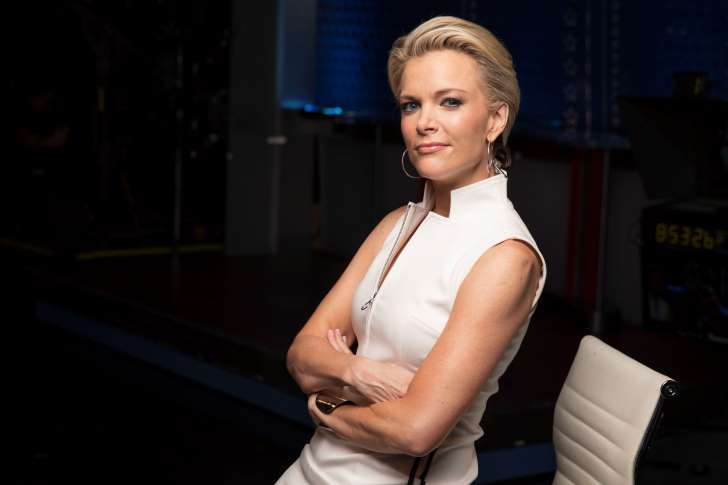
Then along comes people like Jones, the radio talk show blowhard who’s been thrust into the news yet again. Broadcast journalist Megyn Kelly has booked him on her NBC News show and snippets of her interview with Jones have enraged some survivors of one of the nation’s worst tragedies.

Jones has spoken infamously about how the 9/11 attacks against the United States were an “inside job” and then — and this goes way beyond anything resembling human decency — he has alleged that the Sandy Hook Elementary School massacre in Connecticut was staged; he says the children who were slain were “actors.”

Kelly is giving this guy’s moronic views a platform.

Should he be allowed to spout that trash? Should he be given air time on a major broadcast network? That pesky First Amendment says “yes.” Tenets of good judgment and basic humanity suggest that this guy shouldn’t be given a platform to spout the filth that pours out of his pie hole.

Kelly deserves the criticism she is getting from at least one of the Sandy Hook parents who lost a child in that hideous act of cruelty.

And that damn heartburn continues to churn in my gut.

Trump increases pols’ antipathy toward media

What is it about politicians who make lame jokes and then fail to own them?

Texas Gov. Greg Abbott is just the latest in a long and growing line of pols who have committed that transgression.

But here’s the deal: Abbott’s lame joke is speaking to a larger — more serious — issue involving the media and the politicians they cover.

The governor this past week signed into law a bill that reduces the amount of money that concealed handgun carry applicants must pay to obtain their license. Then he went to a shooting range, fired a few rounds at a target and then joked that he would carry the target around “in case I see any reporters.”

Few folks are laughing.

You see, it’s the context of Gov. Abbott’s remarks that are so damn troubling.

We can thank the president of the United States for it.

Donald Trump has all but declared war on the media. He calls them the “enemy of the people.” He accuses mainstream news outlets of producing “fake news.” He refuses to answer tough questions from the media. He calls news media outlets “a disgrace” and calls reporters “among the most dishonest people” anywhere. He reportedly told the then-FBI director that reporters should be jailed if they report on leaked classified material.

Trumpkins show up at his rallies wearing t-shirts that suggest journalists should be hanged.

Now the governor of Texas makes a goofy joke that seems to suggest it’s OK to shoot reporters. He won’t take it back. He won’t apologize for the hideous timing of the remark, coming as it did just two days after a Republican congressional candidate “body slammed” a reporter for asking him about the GOP health care overhaul.

Is this the era into which we have entered? That it’s OK to intimidate reporters for doing their job? That the First Amendment protection of a “free press” isn’t to be taken seriously, let alone literally?

Mimi Swartz, writing for Texas Monthly, has asked the governor to take it back. You can read her essay here. I don’t expect Abbott to do as she asks.

Sadly, neither do I expect the president of the United States to back off his own campaign against the media assigned to report his actions to the people he governs.


‘I, alone … ‘ should have been given us a clue

Donald J. Trump’s time as president has lasted all of about 122 days — give or take — yet it seems like forever already.

As I look back on this man’s stunning political ascent, I am struck by one moment that I believe in hindsight should have given us a clue on what we might expect.

He stood before the Republican National Convention this past summer in Cleveland and declared that “I, alone” can repair all the things he said are ailing the country.

Setting aside for a moment or two the myriad problems that are bedeviling this man and his administration — and which might cost him his office — that particular statement suggested to me at that moment that this fellow really doesn’t get it.

He doesn’t understand one of the principal tenets of governing, which is that he is participating in a team sport. It’s so critical to understand that notion at the federal level, where the founders established a triple-layered governmental system where one branch holds no more power than the other two.

The presidency is but one branch; it must work in tandem with the Congress. Waiting in the wings to ensure that the executive and legislative branches don’t violate the Constitution are the federal courts, comprising actual judges, not the “so-called” types who render decisions that might go against whatever the president wants to do.

Donald Trump ignores political decorum, custom and practice. As some have noted, he does so either out of ignorance or does so willfully. I’ll take Trump at his word that he is a “smart person,” which means he is invoking a willful disregard for how the federal government is supposed to work.

The concept of governing by oneself does not work. It cannot work. The president is getting a real-time civics lesson in how the nation’s founders established this government of ours. He has vowed to run the country like his business. Yeah, good luck with that.

A business mogul can fire people at will. He can order underlings around, make them do this or that task. He can threaten, bully and coerce others.

When he takes the reins of the executive branch of the federal government, all of that prior experience gets thrown out the window.

How does the president tell Congress — comprising 535 individuals with constituencies and power bases of their own — to do his bidding? And how does the president actually defy the federal judiciary, which the founders established to be an independent check on every single thing the president and Congress enact?

Yes, the Republican Party’s presidential nominee gave it all away when he stood there in Cleveland and bellowed “I, alone” can fix it.

No, Mr. President. You cannot. Nor should you have ever tried.

Moreover, I believe his repeated efforts to trample over Congress and the federal courts are going to bite him hard in the backside as he seeks to defend himself against the other troubles that are threatening him.

Does the president still think invoking Fifth means guilt?

Donald J. Trump was simply outraged during the 2016 presidential campaign about Hillary Clinton’s aides invoking their constitutional protection against self-incrimination.

Doing so, he said at the time, meant they likely were “guilty as hell” of committing a crime.

http://www.cnn.com/2017/05/22/politics/trump-campaign-staff-fifth-amendment-flynn/index.html

The issue had to do with Clinton’s e-mail controversy and other matters. Trump was running against Hillary for the presidency, which meant that such activity just made his case for him.

He is now the president. One of his former trusted aides, ex-national security adviser Michael Flynn, is invoking his Fifth Amendment rights. He has refused to answer a Senate Intelligence Committee subpoena. He has a lot of questions to answer about his relationship with the Russian government and whether he allegedly worked with the Russians to influence the 2016 election.

Flynn was fired 24 days into his new job.

Does the president still think Flynn’s decision to invoke the Fifth mean he is “guilty as hell” of a crime? Well, do you, Mr. President?

Preferring the U.S. method of letting ’em protest

U.S. Commerce Secretary Wilbur Ross cannot possibly be a dim bulb.

Or can he?

Ross offered a critique of the welcome that Donald J. Trump’s presidential entourage received in Saudi Arabia.

“There’s no question that they’re liberalizing their society, and I think the other thing that was fascinating to me, there was not a single hint of a protester anywhere there during the whole time we were there,” Ross said in an appearance on CNBC. “Not one guy with a bad placard.”

Not one guy, eh?

Someone ought to inform the secretary that public protest in Saudi Arabia remains highly illegal. Protesters generally are rounded up, arrested, given lashes until they bleed … you know, the kind of thing that occurs in countries run by repressive regimes.

http://www.huffingtonpost.com/entry/wilbur-ross-trumps-saudi-visit_us_5922dd3ce4b03b485cb31054

CNBC reporter Becky Quick sought to inform Ross of those prohibitions. He answered:

“In theory, that could be true,” he replied. “But boy, there was certainly no sign of it. There was not a single effort at any incursion, there wasn’t anything. The mood was a genuinely good mood, and at the end of the trip, as I was getting back on the plane, the security guards from the Saudi side who’d been helping us over the weekend all wanted to pose for a big photo op, and then they gave me two gigantic bushels of dates as a present, a thank you for the trip that we had had. That was a pretty from-the-heart, very genuine gesture and it really touched me.”

I believe I will stick with the American way. It allows protests. It gives people the freedom to speak angrily against the government, although the only stipulation I can find in the First Amendment is that it guarantees the right of citizens to protest “peaceably.”

Violence? Nope. Can’t do that, not even in America.

It still sure beats the dickens out of the prohibitions against such behavior in Saudi Arabia.