Tag Archives: Ted Cruz

Whinin’ Donald needs to quit griping about delegates

cruz

Donald J. Trump has a trove of nicknames he tosses out at his political foes.

Lyin’ Ted is one. So is Little Marco. Now he’s come up with Crooked Hillary.

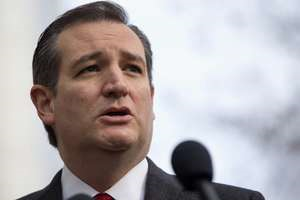
Oh, but one of those adversaries, Ted Cruz, may have coined a name for Trump.

Whinin’ Donald.

Sen. Cruz today told Trump to quit his “whining” about the Republican Party’s delegate selection process leading up to the GOP presidential convention in Cleveland this summer.

Trump is griping about the process, calling it a “sham” and a “disgrace.” He says the game is rigged against him.

Actually, it’s not. It’s the way the RNC has set up the selection process. It allows candidates to persuade delegates to join their team. Trump’s campaign staff apparently hasn’t gotten the word on how the process works. They’re being outhustled by the Cruz Missile’s team.

Trump doesn’t like it.

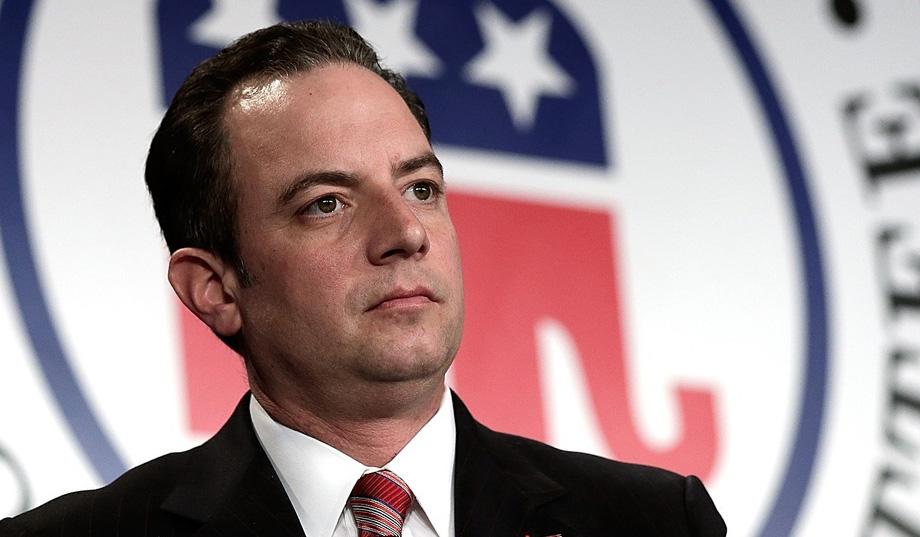
RNC Chairman Reince Priebus says he isn’t changing anything. The rules are the rules, he said. Trump has to work within those rules, the chairman added.

http://thehill.com/blogs/ballot-box/presidential-races/276595-rnc-chief-no-changes-to-delegate-requirement-likely

Priebus said the RNC will continue to insist that one of the candidates for president must have a majority of delegates pledged to capture the party’s presidential nomination. Trump suddenly is looking vulnerable in the hunt for delegates and he is arguing now that a plurality ought to be good enough.

No can do, Priebus said.

Trump now has turned to whining about the process.

This GOP campaign gets more fun as each day passes.


‘Unity’ appears headed for the cliff

reince-priebus-reforms

Donald J. Trump has a peculiar way of expressing his desire to bring the Republican Party together in a spirit of “unity.”

The GOP presidential frontrunner is emptying both barrels — rhetorically, of course — into Republican Party chairman Reince Priebus for allegedly stacking the nominating process against him … meaning Trump.

Trump is angry at the way U.S. Sen. Ted Cruz of Texas managed to corral all of Colorado’s Republican convention delegates this past week. He is steaming over losing the delegate count to Cruz while “winning” the Louisiana primary earlier.

Who’s to blame? Reince Priebus, said Trump. He’s working “against” the frontrunner. He calls the chairman’s alleged tactics “disgusting” and some other pejorative terms.

Priebus’s response is simple: The rules are the rules, Mr. Trump; get over it, work with them.

I’ve got to give Cruz credit, though, for outhustling Trump — the hustler in chief of this year’s GOP primary campaign — in obtaining committed delegates. Cruz’s team comprises political pros and veterans who know how to work the system established by the party. Trump’s team, until just recently, has been lacking in that kind of experience.

However, if Trump intends to “bring the party together” should he be nominated, he’s got to learn — as if he thinks he can learn anything — that you don’t accuse the guy who runs your political party of being a political crook.

You want unity? Trump might consider working more behind the scenes, quietly and with discretion, with the chairman. He also might consider tamping down the fiery rhetoric that keeps pouring out of his mouth.

That’s the tallest of orders. It would require the once-presumed GOP nominee to change the way he does business.

It won’t happen, which is OK with some of us out here.

I’m waiting anxiously for a fun-filled Republican convention in Cleveland.


Gov. Kasich faces a bitter irony

kasich

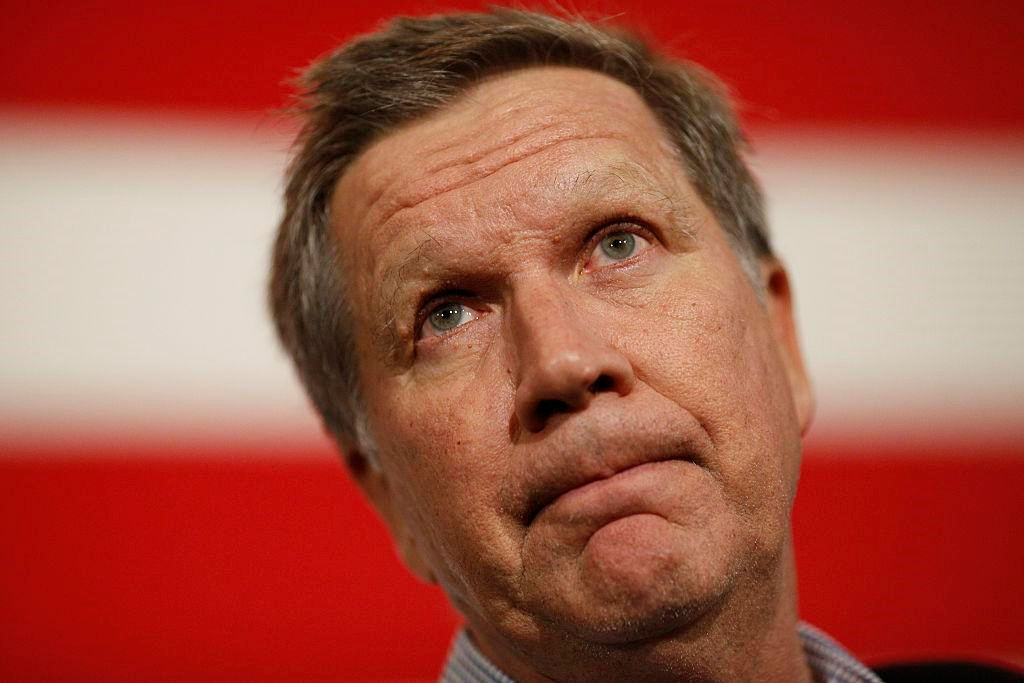
John Kasich must feel like the unluckiest politician in America.

He’s caught in perhaps the most bitter irony in recent political history.

The Ohio governor is running for the Republican Party’s presidential nomination. He’s one of three men still standing in what began as a 17-candidate GOP primary free-for-all.

Given that we’ve been talking — a lot! — about public opinion polling in this presidential campaign, it’s good to mention this: Kasich stands alone among the three men still running as the only candidate who can defeat probable Democratic nominee Hillary Rodham Clinton. Donald Trump loses big to Clinton; so does Sen. Ted Cruz of Texas.

Why, then, does Gov. Kasich still struggle as the longest shot of all the GOP candidates who will become the party’s presidential nominee this summer?

The Republican base has endorsed Trump and Cruz in all those primaries and caucuses. Kasich has won exactly one contest: in Ohio, the state he governs. Hey, man, he had to win that one, right?

I’ve heard pundit after pundit, voter after voter say the same thing: Gov. Kasich is the last grown-up in this race.

Trump and Cruz are despised by the Republican establishment for varying reasons. Trump lacks a governing philosophy; Cruz seems to have virtually no friends in the U.S. Senate, where he has served since January 2013.

It appears, though, that one of those two individuals is going to carry the GOP banner into the fall against Clinton. Those polls? They keep showing they’ll lose. Maybe by a lot.

Kasich continues to poll far better vs. Clinton than either of them.

He also continues to lag far behind in the Republican Party polls of primary voters.

Poor guy. I feel sorry for Gov. Kasich.


Ryan settles it: He’s will not accept it

90

I’ve been waiting for this declaration.

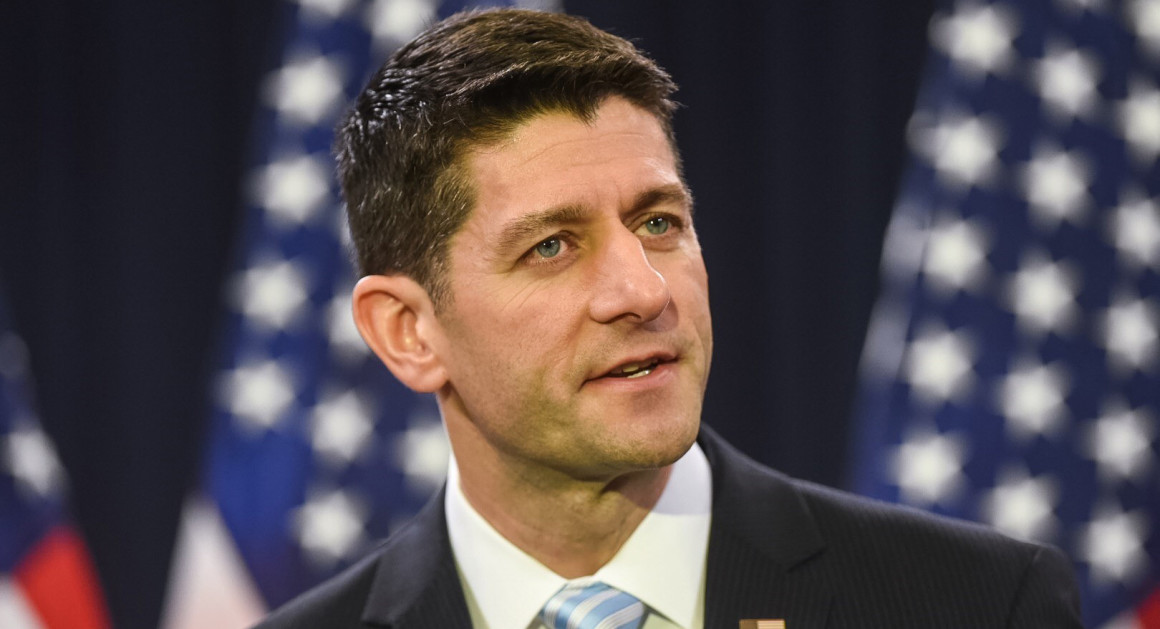
Today, it finally came from U.S. House Speaker Paul Ryan, who declared that he will not accept the Republican Party’s presidential nomination if it’s offered to him.

There. It’s a done deal.

Ryan’s declaration spells out a gloomy prospect for the Republican Party. It’s going to nominate — more than likely — one of two men who hold tremendous negative ratings among rank-and-file voters.

Donald J. Trump will go to the GOP convention with more delegates than anyone else. U.S. Sen. Ted Cruz of Texas will show up with the second-most delegate stash.

Neither of these fellows is going to defeat probable Democratic nominee Hillary Rodham Clinton, although surely their partisans will argue differently.

Ryan might have been able to rescue his party from what could turn out to be an electoral landslide loss. He’d bobbed, weaved, dodged and danced all over the question about whether he’d be open to a draft at the convention in Cleveland, Ohio.

“Count me out,” he said today. The convention should nominate someone who “actually ran for the job,” he said.

Don’t misread my intention here.

I don’t think Paul Ryan should become the next president. I voted against the ticket on which he ran in 2012 as the VP nominee with GOP presidential nominee Mitt Romney.

It would have been a fascinating development in the extreme, though, to see whether the convention could turn to him as a sort of political savior.

It won’t happen.

Now the party is left with a sour choice.

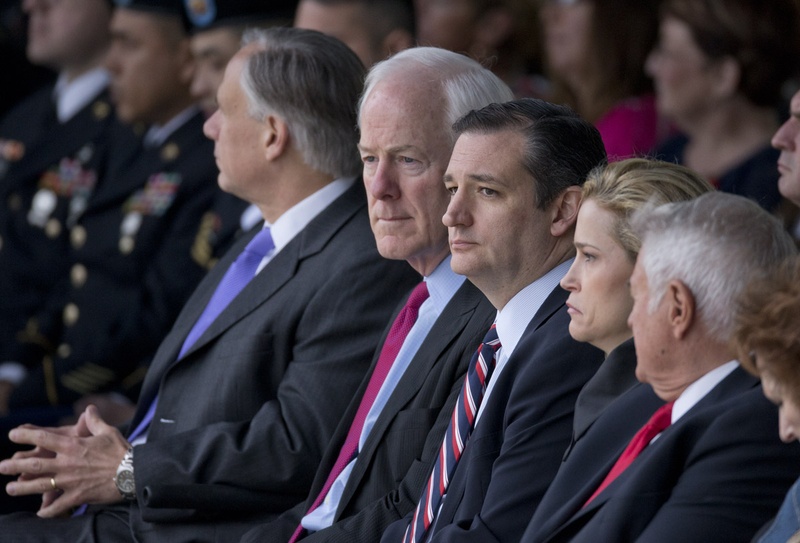
Cruz and Cornyn: an uneasy Senate team?

cornyn and cruz

Every state is represented in the U.S. Senate by two individuals who, under an unwritten rule of good government, would seek to work in close political partnership.

The Texas Tribune has published an interesting analysis of the relationship of Texas’s two Republican senators, one of whom is running for president of the United States.

Ted Cruz and John Cornyn, according to the Tribune, aren’t exactly close. They aren’t joined at the hip. You don’t see them singing each other’s praises.

Is it a metaphor for what we’ve heard about Cruz?

It’s been stated repeatedly during this Republican primary campaign that Cruz hasn’t made many “friends” in the Senate. He doesn’t “play well with others,” the saying goes. He called the Senate majority leader, Mitch McConnell, a “liar” in a Senate floor speech and then just this past week said he had no intention to take back what he said.

It might be a big deal — in a normal election cycle. This one isn’t normal. As the Tribune reports: “In any other circumstance, it would be curious that a viable presidential candidate did not have the support of his fellow state Republican. But each man in this case represents the visceral divide raging in the party: Cornyn is the consummate establishment team player, while Cruz is the TEA Party insurgent.”

Cruz has been a senator for slightly more than three years. Cornyn was elected in 2002. What’s more, the Senate is Cruz’s first elected office; Cornyn, on the other hand, served as Texas attorney general and, before that, as a member of the Texas Supreme Court.

Cornyn knows how to play the political game in Texas. He’s good at it. Is he exactly my kind of senator? Hardly, but I do respect the man’s political skill.

Cruz brings another element to this game. I would consider it his amazing degree of hubris and utter fearlessness.

It’s long been said that the U.S. Senate is a 100-member club that requires a bit of time for members to feel comfortable. It took young Ted Cruz no time at all to grab a microphone on the Senate floor and begin blasting away at his rivals.

It’s only a hunch on my part but it might be that the Texas rookie’s rush to the center of the stage could have been a bit off-putting to the more senior legislator.

It used to be said that the “most dangerous place in Washington” was the space between Sen. Phil Gramm and a microphone. Gramm left the Senate some years ago. Ted Cruz has taken up that new — apparently with great gusto.

Is he a team player? Are Texas’s two senators — Cornyn and Cruz — on the same page all the time? Consider this from the Tribune:

“There are no whispered tales in Senate circles about heated arguments between the two men or icy glares on the Senate floor. Instead, the most frequently used word observers use to describe the relationship is ‘disconnected.’”


Who’s done most to earn presidency?

kasich

Now that the debate over which presidential candidates are “qualified” to assume the office if they get elected is more or less over, let’s turn to actual accomplishment.

Part of the qualification argument ought to include who among the five individuals running for the office have done something worthy of consideration. Do they have sufficient executive experience? Have they accomplished anything of substance legislatively? Does business experience matter?

Let’s get the easy stuff out of the way first.

The business experience is helpful in a limited way. Yep, that notion zeroes in on Donald J. Trump. However, as I’ve noted before — although not recently — government is not intended to be run “like a business.” Trump seems to equate everything to “cutting deals.” Treaty negotiation? “I’ll make the best deals imaginable,” he says. Working with Congress? Same thing. Trade agreements? “We’re losing everywhere; we won’t when I’m president,” he boasts.

Knock it off, Trump! You cannot do these things in a vacuum.

He’s got zero government experience. To borrow a phrase: Trump is a loser.

Government executive experience matters much more. Of the remaining candidates, Ohio Gov. John Kasich and former Secretary of State Hillary Clinton qualify. I’d rate Kasich’s years as governor over Clinton’s as secretary of state. Kasich has had to manage a budget, deal with legislators, fight with constituents — sometimes all at once.

Clinton has managed a huge federal agency. She flew more miles to more countries than any previous secretary of state; I’m unsure where here successor, John Kerry, stands in that regard. She has sought to negotiate disputes between nations and, yes, has been caught up in controversy. But her time at State matters … a lot!

Legislative accomplishment?

Here’s where it’s kind of a runaway.

Clinton, U.S. Sens. Ted Cruz of Texas and Bernie Sanders of Vermont all have congressional experience. None of them can boast of an accomplishment that measures up to Kasich’s time in the U.S. House of Reps.

I’m trying to figure out which major piece of legislation has any the names of Clinton, Cruz or Sanders. Cruz’s major “accomplishment” was to mount that idiotic filibuster in an effort to wipe out the Affordable Care Act. Sanders and Clinton can’t even “brag” about something so ridiculous.

Kasich, though, served as chairman of the House Budget Committee that played a major role in achieving a balanced federal budget in the 1990s. That is no small feat, given the toxic political climate at the time. The House was run by Republicans; the president, Bill Clinton, is a Democrat. The White House and Capitol Hill had different notions on how to achieve a balanced budget. They found common ground.

There, my friends, is where one candidate’s record shines.

Is it enough for Republicans to nominate him? Probably not. They’re going to haggle at their convention over whether to nominate two patently frightening “outsiders,” one of whom is the real thing (Trump), the other of whom (Cruz) keeps trashing the legislative body where he’s served since January 2013.

Sure, each of these people is technically “qualified” constitutionally to run for the office. And yes, that includes the Canadian-born-to-an-American-mother Cruz.

I still rate Clinton’s combined government experience — and I include her policy-making influence during her eight years as the nation’s first lady — as giving her a slight edge in the overall presidential qualification contest.

If only the Republican delegates this summer would come to their senses and deliver their party’s nomination to the remaining candidate, Gov. Kasich, who actually has something to show for his lengthy public service record. Then we could have a serious debate this fall on who to select as the nation’s next president.

If only …


Cruz is ‘eligible’ to run for POTUS

NEW YORK, NEW YORK - APRIL 06: Republican presidential candidate Ted Cruz listens at the restaurant Sabrosura 2 on April 6, 2016 in the Bronx borough of New York City. Cruz, who won last night's Wisconsin primary, was visiting New York in advance of New York's Republican primary on April 19, 2016. (Photo by Bryan Thomas/Getty Images)

This is fantastic!

The Ted Cruz Birther Movement is slow to die. Heck, it might never wither away!

Constitutional crybabies keep insisting that because the Republican U.S. senator from Texas — and GOP candidate for president — was born in Canada that he isn’t eligible to seek the presidency, let alone hold the office if elected.

Plaintiffs in several states have sought to block Cruz’s candidacy on specious grounds that the senator is a foreigner.

These challenges are doomed. They won’t get to first base, I believe, with the U.S. Supreme Court.

A lower court judge put it well. A natural-born citizen “includes any person who is a United States citizen from birth,” wrote Pennsylvania Commonwealth Judge Dan Pellegrini.

Young Rafael Edward Cruz came into this world as a U.S. citizens because his mother is an American. Therefore, no matter where on Earth baby Ted was born he became eligible to run for the presidency.

The U.S. Constitution doesn’t define “natural-born citizen.” It doesn’t specify that a president must have been born on sovereign U.S. territory. All it specifies is citizenship — and federal law, by golly, is pretty damn clear on that point.

Still, this birtherism regarding Cruz’s eligibility is nearly as funny as the cockamamie notion that dogged President Barack Obama right up until the moment he won re-election to a second — and final — term in November 2012.


Let’s de-construct the Sanders ‘revolution’

Cassidy-Bernie-Sanders-Loud-and-Clear-1200

I hope my friend Jon Talton has a stout spine, as I want to piggyback on an excellent blog he has written about U.S. Sen. Bernie Sanders’ campaign for the Democratic Party presidential nomination.

He poses questions for the man who’s battling Hillary Rodham Clinton for the party nomination. Talton covers a lot of ground, noting that Sanders has lied about Clinton’s alleged statements, oversold his Senate record, has failed to develop any foreign-policy platform.

I want to add another critical point regarding the Sanders candidacy.

Talton compares Sanders to the “gadfly” who gripes at city council meetings. I believe he’s worse than that. His one-note chorus about “income inequality” is bordering on demagoguery.

The dictionary defines a demagogue as one who “obtains power by appealing to the emotions and prejudices of the populace.” That term clearly applies to the leading Republican candidate, Donald J. Trump and to Texas U.S. Sen. Rafael Edward Cruz.

For months on end, Sanders has taken his “message” of income inequality around the country. He lays all the blame for whatever ails the nation on the “top 1 percent” who are acquiring virtually all the nation’s wealth at the expense of the other 99 percent.

The way I see it, Sanders is appealing to people’s “emotions” and “prejudices.”

What’s more, he isn’t offering substantive proposals for how to attack what he says are the nation’s most critical problems. He recently was pressed about how he would close the “big banks.” Sen. Sanders’ mumbled and bumbled his way through a virtually incomprehensible response.

I’m still waiting to hear how he intends to provide free college education for every student in the nation — without bankrupting the federal Treasury. Is there any surprise, then, that Sanders is wiping Clinton out among college-age voters?

One of the more fascinating arguments Talton makes in his blog deals with the reason why Republicans haven’t yet taken aim at him in the primary. It’s because the GOP wants to run against him in the fall. They are expending all their ammo during this primary season trying to take down Clinton.

Suppose lightning strikes and Sanders does win the Democratic nomination … is ol’ Bern ready for the onslaught that is sure to come?

Gosh, and to think I once lamented why only the Republicans were having all the fun during this nominating season. The Democrats have joined them.

I don’t know where to turn.

Gov. Kasich getting the faintest of praise

kasich

I can’t quite figure this out.

As Democratic candidates Bernie Sanders and Hillary Clinton bicker over who between them is “qualified” to be president, they and fellow Democrats keep tossing the faintest of praise toward a Republican presidential candidate.

Here’s how it’s going.

Reporters keep badgering Sanders and Clinton about what they have said about each other’s qualifications. They both say the essentially the same thing about the other candidate: “I would prefer Secretary Clinton/Sen. Sanders any day over either Donald Trump or Ted Cruz.”

Tonight, former Democratic candidate Martin O’Malley said he’d prefer either Clinton or Sanders over Trump or Cruz.

That’s four of the five candidates accounted for.

But what about the fifth one? Ohio Gov. John Kasich?

Neither Clinton or Sanders mention Kasich in the same breath with Trump and Cruz?

I am left to presume one of two things:

Either they secretly admire Gov. Kasich’s adult conduct during this campaign and his political background or … they believe he’s no longer a serious threat to become the Republican presidential nominee.

I hate to think they’re writing him off.

I also know better than to think Clinton and Sanders have some sort of secret admiration for someone who — if lightning strikes or Earth spins off its axis in the next 20 minutes — well might oppose one of them in this year’s presidential campaign.

I’m betting Kasich is going to take his non-mention in this bickering as a form of compliment.


Who’s ‘qualified’ to be president?

trust-1

I am now going to weigh in on who I believe is qualified to become the 45th president of the United States.

The qualification issue has arisen in the Democratic Party primary. The candidates keep yapping about the other’s qualifications, or lack thereof.

But look, we’ve got four men and one woman running for president. Why not, then, take a quick look at each individual’s “qualifications.”

First, let’s stipulate the obvious: They’re all technically qualified, even Rafael Edward Cruz, the Canadian-born U.S. senator from Texas who earned his constitutional qualification by virtue of his mother’s U.S. citizenship.

No question about any of the others in that regard.

So, here goes, for what it’s worth — which ain’t much. In order:

Hillary Rodham Clinton is the most qualified. She served as first lady during her husband’s two terms as president. She was elected twice to the U.S. Senate from New York. She has served four years as secretary of state. She ran for president in 2008 and won many Democratic state primaries, including the Texas primary, that year.

She knows how government works and has a good knowledge of the limitations of the office of president. She once was a lawyer, after all.

John Kasich is a very close second. The Republican Ohio governor has a record as a member of Congress that should make him proud. He helped balance the federal budget as chairman of the House Budget Committee. He exhibits a good dose of the “compassionate conservatism” touted by former President George W. Bush. He reaches across the aisle and knows to compromise without sacrificing his principles.

He’s developed a solid record as Ohio governor. Kasich, too, understands government and its limitations.

Ted Cruz comes in a distant third. This one really is nearly a tossup with the next person. At one level, he might be the scariest candidate running for the White House. This freshman GOP U.S. senator keeps invoking theology, apparently disregarding that the Founding Fathers worked real hard to create a secular government. Cruz also seems too quick to “carpet bomb” Islamic State targets, which quite naturally is going to produce civilian casualties in direct contradiction to military policies established by two presidents, one Republican and one Democrat.

Bernie Sanders is fourth, but barely so. He’s served in Congress a lot longer than Cruz. However, his campaign for the Democratic nomination has begun to bore me. Why? He says the same thing over and over: Wall Street banks bad; wage inequality preys on women and minorities; we need to make the “top 1 percent” pay more in taxes.

Foreign policy? He remains strangely uninterested in talking about that.

Donald J. Trump is patently, categorically and unequivocally unsuited for the presidency. Sure, he’s a natural-born American. So … he’s “qualified.” But he is clueless about the limits of the office he seeks to occupy. He has vaulted to the top of the GOP heap by appealing to Americans’ darker instincts. His insults go so far beyond the pale that many of us have run out of words to describe them.

Read any transcript of the leading Republican candidate’s answers to direct questions and you are going to be blown away by his absolute incoherence.