Tag Archives: Capitol Hill

Listen to the VP, senators, about doing your job

biden

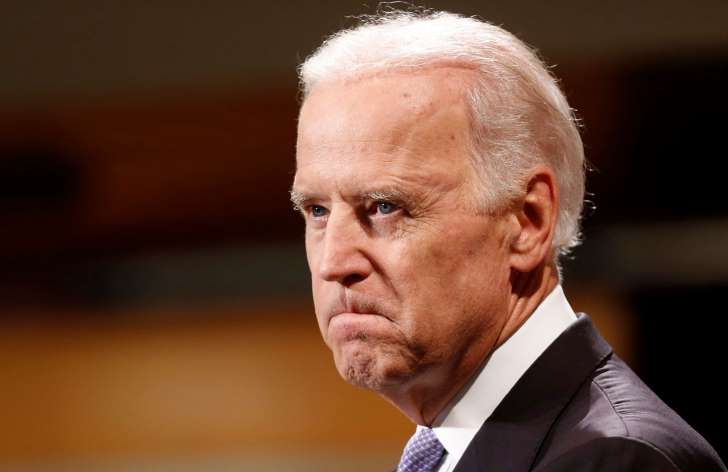
Vice President Joe Biden is going to lecture the U.S. Senate on something about which knows a thing or two.

He wants his former colleagues to do the job they took an oath to do, which is vote on whether to approve a nominee to the U.S. Supreme Court.

Biden will deliver his message in remarks at Georgetown University.

At issue is the nomination of Merrick Garland to fill the seat vacated by the death of Antonin Scalia. Senate Republicans — many of them, anyway — are digging in on the nomination. They don’t want to consider a Barack Obama appointment, contending that it’s too late in the president’s second term. He’s a “lame duck,” therefore, the task of appointing a justice should fall on the next president.

That, of course, is pure malarkey.

Barack Obama is president until Jan. 20, 2017. He wants to fulfill his constitutional duty and he’s urging the Senate to do so as well.

Oh sure. The balance of the court is hanging here. Scalia was a devout conservative ideologue — and a brilliant legal scholar. Garland is a judicial moderate; he’s also a scholar; a man viewed widely as supremely qualified.

How does Biden — who served in the Senate for 36 years before being elected vice president — figure in this?

As vice president, he’s the presiding officer of the Senate. Of course, he votes only to break ties. He doesn’t actually run the place. That task falls on the majority leader, who happens to be a Republican, Mitch McConnell of Kentucky.

It’s been McConnell’s call to obstruct this nomination.

Biden, though, does have a number of friends in both parties who serve in the Senate. Is there any hope that he can get through to them? Probably not, but when you’re vice president of the United States, you have the bully pulpit from which to preach an important message to those who need to hear it.


Garland the perfect choice for SCOTUS … normally

Caplan-Merrick-Garland2-1200

Under normal circumstances — without such historic potential consequences on the line — President Obama’s choice for the U.S. Supreme Court would be considered damn near perfect.

Merrick Garland fits the bill — to the letter.

Brilliant legal scholar; strict adherent to the Constitution; moderate judicial philosophy; meticulous writer; tremendous personal story; varied legal career in private practice and as a federal prosecutor; many years of experience on the federal bench; virtually unanimous admiration among his peers.

Then again, he’s got this particular problem that is not of his making.

He’s been chosen to the highest court in the land during an election year. That, by itself, isn’t a deal breaker. Except that Republicans who control the U.S. Senate, which must confirm the appointment, have made it one.

They’ve declared that Obama shouldn’t get to pick someone to replace the late conservative ideologue Antonin Scalia during the heat of a presidential election campaign. They want to hand that duty over to the next president who, they hope, will be a Republican.

They’ve declared that the current president doesn’t get to his job, which the U.S. Constitution says includes making appointments to the federal bench. He’s made a big choice. Garland is been named to fill some huge shoes on the Supreme Court.

His only drawback, if you want to call it that, is that he isn’t the rock-ribbed, ironclad conservative in the mold of Scalia. Oh, no. Garland is a moderate. He’s a mainstream, thoughtful jurist with a gleaming reputation for careful legal scholarship.

What, do you suppose, will be the American Bar Association’s rating of this guy, when the ABA decides to make that declaration? I’ll predict he’ll get the highest recommendation possible from the bar.

So what in the world is holding up his confirmation? It’s the obstruction of the Senate Majority Leader, Mitch McConnell, who vows to block any attempt even to conduct a confirmation hearing before the Senate Judiciary Committee.

And to think that McConnell had the brass to say that the president is “politicizing” this pick by criticizing Republicans’ effort to block it.

The stunning lack of self-awareness here is beyond belief. It’s McConnell and his Senate lieutenants who have politicized this process by stating that the 44th president of the United States shall not have his judicial appointment even considered for confirmation.

Why? Because they hope to get one of their fellow Republicans elected president this November.

Something tells me McConnell and his gang of Senate GOP obstructionists are flirting with political disaster if they insist on continuing to play this foolish game.


‘Lame duck’ needs finer point . . . perhaps

Lame-Duck-Congress-a

An acquaintance of mine asked an interesting question regarding President Obama’s upcoming battle over how he intends to fill a key vacancy on the U.S. Supreme Court.

He wondered how one should define the term “lame duck”?

His understanding of the term meant that an officeholder became a lame duck when his or her successor in office had been determined.

Here’s how the American Heritage Dictionary defines the term: “An elected officeholder continuing in office during the period between and election and inauguration of a successor.”

My reaction was that the definition of the term has become a bit more “fluid” these days.

Senate Republicans say they don’t want Obama to fill the vacancy created by the death of Supreme Court Justice Antonin Scalia because he’s a “lame duck” president. They want the next president to make the call.

I tend to have a broader view of the term “lame duck.” I suppose one could argue that any president who wins a second term becomes a lame duck the moment the election returns are finalized. The Constitution prohibits the president from running again, so the clock begins ticking on the president’s term. If that reasoning holds up, then the American Heritage dictionary definition could be interpreted as being germane.

Whatever the case, or however one defines the term, there remains an indisputable truth. The president is in office until the very moment the successor takes the oath of office.

Therefore, the president is entitled — lame duck or not — to all the perks, privileges and power that the office commands.

President Obama is entitled to appoint someone to fill the late Justice Scalia’s seat on the Supreme Court. The Senate, thus, is entitled — and obligated, in my view — to consider that appointment in a timely manner and then vote on whether to approve it.

The president’s lame-duck status should not be an issue.

But it has become one, thanks to the obstructionists who are now in charge of the U.S. Senate.


Still a carpetbagger

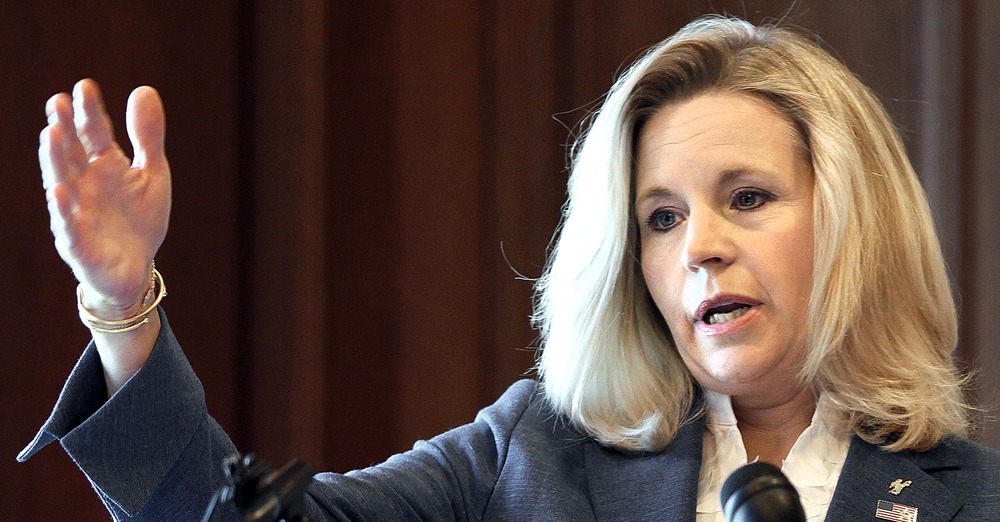
CHEYENNE, WY - JULY 17: Wyoming Senate candidate Liz Cheney holds a news conference at the Little America Hotel and Resort in Cheyenne, Wyoming on July 17, 2013. Cheney, the daughter of former Vice President Dick Cheney, will run against longtime incumbent Sen. Mike Enzi (R-WY). Cheney launched her campaign yesterday following Enzi's announcement that he will run for a fourth term. (Photo by Marc Piscotty/Getty Images)

Liz Cheney didn’t get it. She didn’t learn her lesson.

Cheney is the daughter of former Vice President Dick Cheney. She once thought about running for the U.S. Senate from Wyoming, which her dad once represented while serving in the U.S. House of Representatives until he was named defense secretary during the administration of President George H.W. Bush.

She ran into this problem, though. Actual residents of Wyoming accused Liz Cheney of being a carpetbagger, someone who had not lived in the state since she was a little girl.

She has lived in Virginia her entire adult life.

Liz Cheney dropped out of the race for the Senate.

Now, though, she wants back in as a Wyoming politician. She has declared her intention to run for the state’s only House seat.

Cheney posted her announcement on her Facebook page.

Oops! She forgot to delete a reference on the Facebook post that revealed a tiny detail. It contained the place from where she issued the post: Alexandria, Va.

Check it out.

She still lives there. Cheney, though, did remove the reference to Alexandria.

Will this bring about more carpetbagger accusations? It might.

I know what you’re thinking. What’s the big deal? Other “carpetbaggers” have been elected to public office. Hillary Clinton moved to New York and then got elected to the Senate from that state in 2000. My favorite carpetbagger was the late Robert F. Kennedy, who also got elected to the Senate from New York in 1964; he, too, faced the same accusation.

Still, Liz Cheney needs to prepare to answer the questions about where she lives and whether she really knows much about the state she wants to represent on Capitol Hill.


Take a bow, Brian Lamb

maxresdefault

Brian Lamb is a genius.

He might the smartest journalist in America. Why do I say that? He founded a network that has managed — through all the revolutions and incarnations of other media outlets — to keep the organization he founded free of the partisanship that has poisoned the dissemination of news.

Lamb founded C-SPAN — which is an acronym for Cable-Satellite Public Affairs Network.

C-SPAN tweeted out a message with some testimonials from those who appreciate the contribution it makes to informing the public about politics and policy.

Count me as a huge fan.

Has anyone ever guessed the political leanings of Lamb and the team of reporters and talking heads he employs at the network?

Lamb has made it his policy to ensure that such questions never come up. When you listen to his interviews with public officials, you never know where he leans. Left or right? Doesn’t matter. It’s hidden.

Unlike the other cable networks — whether it’s Fox on the right or MSNBC on the left — viewers get a taste of the bias that spews from the commentators/pundits/talking heads.

They have bored me for years.

Lamb invented pure-bred public affairs programming when he launched C-SPAN in the early 1980s. He persuaded Congress to let his network televise the floor speeches from senators and House members and immediately the public learned a dirty little secret about both legislative chambers: Members quite often pontificate before an empty room. We didn’t need the C-SPAN staffers to tell us; they just broadcast it, without comment.

So it has been with C-SPAN. Brian Lamb’s creation has enlightened us simply by allowing us to look inside these institutions, hear our elected representatives speak for themselves and then giving us a chance to decide whether they’re full of wisdom . . .  or something that stinks to high heaven.


SOTU won’t fill us with warm, fuzzy feelings

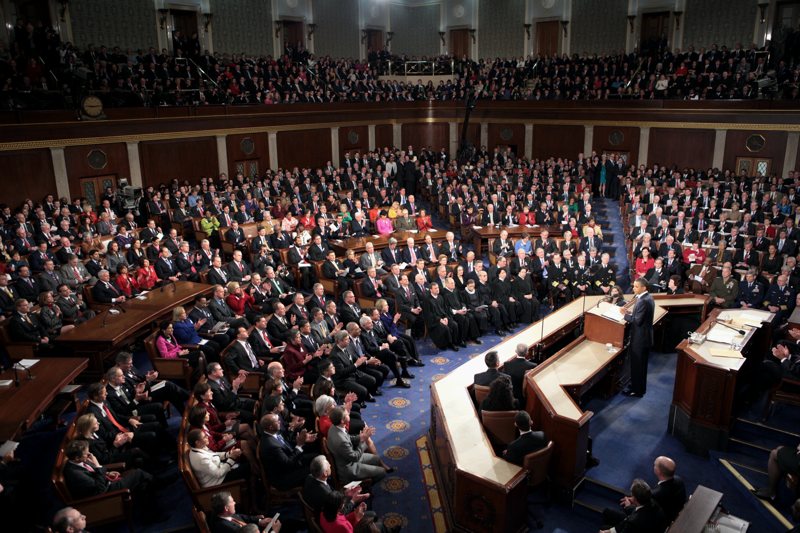
2011_State_of_the_Union

It never really had to be this way.

Barack H. Obama took office in January 2009 as the 44th president of the United States after an election that many had hoped would be a “transformational” political event for a country that had just elected its first African-American president.

Not long afterward, then-Senate Minority Leader Mitch McConnell announced that his top priority would be to make Obama a one-term president. Yes, that’s right. McConnell said that defeating the president’s re-election effort would be his No. 1 priority.

That set the tone — right off the top — for the kind of relationship that the White House would have with Congress.

It hasn’t gotten any better, even as President Obama prepares to deliver his final State of the Union speech to a joint congressional session.

Ugly relationship coming to an end

To be blunt, the president didn’t do his part to develop a good working relationship with Congress. I’ve lamented before how the young president never learned how to build upon those relations with his congressional friends. To be honest, the president arguably served too little time in the Senate to have crafted a lot of friendships and political alliances among his fellow legislators.

I had hoped the president could have followed the Lyndon Johnson model of transferring his Senate experience into effective legislative accomplishment.

He didn’t.

However, Congress made it clear that it had no intention of giving any quarter to the president.

So, the president’s final State of the Union speech — which the White House says will be an “unconventional” presentation — isn’t expected to produce any bright lights of hope for a smooth and successful final year of the Obama presidency.

Republicans almost unanimously say that next to nothing will get done in this final full year of Barack Obama’s administration.

Perhaps, then, it will be left to the president simply to declare victory on the accomplishments that his presidency has delivered.

I’m wondering now if the president is going to remind us that Sen. McConnell’s top priority never came to pass.


House OKs another waste-of-time measure

obamacare-1

Here we go again.

The U.S. House of Representatives has approved a measure to repeal the Affordable Care Act. The House vote comes after the Senate approved the measure earlier.

Speaker Paul Ryan blustered that the measure is going to President Obama’s desk — where it faces a certain veto.

The president’s signature effort is in no danger of being overturned.

Which begs the question: Why is Congress continuing to waste the public’s time and money on these efforts to repeal the Affordable Care Act?

Oh, I think I know.

Republicans who control both congressional chambers want to make political hay. They want to keep hammering at a law they detest because, they say, it expands the federal government.

Well, the ACA also does something else. It provides health insurance to roughly 17 million Americans who beforehand didn’t have it. They couldn’t afford it. They were denied medical care because they couldn’t afford to pay for it. The ACA now provides insurance.

Repeal the law? Sure. And replace it with . . . what, exactly?

House members and senators will get the veto that the president promises. They’ll be unable overturn the veto because Republicans lack the two-thirds majority in both houses to do it.

So, the dance continues.

Will someone tell the band to stop playing? Please?


Meanwhile … a budget deal comes forth

budget

While the Republican presidential horde was cackling Tuesday night in Las Vegas about how much better they could govern the country than the man who’s been doing it for nearly eight years, GOP and Democratic congressional leaders were hard at work.

They produced a budget to fund the government well into 2016.

Republicans got a lot of what they wanted; Democrats got some of what they wanted. Republicans control Congress, so that’s to be expected.

I believe that’s what we call “legislating.”

House Speaker Paul Ryan, R-Wis., announced a tentative deal that spends $1.1 trillion through most of the upcoming election year.

It’s not a perfect deal. Then again, when you have two parties grappling for their preferences, one cannot expect perfection. One gets what one can get. You seek to make the best of it and then you line up and support a deal that does what it’s designed to do: run the massive federal government that is supposed to serve the people who pay for it — that you be you and me.

One of the more intriguing elements of the deal is that it ends the nation’s ban on exporting oil. Fascinating, yes? We’re now the world’s No. 1 producer of petroleum, so we have a surplus of what we could call “Texas Tea” to share with our trading partners and allies.

We’re not out of the woods just yet. The government is scheduled to shut down tonight. Leaders from the both parties have to engineer yet another stop-gap measure that would keep the government functioning through Dec. 22.

In the meantime, they all can work out the details of getting this bigger deal done. They need to wrap it up before they all head out of town for Christmas.

Get busy. Go home. Spend some time with your loved ones.

Then get back to work. We pay you folks to govern.


A congressional breakthrough … maybe?

Pelosi-Ryan-jpg

A single dinner involving two political leaders of opposing parties likely doesn’t signal much all by itself.

It might portend a potential thaw in relations on Capitol Hill. I reiterate … it might.

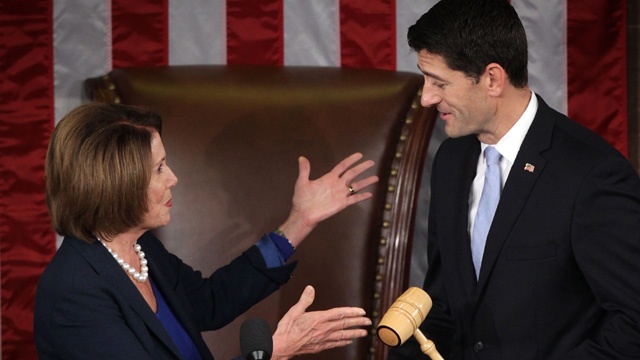
Newly elected House Speaker Paul Ryan, R-Wis., invited House Minority Leader Nancy Pelosi, D-Calif., to his Capitol Hill office for a two-hour get-together. They had a meal in the office and talked a little shop and got to know each other a little better.

What does this mean?

It might be a precursor to some actual progress in Congress between political leaders who’ve been fighting each other — often using some intemperate language to describe the other sides’ motives and intentions.

Democrats and Republicans are battling at the moment over a new budget. They did manage to cobble together a five-day stopgap measure that keeps the government running … but only for a short time. More bargaining is due in the next few days for everyone to agree on a $1.1 trillion federal budget that funds the government through most of next year.

Oh yeah. It’s also an election year.

Ryan and Pelosi reportedly don’t know each other well. This meal in Ryan’s office was billed as sort of an ice-breaker.

Where do we go from here? That remains anyone’s guess.

Congress, though, needs to figure out a way to assert its constitutional responsibility to actually govern. There’s been too much fighting between the parties, not to mention between the majority party — that would be the Republicans — and the White House.

The president must share responsibility in this ongoing inability to find common ground. However, just as members of Congress want to take credit for the good things that happen, they also need to take responsibility for the negative occurrences.

Ryan and Pelosi likely aren’t going to become best friends forever — aka BFFs. A dinner, though, well might set the stage for a new working relationship that restores the concept of good government to Capitol Hill.

Win or lose, Cruz may pay steep price

cruz

Ted Cruz stormed onto the U.S. Senate floor in January 2013 and began immediately demonstrating his lack of understanding of institutional decorum.

The Texas Republican began making fiery floor speeches. He accused fellow senators — and former senators — of doing things detrimental to national security. He sought to shut down the government over the Affordable Care Act.

Along the way, he decided to run for president of the United States … and while running for the White House, he accused Senate Majority Leader Mitch McConnell of being a liar.

Cruz facing hurdles

The Texas Tribune reports that win or lose in his bid for the presidency, Cruz faces a serious problem with his Senate colleagues. Many of them don’t like him. They don’t like his brash attitude. They dislike his lack of manners. They believe he’s self-serving and egotistical — which, coming from U.S. senators with monstrous egos of their own is really saying something, if you get my drift.

If the Cruz Missile gets elected to the presidency next year — which I do not believe is going to happen — he’ll have to cut deals with the very senators he’s managed to anger. If his campaign falls short, he’ll return to Capitol Hill and, well, he faces the same chilly reception from his colleagues.

The Tribune reports that some political observers doubt Cruz’s ability to legislate. “Texas has been short a senator since the day Cruz was elected,” said Jenifer Sarver, an Austin-based GOP consultant and former staffer for U.S. Sen. Kay Bailey Hutchison, Cruz’s predecessor. Sarver continued: “As someone who worked for Senator Hutchison, who was an absolute and constant champion for Texas, it’s disappointing to see his lack of regard for how his political posturing could impact Texans.”

Sure, Cruz has his fans among conservatives in Texas and around the country. I surely get that many Americans applaud the man’s in-your-face style. Cruz calls his approach merely “anti-establishment.”

But the young man is just one of 100 men and women from both political parties who need to work together on occasion to get something done for the good of the country or for their own states.

To date, as near as I can tell, Sen. Cruz — who is serving in his first-ever elected office — hasn’t yet read the memo that reminds him of how a legislative body is supposed to function.