Tag Archives: Vietnam War

Waiting anxiously for a landmark event

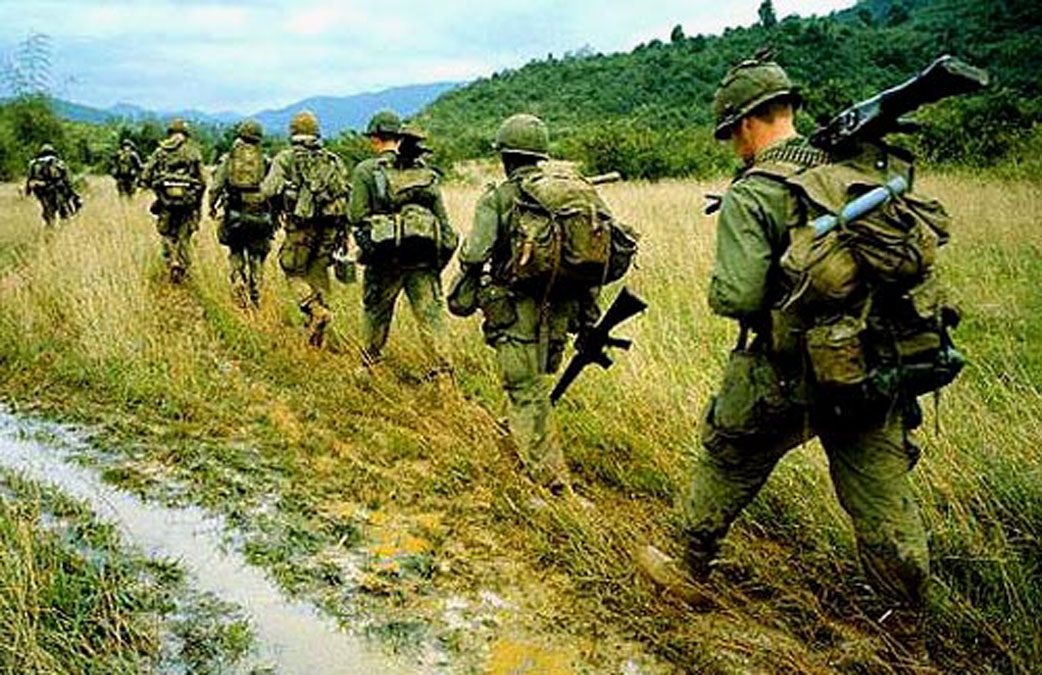
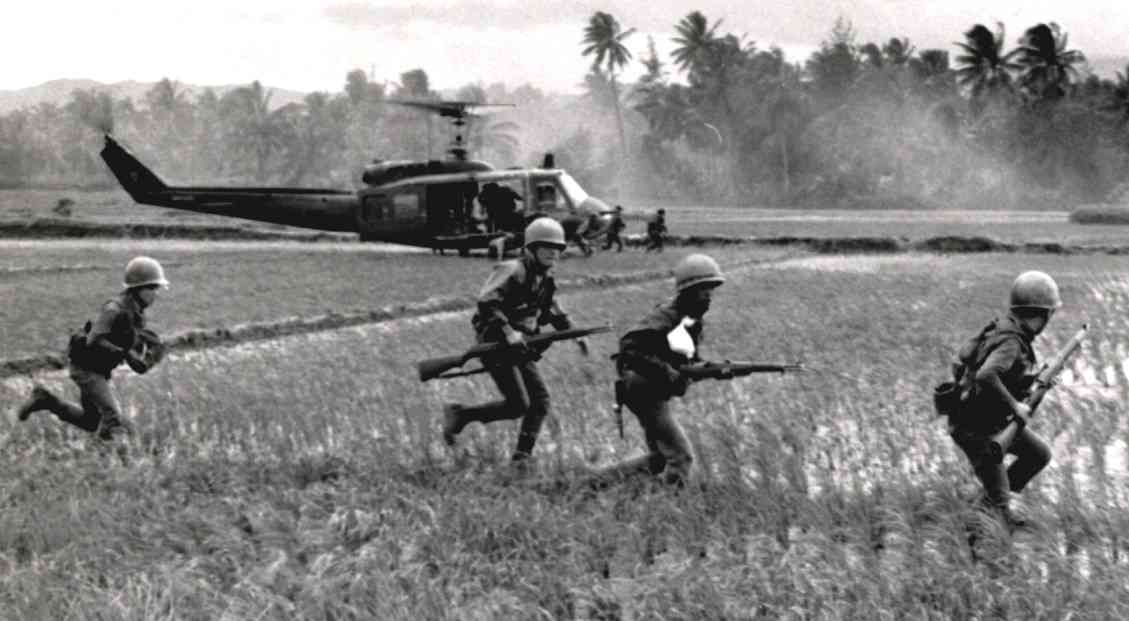
I don’t believe it’s an overstatement to call Ken Burns and Lynn Novick’s upcoming PBS documentary special a “landmark television event.”

They’re going to chronicle an event that shaped a generation of Americans. It made a lot of young Americans grow up in a major hurry. “The Vietnam War” airs beginning Sept. 17 over 10 days; it comprises 18 hours of viewing.

Burns told AARP magazine: “We have a kind of historical amnesia about Vietnam.” He said it is “like an amputated limb that still itches, still aches. If we as Americans want to get over the divisions we feel today so prominently, it’s important to understand the place where they began.”

AARP calls Burns and Novick’s project a “doozy.” Boy, howdy. Is it ever.

***

Millions of Americans are going to watch this event with a special interest. These are those who reported for duty at some time during the Vietnam War. They were affected by it openly and viscerally. The war brought them pain, which many of them brought home with them.

I was fortunate in that regard. I didn’t suffer physical pain as a result of my service there. I’ve noted already that I was what grunts called a REMF, a “rear-echelon motherf*****.” I worked on Army airplanes and later scrambled missions at the I Corps Tactical Ops Center in Da Nang.

But in November 1989, I had the rare honor of returning to Vietnam, 20 years after I reported for duty at Marble Mountain. I went back to Marble Mountain at the tail end of a three-week fact-finding trip I took with 20 other journalists, members of the National Conference of Editorial Writers. We toured Cambodia, Thailand and Vietnam. At the end of that “official” journey,” two colleagues and I flew north from Saigon to Da Nang as part of a personal sojourn.

We arrived in Da Nang and then took a car out to Marble Mountain. We strolled along the sandy terrain where I had walked as a young soldier. Our guide was explaining to us how the Vietnamese had absorbed our physical presence at Marble Mountain, how they had taken possession of all we had left behind. They put it to use for their own purposes, she said.

That’s when it happened. I broke down in tears. I began sobbing. I cried like a little child. Our guide, Mai, stopped talking. My friends backed away. I was alone with my emotions for, oh, just a few moments. Then it stopped. I wiped the tears off my face. Took a deep breath.

At that moment, I was cleansed of some unknown pain. I felt a sense of relief. I had shed a load of emotional baggage I never even knew I had been lugging around since my departure from the war zone two decades earlier.

I was a happy man. That “amputated limb” no longer “aches.”

I have told Vietnam veterans since my return from that marvelous journey that they, too, need to return. I get mixed reactions from them. I don’t press the issue; it’s for them to decide.

Ken Burns is an acclaimed documentary filmmaker with a huge body of work that’s been broadcast for decades on PBS. His collaboration with Novick is highly anticipated.

It will be a landmark event. I also am quite certain a lot of Vietnam vets will learn something about a critical chapter in their lives. They also might learn something about themselves.

Does it get any better than that?

McCain’s ‘no’ vote on ACA repeal appears to be personal

This is a brief tale of two politicians.

One of them is Donald J. Trump; the other is John S. McCain III. They have an intense dislike for each other. They’re both of the same political party; they’re Republicans.

Trump entered politics in June 2015 when he decided to run for president of the United States. It was his first political campaign. He’d never sought any other public office. He touted his wealth and his business acumen. He promised to “make America great again.”

He got elected president.

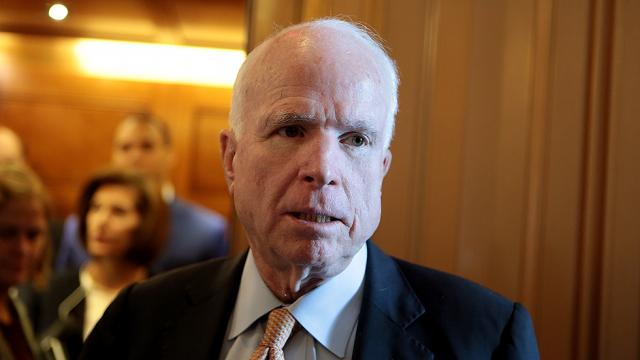
McCain has been in politics for a long time. He retired from the Navy and then was elected to the U.S. House from Arizona. Then he went on to the Senate. He’s been in public office for more than three decades. Oh, and he was a fighter pilot who in 1967 got shot down over Hanoi, North Vietnam. He was captured and held as a prisoner for the rest of the Vietnam War.

While running for president, Trump was asked about McCain’s service and whether he considered the former POW a “war hero.” Trump’s answer is still echoing. “He’s a war hero because he got captured,” Trump said. “I like people who aren’t captured.”

McCain heard that. I’m wondering: Do you suppose he took serious offense at that snarky response? Do you believe he felt disrespected, that the candidate denigrated his service? And how do you suppose McCain felt knowing that Trump avoided service in the war that took such a savage toll on his own body? McCain was injured badly when his plane was shot down. He suffered broken limbs that never were set properly by his captors. He endured torture, isolation, and intense verbal and emotional abuse.

The public service stories of these two men cannot be more different. One of them had zero public service experience until he assumed his high office; the other man spent years in the military before becoming a politician. He paid dearly for his military service.

The men’s political journeys crossed not long ago when McCain ended up voting “no” on a repeal of the Affordable Care Act, something that Trump wanted. He had banked on McCain to be on his side. McCain would have none of it.

McCain, by the way, had just been diagnosed as having a malignant brain tumor. He came back to the Capitol Building to cast his “no” vote.

I am left to ponder now — weeks after Sen. McCain cast that fateful vote against ACA repeal — whether Donald Trump doomed the ACA vote with that idiotic, disrespectful and utterly gratuitous dig at a war hero’s service to his country.

In a perfect world, public policy shouldn’t hinge on personal slights. I think it did this time. I’m glad it did. John McCain deserved better than he got from the man who would become president. But he delivered his response with perfection.

Donald Trump had it coming.

Trump’s lack of compassion on full display

Donald John Trump Sr.’s grotesque lack of compassion became evident yet again Tuesday night while he was railing against Arizona’s two Republican U.S. senators.

One of them, John McCain, is battling brain cancer. Doctors performed surgery recently to remove a cyst near his left eye and discovered an aggressive malignancy in his brain.

I don’t know what the doctors have told McCain about his prognosis. That’s for the senator and his family to know.

Did the president say a word of concern, or care, or compassion about his fellow Republican? Did he offer any prayers from his family to the senator’s? Did he wish him a speedy and full recovery?

Oh, no. The president ventured onto McCain’s turf — his home state of Arizona — and ranted, raved and ridiculed the senator.

I must add, by the way, that the senator has served his country with more honor, heroism and bravery than the president ever imagined. His experience as a prisoner during the Vietnam War alone would be enough to bestow such high praise.

OK, the president didn’t say it. I’ll offer yet again a good word to the stricken senator. Get well, sir. Thank you for your stellar service to our great nation.

Trump throws down on Pakistan

There’s quite a bit to parse about Donald Trump speech tonight about a change of strategy in our nation’s ongoing war in Afghanistan and its military policies regarding South Asia.

Let’s look briefly at Pakistan

The president has declared that Pakistan has to step up and become a significant U.S. ally in the fight against the Taliban, ISIS and al-Qaeda in Afghanistan.

I actually agree with the president’s view on Pakistan, a nation I never have trusted fully to be a valuable partner in that struggle. You’ll recall that in May 2011 our SEAL and CIA commandos killed Osama bin Laden in a compound where he lived for years inside of Pakistan. No one has yet produced evidence that the Pakistanis were totally ignorant of bin Laden’s presence inside their country.

So, yes, the Pakistanis have to demonstrate their commitment to fighting the terrorists in Afghanistan.

Then the president reached across Pakistan and tapped its arch-rival India to play a larger role in this effort. Can there be a more stinging slap in the Pakistanis’ face than that?

The strategy change as delivered tonight lacks detail. Trump’s decision to wage war until circumstances dictate a possible end creates the potential for an open-ended conflict. Are we ready for that?

He also laid down a marker at the feet of the Afghan government. Trump wants to see “real results” in an effort to end corruption. He wants to see the Afghans demonstrate a military capability that prevents the Taliban from return to power.

The president talked for quite a long time before running for office that the Afghan War was a foolish contest. Then he took his seat behind the Oval Office desk, he said tonight, and saw things differently. I’m glad he recognized how perspectives change when you obtain power.

Something is gnawing at my gut that we’ve just heard the president of the United States commit this country to continuing fighting a war that still seems to lack a strategy for winning.

U.S. forces won far more battles in Vietnam than they lost. Conventional wisdom held that we should have actually won that war. We didn’t. The Vietnamese outlasted us. We left and the enemy we “defeated” on the battlefield took control of the government we sought to protect and preserve.

Is there a similar outcome awaiting us in Afghanistan?

49 years later, the day remains as vivid as ever

Forty-nine years ago today, I said so long to my father, piled into a car with my mother and drove into downtown Portland, Ore., to begin two of the most important years of my life.

I was about to be inducted into the U.S. Army. I kissed Mom goodbye and reported to the induction station near the Greyhound bus stop. I took the oath, gathered my belongings and rode about three hours north to Fort Lewis, Wash.

I completed basic training nine weeks later and got my orders for where I would report for my advanced individual training: Fort Eustis, Va., where the Army would turn me into an aircraft mechanic.

We boarded a plane after graduation from basic and flew to Richmond, Va. En route from Boeing Field to Richmond, I chatted with one of the flight attendants.

“You must dread these flights with a bunch of military guys,” I said to her. “Oh, you guys are angels,” she replied. “The last military charter flight I worked carried a plane full of sailors who’d been on a submarine for six months.” I got the picture.

Sixteen weeks after arriving in Fort Eustis, I completed by training and then awaited my orders: Vietnam.

This is my segue into my discussion topic for the next brief period: The Ken Burns-Lynn Novick documentary film on “The Vietnam War” that will air on Panhandle PBS beginning Sept. 17. It’s a must-watch TV event. At least it is for me.

***

I arrived in-country at Bien Hoa Air Base, South Vietnam in the spring of 1969 and was bused immediately to Long Binh, the huge logistics center near Saigon. I was there only for about four days before I got my orders for Marble Mountain, a secure base just south of Da Nang. While at Long Binh, though, I had to perform some of the usual duties assigned to newly arrived soldiers, such as burning fecal matter from the latrines scattered throughout the sprawling compound.

I flew to Da Nang aboard a C-130 transport plane and reported for duty.

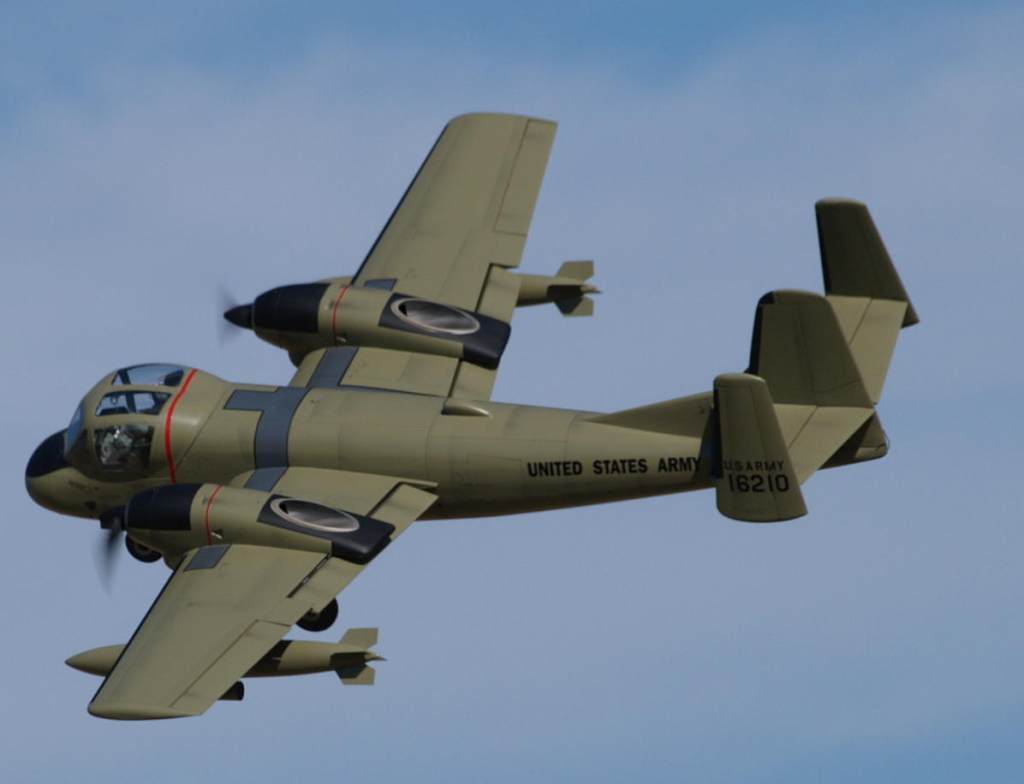
I was what the grunts called a REMF, which stood for “rear echelon mother-f*****.” I didn’t take it personally. I knew we were doing important work there. Our task was to keep OV-1 Mohawk reconnaissance planes in flying condition to perform their duty. Later, I would be assigned to another station at the I Corps Tactical Operations Center, where I became a “flight operations specialist”; my task there was to communicate with aircraft — and to scramble missions on an as-needed basis.

My time in Vietnam was largely uneventful, although we weren’t entirely immune from occasional mortar and rocket barrages from the bad guys camped inside Marble Mountain.

I served and then came home. I remained somewhat confused about a couple of aspects of that conflict in which I participated.

What were we doing there? And for what purpose?

The PBS documentary I hope helps resolve some of that confusion for me. That’s my goal in my plan to watch every single moment of it. I suspect as well that many millions of other fellows my age will want to understand that period of our nation’s history.

I hope Burns and Novick provide us all with the understanding we want — and which some of us need.

The Vietnam War will be told through rare archival film, interviews with those on both sides of the conflict — and through some of the coolest music ever recorded.

I am waiting with bated breath.

Now it’s Sen. Blumenthal in the crosshairs

Donald J. Trump Sr. has pressed his foot hard on the presidential petulance pedal.

He fired off a series of tweets today attacking Democratic U.S. Sen. Richard Blumenthal after Blumenthal appeared on TV over the weekend to criticize the Justice Department’s emphasis on rooting out leakers.

Did the president call into question the specifics of Blumenthal’s criticism? Oh, no. He attacked Blumenthal for a lie he told about serving “in Vietnam” when in fact the senator — a Marine Corps reservist — didn’t set foot in the country during the Vietnam War.

Let’s see. That story came out during the 2010 campaign for the Connecticut U.S. Senate seat that Blumenthal was contesting. He apologized for his mischaracterization. As one who actually did set foot in Vietnam during the war, I was appalled at the time that Blumenthal would say such a thing. I chastised him heavily for it.

But that was then. It’s over.

Here is what I wrote about it at the time:

https://highplainsblogger.com/2010/05/scandal-crosses-partisan-divide/

However, since Trump did bring it up, I guess it’s OK to remind readers of this blog that young Donnie Trump didn’t exactly distinguish himself either during that period in our nation’s history.

He got a boatload of student and medical deferments to keep him away from the war. Trump did suggest during the 2016 campaign that his attendance at a military high school in New York was essentially the same thing as serving in the military. Umm. No. It’s not. Honest.

Check out Trump’s tweets here.

I read somewhere in the past few days that new White House chief of staff John Kelly might be able to bind up the president’s Twitter finger. I guess that hasn’t happened, at least not yet.

In the meantime, Donald Trump continues to demonstrate with startling effectiveness that he possesses the temperament of a child. To think this individual also has control of nuclear launch codes that could destroy the world.

Waiting for an epic TV series: ‘The Vietnam War’

I am tempted to start a short-timer’s calendar in anticipation of what I am absolutely certain is going to become an epic television event.

The Public Broadcasting Service is going to broadcast beginning Sept. 17 a 10-part documentary series, covering 18 hours, on the Vietnam War. Panhandle PBS — based at Amarillo College — will broadcast it in real time as it airs.

I am so very hopeful that it deals with a burning question that has nagged me for decades: Why did we fight this war? I spent a bit of time in Vietnam a long time ago as a member of the U.S. Army. I became confused as to the mission and whether it was all worth the fight. So, it is with that lingering doubt about this major American chapter in our national history that I await this program.

Ken Burns and Lynn Novick are the co-producers of this TV broadcast. I’m sure you know about Burns, the iconic historian and documentarian who has compiled a vast body of work over many years on PBS. “The Dust Bowl,” for example, told the story of how the world’s greatest manmade ecological disaster affected the Texas and Oklahoma panhandles, decimated families and steeled those who remained with an unbelievable resolve to recover.

Burns and Novick have collaborated on this Vietnam War package over the span of 10 years.

I read an interview with them in a magazine called “Vietnam.” Novick answered about what made her decide to make this film. with a fascinating notion. “Some people have said, ‘Why are you going to open old wounds? Can’t we let sleeping dogs lie?'”

I would argue that the dogs of the Vietnam War aren’t sleeping. They haven’t slept a wink since the shooting stopped in late April 1975. The nation has been agonizing ever since about the war, its consequence, the wounds it inflicted on us here at home.

“It’s too painful. And it’s still here,” Novick told “Vietnam.”

A generation of Americans who once were young but who now are much older has lived through considerable pain. Some of us came back from that war and were met with open hostility. I did not experience such shameful conduct, but I certainly knew of it occurring all around me. Those attitudes have changed dramatically in the decades since and I accept with gratitude expressions of thanks today for my service during that long-ago conflict.

I welcome this broadcast with great anticipation about what it will reveal about that terrible time in our national history.

I applaud PBS for its continuing relationship with Ken Burns, who has teamed up with another dedicated documentary filmmaker to tell the story of what has been described as the world’s most important historical event of the second half of the 20th century.

Millions of us played a part in shaping that story. We await anxiously this monumental television event.

Mr. POTUS, apologize to Sen. McCain

Gregory Wallance is a lawyer and author who has written a wonderful essay for The Hill in which he declares it’s time for Donald J. Trump to say he’s sorry for defaming John McCain.

What’s more, according to Wallance, Trump defamed an entire corps of warriors who served their country with honor and valor in precisely the manner that McCain did.

Here is Wallance’s essay.

Sen. McCain, an Arizona Republican, has been diagnosed with brain cancer. His prognosis is not yet known to the world, although my sense is that doctors have given the McCain family a full briefing.

The point is that Sen. McCain served more than five years as a Vietnam War prisoner. He was shot down in 1967 over a Hanoi lake. He suffered broken limbs after he ejected from his stricken jet. The North Vietnamese who captured him stuck a bayonet in his abdomen. He was tortured, beaten and berated by his captors.

He was offered an early release. The communists thought they would win points by releasing the son of a senior Navy officer. The young aviator refused, and was subjected to more torture.

What did then-candidate Trump say about McCain’s service during a war that Trump managed to avoid? He said McCain was a “hero only because he was captured. I like people that weren’t captured.”

No one on Earth thinks Trump has it in what passes for a heart to say he’s sorry for defaming a valiant and gallant war hero. Gregory Wallance, though, has offered a stirring account of why such an apology should be made to honor all the individuals who endured the kind of wartime misery inflicted on John McCain.

Wallance writes: “In the decades after World War II, when more than 120,000 Americans had been POWs, insulting a former POW the way Trump did would have ended any politician’s career.”

Wallance writes about the raid conducted on Japan immediately after Pearl Harbor, about how Col. Jimmy Doolittle and his fellow Army aviators took off from the USS Hornet aboard land-based B-25 bombers. Their mission was fraught with peril from the get-go. They struck targets in Japan. Many of the men were captured by the enemy.

“American servicemen and women become POWs because they are serving their country in harm’s way,” Wallance writes.

He doesn’t expect Trump to apologize. He wants the country to salute those who served their nation and paid a heavy price because they fell into enemy hands.

I join in that salute. Fruitless as it is, though, I also demand that Donald Trump apologize for the hideous insult he leveled at a true American hero.

Trump continues to disgrace his office

I simply am at a loss to understand the president of the United States.

He continues to exhibit an utter disregard for presidential decorum, such as the most recent “performance” he staged at the Boy Scout Jamboree.

Donald John Trump stood before about 40,000 Scouts and their leaders and decided to make a political speech. He denigrated his immediate predecessor, Barack H. Obama, for allegedly failing to appear at a Jamboree; he was wrong, as Obama attended the 2010 event. He tore into Hillary Rodham Clinton, who he defeated in the 2016 election. Trump excoriated Congress for failing to enact a Republican-authored health care bill.

On and on he went …

The Boy Scout Jamboree is among the last places on Earth one would expect to hear such a political diatribe. That didn’t deter this guy.

Let me point out here that Trump never became a Scout; Obama did. For him to criticize President Obama was akin to his declaring that former Vietnam War prisoner Sen. John McCain was a hero “only because he was captured; I like those who aren’t captured, OK?” Oh, yes, Trump never served in the military, while McCain flew combat missions on fighter jets during the Vietnam War.

I won’t belabor the point too much longer, but I feel the need to say that never in my entire life have I felt the utter disdain for a president of the United States that I do for the current White House resident. I cannot attach the terms “President” and “Trump” consecutively.

I say this yet again even thought I do accept that Trump was elected fairly and squarely. He won more electoral votes than Hillary Clinton and won enough of them to be elected president. I do not subscribe to the idea that the Russian meddling in 2016 was decisive; Trump likely would have won even without the Russians’ interference.

However, he continues to disgrace the office. He sickens me at many levels. I’ve lost count of the “last straw” comments he has made since becoming a full-time politician. The Boy Scout riff is just the latest. I’m sure there’ll be more.

‘Give it hell,’ Sen. McCain

I’ve opposed many of John McCain’s public policy pronouncements over the years. None of that opposition, though, has stood in the way of my admiration for him as a dedicated public servant who brought a hero’s stature to his service in the U.S. Senate.

Sen. McCain, the Arizona Republican, is now in the fight of his life.

Doctors removed a blood clot from near his eye and now have revealed that the veteran lawmaker is suffering from an aggressive form of brain cancer.

His daughter Meghan calls him the “toughest person” she’s ever known. Tributes have poured in from throughout the nation, across the political chasm that divides the nation.

Donald Trump and his wife, first lady Melania Trump, sent their  “thoughts and prayers.” Former Presidents Clinton and George H.W. Bush sent their heartfelt prayers as well.

Barack Obama, with whom Sen. McCain tussled as the two men ran for the presidency in 2008 and while Obama served two terms as president, said this in a message via Twitter: “John McCain is an American hero & one of the bravest fighters I’ve ever known. Cancer doesn’t know what it’s up against. Give it hell, John.”

Check out the messages to Sen. McCain.

He earned his hero status the hard way by being shot down during the Vietnam War and by being held captive for more than five years by North Vietnam. He was tortured, beaten to within inches of his life, denied medical treatment for the injuries he suffered when his plane crashed into a lake in downtown Hanoi.

But he persevered. He struggled. He fought back.

As President Obama said, “Cancer doesn’t know what it’s up against.”

John McCain became a national figure the moment he entered Congress and he has served the nation with honor.

We’re pulling for you, senator.