Tag Archives: downtown Amarillo

Expand and improve Civic Center? Absolutely!

ama civic center

ā€œSHALL the City Council of the City of Amarillo, Texas, be authorized to issue general obligation bonds of the City in the principal amount of $83,430,000 for permanent public improvements and public purposes, to wit:Ā  constructing, improving, expanding, renovating and equipping civic center facilities and the acquisition of land therefor; such bonds to mature serially or otherwise over a period not to exceed twenty-five (25) years from their date, to be issued and sold in one or more series at any price or prices and to bear interest at any rate or rates (fixed, floating, variable or otherwise) as shall be determined within the discretion of the City Council at the time of issuance or sale of the bonds; and whether ad valorem taxes shall be levied upon all taxable property in the City sufficient to pay the annual interest and provide a sinking fund to pay the bonds at maturity?”

* Proposition 5 on the Nov. 8 Amarillo municipal ballot

That might be the longest sentence ever written in English. Ever!

But it speaks directly to an issue that has been on the top of Amarillo residents’ minds ever since, oh, we began talking about building the multipurpose event venue across the street from City Hall.

Amarillo City Council has put forward seven ballot propositions. This one, No. 5, deals directly with the Civic Center.

This is the first in a series of blog posts — as I promised earlier —Ā commenting on the propositions coming to us this November.

The city asks residents to spend $83 million and change to improve, rehabilitateĀ and “expand” the Civic Center.

Those who objected to the MPEV said the Civic Center ought to be a higher priority for the city than building a new ballpark. They cited the city’s lack of convention meeting space. Meanwhile, pro-MPEV forces argued that the new venue would be a great attraction for people to venture downtown for an evening of entertainment — which doesn’t argue directly against Civic Center improvements.

The Civic Center is a decent venue for conventions. Sure, it could stand some improvements. The Cal Farley Coliseum isn’t exactly a first-rate sports venue. It’s cramped, with limited seating for hockey and indoor football, although fairness requires me to say that neither the hockey team or the football team play to many sellout crowds during their respective seasons.

Still, an $83 million price tag would seem to do quite a bit for the Civic Center, which has been standing along Buchanan Street since the late 1960s.

Here’s our chance, then, to improve this venue to make it an even better draw for convention business.

Hey, we’ve got that five-star Embassy Suites hotel going up across the street. The folks staying there ought toĀ be able to do their business inĀ a first-cabin convention center as well.

Is an Amarillo baseball deal at hand?

ballpark

“Amarillo Councilman Randy Burkett said he expects his city’s leaders will sign an agreement with Elmore Sports Group in late September or early October.”

— FromĀ an Amarillo Globe-News Facebook post

What prompts Councilman Burkett to make such a bold prediction? Lubbock missed a deadline to put a proposed tax increase on the November ballot that would pay for construction of a new baseball stadium.

Lubbock’s late entry into the baseball franchise hunt appeared for a moment to hinder Amarillo’s own quest.

Thus, the deck now appears cleared for Amarillo to negotiate aggressively to bring the Double A minor-league baseball franchise to the High Plains. The franchise currently does business as the San Antonio Missions.

The Missions are planning to vacate the Alamo City, which is angling to bring in a Triple A franchise.

I am not privy to the goings-on at City Hall. I just sit out here in the peanut gallery hoping for the best.

And “the best” appears, if Burkett is correct, to be taking shape.

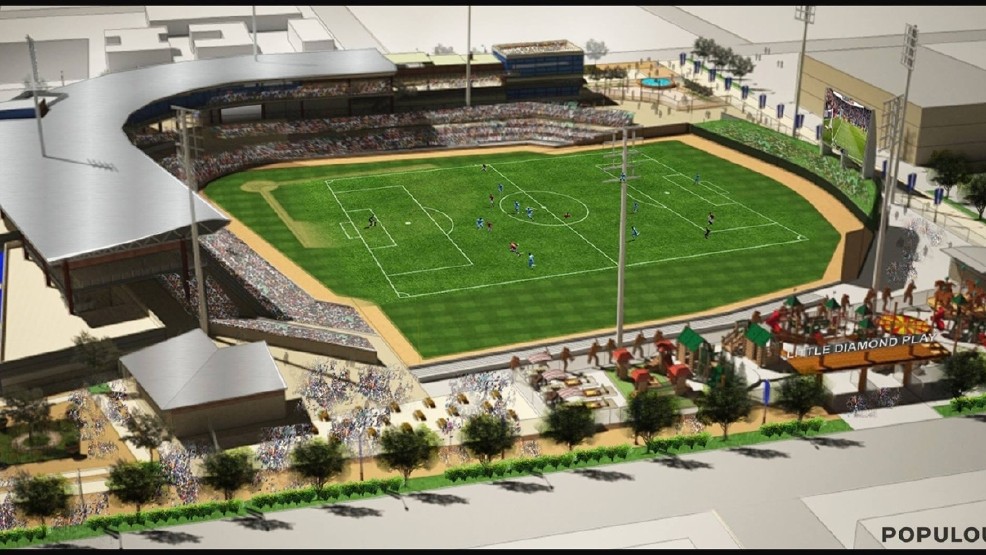
Amarillo is set to begin making room for its downtown ballpark. Crews will begin demolition of the old Coca-Cola distribution building across the street from City Hall. Once the lot is swept clean, then the plan is to build the multipurpose event venue that voters endorsed with their November 2015 referendum vote.

So, if an agreement is about a month away, then the franchise that now plays hard ball in San Antonio will bring its act to Amarillo — hopefully soon.

Then the city can have a legitimate minor-league baseball franchise to root for in a shiny new ballpark. It would be a significant improvement over the half-in, half-out bunch that splits “home” games between Amarillo and Grand Prairie and plays half of its “home” schedule at a rat hole ball park at the Tri-State Fairgrounds.

Amarillo can do better than that.

Walk produces interest in those bike trails

park

My wife and I enjoy walking through the neighborhood, something we’ve done for many years and something we’ve renewed with increasing vigor recently.

On a walk the other day through our southwest Amarillo ‘hood, I noticed the “Bike Trail” sign just as I watched a guy on a bicycle turn the corner and peddle his way along the trail.

The thought then occurred to me: Where does the trail go?

Then I remembered. The city has started a comprehensive bicycle and walking network, but hasn’t finished it.

I spoke with the city parks and recreation director, Rod Tweet, a few months ago for a story I wrote for NewsChannel 10.com. The story dealt with the hike-and-bike network that I knew the city had started.

He couldn’t get too specific in answering questions about when the project would be completed. My sense at the time was that the city had a lot of other projects that greater priorities than the hike/bike network.

Hmmm, I thought. Oh yeah. The city hasĀ that downtown thing going on. I hope they get around to completing the network.

Tweet explained that the goal is to connect all the neighborhoods covering more than 110 square miles with trails that people can travel on their bicycles or on foot. I don’t believe the intent is to enable someone to walk from, say, the Colonies to Lakeside Drive. But I guess they could if they wanted to do so … eventually.

The city fathers and mothers have talked for longer than I can remember about enhancing the quality of life for residents.

I continue to believe that a comprehensive citywide network of hiking and biking trails does precisely that for Amarillo.

The Parks and Rec Department did a good job fixing up the oldĀ railroad right of way along Plains Boulevard. I see people using it all the time — as IĀ zip by in my automobile.

There’s more to do. My hope is that the city gets moving soon on finishing a worthwhile project.

Civic symbolism can have positive impact

CanyonTX1908RandallCountyCourthouse812TJnsn3

I noted recently that Amarillo’s Center City lit up a sign in front of the Paramount Building a decade ago.

Moreover, I noted that there might be some linkage between that singular act and the progress that’s occurred throughout the city’s downtown district since that moment.

There might have been some chuckles around the city over that observation.

But let me take this argument a bit farther.

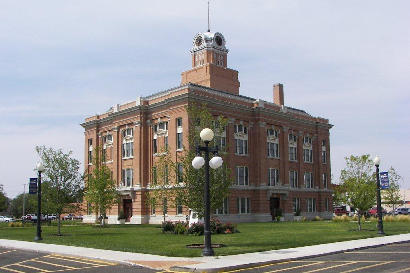
Randall County performed something similar years ago when it renovated the exterior of its 1909 Courthouse building in the Canyon Square.

The county asked voters to approve a referendum to spend public money on refurbishing the outside of the building. The voters said “yes” to the request. The county then finished the job … and the exterior of that building looks spiffy, shiny and sits in the middle of a well-manicured lawn in the middle of the Square.

The building is still unoccupied. There’s no public business being done inside the building. It’s still rotting. Canyon city officials were considering renovating the interior of the building to move some City Hall functions into it — until they got the price tag for it. No can do.

But what’s happened on the Square since the courthouse building’s restoration? It’s blossoming. Businesses have moved into formerly vacant store fronts.

Randall County has moved some of its functions into the old jail and district attorney’s office building across the street. The bulk of the county’s business, though, is done at the Justice Center across the street from West Texas A&M University.

Did the act of restoring the exterior of a once-dilapidated building spur economic growth in the middle of the Randall County seat? County Judge Ernie Houdashell thinks so, as do Canyon city officials … not to mention many of the business owners who have watched the Square’s rebirth.

Does the lighting of a prominent marquee sign on Polk Street have the same impact on downtown Amarillo’s forward progress?

It could be. WhoĀ canĀ doubt it with anything other their own bias?

Could a single sign be the catalyst?

downtown ama

A friend of mine made a social media observation this morning I want to share here.

Wes Reeves of Amarillo is a big-time preservationist. He loves to save old buildings and to see old structures brought back to life. He’s a former colleague and we’ve been friends during the 21-plus years I’ve lived in Amarillo.

He notes that 10 years ago, Amarillo’s Center City flipped the switch on a sign in front of the Paramount Building on Polk Street in downtown Amarillo. The sign lit up, the crowd gathered in the street cheered mightily; I was one of them doing the cheering.

Reeves writes: “We hoped it would become a symbol for downtown rebirth, and it has. Since that time, tens of millions of dollars have been invested in downtown. And this sign has been photographed thousands of times by locals and visitors alike.”

He’s a happy young man. I’m happy, too.

He poses an interesting theory as to whether a singular symbolic act could have such a tangible economic impact. It might be pure coincidence that the lighting of the sign — which formerly lit up the entrance to a downtown movie theater — could have played a direct role in the progress that has occurred downtown.

The city did have a Strategic Action Plan in the works when Center City lit the sign. Movement was beginning.

Potter County had renovated the Santa Fe Building one block over and installed government offices into the beautiful structure.

As Reeves noted, too, “tens of millions of dollars” in private investment has been spent downtown since the sign started blazing brightly on Polk Street.

Coincidence? Strategic planning? Divine providence?

Whatever.

The sign was lit. The city has come a long way in the decade since in its effort to revive its downtown district. It stillĀ has a ways to go.

I’m believing that all those cheers were worth it that night when they flipped the switch on the Paramount sign.

Let’s get busy, Amarillo City Council

MPEV

The author of a letter to the Amarillo Globe-News has sounded an alarm for Amarillo.

He suggests that Lubbock is up to no good in its effort to lure a Double A baseball franchise that is planning to vacate San Antonio. He likens the move to someone who is stealing a kiss.

You see, Amarillo is also trying to bring that same franchise, which is currently called the San Antonio Missions, to the Panhandle. Lubbock has just now joined in the hunt for the same prize.

The headline on the letter to the editor calls Lubbock a “wicked stepsister.”

Interesting description, although it does seem a bit harsh.

But make no mistake, there exists a civic rivalry between the communities.

Lubbock is home to more residents; it has Texas Tech University; it has a first-cabin sports and entertainment venue at the Tech campus. There is this perception that Lubbock is able to land the first-line entertainment acts while Amarillo — as often as not — gets stuck withĀ knock-off “tribute”Ā bands and truck pulls.

Lubbock now it seeks to land a baseball franchise that first came into Amarillo’s sights several months ago.

Amarillo wants the Missions to move here and to take up residence in that downtown ballpark that is set to be built — eventually! — on property across the street from City Hall. The multipurpose event venue is part of the city’s downtown revival effort. The key to the MPEV’s success, though, seems to lie in whether the city can persuade the Missions to come here.

Will the Lubbock initiative get in the way?

I do believe that the time has officially arrived for Amarillo’s City Council to pull together, in unison, for the same goal.

There’s been some signs of fracture among council members since the latest municipal election, which occurred in May 2015. It’s more imperative than before, though, for the governing board to set aside personal differences.

A new MPEV tenant does not want to wade into an environment that — in the words of interim City Manager Terry Childers — has produced a “caustic political environment.”

I don’t yet know what Lubbock has up its municipal sleeve.

However, I do believe it is time for Amarillo to show itsĀ chops and ensure this potential suitor that it intends to do all it can to make the MPEV/ballpark a success and that whoever takes up residence in the new venue will enjoy the fruits that success will bring.

Some unity of purpose is in order.

Hoping for actual minor-league baseball

baseball

My curiosity got the better of me this morning.

I decided to look up the home page for the AirHogs, the team that passes for a minor-league baseball organization that plays some of its home games in Amarillo.

I discovered a serious travesty.

The AirHogs are known as the Texas AirHogs, given thatĀ the teamĀ splits its “home schedule” between Amarillo and Grand Prairie, a community in the Metroplex.

The home page lists its “home” game schedule by referring to the split between Amarillo and Grand Prairie.

http://airhogsbaseball.com/home/

Which brings me, I suppose, to the purpose of this blog post: the possibility of Amarillo getting an actual minor-league baseball franchise.

City officials have announced a schedule for the knock-down of a vacated Coca-Cola distribution plant across the street from City Hall. It’s coming soon. The lot will be cleared off, scraped clean and then the city will await construction of a $45 million ballpark — once known as the multipurpose event venue.

All the while, the city — or more specifically, the Local Government Corporation — is negotiating with a baseball franchise that currently plays ball in San Antonio. The hope here is that the San Antonio Missions, a Double A team affiliated with the National League San Diego Padres, will relocate to Amarillo once San Antonio lands a Triple A franchise.

The LGC has a huge task before it. Indeed, the negotiation likely is a key reason that interim City Manager Terry Childers agreed to stay on the job a while longer as the City Council continues its search for a permanent chief city administrator.

During the campaign prior to the November 2015 municipal referendum on the MPEV, retired Amarillo College President Paul Matney talked about Amarillo’s history as a “baseball town.” The voters agreed narrowly with Matney’s assessment and approved the referendum that gave the city the green light to proceed with the MPEV.

That history, though, is not being honored by the ridiculous half-and-half home schedule the AirHogs are playing. Heck, they aren’t even playing all their Amarillo home games at that dump called Potter County Memorial Stadium; they are playing some of those games at West Texas A&M University’s home field.

I am trying mightily to retain confidence that the LGC can pull this deal together and that Amarillo can get the kind of minor-league baseball that will make the city proud.

City is getting its infrastructure act together

childers

I’ve been yapping and yammering for a year about all the “change” that arrived at Amarillo City Hall with the election of three new City Council members.

Some of it has been good. Some, well, not so good.

I want to address one of the “good” changes that is developing as I write this brief blog post.

Amarillo interim City Manager Terry Childers has laid out the case for the city to ask its residents — the bosses, if you will — this question: How much are you willing to pay for some critical infrastructure needs?

He spoke to Panhandle PBS on Thursday night in a “Live Here” segment that, to my ears, illustrates a fundamental shift in the city’s approach to applying good government.

Here’s the interview:

http://video.kacvtv.org/video/2365817588/

Amarillo has long boasted about its low municipal property tax rate. It’s the lowest of any city “of significance” in Texas, Childers said. The issue, though, is that it’s not enough to take care of those capital needs and “maintenance and operation” the city must meet.

Childers talked about the need to repair and replace roads, sewer lines and to modernize the Civic Center. How is the city going to do that? It has to ask the residents to pony up the dough.

There might be a 1-, 2-, 3-, or 4-cent increase in the municipal property tax rate. Each penny of increase in the amount per $100 assessed property valuation will enable the city to borrow funds to pay for the improvements.

Given that the city is virtually debt free, Childers seems to suggest that the time has come to ask for residents for some help in paying for these needs.

Amarillo already is undergoing a serious makeover of its downtown district. There’s already been some public commitment, but the bulk of the money is coming from private investors. Very soon, the city will start knocking down the old Coca-Cola distribution center to make room for that multipurpose event venue. I remain delighted to see the changes that have occurred already downtown — and await eagerly the changes that are about to come.

But the city needs to do a lot of work to fix its streets, sewer lines and other infrastructure amenities that we all need.

Childers is making a strong case for those needs.

Sometimes old makes way for new

polk street

This picture is of a building that’s coming down on Polk Street,Ā  near Seventh Avenue, in downtown Amarillo.

A friend of mine, Wes Reeves, snapped it and posted it on social media earlier today.

I’ve known Reeves for many years and I have developed a keen affection for his own love of local history and things that are old and worth preserving.

Reeves loves old buildings. He believes communities must honor their past by doing all they can to preserve those vestiges of history.

He also noted as he posted this photo that there’s some good news accompanying the demolition of something old. It is that Amarillo is getting something new: a brew pub that is planned to be built in the city’s evolving downtown business-and-entertainment district.

Which brings me to the point here.

It is that the city is changing its central district personality.

Is the city going to forsake every single shred of history? Good heavens, no!

Amarillo already has preserved the historic Fisk Building and turned it into a classy hotel. Potter County has renovated the exterior of its courthouse, along with restoring and reviving the Santa Fe Building. There will be plenty of other restoration projects ahead; I’m hoping — along with the rest of the city — for eventual restoration of the Barfield Building and the Herring Hotel.

The new features, though, ought to be as welcome here as efforts to preserve the old ones.

And no doubt about it, we’re getting plenty of new business.

Yes, downtown is changing. That change necessarily means we have to make way for the change. If it involves the occasional removal of something old that no longer is functional, well, I’m all for that, too.

Let the change continue.

Not so fast, Mr. Manager

childers

Amarillo City Council members have put the brakes on a search for a city manager.

This is an interesting — but I’m not yet sure it’s a necessary — development in the rebuilding of the city’s top administrative infrastructure.

Interim City Manager Terry Childers came on board after Jarrett Atkinson resigned a job he held for about six years. Childers then got entangled in an embarrassing kerfuffle involving the city’s emergency communications center. HeĀ apologized for bullying a dispatcher over an incident involving a misplaced briefcase.

Then the search commenced.

Why the delay … now?

Mayor Paul Harpole said the city has a lot of big projects in the works that require some administrative continuity.

He noted that the city has a potential bond election coming to seek voter approval on a number of big construction projects; plus, the city is in the midst of negotiations to bring a AA baseball franchise top play hardball in the to-be-built downtown ballpark; and … the city is enacting a series of administrative overhauls within the police department.

Childers is leaving his footprint on City Hall. He’s selected an interim police chief, Ed Drain, to succeed former Chief Robert Taylor, who recently retired.

As an outsider sitting in back row of the peanut gallery, though, I wonder about the status of the individuals the city has examined for the city manager’s post. The delay in hiring a permanent manager could take as long as a year. Do the individuals already looked at hang around, waiting for the phone call from City Hall?

My initial concerns about Childers centered on that silly exchange over the briefcase. He blundered and blustered his way into local headlines over that tempest and, to my mind, it seemed appropriate for the council to proceed with all deliberate speed in finding a permanent city manager.

I’m guessing the waters have calmed a bit at City Hall. If that’s the case, then the council is moving with all deliberate prudence in this search.

However, if the interim manager is here temporarily, then the council needs to get on with the search for someone who’ll take his or her post permanently.