Tag Archives: Bill Clinton

When did political spouses deserve the blame?

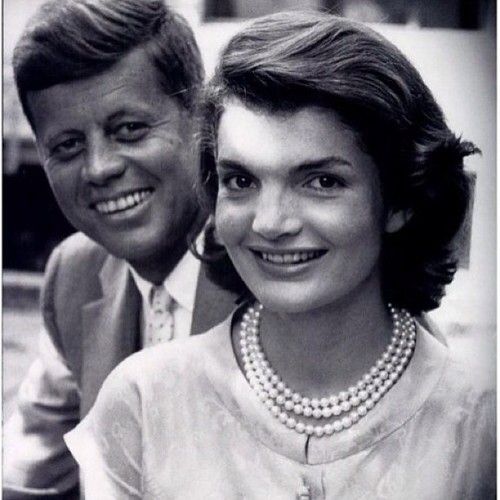
kennedys

A picture showed up on my Facebook feed with the caption: No one blamed Jackie for what Jack did.

Hmm. Interesting, yes?

Now we’re getting a lot of blame being tossed around at the wife of another president.

Times really have changed.

President John F. Kennedy was a seriously unfaithful husband. During the time he was president — from January 1961 until November 1963 — his transgressions went unreported by the media that knew about it, but kept it secret through an understanding: If it doesn’t affect his performance as president, it doesn’t matter.

Years later, long after JFK had been buried and his wife had remarried, the world knew of what he had done behind his wife’s back.

Have we blamed Jackie for what the president did?

No. Today, the calculus is different.

Republican candidate for president Donald J. Trump is now blaming Hillary Rodham Clinton for being an “enabler.” That’s a reason to vote against her for president, said Trump. Why? Because she was mean to other women who accused her husband, Bill Clinton, of being unfaithful to her.

The House of Representatives impeached President Clinton for lying under oath about his relationship with a young White House intern. The Senate acquitted him in the trail that ensued.

Does any of that have an impact on how Hillary Rodham Clinton would govern the country if she’s elected president this fall? No.

In fact, I saw another social media post that suggested that Hillary Clinton’s response to her husband’s transgression should be saluted, not condemned. The Clinton family stayed together. They worked through their anger and heartbreak.

Of course, none of us knows what they have said to each other in private. Nor should we know. It’s their business exclusively.

Perhaps the most ironic twist of all in this game of blaming a political spouse for her husband’s behavior is the reputation of the individual who’s leveling the blame.

Given his own highly publicized history of marital infidelity, Donald Trump has no standing — zero! — to challenge the moral rectitude of any other human being in public life.

‘We let bygones be bygones’

Perry_presser_photoTT_jpg_800x1000_q100

I generally like the craft of politics and, yes, I like some of those who practice the craft.

One of the aspects of politics, though, is the ease with which politicians can set aside amazingly hurtful comments they make about each other to pursue newfound friendships and alliances.

Take the case of former Texas Gov. Rick Perry and the presumptive presidential nominee of the Republican Party, Donald J. Trump.

I would have bet real American money that the two men truly detested each other after hearing Perry skin Trump alive with comments about the real estate mogul being a “cancer on conservatism.”

Not long after that, Perry dropped out of the GOP primary race and then endorsed the formerly “cancerous” Trump’s bid for president.

https://www.texastribune.org/2016/05/06/perry-defends-trump-endorsement/

According to the Texas Tribune: “We are competitors, and so the rhetoric is in the heat of battle. It’s in the chaos of a presidential bid,” Perry said, also noting his criticism of Mitt Romney during the 2012 presidential campaign. “If no one doesn’t understand that, then they don’t understand how our process of elections work. We compete, and then we let bygones by bygones.”

I guess Perry deserves credit for being a good sport. So, too, does Trump for accepting the Perry endorsement.

The things they say to and about each other, though, do seem to cross some imaginary boundary of decency.

I look back at the 2000 contest for the U.S. Senate seat in New York. The Democratic Party nominee for that seat was none other than first lady Hillary Rodham Clinton. I considered it astonishing then that Clinton would want to serve in the legislative body with senators who actually voted to convict her husband of charges brought against him in that impeachment.

It also astounded me, after she won the seat, that Clinton managed to form constructive working relationships with her Republican Senate colleagues, who, you’ll recall, voted to convict President Clinton of the charges brought against him.

I didn’t think she’d run for the Senate seat. Nor did I believe she could ever trust her GOP colleagues as far as she could throw them.

I’m left to ask myself: Could I ever let “bygones be bygones” and throw in with former adversaries?

Umm. No.


Here is what Hillary should avoid

bush-dukakis_6

Bill Clinton’s first campaign for the presidency fine-tuned the art of rapid response.

His team formed the War Room, comprising staff members adept at answering critics immediately.

When his enemies struck, Team Clinton was ready to strike back. Hard.

How is this relevant to the current political race that now seems just about set? It’s that the former president’s wife, Hillary Clinton, is about to become the Democratic Party’s next presidential nominee and — sure as the dickens — she’s going to face a torrent of attacks from Republicans led by their nominee, Donald J. Trump.

The only advice I’m going to offer Hillary Clinton is this: Do not let Trump’s team set the tone for this campaign. Re-create the War Room and be sure you’ve get every face in order before you launch your counterattack.

Bill Clinton’s quick-strike strategy in 1992 was born out of what occurred four years earlier. The 1988 campaign between Vice President George H.W. Bush and Massachusetts Gov. Michael Dukakis featured a tremendously negative stream of attacks from Bush against Dukakis.

How did Dukakis respond? He didn’t.

The ’88 Democratic nominee thought he should stay “above the fray.” So, he let the Bush team define him, paint him as squishy; that he was on crime; that he was unprepared to be commander in chief.

Sure, Dukakis suffered a couple of critical self-inflicted wounds: He allowed himself to be video recorded riding around in that tank, which made him look ridiculous as he wore that helmet; he also fluffed CNN newsman Bernard Shaw’s question about his views on capital punishment during that televised debate, sounding cold and clinical when asked whether he’d support the death penalty if his wife, Kitty, were raped and murdered.

Dukakis’ big lead after that summer’s conventions evaporated and he ended up losing the election to Bush in an Electoral College landslide.

Trump now says Hillary Clinton hasn’t been properly “vetted.” Oh, please. She is arguably the most vetted presidential candidate of the past 100 years. Clinton was subjected to intense scrutiny during her years as Arkansas’ first lady, as the nation’s first lady, as a U.S. senator and as secretary of state.

It seems apparent that we’re heading toward one of the nastiest presidential campaigns on record. Trump already has dispatched a vast Republican field in large measure through is own use of insult and innuendo against many of his former opponents.

Don’t think for a second he won’t try the same thing against Hillary Clinton.

She’d better be ready.


Who’s done most to earn presidency?

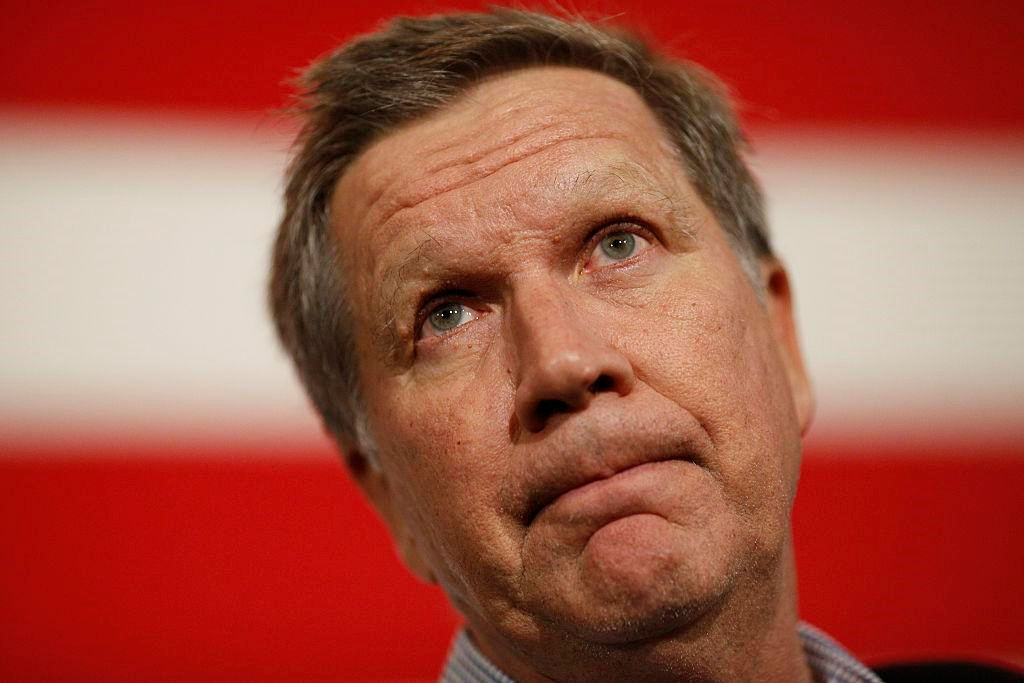
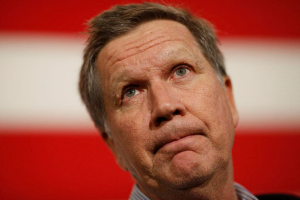
kasich

Now that the debate over which presidential candidates are “qualified” to assume the office if they get elected is more or less over, let’s turn to actual accomplishment.

Part of the qualification argument ought to include who among the five individuals running for the office have done something worthy of consideration. Do they have sufficient executive experience? Have they accomplished anything of substance legislatively? Does business experience matter?

Let’s get the easy stuff out of the way first.

The business experience is helpful in a limited way. Yep, that notion zeroes in on Donald J. Trump. However, as I’ve noted before — although not recently — government is not intended to be run “like a business.” Trump seems to equate everything to “cutting deals.” Treaty negotiation? “I’ll make the best deals imaginable,” he says. Working with Congress? Same thing. Trade agreements? “We’re losing everywhere; we won’t when I’m president,” he boasts.

Knock it off, Trump! You cannot do these things in a vacuum.

He’s got zero government experience. To borrow a phrase: Trump is a loser.

Government executive experience matters much more. Of the remaining candidates, Ohio Gov. John Kasich and former Secretary of State Hillary Clinton qualify. I’d rate Kasich’s years as governor over Clinton’s as secretary of state. Kasich has had to manage a budget, deal with legislators, fight with constituents — sometimes all at once.

Clinton has managed a huge federal agency. She flew more miles to more countries than any previous secretary of state; I’m unsure where here successor, John Kerry, stands in that regard. She has sought to negotiate disputes between nations and, yes, has been caught up in controversy. But her time at State matters … a lot!

Legislative accomplishment?

Here’s where it’s kind of a runaway.

Clinton, U.S. Sens. Ted Cruz of Texas and Bernie Sanders of Vermont all have congressional experience. None of them can boast of an accomplishment that measures up to Kasich’s time in the U.S. House of Reps.

I’m trying to figure out which major piece of legislation has any the names of Clinton, Cruz or Sanders. Cruz’s major “accomplishment” was to mount that idiotic filibuster in an effort to wipe out the Affordable Care Act. Sanders and Clinton can’t even “brag” about something so ridiculous.

Kasich, though, served as chairman of the House Budget Committee that played a major role in achieving a balanced federal budget in the 1990s. That is no small feat, given the toxic political climate at the time. The House was run by Republicans; the president, Bill Clinton, is a Democrat. The White House and Capitol Hill had different notions on how to achieve a balanced budget. They found common ground.

There, my friends, is where one candidate’s record shines.

Is it enough for Republicans to nominate him? Probably not. They’re going to haggle at their convention over whether to nominate two patently frightening “outsiders,” one of whom is the real thing (Trump), the other of whom (Cruz) keeps trashing the legislative body where he’s served since January 2013.

Sure, each of these people is technically “qualified” constitutionally to run for the office. And yes, that includes the Canadian-born-to-an-American-mother Cruz.

I still rate Clinton’s combined government experience — and I include her policy-making influence during her eight years as the nation’s first lady — as giving her a slight edge in the overall presidential qualification contest.

If only the Republican delegates this summer would come to their senses and deliver their party’s nomination to the remaining candidate, Gov. Kasich, who actually has something to show for his lengthy public service record. Then we could have a serious debate this fall on who to select as the nation’s next president.

If only …


Master panderer tosses it back

pander

Did you hear Donald J. Trump’s reaction to Hillary Rodham Clinton’s “photo op” as she sought to enter a New York City subway?

It seems that Clinton — the leading Democratic candidate for president — had some trouble getting her subway pass approved by the machine that accepts these items. It made for a clumsy scene at the pay station.

Then we hear the leading Republican presidential candidate poke fun at Clinton. He suggested that Clinton likely had never ridden a subway in her life. He then accused her — get ready for it — of “pandering” to New York primary voters who ride the train regularly.

There you have it. Kettle, meet pot.

For the entire length so far of his GOP campaign, Trump can be heard pandering to every audience to which he has spoken.

He “loves” Jewish people, Mexicans, evangelical Christians, women, young people, old people … you name it, Trump loves ’em. He says so at every opportunity.

The best pandering job occurred at Liberty University, the well-known Christian college, where he recited a verse he found in “Two Corinthians.” He said “nothing beats the Bible,” and “the Bible is the best.” Does that really and truly sound like something that would come from an individual who actually understands the holy book?

Trump has redefined so much about presidential political campaigning in 2016.

He has become the nation’s panderer in chief.

I can’t help but recall how the late U.S. Sen. Paul Tsongas once described then-Arkansas Gov. Bill Clinton during the 1992 Democratic primary.

Tsongas coined the term “Pander Bear” for Gov. Clinton.

Wherever he is, Sen. Tsongas is laughing out loud.


Who’s qualified to become POTUS?

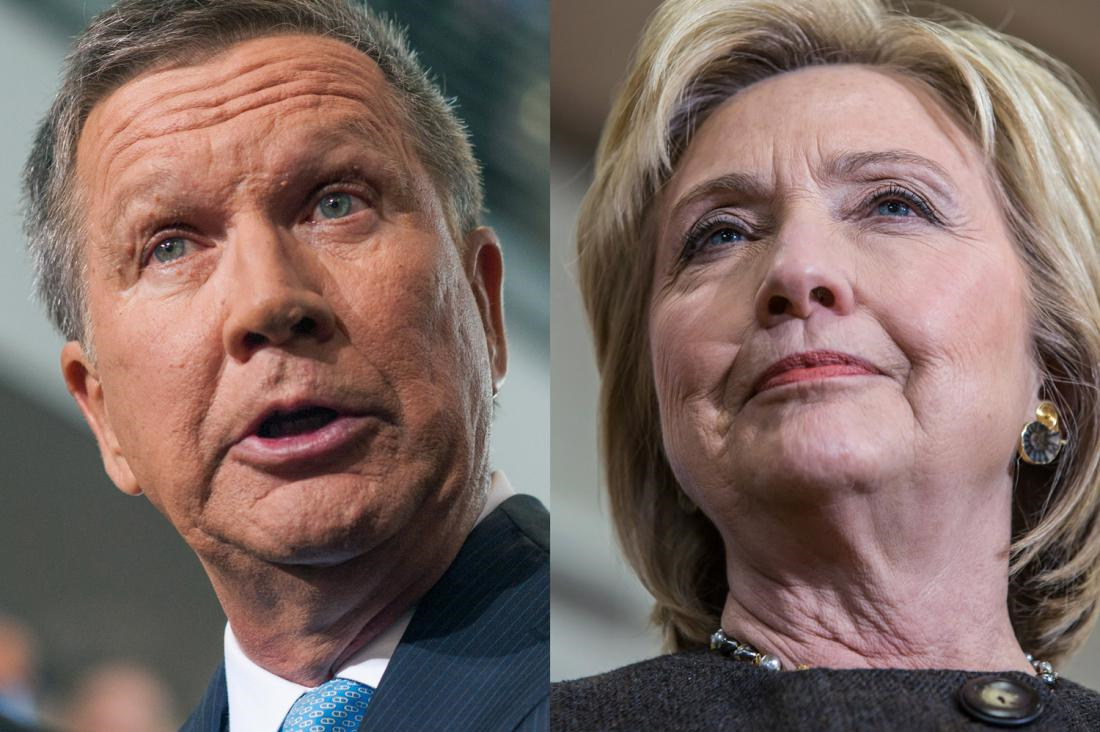
kasich and clinton

Politicians “walk back” comments all the time.

They get caught up in the heat of tossing verbal barbs and stones and then rethink what they say. Are the rest of us allowed to reconsider things we say out loud?

I’ll do so here. I won’t take back everything I said earlier.

At issue are the qualifications of the current crop of candidates for president of the United States. I said in an earlier blog post that I believe Hillary Rodham Clinton is the most qualified of the five people running for president — in either party.

Here is what I wrote earlier.

Then came a comment from a regular reader/critic of this blog. He tells me that Ohio Gov. John Kasich’s qualifications and record make him the most qualified candidate.

This reader, I feel compelled to note, is an Ohio native. So maybe — just maybe — his view is a bit colored by some home-boy bias. I hope he might concede that point. I won’t hold it against him if he doesn’t.

He does make a good point, though, about Kasich — who long ago emerged as my favorite Republican presidential candidate.

Why is Kasich my favorite? He works well with Democrats. He showed an ability to do so while he served in Congress. A good bit of his congressional service included his chairmanship of the House Budget Committee, which — as its title suggests — helps craft the federal budget.

While he sat in the chairman’s seat, the federal government managed to balance its budget. That means Chairman Kasich was able to reach a meeting of the minds with the Democrat who at the time was president; that would be William Jefferson Clinton.

That is no small task. It’s been made even more profound given the current political climate that has poisoned the air and water in Washington.

He’s my favorite Republican for that reason, plus his grown-up answers to today’s tough questions. He understands how government works, how Washington works. That also commends him for the presidency, rather than the blow-it-up approach preached by Donald J. Trump and Rafael Edward Cruz.

Does this make him more qualified than Hillary Clinton? My critic says Clinton’s service has been marginal; she “stood by her man” as U.S. first lady, served an undistinguished tenure in the Senate and her time as secretary of state was plagued by scandal … he said.

That’s his view. I honor that. I just disagree with it.

I do, though, admire Gov. Kasich’s service. I hope lightning strikes at the GOP convention this summer that produces a Kasich nomination for president.

Then the decision for yours truly becomes difficult.

Define whose ‘awful legacy,’ Mr. President

Bubba and The Worst President Evah

Former President Bill Clinton is paying the price for speaking without maximum precision.

So is the presidential campaign of his wife, Hillary Rodham Clinton.

The 42nd president, while speaking on his wife’s behalf, asserted it is imperative that voters erase what he called the “awful legacy” of the past eight years.

That’s it. Awful legacy. He didn’t identify whose legacy to which he was referring.

Pundits, politicians and just plain folks were left, therefore, to presume he meant the president’s “awful legacy.”

The borrow a term: Oops!

The Hillary Clinton campaign immediately sought to clarify what he meant, which was the legacy of the Republican-controlled Congress that, according to the campaign, has obstructed President Obama at every turn along the way.

OK, but he didn’t say it. He didn’t say “Congress’s awful legacy.” Then again, neither did he say “Barack Obama’s awful legacy.”

However, since the president is the Main Man in any political discussion, we are left to presume the former president was talking about his successor.

Right?

President Clinton, of course, has gotten into this kind of word-parsing mess before.

Recall his grand jury testimony during the Lewinsky Scandal when he sought to tell the panel, “It depends on what the meaning of the word ‘is’ is.” That verbal miscue has become embedded in U.S. political lexicon.

I doubt this one will endure quite as long.

Still, for a seasoned politician — which Bill Clinton certainly is — to speak so imprecisely in the heat of a critical campaign really does make some of us wonder: What in the world did he really say — or mean?

Perhaps he can blame it on jet lag.


Negative campaigning: It still works

dontvotefortheotherguy

Political operatives have a name for it.

Opposition research.

Every major political campaign dating back to, oh, most of the previous century has featured it. The organization hires teams of researchers to do one thing: look up negative aspects of an opponent’s record to use against them.

Why embark on this mission? Because it works. Every single time. Voters eat this stuff up, no matter how much they complain how they dislike negative campaigning. They respond to it.

The potential Hillary Clinton-Donald Trump presidential campaign that looms not too far into the future is going to provide “oppo research” teams a veritable trove of negatives.

If I were willing to wager my recreational vehicle, I’d say that Clinton’s team is facing what one could call a “target rich environment.”

Remember the time her husband ran for president in 1992? His campaign famously developed what came to be called The War Room. It developed a quick-hit strategy to answer every negative attack leveled at Gov. Bill Clinton by President Bush’s re-election team. The Bill Clinton team learned the lessons taught by the 1988 campaign of Democratic nominee Michael Dukakis, which allowed the Bush team to “peel the bark” off of Dukakis, as the late campaign strategist Lee Atwater said famously.

I’m willing to presume that Mrs. Clinton’s team has resurrected that notion for her campaign this fall.

More to the point, though, will be the opportunities that the presumed Republican nominee, Trump, will present to the newest Clinton version of The War Room.

Trump has littered his GOP primary campaign with countless public utterances worthy of outright ridicule, not to mention condemnation.

It makes me recall the era not long after the 9/11 attacks. Those of us in daily opinion journalism were handed so many opportunities and topics on which to comment that we faced the editor’s prized dilemma: What can I set aside for tomorrow or another day even later on which to offer an opinion or perspective. Take it from me: It is far more preferable to have too much from which to choose than not enough.

Team Clinton is going to have that kind of “problem” staring it in the face once the GOP nominee’s identity becomes clear.

Yes, I know that Trump’s team will have its chances as well. Which one of the campaigns, though, will have the resources available to them to do the kind of research they’ll need to skewer their opponent? My hunch: the edge goes to Clinton.

Donald Trump already has demonstrated his ability to “go negative” when the other candidates have fired broadsides at him. He does so in amazingly crude ways. He’s criticized opponents’ physical appearance; he has denigrated a journalist’s physical handicap; he has chided an opponent for the manner in which he perspires. All of this, though, has endeared him to the Trumpsters who have glommed on to his message — whatever the hell it is.

And those examples comprise a tiny fraction of Trump’s much-touted business, personal and political history.

And it’s that crudeness that, by itself, is going to present the Clinton team with much of the opposition research material it figures to use against their expected foe.

You want negative campaigning? We’re about to get it.

It won’t be pretty. We’ll bitch about it.

Bring it on!


Hey, these guys got along, too!

newt

The politics of the moment has this way of inflicting a case of selective amnesia among politicians.

Take last night’s 12th — and possibly final — Republican Party presidential debate with Donald J. Trump, Rafael Edward Cruz, Marco Rubio and John Kasich as providing an example of that peculiar malady.

One of them (I can’t remember who) brought up President Reagan’s famous buddy-buddy relationship with House Speaker Tip O’Neill. The two men — one Republican, one Democrat — worked well together.

Sure they did. I honor them for that cooperation.

So did a couple of other well-known pols. Democratic President Bill Clinton and Republican House Speaker Newt Gingrich also managed to find common ground when the need arose. And it did, particularly as it regarded the need to balance the federal budget.

None of these current GOP candidates, though, mentions that political partnership.

We all know why that is the case, of course.

It’s because the president’s wife, Hillary Rodham Clinton, wants to ascend to the office her husband once occupied.

Why, we just can’t give Bill Clinton any props for doing what the current president and the current congressional leadership seem unable — or perhaps unwilling — to do.

I’m the first to acknowledge that the Clinton-Gingrich relationship never evolved into the personal public friendship that Reagan and O’Neill developed.

The Gipper and the Tipper would share some spirits once they were off the clock, setting politics aside; it’s been reported widely how they would swap stories between them and laugh at the foolishness of the day.

I don’t believe I’ve ever heard of similar moments of non-political fellowship involving Bill and Newtie.

However, they certainly did form a valuable political partnership during the time Gingrich was speaker. It’s understandable, I suppose, that the Republicans running for president would choose to ignore it.

I’ll just have to rely on Hillary Clinton to remind the rest of us how bipartisan cooperation can work.

She was there, too.


Trump now challenges the speaker of the House

donald-trump-1a64c2eda04ee51d

House Speaker Paul Ryan today laid out an interesting challenge to the Republican Party’s leading presidential candidate.

He said Donald J. Trump needs to condemn the politics and policies of the Ku Klux Klan, which Trump has failed to do with anything resembling clarity. The Republican Party, said the GOP speaker, does not stand for bigotry, hatred and racism.

Trump’s response?

He said he doesn’t know the speaker but expects to get along with him once the two men get acquainted. If they don’t, said Trump, then Ryan could have some trouble.

Whoa!

Let’s hold on.

As MSNBC commentator Lawrence O’Donnell noted this evening, the speaker of the House of Representatives has far more power than the president of the United States. Thus, the GOP frontrunner needs to take care if he’s going to “threaten” the Man of the House.

Why? The House generates all tax legislation. Plus, as O’Donnell noted, speakers of the House have the ability to make life quite uncomfortable for presidents. Think of what the House did to President Nixon during the Watergate scandal; think also of what the House did to President Clinton during the Lewinsky scandal. Nixon nearly got impeached; Clinton actually was impeached.

Donald Trump needs to learn to make nice. Then again, if he had any understanding of how government actually works, he would know better than to threaten the man who runs one half of a co-equal branch of government.