Tag Archives: Amarillo City Council

Stay the course with AEDC

Screen-Shot-2015-06-24-at-12.21.16-PM-1024x260

Buzz David’s tenure as head of Amarillo’s leading economic development arm is about to end.

I read the newspaper account of his supposed “retirement” twice this afternoon and I’m left with a nagging takeaway: There seems to be more than meets the eye in his announced departure from the Amarillo Economic Development Corporation.

I don’t know the particulars. AEDC called his announcement a “retirement,” while David insists he’s going to stay in the economic development game after his tenure at AEDC ends late this month.

Whatever the case turns out to be, I want to declare that AEDC has succeeded so far in fulfilling its mission to bring jobs to Amarillo and the Panhandle and that David has been a major factor in that success.

The city should seek to find a suitable replacement, someone with the kind of economic development chops that David exhibited during his decade-plus as president and CEO of AEDC.

As for AEDC itself, my unsolicited advice to the Amarillo City Council is clear cut and unequivocal: Don’t mess with it.

I say this because of some careless talk around the city immediately after this past year’s municipal election that the AEDC board should resign en masse. That talk subsided immediately, for which I am grateful.

I had the chance to watch David up close for many years while I was working as editorial page editor of the Amarillo newspaper. I’ve had many discussions with him during that time and since my departure from the paper more than three years ago.

I consider David to be an impressive individual with loads of business savvy. If you ask him about criticism of certain projects AEDC brought to Amarillo, he’s straightforward and direct in answering them.

I once inquired about the Hilmar Cheese plant that AEDC awarded several million dollars to build in Dalhart. David’s response? The money was well-spent, given that the economic impact of that operation ripples far beyond Dallam and Hartley counties.

The Bell aircraft assembly operation came into being before David arrived at AEDC. It, too, has produced huge economic impact for the region. On David’s watch at AEDC, the operation has continued to expand.

AEDC’s strategy is to use the money it accrues from the half-cent municipal sales tax it collects and then doles it out to businesses interested in locating in Amarillo.

That strategy drew considerable scorn from the Dallas-Fort Worth media after Amarillo managed to lure the Bell aircraft operation from Tarrant County to its current location next door to Rick Husband Amarillo International Airport.

It worked! Period.

Yes, there have been some hiccups along the way. Businesses that set up shop here after receiving AEDC assistance have failed.

The bottom line, though, looks good.

I wish Buzz David well as he moves on to his next station in life.

Moreover, my hope is that the city doesn’t mess with the successes built by its economic development corporation.

 

Find homes for the homeless?

homelessness

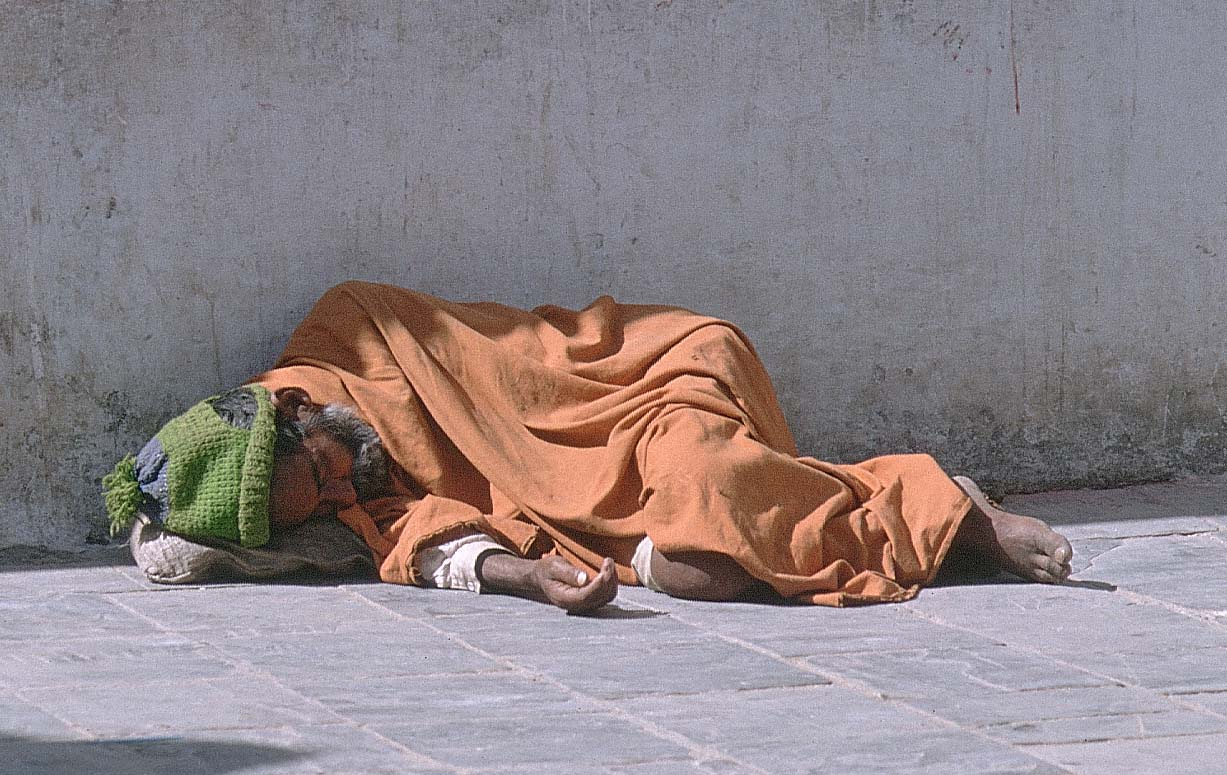
An earlier post on High Plains Blogger prompted a good buddy of mine to send me a link to a story published a year ago on how another city decided to deal with homelessness.

The city is Medicine Hat, Alberta, Canada, population 61,000.

The mayor of Medicine Hat, a self-proclaimed “fiscal conservative,” Ted Clugston, decided the city should provide homes for every homeless person within 10 days of their learning they were without a home.

The blog I posted earlier commented on the Amarillo City Council’s decision to table an ordinance that regulates where homeless people can sleep.

https://highplainsblogger.com/2016/03/whether-and-how-to-protect-homeless-folks/

Is it possible for Amarillo — with its population of nearly 200,000 residents — to embark on an ambitious plan to end homelessness?

It seems impossible for a couple of reasons.

One is that Amarillo is home to a major interstate highway interchange. I-27 ends at I-40. It’s the east-west highway — I-40 — that brings a lot of transient traffic through the city. Are these folks “homeless” Amarillo residents? Well, no. They are passing through.

How many of them are there? I haven’t a clue, but there would seem to be a fairly greater number of them than the folks who live in Medicine Hat.

The Canadian city also sits astride a major highway, Canada’s Highway 1. So perhaps that city gets a fair amount of pass-through transient traffic as well.

I think the second reason a homeless eradication program seems unrealistic for Amarillo is that, to be candid, I don’t sense the political will here to provide housing for every homeless person.

According to the Huffington Post: “If you can get somebody off the street, it saves the emergency room visits, it saves the police, it saves the justice system — and so when you add up all those extra costs … you can buy a lot of housing for that amount of money,” Clugston told the (CBC) network.

He initially resisted the idea of finding housing for those who need it. Then he changed his mind.

Would we really commit to such an ambitious and proactive project? Do we have the civic and political leadership to lead such an effort?

My gut tells me “no.” I could be persuaded otherwise.

Your thoughts?

Whether — and how — to protect homeless folks

14928431

Amarillo, we have a classic conundrum on our hands.

City officials want to “protect the public” by issuing rules restricting where individuals can sleep. Now they find themselves grappling with whether proposed new regulations infringe on the rights of people who have nowhere to go, nowhere to sleep at night — except in public places.

Here’s where City Council members might wish they actually got paid real American money for the job they do to set public policy for a city of 200,000 residents.

The council tabled a proposed ordinance until city legal staff can figure out a way to restrict where folks can sleep at night without taking away the rights of those who live on the street.

It appears that a lingering question concerned how the city defines places that aren’t usually set aside for “human habitation.”

The council then decided against accepting the proposed ordinance.

Oh, the difficulty of some public policy matters.

Mayor Paul Harpole said the purpose of the ordinance is to protect the public and not harm the homeless.

OK, Mr. Mayor. Let’s then try to figure out how to do one thing without doing the other.

From my peanut gallery perch, it appears the city is facing a situation where any controls on where homeless people can sleep at night are necessarily going to inflict some measure of “harm” to those who cannot find shelter. Harpole, incidentally, cast the lone vote against tabling the ordinance.

As NewsChannel 10 reports: “I think a lot of people here are working extremely hard not only to work on this ordinance, but really work on solving some of the root problems of homelessness here in the City of Amarillo,” said James Allen, Community Development Administrator for the City of Amarillo. “I applaud the community for being involved and I want them to stay involved and I think together we will come up with solutions that will address these issues.”

The city cannot let individuals sleep in public parks, or on public sidewalks, or in abandoned buildings. Nor can the city afford to build shelters that will accommodate all the homeless individuals who currently are looking for somewhere — anywhere — to sleep at night.

The issue is coming back to the City Council agenda next week. There might be some tightening of the language to give the proposal some more precision and perhaps seek to protect the city’s homeless population.

For the life of me, I’m trying to understand how any new rules can avoid some discomfort among the people they affect the most.

Good luck, council members. You’ll need lots of it — and some wisdom, too.


MPEV remains worth the city’s investment

MPEV

This is a bit of a non-surprise to many Amarillo residents.

The price of the proposed downtown multipurpose event venue/ballpark has come in a bit greater than originally thought.

Is it cause to toss the idea into the crapper? Not even close.

I’ll admit that I didn’t quite buy into the notion that the MPEV would cost more than the $32 million price tag attached to the non-binding referendum that voters approved in November 2015. I had some faith that the cost would hold up. It hasn’t, according to consultants who have delivered a $48.4 million price tag to the City Council to consider.

What’s the city going to do to cover the cost?

That is the $48.4 million question that the council has asked the Local Government Corp. to figure out. The LGC has received the directive and plans to deliver a report in April to the council.

The increased cost presumes that the city will hook up with a Double-A minor-league baseball team affiliated with a major league franchise.

Suppose the city does land an affiliated minor-league team for the city. Suppose as well that the city builds the MPEV for $48.4 million. Then let’s suppose what might occur if the baseball team fills up the MPEV with thousands of baseball fans every day or night.

Mayor Paul Harpole believes — and I think he’s correct — that the boost in sales tax revenue likely could more than offset any potential property tax increase that residents would have to bear.

“That regional money that comes into our city through sales tax has helped us keep property tax down,” said Harpole. “It’s important that we keep that growth as long as we can, but it has to make economic sense. It has to be something where it doesn’t put the city in too much debt. So we’ll look at that and see what it is and get an answer back and see what we’re going to do.”

Let’s not look askance at the job growth and economic impact created by the MPEV. The consultant that made the report to the City Council, Brailsford and Dunleavy, projects an estimated 341 permanent jobs associated with the MPEV and about $25 million pumped annually into the Amarillo economy.

Does the city issue certificates of obligation? Does it submit a bond issue to the voters, asking residents to approve it? Are there economic development grant funds available for the city to seek?

LGC officials and City Council members have committed to proceeding with exploring this issue thoroughly.

Count me as one Amarillo resident who maintains an abiding faith that the MPEV — even with its inflated cost — can bring a much greater economic return to the community than what it is likely to spend.


City manager search provides major test of resolve

Amarillomain

Amarillo’s search for a city manager will offer the community a chance to gauge the City Council’s commitment to the future of the city’s downtown district.

I’ve commented already on the huge transition already under way in the downtown area. It’s been a very long time since we’ve seen three construction cranes towering over gigantic projects that have begun there.

It gives me hope that the city truly is committed to the huge effort that’s been done already to provide for a better, more vibrant downtown district. Trust me on this: The entire city is going to reap giant rewards once this work is done.

But the city is on the hunt now for a permanent city manager to oversee all of it. The interim manager, Terry Childers, will depart in due course and the new person will be asked to become the chief executive of a $200 million annual enterprise.

One question the council — which will make this hiring decision — must ask of applicants is: Are you committed fully to ensuring the city proceeds full speed toward the future course it has charted?

I understand that the ultimate policy decisions rest with the five members of the City Council. Still, we do have a strong manager form of government here. The council hires the city manager to take control of the levers of government. It puts final administrative authority in that person’s hands. The manager, of course, must do what the council directs. There needs to be constructive synergy between the manager and his or her bosses on the governing council.

To be honest, I am heartened by the direction this new council has taken with regard to downtown. It has honored — so far — the wishes of the electorate that in November endorsed the concept of a ballpark to be build across the street from City Hall.  It has marched forward with construction of the convention hotel and parking garage. Momentum is building.

The next city manager must be committed to continuing that march.

What’s more, the City Council must be on board as well.

The City Council’s search for the new manager — and the decision it makes — will reveal a great deal about its commitment to Amarillo’s future.


Another blemish surfaces in the city manager saga

10057352_G

Let’s see, how are we supposed to sort this out?

Amarillo hired a search firm to help locate an interim city manager after Jarrett Atkinson resigned his post this past year. It contracted with the firm, Strategic Government Resources, to provide detailed documentation of all the candidates it would present to City Hall for consideration.

Now we hear that the SGR didn’t do that with the man selected as the interim manager, Terry Childers.

We have learned that the city doesn’t even have a resume for Childers on file.

The city apparently relied on an oral report from the headhunter.

So, based on that report, it hired Childers, who — it turned out — managed to flub a 911 call to the Amarillo emergency call center when he misplaced a briefcase at a local hotel. He called the dispatch center and bullied the dispatcher while she followed the protocol she was instructed to follow.

Now the city has embarked on a search for a permanent city manager. Is it going to retain SGR to scour the nation for the right person?

According to City Councilman Brian Eades — who’s leaving the council this summer — his confidence in SGR has been “undermined in a way.”

Do you think?

The way I see it, when the city signs a contract with a headhunter that requires it to provide the requisite documentation on candidates who want to become the city’s chief executive officer — the individual who oversees a $200 million annual budget — the search had damn well better do what it pledges to do.

It seems that SGR dropped the ball in the city’s search for an interim manager.

Mayor Paul Harpole said the search for the permanent city manager will be different.

It had better.


Will there be a big change in city voting plan?

8436358_G

For most of my time as an Amarillo resident — it now totals more than 21 years — I’ve been a fairly staunch advocate of the city’s at-large municipal voting plan.

All five members of the City Council represent the entire city. They all answer to the same constituent base. All four council members have as much political stroke as the mayor.

Then my attitude began to change. I posted a blog in 2013 declaring my change of heart and my belief that the time may have arrived to enact a hybrid single-member-district voting plan for the city.

https://highplainsblogger.com/2013/12/re-thinking-single-member-districts/

The city’s population is about to exceed 200,000 residents and perhaps it will be time to consider a serious change.

Then again, the city is embarking on a comprehensive neighborhood revitalization project that city leaders hope will bring some infrastructure equality to a few of the city’s more depressed neighborhoods.

I understand that the North Heights neighborhood is going to get the first infusion of interest, and perhaps some much-needed money, to help improve its appearance.

This is part of a sweeping set of goals the city has set for itself.

The Barrio is likely to be next. Then the city will turn its sights on the San Jacinto neighborhood. Perhaps after that it could be The Boulevard.

Will the city stop seeking to improve its southwest quadrant? No. That work will continue.

The upshot of this might be to stem any possible momentum that could build in the short-term future to change the manner in which voters elect their City Council.

The three new fellows who got elected in 2015 all vowed to be agents of change at City Hall. I’ve commented before about the pros and cons of some of the change they brought.

Will there be a profound change proposed by one of the new guys that deals with the city’s voting plan? Or will the city’s neighborhood improvement plans be enough to forestall a new voting plan?

Time will tell if leaders deliver on their pledge to pay careful attention — and deliver much-needed resources — to all corners of the city.


Councilman puts on his booster hat … and it fits!

9025332_G

Elisha Demerson spoke today about how “great it is to be in Amarillo” these days.

He mentioned a couple of things that deserve attention.

One thing the freshman Amarillo City Council member told the Rotary Club of Amarillo is that downtown Amarillo is progressing nicely. He took particular note of the convention hotel and parking garage that are under construction.

Downtown is being reshaped, reconfigured and revitalized.

The other thing Demerson said is quite instructive. He said the city has the “second-lowest tax rate” of any city in Texas. It’s less than 40 cents per $100 in property valuation.

What does that mean?

It means to me that the city’s intense push toward public-private partnerships is paying off.

I’ve noted before how so much of downtown’s progress in recent years has come with the help of private investment. Banks have spent their own capital to expand operations downtown; the historic Fisk Building was converted into a hotel, again with private money. Storefronts that once were dark now are full of life.

Is there more work to do? Certainly. That’s why the progress we’ve seen shouldn’t be derailed.

It makes me wonder yet again: What was all that anger during the 2015 municipal election campaign all about?

The city retains a ridiculously low municipal tax rate while its downtown business district is showing palpable, tangible, observable signs of progress.

Bring a woman back to City Council?

gender-via-cost-esf-org

I’ve been thinking for the last little while about the gender makeup of Amarillo’s municipal governing panel during the 21 years I’ve lived here.

We arrived in Amarillo in 1995 and the then-City Commission had a woman serving with four men, the late Dianne Bosch.

As I look back during the two decades here, I seem to recall that almost during that entire time the commission comprised at least one woman.

It had a co-ed composition until this past year, when two female incumbents — Lilia Escajeda and Ellen Green — lost their re-election bids.

Now the City Council comprises all men.

One of them, Dr. Brian Eades, is leaving the council in July.

Should the doctor’s colleagues on the council pick a woman to succeed him just for the sake of gender diversity? To be honest, I can’t really identify how a woman’s perspective would fundamentally change the enactment of municipal policy.

Still it’s worth considering this fact: Women comprise roughly half the city’s population. Why not recruit a qualified woman to serve on the City Council? Shouldn’t the council represent the interests of all its constituents?

It does have an African-American serving. But the rest of the men on the council are Anglos. Hey, aren’t Latinos the second-largest ethnic group living in the city?

Again, it’s not that I’m promoting necessarily a gender-based affirmative action policy for the selection process.

The city has run well with woman at the controls. Heck, we even elected a female mayor — Debra McCartt — who seemed to defy the laws of physics by appearing to be in multiple places at the same time.

The selection process will be an interesting exercise in the first place. The council well might face some competing political differences as it wrestles with finding the right person to succeed Dr. Eades.

Let’s toss around the thought of looking for a female to restore the recent tradition of gender diversity on the Amarillo City Council.

City begins search for new manager … good!

10057352_G

Amarillo is about to commence its search for a permanent city manager to take the reins of a government that has been beset with a few hiccups and headaches of late.

We’ve got an interim manager on the job. Terry Childers came aboard a few months after Jarrett Atkinson quit. The initial word about Childers was that he is a take-charge guy, a thorough administrator and a hands-on sort of chief executive.

Then he made that fateful 911 call after misplacing his briefcase, threw the emergency call center into an uproar and became the object of considerable, um, discussion — and perhaps some derision — throughout the community.

OK. What now?

Mayor Paul Harpole said the search will be national.

Allow me a brief hand-clap here. That’s a good call.

“We think it’s time and I think Mr. Childers thinks it’s time too.” said Harpole. Yes, it certainly is, Mr. Mayor.

The governing body doesn’t have much institutional knowledge in conducting that kind of search. John Stiff served as city manager from 1963 until 1983. Then came John Ward, Alan Taylor and Atkinson, all of whom were promoted from within. The city limited its search.

A wide-ranging national search will serve the city well — if it’s done thoroughly and with proper vetting of all the applicants who want to relocate to the Texas Tundra.

The council — which has the sole authority in making this hiring decision — is going to get a lot of unsolicited advice from its bosses. That would be you and me. The folks who pay the bills with our tax money.

Here’s a suggestion: Consider following a model adopted by the Texas A&M University System and Amarillo College when selecting campus presidents.

West Texas A&M University, for example, has done a good job of introducing campus president candidates to the community before they are hired. The A&M regents have selected finalists and then trotted them out one at a time to meet with campus faculty, student body officers and then the public. All interested parties are given the chance to size up the finalists before the regents make the call.

City Hall can go through the same process with the finalists selected by the council.

It’s not a radical approach. It merely infuses the process with the kind of transparency the public was told had been missing in earlier critical policy discussions. You’ll recall the campaign pledges by some of the newest members of the council, yes? We’re going to make city government more “open,” more “accountable,” more “transparent.”

Well, gentlemen, here’s your chance.

Now that the interim city manager has issued his apology for the clumsy manner he handled that 911 call in February and has pledged to behave himself for the rest of the time he’s on the job, the council can proceed with all deliberate speed in finding a permanent chief administrator.

It’s going to take a few months. Be careful, council members. Be diligent, too. Be open and be sure you keep us — your employers — in the loop.