Tag Archives: Vietnam War

Thank you for the expressions of gratitude

I was sitting with my wife, granddaughter and her parents this evening in a burger joint in Allen, Texas.

A little girl, about maybe 10 or 11 years of age, stood by the end of the table where I was sitting. She waited for me to finish saying something to my family members.

Then she said, “I want to thank you for your service in the Army.”

I was taken aback. To be candid, I was moved almost to tears, as I did swallow hard for a moment.

I had worn a ballcap to the restaurant. It said “Army” with the words “Vietnam Veteran.” You’ve seen hats like it, I’m sure. They feature the ribbons all ‘Nam vets get when they served during that terrible conflict.

What I got tonight was a demonstration of respect that (a) I didn’t get when I returned home from the U.S. Army in 1970 or (b) I never thought of extending to a military veteran when I was that little girl’s age.

She stood at the end of the table with a woman who I’ll presume is her mother. Maybe Mom told her to say what she said; maybe the little girl thought of it all by herself. It doesn’t matter one little bit to me as I write this brief blog post.

What we witnessed this evening is an ongoing sense of appreciation that our nation is expressing to those who have worn a military uniform. It seems to have had its birth during the Persian Gulf War of 1990-91. Communities across the nation welcomed those fighting Americans home with parades and salutes after their stunning victory in Kuwait. I witnessed one of those parades in Beaumont, Texas, and I saluted a flatbed trailer carrying a group of Vietnam vets who got their share of love from the crowd gathered along the parade route.

Who led the cheers for the Gulf War heroes? Vietnam War vets who weren’t shown that kind of affection when they returned home from that earlier war.

A little girl made my day. She made me swallow mighty hard for just a moment or two.

This old veteran thanks her — and all those who continue to thank me for my service.

Sen. McCain weighs in on CIA nominee: vote ‘no’

U.S. Sen. John McCain is a bystander in the drama unfolding in Washington regarding Donald Trump’s nominee to lead the Central Intelligence Agency.

The Arizona Republican, though, is no ordinary cheap-seat chump. He is battling brain cancer and likely won’t get to vote on Gina Haspel’s nomination to lead the CIA. He also knows more than your average American politician about torture.

Haspel declined this week to answer a question from Sen. Kamala Harris, who demanded a yes-or-no response: Do you believe torture is immoral. Haspel didn’t provide the answer that Harris wanted. Haspel took part in “enhanced interrogation” of enemy combatants while working as a deep-cover agent for the CIA.

McCain said Haspel’s non-response to Harris’s question is a deal-breaker and he has urged his Senate colleagues to vote “no” on her nomination.

I won’t join the senator in calling for the Senate to reject Haspel’s nomination. But I do understand his belief that torture is not in keeping with who we are as a nation. He knows of which he speaks.

McCain was a Navy aviator when he was shot down in 1967 over Hanoi, North Vietnam. He parachuted during the Vietnam War into a lake and was taken captive. He spent the next five-plus years as a prisoner of war. He was tortured, held in solitary confinement for years on end. He has never recovered fully from the injuries he suffered when he was shot down or from the injuries inflicted by his captors.

So, when Sen. McCain says torture is wrong, I listen carefully to what he says. I happen to agree with him and I disagree vehemently with what Donald J. Trump said while campaigning for the presidency, which is that waterboarding doesn’t go far enough in trying to extract actionable intelligence from our enemies.

I’m still pondering my own thoughts about Haspel’s nomination. I like the fact that she’s a career spook who knows the ins and outs of the agency she has been asked to lead. I am troubled by her inability or unwillingness to declare her view on the morality or immorality of torture as an interrogation technique.

If there is a moral authority on torture among today’s crop of U.S. politicians, it would be Sen. John McCain.

No one knows how much ‘time they have left’

U.S. Sen. John S. McCain said the following regarding his struggle against brain cancer: “Maybe I’ll have another five years, maybe with the advances in oncology they’ll find new treatments for my cancer that will extend my life. Maybe I’ll be gone before you hear this, my predicament is, well, rather unpredictable.”

The Arizona Republican made that assessment on an audio recording relating to his new book, which is to be published later this month.

I want to offer a bit of perspective that I hope, dear reader, you take in the spirit I offer it. I offer this to give Sen. McCain more than a glimmer of hope in his valiant fight.

It is merely that no one knows “how much longer” they’ll be here.

I enjoy good health. I don’t expect to die in the next 30 minutes. No one — except those intent on purposely ending their life — should know when their time is up.

I surely want Sen. McCain to beat the disease he is battling. I want him to return to the Senate, where he has served for more than three decades. I want him to continue to speak out, to lend his voice to the issues of the day. Will I agree with him always? Oh, probably not. Indeed, I’m likely to disagree him more than agree with the senator.

I get the fatalism he is expressing in his memoir, “The Restless Wave: Good Times, Just Causes, Great Fights, and Other Appreciations,” but let’s seek to keep it in some semblance of perspective. It well might be that McCain believes he has been living on borrowed time as it is, given what he endured from 1967 to 1973 as a Vietnam War prisoner who suffered unbearable and unspeakable torture at the hands of his captors.

I want him to draw a bit of strength from the belief that no one can know when the end will come. No one!

McCain is now liberated to speak from his gut

There’s no need to pussyfoot around this.

John McCain is seriously ill. Accordingly, serious — life-threatening — illness has a way of liberating anyone. The Republican U.S. senator is fighting for his life against a virulent form of brain cancer.

He is about to have a book published in which he speaks from the deepest recesses of his gut about a man — Donald J. Trump — who once disparaged his valiant and heroic service to the nation he loves.

The book is titled, “The Restless Wave: Good Times, Just Causes, Great Fights, and Other Appreciations.” In it, the senator says this about the president: “He has declined to distinguish the actions of our government from the crimes of despotic ones.” He adds: “The appearance of toughness, or a reality show facsimile of toughness, seems to matter more than any of our values.”

There’s more, of course, such as: “I’m freer than colleagues who will face the voters again. I can speak my mind without fearing the consequences much. And I can vote my conscience without worry,” McCain writes.

“I don’t think I’m free to disregard my constituents’ wishes, far from it. I don’t feel excused from keeping pledges I made. Nor do I wish to harm my party’s prospects. But I do feel a pressing responsibility to give Americans my best judgment.”

McCain is a brave warrior. Of that there can be no doubt. There can be no question or equivocation.

He fought for his country during the Vietnam War. He was shot down over Hanoi and taken captive. He endured unspeakable torture on top of the grievous injuries he suffered when he bailed out of his jet fighter and splashed into a lake in the middle of Hanoi.

Sen. McCain is one of those politicians one can admire even when you disagree with his politics. I am one of those Americans who holds this man in the highest regard possible, even though I did not cast my vote for him for president when he ran in 2008 against his “friend and colleague,” U.S. Sen. Barack H. Obama.

The nation he fought so valiantly to defend wishes him well. I hope for a miracle that he can beat the cancer that is ravaging him.

I’m glad he has found his voice, although I am saddened in the extreme over the circumstances that have led him to that discovery.

I want him to speak out for as long as he is able.

How do they get these pictures?

UPDATE: Just a few minutes after posting this item, I was informed that the photo above is a “digital manipulation.” Whatever. I’ll keep it posted just because it’s a cool image.

I just have to share this picture on this blog. It is a couple of years old. It was named National Geographic’s “photo of the year” for 2016.

It amazes me in the extreme how photographers are able to capture images such as this. The shark in this photo looks to be of monstrous proportions. It well might be, say, 15 to 20 feet in length. Whatever. I remain in awe of those who find a way to be in the right place at the right time.

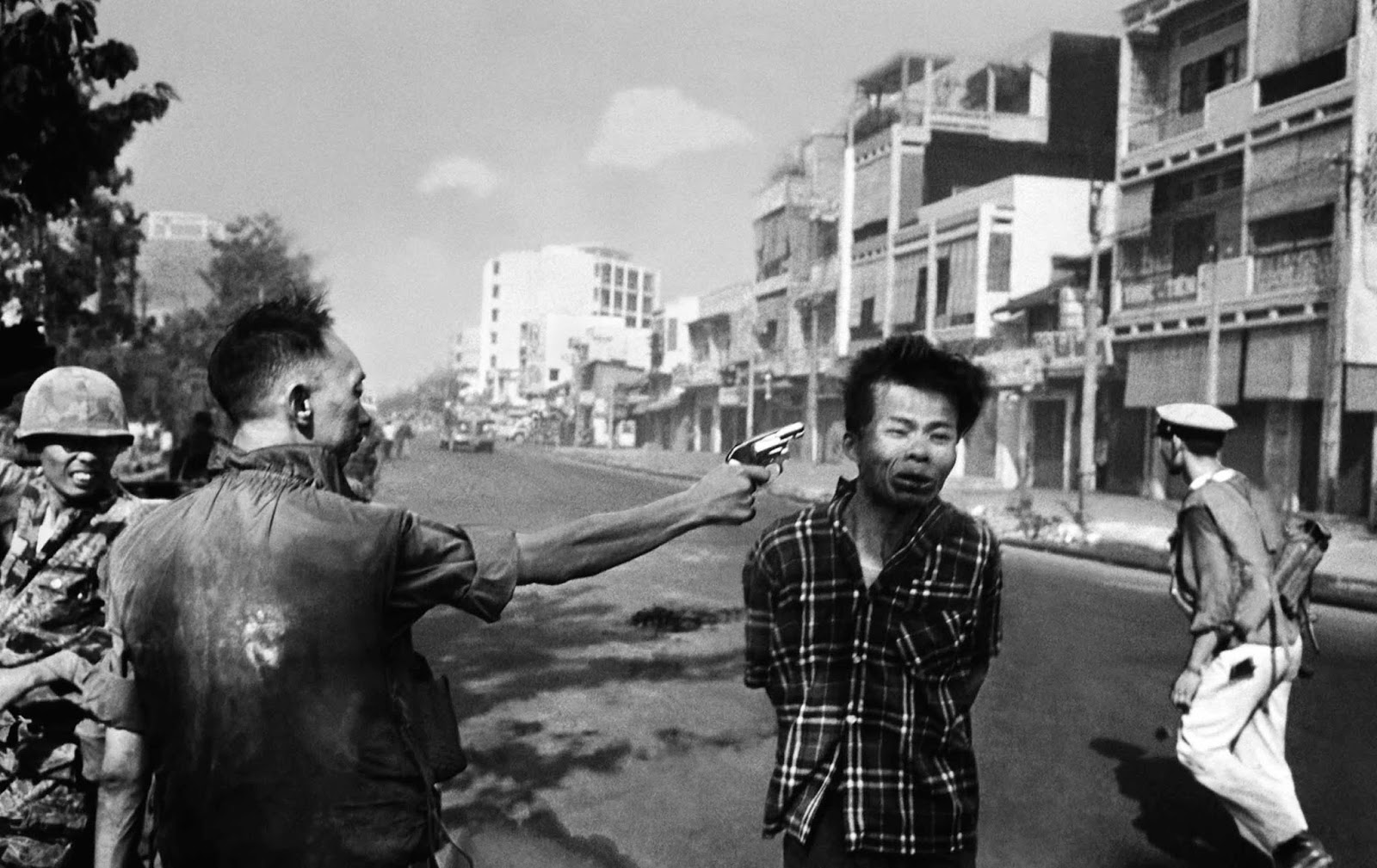
Perhaps the most astonishing news photo I’ve ever seen was snapped in January 1968 by Eddie Adams, who took the picture of South Vietnamese police official Nguyen Ngoc Loan executing a Viet Cong suspect on a Saigon street.

He snapped the picture at precisely the moment the VC officer was shot in the head. Adams was awarded the Pulitzer Prize that year.

I’ve had the pleasure of working with and becoming friends with accomplished photojournalists over my nearly four decades as a print journalist. They amaze me with their keen eye and instinct for chronicling the world around us.

Their work runs the gamut from the dramatic beauty of sharks jumping out of the ocean to the hideous drama of war.

Wow!

If only POTUS had served

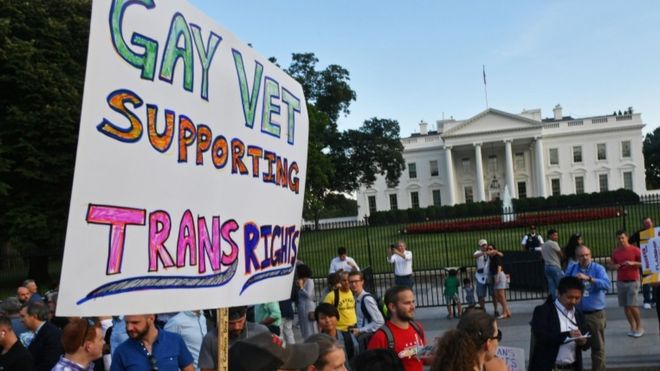
Donald J. Trump’s decision to implement a ban on transgender Americans from serving in the military is wrong on at least two levels.

Yes, he has made some exceptions to the ban, allowing certain individuals to continue their service.

However, he is promulgating the bias against transgendered individuals, allowing a form of discrimination against them because they have decided to change their sexual identity. The discriminatory nature of the decision is offensive on its face, just as it was in Texas when the Legislature sought to enact the “Bathroom Bill” that would have required individuals to use public restrooms that aligned with the sex stated on their birth certificate; that bill didn’t see the light of day.

Here is another factor that rankles many critics of the president, such as yours truly.

This man seeks to deny Americans the privilege of serving their country in uniform, of going to battle for their nation and denying them the right to do the very thing that young Donald Trump sought to avoid doing back when he was of age during another time of war.

Trump obtained at least five medical deferments to keep him out of serving during the Vietnam War. He cited “bone spurs,” or some ailment that hasn’t been independently confirmed so many decades later.

The very idea that a commander in chief who avoided service in the military would deny others the right to serve their country — and to go to war on our behalf if they got the order — is even more offensive on its face.

Many millions of Americans answered the call during that earlier time. Say what you will about citizens’ rights that they employed during that time of tumult. I understand that young men of privilege are entitled to avoid military service if they have the chance.

However, that history does tend to stick in our craw.

The pilot deserved higher honor than he got

Flash back 50 years ago and you find yourself recalling one of the most tumultuous years in U.S. history: 1968.

We’ll soon mark a couple of assassinations that tore the nation’s heart apart. We’ve already noted the 50 years since a one-time enemy launched an offensive against our troops in Vietnam, changing the nation’s fundamental attitude about whether the war could be won on the battlefield. At the end of this year we will mark a mission to the moon that gave us a glimmer of hope after all that heartache.

Fifty years ago today, a U.S. Army pilot — the late Hugh Thompson — landed his helicopter at My Lai, South Vietnam, and told fellow soldiers that he would kill them all if they continued to massacre innocent men, women and children. His crew chief and door gunner were standing by to carry out the order — if Thompson were to deliver it. The soldiers backed off and spared the nation from even more tragedy.

The My Lai massacre became one of the flashpoints of the Vietnam War. Army Lt. William Calley, who commanded the men who took part in the massacre, stood trial and served prison time for his role in that horrific event.

What has gone largely unremembered is the heroism that Thompson exhibited when he confronted the men who had gunned down hundreds of Vietnamese victims.

As Thompson told the Los Angeles Times before his death in 2006: “I thank God to this day that everybody did stay cool and nobody opened up. … It was time to stop it, and I figured, at that point, that was the only way the madness, or whatever you want to call it, could be stopped.”

The Army sought to hide the massacre. It sought to keep it out of public view. Then the famed journalist Seymour Hersh uncovered it and reported it worldwide.

Thompson eventually received the Soldier’s Medal for “heroism not involving actual conflict with an enemy.”

He also deserved a nation’s thanks and gratitude for stopping evil when he spotted it from on high.

Today’s students channeling their grandparents

I am hearing some talk in recent days about the nature of the student-led protests that are developing across the nation in reaction to the spasm of gun violence in our public schools.

It has something to do with an earlier era of protest that got enough people’s attention to hasten the end of a costly and divisive war.

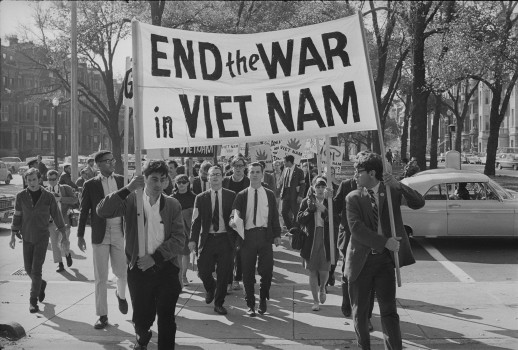
Many observers equate the post-Parkland, Fla., school massacre response to what transpired in the 1960s and early 1970s, when thousands of Americans protested the Vietnam War.

They hope this protest has the staying power of that earlier time, when Grandma and Grandpa were much younger and took on the power structure that continued sending young Americans to die on battlefields halfway around the world.

Young Americans are dying today, too. The difference is that they are dying in classrooms here at home.

I wasn’t among the young folks who marched in the street, carrying a sign, chanting slogans … that kind of thing. I wasn’t wired that way. Indeed, I took part for a time in that war, heading off to Vietnam in the spring of 1969 to serve in the Army.

Upon my return and later my separation from the Army in the summer of 1970, I was filled with plenty of doubt about that war and whether its mission was worth continuing. The Vietnam War did awaken my political awareness, although I put it to use in ways that didn’t require me to stand on street corners yelling my displeasure at U.S. foreign policy.

The Parkland slaughter does seem to have awakened a new generation as well. Students plan to “March For Our Lives” on March 24. In Amarillo — a community not really known as a political hotbed for protest — that event will begin at Ellwood Park, where students and their elders will gather to march to the Potter County Courthouse.

Should this protest shred the Second Amendment to the U.S. Constitution, which guarantees the right of Americans to “keep and bear arms”? No. Not in the least. Surely there must be some legislative remedy that preserves the amendment, but which makes it more difficult for nut cases to obtain firearms.

The young people who are on the “front lines” of this struggle are seeking to have their voices heard. Decades ago, another generation of young people were thrust onto the front lines to fight another war. Their voices were heard eventually. They brought change then. Their descendants can bring it once more.

Trump would have ‘run in there,’ unarmed?

I know this is a rhetorical question, but I am going to ask it anyway.

Why doesn’t Donald J. Trump keep his trap shut when he certainly must know the response he is going to evoke?

I know the answer. He cannot. A man with utterly zero sense of self-awareness doesn’t know how to be circumspect.

Example: He told the nation’s governors today that he would have “run into” Marjory Stoneman Douglas High School in Parkland, Fla., when the shooting started “even if I didn’t have a weapon.”

Really, Mr. President? You would have done that had you been there?

According to The Hill: “You don’t know until you test it, but I really believe I’d run in there even if I didn’t have a weapon,” Trump told a gathering of governors at the White House. “And I think most of the people in this room would have done that, too.”

Does the chicken hawk in chief really expect us to believe the would do something he didn’t have the inclination to do back when there was a full-scale war raging in Southeast Asia?

A much younger Donald Trump came up with student deferments and a medical deferment —  bone spurs, yes? — to avoid service in the Vietnam War. A couple of million others of us didn’t exercise those options. We went to war while individuals such as Donald Trump sat on the sidelines.

This is the kind of thing that the president should be mindful of when he launches into this bit of faux bravery.

Except that Trump has no awareness of how his tough-guy talk plays to those of us who followed a much different path than the one he took when he had the chance to run toward the gunfire.

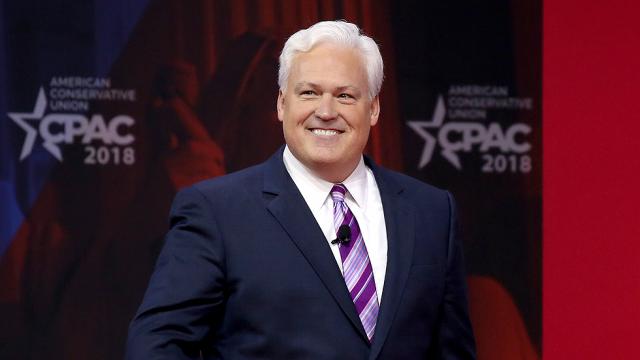
CPAC crowd shames itself with boos of Sen. McCain

I cannot stomach what I heard today about the Conservative Political Action Conference reaction when the president of the United States mentioned a critical vote cast by a member of the U.S. Senate.

Donald Trump didn’t mention U.S. Sen. John McCain’s name. He didn’t have to. The CPAC crowd knew he was referring to McCain’s vote on the Senate floor that sunk the GOP plan to repeal the Affordable Care Act.

Then the CPAC audience started booing. They booed a Vietnam War hero, a man who has given more for his country than I suspect anyone else in that CPAC room. They booed a man the president himself once denigrated as being a war hero “only because he was captured” by the North Vietnamese; candidate Trump then said, “I like people who aren’t captured, OK?”

Good grief! Trump simply disgusts me.

CPAC disgraced itself with that hideous display of callousness. Indeed, the president has disgraced himself as well with his own boorish behavior over this and, oh, so many other instances.

I am compelled to mention, too, that Sen. McCain is fighting for his life at this moment against an aggressive form of brain cancer.

For the president to bring up McCain’s vote against repeal of the ACA in that CPAC venue was disgraceful enough. For the CPAC audience to boo a gallant warrior who persevered more torture than anyone ever should have to endure was disgraceful in the extreme.

Shame on them.