Tag Archives: US Constitution

Impeachment seeks to overturn election? Damn right! So what?

The most tiresome mantra coming from Donald J. Trump’s defenders is the one that suggests that the pending impeachment of the president by the House of Representatives is a “ploy” to overturn the results of the 2016 election.

To which I say: Yeah? So … what?

Of course it would “overturn” those election results. That’s what impeachments are intended to do, despite contentions from those who speak nobly of “defending the Constitution.”

Donald Trump has committed what I believe are impeachable offenses. He sought foreign government assistance to further his personal political future. He sought to sic that foreign government onto an investigation into Joe Biden and his son, Hunter, intending to damage the political fortunes of a potential 2020 presidential campaign rival. He has obstructed justice. Trump has abused his power.

Impeachment must be the recourse that the House must follow.

Is it the aim of the impeachers to sully Trump’s reputation, to seek his ouster? Sure it is. When the House impeaches Trump, the Senate will put the president on trial. The Senate likely won’t boot him out, given the high bar set in in the Constitution to convict a president of high crimes and misdemeanors.

Then the president must campaign for re-election with the impeachment cloud dangling over his noggin. I hope he loses because of it. He doesn’t deserve to be president and shouldn’t have been elected — in my view — to the office in the first place.

Yes, I want the 2016 election results overturned by the election. It is not one bit different from what the GOP sought to do in 1998 when House members impeached President Clinton, who two years had won re-election with a smashing victory. And, let us not forget that President Nixon faced impeachment in 1974 by a heavily Democratic House just after being re-elected in 1972 in a historic landslide.

So what if this impeachment intends to “overturn the election”? It’s the potential natural consequence of what is about to transpire in the House of Representatives.

In the infamous words of acting White House chief of staff Mick Mulvaney: Get over it!

Religion and politics: as toxic a mix as you get can get

A social media meme is making the rounds calling for the elimination of religion from the world of politics.

I should add my own description: I mean “secular” politics.

Donald Trump’s re-election bid is likely to be fueled in good measure by the support he continues to have among evangelical voters who, for the life of me, cling to rear bumper of the clown car with Trump at the wheel. Why they continue to hang onto this guy’s message — such as it is — is beyond me.

However, religion in my mind has its place when discussing certain aspects of certain issues. I get the religious element to issues such as abortion, prayer in public places, same-sex marriage. I listen to those arguments and will argue my own point of view, which normally conflicts with the evangelical views on the issues I have just listed.

Then we have those on the right and the far right who continue to insist that they support political candidates on the basis of their faith. More to the point, they make judgments on candidates’ fealty to the New Testament, or whether they are devout enough in their Christian faith, or whether they worship God at all, or whether they adhere to faiths other than Christianity.

Indeed, this is where Trump’s support among evangelical voters would seem to break down, except that it doesn’t, again for reasons that escape me.

The U.S. Constitution states specifically and categorically that there should be “no religious test” applied to officeholders or those who seek to hold public office. The founders were as categorical on that subject as they were on practically any principle they wrote when building the nation’s governing framework.

And, yes, the Declaration of Independence, written 13 years before the Constitution was ratified, does refer to “God” and “the Creator.” They left it to the authors of the Constitution to develop a secular governing document which they wrote precisely that way to steer clear of injecting religious policy into the laws of the land.

So, as this campaign gets wound up and as we start heading down the campaign trail toward the White House, it is my fervent hope we can make our judgments on candidates’ fitness for the office without seeking to determine whether they are holy enough in their principles.

That’s what I want, so help me God.

Impeachment inquiry confirms many of our worst fears about POTUS

As I watch the Donald Trump impeachment inquiry drama unfold, I am drawn back to what many of us said about this man when he declared his presidential candidacy.

We said he was unfit for office. We wondered how in the name of political sanity could this guy ever get elected to anything, let alone to the presidency of the United States. We feared the worst about this guy’s instincts.

I do not relish watching this drama play itself out, let alone delivering evidence that our worst fears are being revealed to all the world.

Yes, I am acutely aware that not everyone shares the view of many of us. Many other Americans are lining up behind this guy. They are attacking the process that has produced the impeachment inquiry. They question the motives, even the patriotism and love of country of many of Donald Trump’s critics.

But at the base of all this drama we are left with wondering about the core values of the man who scored arguably the most remarkable political fluke in U.S. history by being elected to the only public office he ever sought.

He brought not one single moment of public service to the 2016 presidential campaign. He crafted his entire adult life around one goal: self-enrichment. He worried exclusively about his own fortune. He didn’t know a thing about the complexities of governing, let alone how the nation’s government was constructed.

Now we are in the midst of an inquiry to determine whether he should be impeached for “high crimes and misdemeanors.” What lies at the base of those crimes? Complete ignorance, or perhaps willful flouting, of what the Constitution prohibits.

It doesn’t allow a president to solicit foreign governments for political favors. That is what has been alleged against Donald Trump. Nor does it allow a president to profit from his public office. That allegation hasn’t been made formally, but it well might be in the offing once the House completes its impeachment inquiry.

This all arcs back in my mind to the very questions that so many millions of us had from the very beginning of this man’s candidacy for America’s highest and most exalted public office.

Donald John Trump had no business being elected to this office. Yet he was elected. He had some unforeseen help, to be sure. We now are watching the drama resulting from that election play out before our eyes.

It isn’t pretty. However, none of us should turn away. We need to stay alert and engaged while awaiting the final curtain.

And yes, many of us saw this drama coming.

Speaker ups the ante; now it’s ‘bribery’

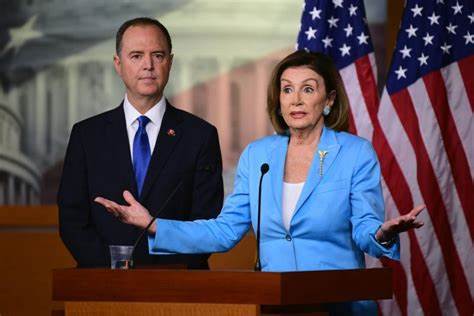
Oh, brother. Here we go. House Speaker Nancy Pelosi now is tossing out the “b” word in connection with the impeachment inquiry under way in the House of Representatives.

She believes Donald Trump has committed an act of “bribery,” one of two crimes mentioned specifically in the U.S. Constitutions as grounds for removing the president from office; the other crime is “treason.”

So, where do we stand? Pelosi has stated out loud that Trump’s attempt to obtain a political favor from Ukraine in exchange for sending weapons to Ukrainians who are fighting Russia-backed aggressors is a bribe.

I am left to say, um, wow!

The Constitution states that the president “shall be removed from office on impeachment for conviction of treason, bribery, or other high crimes and misdemeanors.”

OK. You got that? What does the handy-dandy American Heritage Dictionary say about what constitutes a bribe? “Something, such as money or a favor, offered or given to induce or influence a person to act dishonestly.” 

As I try to connect these dots, I conclude the following: Donald Trump’s asking Ukrainian President Volodymyr Zelenksiy for a “favor, though” falls directly into the definition of a bribe. He wanted dirt on Joe Biden and his son, Hunter; in return for the dirt, the president would release weapons slated to go to Ukraine.

Hmm. Is that a bribe? I believe it is.

The more troublesome question rests with how congressional Republicans are going to act on this conclusion. I fear they won’t consider it a bribe. They likely will insist that it’s done “all the time.”

But … is it?

I often have written about how “elections have consequences.” Well, consider this little observation: We are now reaping the consequence of electing someone with zero understanding of what the United States Constitution allows and prohibits.

Impeachment: Problematic, but necessary

I have traipsed all over the proverbial pea patch in trying to assess whether the U.S. House of Representatives should impeach Donald J. Trump.

At this moment, and it appears to be a permanent view, I stand in favor of impeachment as a necessary evil. Will a House impeachment result in Trump’s removal from the presidency of the United States? Probably not. The Senate’s Republican majority isn’t likely to follow the House Democrats’ lead in determining that Trump committed impeachable offenses that merit his ouster.

My former view was that impeachment would be an exercise in futility. So, my thought held, what is the point?

I have determined that the point is that Congress cannot let stand what it believes are acts that constitute egregious abuse of power and obstruction of justice.

It is all but proven that Trump sought personal political help from a foreign government. That’s a crime. The president of Ukraine and Trump spoke on the phone. The Ukrainian thanked Trump for supplying his country with military weaponry, but Trump then said he needed a “favor, though” in return for delivery of the weapons to be used against Russian aggressors.

Trump has sought foreign government help in digging up dirt on Joe Biden, a potential political foe in 2020. How in the world is that not an impeachable offense?

The president’s ouster as a result of impeachment remains unlikely at this moment. The Senate will hold a trial. Republicans occupy 53 of the body’s 100 seats. The U.S. Constitution requires a two-thirds vote to convict a president for him to be kicked out of office.

The way I see it, it is entirely possible for most senators to vote to convict Trump, just not enough of them to kick him out of the White House. I can think of possibly four Senate Republican votes to convict: Mitt Romney, Lisa Murkowski, Lamar Alexander and Johnny Isaakson; the latter two are not seeking re-election in 2020 and are immune from any retribution Trump might seek to level against them. Then again, a slim majority to convict Trump presumes all Senate Democrats vote to uphold the House impeachment.

Yes, this impeachment inquiry remains highly problematic. However, I believe now that it must proceed and it should result in articles of impeachment against the president.

Donald Trump has richly earned the inglorious title of “the nation’s third president to have been impeached.” Whether he can parlay that epithet into a winning re-election strategy remains to be seen.

If he does, then there will be something terribly wrong with our nation’s political system.

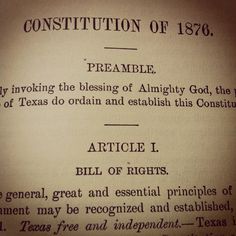
Still a need to revamp the Texas Constitution

I am no fan of the Texas Constitution. I don’t like having to vote on amendments every other year. I don’t believe the Constitution works as well as it would work if it were modeled more like the U.S. Constitution.

I’ll give you an example of what I mean.

On Tuesday, those few Texans who bother to vote will get to decide on a constitutional amendment that has no real meaning. It would make it more difficult to enact a personal income tax in Texas. Here’s the deal: We already have an amendment to the Texas Constitution that requires voters to approve a state income tax. The proposed amendment on the Tuesday ballot makes it more difficult for the Legislature to refer a state income tax to voters for their approval or likely rejection.

What’s more, the amendment already on the books was enacted after an earlier Legislature approved a law requiring a statewide vote to approve a state income tax.

Texans will decide the fate of 10 Texas constitutional amendments all told.

This is an absurd way to govern a state as huge, diverse, modern, cosmopolitan and sophisticated as Texas.

The 1876 Texas Constitution has been saddled with roughly 700 amendments. They all have gone to the voters for their approval. Except that constitutional amendment elections — which occur every odd-numbered year after the Legislature adjourns in May — usually draw paltry voter turnouts. By “paltry” I mean, well, dismal, abysmal, minuscule. These elections usually do not reflect rank-and-file Texans’ view of the proposed amendments. We need to do a much better job of boosting voter turnout … but that’s another story for another day.

The state came close to changing the Texas governing document. There was a serious move toward convening a constitutional convention in 1974. It collapsed.

The federal Constitution has been amended just 27 times. Congress refers amendments to the states, which then charge their legislative assemblies with the task of ratifying the amendment. If three-fourths of the states’ legislatures ratify the amendment, it gets added to the U.S. Constitution.

We have the federal court system to interpret whether laws are constitutional. The U.S. Constitution can get rickety at times. It is facing a serious test of its durability and strength now with the pending impeachment of the president of the United States. I am certain the U.S. Constitution will survive.

The Texas Constitution was the product of a government principle that didn’t trust the Legislature to enact certain laws without an endorsement of voters. It’s a creaky document that seems beyond antique as we prepare to commence the third decade of the 21st century.

Will the Legislature ever find the will to tackle serious reform of the Texas Constitution? Oh, probably not in my lifetime. I just want to put it on the record that I believe a major Texas governmental makeover is long overdue.

Let the fecal matter hit the fan

Well now. That went about the way observers had predicted it would go.

Almost all House Democrats voted today in favor of a congressional resolution to proceed with an impeachment inquiry into Donald J. Trump; all House Republicans voted against it. One former Republican who’s now an independent cast his vote in favor of the measure.

What happens now?

The House of Representatives will proceed with its inquiry into whether the president committed impeachable offenses by soliciting a foreign government for personal political help and/or whether he has sought to cover up that allegation. Let’s toss in an abuse of power allegation and an obstruction of justice charge as well.

Republicans who voted “no” have said they don’t want the inquiry. Democrats favor it looking more deeply into these disturbing allegations.

House Speaker Nancy Pelosi called today’s vote a sad day for the country. It is all of that … and much more.

It is going to produce public hearings. It will enable the president’s legal team to cross exam witnesses. It will drag into full public view all the things that have been said in private, behind closed doors as House members deposed witnesses.

It’s all been legal. It’s all being done according to the Constitution.

Today’s vote, moreover, should have stemmed phony GOP complaints about there being a star chamber aspect to this inquiry. It won’t stop Republicans from seeking to protect a president of their own party.

They will yap about politics driving the inquiry while invoking their own brand of politics to block it. Do you see the irony in that?

The public portion of this sober process does mean at a minimum that the fecal matter is about to hit the fan. The remaining question for me — and millions of other Americans — is whether any Republicans will be persuaded that Donald J. Trump has broken the law and should be removed from office.

I am not holding my breath.

Founders had it right when they set POTUS removal bar so high

The nation’s founding fathers did a masterful job of laying out a two-step process for removing a president of the United States from office.

Impeachment is the easy part. It requires a simple majority in the House of Representatives to effectively indict the president for crimes against the nation. The current House appears poised to impeach Donald Trump on at least two counts involving abuse of power and violating his oath of office.

Conviction in the Senate is the hard part. The founders decided that two-thirds of the Senate need to convict a president who stands trial in the upper legislative chamber. The current Senate appears set to keep Trump in office. Why? Because two-thirds of its members won’t vote to convict Trump of the charges that the House will bring to them. And why is that? Because Republicans occupy 53 of the 100 seats; a conviction would require a flip of about 20 GOP seats to convict Trump. It won’t happen.

But here’s another scenario that appears quite possible if not likely.

Most of the senators might actually vote to convict Trump. There might be, say, 51 or 52 Senate votes to remove Trump from office. That’s not nearly enough to force him out of the White House. It is, though, enough of a stain on Trump’s term as president to persuade votes in November 2020 to cast him aside.

There actually might be enough voters in key states who would say, in effect: I cannot support a president who has been found guilty of high crimes and misdemeanors by most of the members of the U.S. Senate. 

Now, Trump likely will be able to say he avoided conviction in the Senate. A majority vote to convict him — even one that fails to clear the high bar the founders set — does not allow him to declare himself “acquitted.”

The drama well could produce a nail-biter and set up the most astonishing presidential campaign theme in our nation’s history.

Let’s put an end to the ‘coup’ garbage

So help me, I am about to go bonkers, nuts, batty if I keep hearing critics of the House of Representatives impeachment inquiry refer to it as a “coup d’état” that seeks to “overthrow” the government run by Donald John Trump.

Let us slam on the brakes!

The House of Reps is embarking on a process that likely will result in the impeachment of the president of the United States. The House will vote Thursday on a measure that will effectively codify that effort, putting all its members on the record: Do you support the inquiry or oppose it?

I should add that the Constitution does not require such a vote. The House, led by Democratic Speaker Nancy Pelosi, has decided to do the right thing. It has relented to Republican demands that they have such a vote, not that it has assuaged GOP criticism of the process; Republicans have merely switched targets, changed the subject, “moved the goal posts.”

This “coup” crap has to stop!

So should this nonsense we keep hearing from Republicans about “overturning the results of the 2016 election.” The latest presidential election will stand forever as a victory by Trump over Hillary Rodham Clinton. The House impeached President Clinton in 1998, but it did not negate the reality of his 1996 re-election victory. Nor did President Nixon’s near-impeachment in 1974 overturn the results of his 1972 landslide re-election.

Donald Trump’s impeachment, when it occurs, will have been done in accordance with what the Constitution provides in Article I, which declares that the House has the “sole” authority to impeach a president. The absence of ground rules in the Constitution gives the House considerable latitude. The House is operating well within the authority it owns.

However, absent a credible defense against what has been alleged against Donald Trump, the president’s GOP allies in Congress and in conservative media have decided to attack the “process.” They are criticizing Democrats, if you can believe this, for doing precisely what the Constitution allows them to do.

Then the argument plows straight into the demagoguery associated with phony and dubious claims of a “coup d’état” against the president.

This is nonsense. It is — to borrow a Trump phrase — pure bullsh**!

Let the drama play out.

What if Senate provides a majority to convict Trump?

Let’s ponder for a moment the raw politics of impeaching the president of the United States.

It appears to be a near certainty that the House of Representatives is going to impeach Donald J. Trump on grounds that he violated his oath of office by seeking foreign government assistance for personal political gain.

I stood with House Speaker Nancy Pelosi’s initial reluctance to impeach Trump. Then came that phone call with the Ukrainian president that revealed a clear violation of the presidential oath. It has gotten even worse for Trump since then. Pelosi changed her mind, launching an impeachment inquiry.

I now endorse the inquiry. I also believe Trump has committed impeachable offenses.

But what will happen when Trump gets impeached, where Democrats hold a significant majority in the House? It goes to trial in the Senate, where Republicans command a narrow 53-47 majority. The House needs a simple majority to impeach; the Senate needs a two-thirds super majority to convict the president.

Do I believe the Senate will kick the president out of office? No.

However, consider this: Three GOP senators are bowing out after 2020. They won’t seek re-election. They are Lamar Alexander of Tennessee, Mike Enzi of Utah and Pat Roberts of Kansas. What happens to these men’s conscience when they are freed from the pressure of seeking re-election in states that voted for Trump in 2016? Is it possible they could decide that Trump has committed an impeachable offense? These men flip and we have a 50-50 split in the Senate. But wait a second!

There are other senators who are expressing grave concern about Trump’s conduct. Enzi’s junior partner in Utah, Mitt Romney, is one. How about Susan Collins of Maine, who has spoken critically of the president from time to time? Might there be one or maybe two GOP senators willing to vote to convict, knowing that their votes won’t result in Trump’s removal?

Yes, there is a chance — although it’s still small, but it could be growing — that a majority of senators vote to convict the president of “high crimes and misdemeanors,” but he remains in office by virtue of the high bar the founders set when they wrote the U.S. Constitution.

Furthermore, what about the House vote? A significant number of Republican House members have decided to step aside after 2020. They, too, might be motivated to vote their conscience rather than worry about retribution from a president who is known to retaliate against those who cross him.

The number of Republicans set to leave both congressional chambers very well might provide Democrats some measure of cover as they prepare to impeach Donald Trump.

If he is impeached, he will go down in history as an impeached president. If he clears the Senate trial, there might be a qualifier if more senators vote to convict him than acquit him. And how in the world is Donald Trump going to spin such an event?

Hey, strange things can — and do — happen atop Capitol Hill.