Tag Archives: Texas Legislature

Legislators don’t need a full-time salary

Blogger’s Note: This post was published originally on KETR-FM’s website — www.ketr.org. Your blogger wanted to share it here as well.

I actually have wrestled with this issue on occasion, but I cannot shake my belief in my original thought about it.

What is the issue? Whether to pay Texas legislators a working salary to serve in the state Senate and the House of Representatives. I kind of get the argument in favor of paying them a salary on which they could live.

I keep coming back to the idea that I really like the idea of a “citizen Legislature.”

So, let’s leave the salary issue alone.

The 86th Legislative Assembly has adjourned sine die. It completed its 140-day cycle and, near as I can tell, Gov. Greg Abbott won’t summon them back for a special session this summer.

That’s fine with me. Our legislators can get back to work on their day jobs.

Texans pay their legislators a whopping $600 per month, who also get an expense allotment of $190 per day when the Legislature is in session. That amounts to around $33,900 when the Legislature is in session, and about $41,000 for a two-year term for a member of the Texas House of Representatives.

Is that enough for someone to live on? Of course not! But that isn’t the point.

The Texas Constitution ostensibly allows for regular folks to take a break every odd-numbered year for about five months to write laws, to argue among themselves and to persuade each other to support their legislation.

When they’re done, they go home and resume whatever it is they do when they aren’t in Austin.

The Legislature also appropriates money for staff, some of whom serve between legislative sessions. When the Legislature is in session, House members and senators hire additional staff to handle the deluge of business that occurs from January to May every odd-numbered year.

I like the principle of a citizen Legislature. It gives at least the appearance that our elected lawmakers have an understanding, a kinship, with the people they represent. They are bound to return home and under the strictures of the laws they enact.

I am acutely aware, too, that often the chintzy salaries we pay our legislators might shut out actual working men and women from serving. It costs a lot of money to give up one’s day job to head to Austin for five months every other year. That means those elected to the House and Senate might be, oh, lawyers or physicians who have the financial means to serve in the Legislature.

What’s more, the lieutenant governor who presides over the Senate and the speaker who presides over the House also receive essentially the same salary as the legislators they manage in either legislative chamber. Plus, the lieutenant governor and House speaker essentially hold down full-time legislative jobs.

My version of reality tells me the state system of paying legislators a chump-change salary works well for the state.

As the saying goes, If it ain’t broke, don’t fix it.

Besides, even if it is broke, paying legislators more money isn’t likely to be sufficient to repair what needs fixing.

This amendment issue is worth all Texans’ support

It’s not often that a Texas constitutional amendment election gets my juices flowing, but this year is going to present one for my wife and me.

Hey, we’re retired these days and we spend time cruising around Texas hauling our fifth wheel recreational vehicle behind our pickup. When we travel in Texas, we make it a point to spend as many nights as we can at one of the state parks.

So, the Legislature has decided to send a measure to voters this fall that dedicates a lot of money to maintain and improve our state park network.

I am all in on this one!

According to the Texas Tribune: In a big win for outdoor enthusiasts and day trippers alike, legislation that would ensure that the Texas Parks & Wildlife Department and the Texas Historical Commission always get the maximum amount of money they are allowed to receive through a state sporting goods sales tax has passed both the House and Senate and heads to Gov. Greg Abbott’s desk for his signature.

The 1993 Legislature approved a law that dedicated 94 percent of sales tax revenue to the state parks, with 6 percent going to the Texas Historical Commission. In the years since then, the state has been forced to use that revenue to balance the budget, depriving the parks system of money it needs for maintenance, upkeep and improvement of the system.

The constitutional amendment would ensure the state spends as much money as possible on parks, according to state Sen. Lois Kolkhorst, R-Brenham, author of the bill.

My wife and I recently moved to Collin County. We live with easy driving distance of several first-class state parks. We have enjoyed Lake Tawakoni, Lake Bob Sandlin, Eisenhower and Lake Arrowhead state parks.

We are — and this is not an overstatement — gigantic fans of the Texas Parks & Wildlife Department and the state park system. We have enjoyed many of our state parks over the years. We purchase the annual pass that waives our entrance fees; we see it as an investment in what we believe is a first-class network of parks.

We obviously aren’t alone in making ample use of our state parks. TP&W Commission Chairman Ralph Duggins noted in an email that pressure on the parks is coming from a booming population and said that “this bill will give voters the chance to assure their future with a predictable, dedicated and sustainable funding stream.”

I am often highly critical of state government. Not on this matter, though. The Texas state park network is worth all Texans’ support.

86th Texas Legislature about to end … for keeps, maybe?

I am putting my ear to the ground but I don’t hear much of anything coming from down yonder in Austin.

The Texas Legislature is about to call it a session. It will end fairly quietly compared to recent previous legislative sessions.

I do hope Gov. Greg Abbott refrains from calling a special session to meet later this summer.

What did this group accomplish? A few things.

  • They approved a form of public school finance reform that doesn’t respond to a court order. That’s a pretty good thing.
  • Lawmakers managed to give public school teachers a raise in pay, which the good teachers surely deserve. Was it enough? Probably not. Then again, it’s never enough.
  • Legislators — and this is a big deal for Amarillo, where I used to live — approved money for Texas Tech University to build a new school of veterinary medicine in Amarillo. That’s huge, man!
  • The Legislature approved a reduction in property taxes, which no doubt is music to those who shell out growing amounts of tax money every year. I don’t have a particular issue here, given that I’m old enough to qualify for a homestead exemption that freezes my property taxes.

All told, it was a fairly productive session. It also was fairly quiet.

A special session might still occur if Gov. Abbott can find a reason to call one. Whatever. I hope it doesn’t happen.

Legislators don’t make enough money –$600 a month plus per diem expenses — to stay on the job for longer than the 140 days mandated every other year.

Go home, legislators. We’ll see you in 2021.

Time-change bill dies … but is it really dead?

Blogger’s Note: This item was published originally on KETR-FM’s website. High Plains Blogger wanted to share it here. Enjoy.

This isn’t the biggest bill ever to die a quiet death in the Texas Legislature, but it might be one of the more talked-about once lawmakers decide to pack it in for this session and head home to their respective districts.

It’s the bill that would have allowed Texans to vote later this year on whether to ditch the twice-yearly time change – from Standard Time to Daylight Saving Time … and back again.

The Texas Senate, apparently because of “inaction” by Lt. Gov. Dan Patrick, has allowed the bill to wither away and die. Texans won’t be voting on this measure in the fall.

Too bad? Well, that depends, I suppose, on your point of view.

For me, it makes no never mind.

Every year – first in the spring and then in the autumn – we gripe and moan about the time change. We holler in the spring when we move the clocks ahead and lose that hour of sleep; some of us are late for worship services that Sunday (because the time change occurs officially at 2 a.m. those days). Then we yap in the fall when we set the clocks back an hour, regaining that hour of sleep we lost in the spring; I don’t know this with any certainty, but perhaps some of us even get to our house of worship an hour early.

None of this ever has bothered me.

I understand the reason for enacting Daylight Saving Time. It was done initially to conserve energy. We get more daylight later in the day and don’t have to turn on the lights quite so early. Thus, we conserve valuable electricity, which is powered by, oh, the finite supply of fossil fuel. Oh, sure, we rely more in Texas these days on wind power, the sun and maybe some bio-fuels produced from corn and other crops.

But the clamor to switch to the same time all year long is a bit overheated to suit my taste.

The bill’s author, state Rep. Lyle Larson, R-San Antonio, said Texans supposedly have passionate views on the issue. I presume he means “all Texans.” Count me out, Rep. Larson. I ain’t one of ‘em.

For the record, if I had the chance to vote on which time to use, I’d stick with Daylight Saving Time. Why? I like the extra sunshine in the evening. Yes, it also saves energy.

But it’s all for naught, right?

Maybe not. There might be a special session in our immediate future this summer if Rep. Larson and his House allies feel strongly enough about it and can persuade Gov. Greg Abbott to call one and then put the time-change issue on the agenda.

But I hope not.

It’s fine that minds change … but why not explain the shift?

I guess the Amarillo Globe-News has taken a 180-degree turn on the issue of red-light cameras.

The newspaper’s editorial page published an editorial today that all but sings the praises of efforts to unplug red-light cameras in cities all across Texas. The state House has approved a bill that takes away cities’ authority to deploy the devices.

The Globe-News used to favor the cameras. I know because I was editor of the opinion page at the time and we spoke quite fervently in support of the devices that Amarillo City Hall deployed to assist police officers in their efforts to deter motorists from disobeying traffic signals’ command to stop at red lights.

Well, the corporate ownership has changed. A new publisher runs the Globe-News. They have a new “director of commentary,” too. So today the paper has signaled the pending demise of red-light cameras.

The paper takes seriously the “Big Brother” concerns from opponents who contend that the cameras deny accused lawbreakers the chance to “face their accuser.” That, in my view, is pure baloney. Those caught running red lights can appeal the penalty; thus, they can “face their accuser.”

The paper doesn’t actually declare that it has changed its mind. It nearly does so, though.

Which I guess brings me to my point: If the newspaper is going to walk back its once-firm view on the use of certain mechanical devices to crack down on motorists who disobey traffic laws, doesn’t it owe its readers an explanation into why it has all but reversed course?

Check out the editorial here.

It saddens me.

Tax shift set aside until 2021 … let’s look for real reduction

It won’t be any better in 2021 than it is this year.

Texas legislators have decided apparently to delay any action on a bill that would have increased the state sales tax by a penny while rolling back local property taxes.

House Joint Resolution 3 and House Bill 4621 had won the endorsement of House Speaker Dennis Bonnen, Gov. Greg Abbott and Lt. Gov. Dan Patrick. Most legislators seemed to like, but opposition arose from interesting and disparate ends of the political spectrum: progressives and archconservatives disliked the measure for wildly different reasons.

I agree with those at both ends.

Progressives believe the sales tax is regressive and punishes poor Texans because they pay the same tax as rich Texans on goods they purchase. Good point, yes? Sure it is!

Conservatives on the right and far right believe the Legislature’s Republican caucus should remain faithful to its members’ pledge to avoid raising new taxes. Another good point? Yep, it is!

Lt. Gov. Patrick had made property tax reduction a key legislative agenda item. I’m OK with that. Why, though, pay for that reduction with a boost in the state sales tax? I’m not so OK with that notion.

If we’re going to reduce property tax, I would be far more in favor of an actual reduction in Texans’ total tax burden.

Let’s hope legislators take some time between the end of this session and the start of the next one to find a way to get there.

Gay conversion therapy debate flares up again

I suffer occasionally from a case of politics-induced heartburn.

It’s flaring up again. The catalyst this time is gay conversion therapy, which is being debated in the Texas Legislature. Some lawmakers want to make it illegal to force someone to undergo the quackery associated with trying to “convert” a gay person into a straight person. Most of them, though, seem satisfied with allowing individuals to endure such nonsense.

House Bill 517 gets scrutiny

A handful of states have made gay conversion therapy illegal. They recognize that a person’s sexual orientation is part of his or her DNA. It’s who they are. Therefore, it is impossible to “convert” someone from one orientation and guide them toward something else.

It’s a belief I have held for a long time, that one does not “choose” to become gay. Nor do they “choose” to become straight, for that matter.

I am nearly 70 years of age. My memory fails me at times, but so help me, I do not ever recall a moment when I was coming of age all those years ago when I gave any thought about whether I preferred to be intimate with women.

Thus, I find it impossible to believe that those who are gay make that choice consciously.

I am left to wonder two things: Why would anyone choose to be vilified by those around them? Why, too, is it often so difficult for those who are gay to “come out” to their loved ones?

Let me clear the air on one key point as well. Even discussing anyone’s sexuality makes me highly uncomfortable. It is a subject that I consider to be no one’s damn business. It is a part of one’s life that should remain utterly, completely and totally private.

Not everyone believes that, apparently. Some legislators in Texas and in many other states believe someone’s sexual orientation should become a matter of public policy.

That’s where this idiocy of “gay conversion therapy” comes into play.

I know I’m going to get grief for stating all this. That’s all right. I get that many Americans feel strongly about gay conversion and believe in their heart and soul that it’s a legitimate psychological therapy. I am not one of them.

Still, the heartburn I suffer from this discussion is real.

There is one constructive way to look at this, though. It is that we’re actually debating this issue in Texas. Maybe that’s a sign of progress.

Red-light cameras appear on their way out; what a shame

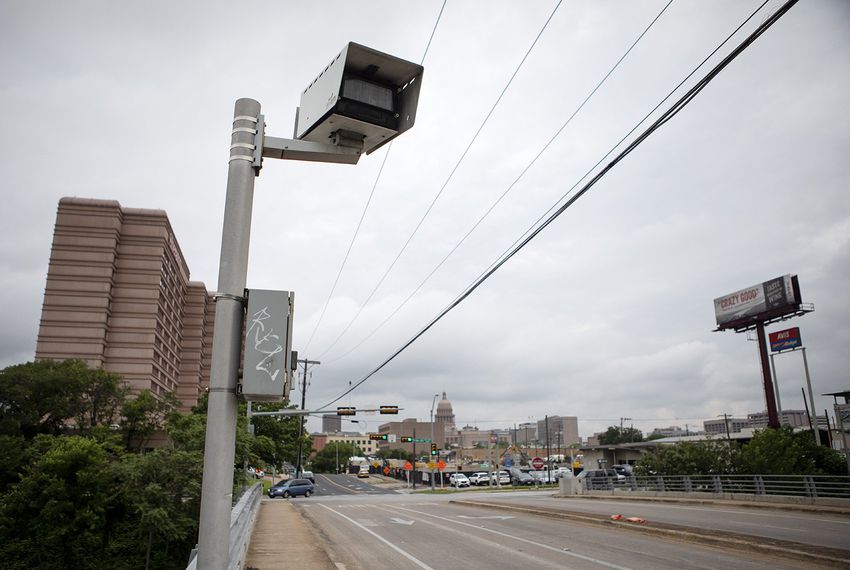
Texas legislators appear ready to pull the plug on cities that want to do more to protect motorists and pedestrians from those who break the law by running through red lights.

Yep. The Texas House of Representatives has approved a bill written by Rep. Jonathan Strickland, R-Bedford, to disallow cities from deploying the devices.

This, I must say once again with emphasis, is a huge mistake. It’s big, man!

Strickland believes — and this is rich — that the cameras violate constitutional provisions that guarantee accused citizens to face their accuser. Pardon me for saying so, but Strickland is full of crap!

The cameras do not deny anyone any rights as citizens. Those who get cited by the cameras that catch them running through red lights or taking off from a dead stop through an intersection are entitled to appeal their citation to a municipal judge.

The cameras that are used in cities all across Texas take pictures of license plates on the offending vehicles and the citation is sent to the vehicles’ owners. The fines run $75 for a violation.

Let me disclose something: I got caught by one of those cameras in Amarillo several years ago. I made a mistake by racing through an intersection; I was a tad late and I got caught. I paid the fine. That was it.

I am troubled by the Legislature’s motives in repealing the law enabling cities to use the devices. Republicans control both legislative chambers. GOP politicians traditionally have ceded power to local authorities, acknowledging that the locals know best what their communities need.

Many cities, such as Amarillo, determined that the red-light cameras would deter motorists from running through the red lights. City officials have determined that the cameras do their job. They give the city extra sets of “eyes” to monitor the behavior of motorists driving vehicles along public rights-of-way.

The Legislature is considering an amendment to the repeal effort that would allow cities to retain the devices until their contracts with vendors expire. It won’t soften one bit the lack of wisdom the Legislature is demonstrating by ordering cities to take down these devices.

I’ve heard the arguments for and against the cameras. I signed on early as a proponent of the devices. My support for them hasn’t waned. I only wish the Legislature would reconsider this unwise idea.

If cities — which are governed by municipal charters — feel the need to use them to reduce hazards to motorists and pedestrians, let them make that call without legislative interference. 

If Empower Texans favors it, Sen. Seliger opposes it!

I am going to stand with my friend, Texas state Sen. Kel Seliger, the Amarillo Republican who has become a top-tier target of a far-right political action group known as Empower Texans.

Empower Texans is crowing about the passage in the Texas Senate of a property tax overhaul that garnered the support of every legislative Republican except one: Seliger, who, according to Empower Texans, sided with Texas Democratic legislators in opposing the bill.

I’ll save my comment on the legislation, Senate Bill 2, for a later blog post.

Today, though, I want to note briefly that Empower Texans sought to oust Seliger from his Senate District 31 seat in 2018, but failed when Seliger got through the GOP primary against two ultra-conservatives and was effectively re-elected without a runoff in his heavily Republican Senate district.

Seliger has made no effort to disguise his disgust with Michael Quinn Sullivan, the founding guru of Empower Texans, who believes that all Texas officeholders must adhere to his far-right agenda.

For example, Empower Texans favor vouchers for parents who want to pull their kids out of public education; Seliger, long a champion of public ed, opposes it.

With that, Empower Texans has sided with Lt. Gov. Dan Patrick — who also opposes much of what Seliger favors — in pushing for this property tax overhaul.

It boils down to a simple notion. If Empower Texans favors an initiative, it will do so without the support of Sen. Seliger, a man who has represented his sprawling West Texas district with distinction since 2004.

Sen. Seliger is unafraid to tout his own conservative credentials. The only “sin” he commits is that he isn’t conservative enough to suit Michael Quinn Sullivan and his cabal of right-wing ideologues.

Texas seeks comprehensive solution to school gun violence

Texas state Sen. Larry Taylor was hurting nearly a year ago, along with many of the rest of this state, not to mention the rest of America. A gunman opened fire at Santa Fe High School in his Senate district, killing 10 people and wounding 13 others.

Taylor, a Friendswood Republican, sought to do something to at least mitigate such tragic events in the future. He has produced a bill that isn’t perfect, but I’ll be damned if I’m going to protest it here.

Senate Bill 11 — which the Senate approved 29-2 and heads for the House of Representatives — seeks to strengthen mental health initiatives in Texas. According to the Texas Tribune, it gives teachers access to telephones and other electronic communications, and establishes threat assessment teams to help identify potentially dangerous students while determining the best ways to intervene before they erupt.

The bill also “requires school districts to appoint school safety committees that meet once a semester to provide their boards of trustees with recommendations for updates to their districts’ multihazard emergency operations plans,” the Tribune reports.

Does the legislation deal with the purchase of firearms, or the access that bad folks have to obtain them? No, but to my way of thinking it seeks a comprehensive approach to seeking out and identifying those who might be prone to producing the kind of insanity that has shown itself too often.

“We cannot afford to do nothing,” Taylor said, adding that too often legislators let “perfect become the enemy of the good.” So, the bill isn’t perfect. It is, however, a good start.

“Multiple young people’s funerals back to back in a few short days is very difficult,” Taylor said. “That’s why we have to get this done.”

Indeed. We mustn’t have to endure such heartache.