Tag Archives: Vietnam War

How low can POTUS go?

It is fair to wonder about the depths of Donald J. Trump’s progression as a politician. To the point: Just how low is too low and how do we know if he has hit rock bottom?

I do not believe, based on the record of low points he has acquired to date, that we have found the bottom of the abyss.

My goodness, this individual has scored so many low points it’s hard to keep score. Some highlights/lowlights:

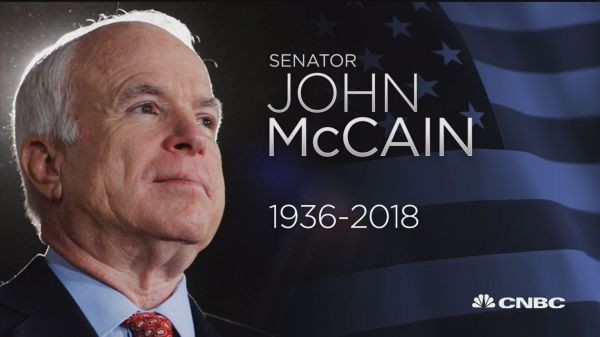
  • He said the late U.S. Sen. John McCain was a “war hero only because he was captured” during the Vietnam War.
  • Trump denigrated a Gold Star family because of their Arab ethnicity; their son, an Army officer, died in battle in Iraq. The parents had the temerity to criticize Trump during the Democratic National Convention in 2016.
  • Trump mocked a New York Times reporter, mimicking his actions caused by a severe neuromuscular disease.
  • The candidate admitted to a TV host that he grabbed women by their genitals because of his “celebrity” status.
  • Trump has lied repeatedly, gratuitously and without any sense of shame.
  • The president just recently criticized the Special Operations Command chief — retired Admiral William McRaven, a battle-tested SEAL — for failing to kill Osama bin Laden “much sooner” than commandos did.

I know I have missed some examples, but you get the idea.

One might surmise, probably correctly, that any one or two of those incidents would doom someone’s political aspirations. Donald Trump, though, not only has survived, he has managed to fire up his political base. The roughly 38 percent of Americans who stand by their man do so because he “tells it like it is,” or he sticks it in the establishment’s eye, or speaks their language.

What’s more, this guy doesn’t care that the rest of the country finds his statements, behavior and demeanor repugnant to the high office he occupies.

How low can this guy go? I think he’s got some more space to fall before he finds the bottom of the pit.

He once said he could “shoot someone on Fifth Avenue and not lose any votes.” I believe he is correct. Surely he knows better than to test that theory. Doesn’t he?

Commander in chief shows disregard for military

I have to ask: How in the name of pride in our military does the president of the United States get away with the utter denigration he heaps on distinguished military personnel?

Donald Trump did it (in)famously in 2016 when he said the late U.S. Sen. John McCain was a “war hero only because he was captured. I like people who aren’t captured.”

Trump went on to win the presidential election after declaring he knows “more about ISIS than the generals.” Then he surrounded himself with current and former four-star officers, proclaiming some sort of phony affinity for the expertise they bring.

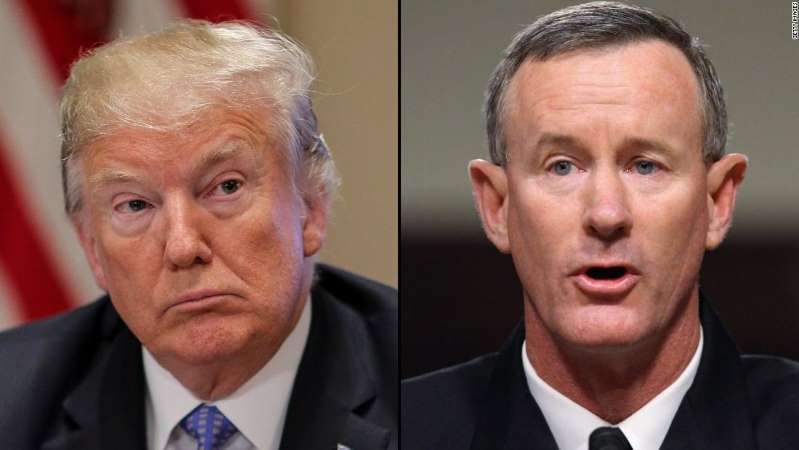
And now the latest tumult has erupted. The president has disparaged the May 2011 raid that killed 9/11 mastermind Osama bin Laden and, particularly, the man who coordinated that effort, retired Admiral William McRaven.

McRaven, a decorated Navy SEAL, headed the Special Operations Command when President Obama issued the order to kill bin Laden.

Trump now says we should have taken bin Laden down “a lot sooner.” Again, the commander in chief has denigrated a war hero and has mocked the effort that was carried out with precision and professionalism by a dedicated team of SEALs, Army Green Beret pilots and CIA deep-cover operatives.

Moreover, he gets away with it! The “base” that adores him gives him a pass. They don’t care that the commander in chief thinks so little of the brave men and women who volunteer to do something that the president waffled on when he had the chance when he was of draft age during the Vietnam War.

I do not get it. I never will get it.

Vets could bring a return to congressional collegiality

I long have lamented and bemoaned the lack of collegiality in the halls of Congress. Political adversaries become “enemies.” They drift farther and father apart, separated by a deepening chasm between them.

There might be a return to what we think of as “collegiality” and “comity” in the halls of power on Capitol Hill.

It might rest with a large and hopefully growing class of military veterans seeking to serve the public in a political capacity.

They have shared experiences. They know the pain of loss of comrades in battle. They endure similar stresses associated with their time in battle.

I posted earlier today a blog item about U.S. Rep.-elect Dan Crenshaw, a wounded Navy SEAL who is among 15 veterans elected to Congress in this past week’s midterm election. Crenshaw is a Republican from Houston. I don’t know the partisan composition of the congressional freshman class of veterans. It doesn’t matter. My hunch is that they are going to find plenty of commonality once they settle into their new jobs and get acquainted with each other’s history.

The Greatest Generation returned home from World War II and the men who served in the fight against tyranny developed amazing friendships when they found themselves serving under the same Capitol Dome.

Democratic Sen. Daniel Inouye of Hawaii became lifelong friends with Republican Sen. Bob Dole of Kansas; they both suffered grievous injuries in Italy near the end of the war, went to rehab together and developed a friendship that lasted until Inouye’s death. There were so many others. Fellow aviators, Democratic Sen. George McGovern and Republican Sen. Barry Goldwater became friends for life, as did Sens. McGovern and Dole.

The Korean War produced its own crop of veterans who entered political life together.

Then there is the Vietnam War generation, which also featured lasting friendships that transcended partisan politics. GOP Sen. John McCain and Democratic Sen. John Kerry worked together to help restore diplomatic relations with Vietnam. Democratic Sen. Bob Kerrey and Republican Sen. Chuck Hagel both represented their native Nebraska in the Senate, serving briefly together on Capitol Hill. Former Vietnam prisoners of war found commonality: Sen. Jeremiah Denton, Rep. Sam Johnson, Sen. McCain — all Republicans — were among that particular clique of lawmakers with a special bond.

The latest class of vets joins a cadre of veterans already serving in Congress. Democratic Sen. (and double amputee) Tammie Duckworth is among the most notable.

There always is much more to life than politics. My hope now is that the new crop of vets find a way to lead the way back toward a more civil era in Congress. I pray they can find a way to bridge the chasm that divides men and women of good will.

I am filled with a new sense of hope that these individuals with common life experience can cleanse the air of the toxicity that has poisoned it in Washington.

‘Falsus in omnibus’ argument haunts this senator

I cannot remain silent on a minor back story involving the confirmation hearing of Brett Kavanaugh, Donald Trump’s nominee to join the U.S. Supreme Court.

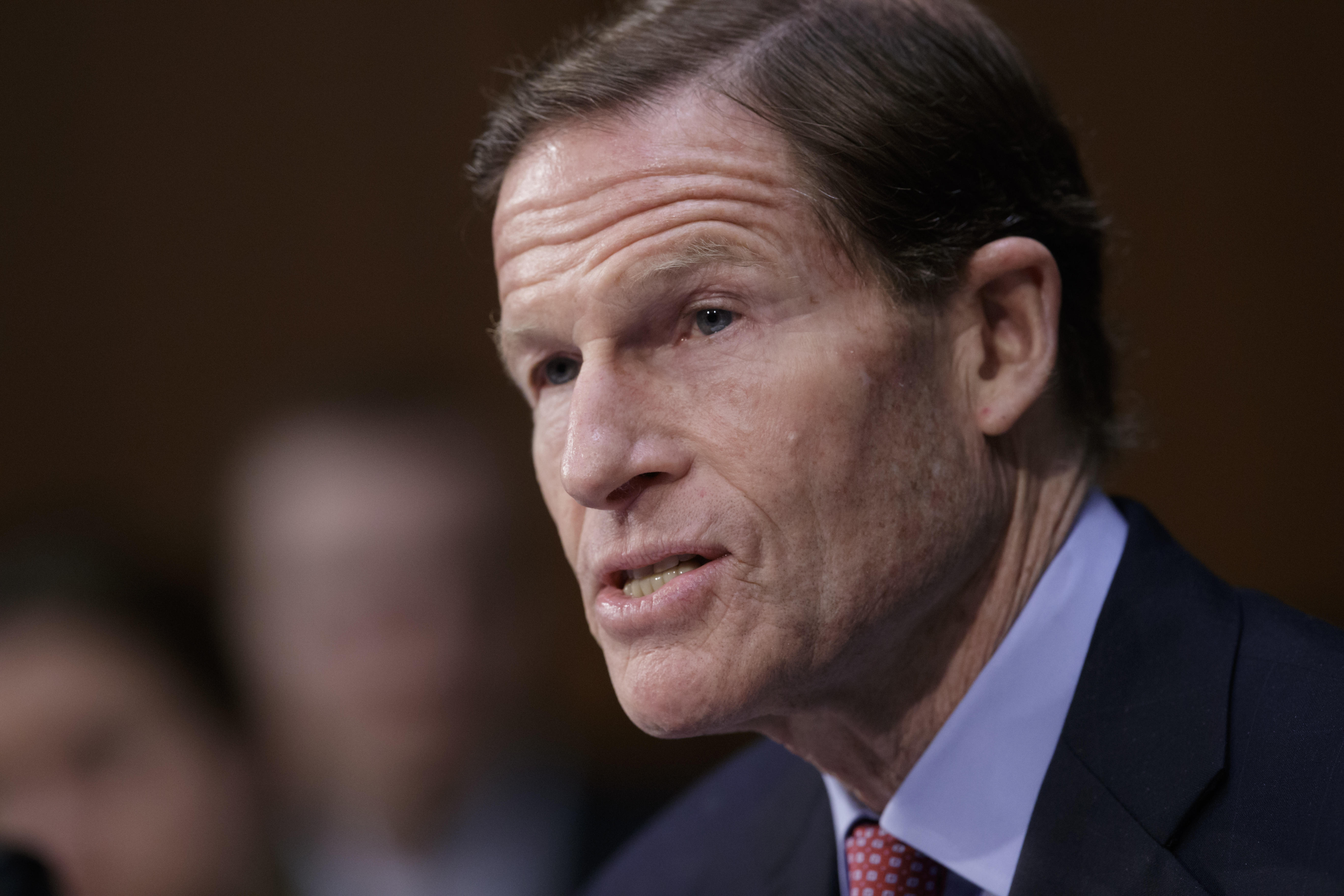
It involves the questioning by U.S. Sen. Richard Blumenthal, the Connecticut Democrat who had the gall to lecture Kavanaugh about the hazards of lying about “one thing.”

Blumenthal sits on the Senate Judiciary Committee. His path to the Senate came amid some controversy of its own, involving Blumenthal’s own lying.

You see, the senator who’s been in public life for a long time, had been lying about his so-called service in Vietnam during the Vietnam War. As the saying goes … oops! He set never foot in-country during the Vietnam War.

As the New York Times columnist Bret Stephens noted, he is “grateful” for Donald Trump for calling Blumenthal out on his sheer hypocrisy. Stephens wrote this: ” … Richard Blumenthal lecturing Kavanaugh on the legal concept of falsus in omnibus — false in one false in one thing, false in everything — when the senator … lied shamelessly for years about his military service. And then feeling grateful to Trump for having the simple nerve to point out the naked hypocrisy.”

You see, those of us who did set foot in-country during the Vietnam War take this kind of lie quite seriously. It’s the kind of lie I cannot look past when I hear a politician pontificate about truth-telling to another public figure.

Sen. Blumenthal’s hypocrisy doesn’t change my mind about Kavanaugh’s nomination to join the nation’s highest court. It just galls me in the extreme to hear a politician say something he ought to know would come back to bite him in the backside.

Big crowds don’t necessarily mean big vote totals

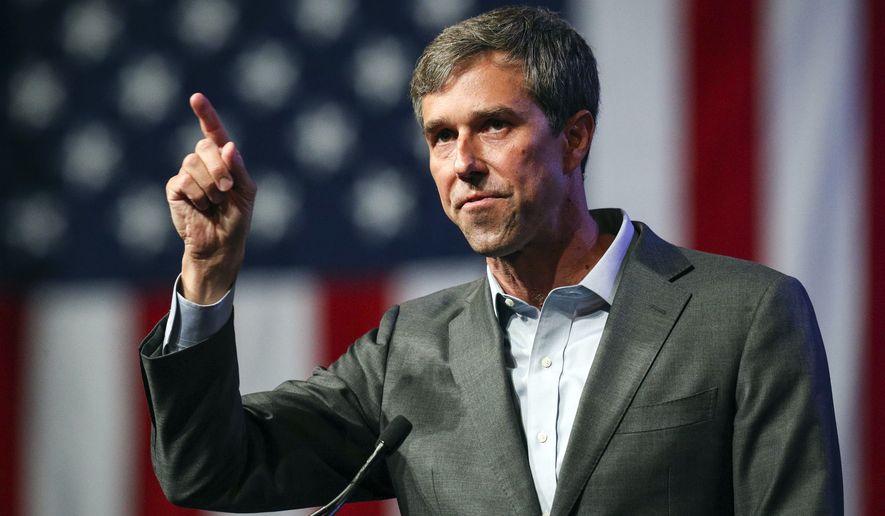
I must offer a word of caution to Beto O’Rourke’s fans who take great pride in the size of the crowds the U.S. senatorial candidate is drawing as he stumps his way across Texas.

The Democratic challenger to Sen. Ted Cruz has my vote. I want him to win in a big way. Cruz hasn’t distinguished himself as a champion for Texas causes and interests; he’s more fixated on his own ambition.

Having said that, Cruz must be considered the favorite to win re-election. Yes, polling indicates a close race. However, Texas is a Republican state. O’Rourke has to to overtake The Cruz Missile quickly and open up a bit of a spread between the two of them.

How does he do that? Well, he is drawing big crowds at rallies in rural Texas. Let me caution O’Rourke’s faithful followers: Big crowds don’t necessarily translate to a winning trajectory.

Example given: the 1972 presidential campaign of Sen. George McGovern.

I was a campus coordinator for Sen. McGovern in my native Oregon. I had returned from the Army in 1970. I was disillusioned about our Vietnam War policy. I spent some time in the war zone and came away confused and somewhat embittered.

I wanted Sen. McGovern to defeat President Nixon. He drew big crowds all across the nation as he campaigned for the presidency. They were vocal, boisterous, optimistic.

My task in college was to register new voters. We got a lot of new voters on the rolls that year. I was proud of my contribution.

On Election Night, it was over … just like that. The president was re-elected in a landslide. 520 electoral votes to 17. He won about 60 percent of the popular vote.

The big crowds, including a huge rally in the final days in downtown Portland, didn’t mean a damn thing!

Will history repeat itself in Texas in 2018? Oh, man, I hope not!

Time to study up on local election races

I regret that I haven’t yet gotten up to speed on the political tides of Collin County, where my wife and I have lived since May.

An election is coming up. I have to get busy. Like … right away.

Our congressman, former Vietnam War prisoner Sam Johnson, is retiring. Rep. Johnson, a Republican, was held captive for seven years by the North Vietnamese, which is about a year and a half longer than the late Sen. John McCain was imprisoned.

I still hope one day to shake Rep. Johnson’s hand and thank him for his years of public service and sacrifice to the country.

I also need to catch up with the Republican and Democrat who are running to succeed him.

There’s also a whole lot of county races I need to understand.

And then … we have the Legislature. We’re going to have a new state senator and a new state representative elected from our part of the county.

I’m pretty well versed on the statewide ballot and the individuals who seek to represent us in Austin. I’ve made my share of commitments, made up my mind on many of the races. I’m still working on a few others.

Living more than 23 years in the Texas Panhandle gave me a pretty solid grounding on the individuals who seek to represent residents in public office. That’s behind me now.

It’s time to get better acquainted with the lay of the land in Metroplex, where the politics — based on what I’ve seen to date — is a good bit more complicated than what we experienced way up yonder on the Caprock.

Pray for me.

Meghan McCain had every right to say what she said

I want to declare one more time — and I hope it’s the final time — that Megan McCain didn’t say a single inappropriate thing while paying tribute to her father, the late Sen. John McCain.

I was proud of the courage and steely fortitude she demonstrated while standing in the National Cathedral pulpit to honor the life and heroic public service that her beloved father exhibited for more than six decades.

Listen to her remarks.

And yet to hear some of the gripes from Donald J. Trump’s loyal followers who say she was too cruel, too mean and too vengeful in her remarks simply galls me beyond measure.

She compared her father’s “suffering” while serving the nation to those who lived — at that time — existences of “privilege and comfort.” Yes, she was referring to the president of the United States, who was pointedly not invited to the private funeral in Washington, D.C. Sen. McCain and Trump had serious differences that went far beyond mere policy disagreements. It was personal and visceral.

Think, too, for a moment about the source of the criticism toward Megan McCain. It comes from supporters of a man who (a) has said some hateful and insulting things about his foes and (b) has never apologized for anything he ever says. Trump had the utter gall to say that McCain — a Vietnam War prisoner — was a “war hero because he was captured. I like people who aren’t captured, OK?”

Well, I happen to like presidents who don’t utter crass and cruel statements about a legitimate American war hero.

The 62 million Americans who voted for Trump in 2016 knew what they were getting when they cast their votes for the one-time reality TV celebrity/serial philanderer/real estate mogul/pathological liar.

Perhaps their criticism of Meghan McCain’s remarks is meant to disguise their own regret for casting their ballots for Donald Trump in the first place … not that many of them will ever acknowledge it publicly. Think of it: That, too, mirrors the attitude demonstrated by their champion, the president of the United States.

Meghan McCain spoke from her broken heart. She also spoke the truth in her father’s honor.

As former Sen. Joe Lieberman, the Connecticut Democrat, and one of the late senator’s dearest friends, said of Meghan McCain: She clearly “is her father’s daughter.”

Sen. McCain got the sendoff he deserves

It’s been said over the past few days that the pomp, circumstance and pageantry associated with U.S. Sen. John McCain’s funeral is reserved usually for presidents of the United States.

Well, to my mind, the senator deserved all the tributes — and the accompanying ritual — that he received.

The great man’s six decades of public service all alone was worthy of the salute bestowed to him.

The eulogies delivered in Phoenix by former Vice President Joe Biden and in Washington by former Presidents Barack Obama and George W. Bush spoke volumes about the nature of the ceremony that the late U.S. senator planned for his farewell.

It was Vice President Biden who introduced himself to the crowd assembled by saying, “I’m Joe Biden; I am a Democrat: and I loved John McCain.”

And so it went as the nation poured out its heart to memorialize the iconic Republican lawmaker.

I was glad that the ceremonies didn’t dwell too heavily on the single aspect of McCain’s service to the country — his five-plus years as a Vietnam War prisoner. But it was there. It was impossible to set that part of his sacrifice aside.

The last public figure to get this kind of sendoff was President Ford, who died in 2006. Then it fell to others to deliver such a heartfelt salute to a man who fought a valiant battle against disease.

He already had battled his wartime captors. And he won that fight.

Sen. John McCain was the rare public figure who emerged even bigger after he lost the toughest political battles of his life: his unsuccessful campaign for the GOP presidential nomination in 2000 and his losing bid for the office in the 2008 election against Barack Obama.

With that, the nation has bid farewell to a gallant warrior and a true-blue American hero.

May this sometimes irascible man rest in peace.

As he said of himself, Sen. McCain “lived and died a proud American.”

The country he loved and served with honor and distinction is better because he came along.

There actually was a time when we were more divided

These 50-year commemorations keep sneaking up on me.

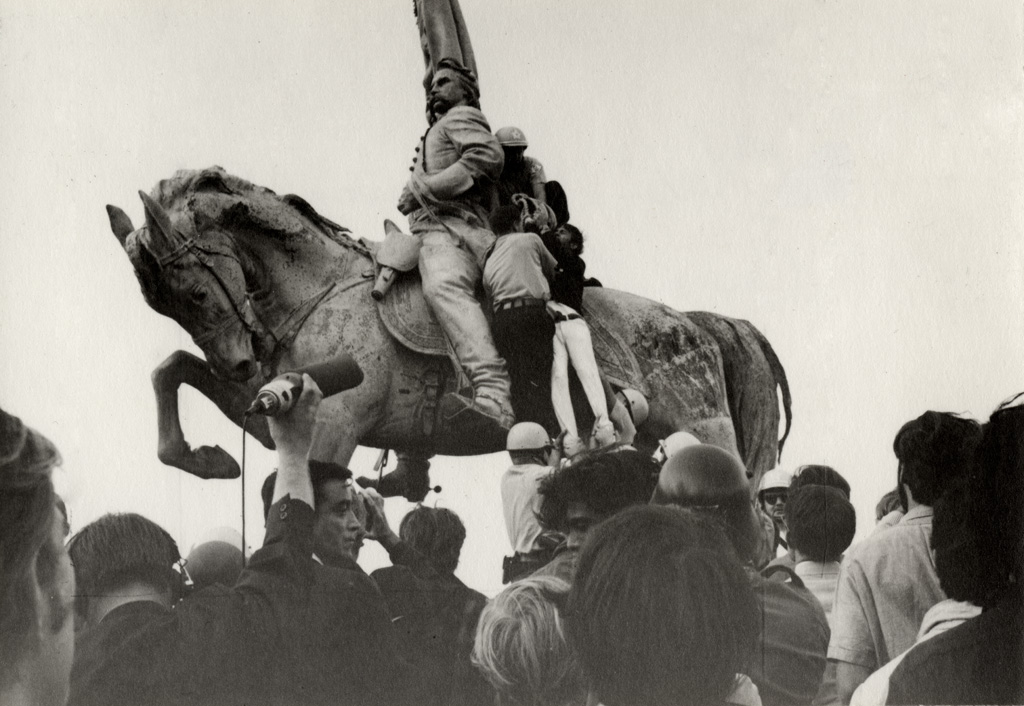
One of them, Aug. 29, 1968, occurred in Grant Park, Chicago, during that year’s Democratic National Presidential Nominating Convention.

Democrats nominated Vice President Hubert Humphrey to run against Republican nominee Richard Nixon. Humphrey lost the election narrowly to Nixon.

HHH’s political fate likely was sealed in Grant Park, when Chicago police applied brute force to put down a riot being staged by hippies, Yippies and assorted other anti-Vietnam War protesters. It was an ugly night of violence.

I was about a week into my own duty in the Army. I would head to Vietnam the following spring. But, oh, I do remember that political year. My first political hero, Sen. Robert Kennedy, was gunned down in the Los Angeles hotel kitchen after winning the California Democratic presidential primary. RFK’s death came two months and a day after the Rev. Martin Luther King Jr. was shot to death at the Lorraine Motel in Memphis, Tenn.

I want to take particular note here to remind us that no matter how divided we are today, it could actually be worse. The Grant Park riot 50 years ago today tells me just how deep and wide the chasm can get.

I do fear that we might be headed in that direction five decades later. If we get there, then we’d all better prepare for the worst.

Why praise someone on the other side?

Roger Kimball, a conservative writer for The Spectator, thinks the New York Times’s praise of the late Sen. John McCain rings hollow.

Indeed, he takes aim at liberals for their high praise of the senator, given his own conservative voting record in the House and the Senate over more than three decades.

Well, I beg to differ with his assertion about the hollow ring of such high-minded rhetoric.

Read Kimball’s essay here.

I consider myself a liberal. Or a progressive. I have stated on this blog many times that I didn’t vote for Sen. McCain when he ran for president as the Republican nominee in 2008. I have opposed his policy and have challenged his constant griping against the man who thumped him in that landmark presidential election a decade ago.

However, the man’s public service is worthy of salute and high praise. His courage in the face of his hideous captivity during the Vietnam War is as well. Sen. McCain’s dignity during his valiant but futile fight against the cancer that took his life commends high praise.

I have been saddened in the extreme by Sen. McCain’s death. He was a man of deep courage, conviction and dedication to his country. He paid a huge price for his service when he was shot down in 1967. He endured more than five years of captivity, came home and continued to serve his beloved country.

Sen. McCain said it well himself by declaring that he “lived and died a proud American.”

How can a liberal look away from such dignity?