Tag Archives: Congress

Congressional toxicity is flaring to dangerous level

So . . . just how toxic is the atmosphere in Congress, if not in all of Washington, D.C.?

Senate Intelligence Committee Chairman Adam Schiff provided a critical example.

Committee Republicans today demanded that Schiff resign as chairman of the committee. Donald Trump has called on Schiff to quit Congress altogether. GOP Intelligence Committee member Mike Conaway of Midland said Schiff no longer has the standing to lead the committee and said he should resign immediately.

Schiff has been a stern critic of Donald Trump. He maintains that the president’s campaign did collude with Russians despite special counsel Robert Mueller’s findings to the contrary.

Schiff then took the microphone after Conaway’s lecture and gave it right back to his GOP colleagues. He held firm on his assertion that there was collusion. “You might say that’s all OK,” Schiff said. “You might say that’s just what you need to do to win. But I don’t think it’s OK. I think it is immoral, I think it is unethical, I think it’s unpatriotic and, yes, I think it’s corrupt.”

Yes, it is highly toxic on Capitol Hill. The mood between Congress and the White House is equally toxic.

Why mention it? Because it seems different now than any era I can recall. President Bush 43 managed to maintain working relationships with the likes of Sen. Ted Kennedy; President Reagan famously befriended House Speaker Tip O’Neill, his after-hours drinking buddy; President Bush 41 also maintained strong friendships with House Ways and Means Chairman Dan Rostenkowski; President Clinton managed to work with House Speaker Newt Gingrich to craft a balanced federal budget.

These days we hear Donald Trump calling Adam Schiff “pencil neck.” He is throwing out “traitorous” and “treasonous” terms to describe Democrats behavior during the special counsel’s probe into alleged collusion; and, yes, Democrats have tossed those terms at the White House, too.

Good government requires leaders of both political parties to find common ground. Dear reader, there ain’t a bit of commonality to be found these days. Anywhere!

It is going to get more divisive, more toxic the deeper we plow into the 2020 election season. After that remains anyone’s guess.

It is no fun — none at all — watching these men and women tear each others’ lungs out. Too many important matters are going unresolved because of the outright hatred one senses among politicians across the aisle that divides them.

Mo Brooks cites ‘Mein Kampf’? What the . . . ?

Of all the works that a member of the U.S. House of Representatives wanted to use to illustrate a point, he chooses to stand on the floor of the People’s House and invoke the words of the 20th century’s most despicable tyrant.

Wow! How do you process that one?

Mo Brooks, an Alabama Republican, sought to defend Donald Trump against Democrats’ attacks on him over the course of special counsel Robert Mueller’s probe into The Russia Thing. By now you know how that turned out: Mueller found no credible evidence of collusion between Trump’s campaign and Russian goons who attacked our electoral system.

Why in the name of ethnic genocide does Brooks choose to reference passages to “Mein Kampf,” written in 1925 by the future chancellor of Germany, Adolf Hitler? Brooks cited a passage that Hitler used to talk about “the big lie,” which was a screed that sought to foment his upcoming campaign to launch the Holocaust against Jews. Brooks sought to label Hitler and the Nazis as “socialists.” They were not. The National Socialist Party of Germany was a fascist organization bent on world conquest.

And think for a moment about the juxtaposition of where he did and who he was quoting.

It was in that very chamber where President Franklin Delano Roosevelt asked Congress to declare a “state of war” between the United States and Japan after the “dastardly attack” that had occurred the prior day, Dec. 7, 1941, “a date which will live in infamy.”

The next day, Germany declared war on the United States. The fight was on and the rest, as they say, was history.

And so Rep. Brooks chose to defend the current president of the United States with rhetoric penned by the monster who sought to eradicate Jews from Europe? He sought to conquer the world. He said the Third Reich would last a thousand years; he missed his goal by 988 years.

That a member of Congress would quote from such a monster on the floor of the nation’s Congress is a shameful act.

Trump’s victory dance takes on vengeful look

Donald Trump won a significant victory with Robert Mueller’s findings that the president’s campaign did not “collude” with Russians.

Now the president is launching what is looking like a revenge mission to strike back at those who he says have done him wrong.

We’re hearing reports that he is going after media personalities, media organizations, political foes, former intelligence officials who have been openly critical of him.

Wow! C’mon, Mr. POTUS. The man needs to accept the special counsel’s findings with a semblance of gratitude for the service he has done. Then he needs to get about the task of actual governing.

I shall point out that Democrats in Congress, not to mention millions of Americans beyond the Beltway, are upset with what Mueller has concluded. They wanted the special counsel to decapitate the Trump administration with a finding that said Trump’s campaign did collude with Russians.

The president characteristically has misstated the obvious. He said Mueller has given him “total exoneration.” No, he hasn’t done anything of the sort. Mueller said the obstruction of justice allegation has yet to be settled. Mueller said he didn’t find enough evidence to bring a complaint, but added that the absence of such evidence doesn’t clear the president.

I fear the matter has gotten muddied up even more.

Trump’s collusion battle appears over. The president can declare victory. He should have done so with a brief statement issued on White House stationery and then be done with it.

But . . . it’s not over.

Yes, we’re going to endure more pitched battles.

Help!

Mueller’s finding contains good news

I try to be a fair-minded fellow. I have been highly critical of the president of the United States, but I also am willing to acknowledge good news about him when it presents itself.

Robert Mueller III has determined that Donald Trump’s presidential campaign did not “collude” with Russians who sought to influence the outcome of the 2016 election.

That is good news for the United States of America.

It means that Mueller’s exhaustive 22-month probe into alleged collusion came up empty. He found insufficient evidence to bring charges related to collusion, which is not by itself a criminal act.

Does this mean I think better of the president? Or does it mean that our electoral system isn’t in jeopardy from foreign hostile powers sowing discord and causing havoc? No. None of that is true.

Donald Trump is as unfit to be president today as he was prior to the conclusion of Mueller’s investigation and I will use this blog as a forum to make that point for as long as he sits in the Oval Office. What’s more, Mueller has determined — along with our nation’s intelligence professionals — that Russia indeed interfered in our election. That is a serious national security concern that needs our nation’s fullest attention.

Mueller’s findings have provided significant confirmation that Donald Trump was not a Russian “asset” who knowingly coordinated with Russia to disrupt our election.

Let’s also understand that the obstruction of justice matter — the other 800-pound gorilla — remains an open question. Mueller did not “exonerate” Trump on that score. He took a non-committal stance on whether the president obstructed justice in the search for the truth regarding “The Russia Thing.” Congress will have more to say on that matter, as will federal prosecutors working out of the Southern District of New York.

On the matter of collusion with Russia and whether the president and his campaign team conspired with the bad guys, well . . . that chapter appears to be closed.

Thus, irrespective of what it might mean for the president and his political future, Robert Mueller has delivered a healthy helping of good news for the country.

No high-fives, or condolences just yet

To those who support Donald Trump and those who oppose the president, I want to offer a word of caution for plainly different reasons.

The Trumpsters out there are high-fiving each other over Robert Mueller III’s submission of a report to Attorney General William Barr; he did so without recommending any further indictments into his probe of alleged collusion between the Trump campaign and Russians who attacked our electoral system.

They’re repeating the president’s mantra: no collusion.

Whoa! Hang on here, man!

We don’t know anything of what the special counsel’s report says.

The anti-Trump factions are expressing some level of disappointment. They wanted Mueller to deliver some heads — and maybe even some genitalia — on a platter when he turned in his report to Barr. That didn’t happen. Mueller didn’t recommend any more indictments.

To both warring camps I want to offer the same words of caution. It is premature to gloat or glower over what Mueller has completed.

We do no know a thing!

Are we clear? Good!

Join me in waiting for the AG to let Congress know what Mueller has submitted. I guarantee you that a federal government branch with 535 blabbermouths in both legislative chambers cannot possibly keep a secret.

Once they know . . . we’ll all know.

What if Trump changes his mind?

The thought occurs to me. Here goes . . .

Donald Trump has said he wants special counsel Robert Mueller’s report on alleged collusion, conspiracy and obstruction of justice to be made public. The president said he doesn’t object to the public seeing what Mueller produces.

But the president is known to change his mind. Sometimes on a whim. On a dime. Without warning.

What might happen if after seeing an outline of the report’s findings the president changes his mind? Suppose he calls Attorney General William Barr and instructs the AG to keep the report from Congress. Don’t release it to the public.

My question: Would such an act constitute an impeachable offense?

Wait for Congress to get Mueller’s findings; then we’ll know

This is just a hunch. I want to share it anyway.

My hunch is that when U.S. Attorney General William Barr releases Robert Mueller’s findings to members of Congress, the lid is going to fly off the report and we’re going to know all there is to know — immediately!

Mueller turned his report over to Barr. It was locked up tighter than a hermetically sealed drum. No one knows its contents.

Barr is going to look it over. He said in a letter to Congress that he might let lawmakers know as soon as this weekend.

That would be great!

I am tired of waiting on these results. I happen to believe that House members and senators who represent us out here in Flyover Country want to do what we demand of them. Put another way, they know they’d better do what we demand . . . or else!

So, if Barr delivers the findings to Congress by the weekend, I expect we all will know what Mueller has concluded about collusion, obstruction of justice, conspiracy, you name it.

Don’t wait too long, Mr. Attorney General.

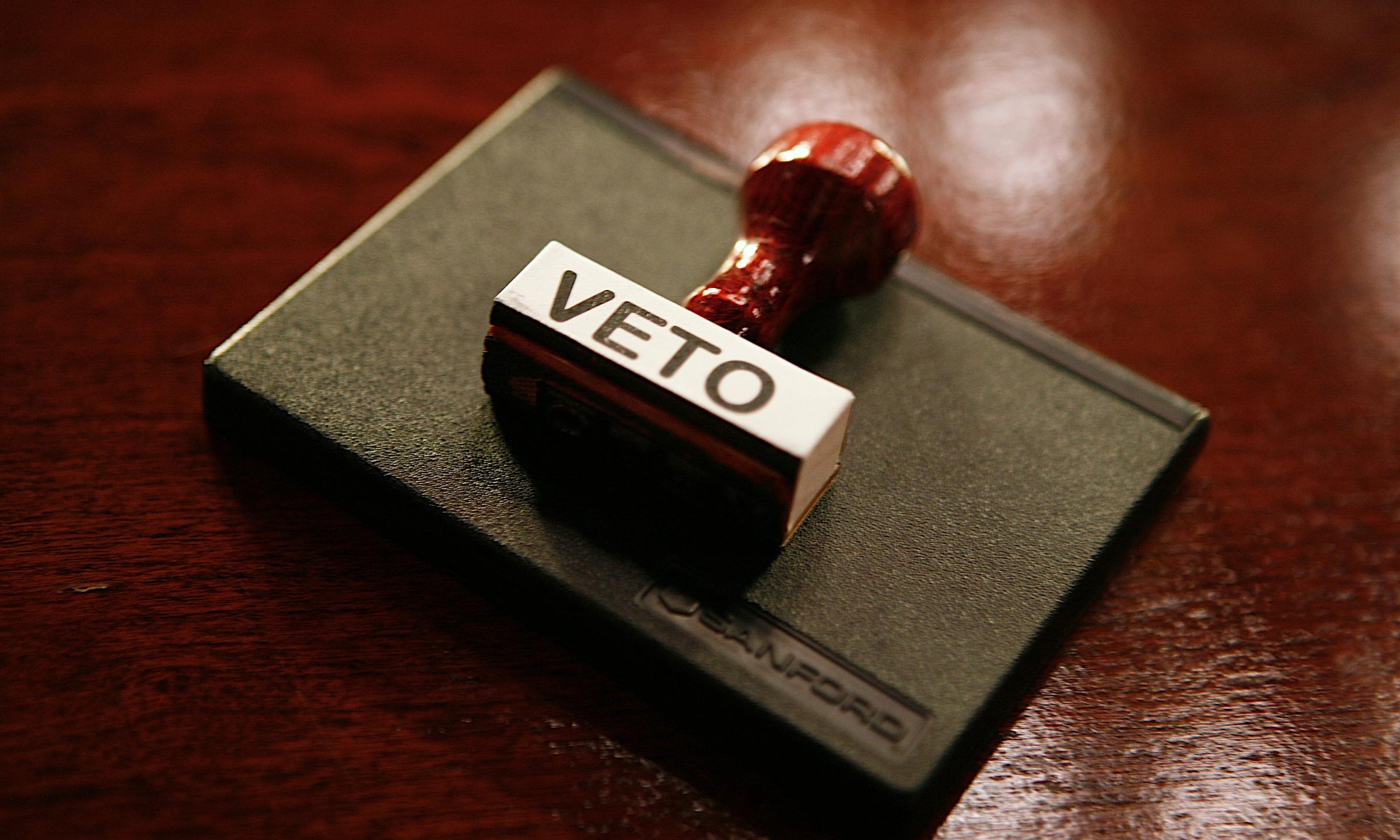
Veto likely will hold up, but then what?

Donald Trump’s first veto of his presidency is likely to withstand congressional efforts to overturn it.

It’s good to ask, though: What happens next?

The president vetoed House and Senate bills that sought to toss aside his national emergency declaration that he sought to build The Wall along our southern border. Congress based its action on a couple of key issues: there is no national emergency, the president’s action sets the stage for future presidents to do the same thing and it usurps congressional authority to appropriate money for specific projects.

Trump wants to divert funds allocated for various programs to build The Wall.

Twelve Senate Republicans voted with Democrats to wipe out the declaration. Democrats control the House, so that vote was a done deal from the get-go. Neither vote was veto-proof, however.

Trump is messing with fire with this veto. Sure, the Constitution grants him the authority to do what he did. However, it’s not yet clear whether his action will withstand a legal challenge if it comes from congressional Democrats.

Never mind that Attorney General William Barr said when Trump signed the veto document that he was within his right legally; we all expected the AG to stand with the president.

The animosity between the legislative and executive branches of government is as vivid as ever. Trump’s veto is likely to stand. However, the fight over The Wall is far from over.

Term limits for SCOTUS? Really, Sen. Booker?

Cory Booker needs to take a breath.

The U.S. senator from New Jersey and one of dozens (or so it seems) of Democrats running for president has pitched a notion of setting term limits for members of the U.S. Supreme Court.

C’mon, senator. Get a grip here!

The founders had it right when they established a federal judiciary that allows judges to serve for the rest of their lives. Lifetime appointments provides judges — and that includes SCOTUS justices — the opportunity to rule on the basis of their own view of the Constitution and it frees them from undue political pressure.

Sen. Booker is a serious man. I get that. He has an Ivy League law degree and is a one-time Rhodes scholar.

He’s also running for a political office in the midst of a heavily crowded field and is seeking to put some daylight between himself and the rest of the Democrats seeking to succeed Donald Trump as president.

Term limits for SCOTUS justices isn’t the way to do it.

We don’t need term limits for members of Congress, either. My view is that lifetime appointments for the federal judiciary has worked well since the founding of the Republic. There is no need to change the system based largely on a knee-jerk response to the current political climate.

Veto would inflame already red-hot tensions

Donald Trump had a one-word, four-letter response to the U.S. Senate vote rejecting his declaration of a national emergency on our nation’s southern border.

“VETO!” he wrote via Twitter.

OK, so the president has thrown down on both chambers of Congress.

The House and the Senate both have rejected Trump’s view that a national emergency exists on our border. They contend that no such emergency exists. A majority of both legislative chambers has stood up against the president.

This is what divided government brings to the table.

Trump has the constitutional authority to veto the legislation that rejects his national emergency declaration. Congress also has the authority to override a presidential veto. It cannot do so with a simple majority. The override sets the bar higher than a vote to enact a law in the first place.

Should the president carry out his veto threat? Does he risk sticking in the eye of a co-equal government branch that has spoken ostensibly for the constituents who elected its members?

Trump’s national emergency declaration is as phony as it gets.

Astonishingly, the president himself has admitted that the declaration is unnecessary. “I didn’t need to do it,” he said immediately after declaration the emergency. The move is meant to empower the president to reallocate money approved by Congress for specific projects; he wants to redirect the funds to build The Wall he says would stem the flow of criminals pouring into the country.

Twelve Senate Republicans joined their Democratic colleagues in rejecting Trump’s emergency declaration. The rest of the Senate GOP caucus, interestingly, stood behind the president of their own party after chiding his predecessor — Democrat Barack Obama — for the alleged “lawlessness” of his own executive procedures.

To my way of thinking, Trump’s serious overreach in reaction to a phony immigration crisis is far more “lawless” than anything that Obama ever did.

But that’s just me.

The president is empowered to veto the rejection that is heading for his desk. He’ll likely carry through with the threat. It won’t solve any of the political problems that are piling up around him.

So the battle rages on.

And on and on.