Tag Archives: Texas Tribune

Let the kids’ lemonade flow!

Texas Gov. Greg Abbott has taken up the cudgel for the state’s budding entrepreneurs.

Abbott signed a bill that makes it illegal for cities and homeowners associations to force children to shut down their lemonade stands.

Yes, I know I have been tough on the governor and the Legislature for snatching local-control issues out of locals’ hands. This one, though, makes me smile.

State Rep. Matt Krause, R-Fort Worth, authored the bill that prohibits the closure from cities and local neighborhood groups. Kids like to sell non-alcoholic drinks to raise money for all manner of causes: field trips, gifts for Mom and Dad, or just plain vacation money.

As the Texas Tribune reports, support for the legislation grew after two East Texas siblings were forced in 2015 to shut down a lemonade stand they had set up to raise money for a Father’s Day gift.

The injustice of it all! I’m tellin’ ya, those youngsters needed the strong arm of the state. Well, those who will come along to raise money for their own parents will have the protection of state law.

The warning now has been sent to city halls and neighborhood association busy-bodies: Leave the kids alone! In fact, you need to buy a glass of the cool drink yourselves to help the up-and-coming business tycoons meet their financial goals.

This amendment issue is worth all Texans’ support

It’s not often that a Texas constitutional amendment election gets my juices flowing, but this year is going to present one for my wife and me.

Hey, we’re retired these days and we spend time cruising around Texas hauling our fifth wheel recreational vehicle behind our pickup. When we travel in Texas, we make it a point to spend as many nights as we can at one of the state parks.

So, the Legislature has decided to send a measure to voters this fall that dedicates a lot of money to maintain and improve our state park network.

I am all in on this one!

According to the Texas Tribune: In a big win for outdoor enthusiasts and day trippers alike, legislation that would ensure that the Texas Parks & Wildlife Department and the Texas Historical Commission always get the maximum amount of money they are allowed to receive through a state sporting goods sales tax has passed both the House and Senate and heads to Gov. Greg Abbott’s desk for his signature.

The 1993 Legislature approved a law that dedicated 94 percent of sales tax revenue to the state parks, with 6 percent going to the Texas Historical Commission. In the years since then, the state has been forced to use that revenue to balance the budget, depriving the parks system of money it needs for maintenance, upkeep and improvement of the system.

The constitutional amendment would ensure the state spends as much money as possible on parks, according to state Sen. Lois Kolkhorst, R-Brenham, author of the bill.

My wife and I recently moved to Collin County. We live with easy driving distance of several first-class state parks. We have enjoyed Lake Tawakoni, Lake Bob Sandlin, Eisenhower and Lake Arrowhead state parks.

We are — and this is not an overstatement — gigantic fans of the Texas Parks & Wildlife Department and the state park system. We have enjoyed many of our state parks over the years. We purchase the annual pass that waives our entrance fees; we see it as an investment in what we believe is a first-class network of parks.

We obviously aren’t alone in making ample use of our state parks. TP&W Commission Chairman Ralph Duggins noted in an email that pressure on the parks is coming from a booming population and said that “this bill will give voters the chance to assure their future with a predictable, dedicated and sustainable funding stream.”

I am often highly critical of state government. Not on this matter, though. The Texas state park network is worth all Texans’ support.

Hit the road, Mr. Secretary

So long, David Whitley. Don’t let the door hit you in the … whatever.

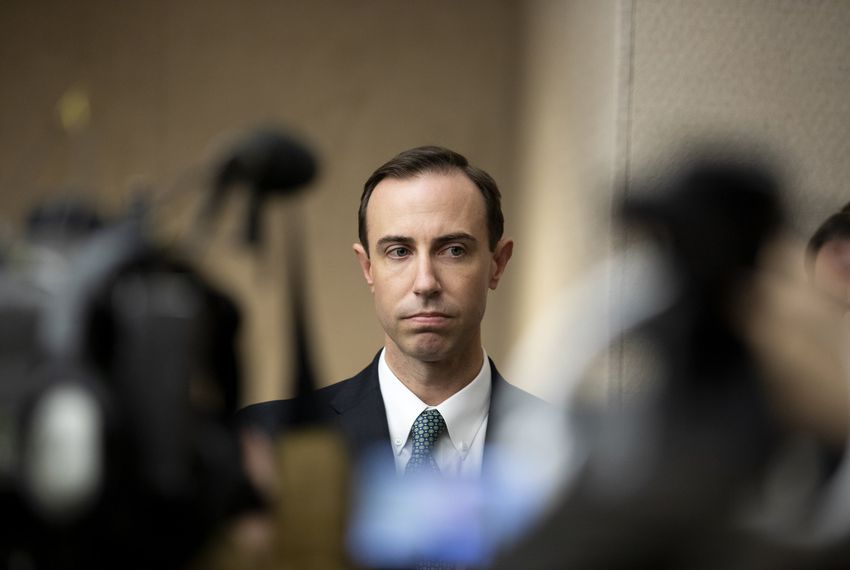
Whitley has resigned as Texas secretary of state after serving for less than half a year. His brief tenure as the state’s chief election officer will be remembered for one thing only: his botched effort to purge Texas voter rolls of ineligible voters, which turned into an embarrassing revelation that those so-called illegal voters were actually quite legal.

As the Texas Tribune reports, gubernatorial nominees usually sail straight through the Texas Senate. Whitley didn’t make the grade; he never was confirmed by the Senate. So, when the Senate gaveled itself adjourned today, Whitley had to leave. So, he did.

Whitley got caught up in the tempest over whether the state’s voter rolls were filled with illegal immigrants. His office flagged the names of thousands of Texans who were thought to be voting illegally. It turned out to be, um, false. The alarm turned out to be mostly false.

Whitley was left trying to explain why his office got it so wrong.

Senate Democrats stood firm in their opposition to Whitley and given the Senate’s two-thirds rule required to confirm nominations to executive positions, Whitley’s nomination by Gov. Greg Abbott was doomed.

Well, the governor will now look for another secretary of state.

My hunch is that the next one will not try the kind of stunt that torpedoed David Whitley.

Keep fighting the fight, Sen. Seliger

Stand tall, Kel Seliger. I am with you, my friend.

There you go. I have just laid out my bias in favor of the Amarillo Republican who serves in the Texas Senate representing the sprawling District 31 that stretches from the top of the Panhandle to the Permian Basin.

A thorough Texas Tribune feature story tells how Seliger, who’s served in the Senate since 2004, managed to get on Lt. Gov. Dan Patrick’s sh** list during the 2019 legislative session.

The way Seliger tells it, he is voting on behalf of his West Texas constituents and doesn’t really give much of a damn about the political agenda being pushed by Patrick, the Senate’s presiding officer.

That, I believe, is what we call “representative democracy.”

Seliger says he’s still “paying penance” in the Senate after Patrick stripped the body’s second-most-senior Republican of his committee chairmanships and his role on other key committees. Patrick blamed his response on what he called “lewd” comments from Seliger toward a key Patrick aide; Seliger believes it’s because he has opposed much of Patrick’s legislative agenda.

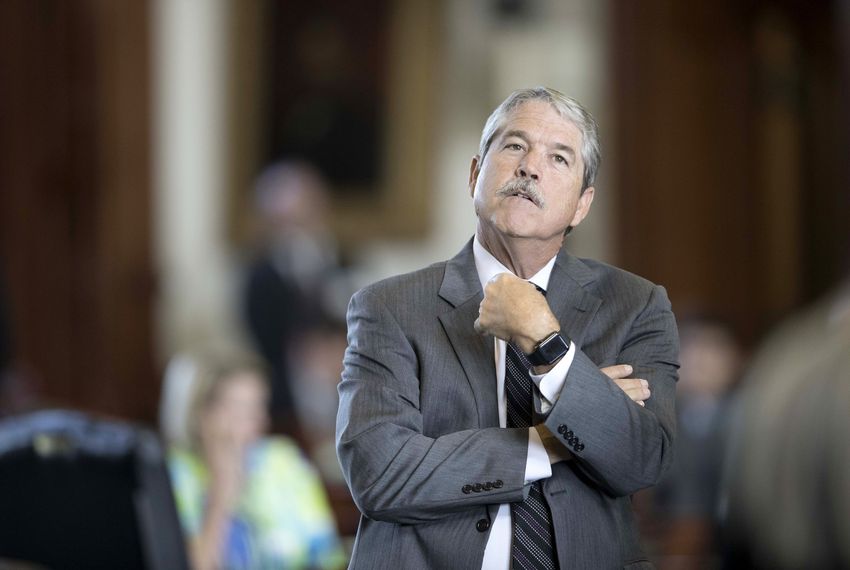
Sen. Seliger has occasionally been the lone Senate GOP vote against some legislation, such as the measure to ban cities from deploying red-light cameras aimed at deterring traffic violators. Seliger called it a matter of “local control.” Amen to that, senator!

I’ve known Seliger since 1995, when I arrived in Amarillo to take my post as editorial page editor of the Globe-News. Seliger was mayor of Amarillo at the time. We hit it off right away, developing a thoroughly cordial professional relationship. Over time, it turned into a personal friendship, particularly after he left public office.

Then the senator from Amarillo, the late Teel Bivins, received an ambassadorial appointment from President Bush and Seliger ran to succeed Bivins in District 31. He has served with distinction and dedication to his constituents ever since.

The Tribune article notes that Seliger hasn’t yet committed to running for another term in 2022. He defeated two GOP primary challenges in 2018, winning the nomination without a runoff.

All the while, Seliger has managed to stick it in Patrick’s ear. He was the only Republican senator to not endorse Patrick for re-election in 2018. Why? My best guess is that Patrick is too, um, ideological to suit Seliger’s taste.

Seliger wears his own brand of conservatism proudly. Indeed, he embodies what I believe is a traditional Republican world view, which is that the state need not meddle in matters that local communities can settle themselves.

I believe Seliger is the same man he’s always been. The shift has occurred elsewhere, within the leadership of the Texas Republican Party. I prefer, thus, to stand with my friend as he continues to serve the people who keep electing him to the Texas Senate.

Beto’s early burst needs a boost

Beto O’Rourke burst on the national public political stage with a near-miss loss to a Republican U.S. senator in Texas in 2018.

Then the former El Paso congressman launched his presidential campaign and hearts started fluttering beyond Texas’s state line. He raised a lot of money in the first 24 hours of his 2020 presidential candidacy.

But then . . . O’Rourke plateaued. Other Democrats — and there are a lot of ’em out there — began stealing Beto’s thunder. They spoke in many more specifics than O’Rourke has offered.

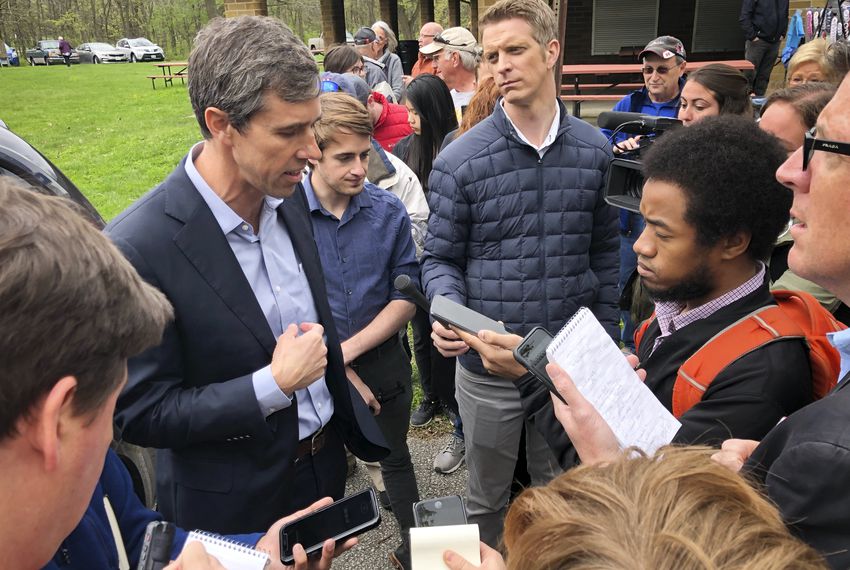
So now, according to the Texas Tribune, O’Rourke is now finding himself looking for a bit of a reset. He is settling in for the long haul. The Tribune reports that O’Rourke is still campaigning “aggressively,” but he’s now just one among a large field of politicians who want to become the next president of the United States.

Yep. It’s going to be a long one, no matter how O’Rourke finishes this campaign.

The RealClearPolitics poll average has former Vice President Joseph R. Biden Jr. as the runaway frontrunner for the Democratic Party nomination. Biden stands at 41 percent among all the announced candidates; Sen. Bernie Sanders is next at something like 16 percent. Beto stands at 4 percent, according to the RCP poll average.

It’s way too early to write Beto off, just as it way too early to anoint Joe Biden as the next Democratic Party presidential nominee.

I guess O’Rourke’s recent struggles tell us about the fickle nature of the voting public and offer an example of how a candidate cannot rely solely on a prior campaign . . . that he lost!

Red-light cameras appear on their way out; what a shame

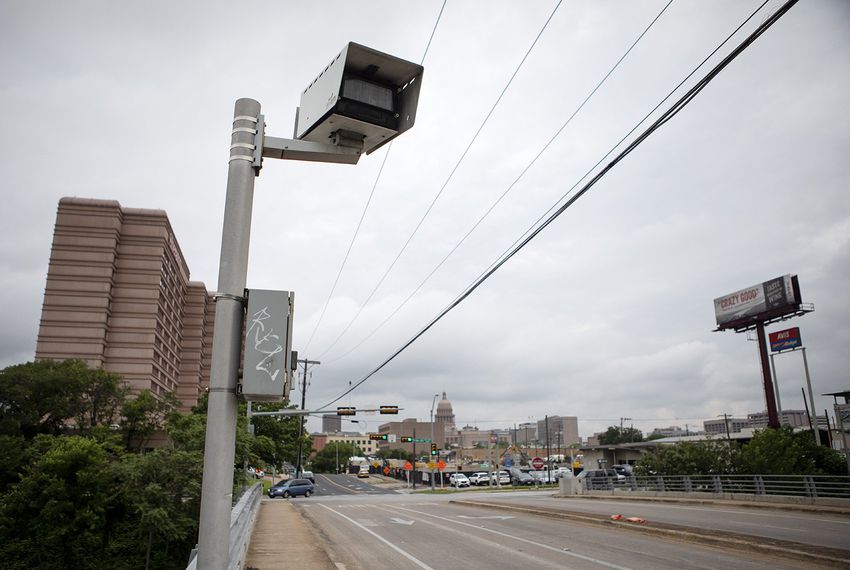
Texas legislators appear ready to pull the plug on cities that want to do more to protect motorists and pedestrians from those who break the law by running through red lights.

Yep. The Texas House of Representatives has approved a bill written by Rep. Jonathan Strickland, R-Bedford, to disallow cities from deploying the devices.

This, I must say once again with emphasis, is a huge mistake. It’s big, man!

Strickland believes — and this is rich — that the cameras violate constitutional provisions that guarantee accused citizens to face their accuser. Pardon me for saying so, but Strickland is full of crap!

The cameras do not deny anyone any rights as citizens. Those who get cited by the cameras that catch them running through red lights or taking off from a dead stop through an intersection are entitled to appeal their citation to a municipal judge.

The cameras that are used in cities all across Texas take pictures of license plates on the offending vehicles and the citation is sent to the vehicles’ owners. The fines run $75 for a violation.

Let me disclose something: I got caught by one of those cameras in Amarillo several years ago. I made a mistake by racing through an intersection; I was a tad late and I got caught. I paid the fine. That was it.

I am troubled by the Legislature’s motives in repealing the law enabling cities to use the devices. Republicans control both legislative chambers. GOP politicians traditionally have ceded power to local authorities, acknowledging that the locals know best what their communities need.

Many cities, such as Amarillo, determined that the red-light cameras would deter motorists from running through the red lights. City officials have determined that the cameras do their job. They give the city extra sets of “eyes” to monitor the behavior of motorists driving vehicles along public rights-of-way.

The Legislature is considering an amendment to the repeal effort that would allow cities to retain the devices until their contracts with vendors expire. It won’t soften one bit the lack of wisdom the Legislature is demonstrating by ordering cities to take down these devices.

I’ve heard the arguments for and against the cameras. I signed on early as a proponent of the devices. My support for them hasn’t waned. I only wish the Legislature would reconsider this unwise idea.

If cities — which are governed by municipal charters — feel the need to use them to reduce hazards to motorists and pedestrians, let them make that call without legislative interference. 

Texas seeks comprehensive solution to school gun violence

Texas state Sen. Larry Taylor was hurting nearly a year ago, along with many of the rest of this state, not to mention the rest of America. A gunman opened fire at Santa Fe High School in his Senate district, killing 10 people and wounding 13 others.

Taylor, a Friendswood Republican, sought to do something to at least mitigate such tragic events in the future. He has produced a bill that isn’t perfect, but I’ll be damned if I’m going to protest it here.

Senate Bill 11 — which the Senate approved 29-2 and heads for the House of Representatives — seeks to strengthen mental health initiatives in Texas. According to the Texas Tribune, it gives teachers access to telephones and other electronic communications, and establishes threat assessment teams to help identify potentially dangerous students while determining the best ways to intervene before they erupt.

The bill also “requires school districts to appoint school safety committees that meet once a semester to provide their boards of trustees with recommendations for updates to their districts’ multihazard emergency operations plans,” the Tribune reports.

Does the legislation deal with the purchase of firearms, or the access that bad folks have to obtain them? No, but to my way of thinking it seeks a comprehensive approach to seeking out and identifying those who might be prone to producing the kind of insanity that has shown itself too often.

“We cannot afford to do nothing,” Taylor said, adding that too often legislators let “perfect become the enemy of the good.” So, the bill isn’t perfect. It is, however, a good start.

“Multiple young people’s funerals back to back in a few short days is very difficult,” Taylor said. “That’s why we have to get this done.”

Indeed. We mustn’t have to endure such heartache.

Daylight saving or standard time? Let’s decide

Texas lawmakers appear to be on the verge of giving Texans a fascinating election choice later this year.

It will be whether to scrap the twice-a-year switch between standard time and daylight saving time and keep our clocks fixed on the same time all year long.

I like the idea of giving us a chance to vote on this matter, even though I tend to think we vote on too many issues already in Texas.

For the record, I’ll state once again that switching back and forth is no big deal to me. I don’t mind the time change, even in the spring when we supposedly “lose” an hour of sleep because we push our clocks ahead an hour at the start of daylight saving time.

But since the Legislature is going to ask us to state a preference, I guess I should weigh in.

I would like to see us stay on daylight saving time. I prefer the extra hour at the end of the day, which is what a year-long daylight saving time setting would bring us.

But . . . that’s just me.

The Texas Tribune reports that the Legislature is preparing a two-part referendum. The first part asks whether a referendum on daylight saving time can occur; the Texas Constitution doesn’t allow for it now, so approving the first part of the ballot measure would legitimize the second part. That would be whether to follow a standard time or daylight saving time all year long.

I suppose you could presume that rejecting the first part of the ballot measure would be to reject the idea of tossing out the back/forth time change. State Rep. John Smithee, R-Amarillo, my former state legislator, sought to add a third element to the measure — keeping the time-change switch — but the amendment lost on a narrow 72-70 vote.

I do endorse the notion of putting this idea to a vote.

So, let’s settle it once and for all.

Then we cease the bitching about springing forward and falling back twice each year.

We aren’t alone in moving to the Metroplex!

This just in: My wife and I were part of a trend of those moving to the Dallas-Fort Worth Metroplex in 2018!

Who knew?

According to the Texas Tribune, the U.S. Census Bureau said more than 131,000 people moved to the D/FW area in 2017-18. The Metroplex remains the fastest-growing region in Texas, which is among the fastest-growing states in the nation.

In May 2018, my wife and I picked up our belongings and moved them to Fairview, a community tucked between Allen and McKinney in Collin County. Not satisfied with our living arrangement there, we then looked for a home to buy. We found one in Princeton, which also is in Collin County.

We have since learned a couple of things about Princeton. It is the fastest-growing community in Collin County and our investment here is going to accelerate rapidly over the next decade or so.

I have made no secret about why we moved from the Texas Panhandle to the Metroplex.

Is it at all possible that those other recent transplants to D/FW also have grandchildren they want to watch grow into adulthood?

Texas going into battle on behalf of . . . Chick-Fil-A?

Texas Attorney General Ken Paxton put a message out via Twitter that said this . . .

The City of San Antonio’s decision to exclude Chick-fil-A based on the religious beliefs associated with the company and its owners is the opposite of tolerance. It’s discriminatory, and not only out of step with Texas values, but inconsistent with the Constitution and Texas law.

Sigh.

I am truly undecided on this one.

San Antonio officials have decided to remove Chick-Fil-A from its new airport terminal. Why? Because the fast-food owners have said they oppose same-sex marriage. The city said it cannot support a company that has “anti-LGBTQ” sentiments.

Paxton’s argument is that the prohibition violates the religious liberty clause in the U.S. Constitution and it runs counter to state law that bans discrimination on the basis of religion.

My own view is that I do not choose to patronize businesses on the basis of their politics. I don’t boycott films by actors whose politics differ from my own, either.

I have no particular bone to pick — no pun intended — with Chick-Fil-A one way or the other. Its food is OK. I do recall not long after the company CEO made his anti-gay-marriage comment that the lines grew long at the Chick-Fil-A in southwest Amarillo. I didn’t want to wait forever for a so-so chicken sandwich. I guess some folks in the Texas Panhandle were hot to trot over the CEO’s comment; they said, “Hell yes!” to his view and decided to demonstrate their support by waiting in line for a very long time.

It ain’t my bag, man.

This matter is much ado about nothing too much.

I think I can predict that the lines at Chick-Fil-A are going to grow long once again.

Fine. Knock yourselves out, folks.