Tag Archives: Richard Nixon

E-mail controversy rivals Watergate? Hardly

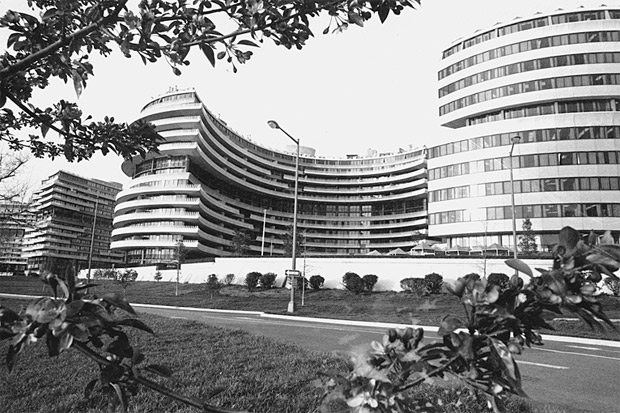
widemodern_watergatecomplex_051513

Donald J. Trump is likely going to lose his bid to become the next president of the United States, so he is bound to say damn near anything.

Thus, the Republican nominee has declared that the Hillary Rodham Clinton e-mail controversy rivals Watergate as among the nation’s worst “political scandals.”

Umm. Let me think. No, it doesn’t even come close.

Let’s review.

Hillary Clinton used her personal e-mail server to communicate with staffers while she was secretary of state. The FBI director determined there was no credible evidence to prosecute her over suspicions that she might have let classified information fall into the wrong hands. Now comes an announcement — 11 days before an election — that he’s reopening the investigation.

What do we know about the new e-mails? Very little, other than they came from a top aide of Clinton and might include communications with her estranged husband, a former congressman who’s been disgraced because of a “sexting” escapade with underage girls. It’s disgusting in the extreme. Scandalous? Give me a break.

Now, about Watergate.

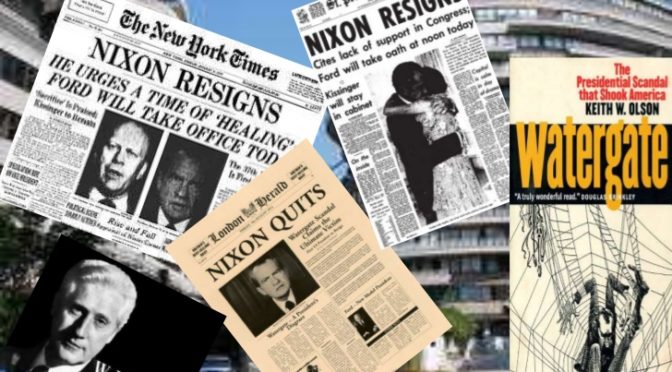
Some goons broke into the Democratic National Committee headquarters in June 1972. Investigators looked into it. Two newspaper sleuths at the Washington Post began snooping around. They discovered a White House connection.

Then they learned that President Nixon was involved. They found out he ordered the FBI to squash the investigation. Then came news about those infamous Oval Office tape recordings, which then revealed that the president used the power of his office to obstruct justice.

That, folks, is a serious constitutional crisis … not just a political scandal.

Nixon quit the presidency. Others went to prison. President Ford pardoned his predecessor.

I see no symmetry here. One does not match the other.

This ‘debate’ didn’t elevate the discussion

jfk-nixon

Of all the analyses I’ve heard and read about the second presidential debate between Democratic nominee Hillary Clinton and Republican nominee Donald J. Trump, one of them stands out.

It came from a talking head who referred to the initial 1960 debate between then-Vice President Richard Nixon and then-U.S. Sen. John F. Kennedy.

It was a serious affair. No audience in the room. Just the candidates and the questioners.

The analyst suggested that there was great hope in 1960 that these events might elevate the quality of the discourse. That it would force the candidates to be civil, collegial and serious. After all, the theory went, they were being beamed into voters’ living rooms. Who wants to hear such trash talk from candidates seeking to become the head of state?

Well, so much for high expectations.

Clinton-Trump II didn’t sink to the level that many prognosticators thought it might. But it damn sure didn’t rise to anything approaching a high-minded discussion about issues.

The overarching issue, of course, was that infamous video recording of Trump talking in 2005 about how he sought to do certain disgraceful things with and to women.

All of that context managed to lower the bar to a horrible level. It made the debate seem small.

As Chuck Todd, the NBC newsman and “Meet the Press” moderator, noted: The debate didn’t do much to enhance the principle of democracy.

Perspective, folks … perspective!

conspiracy theory

Social media are full of interesting tidbits, factoids, a bit of propaganda and pithy commentary.

The item I posted here showed up over the weekend on my Facebook news feed. It’s been passed around a good bit.

It comes from someone who obviously supports Hillary Rodham Clinton’s bid to become the next president of the United States.

It calls for “perspective” from those who insist that Clinton is the worst politician in American history ever to vie for presidency.

The private e-mail server issue hasn’t played out fully. My guess is that might never play out sufficiently to suit every single critic who believes she endangered national security while serving as secretary of state; that she put lives at risk by sending out top-secret messages on her personal e-mail server.

Recent history, though, is full of examples of presidents lying to our faces.

* * *

I’ll take issue, though, with one of the items noted in this anonymous post. The purveyor of this item seems to think President Ford’s pardon of President Nixon was an act of evil. It wasn’t.

Richard Nixon was party to a serious constitutional crisis, the one known as “Watergate.” He paid a terrible political price, arriving at the doorstep of impeachment by the U.S. House of Representatives before resigning his office on Aug. 9, 1974.

Gerald Ford took over and a month or so later, issued a blanket pardon. His reason? To spare the nation more political agony.

I was furious at the time. So were many Americans. I wanted the former president to pay even more for what he did while at the nation’s helm. The cover-up, how he sicced the feds against his “enemies,” how he ordered the FBI to look the other way in investigating the break-in at the Democratic National Committee office.

Ford’s pardon of Nixon likely cost the president a chance at being elected in 1976.

It turned out, though, to be an act of courage.

Many years later, the John F. Kennedy Library in Boston bestowed its “Profile in Courage” award to President Ford for that decision. The late Sen. Ted Kennedy, speaking on behalf of his family, acknowledged in public remarks that he, too, was wrong to criticize the president for making that decision, but that he came to realize he did the right thing.

The rest of the items noted in the brief missive attached to this blog post? Yep. I agree with ’em.

Time for some perspective, folks.

Memo to GOP: Let your nominee finish his race

Campaign_2016_Trump-6e9c2.wdp

More and more Republicans are saying it: get rid of our presidential nominee.

Dump Trump. Ditch Donald.

The latest Republican to speak out is talk-show host — and former GOP congressman — Joe Scarborough. He says Donald J. Trump has disqualified himself as a presidential candidate.

https://www.washingtonpost.com/blogs/post-partisan/wp/2016/08/09/the-gop-must-dump-trump/?utm_term=.e3ce0dbe3fe2

I believe I must remind Scarborough of the following: Republican Party primary voters had the opportunity all along the way to look to someone else when given the chance.

They chose to go with Donald Trump.

He won the GOP nomination fair and square. He scored a first-ballot win at the Cleveland convention.

Sure, Trump has made a hash of his campaign. His statements have boggled our minds. He is demonstrating time and time again his total unfitness for the job.

How, though, does the party ditch a nominee now?

My own sense is that the party ought to let the man finish what he’s begun. Let him complete the race. Let him continue to embarrass himself.

The party can recover. Political parties have ways to do it. The Republicans rebuilt their conservative coalition after the 1964 disaster when Barry Goldwater got trampled by Lyndon Johnson. Democrats did the same thing after getting battered by Richard Nixon’s landslide win over George McGovern in 1972.

It’s a bit late in the game for the Republican Party to change nominees now.

What’s more, as someone who has no intention of voting for Donald Trump — and who cannot stand the idea of his ever getting anywhere near the Oval Office — I plan to enjoy this supreme narcissist getting his noggin thumped.

Debates may portend the election result

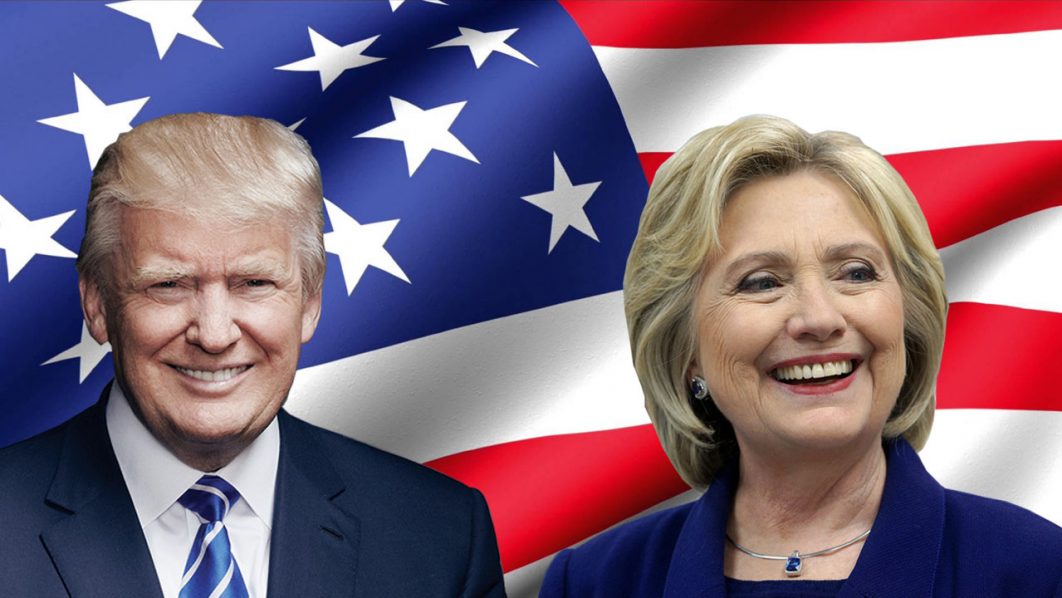
trump-and-clinton-1062x598

Some new polls are out and they show Democrat Hillary Rodham Clinton stretching her lead over Republican Donald J. Trump in the race for the White House.

Don’t take it to the bank.

http://www.motherjones.com/kevin-drum/2016/08/trump-support-collapsing-nationwide

The link here is from Mother Jones, a liberal publication, which tells us that Trump’s support is collapsing across the board. Clinton is hammering Trump with virtually every demographic group imaginable and is holding her own with one group, white men, that Trump formerly dominated.

Don’t take that to the bank, either.

The biggest test of this contest for both of these candidates will occur when they square off in their joint appearances. As an aside, I dislike referring to these events as “debates,” given that they aren’t anything of the sort.

I intend to watch all of them, plus the vice-presidential contest between Democrat Tim Kaine and Republican Mike Pence.

What should we look for as Clinton and Trump stand — or sit — together on the stage?

I’m going to watch for body language.

It’ll be quite instructive to me to see how these two candidates greet each other when they are introduced, how they react to the nastiness they’re going to say about each other during the questioning and how they act when it’s time to say “good night.”

I don’t expect Clinton to change her message much. Trump, on the other hand, might decide to revamp his entire campaign theme. Heck, he might change it multiple times in the first half of the first joint appearance!

If form holds, Clinton will be fully prepped and briefed for anything Trump is going to say. As for Trump, it remains to be seen if he even has a debate prep team formed to coach him through what Clinton is going to lob at him.

There well could be a classic line that will live on once the lights go out. We might hear a “There you go again,” or “Are you better off?” zinger. We could get a “You’re no Jack Kennedy” rejoinder.

One of my favorites blasts was a self-inflicted shot fired in 1960 — at the first one of these televised events — in which Vice President Richard Nixon — husband of Pat Nixon — told us “Americans cannot stand pat.”

Hillary Clinton is up — today! The main event, though, is yet to come.

Facing an unhappy choice this fall

Clinton-and-Trump

It’s time to make an admission.

Others already have said it, but I’ll chime in with this: The election this autumn presents the unhappiest choice I’ve ever faced since I voted in my first presidential election way back in 1972.

At this very moment, I am not yet rock-solid certain what I’m going to do when I go to the polling place.

Republicans have nominated a certifiable buffoon/goofball/fraud/con artist as their presidential nominee. Donald J. Trump is unqualified at every level one can mention to sit in the Oval Office and make decisions as our head of state and government.

Democrats have nominated someone who is far more qualified — on paper — than Trump. Hillary Rodham Clinton, though, is trying to face down that darn “trust” issue. Is she to be trusted implicitly to tell us the truth when we need to know it? That is where I am having trouble with her candidacy.

Who’s left? The Libertarian ticket led by former New Mexico Gov. Gary Johnson, whose signature issue is to legalize marijuana? The Greens, led by Jill Stein?

I’ve already declared in this blog that Democrats have gotten my vote in every presidential election. The first presidential ballot I ever cast, for the late Sen. George McGovern, remains the vote of which I am most proud.

I happened to be — if my Marine Corps friends don’t object to my stealing their service’s motto — one of the “few, the proud” to vote for Sen. McGovern. Then came Watergate and the resignation of President Nixon two years later and one became hard-pressed to understand how it was that the president won by as large a landslide as he did.

The next election four years later gave me a bit of heartburn. I truly admired President Ford and I didn’t really feel comfortable with Jimmy Carter. Well, you know what happened, right?

I’ve been comfortable with my choices every election season since.

Until this one.

You can count me as one of the millions of Americans who’s unhappy with the choices we have. I’ll have made up my mind in time for Election Day.

I’ll just keep it to myself.

Polls could drive GOP nomination? Really?

don trump

I’m almost laughing out loud at the notion that Republican National Convention delegates might revolt this summer and nominate someone other than Donald J. Trump if his poll numbers continue to tank.

If history is our guide, it won’t happen based on that criterion.

In 1964, Republicans gathered in San Francisco to nominate Arizona U.S. Sen. Barry Goldwater to run against President Lyndon Johnson. He trailed badly at the convention. He continued to trail badly throughout the campaign. The president won election by 23 percentage points.

Eight years later, Democrats faced a similar dilemma. They nominated South Dakota U.S. Sen. George McGovern at their convention in Miami; McGovern was far behind in the polls. The convention was one of the most chaotic ever witnessed. McGovern delivered his “Come home, America” acceptance speech in the wee hours. He went on to lose big in 1972 to President Richard Nixon, also by 23 points.

In 1988, Vice President George H.W. Bush was trailing Democratic nominee Michael Dukakis by 17 percentage points when the GOP convened in New Orleans. The vice president stood before the throng and vowed a “kinder, gentler nation.” He was elected by 8 percentage points.

The polls aren’t going to determine whether Trump is nominated.

My own view is that the presumptive GOP nominee, by virtue of his collecting more votes than any of other candidates and winning the vast majority of state primaries and caucuses has earned the party nomination.

Let the delegates stand by their man. Send him off to campaign against Hillary Clinton.

Take your chances, GOP. Trump is your guy.

This scandal produced a suffix

Forty-four years ago today, some goofballs broke into the Democratic Party headquarters in Washington, D.C.

They rifled through some files looking for dirt they could find on the party bigwigs. They left.

The cops arrived and discovered that the office had been burglarized. They launched their investigation at the Watergate Hotel and office complex.

Thus, a political suffix was born.

The Watergate scandal took flight eventually. The Washington Post assigned a couple of reporters from its metro desk — Robert Woodward and Carl Bernstein — to cover it as a run-of-the-mill cop story. They buried their initial coverage of it.

Then the reporters’ phones start ringing. “There’s more to this story than meets the eye,” snitches told them. The reporters badgered their editor, Ben Bradlee, to allow them to look more deeply into it. Finally, Bradlee relented. He turned the fellows loose.

They uncovered a scandal that would turn into a monumental constitutional crisis. We would learn that President Nixon told the FBI to stop snooping around, that he had ordered the CIA to spy on his enemies. Nixon would quit the presidency, Woodward and Bernstein would win the Pulitzer Prize — and their names would become synonymous with investigative journalism.

Since then, every political scandal under sun — or so it seems — has had the “gate” suffix attached to it. Here’s what I found on Wikipedia. I know, take it with a grain of salt. Still, it’s rather interesting.

https://en.wikipedia.org/wiki/List_of_scandals_with_%22-gate%22_suffix

There’s more of them than I ever imagined.

But for my money, the original “gate” scandal — and it’s listed in there — remains in a class by itself.

June 17, 1972 is a date many of us will always remember — in the words of the president who would succeed Richard Nixon — when our “long national nightmare” was just beginning.


‘Sic federal regulators on his critics’

trust-1

A single line jumped out at me as I looked at the New York Times article on Donald J. Trump’s view of the U.S. Constitution.

Adam Liptak’s story goes through a litany of concerns that constitutional scholars — across the political spectrum — have expressed about the presumptive Republican presidential nominee’s views.

Then he writes of Trump: “He has threatened to sic federal regulators on his critics.”

That sentence stopped me cold. I froze.

Do you remember what happened to the last president who decided to “sic federal regulators on his critics”?

If you don’t, I’ll remind you.

President Richard Nixon did that very thing, we learned during the congressional investigation of the Watergate constitutional crisis.

http://www.nytimes.com/2016/06/04/us/politics/donald-trump-constitution-power.html?hp&action=click&pgtype=Homepage&clickSource=story-heading&module=first-column-region&region=top-news&WT.nav=top-news

That revelation — along with many others — led the House Judiciary Committee to approve articles of impeachment against the president, who then resigned his office on Aug. 9, 1974, thus ending, in the words of his successor, President Gerald Ford, “our long national nightmare.”

Trump wants to make it easier to sue the media for libel; he wants to ban Muslims from entering the United States; he attacked a federal judge solely on the basis of his ethnicity, calling the American-born jurist “a Mexican” who, according to Trump, “hates me.”

Any one of those occurrences would be a recipe for a top-of-the-line constitutional crisis. I’m trying to imagine what could happen if more than one of those things ever were to occur if a President Trump were to settle in behind that big desk in the Oval Office.

Here’s a comment from a conservative thinker, taken from Liptak’s article: “David Post, a retired law professor who now writes for the Volokh Conspiracy, a conservative-leaning law blog, said those comments had crossed a line.

“’This is how authoritarianism starts, with a president who does not respect the judiciary,’ Mr. Post said. ‘You can criticize the judicial system, you can criticize individual cases, you can criticize individual judges. But the president has to be clear that the law is the law and that he enforces the law. That is his constitutional obligation.’”

I believe this is a major part of what Hillary Rodham Clinton said Thursday when she described Trump as being “temperamentally unfit” to become president of the United States.

Take this veep job and shove it

Vice-Presidents-of-the-United-States-picture-gallery

It’s been said of vice presidents of the United States that their main responsibility is to keep a bag packed in case they have to attend some foreign dignitary’s funeral.

Sure, they’re next in line to the presidency, but until the past quarter-century or so they’ve been treated with far less respect than they deserve.

As the crusty Texan, the late Vice President John Nance “Cactus Jack” Garner once observed of the office — and this is the sanitized version of what he said — “It ain’t worth a bucket of warm spit.”

CNN commentator Jeff Greenfield has written an excellent essay that suggests that the vice presidency well might be relegated to its former inglorious status when the next president takes office in January 2017,

Here’s his essay: http://www.politico.com/magazine/story/2016/05/2016-election-vice-presidency-donald-trump-hillary-clinton-213886

His premise is a simple one?

The Republican Party’s presumed nominee, Donald J. Trump, possesses an ego so y-u-u-u-g-e that he isn’t likely to take seriously a single word of advice given to him by whomever he selects as vice president. And the Democrats’ probable nominee? Hillary Rodham Clinton would share the White House with a man — her husband, former President Bill Clinton — who would serve as her “Economy Czar” and who would provide all the political and strategic advice she’ll need.

What does that mean for the vice president?

Well, I doubt we’ll see anything like the way, for example, President Lyndon Baines Johnson treated Vice President Hubert Humphrey when he reportedly summoned HHH to his office and lectured him about something while sitting on a commode.

Someone once asked President Dwight Eisenhower about the duties he’d assigned Vice President Richard Nixon. Ike responded, “If you give me a week, I’ll think of something.”

The vice presidency, as Greenfield notes, has become a very important office.

The past three VPs have assumed vital roles in their respective administrations, according to Greenfield. Al Gore became a valuable advisor to President Clinton; Dick Cheney, many have argued, grabbed too much power while serving as No. 2 to President Bush; and Joe Biden has become President Obama’s senior advisor/father confessor.

As Greenfield writes: “None of this means the there’ll be a shortage of veep wannabees. A number of Republicans, especially those without (or soon to be without) an official public role, have already signaled their availability: Rick Perry, Chris Christie, Newt Gingrich, Sarah Palin. And it’s not hard to imagine that any number of Democrats would readily sign up, however challenging the job might be with Bill Clinton shuttling between East and West Wings.”

Well, at least the next VP will get to live in a nice house.