Tag Archives: Bernie Sanders

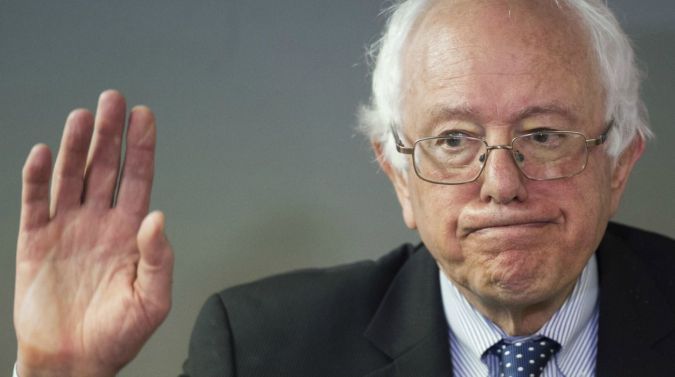
Bernie has won the war of ideas … if not the nomination

berniesanders-61515-1434466786

So much of our national attention has been focused during this political season on the Republican Party presidential primary campaign.

After all, it features a glam king, TV personality, real estate mogul and showman who appears headed for the Republican presidential nomination.

Donald J. Trump has broken all the rules of normal decorum, good manners, class and grace.

Oh yeah! There’s a primary in the other party that’s taking place, too.

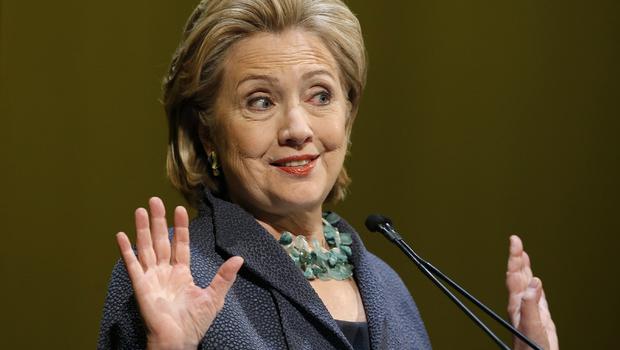
Democrats are fighting with themselves over whether to endorse Hillary Rodham Clinton or U.S. Sen. Bernie Sanders.

The dynamic there also has been somewhat unconventional, albeit not to the degree the GOP race has become.

Sanders is getting his clock cleaned in primary states. He’s been close in many states and he did win Michigan and New Hampshire’s primaries. However, Clinton is now — once again — the shoo-in for the Democratic nomination. To get there, though, she’s had to do something quite extraordinary: She’s had to change her positions on issues to where she now agrees with Sanders.

The Trans-Pacific Partnership? Clinton once favored this trade agreement; now she opposes it.

The Keystone XL pipeline? She once favored it; today she opposes it.

The Iraq War? She voted for it in 2002; she says now that she has changed her mind.

Sanders opposed all those issues from the beginning.

Clinton now has taken up the cause for wage inequality. She’s vowing to take on the big banks. She is sounding more populist than mainstream than when the campaign started.

By golly, she’s sounding like Bernie!

Has Sanders won the war of ideas in the Democratic primary? It’s sounding as though he can declare victory. He well might do that — but he won’t go home quietly.

All this change of mind/heart, of course, brings to mind the issue of Clinton’s authenticity. It has become the source of “Saturday Night Live” skits that skewer the former secretary of state, first lady and U.S. senator over the manner in which she crafts certain images to please whatever audience to which she is speaking.

Sen. Sanders has no serious hope of becoming the Democratic nominee. He does have some hope, though, that the message he’s sought to convey has become part of his opponent’s campaign.

All along, Sanders has sought to tell his party’s base that the campaign “isn’t about me.” If he believes it, then his campaign has been about his ideas.

Stand tall, Sen. Sanders! You’ve won!
Legislating from the bench? Maybe so

young-voters-hit-the-polls-in-2012

I’m usually not one to comment on judges being accused of becoming black-robed “legislators.” Must be my liberal bias.

An Ohio judge, though, just might fit the bill of a jurist who has taken a step or two too far.

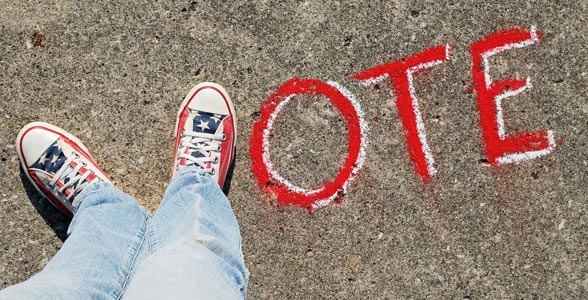
Franklin County Common Pleas Court Judge Richard Frye has ruled that Ohio voters who are 17 years of age today can vote in the Tuesday primary if they’ll be of legal voting age — that’s 18 years of age — by November.

My first reaction is: huh?

It makes no sense.

Let me see if this adds up. Someone who’s not yet old enough to vote will be able to vote in the primary anyway. On what grounds does this make sense?

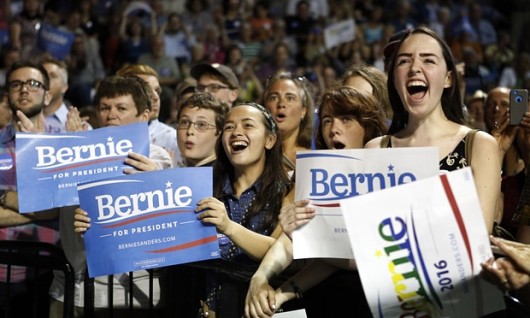
Frye’s ruling is seen as a potentially big win for U.S. Sen. Bernie Sanders, one of two Democrats running for president. Sanders has been getting a lot of young voters’ support and this could open up a large trove of votes; I guess pledges of free college tuition are resonating with the young voters.

“This is a huge victory for 17-year-olds across Ohio. Their votes for presidential nominees will now count when they vote on either Tuesday or over the weekend in early voting,” Sanders campaign counsel Brad Deutch said in a statement.

But, but … how does that compute? How does someone get to vote prior to being of legal voting age?

Ohio’s Republican secretary of state, Jon Husted, is incensed over the ruling. He vows to appeal it. I think he’s got a case for judicial overreach.

I’m a simple fellow. It just seems to me that pre-dating someone’s voting eligibility smacks of manipulation that the law shouldn’t allow.

To be honest, this kind of reminds me of something I witnessed in Jefferson County, Texas, many years when two judges whose courts had criminal jurisdiction were slapped hard by the Texas Commission on Judicial Conduct for back-dating prison sentences. The judges would sentence defendants to prison terms that began before the crimes actually took place. The state’s court watchdog organization took a dim view of it.

Judge Frye, by my way of thinking, is playing a similar game by giving Ohio teens the right to vote before they are actually legally entitled to do so.


Why the qualified tribute to Mrs. Reagan?

bal-nancyphoto0611

The nation has heard from many leading political figures commenting on the death of former first lady Nancy Reagan.

They’ve all been lovely and heartfelt.

Still, consider this statement from U.S. Sen. Bernie Sanders, a Democratic candidate for president:

“No matter your party or political ideology, this is a sad day for America. Nancy Reagan was an exemplary first lady. A devoted partner, she was her husband’s most trusted advisor and, as such, served our country well. Even after her time in the White House, she was an outspoken advocate for stem-cell research to find a cure for Alzheimer’s. Nancy Reagan had a good heart, and she will be dearly missed.”

Is it just me or did Sen. Sanders offer something of a qualifier with that first clause: “No matter your party or political affiliation …”?

I venture to guess that most adult Americans who are even remotely aware of the current presidential campaign know that Sanders leans sharply to the left and that the late President and Mrs. Reagan leaned sharply in the other direction.

I don’t mean to parse and nitpick Sen. Sanders’ statement to death, but it seems to me he could have just started with, “This is a sad day for America” and gone on from there. The rest of the statement came straight from his heart.

One sees this kind of qualification added to tributes to those who have passed on. Lefties do it when righties depart this world and righties do it as well to the lefties who leave us.

Hey, maybe I’ve got too much time on my hands to worry about such things.

Any thoughts here? Am I off base?


What happened to the calamity?

jobs

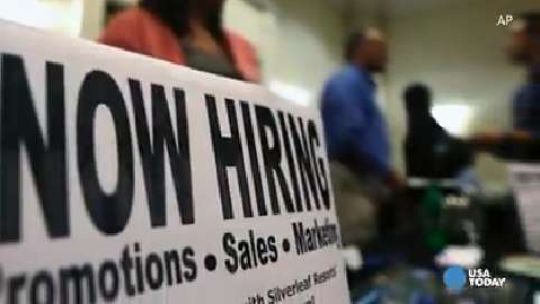
Just a shade less than a quarter-million jobs were added to the U.S. non-farm, non-government payrolls in February, according to the Labor Department’s latest monthly report.

The unemployment rate remained at 4.9 percent.

The federal budget deficit continues to decline.

But by golly, we keep hearing along the presidential primary campaign trail that Barack Obama is presiding over an economic calamity. We’re heading for the crapper. Bernie Sanders keeps harping on the “1 percent” who are making all that money at the expense of the rest of us.

It’s time to give Barack Obama some credit.

Tim Egan writes in the New York Times:

“By any objective measurement, (Obama’s) presidency has been perhaps the most consequential since Franklin Roosevelt’s time. Ronald Reagan certainly competes with Obama for that claim. But on the night of Reagan’s final State of the Union speech in 1988, when he boasted that ‘one of the best recoveries in decades’ should ‘send away the hand-wringers and doubting Thomases,’ the economic numbers were not as good as those on Obama’s watch.

“At no time in Reagan’s eight years was the unemployment rate lower than it is today, at 5 percent — and this after Obama was handed the worst economic calamity since the Great Depression. Reagan lauded a federal deficit at 3.4 percent of gross national product. By last fall, Obama had done better than that, posting a deficit of 2.5 percent of G.D.P.”

I’m not going to give the president all the credit for the economic recovery. However, I’m damn sure not going to condemn with the ferocity that we’ve been hearing — primarily from the Republican candidates for president — about all the gloom and doom.

On other side of the great divide, we hear Democratic challenger Bernie Sanders yammering about the richest Americans not paying enough taxes. He wants to enact fundamental economic change.

I can’t help but wonder: Why?

Yes, we’re in the midst of a contentious political campaign. Candidates are bound to say anything to get attention.

Which is precisely, as I see it, what they’re doing when they keep harping on the economic disaster that hasn’t arrived.

Quandary awaits on Primary Election Day

1407859219000-Election-3-

I am confused about how I should vote on Texas Primary Election Day.

You know, of course, that I hate early voting. I prefer to wait until Election Day to cast my ballot. This year has proved that practice to be more essential than ever. The wackiness of the Republican primary contest has taken us to places never before seen.

But here’s my quandary.

Texas has an open primary system, meaning that voters aren’t “registered” with a political party. We go to the polling place and choose which primary we want to cast our vote. The polling judge will stamp our voting cards with “Republican” or “Democrat,” some of the time; occasionally they forget to do it.

Our polling place is at a local church. We’ll walk through the door and have to decide: Do I vote Democratic or do I vote Republican? (I won’t speak for my wife. She makes up her own mind on these things.)

My own presidential voting history is straightforward. I’ve voted in every election since 1972 and have voted Democratic every time. I flinched one year: 1976, in the race between President Ford and former Georgia Gov. Jimmy Carter; I ended up voting for Carter.

Primary elections in this part of Texas, though, limit one’s options. All the local activity is on the Republican side. We have some token Democrats running for statewide office, but in Randall County — the unofficial birthplace of modern Texas Republicanism — all the local offices are decided on the GOP side.

My problem is this: Do I want to vote in the Republican primary to cast a ballot for someone other than Donald J. Trump or Rafael Edward Cruz or do I lean toward my traditional roots and vote for either Democratic candidates Hillary Clinton or Bernie Sanders?

I’ve declared already that my favorite presidential candidate — of the seven people running in either party — appears to be Ohio Gov. John Kasich. He’s a grownup, a mature public official with an actual record of accomplishment. He’s also got a beating heart that he reveals with great eloquence.

Hillary Clinton also is eminently qualified — on paper — to be the next commander in chief. She’s got a solid public service record. My problem with her? I just don’t trust her completely.

I’m torn. I’m literally undecided on which way to turn when my wife and I walk into the polling place on Tuesday.

My wife wishes we could vote in both primaries; just pick the best candidate either party has to offer — and then decide between whoever wins their parties’ nominations in the fall.

She’s just as torn as I am on what to do next week.

It’s decision time. I might just have to pray about it.

I’m unlikely, though, to say openly who gets my vote. It will become apparent as we move closer toward the general election. Of course, you are free to believe whatever you wish.

President Gingrich, anyone?

1407859219000-Election-3-

How decisive will the South Carolina Republican primary be after the votes are counted?

That remains a matter of considerable discussion.

Donald J. Trump is the frontrunner. The fight now is for second place.

But consider what transpired there four years ago.

Newt Gingrich won the state’s primary, which when you look back shouldn’t have been a huge surprise. The former U.S. House of Reps speaker hails from next-door Georgia. He was more or less a “favorite son” candidate of GOP voters. He then promptly flamed out.

The same theory perhaps applies to Sen. Bernie Sanders’ blowout win in the New Hampshire Democratic primary just a while ago. He represents neighboring Vermont in the U.S. Senate. Familiarity didn’t breed contempt there, either.

This process remains in its early stages.

The Republican field has been winnowed considerably from that massive horde of contenders/pretenders that began the race.

For my money, though, the serious test will occur on March 1 when Texas joins several other states in that big Super Tuesday primary.

Then we’ll see who’s got the chops to keep going.

Let’s all stay tuned.


How does Bernie attract young voters?

Young-Voters-For-Sanders-530x318

Many of my friends seem to think I live, eat, drink and breathe politics.

Not true. I actually have a life outside of the political world. Still, I enjoy the give-and-take of political discussion.

This morning a friend of mine and I were talking about the presidential race. The conversation turned to Bernie Sanders, the independent U.S. senator from Vermont who’s running for the Democratic nomination.

“Why do young people like him so much?” my friend asked.

I haven’t given it that much thought as I’ve watched Sanders chip away at Hillary Rodham Clinton’s one-time inevitability as the Democratic nominee.

Then it dawned on me as my friend posed the question: Sanders has a grandfatherly appeal.

Back in the very old days, when I was a twentysomething idealist, I joined an army of young voters who supported the late Sen. George McGovern. His campaign centered on a single issue: ending the Vietnam War.

By 1972, the war was still raging. My own interest in the war was a bit different from many of my peers. They faced the prospect of going there. I had been there and returned. I came back after my Army stint as confused and confounded about our mission in ‘Nam as I was when I went over in the spring of 1969.

Sanders’ appeal to young voters today — more than four decades later — is a bit more elusive. I have trouble understanding his economic appeal, but then again, maybe it’s just me; I might be a bit slower on the uptake than I used to be.

I’ve concluded that perhaps a lot of Sanders’ appeal rests on the fact that he’s a bit longer in the tooth than any of the other candidates running for president this year — although Clinton isn’t that much younger.

Hillary Clinton faces an authenticity challenge. Sanders doesn’t. He seems to be precisely how he presents himself: a loveable curmudgeon.

I’ll admit that I haven’t talked to that many young people about Sanders’ candidacy. Another young friend with whom I’ve recently gotten acquainted asked me this morning about Michael Bloomberg — the former New York mayor who’s pondering an independent/third party candidacy for president.

I haven’t a clue what would drive a Bloomberg candidacy, other than be a spoiler, I said. He, too, is an older gentleman. Would my young friend support Bloomberg because he reminds her of Grandpa? I might ask next time I see her.

Yes, this election season is the most unconventional many of us ever have seen. This fascinating love affair that Old Man Bernie has developed with younger voters just might be yet another result of the unrest that’s gripped so many Americans.


‘Democratic socialist’ sounding more, um, socialist

berniesanders-61515-1434466786

The  more I hear from U.S. Sen. Bernie Sanders, the more convinced I become that it’s time to end the qualifier when describing his economic philosophy.

The presidential candidate calls himself a “democratic socialist.”

I believe I understand the message he’s trying to convey, which is that his brand of socialism isn’t dependent entirely on the government taking care of every American’s needs.

Sanders has been using the democratic socialist label — again, in my view — to take some of the sting out of the s-word that conservatives are fond of using to describe policies such as, oh, the Affordable Care Act.

Then on Thursday night, near the end of the Democratic presidential candidate debate with Hillary Rodham Clinton, Sanders launched into a lengthy riff about the two political leaders he most admired.

He ended with Winston Churchill, but only after he described Franklin Delano Roosevelt’s tenure as president.

He told us how FDR took office in 1933 while 25 percent of Americans were out of work. We were in the throes of the Great Depression.

How did FDR get us moving again? By energizing government to create jobs. The WPA and CCC were government-financed employment programs. The money to pay for them didn’t just materialize. Americans paid for them with taxes.

Social Security became law in 1935.

Gradually, the nation began to work its way out of the Great Depression.

Then came Pearl Harbor in December 1941. Everything changed after that.

But as I listened Thursday night to Sen. Sanders go on and on about FDR’s leadership, I was struck by the belief that he was talking about socialism. Not just a form of it, but the unvarnished version of it.

I happen to share Sanders’ view that 80-plus years ago, President Roosevelt faced a terrible, miserable set of circumstances when he took his seat behind the big desk in the Oval Office. He felt he had to do something dramatic to get the country going.

Sanders also said something else at the end of the debate that I found a bit curious. He seems to believe the nation is ready for another “revolution,” that the income inequality gap of today sets up a need to create some kind of massive government infusion of money to bolster working families who are suffering while the “top 1 percent of Americans” are doing fabulously.

He wants free college education. Sanders vows to bring universal health care to every American. He intends to push for a dramatic increase in the federal minimum wage.

How does he intend to pay for it? He wants to raise taxes on all Americans.

How, then, is he going to do that with Republicans retaining control of the House of Representatives, where all tax legislation must originate?

He sounds like a socialist.

Not a democratic socialist.

He sounds like the real thing.

I believe I heard someone who is overreaching as he pulls the lever on the economic alarm bell.

FDR faced a grave economic crisis the likes of which will not confront the next president.


GOP now settling in on (mostly) serious hopefuls

carly and chris

Let’s call it a form of political natural selection.

The presidential primary campaign slogs on from state to state and as each state’s votes are counted, the candidates at or near the pack of the pack, bottom of the heap, end of the line — whatever — find themselves with little to zero support.

Why keep fighting?

Two more Republicans threw in the towel today: Chris Christie and Carly Fiorina called it a campaign. They’re suspended, which is a nicer way of saying they’re kaput.

Now it’s up to the GOP grownups to march on.

Except that the remaining candidates isn’t composed entirely of grownups. Donald J. Trump is the frontrunner. Enough said there.

The Democrats started this race with five hopefuls. Three of them dropped out. Now it’s just Hillary vs. Bernie.

But the Republican field still comprises seven candidates. For the life of me I’m not sure why Jim Gilmore is still in the hunt. Ben Carson also must be assessing his chances of ever attaining the White House. Jeb Bush? I had high hopes for him; silly me. Before he bid adieu to this campaign, Christie did a masterful job of peeling the bark off of Marco Rubio at the most recent GOP debate.

Let’s see, who’s left . . . after Trump?

Don’t get me started on the Cruz Missile, Sen. Cruz of Texas. My disdain for him rivals how I feel toward Trump.

My main man is still John Kasich, the serious-minded Ohio governor who’s now trying to call himself a “staunch conservative,” when in reality he’s demonstrated a nice bipartisan touch that today’s hard-core right-wingers deem to be soft, squishy, RINOish.

There will be more Republican dropouts in the next few days. Then we’ll be down to the real serious contenders.

Just as natural selection works wonders in the wild, it does have its way of creating a race where only the fittest can compete.


Hey, Hillary . . . it’s time for a message

hillary

Chris Hayes is a smart young analyst who works for MSNBC.

Last night he offered a most interesting assessment of Hillary Rodham Clinton’s presidential campaign.

It’s that she lacks a message.

Hayes noted that U.S. Sen. Bernie Sanders’ big win in the New Hampshire primary Tuesday came because of his clear mantra: He intends to break up the big banks and drive relentlessly for income equality.

I’m not endorsing or condemning Sanders’ overarching theme. It’s clear as a bell, however.

Hayes’ assessment of Clinton’s message? It’s that she’ll do a good job and that she’s well-prepared to be president of the United States of America.

“That’s not a message,” Hayes said.

Bingo, young man!

She now finds herself playing catch-up with Sanders, who walloped Clinton among young voters who — I should add — appeared to actually turn out Tuesday to vote for their candidates.

It wasn’t Clinton.

Should Clinton be in panic mode? I’m thinking she has time to pull it together.

South Carolina is the next stop on the presidential primary parade route. The former senator/secretary of state can harvest plenty of votes there from a huge African-American base. Here is where she needs to enlist some serious help from her husband, the 42nd and unofficial “first black president” of the United States.

Clinton can paper over all she wants about the expected outcome in New Hampshire. The truth is she got walloped.

Chris Hayes had it right. She lacks a coherent message that resonates with voters who have a serious gripe about what they perceive is wrong with the political system.

Oh, I know too that she’s got those other issues hanging over her. Those e-mails, Benghazi, a perceived lack of authenticity . . . blah, blah, blah.

This once-invincible candidate is now looking, well, a lot less formidable.

Are you standing by, Vice President Joe Biden?