High court to settle redistricting dilemma?

I don’t expect the current U.S. Supreme Court to decide that Texas’s legislative and congressional boundaries were drawn in a manner that discriminates against people of color.

Why not? Because its ideological composition would tilt toward those who dismiss such concerns.

The court will decide Abbott v. Perez sometime this year. It involves the manner in which several districts were drawn. Critics say that Hispanics were denied the right to choose a candidate of their own because of the way a San Antonio-area district was gerrymandered.

I’ll set aside the merits of the case that justices will hear. I want to concentrate briefly on the method the states use to draw these districts.

They are done by legislatures. The Texas Legislature is dominated by Republican super-majorities. The custom has been that the Legislature draws these boundaries to benefit the party in power.

Legislators don’t like being handed this task at the end of every census, which is taken at the beginning of each decade. The late state Sen. Teel Bivins of Amarillo once told me that redistricting provides “Republicans a chance to eat their young.” I’ve never quite understood Bivins’s logic. To my mind, the process allows the party in power to “eat the young” of the other party.

The 1991 Texas Legislature redrew the state’s congressional boundaries in a way that sought to shield Democrats, who controlled the Legislature at the time. The Legislature divided Amarillo into two congressional districts, peeling Republicans from the 13th Congressional District to protect then-U.S. Rep. Bill Sarpalius, a Democrat. Sarpalius was re-elected in 1992, but then lost in 1994 to Republican upstart Mac Thornberry.

https://highplainsblogger.com/2014/04/gerrymandering-not-always-a-bad-thing/

My own preference would be to hand this process over to a bipartisan commission appointed by the governor and both legislative chambers. I favor taking this process out of politicians’ hands. Their aim is to protect their own and stick it to the politicians — and to voters — from their other party.

Perhaps the Supreme Court’s decision might include a dissent that spells out potential remedies to what I consider to be a political travesty.

One can hope.
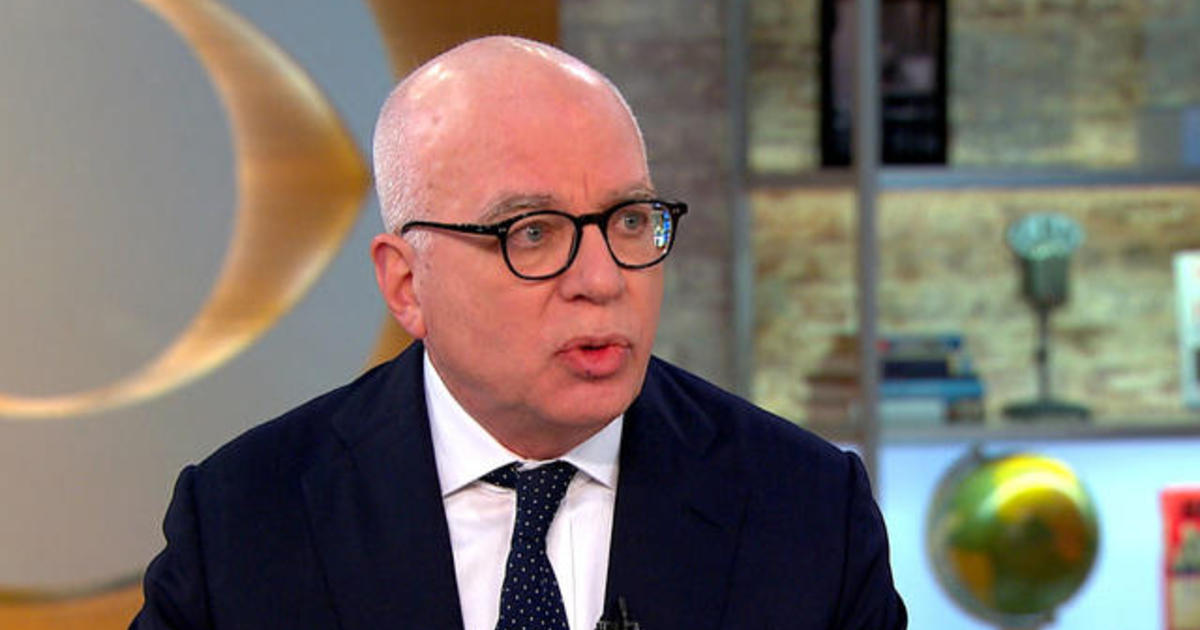
Wolff squares off against CNN host … and loses

I intend fully to read “Fire and Fury” when it arrives in my mailbox in a few days.

My initial intention was to purchase it off the shelf at Barnes & Noble when it was released, then I decided to order it online, via Amazon. It will arrive soon.

There. That said, I watched “Fire and Fury” author Michael Wolff make an ass of himself on CNN, when host Michael Smerconish sought to ask him what I considered to be a legitimate question.

Smerconish, who told Wolff he “tore through” the book, wanted to know if Wolff misrepresented his intentions to the Trump administration when he gained access to the White House and was allowed freedom to talk to many key aides to Donald J. Trump.

I did not hear any inherent bias in Smerconish’s question. Wolff, though, took extreme offense at the question and the questioner. He ended up saying that Smerconish was “doing the White House’s job” by impugning his integrity.

Actually, Smerconish did nothing of the sort. He asked a perfectly appropriate question in his search for complete context in how Wolff was able to report in his book the statements attributed to the likes of former Trump political strategist Stephen Bannon.

So … Wolff finished the interview. Smerconish has become a sort of media Celebrity of the Moment with his questions and the confrontation they produced with the author of a much-discussed book about the president of the United States.

My advice to Wolff: Settle down, dude. And if you’re going to bristle at questions posed by a middle-of-the-roader like Michael Smerconish, you probably ought to stay away from Sean Hannity and his cohorts at Fox News.

Here’s the relevant portion of the interview. It’s worth your time:

Smerconish vs. Wolff

‘The Post’ reminds one of how it used to be

I saw “The Post.” This won’t be a review of the film, except that I simply want to say it was gripping to the maximum degree.

It reminds me of how it used to be in daily print journalism.

I had some trepidation about seeing it. Some of my fellow travelers in the journalism craft had expressed dismay at seeing the film and lamenting what has become of a proud profession. I had a glint of fear that I might share their gloom. I mean, look at what has happened to newspapers all across the nation. They’re shrinking and withering before our eyes as publishers grapple against forces that are overwhelming them: the Internet, the plethora of “news” sources, cable television.

That fear never hit me. Instead, I reveled in the story it told and rejoiced in the victory that The Washington Post scored in the effort to censor it, preventing the government from invoking a prior restraint on a free and unfettered press.

“The Post” tells the story of the paper’s effort to publish the Pentagon Papers, a report written during the Vietnam War. The Papers told of the deception perpetrated on the public by several presidential administrations: Truman, Eisenhower, Kennedy, Johnson and Nixon. Officials all told of supposed “progress” in the fight against the communists in Vietnam. They lied to the nation. The Pentagon Papers revealed the lie.

The New York Times obtained the papers from Daniel Ellsberg. It got the story out first, then the Nixon administration persuaded a judge to prohibit further publication of the Papers, citing national security concerns.

Post editor Ben Bradlee didn’t see it that way. He eventually guaranteed publisher Katherine Graham that no American fighting man would be harmed if the Post published the rest of the damning document.

The matter ended up in front of the U.S. Supreme Court, which then ruled 6-3 against the Nixon administration — and in favor of the First Amendment guarantee of a free press.

The film tells that story in gripping fashion.

In a larger sense, though, the film reminds us of the value of press freedom and the good that the freedom brings to a public that needs to know the truth about the government that works for us.

It also reminds us of journalism’s value to a nation that promotes liberty. Indeed, given the current climate and the fomenting of hatred against the press that’s coming from the current presidential administration, “The Post” comes across as profoundly topical and relevant.

I cheered during the film when Graham gave the go-ahead to publish the Pentagon Papers in The Washington Post. The sight of presses turning over brought a lump to my throat.

I worked proudly in that craft for nearly 37 years. I never had the opportunity to cover a story of the magnitude of the Pentagon Papers. I did, though, have my share of thrills about getting a story into print and feeling the impact of that story on the community our newspaper served. I would derive the same satisfaction as I gravitated to opinion journalism and wrote editorials or signed columns that challenged the sources of power in our community.

“The Post,” therefore, didn’t sadden me.

It made me proud to have taken the career path I chose.

This is what can produce panic

You’re sitting at home in Honolulu, or Hilo, or Lihue, Hawaii.

Your smart phone starts buzzing. You look at it. Then you see a message that declares “Ballistic missile inbound to Hawaii. Seek immediate shelter. This is not a drill.”

Have you ever feared such a thing might occur?

It took 38 minutes for Hawaii’s residents to react to what turned out to be a false alarm.

I don’t know about you, but I might decide to panic at that moment.

It turns out that “human error” caused these minutes of grave concern.

Details remain sketchy. Someone reported today on CNN that a shift change at Hawaii’s emergency response center resulted in someone “pushing the wrong button.” Huh? What the … ?

We live in terribly tense times. The United States and North Korea are engaging in a war of wills. Our nation’s president keeps using his Twitter account to needle North Korean dictator/fruit cake Kim Jong Un about the size the two men’s nuclear “button.”

Hawaii residents hear all this right along with the rest of the country. Then they get a text message on every smart phone in the state that says missiles are incoming?

Hawaii wasn’t hit by a missile. For that the rest of the nation is grateful. But, oh brother, some of our fellow countrymen and women in Hawaii have some serious questions to answer.

Starting with: How in the name of nuclear holocaust does this happen … and how are we going to prevent this type of “human error” from recurring?

Presidents should be better than this

I consider myself a modern fellow. I believe I am adequately liberated from the hang-ups that bedeviled my parents and grandparents.

However, I remain kind of stodgy in one respect. I expect the leader of my country to be the best we have to offer. I expect the president of the United States to be relatively free of the bad habits that afflict many of the rest of us.

Take for example the latest offering from Donald John Trump. He sat in the White House conducting a serious meeting on immigration reform. He was talking to several key lawmakers: six Republicans and a Democrat. The discussion turned to special protections offered to immigrants from Third World countries.

Then the president blurted out his now-infamous “sh**thole” comment about immigrants from Haiti, El Salvador and Africa.

His supporters say he’s speaking for millions of Americans. They say he is using language many of the rest of us use.

I get that. I have been known to pepper my language with terms similar to what the president used. However, there’s a big difference.

Donald Trump is the president; I am not. He is the one who talks about high-minded public policy with other government officials; I talk to my friends and family members. He represents the greatest nation on Earth; I represent only myself.

I want the president to be better than what he continues to demonstrate.

I want him to speak with some semblance of dignity and decorum. He keeps disappointing many of his fellow Americans. We deserve better than what we’re getting from our head of state.

No such thing as ‘off the record’

Michael Smerconish is a smart commentator and CNN TV host.

He offered a prime piece of political wisdom this morning when he said, “There’s no such thing as ‘off the record.'”

There it is. A lesson that no doubt has not been lost on the “stable genius” who sits in the Oval Office of the White House. Donald Trump clearly knew that when he described African nations and Haiti as “sh**hole countries” would be picked up and flashed around the world.

As Smerconish noted today, seemingly everyone has a smart phone equipped with a camera and a recording device.

When the president blurts out a racist comment, or when he makes declarations that are sure to offend millions of Americans — let alone billions of other world inhabitants — he is speaking only to a narrow audience: his political base, the 30-some percent of Americans who stand with him no matter what.

As Smerconish noted today, Barack Obama was caught telling a fundraising crowd that many Americans “cling to their guns” and their religious faith; four years later, Mitt Romney was overheard telling a crowd that “47 percent of Americans” who live on government programs will vote for President Obama “no matter what.”

The world is listening to these politicians.

I get that Trump’s sh**hole comments aren’t a precise parallel to the examples cited already. Still, Donald Trump called an entire continent a place full of “sh**hole” countries populated by dark-skinned people. Lawmakers heard him say it and have declared they heard it. Such a statement sounds pretty damn racist to me.

He has offended millions of Americans.

Trump doesn’t care. His base hangs with him.

Boone Pickens calls it a career … for the final time?

T. Boone Pickens is retiring.

Reportedly for the third time. Something tells me that this is it for the legendary Texas Panhandle oil and natural gas mogul.

Pickens is 89 years of age. His health has been sketchy of late. He wrote this in a letter published on LinkedIn:

“Health-wise, I’m still recovering from a series of strokes I suffered late last year, and a major fall over the summer. If you are lucky enough to make it to 89 years of age like I have, those things tend to put life in perspective. It’s time to start making new plans and setting new priorities.”

Pickens recently put his vast Mesa Vista estate in rural Roberts County up for sale. He’s asking about $250 million for the 80,000-acre spread.

To say this man has left a huge footprint across the Texas Panhandle would be to say that Donald John Trump has, um, “changed” the presidency of the United States.

Pickens’s influence spreads far beyond the Panhandle, the region that helped him build the beginning of his immense fortune. And along the way, he made his share of enemies as well as friends. He once engaged in a notorious feud with the Amarillo Globe-News, where I worked for nearly 18 years until August 2012; Pickens’s beef with the paper predated my arrival there, but I heard all about it.

I am in neither camp. I am merely acquainted with Pickens. We have what I believe is a nice relationship. While working for a time as a “special projects reporter” for KFDA NewsChannel 10 in Amarillo, I had the pleasure of interviewing Pickens at his opulent Mesa Vista ranch.

I certainly know of the impact he has made on the region and on the world’s energy industry.

My intent with this blog post merely is to wish Pickens well as he, in his own words, begins “making new plans and setting new priorities.”

Does the president ever surprise us?

The more I think about it, the less surprised I get over the epithet that flew out of Donald John Trump’s mouth earlier this week.

I refer to his questioning why the United States accepts immigrants from “sh**hole countries” such as Haiti and those in Africa.

African Union member states have called on a retraction and an apology from the president of the United States. Democratic politicians in this country are howling about the racist-sounding rant the president leveled during a White House meeting to discuss immigration issues.

But this comment merely is the latest in a disturbing pattern of behavior that Trump has demonstrated for many years.

He questioned Barack Obama’s legitimacy as president; he called white supremacists, Klansmen and neo-Nazis “very fine people”; he said an Indiana-born federal judge couldn’t adjudicate a case because of his Mexican heritage; he has attacked a Muslim Gold Star family; he called Mexican immigrants criminals; he called for a ban on all Muslims entering this country.

And on and on it goes. Seemingly forever.

He cannot control his impulse to denigrate groups of people. He seems always inclined to target darker-skinned people or non-Christians. He plays solely to his political base.

Why is it a surprise, then, that he would blurt out an epithet about “sh**hole countries comprising dark-skinned citizens?

It’s not. The surprise would come if Trump ever could find a way to offer a word of kindness and compassion for those who want to come here in search of a better life.

I do not expect that from Donald Trump.

Be patient, Amarillo neighbors

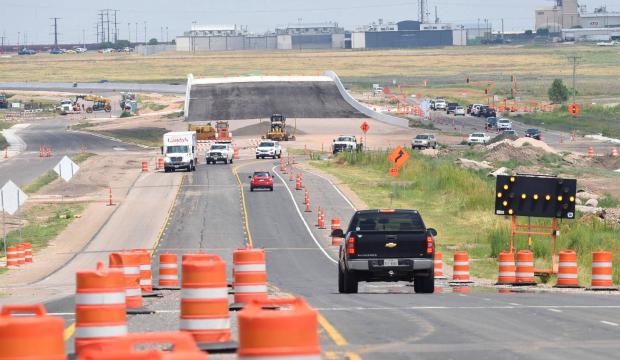
If our plans work out as we hope, my wife and I won’t be living in the Texas Panhandle when they remove the final construction cone or barrel from the myriad road and highway projects underway in Amarillo.

We will have relocated to North Texas, where we’re quite certain we’ll get to witness even more such construction.

I watched my friend Sonja Gross — Texas Department of Transportation public information officer for its Amarillo Division — offer some sound advice on a TV news broadcast to Amarillo residents.

Be patient, she said. The payoff will occur when the road work is done and we can all get around more easily.

TxDOT is in the midst of some major highway infrastructure makeovers.

Interstate 40 between Helium Road and Grand Street in Amarillo is undergoing a major renovation and expansion; Hollywood Road south of the city is being redone; TxDOT has built that direct-access exit from I-40 to the Canyon E-Way, but it’s not yet open for traffic; crews are tearing I-27 apart south of the interchange; crews are building a new bridge across I-40 at Bell Street.

I don’t think I’ve ever seen so much orange in my entire life.

I’ll agree with those who gripe about the road work that it is a pain in the posterior at times. It occasionally is difficult to navigate through the city. I get their frustration, as I feel it at times myself — although I occasionally get angry at myself for letting my frustration get the better of me. I figure that if being delayed a few minutes is my greatest worry, then I’m doing all right, compared to the troubles that so many others have to endure.

Amarillo, though, is going through a serious renovation at many levels. TxDOT’s work on the highways suggests that the state has committed considerable amounts of public money to this region in an effort to improve our infrastructure. How can we complain about that?

Indeed, as state Sen. Kel Seliger said this week at a Rotary Club of Amarillo meeting, Texas remains a “commodity” state that relies on good roads to get commodities, such as cattle and corn, from “their source to their destination.”

Those roads and highways don’t achieve excellence all by themselves. Human beings need to tear them up, put them back together and then ensure that they’re renovated properly — and safely.

I endorse Sonja Gross’s plea to our fellow Amarillo travelers. Our patience might be tested on occasion, but there will be a reward when they remove those cones and barrels.

Guaranteed.

Once more … about immigrants

I cannot resist offering another comment on that unpresidential epithet about immigrants from Haiti and Africa.

It might be my final comment. Then again, maybe not.

Donald John “Stable Genius” Trump’s fit of pique earlier this week about immigrants who come here from s***hole countries hits me personally.

I am a direct descendant of Americans who chose to come to this country from a part of the world that once was considered a s***hole. All four of my grandparents were ethnic Greeks. They risked all they had to come to this country in the early 20th century.

What I haven’t discussed in this blog is how Greeks were treated by other immigrant groups with whom they lived in the Land of Opportunity. Perhaps you are aware that groups such as the Ku Klux Klan sought to intimidate Greeks who had settled in the United States. The Klan considered Greeks to be, um, subpar.

I will not equate what happened to those early Greek-Americans with what the Klan did to African-Americans at the time, or even to Vietnamese immigrants who came to this country in the 1970s after the end of the Vietnam War. Please know, though, that some Americans thought little of immigrants who came here from southern Europe.

They were thought to be from a s***hole place.

Discussion about immigration always catches my attention. It is because I grew up with a keen awareness of my ethnic background. My grandmothers particularly were keen to instruct my sisters and me about our heritage.

They were proud Greeks and they imbued that pride in all of their grandchildren.

So, when the president of the United States disparages immigrants who come here willingly from s***hole nations, he raises my hackles. Donald Trump’s racist ignorance might not raise the hackles of other Americans. Whatever. We all have our own consciences and I wouldn’t dare interject my own values into another American’s heart or mind.

I simply will express my utter outrage that the leader of the world’s greatest nation has chosen to play favorites with those who want to craft a better life for themselves and their descendants.

My grandparents would be appalled.

***

Here is part of the inscription inside the base of the Statue of Liberty:

“Give me your tired, your poor,
Your huddled masses yearning to breathe free,
The wretched refuse of your teeming shore.
Send these, the homeless, tempest-tost to me,
I lift my lamp beside the golden door!”

The president has dishonored those time-honored words.