How does downtown revival boost an entire city?

Amarillo Mayor Ginger Nelson will get a chance soon to explain — I hope in some detail — an important question facing the city’s civic, business and political leaders.

How does downtown improvement ripple its benefits across the entire city of roughly 200,000 residents?

Nelson is going to deliver what’s being billed as a State of the City speech on Oct. 3 at the Civic Center Grand Plaza Ballroom. It’s a breakfast event that lasts an hour beginning at 7:30 a.m.

There has been a lot naysaying going on around Amarillo for the past, oh, half-dozen years or so ever since the city began getting serious — finally! — about reviving its downtown business/entertainment district. I keep hearing the bitching about non-downtown neighborhoods being “neglected” for the sake of downtown improvements.

The mayor, newly elected this year along with the entire City Council, has a chance to offer a serious explanation of just how downtown revival can — and will — deliver benefits to neighborhoods in all directions.

Amarillo will break ground shortly on a new downtown ballpark, which is being touted as the crown jewel of the city’s downtown revival. In April 2019, they’ll throw out the first pitch for a minor-league AA baseball game to be played at the venue. That’s not the only type of activity planned for this venue. Many folks have designs of it being a place for community events featuring music and assorted forms of entertainment; it’ll be a gathering place for folks to sell their wares.

Already the downtown area has been improved and gussied up far beyond what it was two decades. What in the world is wrong with that?

I know this only anecdotally, but my experience has told me as I’ve traveled around the country over many decades is that thriving, lively cities generally have a single thing in common: a thriving, lively downtown district. Is Amarillo a shining city on a hill — to borrow President Reagan’s phrase — devoid of problems? Of course not. The mayor will need to deal with that, too, as she talks to us.

Explaining all of this is what Mayor Nelson faces as she delivers her first State of the City speech. My hope is that this is the first of many such conversations that our city’s presiding elected official has with her constituents.

My hope, too, is that it continues well beyond the time Ginger Nelson wields the gavel at City Hall.
Imagine JFK calling Khruschev ‘Rocket Man’

It’s The Donald vs. Rocket Man.

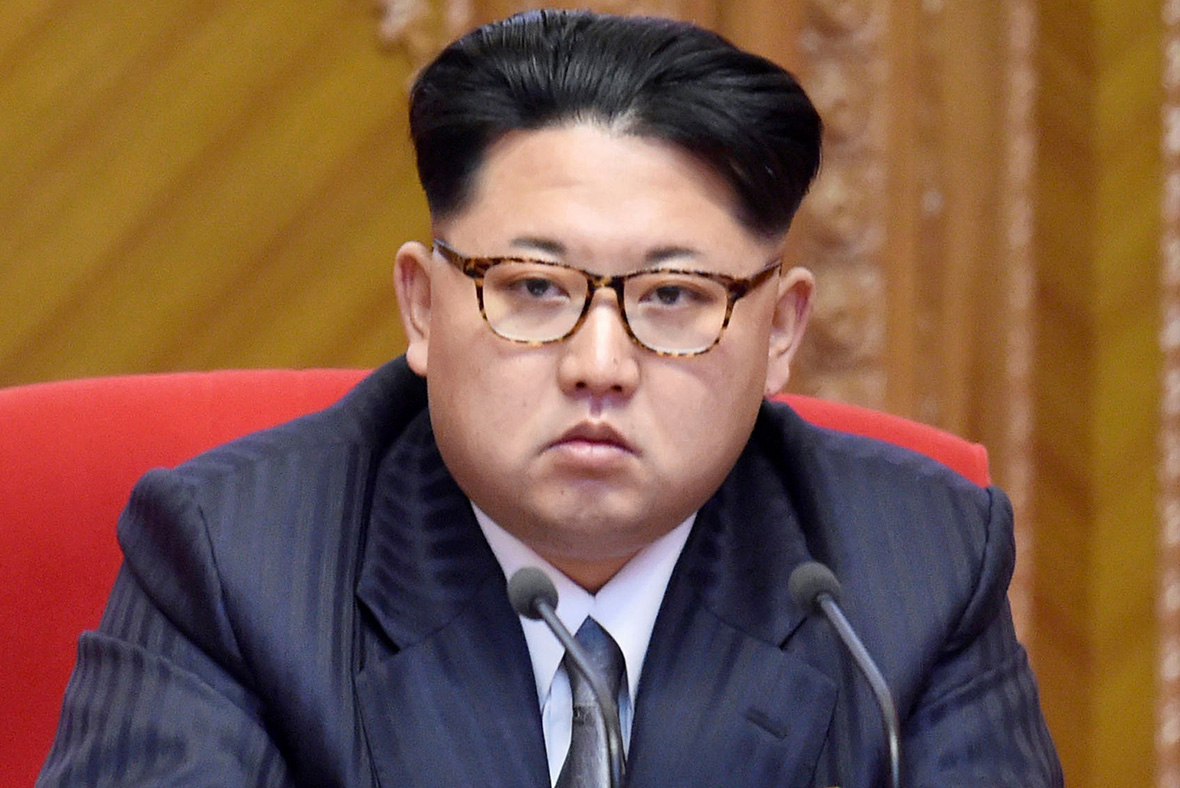
Two heads of state — Donald John Trump and Kim Jong Un — are locked now in a standoff. The president of the United States and the dictator of North Korea are trying to out-insult each other.

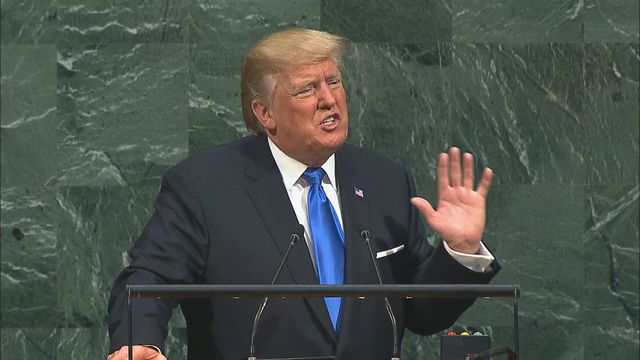
What continues to amaze me, though, is that Trump decided to elevate his Rocket Man poke at Kim in a highly unusual venue. He took his insult to the floor of the United (bleeping) Nations, man!

He said if Rocket Man continues to threaten the United States, this country would “totally destroy” North Korea. That’s the way you promote peace, Mr. President … by threatening to annihilate another nation.

I’m trying to imagine an earlier president, John F. Kennedy, using that kind of language during the height of the Cuban missile crisis in October 1962. I actually have a memory of that time, when the Soviet Union began building launch pads from which it could launch missiles at the United States or our Western Hemisphere allies. It scared the bejabbers out of me — and millions of other Americans, too!

Kennedy didn’t resort to name-calling, or attaching silly school-kid epithets to his references to Nikita Khrushchev, the Soviet leader. He actually left much of the bluster to our U.N. ambassador at the time, Adlai Stevenson.

The president’s use of a Rocket Man insult won’t get Kim to do what we want, which is to stand down in his attempt to develop a nuclear weapon capable of hitting us and our allies.

An earlier president, faced with an even graver threat, arguably, than the one confronting the current president, stared it down with steely resolve, which — according to commentary at the time — forced the other guy to blink.

President Kennedy didn’t need to insult his adversary.

Recalling a chance meeting with an architect of tragedy

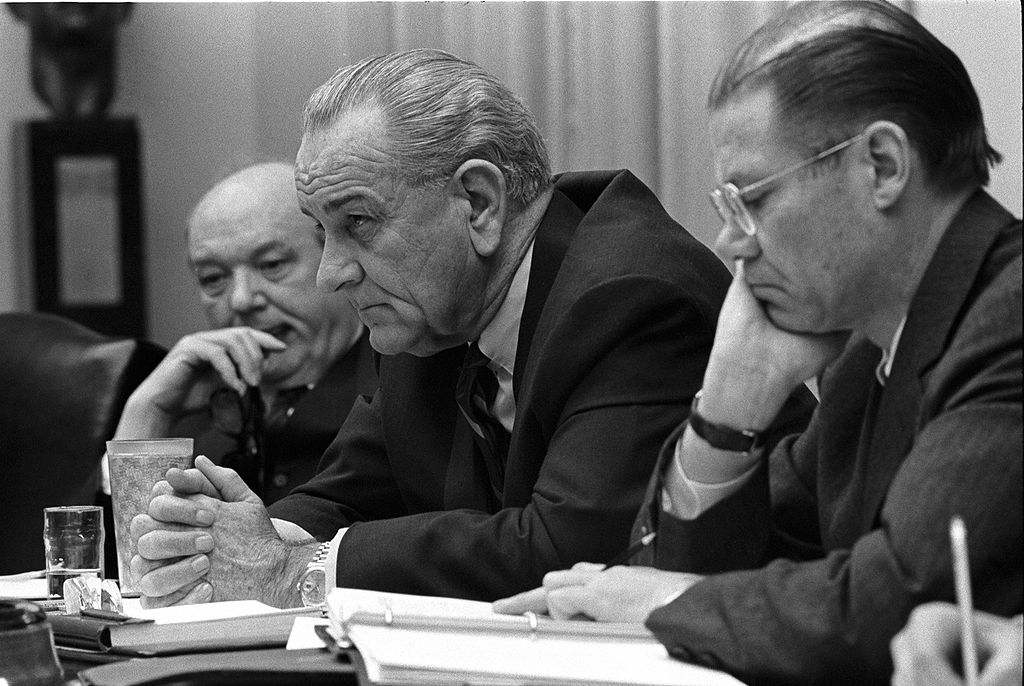
Watching the PBS documentary series “The Vietnam War” brings to mind a chance meeting I had in late 1995 with one of the villains of that national tragedy … Robert McNamara.

I like telling the story, so I’ll provide it here knowing, of course, that it involves only two people — and one of them is dead.

Morris Communications Corp. had convened a meeting of newspaper editors and publishers in Washington, D.C., to discuss how the group had planned to cover the upcoming 1996 presidential election. I was editorial page editor of the Amarillo Globe-News, so I got to attend the meeting.

One Sunday morning right after we arrived, we had a day off. I took the time to walk from the hotel to Arlington National Cemetery. The morning was quiet. Traffic was light. Streets had few pedestrians.

I waited at a corner for the light to turn green so I could cross. I noticed an elderly gentleman walking toward me from another corner. He was carrying a shopping bag full of groceries.

I looked and then looked more intently at the gentleman. It was Robert McNamara, secretary of defense during the Kennedy and Johnson administrations. He had just published a book, “In Retrospect: The Tragedy and Lessons of Vietnam.”

In the book, McNamara acknowledged that he knew as early as 1963 that the Vietnam War was a lost cause. He also admitted that he kept quiet about what he believed at the time. He continued to advise Presidents Kennedy and Johnson to keep sending young men to die in Vietnam.

I was one of the young men he allowed to go to Vietnam; I got my orders in the spring of 1969 and reported for duty at Marble Mountain, Da Nang, to work on Army surveillance aircraft.

I was filled at the time of the book’s publication with anger that McNamara would have kept those thoughts so damn private, that he wouldn’t have spoken out in real time about what he believed about the future of that tragic conflict.

He approached me on that quite D.C. street that Sunday morning. “Mr. Secretary,” I said, “I want to introduce myself. My name is John Kanelis. I live in Amarillo, Texas and I just want to tell you how pissed off I am at you after learning about what you wrote in that book you just published. I was one of those men you sent to Vietnam.”

McNamara smiled and said, simply, “You are a very observant young man.” I smiled back at him and offered a conciliatory follow-up. “I am glad that you finally came clean,” I said.

He thanked me. We shook hands and he walked away.

I continued on to Arlington National Cemetery and paid my respects to President Kennedy and his brother, Robert Kennedy.

And I felt better for getting those thoughts off my chest.

Christian nation or a ‘nation of Christians’?

A former colleague and critic of this blog made a fascinating — and legitimate — point while participating in an exchange about a post I wrote about a guest columnist whose work appeared recently in the Amarillo (Texas) Globe-News.

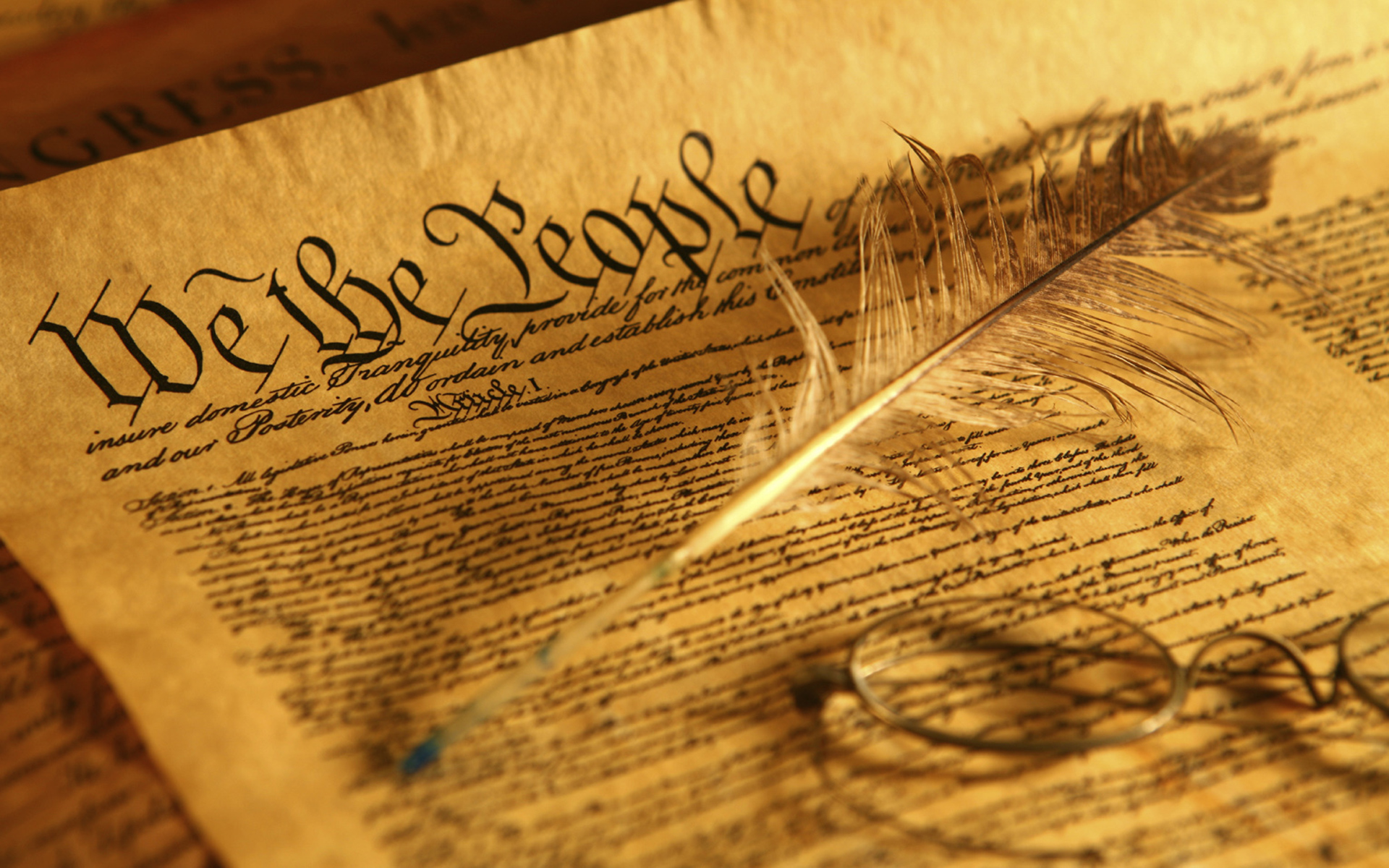
I asserted in my own critique of the essay that the nation’s founders established a “secular government” when they wrote the U.S. Constitution.

My former colleague/critic pointed out that the nation comprises a population “of Christians” and that the nation was founded on “Judeo-Christian principles.” I agree with his assertion about the nation and that the founders likely were motivated by their deep religious faith.

However, that doesn’t dissuade me from insisting that the Constitution is as secular a document as it possibly can be.

The founders were direct descendants of people who migrated across the Atlantic Ocean to escape religious persecution, among many other repressive actions brought on them by their European rulers.

They launched a revolution in 1775. They gathered in July 1776 to sign a Declaration of Independence, which does contain a reference to the “Creator” and to “Nature’s God.” Neither term, though, is specific to Christianity. Each of them could — if one were to interpret them liberally — refer to any of the world’s great religions. Some of us today, though, choose to ascribe Christian theology to any reference to the Creator or to God.

Eleven years later, after we won our independence from the British Empire, our founders crafted the Constitution. They specifically avoided using the term “Christian” or “Jesus Christ” or even “God” or “Creator.” Did they bicker and quarrel among themselves while putting this governing framework together? Of course they did.

I remain committed to the document they produced, the one ratified by the 13 states comprising the United States of America. I have scoured it repeatedly over many decades and I have yet to find any reference to religion, other than in the First Amendment, which states that “Congress shall make no law respecting an establishment of religion … ”

Are we a nation “of Christians”? Certainly. Are we a “Christian nation”? Certainly not.

There. Does that settle it? Hah! Hardly.

Tell us about the ‘state of the city,’ Mme. Mayor

Amarillo Mayor Ginger Nelson seems to get it.

I hope …

The first-term mayor has announced a State of the City speech planned for Oct. 3 at the Civic Center Grand Plaza Ballroom. It’s a breakfast event set to begin at 7:30 a.m.

What this means for Amarillo remains to be seen, of course. Nelson ran this spring on a multi-plank platform that included a pledge to increase transparency and accountability.

Here is her chance.

I once called for a State of the City speech. That was years ago. Then-Mayor Debra McCartt took part in a Panhandle PBS program in which she discussed the state of affairs with Buzz David, then head of the Amarillo Economic Development Corporation and the city’s cheerleader in chief, Chamber of Commerce President Gary Molberg.

McCartt did it one time. That was it.

A State of the City speech gives the City Council’s presiding officer a chance to provide realistic, unvarnished and fulsome analysis of the state of affairs. These speeches should include areas that need improvement as well as where the city is shining brightly.

I don’t know how Mayor Nelson is going to present the State of the City.

Here might be some topics to cover: tax rate projections; the progress of downtown redevelopment; the myriad street improvement that are ongoing; the status of the red-light cameras and whether they’re doing the job they were advertised to do; the status of the curfew for juveniles; Amarillo emergency service response times.

So, she’s got a potentially full plate of issues to cover. Many of them will require a hard look.

Make no mistake, there will be a fair share of soreheads and perpetual skeptics/cynics who will dismiss any such speech by the major as so much trumped-up happy talk. I am not one of them.

I look forward to hearing what the mayor has to say.

Trump demonstrates his ‘gift’ at U.N.

Donald John Trump has an extraordinary “gift,” which is all I can think of to call it at this moment.

The president of the United States’ gift enables him to stand before audiences and say the most inappropriate things at the most inopportune times in the most unlikely venues.

For example:

* The day after his inauguration as president, Trump went to the CIA, stood before a wall honoring the agents who’ve fallen in the line of duty and then proclaimed his joy at winning such a “historic” presidential election.

* Earlier this summer, he went to the annual Boy Scout Jamboree and proceeded to excoriate his predecessor, Barack Obama, for this and that and said — incorrectly, I should add — that the former president had never addressed the Jamboree. Trump’s speech prompted the Boy Scouts of America to issue an official statement of apology.

* Then this week, the president stood in the hall at the United Nations — a place founded on the principle of peaceful resolution to international crises — and threatened to “totally destroy” North Korea if the communist nation threatens the United States or our allies. Oh, there’s more: He scolded the U.N. member nations for not paying their fair share and opened his speech by boasting about the state of the U.S. economy — during the eight months of his presidency.

The essence of the president’s gift lies in his ability to get away with this nonsense. His “base” of supporters loves hearing the president “tell it like it is.” They cheer him on. They chide those of us who oppose this kind of behavior as being “losers” who are bitter at having lost an election they should have won.

He, of course, knows how the base is going to act and react. That’s why he continues to demonstrate this strange behavior.

Will it ever catch up with him? I am never, ever going to say out loud that it will. Only that it should. This guy has been defying the laws of political gravity since the day he rode down the escalator at Trump Tower and declared his candidacy for the first political office he’s ever sought.

Go … figure.

Trump makes good on Harvey pledge; thank you, Mr. President

Donald Trump’s pledge of $1 million to help the victims of Hurricane/Tropical Storm Harvey had been met with some skepticism.

Critics actually doubted the president would deliver the goods, that he would make the donation he promised to make.

The president has delivered.

He has sent $300,000 each to the Salvation Army and the Red Cross; Samaritans Purse and Reach Out America each got $100,000; the president sent $25,000 each to a number of other charities, including ASPCA, the Humane Society and Habitat for Humanity.

They’re all doing great work to help people — and their pets — recover from the devastation brought by the monster storm that tore across the Texas and Louisiana coasts in late August.

I want to applaud the president for making good on his pledge. Some of that money is going to help my peeps — friends and former colleagues — who live along the Texas Coast and who have been coping with the misery brought by the storm.

We hear on occasion that the best way to help so many people affected by these tragedies is simply to send money. Donald Trump, a man of considerable means, has done the right thing.

Well done, sir.

Seliger makes it official: He’s running again for the Senate

I am heartened to learn that Kel Seliger is going to run for re-election to the Texas Senate.

The Amarillo Republican has two GOP primary opponents, one of whom he defeated in 2014; the other Republican challenger comes from the heart of Seliger’s base.

Seliger will face former Midland Mayor Mike Canon and Amarillo businessman Victor Leal.

I watched the Seliger-Canon primary fight up close four years ago. It shouldn’t have been a contest. It turned out to be one. Canon, a lawyer by profession, is a TEA Party favorite. He speaks in platitudes and clichĂ©s. Seliger demonstrated clearly in the 2014 primary campaign a firm grasp of the details of legislating, of state law and of how government works.

Canon managed to split the vast District 31 Republican Party primary vote nearly in half, losing the primary by about 4 percentage points to Seliger.

Now we have Leal entering the race. I don’t yet know what kind of campaign Leal is going to run. He’s got some good name ID, given all the radio advertising he runs promoting his restaurant. Seliger will have to deal with that in some form or fashion.

Seliger’s platform will stress “local control.” He said in a statement that he believes that “Folks closest to a problem are usually the best at solving it.” Good deal, senator. Then perhaps he’ll persuade the 2019 Texas Legislature, presuming he wins re-election, to stop monkeying around with cities’ efforts to install red-light cameras as a deterrent to those who keep breaking the law by running through those stop lights.

I’ve already stipulated that I consider Seliger to be a friend. I also am impressed by how quickly he grasped the nuts and bolts of legislating after he was elected initially in 2004.

Seliger says he’ll run as a conservative legislator. According to some political interest groups, though, he’s not conservative enough. Empower Texas is one such group that likely will work to defeat Seliger. I believe this group is making a mistake.

Kel Seliger knows the pulse of Senate District 31 from the Permian Basin to the top of the Panhandle. He needs to return to the Senate.

Right there might be Sen. Seliger’s first political endorsement.

You’re welcome, senator.

Trump goes to the U.N. and all but declares war

Donald J. Trump did it.

He went to the United Nations, an international body with a mission that aims to seek peaceful resolutions to world problems, and declared this:

“Now North Korea’s reckless pursuit of nuclear weapons and ballistic missiles threatens the entire world with unthinkable loss of human life … The United States has great strength and patience, but if it is forced to defend itself or its allies, we will have no choice but to totally destroy North Korea. Rocket Man is on a suicide mission for himself.”

It was the U.S. president’s premiere visit to the U.N. He stood at the podium in front of the world’s leaders and diplomats and all but declared war on North Korean dictator Kim Jong Un.

Trump turns up the volume on Kim.

Do you feel safer now? Do you feel as though Kim is going to back off his threats? Is he going to dismantle his budding nuclear arsenal based on what he heard the president of the United States say to — and about — him?

Let me think about that. Uh, no, no and … no.

Rocket Man? Are you serious? That’s what the president called Kim at the U.N. It’s a nickname that was born in a Trump tweet just the other day. The president took that juvenile name-calling to the world’s greatest international deliberative body. Well done, Mr. President … not!

I know the U.N. has its critics. Much of the criticism is deserved. It has many times over the years scolded the wrong nations and embraced others. As the president noted correctly this morning, the U.N. has placed nations with abysmal human rights records on its human rights councils.

The international body’s primary mission, though, is to promote peaceful resolutions to international crises. To hear the president of the United States threaten a member U.N. nation with “total destruction” is chilling in the extreme.

Who needs that CBO ‘score’ on health care bill, right, GOP?

The Republican rush to repeal the Affordable Care Act might proceed without a key element that GOP congressmen and women would need to make this critical judgment.

The Congressional Budget Office won’t be able to provide its full analysis of the impact the replacement legislation will have on the future of Americans’ health care insurance.

You see, Congress is facing a Sept. 30 deadline to get this deal done with a simple majority of 50 Senate votes. After that date, the rule rolls back to a 60-vote supermajority requirement. So, there you have it: Senate Republicans don’t want to wait for a “score” that they usually rely on to help them decide matters of this importance.

As Politico reports: The Congressional Budget Office will only have a bare-bones assessment of the latest GOP bill ready before Sept. 30, the deadline for Senate Republicans to pass health care legislation on a party-line vote.

Is it any wonder, then, that some Senate Republican leaders — such as John McCain of Arizona — are critical of the process that is rushing this vote forward?

Read the Politico story here.

The ACA is Barack Obama’s signature domestic legislative achievement. Republicans want to wipe it out, toss it aside. They aren’t interested in repairing it, improving it, making it work better for Americans.

In normal times, the complete CBO analysis was thought to be the standard for lawmakers to follow. The CBO is known to be a completely non-partisan, unbiased source to determine the financial impact of legislation. Its previous analyses of efforts to repeal and replace the ACA have told us that 20 million Americans would lose health insurance under terms of the replacement legislation. Are ACA repeal/replace proponents afraid of what the CBO is going to tell us about what they’ve got in mind this time around?

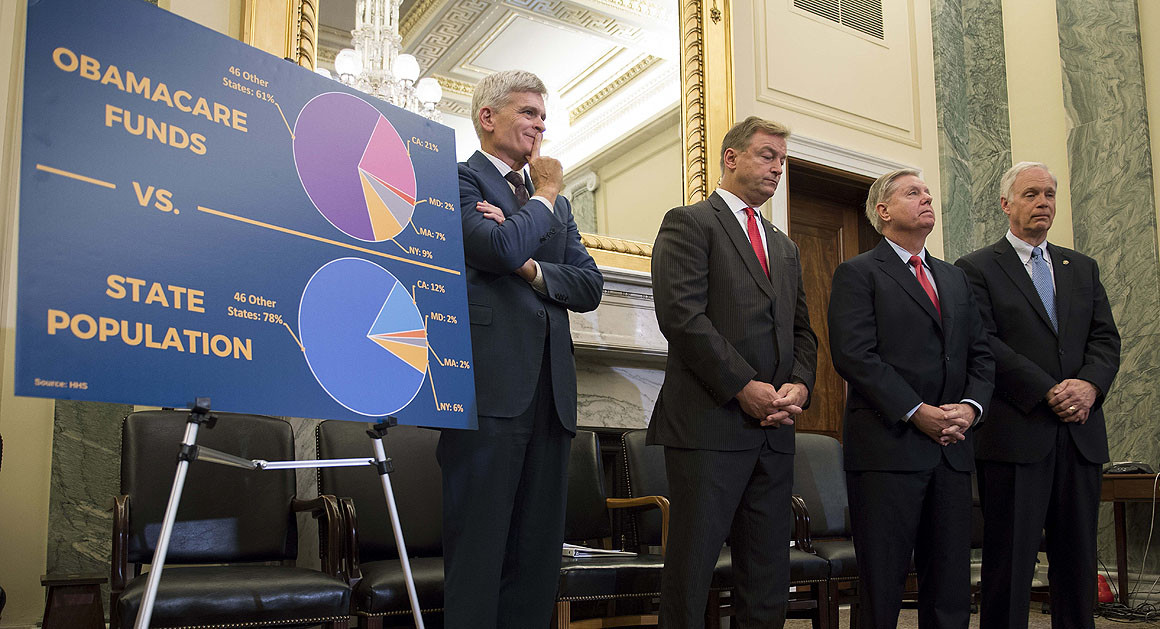
This latest health care insurance bill comes from Sens. Lindsey Graham of South Carolina and Bill Cassidy of Louisiana. Sen. Rand Paul of Kentucky already opposes it. Sen. Susan Collins of Maine is teetering against it. Sen. Lisa Murkowski of Alaska is said to be leaning toward a “no” vote. McCain already is on record opposing this fast-track process.

Is this what we’re getting? Half-baked decision-making based on matters that have little to do with the facts?