Feeling cursed by Nature’s wrath

Forgive me if I sound as if I’m feeling cursed these days.

Mother Nature is drawing a bead on communities I know well. Beaumont and the rest of the Golden Triangle along the Texas Gulf coast is bailing out from the deluge dumped on the region by a storm named Harvey.

Most of our friends are OK. Not all, though. There’s a lot of heartbreak and agony to go around as the Triangle struggles to recover from the Harvey’s savagery. Our hearts go out to them … along with our prayers.

Now as we look in the other direction, toward the Pacific Northwest, I see that my hometown is under siege from an entirely different foe.

Fire!

I see pictures on social media from the Columbia River Gorge, one of the world’s greatest natural splendors, and my heart breaks all over again. Flames are consuming many acres of virgin timber. Historical structures are in jeopardy.

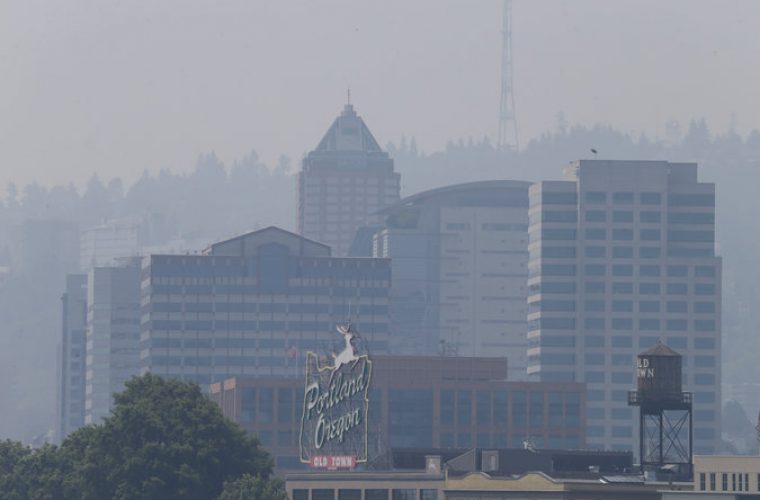
Portland, the city of my birth, is now being showered with ash, reminding residents there of when Mount St. Helens exploded in the spring and summer of 1980, blanketing the city with a fine coat of volcanic ash.

The picture above is of downtown Portland. That ain’t fog, man! It’s smoke billowing over the city from the fires that are burning not far away.

We’re getting ready to head that way for a little R&R. Our trip isn’t coming up in the next few days, but we’ll be hauling our RV in that direction fairly soon. My hope is that the fires are quenched soon. I have considerable faith in the firefighting crews that are on the job. They’re pretty damn good at fighting those forest fires.

Their expertise comes from experience, just as the Gulf Coast rescue crews and other first responders have plenty of experience dealing with the aftermath of killer hurricanes and tropical storms.

But these monstrous events make me nervous in the extreme and they break my heart for tangible reasons.

War is hell in all its grisly forms

Army Gen. William Tecumseh Sherman once delivered a speech in 1880 in which he said the following: “Some of you young men think that war is all glamour and glory, but let me tell you, boys, it is all hell!”

It doesn’t get any more stark than that. The picture I included with this blog post illustrates the hell of war. It is pure and it is evil. There need be no further description needed.

In just a few days, PBS is going to begin airing a landmark series on the Vietnam War. It’s produced and directed by Ken Burns and Lynn Novick, who teamed up on a project aimed at helping a nation come to grips with a conflict that tore at our soul. It ripped our hearts out.

Scenes such as the one depicted in the photo played out throughout Vietnam during that war. A photographer, Eddie Adams managed to capture this scene in all its horror.

Adams won a Pulitzer Prize in 1969 for the photo, but he would say later: “The general killed the Viet Cong; I killed the general with my camera. Still photographs are the most powerful weapon in the world. People believe them, but photographs do lie, even without manipulation. They are only half-truths. What the photograph didn’t say was, ‘What would you do if you were the general at that time and place on that hot day, and you caught the so-called bad guy after he blew away one, two or three American soldiers?'”

The shooter in this picture was Nguyen Ngoc Loan, the head of South Vietnam’s police force. The fellow he shot was a Viet Cong officer. The moment was frozen for posterity. It’s gruesome, but as Adams said, it tells only part of the story.

The VC officer had just led a mission that had captured a colleague of Loan, along with his wife and six children. The VC officer, Nguyen Van Liem, ordered the execution of his prisoners. All of them had their throats cut.

Nguyen Ngoc Loan knew about the mission when he took Liem into custody. He was filled with rage in the moment. The Viet Cong had just launched its Tet Offensive in early 1968 and had brought havoc throughout South Vietnam.

Loan pulled his pistol out and executed his prisoner. As a result, he became the face of war’s cruelty. He became a human metaphor for the terror Americans were feeling at home about what was happening in a faraway land.

Loan would flee the communist victors at the end of the war. He came to the United States. He would die of cancer in 1998 while living in Florida. It’s been said over the years that Loan never recovered fully from the scorn and recrimination he suffered for acting in response to the most hellish circumstance imaginable.

Burns and Novick’s documentary likely will be able to shed some additional perspective on this act of horror, this moment when hell presented itself in a time of war.

***

The first five episodes of “The Vietnam War” will air nightly on Panhandle PBS from Sunday, Sept. 17, through Thursday, Sept. 21, and the final five episodes will air nightly from Sunday, Sept. 24, through Thursday, Sept. 28. Each episode will premiere at 7 p.m. with a repeat broadcast immediately following the premiere.

Obama offers eloquent response to DACA decision

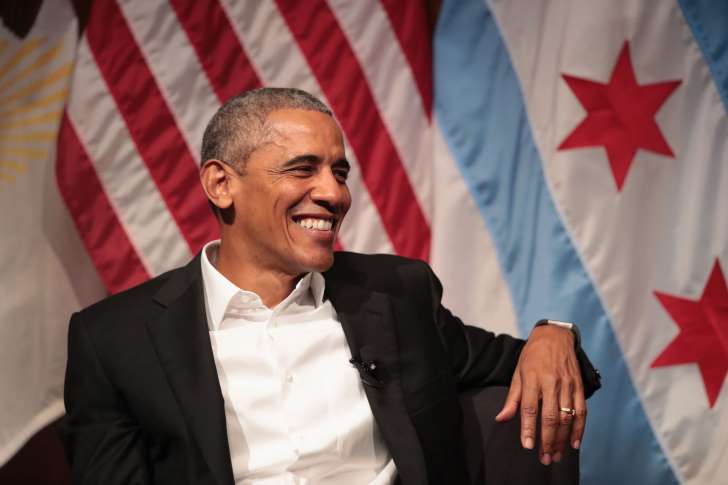
Readers of this blog know that I am a huge admirer of Barack Hussein Obama.

He’s been out of office only since Jan. 20. I miss him already. I’ve actually missed him from Day One of Donald J. Trump’s term in office.

I admire Obama’s principles, the way he carried himself while leading this country for eight years, for his courage in tackling the economic crisis he inherited and his determination to fight international terrorists.

I admire his intellect. And in no way should I even try to emulate it.

That all said, here is President Obama’s response to the president’s decision to rescind the Deferred Action for Childhood Arrivals executive order.

Immigration can be a controversial topic. We all want safe, secure borders and a dynamic economy, and people of goodwill can have legitimate disagreements about how to fix our immigration system so that everybody plays by the rules.

But that’s not what the action that the White House took today is about. This is about young people who grew up in America – kids who study in our schools, young adults who are starting careers, patriots who pledge allegiance to our flag. These Dreamers are Americans in their hearts, in their minds, in every single way but one: on paper. They were brought to this country by their parents, sometimes even as infants. They may not know a country besides ours. They may not even know a language besides English. They often have no idea they’re undocumented until they apply for a job, or college, or a driver’s license.

Over the years, politicians of both parties have worked together to write legislation that would have told these young people – our young people – that if your parents brought you here as a child, if you’ve been here a certain number of years, and if you’re willing to go to college or serve in our military, then you’ll get a chance to stay and earn your citizenship. And for years while I was President, I asked Congress to send me such a bill.

That bill never came. And because it made no sense to expel talented, driven, patriotic young people from the only country they know solely because of the actions of their parents, my administration acted to lift the shadow of deportation from these young people, so that they could continue to contribute to our communities and our country. We did so based on the well-established legal principle of prosecutorial discretion, deployed by Democratic and Republican presidents alike, because our immigration enforcement agencies have limited resources, and it makes sense to focus those resources on those who come illegally to this country to do us harm. Deportations of criminals went up. Some 800,000 young people stepped forward, met rigorous requirements, and went through background checks. And America grew stronger as a result.

But today, that shadow has been cast over some of our best and brightest young people once again. To target these young people is wrong – because they have done nothing wrong. It is self-defeating – because they want to start new businesses, staff our labs, serve in our military, and otherwise contribute to the country we love. And it is cruel. What if our kid’s science teacher, or our friendly neighbor turns out to be a Dreamer? Where are we supposed to send her? To a country she doesn’t know or remember, with a language she may not even speak?

Let’s be clear: the action taken today isn’t required legally. It’s a political decision, and a moral question. Whatever concerns or complaints Americans may have about immigration in general, we shouldn’t threaten the future of this group of young people who are here through no fault of their own, who pose no threat, who are not taking away anything from the rest of us. They are that pitcher on our kid’s softball team, that first responder who helps out his community after a disaster, that cadet in ROTC who wants nothing more than to wear the uniform of the country that gave him a chance. Kicking them out won’t lower the unemployment rate, or lighten anyone’s taxes, or raise anybody’s wages.

It is precisely because this action is contrary to our spirit, and to common sense, that business leaders, faith leaders, economists, and Americans of all political stripes called on the administration not to do what it did today. And now that the White House has shifted its responsibility for these young people to Congress, it’s up to Members of Congress to protect these young people and our future. I’m heartened by those who’ve suggested that they should. And I join my voice with the majority of Americans who hope they step up and do it with a sense of moral urgency that matches the urgency these young people feel.

Ultimately, this is about basic decency. This is about whether we are a people who kick hopeful young strivers out of America, or whether we treat them the way we’d want our own kids to be treated. It’s about who we are as a people – and who we want to be.

What makes us American is not a question of what we look like, or where our names come from, or the way we pray. What makes us American is our fidelity to a set of ideals – that all of us are created equal; that all of us deserve the chance to make of our lives what we will; that all of us share an obligation to stand up, speak out, and secure our most cherished values for the next generation. That’s how America has traveled this far. That’s how, if we keep at it, we will ultimately reach that more perfect union.

I couldn’t say it better myself. Therefore, I won’t even try.
OK, Congress, it’s your turn to fix DACA

So, now we’re left to hope that Congress — the outfit that couldn’t come up with a plan to repeal and replace the Affordable Care Act — is supposed to find a legislative answer for undocumented immigrants who came here as children.

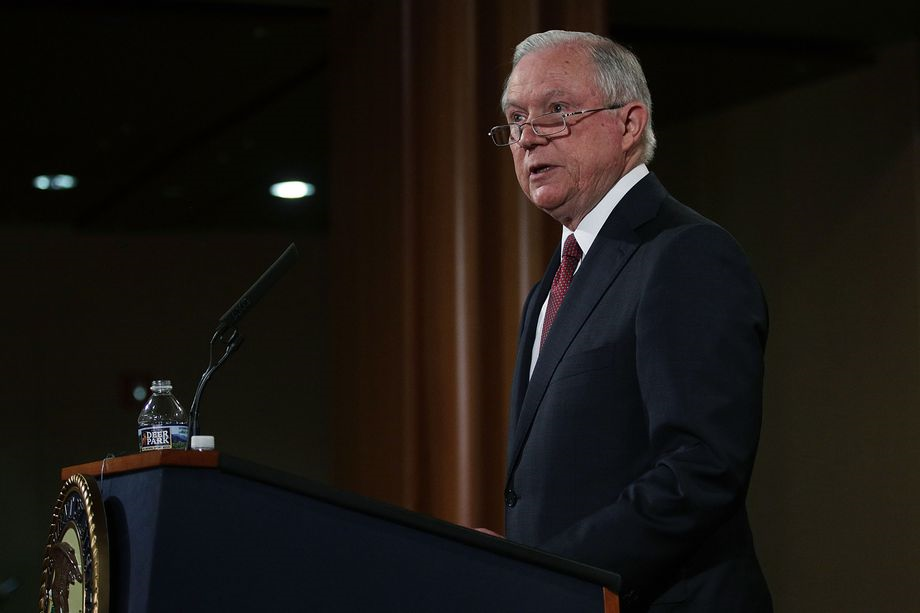
U.S. Attorney General Jeff Sessions announced that the Differed Action for Children Arrivals is being rescinded in six months. Congress has a chance, then, to enact a law that gives DACA residents a fighting chance at avoiding deportation to countries they didn’t know. Why is that? Because they have lived their lives as Americans. They came here as children when their parents sneaked into the country.

Donald J. Trump now wants to punish those individuals for the sins of their parents.

Sessions said today that President Obama’s executive order establishing the DACA program is “unconstitutional.”

Read Sessions remarks here.

If that’s the case — and it’s debatable, of course — then Congress has the chance to make it right for those who have lived as de facto Americans. Their “home country” is the United States of America.

Will Congress deliver the goods in six months? Lawmakers’ track record pretty much stinks to high heaven. They had seven years to come up with a suitable replacement for the ACA. Trump got elected president as a Republican, giving the GOP complete control of the legislative and executive government branches. They choked, failed, sputtered, face-planted on ACA repeal and replacement.

Oh, and the president failed miserably, too. Let’s not forget that he’s the GOP’s leader now.

We have about 800,000 U.S. residents facing potential deportation to places they do not know. The president once again has played solely to his political base. The rest of us be damned!

Get to work, Congress.

Why run on partisan labels at City Hall?

A headline in today’s New York Times caught my attention and gave me a moment’s pause.

It reads: “Bill de Blasio — the best Democratic choice for mayor.”

It has occurred to me on more than one occasion during the many years I reported and commented on politics wherever I have lived and worked that it makes no sense for municipal candidates to run on partisan tickets.

Why in the world does it matter if a mayor or city council member is a Democrat or a Republican? Someone has to explain to me the validity of forcing these folks to run under the banner of any political party. Do elected municipal officials tend to the needs of constituents based on their party affiliation? They had better not.

I get that NYC is a heavily Democratic city. But if someone calls City Hall with a complaint about, oh, a barking dog or a troublesome pothole or a street light that needs repair, does the city staffer ask the caller whether he or she is a Democrat or Republican?

I realize these are issues to be settled within each community. Sitting out here in Amarillo, Texas, I shouldn’t really care about the politics of New York City. And, in fact, I don’t … not really.

It just sticks in my craw a little bit that some cities in America actually elect municipal officials on partisan ballots.

I prefer the way we do it in Amarillo, or in Beaumont, where we lived for a time before moving to the Panhandle, or in Portland, Ore., the city of my birth. They all elect their governing officials on non-partisan ballots.

I remember one year in Amarillo when a challenger to the incumbent mayor sought to urge “good Republicans” to vote for her. We slapped her down hard at the Amarillo Globe-News, where I worked as editorial page editor. She lost to the incumbent.

I’ve actually argued that county-wide offices need not be partisan, either. Someone needs to explain to me how a tax assessor-collector, or county clerk, or country treasurer, or district clerk, or a sheriff, or district attorney does his or her job on the basis of what’s “good for the party.”

We seem to elect everyone in Texas. We even elect constables — which in my view is the most useless public office any county can employ. I’ll save that argument for another blog post, though. Even constables, for crying out loud, are elected on partisan ballots.

And don’t even get me started on why we elect judges as Democrats and Republicans. I detest partisan election of judges perhaps most of all, given that so many good men and women are tossed off the bench simply because they belong to the “wrong political party.” It’s happened to stellar Democrats in Texas during the past two or three decades; and it happened to equally stellar Republicans back when Democrats were the party in power.

There. My morning rant against partisan politics is over. Nothing will change. I do feel better, though.

Happy Trails, Part 37

Oh, the best-laid plans can go awry.

For example, we had intended to venture south and east later this year, when the weather cooled, and the Gulf of Mexico hurricane season had subsided.

We have a lot of friends in the Golden Triangle, where we lived from 1984 until 1995. We had plans to haul our RV south to our former hometown to catch up with many of them.

Oh, wait!

Something happened down yonder. Right? Of course!

Hurricane Harvey came through. The storm crashed ashore first in the Corpus Christi-Rockport region along the Coastal Bend. Then the storm waded back into the Gulf, picked up some more steam and returned to the Triangle as Tropical Storm Harvey.

It dumped a lot of rain. It set a continental United States record at more than 50 inches. 

Now I hear that the Texas Department of Transportation is going to embark on a monumental task. It must repair roads and highways damaged by the storm. According to the Texas Tribune:

Prolonged flooding can wash out bridges, knock down traffic signals and signs and cause asphalt to buckle. Last week, the federal government directed $25 million to the Texas Department of Transportation to help the agency begin repairing the region’s vast transportation system.

But that funding won’t last very long, said TxDOT Deputy Executive Director Marc Williams.

“The size and the duration of this storm is beyond anything we’ve ever experienced in this state,” he said.

When do we plan to return to the Golden Triangle? I don’t know. I can’t project when TxDOT will get all the highways fixed. I am not even aware at this moment whether any of the highways over which we might travel are affected.

We do want to get back. We want to see our friends. We intend to hug their necks and express gratitude and thanks that they’re all OK.

I am not one to trifle, though, with Mother Nature. Nor am I going to wish for TxDOT to speed up its infrastructure repair just to suit my wife and me. It’ll take time. We’ll be patient.

Trump’s now going after South Koreans? What … ?

I must have missed something.

South Korea has been arguably our staunchest ally in East Asia since, oh, the Korean War of 1950-53. We fought side by side with the South Koreans against North Korea and later, the People’s Republic of China.

Now the North has nuclear bombs. It is threatening to use them against South Korea. The United States is supposed to stand ready to defend the South against the North.

So, why is Donald J. Trump browbeating South Korea into doing more to deter North Korea from threatening to toss the rest of the world into a nuclear war?

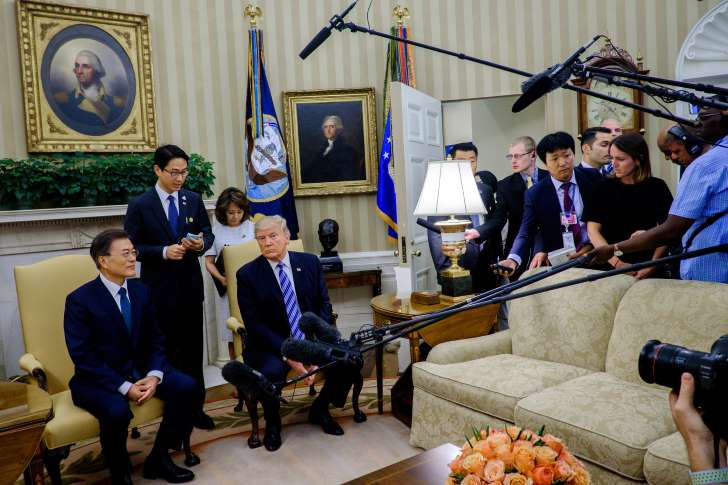
South Korean leaders say they want to “talk” with their neighbors in the North. The U.S. president is having none of it. He has taken to Twitter to suggest that South Korea is run by a government of “appeasers.”

Appeasers? Are you kidding me?

No country on Earth is feeling more nervous about North Korean dictator Kim Jong Un’s crazy threats than South Korea. That’s not good enough for Trump, who’s also now threatening to terminate a U.S.-South Korea trade agreement.

Uh, Mr. President, these guys are on our side. They’ve got more to lose in a military confrontation with North Korea than anyone.

South Korean President Moon Jae-in got elected this year promising to “talk” to North Korea. He fired back at Trump, saying that South Korea “cannot tolerate another catastrophic war on this peninsula.”

Do you think?

Why in the world cannot the president of the United States treat the South Koreans like the valuable ally they’ve been — and need to continue to be as we try to work our way through this crisis with the North?

Talk of “appeasers” and threats to cut off trade won’t do the job.

Vietnam taught us tough, but needed lessons

The Vietnam War remains an open sore, a wound that’s still healing.

A landmark documentary is set to premier on PBS soon. I am anticipating its opening. “The Vietnam War” is a collaborative effort by the acclaimed filmmaker Ken Burns and Lynn Novick, who isn’t as well-known as Burns, but likely will be once this series runs its course.

The series well might help us heal from those wounds of a long-ago war. That’s my hope, anyway.

I took part for a brief period in that conflict. I got my orders and reported for duty as an Army aircraft mechanic. I arrived at Marble Mountain, Da Nang, in the spring of 1969. I served my time and came home.

I’ve told you already about the emotional baggage I shed when I was able to return to that place in 1989. A lot of Vietnam vets have done much the same thing. Many of them had damn heavy loads to release; they were combat vets. I was not one of them, but the baggage was real.

The nation learned many valuable lessons about itself during that war and in its immediate aftermath. I want to look briefly at two of those lessons, which I hope the Burns-Novick film will discuss in detail beginning Sept. 17 (on Panhandle PBS).

We learned how to lose a war. The United States didn’t “lose” this conflict in the traditional sense. The enemy didn’t defeat us on the battlefield. Indeed, our armed forces were able to declare victory in virtually every major conflict we entered against the Viet Cong and the North Vietnamese military.

We inflicted more casualties on them than they did on our side. We captured more of their fighters than they did of ours. We won the fight on the field.

We lost the fight politically. We lacked the stomach to stay in the fight “for the duration.” The Vietnamese were fighting on their turf, fighting for their cities and villages. They were fighting to protect their land.

They had the will to keep fighting. And they did. We lost our will and came home in early 1973. Two years later, left to fend for themselves, the South Vietnamese armed forces were overrun by the North. On April 30, 1975, the shooting stopped.

We didn’t win that fight and it has stuck in our national craw ever since.

I’ve made peace with that fact over the years. I get how it went down. I trust “The Vietnam War” will explain it to those Americans who still wonder: How did we win all those battles but lose the war?

We mistreated our returning warriors. This might be the most shameful aspect of the war, at least in my mind.

I didn’t get spit on. No one called me names. I never once was disrespected outwardly and openly when I wore my uniform while at home upon my return. Too many of my colleagues, though, did receive such mistreatment. It was disgraceful in the extreme.

It is amazing today to listen to left-leaning commentators extol the heroism of our fighting men and women engaged in war in Afghanistan and Iraq. Think about that for a moment. Fifty years ago, those same leftish pundits might excoriate the returning warriors. There might be veiled references to the “atrocities” they committed. They likely would be treated with far less respect and dignity than they are today.

These days, I like wearing my Vietnam vet ball cap when I’m out and about and, yes, I welcome the occasional expressions of “thank your for your service” greetings I get from strangers. That would not have occurred in 1970.

We have turned an important corner in our national upbringing, and it warms my heart to know that we no longer condemn the fighting men and women for doing their duty to their country, just like we did during the Vietnam War.

Ken Burns and Lynn Novick have taken on a profoundly important project with this series on that long-ago, but never-forgotten war. It taught us many lessons about ourselves as a nation — and as individual Americans.

Their documentary is a landmark event in every meaningful sense of the term.

***

The first five episodes will air nightly on Panhandle PBS from Sunday, Sept. 17, through Thursday, Sept. 21, and the final five episodes will air nightly from Sunday, Sept. 24, through Thursday, Sept. 28. Each episode will premiere at 7 p.m. with a repeat broadcast immediately following the premiere.


A moment of civility and honor

I feel the need to share this video before it recedes too far into the nation’s political background.

U.S. Sen. John McCain pays tribute in this brief video to his longtime friend and colleague, Vice President Joe Biden.

Why show this clip here? Today?

These are seriously contentious times. The vice president was about to leave office after nearly four decades serving in the Senate and as the nation’s No. 2 elected official. Sen. McCain acknowledges that he and Biden didn’t always agree on public policy. They argued, sometimes vigorously.

But it serves us all well to know that men who were political opponents could remain friends, a sentiment that McCain expresses with stunning eloquence in his Senate floor speech.

He was among many senators who rose to pay tribute to Biden as the VP prepared to leave public life.

It remains my hope — to which I’ll cling stubbornly — that we can find a way back to a more genteel era on Capitol Hill. Some of the current cast of characters in the spotlight today make it difficult to imagine such a return occurring any time soon — if ever!

I will admit to getting pretty damn worked up myself over the conduct of many of those characters. I’ve said some harsh things in this blog. I won’t retract them, but I’ll seek to do a better job moving ahead at maintaining a more civil tone, even though I sit way out here in the proverbial peanut gallery, far from where the action is.

Recalling the Rev. Jesse Jackson’s one-time campaign battle cry, I’ll continue to “keep hope alive” that decorum will return to the political debate.

Sen. McCain — the Vietnam War hero and a ferocious advocate for his own public policy views — offers us an example of what we need in the halls of power.

What does ‘We’ll see’ mean, Mr. President?

Donald J. Trump is talking in a dangerous code.

The president and first lady walked out of church Sunday and received a question shouted at the president: “Are you going to attack North Korea?” the reporter asked.

Trump’s response? “We’ll see.”

That kind of non-response makes me flash back to my childhood.

I would ask Mom if she would allow me to do something: go to the park, the movies, play with some friends down the street. Or, I might ask if we were having dessert after dinner.

Mom would say “We’ll see,” which usually was her way of saying, “Yes, more than likely.”

When I hear the president of the United States answer with a “We’ll see” to a question about going to war with North Korea …

You get my drift, yes? It scares the living hell out of me!