Remember when The Gipper was a pushover, too?

GTY_hillary_clinton_donald_trump_split_jt_150912_16x9_992

Let’s play this election season out, theoretically, to the end.

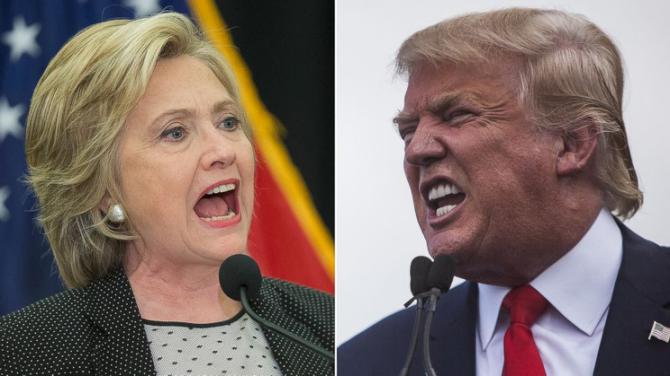
The Democrats will nominate Hillary Rodham Clinton as their presidential candidate; the Republicans will select Donald J. Trump as their standard bearer.

Clinton is the one with the experience: a policy-wonk first lady; a twice-elected U.S. senator from New York; a secretary of state. She’s well-schooled on the nuance of foreign and domestic policy. She’s articulate and is a cool customer under fire.

Trump is none of that. He’s a hot-headed reality TV celebrity. He made a fortune in real estate development. He’s married to his third wife. He has boasted about his sexual exploits with women who were married to other men. His campaign has featured little substance and virtually zero political philosophy — but a whole lot of insults and outrageous proclamations.

Clinton’s the favorite. The prohibitive favorite. She’ll win in a landslide while making history as the nation’s first female president.

Hold on a second.

Thirty-six years ago, the Democrats nominated a former one-term Georgia governor. He was a U.S. Naval Academy grad. He was a policy wonk. He was a smart guy, although perhaps a tad self-righteous. Republicans nominated a former movie actor who starred in those films with Bonzo the chimp; and oh yes, he made that film in which he portrayed Notre Dame football player George Gipp. Sure, he was a two-term California governor.

The Democrat was supposed to win, right?

It didn’t turn out that way. The Republican, Ronald Wilson Reagan, carried 44 states and blew President Jimmy Carter out of the White House.

It’s that history that should tell Democrats to take this upcoming election very seriously if it plays out the way it’s projected to play out.

By any normal measure, Donald Trump should be an easy mark for Democrats. This campaign, however, hasn’t gone according to the form sheet in almost any measure.

Clinton wasn’t supposed to be challenged so seriously from within her party. As for Trump, no one took him seriously when he announced his intention to seek the GOP nomination; his “fellow Republicans” are taking him seriously enough now — so much so that they’re staying up at night trying to concoct ways to derail his political juggernaut.

Both candidates are going to carry a large amount of baggage into a fall campaign, if they are the nominees. They both are packing a lot of negative feeling from within their respective parties.

Of the two, Trump’s negatives — from my perspective — far outweigh Clinton’s.

That doesn’t give the Democratic opposition any reason to fall asleep at the wheel.

The Gipper was supposed to lose big, too.

POTUS should meet with dissidents

90

It’s probably way too late to change the itinerary now, but President Obama might want to give it a shot when he lands in Cuba this week.

He’ll be the first U.S. president since The Flood to visit the island nation.

I’ve been supportive for years of efforts to renew relations with the communist dictatorship. To that end, I have applauded Obama for finally taking the step to reopen embassies in our two countries.

I do wish, though, he would have insisted on meeting with Cuban dissidents while he’s on the island. It’s those dissidents who’ve been the subject of the opposition to U.S. efforts to do what should have happened at least two decades ago, when the Soviet Union disappeared from the planet.

None of us knows what the president will tell Cuban leader Raul Castro when the men meet in private. My hope is that he gives him a scolding as it relates to his government’s treatment of those who oppose it. If the Cuban commies are intent on restoring their nation’s status as a world player, they need to atone for their shameful treatment of political dissenters.

Still, the visit is a welcome turn in U.S.-Cuba relations.

If only the president could arrange to meet with those for whom he says he will fight.


An end to gerrymandering? Sure, let’s do it

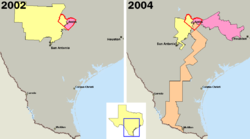
250px-TravisCountyDistricts

The Democratic Governors Association wants to back President Obama’s call for an end to gerrymandering.

I’m all for it. However, it’s not because the Democrats are for it. The practice has been used for political purposes since the beginning of the Republic. By both major parties.

The president was correct in his final State of the Union speech to demand an end to the practice of drawing districts to create a desired political outcome.

It’s just that Republicans who control most state legislators these days have turned the practice into an art form. Some of the congressional and state legislative districts in Texas, for example, simply defy all forms of logic.

There used to be a term used to describe how these districts should be constructed. It’s called “community of interest.” It means that all the residents of a particular district should have issues in common. They should be primarily rural or urban in nature. That’s how it’s supposed to go in theory at least.

But some of the districts in this state snake their way around street corners, winding their way from, say, Austin all the way to the Rio Grande Valley. What does someone living in, say, Laredo have in common with someone living in suburban Travis County?

Nothing!

There once was a time when Democrats ran the show in Texas. The 1991 Texas Legislature, thus, redrew congressional districts and created something of a monstrosity right here in the Panhandle. They split Amarillo in half, putting the Potter County part of the city into the 13th Congressional District and the Randall County portion into the 19th Congressional District.

The Legislature’s purpose? It was to protect Democratic U.S. Rep. Bill Sarpalius’s seat in Congress. The Legislature peeled off enough Republicans living in Randall County and put them into a district served by Republican U.S. Rep. Larry Combest, who lived in Lubbock.

The notion worked through one election cycle; Sarpalius was re-elected in 1992. Then came the 1994 Contract With America election. Sarpalius got beat by Republican Mac Thornberry.

There went the notion of protecting a Democrat.

The principle of gerrymandering really does stink, no matter who’s doing it.

There ought to be some rhyme or reason to the districts we create after every census is taking. The way it’s done now is meant to keep power in the hands of whichever party is in control.


Wondering if Trump will bolt the party

donald-trump-speech-promo-getty-491877616

Peter Wehner doesn’t strike me as a wacked-out Republican loon.

He writes pretty well, if the essay in today’s New York Times is an indication.

The man is frightened at the prospect of Donald J. Trump becoming his party’s next presidential nominee. And he expresses that fear — right along with a lot of other Republican wise men and women — with profound eloquence.

Check out his essay here.

He says the Founders were afraid of people such as Trump. They feared strongmen rising to the top of the political heap. As he says in his NYT essay:

“The founders, knowing history and human nature, took great care to devise a system that would prevent demagogues and those with authoritarian tendencies from rising up in America. That system has been extraordinarily successful. We have never before faced the prospect of a political strongman becoming president.

“Until now.”

I’ve been reading and listening to a lot of commentary in recent weeks about the Republican strategies being devised to deny Trump the party nomination. And as I take it all in I remind myself of things Trump said earlier in this campaign about how he would respond if he’s treated badly at the GOP convention this summer.

He’s suggested, then recanted, and then suggested again that he might launch an independent bid for president if Republicans aren’t nice to him. He wants to be treated “fairly,” he has said.

If I were advising Trump, I’d be examining all these efforts to wrest the nomination from my guy and I would conclude: Hey, these guys flat-out don’t like Trump; they aren’t being nice, fair, even-handed … none of it.

If Trump is true to his word, that he wants fair treatment and would resort to other means to win the White House if he’s mistreated by his party moguls, then my strong hunch is that he might be cooking some plans to strike back at those Republican honchos.

After all, he’s already exhibited a serious mean streak all along the campaign trail so far.

Does anyone really think this fellow is incapable of creating maximum chaos?

And if you do believe he never in a million years would do anything to stick it in the GOP’s eye, check this out.

Then … get back to me.

Political conventions: raucousness with serious purpose

tumblr_m9876t6jRi1qeoxw2o1_1280

I won’t be attending either of this year’s political conventions.

Part of me wishes I could because — having been to three of them over the years — I’ve discovered how much fun they are for those who attend them and for those who report and comment on them.

This year’s Republican convention in Cleveland could be especially fun especially for the reporters lucky enough to get the assignment to cover it.

My first political convention was in 1988, when Republicans gathered in New Orleans.  I was part of the media team representing the Hearst Corp., which owned the Beaumont Enterprise, where I worked for nearly 11 years.

Any convention in The Big Easy was a serious blast, given that it’s, well, New Orleans.

Four years later, the Republicans gathered in Houston, about 85 miles in the other direction from Beaumont. That one produced its own share of memories. Chief among them was watching former President Reagan deliver his last major political speech in which he poked fun at the Democrats for nominating a young Arkansas governor who compared himself to Thomas Jefferson. “Well, I knew Thomas Jefferson,” the president said. “Thomas Jefferson was a friend of mine …” He brought down the house.

Four years ago, I had secured press credentials for the 2012 Democratic National Convention in Charlotte. I didn’t have the support of the Amarillo Globe-News or its parent company, Morris Communication. I applied for the credentials on my own and then received them. Then my world was turned upside-down when I got “reorganized” out of my job at the paper just as the convention was about to begin the following week.

I went to Charlotte anyway — with my wife; we enjoyed ourselves immensely. I attended the convention as a spectator and got to cheer as President Obama and Vice President Biden received their party’s nominations for re-election.

One of the major takeaways from all three events, though, is a visual one.

In New Orleans, Houston and Charlotte, I was struck by the sight of serious-minded men and women parading through the convention hall wearing goofy hats, festooned with campaign buttons, loud clothes, carrying signs — all while they shout slogans from the convention floor.

I had to remind myself of this fact: These people from all across the nation are gathered in one place to nominate a candidate for president of the United States of America. They are choosing the individual who will represent their political party in an election to determine who will be commander in chief of the world’s foremost military establishment; they will pick the head of state and government of the world’s greatest nation.

I’m telling you that when you are among these folks, it’s easy to forget the seriousness of the task they are seeking to complete.

This year — in Cleveland and in Philadelphia — it’ll be no different.

Except that in Cleveland, where Republicans are going to gather, the serious nature of their mission might be compromised by the individual who is poised to accept his party’s nomination as president.


Bernie has won the war of ideas … if not the nomination

berniesanders-61515-1434466786

So much of our national attention has been focused during this political season on the Republican Party presidential primary campaign.

After all, it features a glam king, TV personality, real estate mogul and showman who appears headed for the Republican presidential nomination.

Donald J. Trump has broken all the rules of normal decorum, good manners, class and grace.

Oh yeah! There’s a primary in the other party that’s taking place, too.

Democrats are fighting with themselves over whether to endorse Hillary Rodham Clinton or U.S. Sen. Bernie Sanders.

The dynamic there also has been somewhat unconventional, albeit not to the degree the GOP race has become.

Sanders is getting his clock cleaned in primary states. He’s been close in many states and he did win Michigan and New Hampshire’s primaries. However, Clinton is now — once again — the shoo-in for the Democratic nomination. To get there, though, she’s had to do something quite extraordinary: She’s had to change her positions on issues to where she now agrees with Sanders.

The Trans-Pacific Partnership? Clinton once favored this trade agreement; now she opposes it.

The Keystone XL pipeline? She once favored it; today she opposes it.

The Iraq War? She voted for it in 2002; she says now that she has changed her mind.

Sanders opposed all those issues from the beginning.

Clinton now has taken up the cause for wage inequality. She’s vowing to take on the big banks. She is sounding more populist than mainstream than when the campaign started.

By golly, she’s sounding like Bernie!

Has Sanders won the war of ideas in the Democratic primary? It’s sounding as though he can declare victory. He well might do that — but he won’t go home quietly.

All this change of mind/heart, of course, brings to mind the issue of Clinton’s authenticity. It has become the source of “Saturday Night Live” skits that skewer the former secretary of state, first lady and U.S. senator over the manner in which she crafts certain images to please whatever audience to which she is speaking.

Sen. Sanders has no serious hope of becoming the Democratic nominee. He does have some hope, though, that the message he’s sought to convey has become part of his opponent’s campaign.

All along, Sanders has sought to tell his party’s base that the campaign “isn’t about me.” If he believes it, then his campaign has been about his ideas.

Stand tall, Sen. Sanders! You’ve won!

Paxton gets no ‘love’ from hometown court

paxton

If the embattled Texas attorney general was expecting to get some favorite-son treatment in his home county …

He’s mistaken.

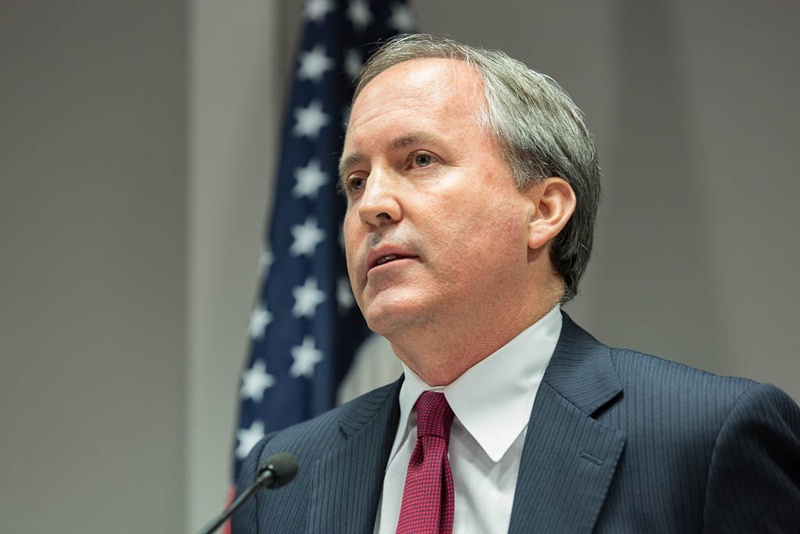
Ken Paxton faces a possible trial on charges that he solicited investment business without notifying the proper state authorities that he was being compensated. A Collin County grand jury indicted him on the felony charges, to which the McKinney Republican has pleaded not guilty.

Paxton represented the suburban community north of Dallas in the Texas Legislature before being elected in 2014 as the state’s top lawyer.

Now a judge — also in Collin County — has tossed aside a motion to cap the money being to the special prosecution team that’s been appointed to represent the state.

Paxton’s lawyer lacked jurisdiction to file the motion, according to Judge Mark Greenberg.

I’m not going to pre-judge this case. The proceedings to date, though, seem to suggest that AG Paxton might be in for rough ride if this case goes to trial in Collin County.

Perhaps the most fascinating aspect of this case so far has been that Paxton has been indicted by a hometown grand jury and has been delivered setbacks by a court in his hometown as well.

Remember when former Republican Gov. Rick Perry blamed the grand jury in Democrat-friendly Travis County of playing politics when it indicted him for abuse of power?

Paxton can’t make the same argument.

This case could get interesting.


Trump brings one positive: big voter turnouts

1407859219000-Election-3-

I am about to do something that gives me the heebie-jeebies.

I’m going to write something positive about Donald J. Trump.

The man has boosted voter turnout in these Republican Party presidential primaries. He’s boasted about it, which is no surprise.

As one who for decades as a print journalist bemoaned the lack of voter participation, I will say that the turnout we’ve seen in the GOP side of the primary battle has been inspiring.

Trump’s tapping into that voter anger has brought people to the polls, which is a good thing. Yes, it is a good thing!

None other than John Cornyn, has said so, too. The senior U.S. senator from Texas — who says he’s remaining neutral in the primary fight — has lauded the result produced by Trump’s presidential candidacy.

According to the Texas Tribune: “The Republican primary has been surprising in a lot of ways, but one of those ways is the tremendous voter turnout that we’ve seen across the country, while the turnout in the Democratic primary has been lackluster,” Cornyn said. “That’s going to be really important in November, and my view is that I will support whoever the nominee of the Republican Party is.”

Cornyn is right, as well, about the “lackluster” Democratic turnout so far. It’s worth speculating, though, that Democrats just might re-discover their turnout “luster” if Trump becomes the GOP nominee and we are going to decide between Trump and Hillary Rodham Clinton in the fall election.

Again, if the turnout this fall sets records and many millions more Americans go to the polls than ever before, we ought to thank Donald J. Trump for that, too.

That’s it. That’s all the niceness I can spare for this guy.


PBS discussion sheds great light on campaign ’16

maxresdefault

I feel compelled to begin this blog post with a disclaimer.

I am a freelance blogger for Panhandle PBS, the publicly funded television station based at Amarillo College here in the Texas Panhandle.

There. That said, I now want to say that the discussion that was broadcast Friday evening was one of the most intelligent I’ve heard yet about the state of the race for the presidency.

This discussion featuring liberal syndicated columnist Mark Shields and conservative New York Times columnist David Brooks covered three critical points:

The Republican primary campaign, the Democratic primary campaign and, in a related matter, President Obama’s nomination of Garland Merrick to the U.S. Supreme Court.

Shields and Brooks occasionally spar when they appear each Friday on the PBS NewsHour. They disagree on substantive matters from time to time. They were in agreement on several critical issues, though, this week.

Hillary Clinton will not be denied the Democratic nomination; Donald Trump is the likely Republican nominee; Judge Garland deserves to have his hearing before the U.S. Senate.

The most interesting aspect of what was said, though, came in the discussion of Trump and Garland.

Shields noted that Trump has won everywhere. He smoked what is left of a once-huge GOP field in Florida, Shields said, where opponents spent millions of dollars in negative TV ads. They didn’t make a dent in Trump’s juggernaut. Whatever it is that Trump has mastered, he has turned it into an unbeatable — so far! — formula for political success.

As for Garland, Shields also believes that the Republican leadership in the Senate is going to pay a price for refusing to consider the judge’s appointment to the Supreme Court. Brooks agreed that Garland deserves a hearing — and deserves to take his seat on the court — he doubts there will be hell to pay in the campaign for Republicans.

Both men also believe that Garland is the best candidate for the court the Republicans are likely to get — particularly if Trump is the GOP nominee for president. Trump will lose the election to Hillary Clinton, who then will be free to appoint someone of her liking — and could present that nominee to a Senate led by Democrats.

And so it will keep going throughout this crazy election cycle.

You’ve got to relish — and share — intelligent discussion whenever you hear it.

That’s what I’m doing here.

* * *

If you’re of a mind, please accept my invitation to look at my blog at PanhandlePBS.org; it’s called “A Public View” and it focuses on public affairs programming aired on Panhandle PBS.

http://www.panhandlepbs.org/blogs/public-view-john-kanelis/


Dr. Carson may be a tad too candid

AAgh1vB

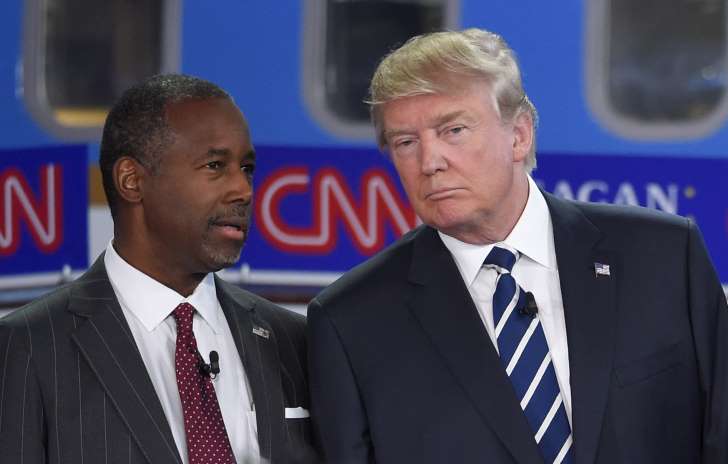
Man, you have to hand it to Dr. Ben Carson.

When politicians switch their allegiance and make surprise endorsements, they usually waffle, wiggle and weasel their way out of answering direction questions as to, “Why?”

Not the doc.

He said he endorsed fellow Republican Donald J. Trump because he couldn’t find another candidate to back, meaning another candidate who (a) could win and (b) fit his own political world view.

There’s another reason: Trump has offered him a spot in a possible (gulp!) Trump administration.

Yep, Carson said so. Out loud. For the record.

Don’t you just love it? I surely do.

Carson’s candor seems to have caught the attention of some legal experts as well. Some have suggested that Trump might have broken federal election law by flat-out “buying” an endorsement by offering a paid position within his administration in the even hell freezes over and Trump is actually elected in November.

New Jersey Gov. Chris Christie is the only other former GOP presidential primary foe to endorse Trump. His own explanation for his switch was so standard. He sought to tap dance all around the fact that he once declared Trump “unfit” to be commander in chief. Now, according to Christie, Trump is, um, “fit.”

Dr. Carson’s candor is refreshing in its way. Politicians are schooled on evasiveness. If you ask a trained pol a direct question about, say, a statement they or someone they support has made, they’re going to revert immediately to a rote response.

It’s as though they’re under some sort of post-hypnotic spell: Ask them a tough question and you trigger a telepathic switch that makes them say what they’re programmed to say.

The good doctor isn’t like that.

I appreciate that he answered so directly: Trump isn’t really my guy. I would have preferred to back someone else. But heck, he made me an offer I couldn’t refuse.

Awesome!