Birther debate getting muddier

rs-trump-cruz

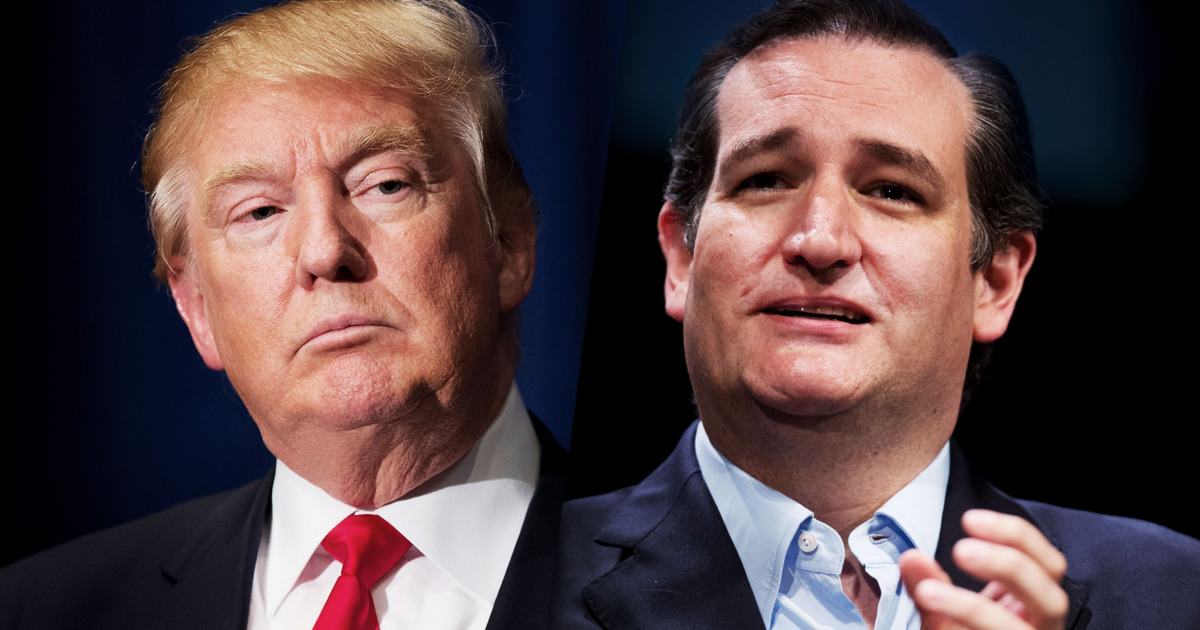
Ted Cruz didn’t need to go where he went . . . but he did.

The Texas Republican U.S. senator raised a curious and completely irrelevant issue in seeking to refute presidential rival Donald J. Trump’s questions about Cruz’s eligibility to run for president of the United States.

During the GOP debate in North Charleston, S.C., Cruz said that under “some theories” Trump might not be eligible to serve because his mother was born in Scotland.

Oh, boy.

Sen. Cruz? That’s even more of a non-starter than the questions that Trump and others are raising about your own eligibility.

Trump keeps questioning whether Cruz can run for president because he was born in Canada. Cruz’s mother is an American, which by the reckoning of many constitutional scholars, makes him eligible; he became a U.S. citizen simply because of his mother’s citizenship.

End of discussion? Not even close.

Cruz muddied it up even more by suggesting that Trump’s mother’s birthplace might jeopardize the frontrunner’s eligibility.

This discussion is venturing into a realm that is reaching far beyond ridiculous.

Trump’s mother’s place of birth is not an issue. Neither is Cruz’s place of birth. Both men are qualified to run for the presidency.

How about staying focused on the real issues of this campaign?

Such as how they intend to govern.


Search for plane turns up . . . what?

untitled

I don’t know whether to laugh or scream at this news.

An Australian search vessel looking for Malaysian Airlines Flight 370 has discovered some wreckage at the bottom of the Indian Ocean.

Is it the plane? Is it any aircraft? Oh, no. It’s now been determined that the debris is from an early 1800s shipwreck.

What about MH 370, which vanished on March 8, 2014 after taking off from Kuala Lumpur en route to Beijing? It’s still gone. Not a trace of it has been found anywhere. Satellite technology, state-of-the-art underwater vessels, shipboard sonar and radar all have failed.

A Boeing 777 with more than 200 individuals on board has vaporized.

Truth be told I’m not altogether sure why I’m even commenting on this item.

The direct descendants of those who were lost on the ship are long gone.

As for those who are waiting for word about the missing jetliner . . . well, they’re still in great pain.


Open carry on campus? Please . . . no!

campus carry

State Sen. Kel Seliger, R-Amarillo, today made it clear that he opposes the notion of allowing anyone to carry weapons on college campuses in Texas.

More to the point, as I heard his talk today to the Rotary Club of Amarillo, he said that allowing guns into college classrooms is a particularly bad idea.

He noted a key foe of the idea of allowing such activity. That would be the chancellor of the University of Texas System. You’ve heard of him, perhaps. Former Navy Admiral William McRaven once led the nation’s special forces command. He is a Navy SEAL who, according to Seliger, “knows more about guns than just about anyone.”

McRaven thinks allowing guns on campus is a bad idea.

Seliger then presented a fascinating scenario to buttress the point about how bad an idea it is to let someone carry a gun openly into a university classroom.

Suppose a professor gives a student a bad grade, he said. Suppose, then, that the grade enrages the student so much that he wants to harm the professor.

I think you get the point.

I’m not going to oppose openly the idea of allowing Texans to carry guns in plain sight. The concealed carry law, enacted in 1995, hasn’t produced gunfights at traffic intersections, as some of us — yours truly included — had feared would happen.

But there ought to be some places where we ought to restrict the open display of these weapons.

Houses of worship are among those places.

So are college classrooms.

And none of that endangers the Second Amendment to the U.S. Constitution.


Conquering telecommunications hurdles

Top-5-Most-Secured-Smartphones-in-the-Market-1

I am all to eager to admit many things about myself.

One of them is my technical shortcoming. I am not a geek. I am not fluent in the language used to discuss telecommunication devices — although I consider myself to be mildly conversant.

My sons are geeks. One of them is an uber-geek. My wife? She’s less so than even I am, although she’s becoming quite good at Internet research.

I say all this to tell you of a huge hurdle I cleared today. Well, at least I think it’s huge.

I had the pleasure today of introducing our guest speaker at the Rotary Club of Amarillo weekly luncheon. State Sen. Kel Seliger spoke to us today about education legislation and related issues with which he is familiar, given that he’s the chairman of the Senate Higher Education Committee and serves on the Education Committee.

I’ve known Seliger for the entire time we’ve lived in Amarillo. That’s 21 years. But I don’t know everything about him.

So, as I was preparing to leave the house this morning to head downtown for our meeting, I called Seliger’s Senate office in Amarillo.

“Hello, Cindy?” I said to the woman who answered the phone; I’ve known her a long time, too. “Do me a favor, please. Could you send me something that you might have in your computer system that serves as an intro for Kel? I’d like to use it to introduce him today.”

Sure thing, Cindy said. “Do you want the long form or the short form?” she asked. The short form is fine, I told her. “I’ll make up the rest of it,” I added.

Just send it to my email address, I said. She did.

My fancy-shmancy smart phone has an email “app” that allows me to receive emails on the thing. I got it within moments. I opened it. I read the text.

“Perfect,” I thought.

So, with my smart phone tucked safely in my belt holster, I drove downtown. I had some lunch with my friend and his district manager and then — shortly after our club president, Jeff Lester, called the meeting to order, I was asked to introduce Seliger to my fellow Rotary Club members.

I pulled out the phone. Opened up the email attachment and then proclaimed to my friends at the top of the Chase Tower — where we were having our lunch — that “I am finally a 21st century man.” I used the text on the phone as a crutch to welcome the senator to our club.

Yes, I know, others give entire speeches using their smart phones. I am not going to do that. I am merely going to proclaim that I have taken another baby step forward into this new age of telecommunications technology.

Hey, you have to declare these victories whenever they present themselves.


Trump is no Reagan

MondaleReagan1984DebateMomentNBCNews_600.jpg.jpg

Donald Trump keeps making bold comparisons between himself and, well, whomever.

Now he says the “revolution” he is leading is bigger than the one led by that one-time actor, turned California governor, turned 40th president of the United States: Ronald Wilson Reagan.

Allow me to differ with that view.

Trump’s contention is false on so many levels.

Ronald Reagan energized disaffected Democrats. They came to be known as “Reagan Democrats” or “Hard Hat Democrats.” They were blue-collar voters who had grown disaffected with their party.

Trump says the current revolutionaries following his campaign have more “intensity” than those who idolized The Gipper.

(Incidentally, I was not among those. But I am guessing you already know that.)

Allow me now to say a word about the nature of Reagan’s message. Yes, it was stern. He took great pleasure and pride in sticking it into the ear of his Democratic rivals. But his call for change had a certain good humor about it. Did that tamp down the intensity of his supporters? Hardly. It made them love him more.

I’m trying to imagine a President Trump (my hands quiver when I type those words) sitting down with political leaders from the opposing party, sharing an adult beverage and a few off-color jokes — as President Reagan often did with House Speaker Tip O’Neill. I can’t get there.

Did Reagan ever call his foes “stupid,” or “incompetent,” or “pathetic”? Did he ever use words like “weak” to describe this country?

He used language much more artfully and with much more nuance. Did that skill weaken the intensity of his supporters? Not even close.

The intensity of the late president’s supporters carried him to two landslide victories — the second of which came within about 2,000 votes of a 50-state Electoral College sweep!

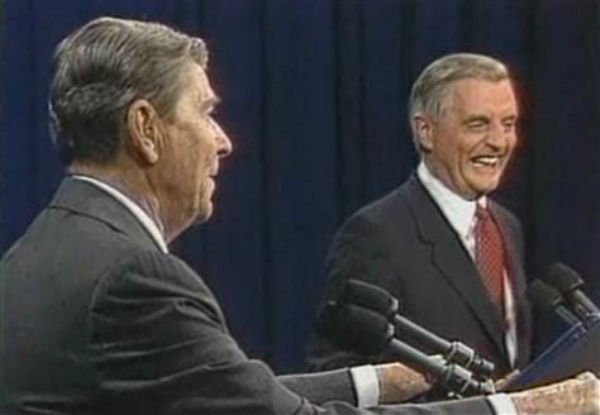
Do you remember that great moment during the second presidential debate in 1984 with Democratic Party nominee Walter Mondale? The first encounter produced several stumbles, bumbles and mumbles from the president. Observers wondered aloud about the president’s mental fitness for the job.

Then came the question during Debate No. 2: Are you up to the job, Mr. President? “I am not going to exploit for political purposes my opponent’s youth and inexperience,” Reagan said.

You know who laughed the hardest at that line? Walter Mondale.

With that, I’ll paraphrase a line made famous by another great American politician, U.S. Sen. Lloyd Bentsen, the Texas Democrat who ran for vice president in 1988.

Mr. Trump, you’re no Ronald Reagan.


Just suppose the Democrats turn on Hillary, Bernie . . .

Dewey-convention-photo

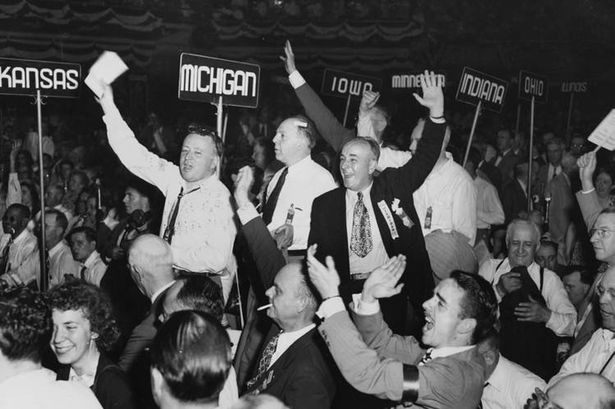
Whenever the subject of “brokered convention” comes up in political circles, it always refers to Republicans.

The idea goes something like this: Several GOP candidates will remain in the race, dividing up the delegates among themselves, denying the frontrunner — whoever it is — the majority needed to sew up the nomination.

The delegates gather in Cleveland and then bicker among themselves, nominating someone on the umpteenth ballot.

It’s not likely to happen. But it could.

However, let’s play take this game a bit further.

What if the Democratic candidates do the same thing?

Two of them, Hillary Clinton and Bernie Sanders, are fighting for supremacy; a third candidate, Martin O’Malley, lags far, far behind.

But what if Sanders upsets Hillary Clinton in Iowa and then beats her in New Hampshire, which is next door to his home state of Vermont. He builds momentum heading into South Carolina. Perhaps he wins there, too. Then the fight is on.

Meanwhile, you’ve got O’Malley out there picking up stray delegates here and there in those primaries where winners do not take all.

Clinton and Sanders carve each other up to deny both of them enough delegates to get a majority at their convention.

Democrats gather in Philadelphia and commence a floor fight. No one emerges as the consensus. To whom do they turn?

Oh yeah. The vice president of the United States, Joseph Biden.

Will that happen? It’s far less likely to occur than a Republican donnybrook.

Then again . . .


Will the VP stay with the fight once he leaves office?

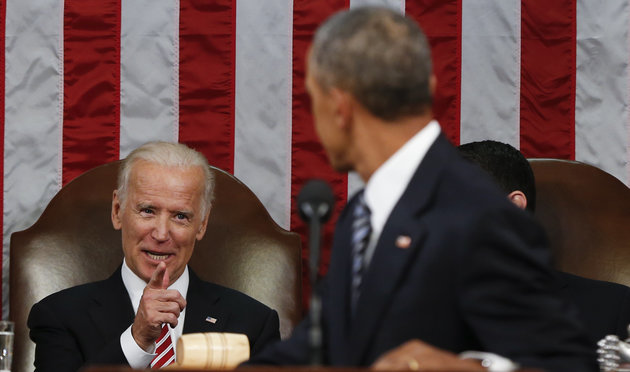
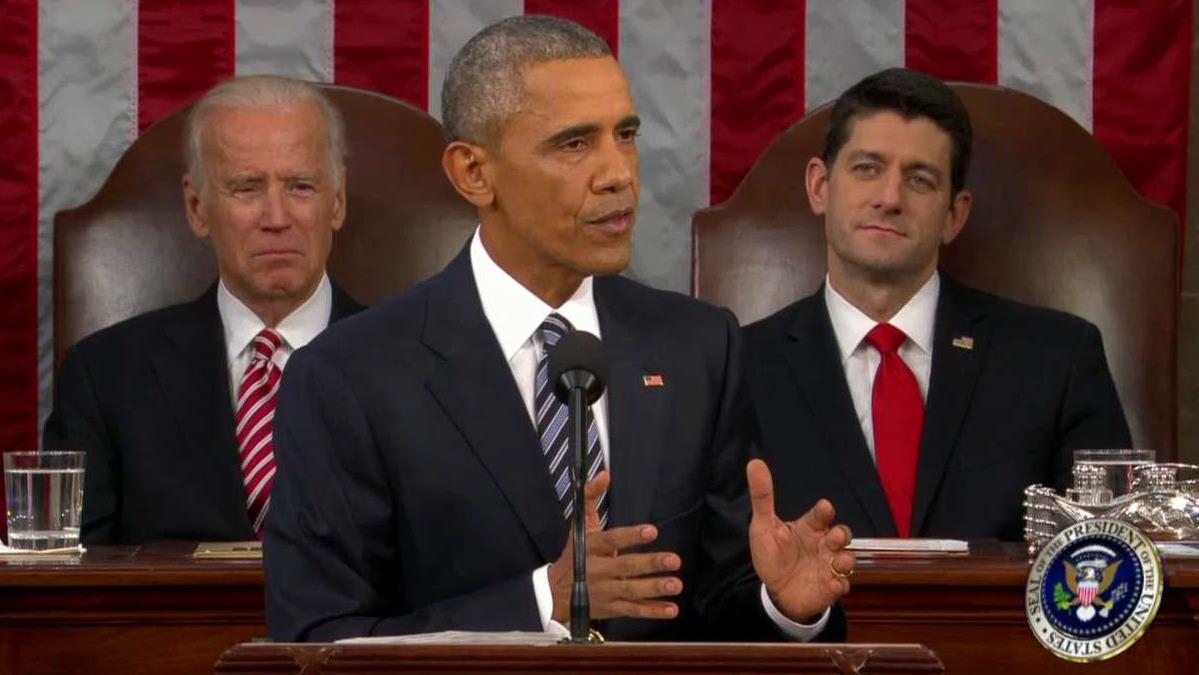
Vice President Joe Biden points at President Barack Obama during the State of the Union address to a joint session of Congress on Capitol Hill in Washington, Tuesday, Jan. 12, 2016. (AP Photo/Evan Vucci, Pool)

President Obama made a stirring choice Tuesday night.

He turned to Vice President Joe Biden and declared that he would be “in charge of mission control” while leading a concerted effort to rid the world of cancer. The vice president will be the point man to find a cure for the dreaded disease.

It was a poignant moment for one major reason: Joe Biden’s son, Beau, died this past year of brain cancer; the younger Biden’s death resonated around the world as we watched the vice president and his family grieve openly — but with dignity and grace.

So it makes sense for the president to put him in charge of such a noble effort.

However …

Barack Obama’s got just about one year left as president; Biden’s time as vice president expires at the same time.

Will this team of researchers find a cure between now and then? Probably not.

So, will the vice president remain as head of the team once the Obama administration leaves office? My hope is that whoever becomes the next president — Democrat or Republican — will ask Biden to remain on the job for as long as he is able.

Joe Biden can become a serious force of nature in the effort to raise money to conduct the research needed to find this cure. Granted, it’s not as if health institutions, think tanks, research hospitals and universities haven’t done a lot already to find a cure.

Having the vice president of the United States take the point on that effort shouldn’t end once he hands his office keys to whoever succeeds him.

GOP governor draws angry fire … from Republicans

haleynikki_090215getty2

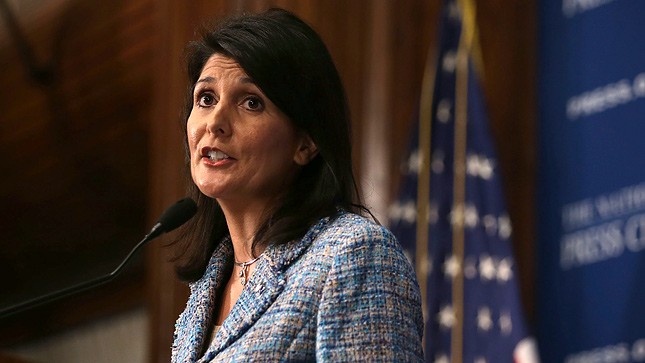
South Carolina Gov. Nikki Haley isn’t angry enough to suit some within what used to be known as the Republican Party.

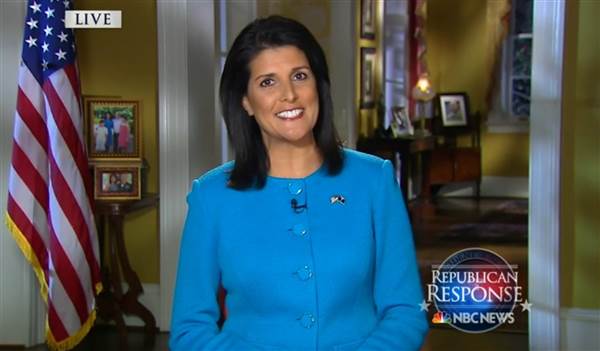
No. She instead called on her party brethren to not listen to the “siren call of the angriest voices.” She offered that advice in her response on behalf of her party to President Obama’s State of the Union message delivered Tuesday night.

What was the reaction among the conservatives within her party?

Anger. Lots of it. Some of it, well, bordering on hateful.

Is this what the Grand Old Party has become? The party of intense, seething anger?

She aimed her fire, without mentioning him by name, at Donald J. Trump, the GOP frontrunner who has tapped into some vein of anger within his party. The call to ban all Muslims? That suits the Republican “base” just fine, irrespective of its being totally outside the principles on which this country was founded.

Haley sought to quell that kind of rhetoric in her GOP response. It was met with hostility.

This is a remarkable set of circumstances facing the Republican Party. It is about to commence its nominating process in just a little more than two weeks with the Iowa caucuses, followed immediately by the New Hampshire primary. Its leading candidate has stirred up some intense anger among the party’s most fervent voters.

Then the party — at the invitation of House Speaker Paul Ryan and Senate Majority Leader Mitch McConnell — listens to Gov. Haley talk sensibly while offering criticism of the Democratic president’s vision . . . only to have its most conservative members go ballistic!

The Republican Party appears to be morphing into something few us recognize.


You go, Gov. Haley!

160112-nikki-haley-rd-1240a_8b761c93c15a723b6244a57473578e61.nbcnews-ux-600-480

If I were inclined to form a political fan club, I think I’d start with South Carolina Gov. Nikki Haley.

The Republican governor delivered a response to President Obama’s State of the Union speech last night that — get ready for it — was not filled with the rancor we’ve heard from so many of the president’s critics.

Haley hits the right note

Is it any surprise, then, that the sharpest criticism of her speech came from conservatives within her party?

Oh, no. She saved her sharpest barbs for one of her political brethren, GOP presidential campaign frontrunner Donald J. Trump.

Gov. Haley cautioned against listening to the “angriest voices” who rail against immigrants.

The daughter of Indian immigrants talked of how the nation was built by people just like her parents.

She showed herself to be an impressive politician who — were I inclined to advise Republican presidential candidates — should be considered a top-drawer vice-presidential possibility.

Except, of course, if the GOP presidential nominee is Donald Trump.


Critiquing final SOTU for this POTUS

694940094001_4701170660001_8b918e30-055c-4dfa-81e5-d7baf77451dc

This won’t be a thorough point-by-point critique of President Obama’s final State of the Union speech, but I want to offer a few observations of what I believe to be the high points . . . and a particular low point of his speech.

Generally, I believe he hit the right tone and sent the correct message on a number of points.

Such as:

Our political system needs an overhaul. The president sought to quell the “toxic” atmosphere that lingers over Capitol Hill and along the presidential campaign trail. He acknowledges that a State of the Union during a presidential election year is going to run headlong into partisan divisions. But it need not result in turning adversaries into enemies, he said.

This toxicity isn’t new. It’s shown itself at times during the entire existence of the Republic. Its victims have been politicians of both political parties — and more than that if you want to count the Whigs, which morphed into today’s Republican Party.

But just because we’ve had this kind of loathing of individuals with whom we differ for as long as any of us can remember doesn’t negate the need to change it.

The anger has spread to those who worship certain religious faiths and who are victimized solely because of their beliefs. Such hatred must cease. It is, as the president said, “not who we are.”

Obama is right, however, to lay the bulk of the responsibility for that change on us out here in Voter Land. The politicians do our bidding. If we demand a change, then they’ll have to heed us.

Correct?

The economy has turned around. He hit on something most of us knew he would say. The nation’s economic standing is far better now than it was when Barack H. Obama took office.

We’ve cut joblessness in half; reduced the annual budget deficit by 75 percent; our auto industry is setting records; our banks and other financial institutions are healthy again.

Does the president deserve all the credit? No. It did happen on his watch.

We remain the world’s indispensable nation. The presidential candidates have been making hay on the stump about the United States’ lack of “greatness.” They contend we are weak, that we cower in the face of danger.

The president said, though, that the world “doesn’t turn to Moscow or Beijing” when times get dicey. “It turns to us.”

Why is that so, if we’re such a basket case?

We’re continuing to fight the war on terror aggressively. The president told us of how more than 10,000 air strikes have killed Islamic State leaders and fighters, disrupted command and control operations, obliterated ISIL’s oil supplies — and is doing so with the help of 60 nations allied behind our effort to destroy these terror networks.

Yet his foes keep saying we should “do more.” One of them, U.S. House Armed Services Committee Chairman Mac Thornberry, said the president isn’t doing enough. What, then, does Chairman Thornberry propose? Oh, yeah. Let’s put “boots on the ground,” which is a cleaned-up way to say, “Let’s put even more young American lives in jeopardy.”

No one should be naïve to think this concentrated air campaign against ISIL, al-Qaeda or al-Shabaab is going to go smoothly all the time. Wars never do.

As for the nature of this war . . .

It is a world war, Mr. President. Obama sought to downgrade this conflict into something less than a global conflict. He is mistaken.

It is true that we aren’t engaged on battlefields around the world the way we were from 1941 until 1945. This war, though, is different in every conceivable way. We aren’t fighting nation-states. We are fighting ideologies, whose practitioners live among us and who prey on innocent victims, so-called “soft targets.”

I believe it is a world war, but not in the historical sense of the term.

* **

Barack Obama didn’t likely change many minds last night. His approval ratings might tick up just a bit, but then they’ll settle back down to where they have stood for years. His foes will be sure to keep beating the drums of pessimism and gloom.

Me? I’m as concerned as the next guy about the future. Then again, I’ve lived long enough and seen enough political turmoil — and warfare — to understand that we are truly are an exceptional nation.

Well done, Mr. President.