Category Archives: legal news

Unanimous picks loom as favorites for high court

untitled

Politics rules on Capitol Hill. It swings both ways, influencing both political parties.

Consider what might be about to happen.

President Barack Obama, a Democrat in the final full year of his second term and final term, is likely to name someone to fill a vacancy created by the death of Supreme Court Justice Antonin Scalia.

The U.S. Constitution grants him the authority to do so. It also grants the Senate the authority to approve anyone nominated to the court.

The Senate is controlled by Republicans.

Democrats and Republicans don’t like each other much these days. Republicans really dislike the Democrat in the White House and the feeling appears to be quite mutual.

What’s the president going to do about this high court vacancy?

One theory getting kicked around in the hours and days after Scalia’s death is that the president could name an appellate judge who’s already been approved by the Senate. One name has emerged as a possible favorite, Judge Sri Srinivasen, an Indian-American who was approved unanimously the Senate before he took his federal appeals court seat.

He’s apparently thought of as a moderate. He doesn’t lean far left. He surely doesn’t lean far right. He shoots straight down the middle, according to a number of legal experts.

So, will this fellow breeze through the confirmation process as he did when the Senate considered him for a lower court?

OK. You can stop laughing.

Republicans are vowing to deny the president any action on a pending nomination. They want to wait until after the November presidential election in which they hope a Republican wins the White House.

Democrats will have none of that. They want the president to make a nomination and they want the Senate to vote on it. Quickly.

Why not select someone who’s already been vetted by the Senate? Would a judge like Sri Srinivasen be just as qualified to sit on the Supreme Court as he is on a lower court?

Well, in my version of a perfect world, it would seem like a natural for the president to find a moderate judge who’s already been approved. Except that he would be succeeding a towering figure of the judicial conservative movement.

Scalia led what has been called a “conservative renaissance” on the Supreme Court. Anyone — regardless of credentials, standing among peers or legal brilliance — is going to be run through a political sausage grinder.

Politics. Sometimes it’s downright ugly.

And sometimes it doesn’t serve the nation well.


Confusion has a strangely familiar Texas feel to it

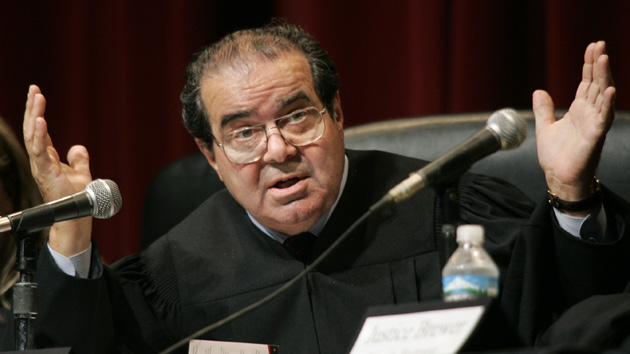
111005_antonin_scalia_ap_605

Antonin Scalia’s tragic death in far West Texas has taken on an air of weirdness that somehow only seems possible in this state.

The U.S. Supreme Court justice — the senior member of the nation’s highest court — died in Marfa while on a hunting vacation.

How did he die? It seems that a justice of the peace issued a cause of death without ever seeing the late justice’s body. There also was a significant amount of time before anyone was able to contact a JP to make the pronouncement in the first place.

As the Washington Post reported, Justice Scalia’s life was one of order, process and decorum. The hours after his sudden and shocking death have been an exercise in confusion and chaos, the Post reported.

These rather startling circumstances bring to mind some of the criticisms that have been leveled at this level of Texas jurisprudence — and I use the term loosely.

It’s that justices of the peace are empowered to make these declarations with little or no actual medical training to do so. We put this responsibility in the hands of elected politicians who, as often as not, are laypeople with little or no formal training in the law, let alone in medicine.

What’s worse in this instance is that the JP allegedly made the call in absentia. How in the world does someone do that? How is it possible that the death of a member of the United States Supreme Court can be handled so sloppily and be the subject of so much confusion?

Only in Texas, it seems, is such a thing even remotely possible.

I am sensing an investigation into the madness that ensued after Justice Scalia’s death is in order.


Get ready for the biggest fight of all

Supreme-Court-blue-sky

The fight over immigration?

Or the Affordable Care Act?

Or budget priorities?

How about gay marriage?

All of those battles between President Barack Obama and the U.S. Congress are going to pale in comparison to what’s coming up: the battle to find a suitable nominee to the U.S. Supreme Court.

Justice Antonin Scalia’s sudden and tragic death Saturday has caused political apoplexy in both sides of the divide in Washington.

Democrats want the president to nominate someone sooner rather than later. Republicans want the nomination to wait until after the election, with the hope that one of their own will occupy the White House beginning Jan. 20, 2017.

President Obama indicated last night he’s inclined to move forward, to nominate someone and to insist on a “timely vote.”

He is correct to insist that he be allowed to fulfill his constitutional responsibility and that the Senate fulfill its own duties.

One of the Republican candidates, Sen. Marco Rubio, said last night that no one has been appointed during an election year. He’s half-right. President Reagan appointed Anthony Kennedy to the high court in 1987; a Democratically controlled Senate confirmed him in 1988, which certainly was an election year.

Consider this, though: Justice Kennedy succeeded another GOP nominee, the late Justice Lewis Powell (picked by President Nixon). Kennedy’s appointment and confirmation did not fundamentally change the balance of the court.

This vacancy is different. By a lot.

Justice Scalia was a towering figure among the conservative majority that serves on the court. Whoever Obama selects surely will tilt to the left.

Therein lies the fight.

Senate Majority Leader Mitch McConnell, a Republican, said the vacancy should be filled after the election, adding that the “American people deserve a voice” in determining who sits on the court.

He could not be more off base. Yes, the voters deserve a voice. However, they spoke decisively about that in November 2012 when they re-elected Barack Obama as president.

Indeed, elections have consequences. There can arguably no greater consequence than determining who gets to select candidates to sit on the nation’s highest court.

The president — whoever he or she is — has a constitutional responsibility to act on a timely manner when these vacancies occur. Moreover, the Senate has an equal responsibility to vote up or down on anyone nominated by the president.

I’ve long believed in presidential prerogative — and my belief in that has never wavered regardless of the president’s party affiliation.

So, let’s mourn the death of a distinguished and, in the president’s words “consequential” justice. Then let us allow the president to do the job allowed by the Constitution and then let us demand that the Senate do its job by voting on whoever the president selects to fill this critical court vacancy.


What, precisely, does ‘original intent’ mean?

founders

U.S. Sen. Marco Rubio tonight paid glowing tribute to the late U.S. Supreme Court Justice Antonin Scalia.

The praise came while Rubio was taking part in the Republican presidential debate.

He said something that struck me as, well, fascinating. Rubio said Scalia’s legal brilliance was rooted in his belief that the U.S. Constitution is not a “living document,” but that the Constitution should be interpreted precisely as the founders intended.

I don’t believe for one second that Justice Scalia wanted to roll back the advances that came about in the many years since the founders wrote the Constitution — in the late 18th century.

However, if Rubio’s praise of Scalia is to be taken literally, it seems fair to wonder: Does he believe the founders were right to deny women the right to vote, or that African-Americans should be enslaved?

Of course he doesn’t.

However, we can see the discrepancy — in my view — in the debate over whether the Constitution is a living document. The argument of those who favor the so-called “original intent” of the founders breaks down.

Why? Because of the many reforms approved in the 200-plus years since the Constitution was ratified, the document does indeed evolve as our nation has evolved.

It’s alive, man.


A major battle now looms

chapman.0830 - 08/29/05 - A Supreme Court headed by Supreme Court Justice Antonin Scalia has questions for Chapman University Law School professor John Eastman as he and California Attorney General Bill Lockyer argue the 1905 ''Lochner v. State of New York'' case during a re-enactment Monday afternoon at Chapman University. (Credit: Mark Avery/Orange County Register/ZUMA Press)
)

Supreme Court Justice Antonin Scalia’s sudden death today has stunned the nation.

As President Obama said this evening, the 30-year member of the nation’s highest court was one of the “most consequential” legal minds of our time.

The president now faces arguably the “most consequential” appointment of his time in office.

To say that Justice Scalia’s passing upsets the ideological balance of the highest court would commit the supreme understatement.

And, oh yes, the partisan divide opened wide immediately upon news of Scalia’s death. Senate Majority Leader Mitch McConnell, a Republican, said the Senate should wait until after Barack Obama leaves office to vote on a replacement; meanwhile, Senate Minority Leader Harry Reid, a Democrat, wants the Senate to act quickly.

Who could have seen that coming?

The president said he’ll make the appointment “in due time.” He wants a thorough, fair hearing and a “timely vote.” As the president — lame duck nor not — Barack Obama deserves the chance to nominate someone of his choosing.

Indeed, the appointment coming from a left-of-center president to fill a vacancy created by the death of a right-of-center Supreme Court justice sets up a huge battle that likely will dwarf any of the many fights Barack Obama has waged already with the U.S. Senate.

The court’s narrow balance has just been shaken to its very foundation.


Texas AG facing serious ethical probe

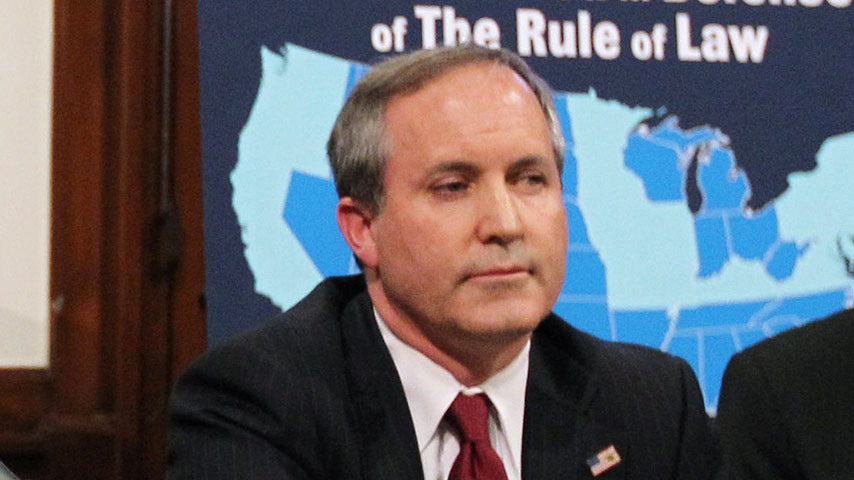
AUSTIN, TX - FEBRUARY 18: Texas Governor Greg Abbott (2nd L) speaks alongside U.S. Sen. Ted Cruz (R-TX) (L), Attorney General Ken Paxton (2nd R), Lieutenant Governor Dan Patrick (R) hold a joint press conference February 18, 2015 in Austin, Texas. The press conference addressed the United States District Court for the Southern District of Texas' decision on the lawsuit filed by a Texas-led coalition of 26 states challenging President Obama's executive action on immigration. (Photo by Erich Schlegel/Getty Images)

Ken Paxton took a serious oath when he became the Texas attorney general.

He put his hand on a Bible and vowed to preserve, protect and defend the Constitution of the United States and of the state.

Then the U.S. Supreme Court did something Paxton — I presume — didn’t expect. It ruled that gay marriage was legal in all 50 states. All of ’em. Including Texas.

How did Paxton react? He said county clerks weren’t bound by the court ruling, that they could refuse to issue marriage licenses to gay couples if the issuance of such documents violated their religious beliefs.

Oops! Can’t do that, said the State Bar of Texas.

It’s now going to launch an ethics investigation to see if Paxton — who’s already been indicted for securities fraud by a Collin County grand jury — violated his oath.

Well, of course he did!

If I were able to make a call on this, I’d declare that the AG broke faith with the oath he took. So did that county clerk in Kentucky, Kim Clark, who refused to issue marriage licenses to gay couples and who spent some time in jail because of that refusal.

What I can’t quite fathom is how these elected public officials feel they can get away with refusing to serve all their constituents. Paxton is a statewide officeholder, representing 26 million Texans. He won election in 2014 and then swore to follow the laws of the land. Not just those with which he agrees.

The Texas bar would seem to have an easy decision on its hands as it regards whether Paxton violated his oath of office. The tougher decision will be in the sanction it should level against him.

I am not going to say he should be removed from office.

Honestly, though, it baffles me constantly that these public officials — who get paid to represent every constituent — think they can select which laws to obey and which laws to flout.

That oath is clear. They cannot make that choice.

At all.


Let’s just call him ‘Silent Clarence’

clarence-thomas-federalist-society-ap

I actually thought it had been longer than a mere decade since Supreme Court Justice Clarence Thomas had asked a question during oral arguments before the nation’s highest court.

Nope. It’s only been 10 years.

The New York Times article attached here spells out what Justice Thomas has settled on as his reason for remaining silent.

It’s discourteous, he told the Times.

Discourteous? You mean if a lawyer says something that you believe needs clarification, but none of your court colleagues wants to seek some clarity, that you don’t want to be rude by asking the lawyer a question?

I don’t quite get that.

On second thought, it makes no sense at all.

Justice Thomas was President George H.W. Bush’s pick in 1991 to serve on the court. He succeeded perhaps one of the most argumentative men ever to serve there, the late Justice Thurgood Marshall, who earned his Supreme Court spurs by arguing successfully before the court on the historic Brown v. Board of Education decision that ended desegregation in public schools.

President Lyndon Johnson made history by appointing Marshall to the court in 1967, making him the first African-American to serve there.

Justice Thomas is a decidedly different type of high court jurist, both in judicial philosophy and temperament, apparently, than the man he succeeded.

I believe President Bush offered a serious overestimation of Clarence Thomas when he called him the “most qualified man” to sit on the high court.

That said, Thomas has been true to his conservative principles over the past quarter century.

As for the next time he asks a question of a lawyer, you can be sure the media will make a big deal of it.


Ethan Couch back home . . . but what about his mother?

160101_2020_act6_16x9_992

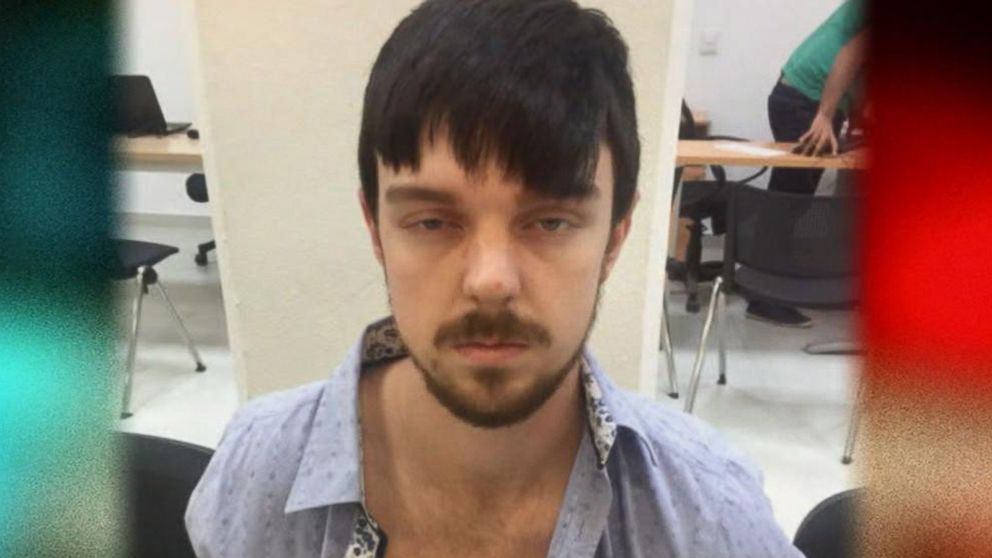
Ethan Couch has returned from Mexico, having decided to forgo a fight against extradition back to the United States.

The 18-year-old Fort Worth resident whose trial for drunken driving brought us the term “affluenza” is likely to face a few more months in jail. He really ought to spend some years behind bars, but Texas law won’t allow it.

Couch killed four people two years ago — when he was still a juvenile — after getting roaring drunk and then driving his pickup. He got off with a probated sentence after his defense team brought in a shrink who said Couch’s upbringing by wealthy parents failed to teach him right from wrong.

Hence, came the term “affluenza defense.”

Couch then bolted to Mexico after violating the terms of his probation.

Who helped the kid? His mother. Tonya Couch already is back in Texas. She’s posted bail and awaits her fate.

No matter what happens to Ethan Couch, his mother deserves — and well might get — some serious prison time.

Given that state law won’t allow the court to throw Ethan Couch into the slammer for more than three or four months, it ought to look carefully at how complicit his mother was in enabling her bundle of joy to violate the terms of his probation and then flee to Mexico.

In a curiously ironic twist, Mommy Couch’s alleged complicity in this caper lends ghastly credence to what the shrink said at her son’s trial about how she and Daddy Couch didn’t teach their son about proper behavior.

It didn’t justify that ridiculously light sentence in the first place.

However, it does suggest that Tonya Couch needs to pay a stiff price if she’s convicted of aiding in her son’s flight from justice.


Let’s ask High Court to settle Cruz eligibility

cruz

The U.S. Supreme Court is in session.

Sure, the justices have plenty on their individual and collective plates. How about giving them one more issue to decide?

Let’s petition the court to decide whether U.S. Sen. Ted Cruz is constitutionally eligible to run for president of the United States.

An essay in Salon suggests that upon closer examination, Cruz’s “natural born” credentials are showing signs of weakness. I’m not sure I buy that notion. I believe he’s eligible to run, despite being born in Canada; his father is Cuban, but his mother is American. U.S. law granted young Teddy citizenship the moment he came into this world.

But the question is swirling nonetheless over whether Cruz qualifies as a “natural born” U.S. citizen.

What harm can be done by asking the court to take up the issue? It comprises a conservative majority. Oh, wait. The court is non-political, yes?

What might happen if the highest court in America decides against hearing the case? That could be construed as a tacit endorsement of the notion that the Texas Republican senator is, indeed, eligible to seek the presidency.

I don’t believe the issue is a terribly complicated one to settle once and for all.

The federal law that grants citizenship to anyone born to an American citizen — regardless of where the birth occurs — either is constitutional or it isn’t.

I believe Ted Cruz is qualified to seek the presidency.

Furthermore, I also believe it’s time for the nine men and women who sit on the U.S. Supreme Court to decide this issue — for keeps!

Just one more point . . .

Cruz criticized the court this past year for its narrow ruling allowing gay marriage, saying that “five unelected judges” shouldn’t be deciding what’s legal and what isn’t.

Would the senator say the same thing if, say, five unelected judges rule in his favor on the “natural born” citizenship question?

Grand jury turns tables on Planned Parenthood foes

Law-Concept-300x270

Grand juries cannot always be depended on to do precisely what some folks want them to do.

Take the case of a Harris County panel that had been impaneled to investigate Planned Parenthood’s activities. The district attorney launched the investigation at the urging of state officials — starting with Lt. Gov. Dan Patrick — into whether Planned Parenthood “sold fetal body parts” in violation of state law.

Today, the grand jury cleared Planned Parenthood of wrongdoing — and instead indicted two anti-abortion activists on charges of “tampering with government records.”

It was a serious surprise.

Here is part of how the Texas Tribune reported the story today:

“The indictments — part of the county prosecutor’s investigation into allegations that Planned Parenthood was illegally selling fetal tissue — include charges against anti-abortion activists David Daleiden and Sandra Merritt for tampering with a governmental record, a second-degree felony that carries a punishment of up to 20 years in prison. The grand jury handed down a second charge for Daleiden for ‘Prohibition of the Purchase and Sale of Human Organs,’ according to the Harris County District Attorney’s office. That charge is a class A misdemeanor that carries a punishment of up to a year in jail.

“The grand jury cleared Planned Parenthood Gulf Coast in Houston of breaking any laws.”

Planned Parenthood has become a whipping child for foes in Congress — and some Republican presidential candidates — over a heavily edited video that purported showing staffers talking about selling organs from babies.

Planned Parenthood, with a mission that goes far beyond assisting women who want to terminate their pregnancies, sees this no-bill from the grand jury as a significant victory in this public-relations campaign being waged against it by political adversaries.

Will this end calls to defund the organization? Probably not. It’s possible that we’ll hear complaints from those who consider this some kind of “political decision.”

Grand jurors lock themselves behind closed doors, listen to presentations by prosecutors and other witnesses. They are charged with weighing the evidence dispassionately and then deliver a decision based solely on what they hear in that room.

Unless I hear otherwise — and grand jurors are sworn to secrecy about what they say and hear during the presentation of evidence — I’ll presume the grand jury did its job properly.