Category Archives: legal news

Journalistic jewel shines brightly

I will get right to the point.

The Amarillo (Texas) Globe-News is about to lose a superstar. He is a jewel to the craft he pursued for nearly four decades and to the community he served with wit, compassion, empathy, wisdom and occasionally with bite.

Jon Mark Beilue has let the cat out of the bag. He spilled the beans. He rolled over and squealed.

Jon Mark is retiring at the end of the week. He is walking away from the Globe-News and heading for some unknown future. He isn’t worried. He has earned whatever rewards await him. Jon Mark decided to tell the world via Facebook prior to signing off on his farewell column for the paper.

Beilue was sports editor of the G-N when I arrived there in January 1995, but it became evident almost immediately that his world view extended far beyond balls and strikes, touchdowns, three-point shots. He would make a move to newspaper columnist, where he managed to chronicle the community’s stories through the eyes and the voices of those who live in the Panhandle.

He wasn’t a Pollyanna. On occasion, Jon Mark was known to unsheathe his rhetorical dagger. If the moment presented itself, he was unafraid to take on the establishment, or to go after individuals or political groups that he thought, um, needed a whuppin’.

He built his reputation through a lifetime in West Texas, starting in Groom, where he grew up and came of age, to Texas Tech University, where he got his post-secondary education and then at the Globe-News, where he spent his entire professional career.

Jon Mark has seen a lot of change over the years. He has been through a lot of the tumult and turmoil that has plagued the media industry, particularly in recent years — and has continued to thrive.

He saw a lot of colleagues come and go during his time at the Globe-News. I am just one of them. I’ll just say that I am proud of my professional association with this man. He is a consummate pro, a man with a huge heart, and someone who possesses a rare rhetorical gift of expression.

I don’t know, of course, what he’ll say in his farewell piece that will see print in a few days. I am absolutely certain he will say it with customary class and wit.

Well done, my friend.

Hoping that SCOTUS leaves ‘Roe v Wade’ alone

Let’s talk about abortion rights, shall we?

The talk of the nation appears to be the future of Roe v. Wade, the landmark Supreme Court ruling that legalized abortion in the United States of America.

The ruling didn’t give women carte blanche to obtain abortion on demand. It merely declared that the U.S. Constitution contains a provision that gives women the right to choose to end a pregnancy. They are allowed to consult with their partner, with God, with their doctor, their conscience.

It is their call. No one else can make that call for them.

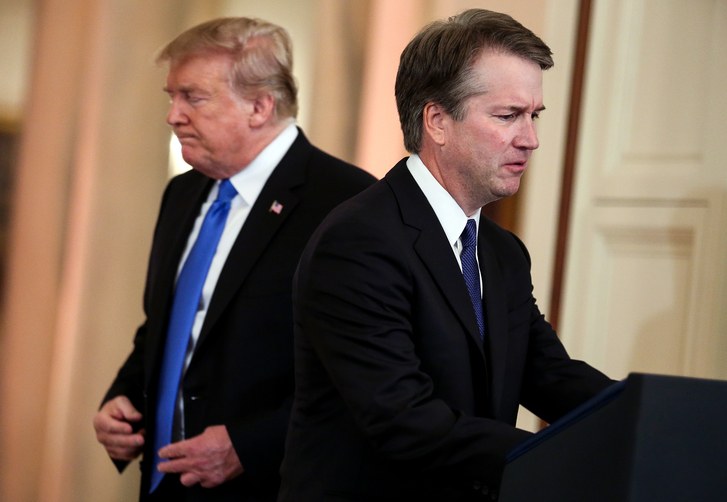
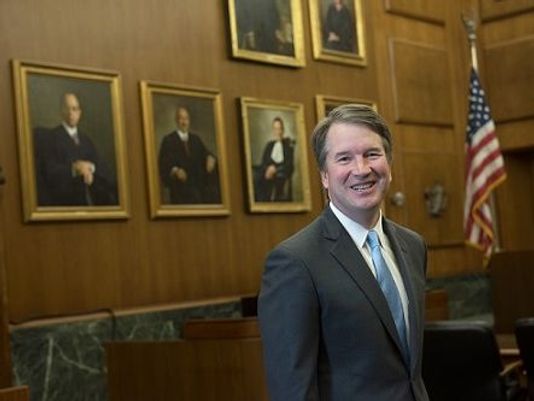
The Supreme Court vacancy that Donald J. Trump wants to fill well might put Roe v. Wade on the line.

I do not want the court to mess with that ruling. I do not want the court to toss the law back to states. The Supreme Court ruled correctly, in my view, to give women the right of choice and to ensure that they alone can decide whether they want to give birth.

Do not accuse me of being “pro-abortion.” I am not. I never could counsel a women to get an abortion. Thankfully, I’ve never faced that dilemma. No woman has ever asked me for my advice on that most personal of decisions.

My point is that this decision doesn’t rest with me. Nor should it rest with lawmakers at the state or federal level.

Roe v. Wade has been at the center of a political firestorm for the 45 years since the nation’s highest court shook up the world with that decision. It well could boil over and might damn well explode if Donald Trump picks someone who is intent on tossing Roe v. Wade aside at the earliest possible opportunity.

Schumer to Trump: Why not select Merrick Garland?

It won’t happen in this universe, but it’s worth calling attention to this strange idea.

U.S. Senate Minority Leader Chuck Schumer — the Senate’s top Democrat — has urged Donald Trump to select Merrick Garland to succeed Anthony Kennedy on the U.S. Supreme Court.

Hell would freeze over, Earth would spin off its axis and the sun would rise in the west for that to happen.

However …

Schumer is making the request in the name of national unity. Garland, a centrist appeals court judge, was nominated by President Barack Obama in 2016. Senate Majority Leader Mitch McConnell — within hours of the death of Justice Antonin Scalia — declared any high court nominee Obama would put forward would go nowhere. McConnell announced his intention to obstruct the nomination and confirmation process.

Garland got nominated. His nomination languished. Trump got elected president. The new president nominated Neil Gorsuch, who then was confirmed.

We’re still divided, significantly because of the theft of the Supreme Court seat by McConnell.

Unification could occur if Trump were to follow Schumer’s advice. I mean, Trump has promised unity. Hasn’t he?

It won’t happen. The idea of nominating Merrick Garland does cause a tingle or two among many of us out here. I’m one of them.

Pure politics drives this SCOTUS nomination

The federal judiciary isn’t political? It isn’t driven by partisan politics?

Excuse me while I bust out laughing.

There. Now I feel better.

Donald J. Trump reportedly has narrowed his short list of U.S. Supreme Court justice candidates to an even shorter list. It’s good to ask: Do you think the president is poring over written opinions, legal scholarship and the candidates’ judicial records to help him make this pick?

I don’t believe that’s the case.

Unlike some of his predecessors — namely Barack H. Obama, who taught constitutional law before entering politics — this president depends seemingly exclusively on the politics of the moment and on whether he likes whoever he might select for a lifetime appointment to a federal judgeship.

This is a big one, folks.

Roe v. Wade — the landmark 1973 ruling that made abortion legal — is on the line. Do you believe the president has studied the implications of that ruling, that he understands its legality?

Justice Anthony Kennedy’s pending retirement gives Trump the chance to make his second Supreme Court appointment. Think of this, too: It’s only a year and a half since he took office. How many more appointments do you think this president can make before his time is up?

Then there’s the question of whether the Senate should consider this appointment before the midterm election. Given the masterful obstruction that Senate Majority Leader Mitch McConnell performed to block Obama’s selection of Merrick Garland to succeed the late Antonin Scalia, there might be a push to delay this vote into 2019. Don’t bet on it, though, given polling that suggests Americans want the Senate to proceed.

I have one more issue to raise quickly. Trump said he won’t ask his court candidates how they would vote on reproductive rights. Do you take him at his word?

Neither do I.

The drama is about to get real thick.

‘Swing vote’ will switch chairs at SCOTUS

Before we get all worked up and apoplectic over the individual who will get Donald J. Trump’s nomination to the U.S. Supreme Court, let’s consider the reality of the departing justice, Anthony Kennedy.

Kennedy has been hailed as a crucial “swing vote” on the court. He sides with liberals on occasion, but mostly sides with the conservative majority.

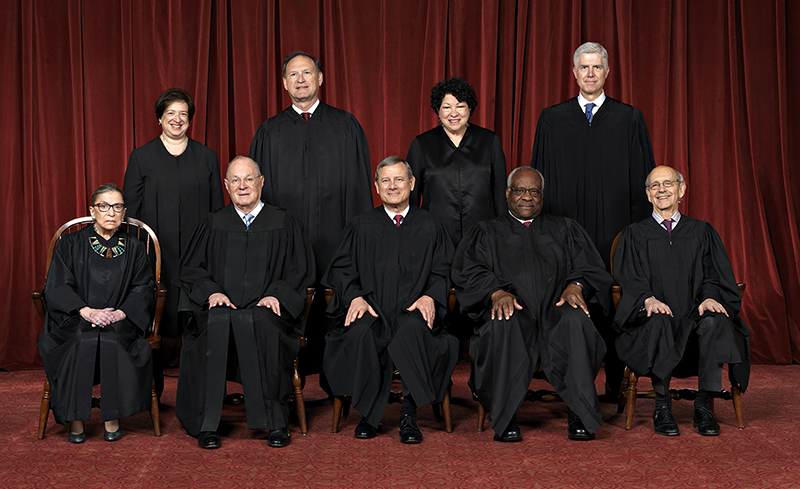
It’s good to understand that the conservative justices hold a 5-4 majority on the court. That majority won’t change.

Indeed, I am of the opinion that’s being shared that the next swing vote will likely belong to none other than Chief Justice John Roberts, who on occasion has sided with the liberal bloc of justices on key decisions, such as the ruling that upheld the Affordable Care Act.

The court’s conservative-liberal balance won’t change fundamentally, in my view, with whoever the president nominates.

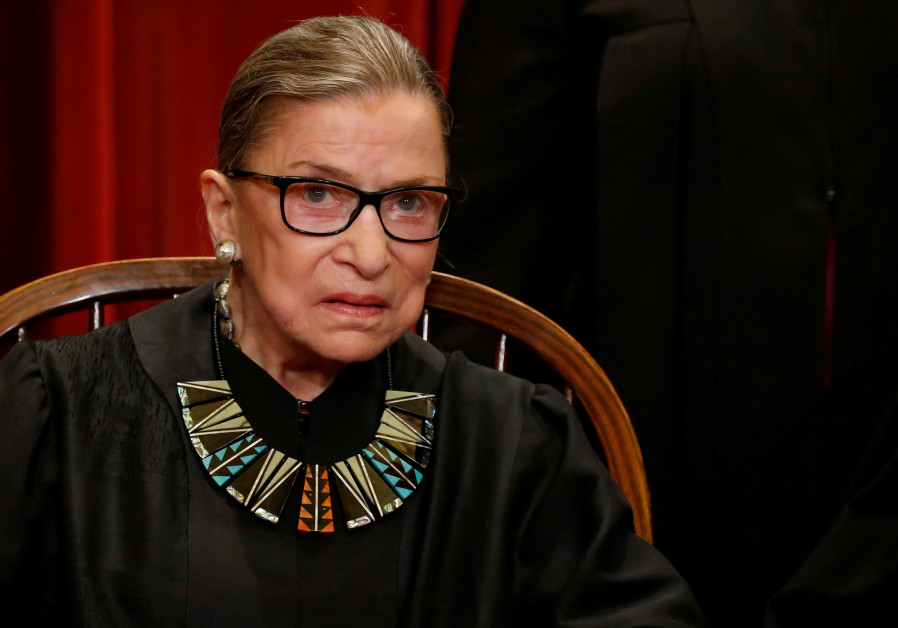
The serious crap storm is going to erupt in the event one of the court’s liberal justices decides to call it a day.

However, the president’s selection — which he plans to announce on July 9 — is no doubt going to endure the kind of public scrutiny not seen since, oh, Robert Bork was defeated in 1987.

The symmetry of that fact also is fascinating.

The U.S. Senate rejected Bork’s nomination; then Douglas Ginsburg pulled out after admitting to smoking weed while in college. President Reagan’s third pick for the court? Anthony Kennedy.

The battle has begun for this SCOTUS seat

Justice Anthony Kennedy’s decision to leave the U.S. Supreme Court has launched arguably the greatest court confirmation battle we’ll see in the next 50 years.

Kennedy is seen as a “swing vote” on key decisions, siding at times with the liberals on the court, but mostly with the conservatives. He was, after all, nominated by President Reagan.

The fight will be fierce. It will get ugly. It will show us just how creative Senate Democrats can get in their vow to fight this nomination to the hilt — if they decide to take it all the way.

I’ll make this prediction, though: If this fight gets as bloody as many of us believe it will, do not expect any of the liberals on the court to leave the bench for as long as Donald Trump is president of the United States.

And let us put down forever any notion that politics doesn’t drive the (a) nomination of a justice or (b) his or her confirmation by the U.S. Senate.

Do the people deserve to be heard this time?

U.S. Senate Majority Leader Mitch McConnell had this to say in February 2016 as it regarded President Barack Obama’s desire to nominate someone to replace the U.S. Supreme Court Justice  Antonin Scalia: The American people should have a voice in the selection of their next Supreme Court Justice.

Hmm. What do you think of that?

Here we are, in June 2018. The Supreme Court has just been opened up yet again. Justice Anthony Kennedy has announced his retirement. Sen. McConnell said he intends to push for a Senate vote by this fall.

Hey! Wait a minute!

We have an election coming up. One-third of the Senate, which must confirm the next appointee, is on the ballot. It could swing from narrow Republican control to Democratic control after the November midterm election.

Don’t the “American people” have the right to be heard in the selection of the next Supreme Court justice? Don’t they, Mr. Leader?

That was his bogus rationale in blocking Merrick Garland’s nomination from President Obama in 2016. The president had a year left in his tenure. We had a presidential election coming up later that year. McConnell said “no way” on the nomination. He blocked it. He obstructed the president. He then — in a shameful display of a lack of self-awareness — accused Democrats of “playing politics” when they insisted that the Senate hold confirmation hearings and then vote on Garland’s nomination.

If anyone “played politics” with that nomination, it was Mitch McConnell!

Now, the leader wants to fast-track the latest Supreme Court nomination on the eve of an equally important election that could determine the ideological and partisan balance in the body that must confirm this nomination.

Does this election count as much as the 2016 presidential election? Aren’t U.S. senators members of a “co-equal branch of government”? Or is the majority leader going to play politics yet again by ramrodding this nomination through — before the people have the chance to have their voices heard?

Mr. POTUS, we must ‘have judges’

Donald J. Trump wants to change U.S. immigration policy by diminishing the role of — get a load of this — the federal judiciary.

Trump wants to toss all illegal immigrants out of the country without the benefit of having their cases heard by judges.

The president of the United States today yet again took dead aim at our immigration policy. He called it the worst policy “in the history of the world.” He then said something quite remarkable in a brief give-and-take with reporters gathered at the White House.

Trump noted that when immigrants cross our border, “they have judges.” Yes, judges. These are the men and women who take an oath to administer the law in accordance with the U.S. Constitution, to ensure that federal law doesn’t violate the Constitution.

Federal immigration law — indeed, the 14th Amendment to the Constitution — grants “any person” the right to “due process” and “equal protection” under the law. It doesn’t limit those guarantees to U.S. citizens, let alone to those who come here legally from another nation.

The president’s desire to toss out the Constitution, to ignore existing federal statutes crosses the line into a desire to create an autocracy. He wants to throw into the crapper a fundamental tenet that the nation’s founders insisted on when they created this government. That tenet established a judicial system that is ostensibly free of political pressure and coercion.

Yes, we need more federal judges — not fewer of them — to deal specifically with this issue of immigration. Yet the president now disparages the role these judges play? He disrespects their vital contribution to the administering of justice?

Reprehensible.

Yep, elections do have serious consequences

Oh, brother. Is there any more proof needed about the impact of presidential elections than the decision today handed down by the U.S. Supreme Court?

The high court ruled 5-4 today to uphold Donald J. Trump’s travel ban involving countries from a handful of mostly Muslim countries.

The conservative majority voted with the president; the liberal minority voted against him.

There you have it. Trump’s travel ban will stand. He will crow about it. He’ll proclaim that the court is a body comprising men of wisdom; bear in mind that the three women who sit on the court today voted against the travel ban. Had the decision gone the other way, he would declare the court to be “too political,” he would chastise the justices’ knowledge of the U.S. Constitution (if you can believe it).

The court decision today has reaffirmed the president’s decision to discriminate against people based on their religious faith. Nice.

The partisan vote on the court today also has brought a smile to another leading politician: U.S. Senate Majority Leader Mitch McConnell, whose obstructionism in the final year of the Barack Obama presidency denied Trump’s predecessor the right to fill a seat created by the sudden death of Justice Antonin Scalia. The Constitution gives the president the right to nominate judges; it also grants the Senate the right to “advise and consent” on those nominations. The Senate majority leader decided to obstruct the president’s ability to do his job.

President Obama nominated a solid moderate, Merrick Garland, to succeed Scalia. McConnell put the kibosh on it, declaring almost immediately after Scalia’s death that the president would not be able to fill the seat. McConnell would block it. And he did.

A new president was elected and it turned out to be Donald Trump, who then nominated Neil Gorsuch, who was approved narrowly by the Senate. Gorsuch proved to be the deciding vote in today’s ruling that upholds the Trump travel ban.

Do elections have consequences? You bet they do.

Frightening, yes? In my humble view — given the stakes involved at the Supreme Court — most assuredly.

Trump once believed in ‘due process’

It’s hard to believe, but Donald J. Trump once stood tall for the cause of “due process.”

A one-time White House staff secretary, Rob Porter, faced accusations that he beat up two former wives. He was forced to quit amid storms of protest.

The president then asked out loud about whatever happened to “due process.” Why, Porter deserved the same level of due process that the country grants to everyone else, Trump said.

That was then.

These days, due process has been kicked to the curb. The president now believes that every immigrant who comes into the country illegally should be rounded up and kicked out immediately. Due process be damned! They don’t need any adjudication, he said.

What gives? Does the president favor due process or not?

Sure, I get that he’s trying to make a political point. However, some principles should withstand political pressure.

U.S. law allows illegal immigrants to have their cases heard by the judicial system. Judges have an obligation, according to the law, to hear the immigrants’ stories and decide — based on the law — how their case should be resolved.

The president, though, says that’s no longer necessary.

Get ’em out of here, he says. All of ’em! Refugees? Those fleeing persecution? Violence? Forget about it!

Kick them all out, he says. Now!

Shameful.