Category Archives: legal news

The system worked: Cosby sent to prison

Many of us have griped on occasion about the occasional inequity of the U.S. criminal justice system.

I have to say, though, that today the system worked well.

A judge in Pennsylvania sentenced the man once known as “America’s Dad” to three to 10 years in a state prison and declared William Cosby to be a “violent  sexual predator.”

Bill Cosby’s status as a comic superstar, TV star, iconic figure didn’t matter as the judge sent Cosby to the slammer. What’s more, his name will be etched forever on a sex offender registry when and/or if he gets out of prison; the man is 81 years of age.

A jury convicted Cosby of drugging and raping Andrea Constand in 2004. Other women have come forward to allege that he had done the same thing to them.

I take no joy in applauding the sentence and Cosby’s new status as a prison convict. Some years ago, my wife and I attended an event at West Texas A&M University that featured Cosby, who brought the house down with a rip-roaring stand-up routine.

That was then. The here and now tells us something quite different about Cosby and what a trial jury determined him to be.

He is getting precisely what he deserves.

If you think the Kavanaugh battle is tough, just wait

The fight to seat Brett Kavanaugh on the U.S. Supreme Court has turned into a donnybrook, with charges of sexual assault coming from two women who contend the high court nominee misbehaved seriously when he was a much younger individual.

The battle was joined actually before that, when Donald Trump nominated Kavanaugh to succeed Anthony Kennedy on the nation’s highest court.

From a philosophical standpoint, though, I remain somewhat perplexed as to progressives’ angst over the thought of Kavanaugh joining the court. He is a conservative who would replace another conservative on the nine-member Supreme Court.

Yet the fight has been joined. Progressives don’t want Kavanaugh on the court because they fear he could overturn Roe v. Wade, the landmark ruling that in 1973 made abortion legal in this country.

If you think that this has been the Mother of Supreme Court Battles, just wait — heaven forbid — Trump gets a chance to nominate someone to replace one of the court’s four remaining liberal justices.

Justice Ruth Bader Ginsburg keeps emerging as the next likely jurist to leave the court. She said she isn’t going anywhere as long as Trump is president. I’ll take her at her word, provided she can control her own destiny … if you get my drift.

Justices Stephen Breyer, Sonja Sotomayor and Elena Kagan? They aren’t leaving on their own while Trump is in the White House.

Fate does have a way of intervening, so it’s wise to keep your minds open to potential shock waves when any of the four progressive justices decide it’s time to go.

If you for a moment thought this fight over Brett Kavanaugh is as bad as it gets, then you need to take another look across the political landscape and anticipate the eruption that would occur if Donald Trump gets to find someone to replace one of the court’s liberals.

We’d all better hold on with both hands.

What man wouldn’t face such an allegation?

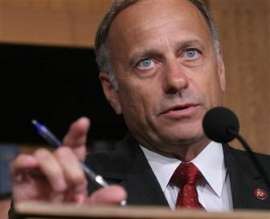
U.S. Rep. Steve King, the Iowa Republican known to utter a bizarre statement on occasion, has done it again.

He has called Christine Blasey Ford, the woman who has accused Supreme Court nominee Brett Kavanaugh of sexual assault when they were teenagers, a character assassin. King said Ford is out to destroy the reputation of a man nominated to the high court by Donald Trump.

He said the following: “You add all of that together and I’m thinking, is there any man in this room that wouldn’t be subjected to such an allegation? A false allegation?”

King paints with a broad brush

Hmm. Let me think about that. Even though I am not in the “room” King referenced, I believe I could avoid being “subjected to such an allegation.” Why? Because I’ve never done the thing that Ford has accused Kavanaugh of doing.

Ford is going to testify before the U.S. Senate Judiciary Committee. Committee Chairman Chuck Grassley, another Iowa Republican, has decided to postpone the committee’s vote on Kavanaugh’s confirmation until after the two principals testify before the panel.

Let’s hear them both out. Let us, moreover, allow ourselves the opportunity to determine who is telling the truth.

As for Rep. King’s weird assertion that implies that no man could avoid being “subjected to such an allegation,” he ought to quit generalizing about men — and certainly about women.

This accuser isn’t looking for publicity

Christine Blasey Ford’s accusation against Brett Kavanaugh is beginning to sound more believable, at least to me.

Ford has accused Kavanaugh, a nominee to the U.S. Supreme Court, of sexually assaulting her when the two of them were teenagers 36 years ago. She said Kavanaugh was drunk, he took her into a room, covered her mouth to keep her from screaming and then groped her, seeking to have sex with her.

Kavanaugh denies the incident occurred.

But the question keeps popping into my noggin: Why would this woman, a university professor, level a charge she knows is false?

She wants the FBI to investigate the case. Does someone with a phony accusation insist on an FBI probe? Ford says she wants a third person to testify before the Senate Judiciary Committee, which is considering whether to recommend Kavanaugh’s confirmation to the nation’s highest court. Would a bogus accuser subject a third person to insult and possible emotional injury?

I still want to hear from Judge Kavanaugh and Professor Ford. I want them to speak to senators about the accusation that has been leveled against a man who wants to interpret the U.S. Constitution at the highest judicial level in the land.

Something tells me there might be more to this than we know.

Wait for FBI probe: What’s wrong with that?

Christine Ford has leveled a serious accusation against Brett Kavanaugh, Donald Trump’s nominee to join the U.S. Supreme Court.

She intends to testify before the Senate Judiciary Committee, but wants the FBI to conduct a thorough investigation before she talks about her allegation: that Kavanaugh assaulted her sexually when they were teenagers.

The FBI can pull together all the evidence it needs to presumably determine whether Ford’s allegation holds up. Or it could come up empty. Or it could produce a result with no definitive answer.

Ford is asking that the FBI do its investigation before she talks.

If it delays Kavanaugh’s confirmation vote, so be it. If his confirmation — should it occur — come until after the court convenes its next judicial term, so be that, too.

The allegation is profoundly serious. Kavanaugh has denied categorically what the accuser has alleged. He is entitled to mount a vigorous defense. Ford, too, is entitled to get a fair and complete hearing of the allegation she has leveled against a man who wants to join the U.S. Supreme Court.

The walls are closing in on the president

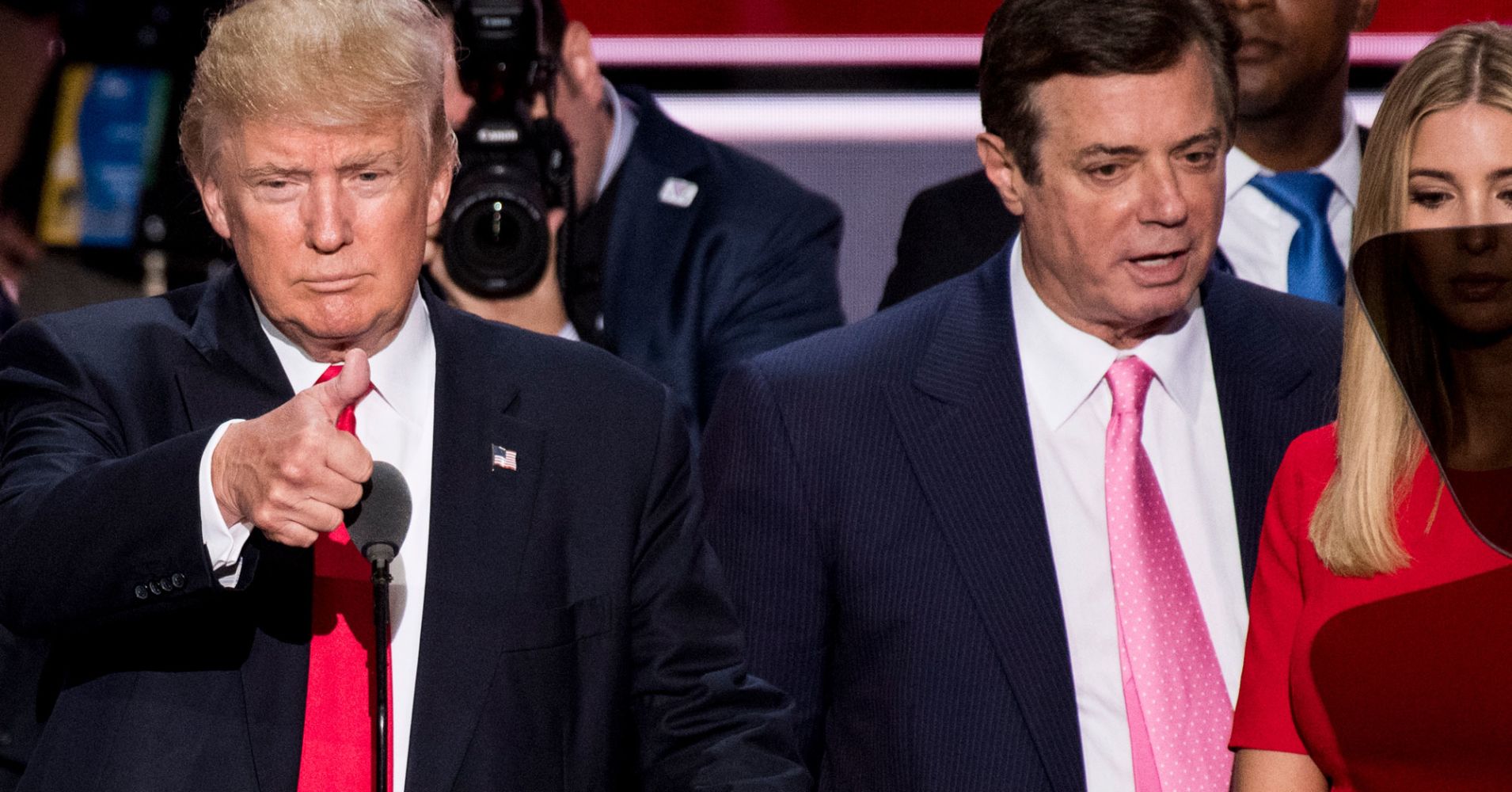
I am pretty sure we can toss aside the comment from the White House that Paul Manafort’s guilty plea will have no impact on special counsel Robert Mueller’s investigation into the 2016 presidential election.

We have come to expect such false bravado from Donald J. Trump’s team. It delivered the goods yet again when Manafort pleaded guilty to two felony charges and gave Mueller a promise to “cooperate” with his probe into whether the Trump campaign colluded with Russians who attacked our electoral system.

Manafort is the biggest fish that Mueller has reeled in. Manafort is the former campaign chairman for Trump. He left the campaign in mid-stride, handing over campaign management duties to Kellyanne Conway.

I, of course, have no way of knowing with any certainty about the mood within the White House. However, when I do the math, I find that two plus two still equals four.

Manafort’s guilty plea and pending cooperation cannot bode well for the president. That brings me to the question of the day: Will the president pardon Manafort and expose himself to accusations of obstruction of justice?

The threat is growing

Trump shouldn’t go there. Then again, he has shown a tendency to do things just because he can. The president has unquestioned power to pardon anyone he chooses. Is this president enough of a fool to do the most foolish thing imaginable at this point in the investigation? I am not putting a single thing past this guy.

Yes, the walls are closing in. However, I won’t predict the president’s downfall. I mean, he wasn’t supposed to win the 2016 election in the first place.

We all know what happened.

Federal judiciary: more political than ever?

I have long supported the principle of an “independent” federal judiciary, whose members are given jobs for life if they choose to stay at their post for as long as they draw breath.

The nation’s founders established it all at the beginning, giving the president the power to select these individuals and the U.S. Senate to confirm them.

My thoughts — naive though they were — believed that such independence would insulate judges from political pressure.

Oh, man! I was as wrong as I could be.

Brett Kavanaugh has provided us just yet another example of how mistaken I have been. Donald J. Trump selected him to succeed Anthony Kennedy on the U.S. Supreme Court. The president has made his judicial preferences clear: He intends to nominate judges who will toss out Roe v. Wade, the landmark ruling that legalized abortion.

Thus, the political wind has swirled all over Judge Kavanaugh. He has said something about Roe being “settled law,” which gave pro-choice advocates some hope that he would leave the ruling alone were he to have to decide a case down the road.

Others aren’t so sure.

Presidential elections surely have consequences. Trump won the 2016 election and already has won the confirmation of Neil Gorsuch to the nation’s highest court. Kavanaugh is set to join the court.

Is he free of political pressure? No. He isn’t. Not by a long shot. Indeed, all federal judges — from trial bench judges, to all level of appellate court judges — face political pressure. It doesn’t let up after they take their seats on the bench. Yes, it gathers incredible steam as they seek confirmation.

I won’t back down from my strong belief in presidential appointment of federal judges. Their lifetime jobs give them some semblance of independence from run-of-the-mill political pressure.

Sadly, it doesn’t eliminate it.

Yes, elections have consequences

Brett Kavanaugh is likely to be confirmed by the U.S. Senate to become a justice on the Supreme Court.

Is he the kind of judge I want on the court? No. But here’s the deal, and I take no pleasure in acknowledging this: Donald Trump is the president of the United States; he was elected in 2016 by winning enough electoral votes to take the nation’s highest office; he gets to nominate individuals to the high court.

Elections have consequences. Of that there can be no doubt.

Kavanaugh is qualified to serve. I heard much of the Senate Judiciary Committee hearing. I listened to Democrats try to trap him into saying something he shouldn’t say. Kavanaugh didn’t take the bait.

I am deeply troubled that the president would declare his intention to nominate someone who would vote to overturn Roe v. Wade, the 1973 landmark ruling that legalized abortion. Tradition usually dictates that presidents not set pre-determined parameters for who gets nominated. This one, though, busted that tradition to pieces.

So, the court will have an even stronger conservative majority if Kavanaugh gets confirmed. I wish it weren’t so. But it appears set to occur.

We’re about to reap the consequence of the 2016 presidential election in a big way. That’s how the system works. I accept the process that has brought us to this point. That doesn’t mean I like it. Far from it.

Memo to POTUS: Leave the NY Times alone

Donald Trump continues to demonstrate his breathtaking ignorance of what the U.S. Constitution guarantees in the treatment of media in this country, which is that government mustn’t interfere with the practice of a “free press.”

However, he’s at it again, saying that U.S. Attorney General Jeff Sessions “should” investigate the New York Times over its decision to publish an anonymous op-ed essay from someone inside the Trump administration. The mystery writer has alleged that the president is out of control and that a “resistance movement” within the administration is pushing back against the president, seeking to curb his more, um, impulsive instincts.

Trump is enraged over the anonymity aspect. He is trying to find out who did it. Hmm, does the term “witch hunt” apply?

Moreover, he wants the Department of Justice to pursue the New York Times over what he calls a “national security” concern.

It’s a reach, Mr. President.

The First Amendment specifically and explicitly protects a “free press” from government interference, intimidation, bullying or coercion. It’s in there. Honest. I’ve read it. So have you.

Trump also has said he is considering some sort of punitive action against the Times. “I’m looking at that right now. It only happened yesterday,” he said.

C’mon, Mr. President! You can’t expect to succeed in bullying a major American newspaper into doing your bidding. I get that he’s angry that someone possibly within his inner circle has spilled the beans on the goings-on in the White House. I expect him to learn the identity of the whistleblower.

However, the notion of punishing the New York Times for giving someone — even someone close to the levers of power — a forum to express their grievance against the federal government goes way beyond what’s acceptable.

Read the Constitution, Mr. President. Start with the First Amendment. You’ll see what it says.

Meet with the judge, Senate Democrats

It’s no surprise to anyone who reads this blog regularly that Brett Kavanaugh is not the kind of jurist I would nominate to a seat on the U.S. Supreme Court.

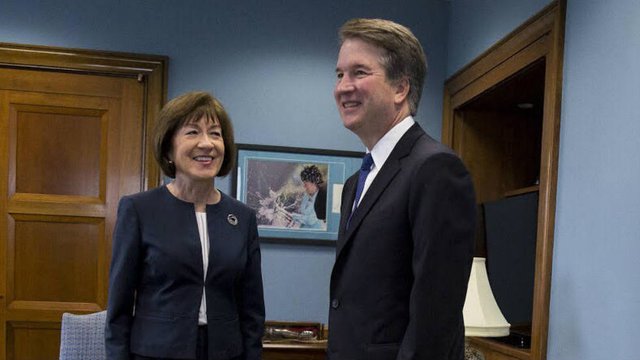
However, it might surprise regular readers of High Plains Blogger to know that I believe U.S. Senate Democrats are wrong to refuse to meet with Kavanaugh prior to voting “no” against his nomination to the nation’s highest court.

Sen. Richard Blumenthal of Connecticut, whose statement is attached to this post, calls the nomination a sham and said he won’t participate in private with Kavanaugh. He is troubled by the conviction of former Donald Trump campaign chairman Paul Manafort of tax fraud and the guilty plea of former Trump lawyer/fixer Michael Cohen to similar accusations.

Here is what I would do if I were a member of the Senate — and y’all can thank God in heaven, as I have, that I am not a U.S. senator. I would sit down with Kavanaugh and then read him the riot act.

I likely would tell him up front that he won’t have my vote, that his lengthy paper trail of judicial opinions and essays is anathema to my own philosophy and that I cannot in good conscience betray my own values.

Then I would shake his hand in front of the cameras, smile and send him on his way.

The idea that these senators — particularly those who will question Kavanaugh during his confirmation hearing — will refuse to meet privately with him is anathema to the kind of decorum and dignity they insist from the president of the United States.

It’s important to remember that presidents have the right under the Constitution to nominate judges to lifetime posts on the federal bench — and that the Senate has the role to “advise and consent” to these nominations.

What is the actual harm in sitting down with this individual and questioning him intently about issues you deem critical — and then voting your conscience?