Category Archives: legal news

Whitaker is going out with a bang

I am wondering if this thought has occurred to those critics of the nation’s acting attorney general’s performance in front of the U.S. House Judiciary Committee.

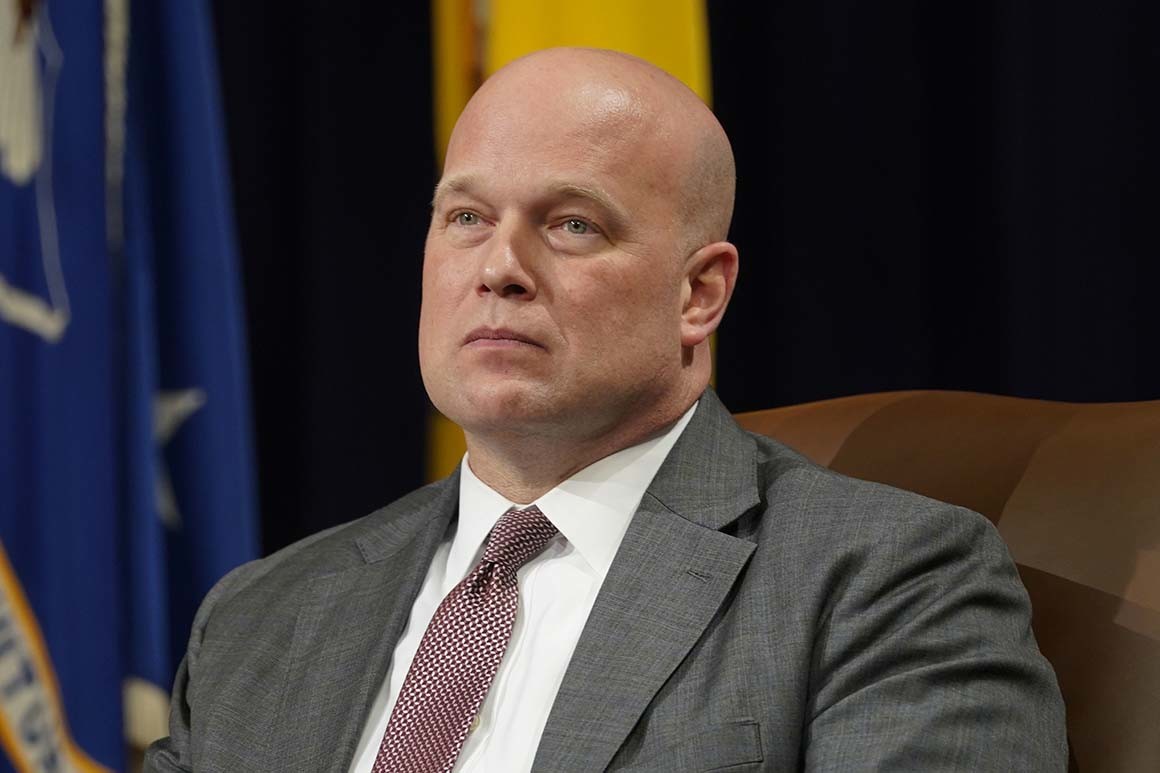
Matthew Whitaker is a lame-duck acting AG. The president has nominated William Barr as the next permanent attorney general.

What, then, does Whitaker have to lose by stonewalling the questions from Judiciary Committee Democrats who pressed him on whether he spoke with Donald Trump about the Russia probe?

Whitaker is going to leave DOJ soon once Barr gets confirmed, which I expect the Senate to do in short order. I am wondering now if he decided to stick it in the Judiciary panel’s ear by refusing to answer simple, declarative questions.

I also am wondering if Donald Trump suggested — or perhaps ordered — Whitaker to dummy up.

Extra glad Whitaker is on his way out as AG

After watching a good bit of acting U.S. Attorney General Matthew Whitaker’s testimony before the House Judiciary Committee, I came away with this major conclusion: I am doubly glad he is on his way out as head of the Department of Justice.

Committee members asked him — and pressed him — to answer a simple question: Do you believe special counsel Robert Mueller is engaged in a “witch hunt” of Donald Trump?

FBI Director Christopher Wray has said “no.” So has the AG-designate, William Barr. Both of those men stand firmly behind Mueller’s integrity and professionalism.

Whitaker’s answer? He didn’t want to comment on “an ongoing investigation.” He said it was “inappropriate.”

Hah! It wasn’t “inappropriate” for Wray to comment. Or for Barr. Whitaker, though, is hiding behind some kind of phony, bogus and dubious pretext that he cannot comment on an ongoing probe into whether Donald Trump’s campaign “colluded” with Russian operatives who attacked our electoral system in the 2016 presidential election.

None of the committee members asked him to comment on specifics of the probe. No one wanted him to give away any secrets. They asked a simple, declarative question that required a simple, declarative “yes” or “no” answer.

I happen to believe William Barr is a fine choice as attorney general. I trust him to be professional who will be beholden to the Constitution and not the president of the United States. This ain’t his first DOJ rodeo, given that he served as AG during Bush 41’s administration.

As for Matthew Whitaker, please go far away — as soon as possible.

Time of My Life, Part 18: Serving as a judicial watchdog

Every so often reporters and editors encounter public officials who actually appreciate the work of holding those officials accountable for their actions.

I met a few of those folks along the way during my 37 years as a journalist. One of those individuals stands out. I want to discuss him briefly to demonstrate that some individuals do not view the media as “the enemy of the people.”

I arrived at the Amarillo Globe-News in January 1995 after spending nearly 11 years as editorial page editor of the Beaumont Enterprise way down yonder in the Golden Triangle region of the Gulf Coast.

We got into our share of scrapes in Beaumont. One fight we had was with a couple of state district judges in Jefferson County. They presided over courts with criminal jurisdiction, meaning that they only tried criminal cases; the civil caseloads were sent to other judges in Jefferson County.

Well, these two judges had to face the Texas Commission on Judicial Conduct, which had received a complaint about the judges’ sentencing practices. These two jurists were in the habit of backdating sentences for individuals convicted of crimes. Example: If someone committed a crime on Jan. 1, but was convicted on Dec. 30, the judge would sentence the individual to a prison term that began prior to the commission of the crime. Such a sentencing practice dramatically reduced the amount of time the individual would serve behind bars.

Such sentencing policies don’t sit well with prosecutors. The judicial ethics commission got a complaint and it dropped the hammer on the two judges. It issued a public reprimand, which in the world of judicial punishment is a real big deal.

We at the Beaumont Enterprise editorialized in support of the Commission on Judicial Conduct’s ruling. We were highly critical of the backdated sentences that were handed down. Our criticism of the local judges obviously angered the two men, but that didn’t dissuade us from calling it the way we saw it.

My time in Beaumont ended and I gravitated to the Panhandle in early 1995. I quickly made the acquaintance of one of the judges who punished the two judges in Beaumont. He was John Boyd, chief justice of the 7th Texas Court of Appeals headquartered in Amarillo.

Justice Boyd knew of my background and for years after our first meeting he would invariably bring up the editorial support we gave to the judicial conduct panel on which he served. He would tell others with whom we would meet of the position we took to endorse the punishment handed out to those backdating judges.

I always appreciated — and still do! — the recognition that we sought only to hold judges accountable for their actions. If any of “our” judges got stepped on, well, so be it.

By all means, change the Texas judicial election system!

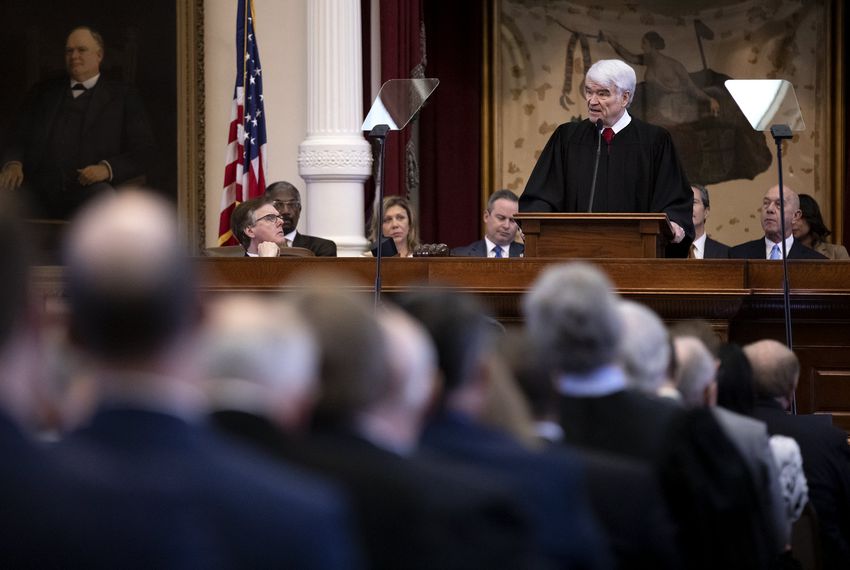
Texas Supreme Court Chief Justice Nathan Hecht has just elevated himself greatly among those of us who detest the way the state elects its judges.

Chief Justice Hecht wants the Legislature to do away with partisan election of judges. He wants a total overhaul of the judicial election system. He has called on merit selection and retention elections to replace the ghastly status quo in which highly qualified judges are tossed aside on a strictly partisan basis.

Hecht has walked this path before. I suppose I just haven’t been paying careful enough attention until now.

To be clear, the chief justice was stung by the loss of key Republican judges in the 2018 midterm election. Appellate courts flipped from GOP to Democratic control, which I guess alarms the Republican chief justice.

Whatever the case, or his motives, I totally support his call for judicial election reform.

Hecht made his remarks in his State of the Judiciary speech. He said, “Make no mistake: A judicial selection system that continues to sow the political wind will reap the whirlwind.”

So it happened in 2018. And so it has gotten the attention once again of the state’s top civil appellate court’s chief justice.

I long have bemoaned the partisan election of judges in Texas. I have sought over the course of many years in Texas to get judges and judicial candidates to explain to me the “difference between Democratic and Republican justice.” Not a single one of them ever explained the difference in any fashion that made a lick of sense.

To be clear about another point as well, not all judges want the kind of reform that Hecht has proposed. I remember asking the late state Sen. (and later a Supreme Court justice) Oscar Mauzy of Dallas whether we should go to a form of merit selection for judges. He came unglued. Mauzy, a ferocious, partisan Democrat, said appointing judges was akin to a “communist” system of justice. He loved running as a Democrat and wasn’t about to support any change in the Texas judicial election system.

Texas Republicans long have prospered in these judicial contests. The Supreme Court and the Court of Criminal Appeals — the state’s two highest appellate courts — comprise 18 GOP jurists. Thus, to hear a Republican chief justice call once again for this significant judicial reform is, well, the rarest of calls.

Thank you, Mr. Chief Justice, for trying to pound some sense into the state’s political power structure.

Mueller is a pro and he is doing his job well

Robert S. Mueller III doesn’t need a chump blogger such as me out here in the middle of Donald Trump Country to defend him.

I will do so anyway.

The president of the United States and his allies have squawked themselves hoarse — in a manner of speaking — while denigrating the work that Mueller has done in pursuing the truth related to “The Russia Thing.”

Trump calls Mueller’s probe a “witch hunt,” he calls it “rigged,” and asserts that Mueller has found zero evidence of “collusion” between the Trump 2016 presidential campaign and Russian operatives who attacked our electoral system.

I am forced to wonder aloud: How does someone pile up 37 indictments and guilty pleas while conducting a “witch hunt”?

Back when then-Attorney General Jeff Sessions recused himself from the Russia probe, deputy AG Rod Rosenstein selected Mueller — a former FBI director and a crack prosecutor — to lead the investigation. Mueller’s appointment was greeted in the moment by partisans on both sides of the aisle with universal acclaim. Politicians called it an inspired choice and were delighted that Mueller accepted the challenge of getting to the root of the Russia matter.

Then he began sniffing out Donald Trump’s closest aides and campaign advisers. Suddenly Mueller’s name became mud in the eyes of Republicans. Donald Trump has been relentless in his haranguing of Mueller via Twitter.

I continue to believe that this decorated Vietnam War combat veteran, a former U.S. Marine, is the man who partisans hailed when the Justice Department named him special prosecutor.

Having said that, do I want this probe to end soon? Yes! I do! I want Mueller to wrap it up. However, I want him to finish his task without interference from the DOJ, or from William Barr, who’s been nominated by Trump to be the next AG to succeed Jeff Sessions. I have faith that Barr will honor his pledge to let Mueller finish his task under his own power and on his own terms.

I’ll just make one request — yet again — of the special counsel: Release as much as he possibly can of what he finds to the public. We are spending a lot of public money on this probe and the public deserves the chance to see if this money is worth the investment we have made in the pursuit of the truth.

This judge set the bar quite high for others to clear

I do not believe it is an overstatement to declare that the Texas Panhandle legal community has lost a legendary figure.

Senior U.S. District Judge Mary Lou Robinson was that rare individual whom others aspired to emulate. She died this past weekend at the age of 92. To say she will be “missed” is to say that the Super Bowl is “just another football game.”

During my nearly 18 years as editorial page editor of the Amarillo Globe-News, I was privileged to interview dozens of candidates for state and county judgeships. Most of them were serious about seeking the job and in serving their community and state. Almost to a person they would include a laudatory statement about Judge Robinson. They would say that this veteran jurist set the standard for judicial excellence. They intended to pattern their conduct on the bench after her.

Yes, she was revered by those within the legal community.

Judge Robinson was a pioneering individual. She was the first woman to serve on the Potter County court at law bench; she would serve on the state district court bench and then on the Seventh Court of Appeals. After that she became the first judge appointed to fill a seat in the newly created Northern U.S. Judicial District of Texas. President Carter appointed her in 1980 and she worked full time as a federal judge until only recently, when she took “senior status,” enabling her to preside over trials of her choosing.

And let us not forget her presiding over the widely covered “beef trial” involving Oprah Winfrey, who got sued by some Panhandle cattlemen over a remark she made about mad cow disease during one of her TV shows. The cattlemen wanted the trial to occur in Amarillo, perhaps thinking they could get a favorable ruling from a local judge.

Winfrey prevailed in the lawsuit.

I did not know Judge Robinson well, although we did serve in the same Rotary Club for many years. She was always gracious, even though she knew I was a member of the media. I mention that because Judge Robinson rarely conducted interviews; I always had the sense that she was mildly uncomfortable with those of us who reported on and commented on issues of the day.

I want to share one more quick story. The Globe-News welcomed a young reporter some years ago who I believe was assigned to cover the courts. He wanted to meet Judge Robinson, who he knew only by reputation; he asked me if I could arrange the meeting. I approached the judge at a Rotary Club meeting and asked her if she would be willing to meet this young man. She agreed.

They met in her office in downtown Amarillo and, according to my colleague, she could not have been warmer, more welcoming and gracious. I recall him telling me she wanted to talk mostly “about her grandchildren” and showed off pictures of her family.

The jurists who will continue to seek to emulate this judicial icon could not have chosen a better model.
Barr faces different Congress in a different era

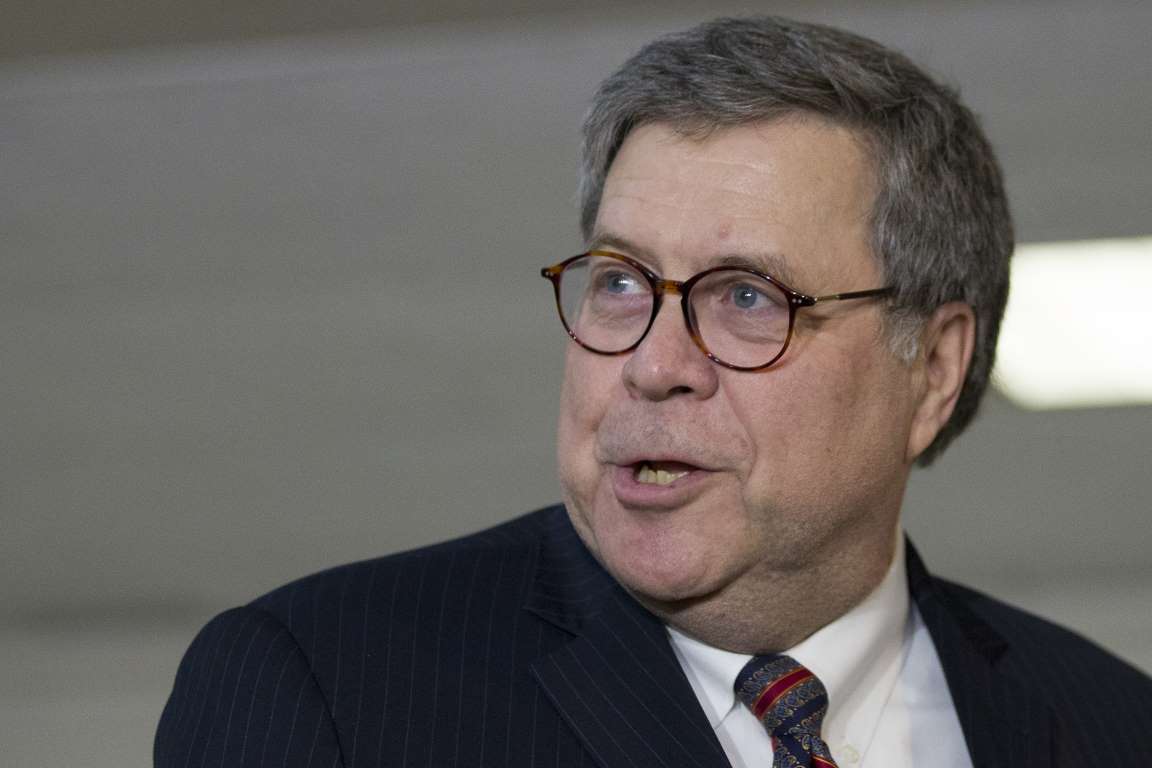
William Pelham Barr surely knows that he is stepping onto political terrain that is a universe apart from where he once ventured.

President George H.W. Bush nominated him to be attorney general in 1991 and he sailed through confirmation, being approved unanimously by the Senate Judiciary Committee and by the full Senate.

Another president, named Donald Trump, has selected him for the top justice job once again. Will he sail effortlessly to confirmation? Nope. It won’t happen.

This is a different time. We have a different type of man in the Oval Office. The climate in Washington is far more toxic than it was when the AG-designate strode upon the national scene back in the old days.

The government is partially shut down. Questions are swirling all around the president. The previous attorney general, Jeff Sessions, got fired because he acted ethically by recusing himself from an investigation into a circumstance in which he was a principal player; he then incurred the president’s wrath for standing up for the rule of law and for DOJ ethics policies.

William Barr is facing tough questioning from Senate committee Democrats. He is handling himself well and I happen to believe he should be confirmed as attorney general, largely because he is now on record as committing himself to ensuring that a key investigation into Trump’s campaign is completed fully and without political pressure or interference.

Yes, there is plenty to concern Americans. I would prefer that Barr commit to letting the public view special counsel Robert Mueller’s report when he issues it. However, he has stated that Mueller — whom he has known for 30 years — is not engaging in a “witch hunt” and has expressed confidence in the integrity of his probe.

And . . . he has told senators that he won’t allow the president to bully him the way he did Jeff Sessions.

This confirmation process is going to be a lot tougher for William Barr than it was the first time. It’s merely a symptom of the era into which we entered upon the election of Donald Trump as president of the United States.

AG-designate Barr: Mueller must finish his task

William Barr is saying precisely the correct thing as it regards an investigation into the president of the United States.

The U.S. attorney general-designate has stated that it is “vitally important” that special counsel Robert Mueller be allowed to finish his exhaustive examination of Donald Trump’s conduct while running for the presidency and since he took office.

He will tell the Senate Judiciary Committee that very thing beginning on Tuesday when he sits before the panel that will decide whether to recommend him for confirmation by the full Senate.

Confirmation hearing on tap

What’s more, Barr has let it be known that it is “very important” that Mueller’s findings are released to Congress and to the public. There shouldn’t be any hiding of the facts from Americans who want to know the details of what Mueller’s legal team will have concluded.

At issue, of course, is this matter of “collusion” with Russian operatives who attacked our electoral system in 2016. Did the Trump campaign cooperate with the Russians? If so, to what end? If not, then we need to hear that, too.

Barr, who served as AG during the George H.W. Bush administration, is certainly no stranger to senatorial inquiries. Indeed, he is considered to be a fine lawyer with a stellar pedigree.

For the prospective attorney general to allay the fears of many who thought he might impede Mueller’s probe is welcome news.

I doubt seriously whether the statement that Barr issued today is going to prevent Judiciary Committee members from asking him directly whether he will guarantee that Mueller is allowed to finish his job.

Let them ask. Barr then will go on the record with his assurances.

Hoping new AG lets Mueller finish his task

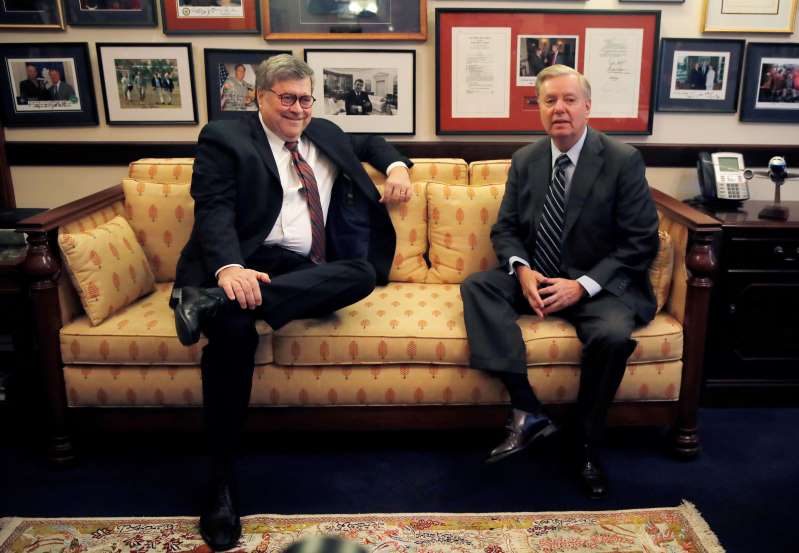
I have hope that U.S. Sen. Lindsey Graham has some deep inside knowledge that he’s now sharing with us.

The South Carolina Republican says that Attorney General-designate William Barr is going to let special counsel Robert Mueller finish the job he began more than a year ago. His task is to determine whether the allegations of “collusion” between the Donald Trump presidential campaign and Russian operatives who attacked our electoral system are true; he also is examining allegations of obstruction of justice, of conspiracy and perhaps all kinds of matters related to the 2016 election and beyond.

Trump selected Barr to succeed Jeff Sessions as AG, whom the president fired because he had the gall to recuse himself from the Russia probe. Sessions had the good sense to recognize potential conflicts of interest, given his role in the campaign and in the transition. He couldn’t investigate himself, so he handed it off to Deputy AG Rod Rosenstein, who then appointed Mueller as special counsel.

Mueller is getting down to brass tacks, or so we are being led to believe. He has extended the term of a grand jury another six months. Mueller reportedly will finish his probe in late February or in March.

He needs to conclude this investigation on his own terms, under his own power and without interference from the new AG, or the White House or the president himself.

Rosenstein reportedly is going to leave DOJ after Barr gets confirmed. Barr will testify next week before the Senate Judiciary Committee. I am quite sure senators will ask him directly whether he intends to let Mueller do his job. Sen. Graham says he will.

Don’t tease us, Sen. Graham.

That didn’t hurt so much, right, senators?

Eighty-seven to 12.

That was the vote on a measure backed by Donald John Trump to overhaul the federal criminal justice sentencing system. It passed through the U.S. Senate with tremendous bipartisan support.

I trust it didn’t hurt senators who decided to side with the president on this one.

It is a solid piece of legislation that I trust will win House support this week and will go to the president’s desk for his signature.

It has drawn support from across the political spectrum. The American Civil Liberties Union likes it along with many conservative organizations.

My favorite element in the bill is the relaxing of federal sentencing guidelines. Current law requires federal judges to impose mandatory sentences even on those convicted of non-violent drug offenses. The overhaul gives federal judges the flexibility that is granted their colleagues in state judicial systems across the nation.

The president is right to push this legislation through. Those who joined him are showing some much-needed compromise and a bipartisan spirit that has been lacking in Congress dating back for many years preceding Trump’s time as president.

The 12 “no” votes, by the way, came from Senate Republicans who stuck by the same tired old system that too often sends people to prison who really don’t deserve to be there.

Here’s hoping for full enactment of this reform.