Category Archives: environmental news

Harvey now hits where it hurts

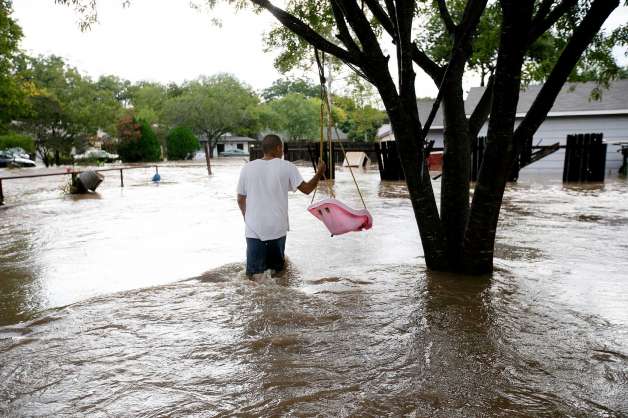
Harvey has stormed ashore again. This time, the storm has savaged my old haunts, my digs. It is hurting more of my friends.

The tropical storm is hitting me where it hurts — in a visceral sort of way.

I don’t know what to do. I might start by sending money to relief agencies that are hard at work trying to lend aid, comfort and safety to the residents of the Golden Triangle.

A career opportunity lured me to the Triangle in the spring of 1984. I spent nearly 11 years working for the Beaumont Enterprise. My family came a few months after I assumed my post. We carved out a good life in a community that seemed to flourish in a universe parallel to the one we left in suburban Portland, Ore.

We made friends for life. They are former colleagues of mine who remain close to my heart. They’re hurting now.

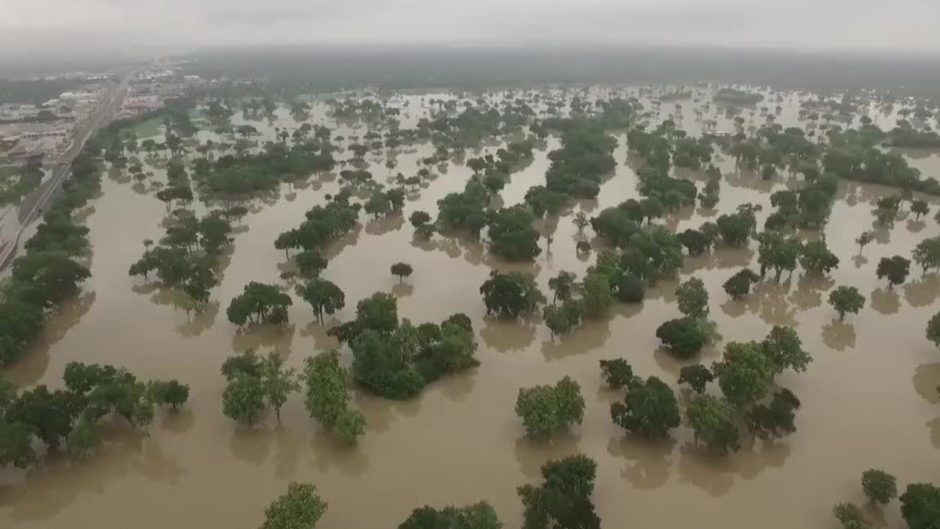
I’ve heard conflicting reports of Beaumont being totally “under water.” The same for Port Arthur, about 20 or so miles south on U.S. Highway 69. Orange — the third city in the Golden Triangle — sits along the Sabine River and it, too, is fending off Harvey’s savagery.

We left a lovely home in Beaumont in January 1995. I got word today from one of my friends — whose home has filled with about 5 feet of water in suburban Lumberton — that my old neighborhood in north Beaumont is likely in “rough shape.” He doesn’t know that with absolute certainty, given that the flood water has limited his mobility. I’ll accept his best guess that our former house is likely inundated.

Dammit, anyway!

The president came to Texas to give his support and to pledge the federal government’s commitment to repairing the devastation brought to our state from the Gulf of Mexico. Gov. Greg Abbott has mobilized the Texas National Guard — something on the order of 12,000 troops — and deployed them to assist local first responders.

The stories I’m seeing on TV and reading on the wires are heartbreaking in the extreme.

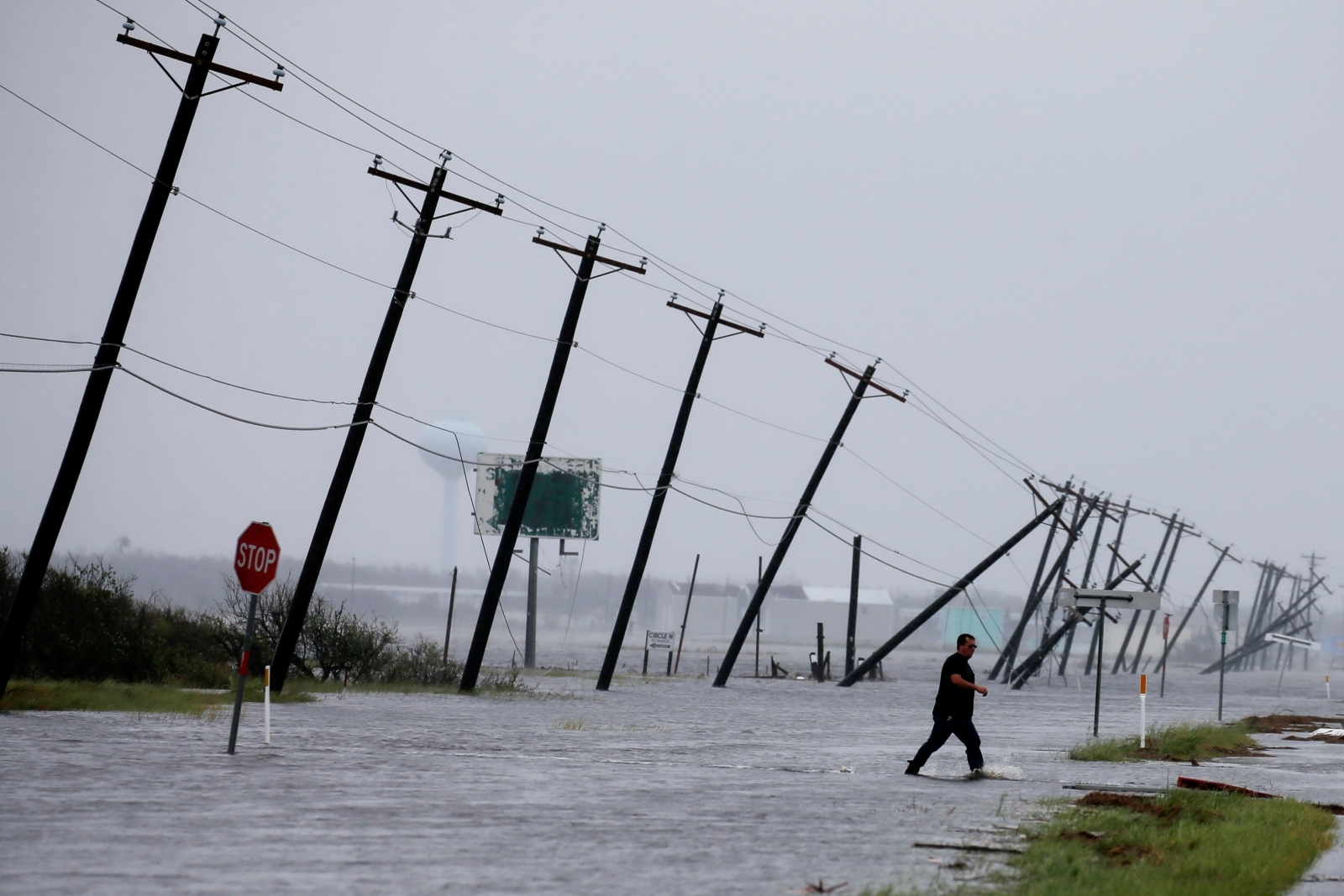
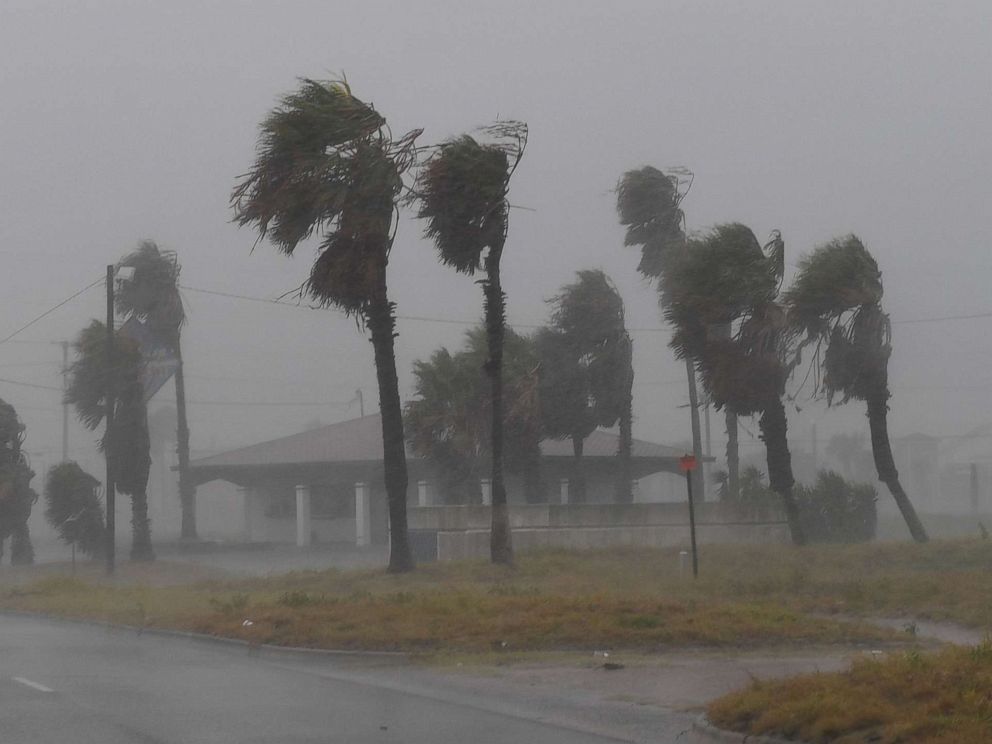
It was heartbreaking to see the coverage from Corpus Christi, Rockport, Port Lavaca, Aransas Pass and Port Aransas. We have some friends along the Coastal Bend, too, and my heart and prayers go to them.

Ditto for what we saw in Houston, where we have more friends and former colleagues. I spoke with one of them before Harvey delivered its heaviest blow; he talked of moving into the second floor of their home. Then the flood came. I called him back, but I haven’t gotten a response. I pray for the safety of this wonderful family. We have other friends scattered throughout greater Houston who are coping and we worry about them, too.

The Golden Triangle’s suffering is a bit different for us. We know the territory well. We know our way around Beaumont. It shatters my heart to see the damage being done — and to see the grief etched on the faces of the storm’s victims.

Social media have enabled us to keep tabs on many of our friends. But not all of them. I am awaiting news that they’re all OK.

I’m on the verge of shedding tears.

Harvey getting set to deliver a second sucker punch

Here it comes … again!

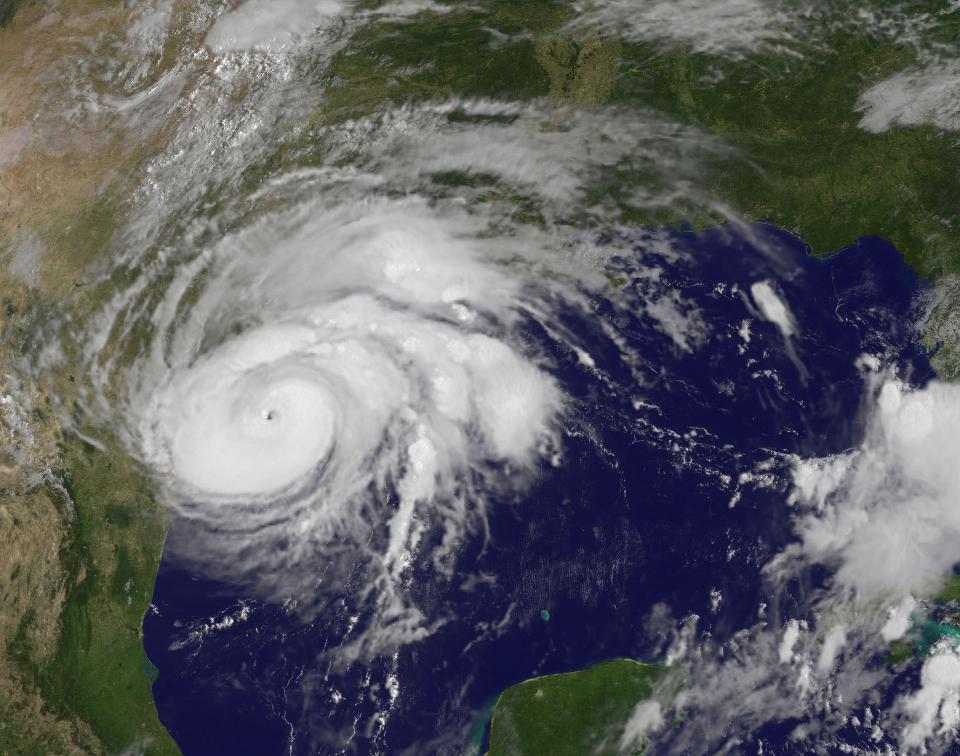
Hurricane Harvey has been “downgraded” to a tropical storm. The beast delivered its havoc to Houston and is still punishing the nation’s fourth-largest city.

Then it decided to back up, move out over the Gulf of Mexico and pick up some more moisture from the overheated body of water. Now the storm is coming back ashore. Where it makes landfall again remains mostly a guess. It’ll be somewhere east of Houston. Possibly near Beaumont, where my family and I lived for nearly 11 years before moving to higher ground in the Texas Panhandle.

What are we to glean from this mayhem, this madness, the utter terror of our friends, neighbors and loved ones having to endure this wrath?

I am going to maintain faith that our fellow Texans are going to show the kind of strength and resolve they usually exhibit in times of terrible distress.

When the acclaimed PBS series on the Dust Bowl aired a couple of years ago, I learned a lot about the steel that runs up the spines of Texas Panhandle residents who survived that terrible time. The series, titled “The Dust Bowl,” recounted the horror that those survivors felt as they watched the ground beneath them blow away. They were children then. Now, quite obviously, they are much older — but their recollections were vivid and so very moving.

Through it all many of them stayed. They fought through the disaster. They rebuilt their lives.

Those earlier Texans have produced generations just like them today and those among us in real time in this moment are enduring another tragedy, brought by another form of nature’s rage.

The storm named Harvey is coming back in. It’s going to do more damage. That’s the terrible news. There can be no “blessing” to derive from this.

However, I anticipate that even after Harvey finishes its terrible task that our Gulf Coast brethren will find a way to rebuild their shattered lives.

God bless them all.

Climate change? Is it really and truly a ‘hoax’?

Believe it or disbelieve it if you wish. When the water recedes along the Texas Gulf Coast and when authorities can account for all the victims and the repair begins to reconstruct thousands of shattered lives from Corpus Christi to the Golden Triangle, there will be a need for a serious discussion.

We’ll need to discuss climate change.

As this item is being posted, Hurricane/Tropical Storm Harvey has just buried the Texas coast under more than 51 inches of rain. It’s the largest single-event amount of rain ever to fall on the continental United States of America. More is on the way.

For the life of me I am having difficulty understanding where all that water is going to go. The topography along the Gulf Coast is flat; the ground is full of water even when the air is dry; the land rises to a “height” of roughly 30 feet above sea level, meaning that the water isn’t going to travel rapidly toward the Gulf of Mexico or seep quickly into the ground.

The normal “steering currents” that guide these hurricanes over land didn’t materialize with Harvey. The storm crashed ashore and then stayed there. It then backed out over the Gulf of Mexico and is set to deliver another deluge farther up the coast.

It’s fair to ask: Did climate change — or global warming — contribute to this catastrophe?

The Gulf already is one of the warmest bodies of salt water on Earth. Its temperature reportedly was even warmer than it is historically, giving Harvey additional fuel to gather up to deliver to the victims awaiting the storm’s arrival.

Climate change deniers do not contribute to the discussion that needs to take place. The new head of the Environmental Protection Agency, Scott Pruitt, denies the existence of climate change. So does the president of the United States, Donald Trump, who calls it a “hoax.”

It is not a hoax, Mr. President. It’s real.

We can debate among ourselves about the cause of the changing climate. I happen to believe that human activity has contributed to it, but that’s just my opinion … for whatever the hell it’s worth.

We must not deny the existence of a change in Earth’s climate, or that the planet’s annual average temperature is warming up. These events have consequences. They are dire. They are tragic.

We’ll need to get to work in due course to put people’s lives back together after the storm clouds lift. The sun will shine again.

However, let us then take part in a meaningful international discussion about how humankind can repair what it has done to the only planet we have.

Hating the feeling of utter helplessness

You know the feeling, I’m sure.

Mother Nature levels her immense power onto a region of this great country and you are left only to wish the very best for those who are being affected.

I won’t suggest that “All I can do is pray.” A clergy friend of mine has reminded us many times over the years that “Prayer isn’t the least we can do; it’s the most we can do.”

So we are left to pray and hope for the very best for those being devastated by Hurricane Harvey’s unthinkable rage.

Social media have offered a pretty good device for those in harm’s way to tell the rest of us that they’re safe and sound. My Facebook news feed is full of such assurances and for that I am grateful on behalf of our many friends throughout the Houston and Golden Triangle areas of Southeast Texas.

Here we sit, though, a good distance away from the havoc. We’re perched way up yonder on the Caprock, high and dry and enjoying the sunshine at nearly 3,700 feet above sea level. The Texas Department of Transportation is advising motorists to avoid travel to the Gulf Coast. If only we could transport ourselves into the storm to lend a hand to the friends we have retained many years after leaving Beaumont for a new life in Amarillo.

And, no, I don’t intend to ignore the misery that has befallen all the good folks who are coping with the storm’s wrath.

So … what is there to do? Except pray.

I can do that. However, it does nothing to assuage my feeling of helplessness.

Hurricane Harvey: the great equalizer

Not too many days ago, the nation rallied and cheered a total solar eclipse that marched the land from sea to shining sea.

We were thrilled and agog at celestial splendor that played out far above us. For the better part of the day, we set aside our political divisions, our angst, our worry and our anger.

That event passed and we returned in short order to our worldly troubles.

Then we had our attention riveted once again to another natural act. Hurricane Harvey has grabbed us all by the throat to remind us yet again that nature’s wrath and rage dwarf anything we can muster up.

The Category 4 storm is continuing to blast South, Southeast and Central Texas. It crashed ashore overnight and it’s going to continuing bringing extreme havoc, misery and more than likely tragedy.

My wife, sons and I used to live on the Texas coast. As I watch the news and try to catch up with events overnight, I keep thinking of — and praying for — our many friends who live along the coast from Beaumont, Houston and down along the Coastal Bend region.

My mind has been yanked away from the political troubles that have occupied me. Indeed, we join our fellow Americans in sending good wishes to our fellow travelers who must endure this destruction this monster storm is delivering.

Think, too, of the extraordinary piece of advice being offered by Texas emergency management officials, who ask folks in the path of the storm to write their Social Security numbers on their arms, just in case.

Mother Nature has this ability to equalize everything. It can “eclipse” our Earthly woes, as we learned just the other day. Those of us who aren’t battered directly by Nature’s wrath are drawn together in a sense of national worry and concern for our fellow Americans.

The rest of it all can wait for Hurricane Harvey to die.

How will Trump respond to this latest disaster?

Donald John Trump made a serious mess of the presidential response to a manmade tragedy, the one that occurred Charlottesville, Va.

He now faces another task: responding to Mother Nature’s disaster that is going to take a dramatic toll on residents of the Texas Gulf Coast.

The president has yet to visit Charlottesville. In the interest of offering constructive advice to a man I’ve been bashing repeatedly since he declared his presidential candidacy, I want to offer this piece of advice. None of this is terribly original, but I offer it to provide some evidence that I’m not just a naysaying critic.

***

Mr. President, be sure you take time to visit the places that are certain to be devastated by the storm’s rage. Don’t wait too long. Don’t dawdle. Don’t let too much time pass before the pain subsides.

Hurricane Harvey is going to blast the living daylights out of the Gulf Coast, most likely near Corpus Christi. It’ll move inland and pour a lot of water on places such as San Antonio and Austin. Flood warnings are out. Texas emergency response officials are doing what they can to get people out of harm’s way.

But this, sir, is the moment for which you must be prepared.

Once the storm clears out of the coastal area, there will be plenty of pain. You’re going to see a lot of Americans picking up the pieces of their shattered lives. They want to know their president cares enough about them to venture into the rubble, to stand with them, to embrace them, to listen to their concerns and to share in their heartache.

You need to bring the entire weight of the federal government to bear in helping these communities repair themselves, That’s what presidents do in times of peril. And take my word for it, Mr. President, this hurricane is going to bring a lot of misery to many thousands of your fellow Americans.

You have to respond to this disaster, sir, in a demonstrable way.

Go to the storm site and tell Hurricane Harvey’s victims that you are with them — all the way!

We’re soaked around here, but is drought really over?

I’m going to have to do the virtually unheard of thing later today: At not quite the halfway point in August, I’m going to empty our rain gauge, which is full of water.

We’ve gotten slightly more than 5 inches of rain at our humble abode in southwest Amarillo so far this month. My wife and I empty it at the end of each month before waiting for more rainfall. This month has been a soaker, man!

The National Weather Service station near Rick Husband Amarillo International Airport reports that Amarillo has received 19 inches of rain year to date; that’s 5 inches more than normal and 6 inches more than we had at this time in 2016.

So, put another way, we’ve achieved just about our average annual amount of precipitation — and we still have more than four months to go in this calendar year.

All of this begs the question: Is the drought over?

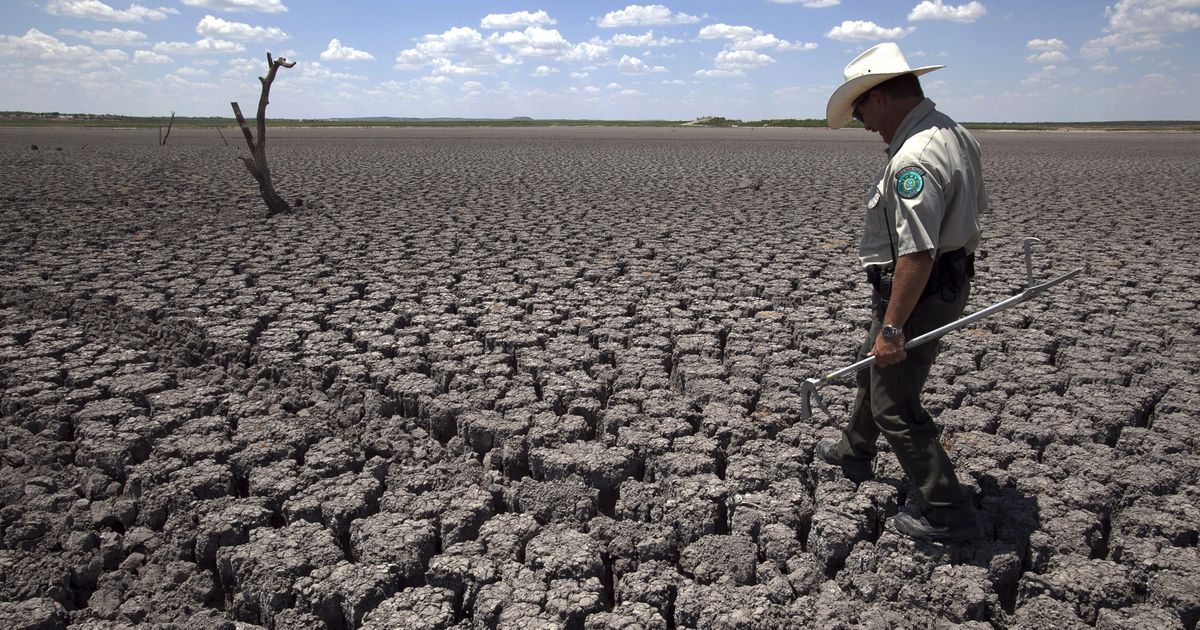
I’ve heard it said about the crippling drought the High Plains endured in 2011 that it would take an epic amount of rain to bring us officially out of drought status. I cannot remember the specifics, but given that the Ogallala Aquifer takes so very long to recharge given its depth that the rain has to fall in virtually biblical amounts to break the drought.

I’m going to continue believing that and monitor my water use accordingly.

We don’t have one of those automated irrigation systems in our yard. So that’s not a particular issue for my wife and me. We serviced our outdoor faucets during the depths of the drought, so we’re good there. We do things in the kitchen such as turn on the sink faucet sparingly when washing dishes. We remodeled one of our bathrooms a couple of years ago and had one of those “gravity flush” toilets installed, which saves water.

We’re not paragons environmental purity. I don’t intend to portray us as such. Water preservation, though, remains on the top of my mind’s awareness, even when it’s pouring out of the sky.

I keep thinking, too, about that fabulous PBS documentary “The Dust Bowl” that aired not long ago. It told the terrible, horrifying story of how prolonged drought and reckless farming techniques formed a sort of “perfect storm” that created what has been called the nation’s “worst manmade environmental catastrophe.” The Texas and Oklahoma panhandles were in the bullseye of that hideous event.

Our farming techniques have improved since the 1930s. Yes, we can control how we take care of our land. The return of the kind of Dust Bowl-era drought, though, is far beyond our meager effort to dictate to Mother Nature.

Let’s keep that in mind — even as we welcome the rain that keeps drenching us.

Manmade or cyclical climate change? Doesn’t matter!

Let’s set aside for a moment the debate over whether Earth’s changing climate is the result of human activity or it’s just part of the epochal cycle the planet goes through every few thousand millennia.

I happen to think human beings do play a big part in it. That’s just me.

The bigger issue of the day is this: It doesn’t matter one damn bit!

Whether the planet’s climate is warming because of carbon emissions or deforestation or whether it’s part of Earth’s life cycle, human beings need to do something about it.

Now! Although it might too late.

The Trump administration has just informed the United Nations that the United States is formally withdrawing from the Paris climate accord, joining those two other stalwart nations that didn’t sign the accords in the first place: Nicaragua and Syria.

Earth’s temperature is rising. Sea levels are rising, too. Indeed, the levels will rise even more once a glacier the size of Delaware melts into the ocean; the iceberg broke off of Antarctica recently.

Climate change deniers — led by the current head of the U.S. Environmental Protection Agency — insist that there’s nothing we can, or should, do to abate those changes. We have members of our Congress who suggest that since human activity isn’t the cause that human beings shouldn’t be held responsible to slow it down, if not stop it altogether.

The president of the United States calls climate change/global warming a “hoax” perpetrated by China and other great powers seeking to intimidate the U.S. fossil fuel industry.

I keep coming back to a simple, fundamental point: Whatever the cause — cyclical or at human hands — we human beings are the dominant life form on Planet Earth. Old Testament scripture instructs us to “fill the Earth and govern it.”

So, are we going to govern it or are we going to just sit back and let nature’s forces have their way?

Yes, I know that human beings cannot match nature’s power. I know we cannot change the flow of the rivers, or stem the tides that will rise no matter what we do to prevent it.

Human beings, though, can insist we stop decimating our forests, depriving the planet of vegetation that oxygenates our atmosphere; without it, the air fills with CO2 and, by design, grows warmer. It’s that simple.

Will any of that prevent Earth’s climate from changing? Probably not. However, it is better to seek to do something than to do nothing at all. That’s what good stewards of the world we inherited must do.

Gore was ‘wrong’ about Trump

Albert Gore Jr. must possess a bottomless wellspring of hope in his soul.

The former vice president told Stephen Colbert this week that he had hoped Donald J. Trump would change his mind regarding his decision to pull the United States out of the Paris climate change accord.

He has given up. The former VP says on Colbert’s late-night talk show that Trump is beyond redemption regarding climate change, which has been Gore’s signature issue since leaving the vice presidency in January 2001.

According to The Hill: “I went to Trump Tower after the election,” said Gore, who was on the show to promote his new movie, “An Inconvenient Sequel: Truth to Power.”

“I thought that there was a chance he would come to his senses. But I was wrong.”

The former vice president perhaps can take some solace in the belief — at least I believe it — that Trump doesn’t understand climate change or that he doesn’t grasp the theories floated by scientists around the world that human activity is a major cause of the planet’s changing climate.

Science means nothing to the reality TV celebrity-turned-president of the United States.

It doesn’t make Al Gore feel any better, to be sure. Perhaps his wellspring of hope is diminished somewhat as it regards the president of the United States.

Why take aim at grizzlies, Mr. President?

Donald J. Trump’s latest executive order has me scratching my head in utter disbelief.

The president has removed the Yellowstone grizzly from the Endangered Species List. I don’t get this one. Not at all!

There are roughly 700 of the beasts in the wild near the fabled national park that sits in the northwest corner of Wyoming and which straddles the state lines of Idaho and Montana.

Seven hundred!

Is that a lot of the big bears? I don’t consider 700 animals as constituting a glut of them. The president, though, suggests that the Yellowstone grizzly population has increased sufficiently to warrant its removed from the ESA.

“The ongoing recovery of Yellowstone grizzly bears is an undeniable example of how the ESA can bring a species back from the brink. However, we are concerned over how grizzly bears and their habitat will be managed after delisting,” said Jamie Rappaport Clark, president of Defenders of Wildlife.

Interior Secretary Ryan Zinke, a former congressman from Montana, hailed the delisting. So did Wyoming Gov. Matt Mead and Montana U.S. Sen. Steve Daines, both Republicans.

Call me an unapologetic animal lover. I don’t want these magnificent beasts’ habitat compromised any more than it already has been, even with its listing on the ESA.

I’m not at all clear on the ill effects that the bear’s presence on the Endangered Species Act has brought to any human being. Where is the harm? What does its removal from that list mean for the beasts’ future?