Category Archives: State news

Build a wall along a river? How do you do that?

border-wall1

My friend Rick has asked a perfectly reasonable question regarding the wall that Republican presidential nominee Donald Trump wants to build along our nation’s southern border.

How’s he going to do that, Rick asks, along the Rio Grande River, which comprises the entire border between Texas and Mexico?

He points out three obstacles facing Trump’s plan to build that wall:

* Does he build the wall on the Texas side of the river, denying Texans access to the river?

* Does the wall go up in the middle of the river?

* Finally, does Trump propose to build the wall on the Mexican side of the river, in territory governed by another sovereign nation?

Trump is going to Mexico City on Wednesday to meet with Mexico’s president.

He’s got some serious fence-mending ahead of him.

If he’s willing to apologize for all the insults he has hurled at Mexican citizens — and remember, he says he never apologizes — then he’s got to figure out a way to explain to his hosts how he intends to make Mexico pay for the wall.

I believe I’ve heard the Mexicans say there’s no way on God’s Earth that they’re going to foot the bill for the wall.

Travel safely, Donald.

Voter ID law: an overreach … perhaps?

Ballot-Texas_jpg_800x1000_q100

Texas legislators were so convinced that voter fraud had reached epidemic proportions in the state that they enacted a law requiring everyone to show photo identification when they registered to vote … and then voted.

Is it the problem, the crisis, the scourge that lawmakers feared?

Apparently not.

https://www.texastribune.org/2016/08/22/texas-prosecuted-15-illegal-voting-cases-none-invo/?mc_cid=97b9db7408&mc_eid=c01508274f

According to the Texas Tribune, the state prosecuted a total of 15 cases of voter fraud from 2012 until the 2016 state primary.

Fifteen! That’s it.

Most of the cases actually prosecuted involved something called “illegal assistance” of voters, which would be banned by the voter ID approved by the 2011 Texas Legislature.

It’s been said of some legislative remedies that they are “solutions in search of a problem.” This one seems to fit that description.

The Tribune reports: “Texas’ contested law, passed in 2011, requires voters to present one of seven approved forms of government-issued ID at the polls. In July, the U.S. 5th Circuit Court of Appeals in New Orleans ruled the law violates parts of the Voting Rights Act. For the November election, people without ID will be allowed to vote if they sign a sworn statement. A spokesman for the Texas attorney general said ‘this case is not over’ and the agency is considering an appeal to the U.S. Supreme Court.”

I am not vehemently opposed to requiring individuals to prove they are who they say they are. We ask people to produce ID when they cash a check, check in for flights at airports or make withdrawals from bank accounts.

Yes, voting is important. It’s crucial that we protect the integrity of this fundamental right.

But the study reported by the Tribune suggests to me that the rush to approve voter ID requirements was an overheated response to an equally overblown problem in Texas.

Trump ‘endorses’ possible Perry bid against Cruz

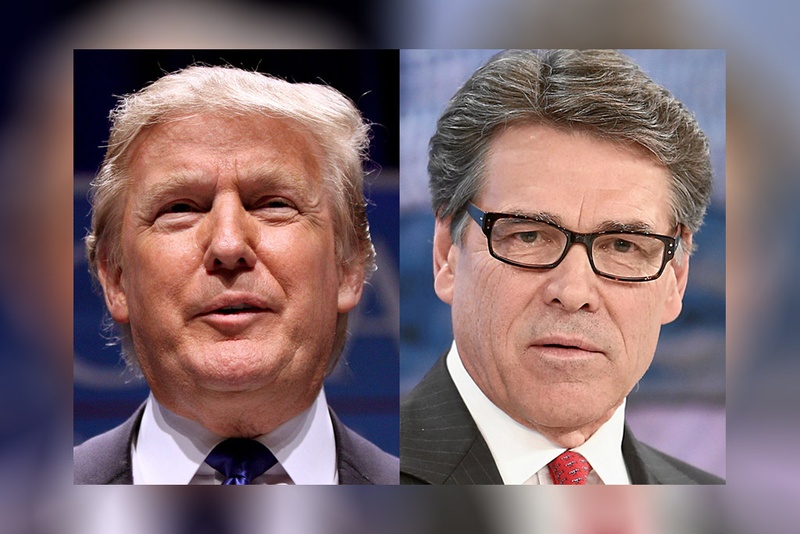
DonaldAndRick_TT_jpg_800x1000_q100

Is there any alliance more fragile than one built out of political necessity?

I think not.

Donald J. Trump came to Texas this week for a rally in Austin. Someone asked him about reports that former Texas Gov. Rick Pery is considering a challenge in 2018 against U.S. Sen. Ted Cruz.

The Republican presidential nominee said, according to the Texas Tribune: I’ve been hearing a lot about that and I don’t know if he wants to do it, but boy, will he do well,” Trump said of Perry. “People love him in Texas, and he was one great governor.”

https://www.texastribune.org/2016/08/24/donald-trump-encourages-rick-perry-challenge-cruz/

Talk about a clumsy political dance.

* Gov. Perry once was a GOP candidate for president; he dropped out.

* Then he endorsed his fellow Texan, Sen. Cruz, who fought Trump nearly all the way to the convention before he, too, dropped out.

* Perry then endorsed Trump.

* Cruz, meanwhile, declined to endorse Trump when he spoke at the Republican convention, drawing a huge chorus of boos from the delegates who heard Cruz encourage Republicans to “vote your conscience” this fall in the race against Democratic nominee Hillary Rodham Clinton.

Now we have Trump visiting Texas’s capital city and all but enticing Perry to make a run for the Senate if he’s so inclined.

It’s becoming something of a parlor game these days to try to understand Trump’s thinking on, oh, just about anything and everything.

Would the party’s 2016 presidential nominee actually endorse Perry over Cruz? Would it matter if he did?

What’s more, is Rick Perry seriously thinking about a campaign against the guy he endorsed for president first?

Or is Gov. Perry among the Republicans who are angry at Sen. Cruz for failing to endorse the party’s presidential nominee?

Austin is ‘weird,’ all right

RobertMorrow-Meeting_jpg_800x1000_q100

There’s a saying one sees on bumper stickers or on wall posters in Austin, the capital city of Texas.

It urges everyone to “Keep Austin Weird.”

Well, a fellow named Robert Morrow is doing his part. He’s doing more than his part, actually. He’s gone above and beyond the call.

Morrow is the former head of the Travis County Republican Party. He had to quit his party job when he announced he would run as a write-in candidate for president of the United States.

But before he left his party office, Morrow had some choice words to say about the GOP’s presidential nominee.

When Trump appeared at a campaign rally earlier this week in Austin, Morrow paraded outside the meeting hall with a sign that read “Trump is a child rapist.”

https://www.texastribune.org/2016/08/25/travis-county-gop-set-try-oust-morrow/

Morrow said later that the party sought to oust him because he had “embarrassed the living f*** out of Trump.”

Texas GOP Chairman Tom Mechler of Amarillo, of course, is having none of Morrow’s behavior. He wants him gone. Morrow, according to the Texas Tribune, responded by inviting Mechler to “perform a sex act” on him.

Mechler, someone I’ve known for years, is moving forward with selecting a new Travis County party chair.

Good luck, Mr. State Chairman, in that search. Just remember: There’s a reason Austin is proud of its weirdness.

Texas GOP coasts while others sweat Trump

7C2A3477_jpg_800x1000_q100

The Texas Tribune headline describes the article below as an analysis of how the Texas Republican Party is so serene in this tumultuous election year.

While other state party leaders are sweating bullets over the fate of their down-ballot candidates in a campaign led by GOP presidential nominee Donald J. Trump, Texas’s Republican Party is as confident as ever about success.

I think I know the reason.

It’s the lack of a viable Texas Democratic Party.

https://www.texastribune.org/2016/08/24/analysis-why-texas-gop-isnt-panicking-over-trump/

Trump continues to hold a lead over Democratic nominee Hillary Clinton in Texas. The latest PPP poll puts Trump up by 6 percent; yes, it’s a smaller margin than what Mitt Romney or John McCain won by over Barack Obama in the previous two elections, but it’s also outside the margin of error.

Ross Ramsey’s piece in the Tribune seeks to break apart where Democrats remain strong and where Republicans maintain their strength.

I think it’s a simpler issue than that.

The Texas Democratic Party hasn’t found its voice. It hasn’t discovered a way to break the GOP vise grip on statewide offices. It hasn’t fielded candidates for statewide or regional offices who can find the magic it takes to persuade diehard Republicans to cross over.

Republicans win in this state simply because they are of the “right” — meaning “correct” — political party.

Trump likely win the state’s 38 electoral votes this fall because (a) we still have straight-ticket voting available and (b) because the state’s Democratic Party doesn’t have the heft to mount any kind of ground game challenge.

Do I wish it were different in Texas? Certainly, but not necessarily for the reason you might think.

Some readers of this blog consider me to be a yellow dog Democrat. Not true. I bemoaned the same one-party domination when I first arrived in Texas back in the spring of 1984. I took up my post with the Beaumont Enterprise, in the Golden Triangle region of the state, where Democrats controlled everything.

I called then for a stronger Republican Party because I feared the dominant party would become arrogant and would force-feed its agenda on constituents without proper debate.

The same thing has happened now that Texas has flipped from solidly Democratic control to even more solidly Republican control.

Texas GOP pols have good reason to feel “sanguine,” as Ramsey states.

They have no competition.

Railroad Commission needs a name change … at least

UP9A0023_1_jpg_800x1000_q100

The Texas Railroad Commission used to regulate the railroads.

It also set trucking regulations.

It did all that while also regulating the state’s mammoth oil and natural gas industry.

That was then. In the here and now, though, the three-member Railroad Commission only regulates oil and natural gas. Rail and trucking regulation has been handed off.

This now begs the question I’ve been asking for more than 30 years observing and covering Texas politics and government: Why is this agency still called the “Texas Railroad Commission”?

The Railroad Commission came under scrutiny this week in Austin. The state’s Sunset Advisory Commission is examining the way the RRC does its job and whether it’s worth remaining active.

https://www.texastribune.org/2016/08/22/texas-lawmakers-push-back-railroad-commission/?utm_campaign=trib-social&utm_medium=social&utm_source=twitter&utm_content=1471911433

It’s fascinating in the extreme to me, though, that lawmakers would rush to defend the name of the organization that no longer has a thing to do with making sure the trains run on time.

They are clinging to that thing called “tradition.”

I keep coming back to the question: Why? Why keep the vise grip on something that makes no sense?

A former railroad commissioner, Elizabeth Ames, once pitched the notion of changing the name of the panel to something that reflects more accurately its actual duties. If memory serves, she rather liked the idea of calling it the Texas Energy Commission. The idea, which never really was argued seriously in the Legislature, went nowhere.

Ames is no longer in office. Those who now comprise the Railroad Commission seem wedded to the tradition that hides its duties behind this silly misnomer.

I could pose the following statement to 100 people at random in Amarillo: Please tell me the duties of the Texas Railroad Commission. I would bet real American money that most of them would include “rail regulation” in their response.

C’mon, folks. Change the name!

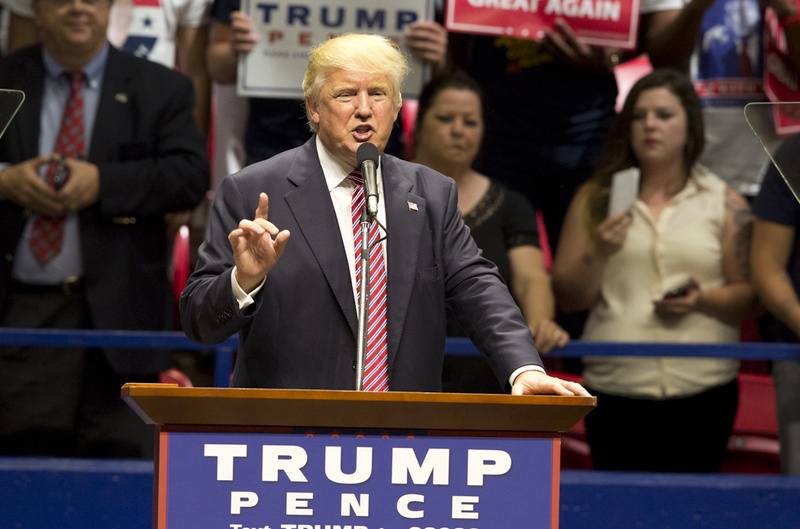
Trump confounds them by holding rally … in Texas!

061616TTtrump000028_jpg_800x1000_q100

Donald J. Trump has said many times how he has surrounded himself with “the best people” to run his presidential campaign.

If they are “the best,” one can ask, why do they keep sending him (a) to states he has no chance of winning and (b) to states he has virtually no chance of losing in the upcoming election?

As Ross Ramsey of the Texas Tribune points out, Trump is coming to Austin — the one in Texas — for a political rally this week.

https://www.texastribune.org/2016/08/22/analysis-texas-august-funny-place-trump-rally/

It’s an interesting call.

Trump, the Republican nominee, is losing all the battleground states to Democratic nominee Hillary Rodham Clinton.

Florida, Ohio, Pennsylvania, Missouri, North Carolina … they all need to hear from the GOP candidate.

Texans appear to have their minds made up. They’re going with Trump — apparently — even though a recent PPP poll said Trump leads Clinton by just 6 percentage points. That marks a significant whittling of the margin that Mitt Romney won by in 2012 over Barack Obama.

Trump, though, is going to stage a rally in Texas.

Go figure.

Shoot, as long as he’s in Texas, he ought to fly Trump One — or whatever they’re calling that jet of his — to Amarillo, where I know he’d get a hero’s welcome.

A rigged election? Yes, but not the way Trump calls it

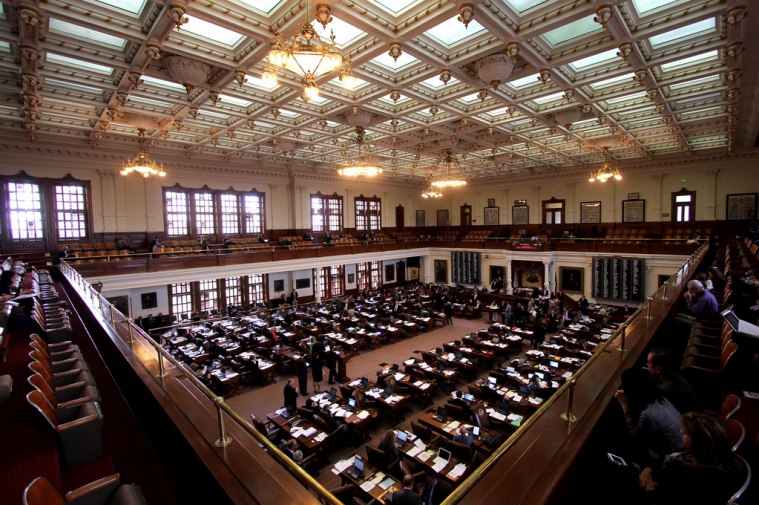
Texas house of reps

Donald J. Trump likes issuing dire warnings about a “rigged election” on the horizon.

He means, of course, that the presidential election will be rigged and that the Republican nominee will lose only because of “crooked” politicians seeking to grease it for Democratic nominee Hillary Rodham Clinton’s election to the presidency.

Trump is mistaken, but only partially so.

Yes, the election at another level will be “rigged.” The rigging occurs in the election of members of Congress.

The culprit is the tried-and-tested method of gerrymandering, which the Republicans in charge of Congress and in many state legislatures around the country have fine-tuned to an art form.

David Daley writes in a blog for BillMoyers.com that the rigging will allow the GOP to maintain control of the House of Representatives, even as the Senate could flip to Democratic control — and as Clinton is swept into the White House in a landslide.

http://billmoyers.com/story/real-way-2016-election-rigged/

Yep. The GOP has done well with this totally legal process of apportioning House congressional districts. It’s done every 10 years after the census is taken and ratified.

They have gerrymandered the dickens out of the House districts, drawing lines in cockamamie fashion to include Republican-leaning neighborhoods and to shut out Democrats.

Now, to be totally fair and above-board, this isn’t a uniquely Republican idea. Democrats sought to do it, for example, in Texas when they ran the Legislature. As recently as 1991, the Democratic-controlled Texas Legislature monkeyed around with congressional districts, seeking to protect Democratic incumbents in the U.S. House.

Amarillo became something of a testing ground for that experiment. The Legislature divided the city into halves, with the Potter County portion of the city included in the 13th Congressional District, while the Randall County portion was peeled off into the 19th District. Potter County contained more Democratic voters and the idea was to protect then-U.S. Rep. Bill Sarpalius of Amarillo, a true-blue Democrat, from any GOP challenge.

Randall County, meanwhile, is arguably ground zero of the West Texas Republican movement and its residents ain’t voting for a Democrat to any public office.

The tactic worked through the 1992 election, when Sarpalius was re-elected. Then came the 1994 Republican wipeout, led by that firebrand Rep. Newt Gingrich of Georgia. Sarpalius got swept out by the GOP tsunami that elected a young Clarendon rancher and self-proclaimed “recovering lawyer” named Mac Thornberry.

The Republicans would wrest control of the Legislature from the Democrats after that and they have perfected the art of gerrymandering. Sure, the Democrats tried to gerrymander themselves into permanent power.

Republicans, however, have proved to be better at it.

You want a “rigged” election? There it is.

The GOP presidential nominee, quite naturally, isn’t about to call attention to the real rigging of the U.S. electoral system. Instead, he’s going to fabricate suspicion in a scenario that will not occur.

Texas capital punishment law needs reform

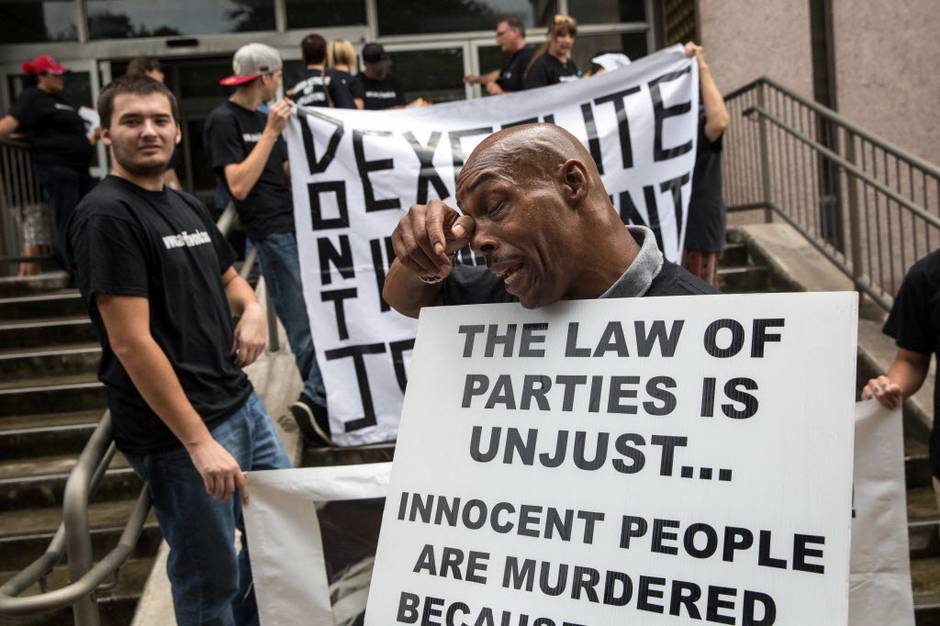
law of parties

Jeffrey Wood has become a poster boy … of a sort.

No, he won’t be showing up on a beefcake calendar. His name, though, could become part of an effort to provide significant improvements to Texas’s laws governing capital punishment.

This week, the Texas Court of Criminal Appeals halted Wood’s scheduled execution for a crime he didn’t commit. It sent the case back to a lower court to determine whether he was tried properly.

Beyond that, Wood’s case has brought to light a dubious provision in a state law that allows juries to convict someone of a capital crime — even if they don’t commit the actual act.

In 1996, Wood was sitting in a truck in Kerrville while his friend, Philip Reneau, was inside a convenience store committing a robbery. Reneau demanded the store clerk turn over the safe; when the clerk refused, Reneau shot him to death.

Meanwhile, Wood’s presence in the truck made him — under state law — culpable for the capital crime. They call it the “law of parties,” and it creates a form of criminal equality among those who commit these dastardly crimes.

The state executed Reneau in 2002. Wood’s turn was coming up. State Rep. Jeff Leach, R-Plano — a staunch supporter of capital punishment — has asked Gov. Greg Abbott and the Texas Pardons and Parole Board to commute Wood’s sentence. He doesn’t think the death penalty in this case is right and just.

There ought to be a more permanent and comprehensive solution to this matter. The Texas Legislature ought to rewrite the law to separate the person who commits the crime from an individual who accompanies the individual.

The state argued at trial that Wood knew Reneau would kill the individual if he didn’t obtain the money. That knowledge made him equally responsible for the capital crime, prosecutors said.

http://www.dallasnews.com/opinion/latest-columns/20160819-let-s-exact-justice-and-commute-jeff-wood-s-death-penalty-sentence.ece

In my quest for a perfect world, I would prefer that Texas not even have a death penalty statute. I know, though, that a majority of Texans support capital punishment. Indeed, the state has become the all-time champeen among all the states in executing those convicted of capital crimes.

If we’re going to continue killing criminals, though, the very least we can do is focus more sharply on those who actually commit the crimes.

Jeffrey Wood did not kill that store clerk. Philip Reneau did. Reneau paid the price as authorized under Texas law. Wood does not deserve to pay the same price.

Gov. Abbott should commute Wood’s sentence and spare his life.

Meanwhile, the governor — who’s also a former trial judge — ought to invite the Legislature to improve what looks to me to be a serious flaw in the state’s criminal penal code.

Get rid of the law of parties.

Love for football requires some understanding

AW5P9645RTS11inch_original_crop_north

We learned something quintessentially Texan when we moved to Texas back in the spring of 1984.

It is that high school football matters — a lot! — to communities all across our vast state. Whether it’s along the Gulf Coast or throughout the Piney Woods of East Texas, or in West Texas, communities rally around their high school football team. Non-football activity virtually stops on Friday nights in the fall in places like Orange, Silsbee, Lufkin, Canadian or Pampa. It all takes place under the lights in high school stadiums all over the state.

We’ve come to understand the importance of football in Texas.

It’s with that backdrop that I found the story this morning about the new football stadium to be built in McKinney, a suburban community just a bit north of Dallas.

They’re going to spend $69.9 million for a 12,000-seat stadium. Construction starts next month and it will be open for business next year. McKinney residents got a bit of a jolt when school officials reported that increasing concrete costs drove the price of the stadium past its original price of $62.8 million.

The fascinating element, of course, is that the money was approved by voters, who approved a bond issue to build a facility that a lot of Division II colleges would love to have.

I’ve got a bit of a personal interest in this issue as well. They built an 18,000-seater in Allen, just south of McKinney a few years back. My grandson graduated from Allen High School this past year. The place is gorgeous and it, too, came via a successful bond issue election. Of course the Allen High project had its ups and downs. One of the “ups” is that the Allen Eagles have been perennial state champions in Class 6A and they fill the place when the Eagles are at home. The “down” was a big one: The stadium was closed for two seasons when they found stress fractures in the concrete that needed immediate repair.

Now is this something I could support with my vote if I was given a chance? I do not know.

The four public high schools in the Amarillo Independent School District share playing time at Dick Bivins Stadium. It’s a nice venue, too. Indeed, it beats the dickens out of the crummy little “stadium” where my high school played football back in Portland, Ore., in the old days.

I guess you just learn to accept the realities of where you live.

Football is a big deal in Texas. My sons didn’t play football when they were growing up and coming of age in Beaumont. Therefore, I generally didn’t have much vested interest in how their high school team played on Friday nights.

These days I no longer question the decisions that residents of certain Texas communities make regarding whether to build these seriously well-appointed sports venues.

If that’s what they want for their community, it’s their money to spend however they see fit.

There was a time when I’d suffer big-time sticker shock. I’ve gotten over it.

I mean, this is Texas, man!

http://beta.dallasnews.com/news/mckinney/2016/08/19/mckinney-isd-stadium-price-hike-shocks-officials-trustees