Category Archives: State news

Reps. Price, Smithee turn their backs on ‘local control’

I know these two men well and have developed a lot of professional respect for them, but Texas state Reps. Four Price and John Smithee of Amarillo have disappointed me.

The two Republican lawmakers have put their names on a bill that would allow the Legislature to disallow the deployment of red-light cameras. Cities that deem there is a need to use the equipment to stop motorists from breaking the law no longer would be allowed to use the cameras.

Amarillo — which Price and Smithee represent — is one of those Texas cities that has used the cameras to assist in the enforcement of traffic laws.

Gov. Greg Abbott has gone on record saying he wants the cameras pulled down. His statement suggests he will sign legislation that forbids cities from using the cameras.

Why does this bother me? Well, I support the city’s effort to crack down on red-light violations at signaled intersections. I say that as someone who has been caught running through an intersection, seeking to sneak through when the light had turned yellow; I wasn’t quick enough to avoid getting caught.

Moreover, Republicans have traditionally been the political party that espouses local control. They have been champions of cities operating under their charter, rather than allowing “big brother” state government to impose policies that determine issues that are best left to the cities’ discretion.

I guess that’s no longer the case.

Indeed, the Legislature’s decision just a few years ago to allow cities to use the cameras came after extensive discussion and debate. I believe the cameras have helped deter motorists from acting in a manner that endangers other motorists and pedestrians.

I wish Reps. Price and Smithee had held true to their view that local control is the preferred method of delivering good government.
Two-thirds rule likely to scuttle key Texas appointment

The Texas Senate operates on a rule that is designed ostensibly to promote bipartisanship.

It’s the two-thirds rule, which requires 21 of the Senate’s 31 members to approve legislation — and appointments.

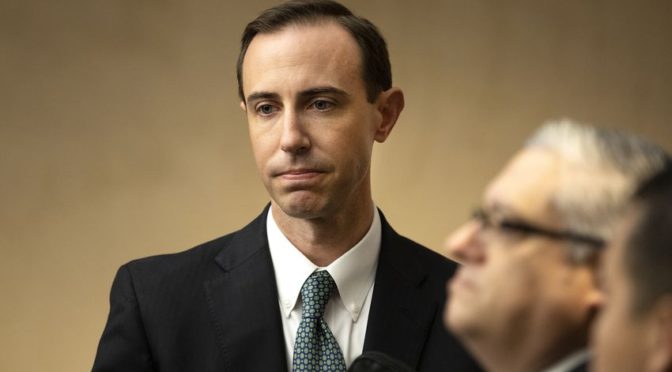
However, all 12 of the Senate’s Democrats are going to oppose the nomination of David Whitley as the next Texas secretary of state. That leaves him with just 19 votes, all of which will come from Senate Republicans.

It seems that Whitley, who’s been acting as secretary of state, blew it when his office “flagged” several thousand voters who were thought to be illegal residents of Texas. It turns out that many of those flagged were quite legal. One of them happened to be a key member of a Senate Democrat’s staff.

Can we hear an “oops”?

Gov. Greg Abbott appointed Whitley to be the state’s top elections officer this past year, but the Legislature was not in session, meaning that the Senate hadn’t yet formally approved his nomination. With the Senate’s 12 Democratic members now on record as opposing his appointment, it appears that Abbott might have to look for someone else to run the state’s election system.

The Secretary of State’s Office committed a fairly embarrassing cluster flip with the flagging of those names. It sought to purge the system of what it said were illegal voters, only to determine that the list of flagged voters was significantly inaccurate.

Abbott said he still supports Whitley fully, which is what one would expect him to say.

I’ll offer this bit of advice: David Whitley needs to bow out; the governor needs to find another nominee. Then we can get back to the task of running our state elections instead of looking for bogeymen where they likely don’t exist.

Yes, the Texas Senate’s two-thirds rule works.

Sen. Paxton exhibits a form of tone deafness

Texas state Sen. Angela Paxton — who was just elected in 2018 — is new in her job as a legislator. The McKinney Republican, though, should have thought better than to propose a bill for consideration that involves her husband, the state attorney general.

Why is that? Attorney General Ken Paxton is awaiting trial on a securities fraud allegation. Sen. Paxton, though, has proposed Senate Bill 860, which broadens the AG’s regulatory power over those who market financial services. You see, AG Paxton is accused of failing to report his own involvement as a securities adviser to potential clients.

Therefore, I intend to accuse Sen. Paxton of being tone deaf.

She is one of 19 Republicans serving in the Texas Senate. I would doubt seriously any of the dozen Democrats who serve with her would buy into what she wants to do, so we’ll look briefly at her GOP colleagues.

It seems odd that the spouse of a statewide elected official who is set to stand trial for securities fraud would propose legislation that affects the official who’s about to become a defendant in a court trial.

They talk about whether legislation passes the “smell test.” This one doesn’t, at least not my olfactory glands.

Couldn’t the rookie Texas senator find a GOP colleague among the 18 of them who serve with her to carry this legislation forward?

AG might get new power

Don’t misunderstand me. I don’t necessarily endorse SB 860. It expands the power of the attorney general and seems to remove a level of transparency that should be required when it involves securities and financial regulation.

It’s just that Sen. Paxton carrying a bill that has a direct impact her husband, who’s facing potential prison time if he’s convicted of securities fraud, is a stinker.

Ethics watchdogs seem to believe it stinks, too. I’m on their side.

Still steamed over Sen. Seliger getting stiffed

I should be moving on, looking forward . . . but I cannot stop gnashing my teeth over the way Texas Lt. Gov. Dan Patrick treated a man I respect and for whom I also have a fair amount of personal affection.

I refer to state Sen. Kel Seliger of Amarillo, who belongs to the same Republican Party as Patrick, except they’re both Republicans in name only.

Patrick, who presides over the Texas Senate, decided to remove Seliger from a key committee chairmanship, Higher Education. He also took him off the Education Committee, and put him in charge of the newly formed Senate Agriculture Committee. Then he yanked him out of the Ag Committee chairmanship after Seliger made an impolite remark about a key Patrick aide.

Why did Patrick seek to punish West Texas — which Seliger has represented since 2004? I keep rolling around some theories. I’ve come up with one that I think makes sense.

Seliger has too many Senate friends who happen to be Democrats. Patrick doesn’t enjoy that kind of bipartisan camaraderie.

I remember not long after Seliger was first elected to the Senate in 2004 when he began talking about the friendships he had forged with Democrats. He would mention Sen. Juan “Chuy” Hinojosa, a South Texas Democrat, as a colleague with whom he would work on legislation.

A Dallas Morning News article published a few weeks ago noted that Democratic senators think highly of Seliger. Kirk Watson, D-Austin, is considered one of Seliger’s best friends in the Senate. Another Democratic senator, Royce West of Dallas, also spoke highly of Seliger in the Dallas Morning News feature.

Does the lieutenant governor — a fiery TEA Party conservative — get that kind of love from across the aisle? I have the strong feeling he does not.

I don’t know if Lt. Gov. Patrick is prone to petty jealousy. However, I cannot rule it out, as I don’t know the man; I only know of him and know of the highly partisan legislation he likes to push through the Senate.

Sen. Seliger isn’t wired that way. He calls himself a proud conservative. He pushes for local control and doesn’t like the state meddling in matters that are best decided by local governing bodies.

Seliger also is a champion of public education; Patrick favors vouchers funded by tax money to send students to private schools.

Sen. Seliger also stood as a bulwark in favor of the Texas Tech University school of veterinary medicine planned for Amarillo. I am not at all sure what Patrick feels about that, but his removal of Seliger from the Higher Ed Committee chair has the potential of putting the vet school in some jeopardy.

I hope for the best for West Texas. I also hope Seliger rises to the occasion and is able to have his voice heard despite being stripped of political power.

Indeed, Sen. Seliger might need to reach across the aisle now more than ever.

Pass the scented spray in the Texas Senate; this one stinks

The Texas Senate needs to be fumigated. Already!

Republican state Sen. Angela Paxton, the wife of the Texas attorney general, who is awaiting trial on securities fraud, has just introduced legislation that would give her husband, Ken Paxton, the authority to decide who is violating, um, securities fraud.

This one not only doesn’t pass the smell test, it stinks up the entire Texas Senate. Pass the scented spray!

This measure disappoints me greatly. Sen. Paxton, from McKinney, is a freshman legislator. However, she ought to know better than to step with both feet into this legal pile of dookey.

Not a conflict of interest, but it’s close

Senate Bill 860 would broaden the power to the attorney general’s office. As the Texas Tribune reports: “In doing so, the bill would grant broad powers to the attorney general’s consumer protection division, allowing it to accept or reject entrepreneurial applicants who seek to hawk innovative produces outside of the state’s current standards and regulations.”

What about the AG? Ken Paxton was indicted in 2017 by a Collin County grand jury for securities fraud in connection with an allegation that he didn’t provide proper notification that he was acting as an investment adviser. He’s awaiting trial.

Good grief! My major concern about Sen. Angela Paxton service dealt with how she might vote on matters involving her husband’s salary as a state constitutional officer. I didn’t see this one coming.

I get that AG Paxton should be presumed innocent, but why in the world would Sen. Paxton want to step so directly into this legal mess involving her husband?

This one stinks to high heaven!

Texas AG won’t probe voter roll SNAFU . . . imagine that

Something suspicious occurred when the Texas secretary of state flagged the names of 95,000 Texans on the belief they might be non-citizens who voted illegally.

It turns out many of them — particularly in five of the state’s largest counties — were citizens after all. They all voted legally. The state erred dramatically.

How could that happen? Texas Attorney General Ken Paxton has said his office won’t launch an investigation into what occurred. I wish the AG would rethink that option and look deeply into it.

The erroneous flagging has drawn plenty of barbs from Latino groups and others who believe the state might have been profiling voters simply because of their last names.

A large number of those flagged voters should not have been singled out.

There’s just something about this matter that doesn’t smell right to me. It has the stench of prejudice and a premature jumping to conclusions about those who comprise a certain minority group in Texas.

According to the Texas Tribune, county officials so far have discovered “at least 20,000” individuals targeted by the state were eligible to vote. Will there be more of them?

I am one Texan who wants to know how and why these individuals were flagged by the top state elections official.

By all means, change the Texas judicial election system!

Texas Supreme Court Chief Justice Nathan Hecht has just elevated himself greatly among those of us who detest the way the state elects its judges.

Chief Justice Hecht wants the Legislature to do away with partisan election of judges. He wants a total overhaul of the judicial election system. He has called on merit selection and retention elections to replace the ghastly status quo in which highly qualified judges are tossed aside on a strictly partisan basis.

Hecht has walked this path before. I suppose I just haven’t been paying careful enough attention until now.

To be clear, the chief justice was stung by the loss of key Republican judges in the 2018 midterm election. Appellate courts flipped from GOP to Democratic control, which I guess alarms the Republican chief justice.

Whatever the case, or his motives, I totally support his call for judicial election reform.

Hecht made his remarks in his State of the Judiciary speech. He said, “Make no mistake: A judicial selection system that continues to sow the political wind will reap the whirlwind.”

So it happened in 2018. And so it has gotten the attention once again of the state’s top civil appellate court’s chief justice.

I long have bemoaned the partisan election of judges in Texas. I have sought over the course of many years in Texas to get judges and judicial candidates to explain to me the “difference between Democratic and Republican justice.” Not a single one of them ever explained the difference in any fashion that made a lick of sense.

To be clear about another point as well, not all judges want the kind of reform that Hecht has proposed. I remember asking the late state Sen. (and later a Supreme Court justice) Oscar Mauzy of Dallas whether we should go to a form of merit selection for judges. He came unglued. Mauzy, a ferocious, partisan Democrat, said appointing judges was akin to a “communist” system of justice. He loved running as a Democrat and wasn’t about to support any change in the Texas judicial election system.

Texas Republicans long have prospered in these judicial contests. The Supreme Court and the Court of Criminal Appeals — the state’s two highest appellate courts — comprise 18 GOP jurists. Thus, to hear a Republican chief justice call once again for this significant judicial reform is, well, the rarest of calls.

Thank you, Mr. Chief Justice, for trying to pound some sense into the state’s political power structure.

Voters retain ultimate power

Two political incidents in the Texas Panhandle have provided significant evidence of just who holds the power in these disputes.

I refer to two dustups: one involving Texas state Sen. Kel Seliger, R-Amarillo, and Lt. Gov. Dan Patrick; the other one involves the Amarillo Independent School District Board of Trustees.

In both instances, the voters are getting the shaft by those in power.

First, the Seliger-Patrick battle.

Patrick is angry with Seliger because the Amarillo Republican lawmaker doesn’t always vote the way Patrick prefers. What the lieutenant governor needs to understand — and I am sure he does at some level — is that Seliger works for West Texans, not for Dan Patrick.

Patrick yanked the chairman’s gavel from Seliger, who chaired the Senate Higher Education Committee. Seliger said something supposedly unkind about a Patrick aide. Patrick then responded by pulling Seliger out of the chairmanship of the Senate Agriculture Committee.

Seliger owes his allegiance to the voters of the sprawling Texas Senate District 31. As for Lt. Gov. Patrick, he is acting like a legend in his own mind.

Now, the AISD board.

An Amarillo High School volleyball coach, Kori Clements, resigned after one season. She cited parental interference as the reason she quit; she also said the school district administration didn’t back her.

The chatter around the school district is that the offending parent is a member of the AISD board of trustees.

The board has been silent. It has refused to speak to the issue directly. It needs to do exactly that. Why? Because the board works for the public, which pays the salaries of the administrators and educators and which pays to keep the lights on at all of AISD’s campuses.

The voters are the bosses. The AISD board answers to them, not to each other, or to the superintendent.

There needs to be a public accounting for what happened to make Coach Clements pack it in after just a single season as head coach of a vaunted high school volleyball program.

The public needs to know. It has every right to demand answers.

Search for voter fraud comes up . . . empty!

I guess it’s fair to ask: Did the search for fraudulent voters in Texas come up empty?

The Texas secretary of state’s office flagged the names of 95,000 individuals looking for evidence that they aren’t U.S. citizens and were ineligible to vote. Then the office decided that many thousands of those flagged actually are U.S. citizens.

Gov. Greg Abbott is downplaying the significance of what transpired. He said something about it being an ongoing process and that the list was never intended to be a “final” assessment.

Well, OK, governor. If that’s your story, I’m sure you’re going to stand by it.

It just looks to me as though the secretary of state was looking for a problem where none seems to exist. The SoS informed officials in five large Texas counties — including Collin County, where my wife and I reside — that they likely erred in flagging those names.

It looks to me as though we are finding out that the instances of fraudulent voting in Texas is the non-starter that many critics of the allegations about voter fraud have said all along.

There just isn’t the epidemic of voter fraud in Texas that many have suggested is occurring.

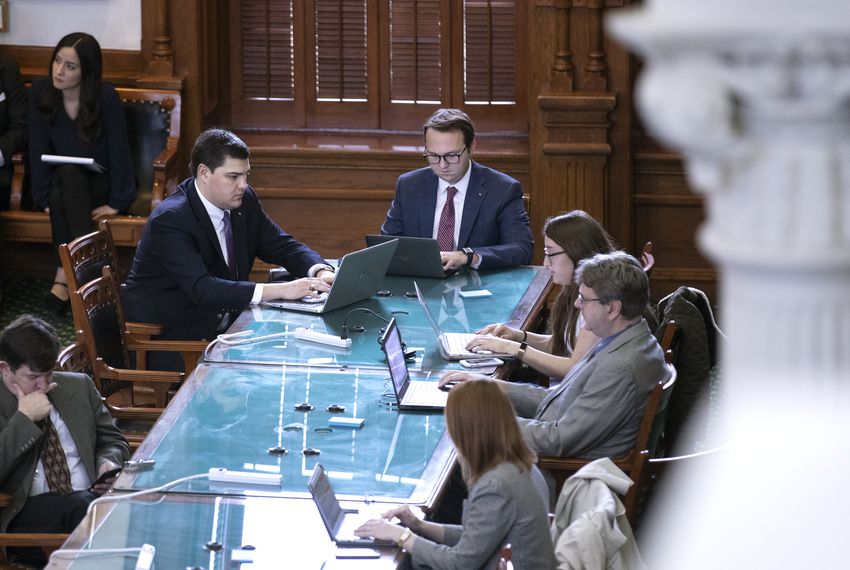
Texas Senate gives right-wing PAC special seat at press table

Do you want to know the crux of what has pi**** off a leading Texas senator about the way the state’s upper legislative chamber is being run?

Try this: Empower Texans, a right-wing political action group, has been given a ringside seat on the floor of the state Senate. Such groups usually are relegated to the upper floor along with the rest of the spectators who are curious about what’s happening in the Legislature.

In the Senate, which is run by an Empower Texans darling — GOP Lt. Gov. Dan Patrick — the group gets to look senators in the eye while they debate and cast their votes.

Trouble is brewing?

Sen. Kel Seliger, R-Amarillo, said this, according to the Tribune Tribune: “They’re an advocacy organization and a political organization. Far more than anything else. That’s really their identity. They have a PAC and they contribute to candidates.”

Seliger knows Empower Texans well. He had to fend off a spirited Republican primary challenge in 2018 from two ultraconservative candidates. He won his party’s nomination outright anyway, which is to West Texas’s great benefit.

But the decision to allow this group of far-right-wing zealots onto the Texas Senate floor speaks volumes to me about the kind of place Lt. Gov. Patrick is creating. The Tribune reports that Empower Texans’ presence at the press table has angered some senators and ignited rancor early in the legislative session.

I’ve noted repeatedly in this blog about the feud that has erupted between Seliger, a senior GOP senator, and Patrick. Seliger’s legislative clout has been diminished by his removal from key Senate committees, namely the Higher Education and Education panels.

Now we hear that Empower Texans, an advocacy group that has taken aim at Senate moderates, such as Seliger, is getting to mix it up directly with legislators the group seeks to influence.

Seliger said the group’s status is “under review, as I think it ought to be. This is an easy call.”

Something is telling me the Texas Senate is going to become an unhappy place in this legislative session.