Category Archives: political news

New polarization: pols vs. media

mainstream-media

I hear it from time to time. People I meet during a given week occasionally engage me in a conversation that begins: Do you think the nation is more polarized than ever  before?

My short answer generally goes like this: Well, maybe not since the Vietnam War. But we got through it. I believe we’ll be OK.

The polarization today, though, seem to be taking on another dimension.

Politicians, chiefly those on the right, now are taking dead aim at the media. Oh, I forgot: the mainstream media, those folks with the liberal bias.

Ted Cruz is the junior U.S. senator from Texas. He’s running for the Republican presidential nomination. He took some reporters pheasant hunting with him in Iowa this weekend.

Cruz scored plenty of points at the latest GOP presidential debate by taking aim not just at CNBC, which moderated the event, but at “all media.” The crowd in the Boulder, Colo., hall roared its approval — as did conservatives all across the nation.

The media now are seen as the enemy of the right. The left-wing, liberal media are out to “get” those who hold different views, say Cruz and other politicians on the right.

Cruz then took his beef an interesting step further. He suggested — with a straight face at that — that GOP debates should include “moderators” more friendly to their cause. He mentioned Fox New commentator Sean Hannity as one who he’d prefer to “moderate” a debate among GOP presidential candidates.

I agree with my pals on the right on this score: The establishment media — and I include conservative-leaning journalists in that group — have become legends in their own minds. They at times interject themselves into the stories they are covering. They become confrontational and snarky when neither is warranted. I believe we saw some of that from the CNBC moderators.

Then again, have our Republican friends forgotten — already! — what happened at the first GOP debate that Fox News sponsored. Fox’s Megyn Kelly got things started with a question to Donald Trump about the candidate’s history of anti-female statements. It went downhill rapidly from there.

The Republican presidential field of candidates has done a good job of demonizing the mainstream media as a tool of the left. It has cast the MSM as an institution to be loathed and mistrusted.

Are we polarized? Yes, we are. I’ll stand by my short answer: We’ll get past this … eventually.


Should the president return that Peace Prize?

barack obama

Barack H. Obama campaigned for the presidency vowing to end the wars in Iraq and Afghanistan.

His election in 2008 prompted the Nobel Committee to award him the Peace Prize the following year with the hope of a peaceful future in those two countries. The new president accepted the prize while acknowledging the unusual context in which the committee awarded it.

I never thought I’d say this, but I have to wonder if President Obama has ever considered giving the award back.

Why? Well, consider that that he vowed to end both wars. They haven’t ended. Now he’s about to commit a handful of U.S. troops into a third country to engage in the battle against the Islamic State.

Obama faces dilemma

The president recently announced that he would keep troops fighting in Afghanistan past the time he leaves office in January 2017; our commitment in Iraq remains, despite the pullout of frontline combat troops. Now this, the deployment of Special Forces to assist the Kurds fighting ISIS in northern Syria.

He took office while the country was fighting in two countries. He likely will leave office with the nation fighting in three countries.

This is not the legacy that Barack Obama ever wanted, but it’s part of the legacy he will leave the next president of the United States.

I get that circumstances have changed since he took office as the so-called “transformational” president. The Islamic State has exploded onto the scene. Syrian dictator Bashar al-Assad has brutalized and murdered hundreds of thousands of his people. The Iraqi military has fallen far short of its mission to defend the country against Islamic State murderers. The Taliban has fought back in Afghanistan.

Yes, we killed Osama bin Laden. We’ve continued to hunt down and kill terrorists all across the Middle East and South Asia. And we’ve known all along that the Global War on Terror would not end in the conventional way, with one side signing a peace treaty to end the hostilities. We are fighting an elusive and cunning enemy.

However, all that hope that Barack Obama brought to the presidency has dissipated as he heads for the final turn of his two terms in office.

I’m not going to say President Obama should give back the Nobel Peace Prize, although I wouldn’t complain out loud if he did.


Early vote totals: impressive

EARLY+VOTING_MGN

Let’s try this number on for size …

13,627.

That’s the number of Amarillo voters who cast ballots in advance of Tuesday’s election. We’re going to decide whether we want to build a $32 million multipurpose event venue that includes a ballpark in downtown Amarillo; we’re also going to vote on seven proposed amendments to the Texas Constitution.

The early-vote number isn’t a record-breaker. It’s impressive nevertheless.

By my estimation, that number represents roughly 10 to 11 percent of all registered voters in the city. It’s not great in and of itself.

However, compared to the hideous turnout of many recent previous municipal elections, I believe that early-vote number represents a positive trend.

I’ll be frank. The constitutional amendments aren’t drawing voters out. It takes a citywide issue such as the MPEV to bring ’em to the polls.

I haven’t voted early. I’m waiting until Tuesday. I’ll probably go to my Randall County polling place first thing. I’ll be there by 7 a.m.

You know how I’ll vote on this deal. Oh, just in case you don’t know … I’m voting “for” the MPEV as a statement that the city is ready to keep marching forward.

I’m heartened that the early turnout has been so relatively brisk.

What does it mean for the final result? We’re going to find out early Tuesday evening when those early ballot results are released.

Here’s hoping for the best.


Let’s allow Dems to face media grilling

media

All this talk over the past few days about the alleged mistreatment of the Republican Party presidential candidates by the “mainstream liberal media” brings something to mind.

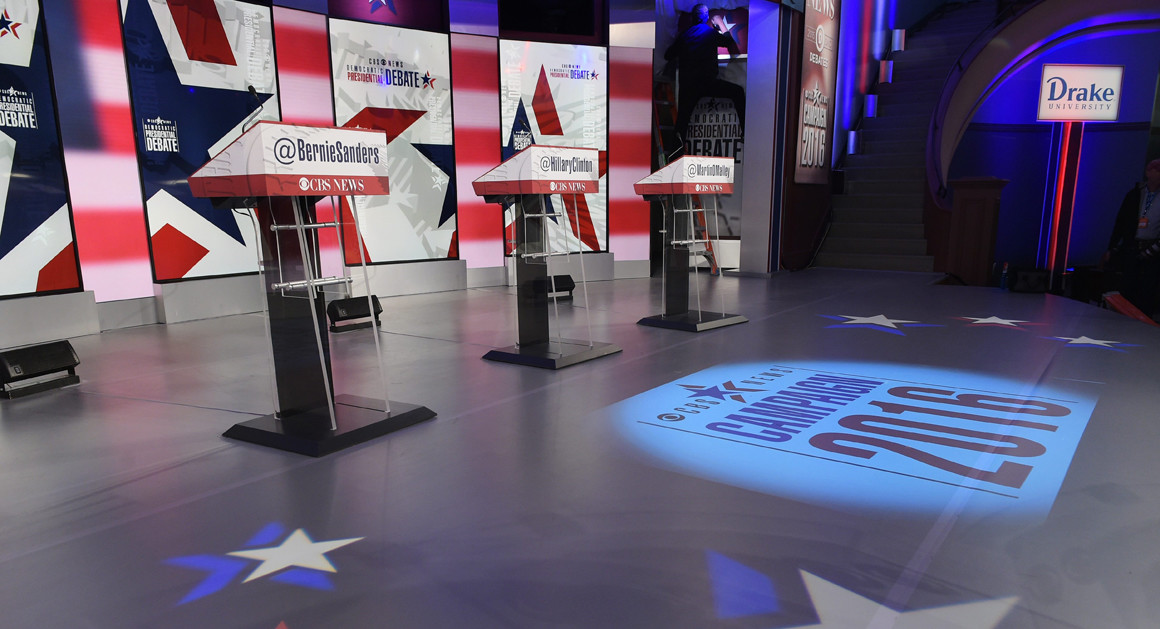
Let’s suppose as we travel down the primary campaign road that the Democratic field — or what’s left of it — decides to debate among themselves in a nationally televised event.

What might happen if the moderators all  turned out to conservative-leaning journalists? Believe me, there are plenty of them to go around.

Imagine a panel comprising, say, Britt Hume, Jennifer Rubin and Byron York grilling the likes of Hillary Rodham Clinton, Martin O’Malley and Bernie Sanders.

Hume is a regular panelist on Fox News Sunday; Rubin is a conservative columnist for the Washington Post; Byron York is a long-time conservative columnist whose work is syndicated in papers across the country.

They’re all smart and savvy political hands.

I’m trying to imagine how the Democratic National Committee might react to the tough line of questioning that such a panel would bring to a Democratic candidates debate.

I’m not sure the DNC would allow such a panel to present questions to their candidates. Yet the Republican National Committee signed off on the recent CNBC-sponsored debate and the moderators chosen by the network to quiz the candidates on the debate stage.

Still, there’s a part of me that wishes the DNC would agree to such an event, with that party’s candidates facing sure-fire relentless questioning on a whole array of issues facing the nation.

I know it won’t happen. But I can dream … can’t I?


RNC fights back: severs tie with NBC

horse race

Can it possibly true that the Republican National Committee doesn’t like its party’s presidential candidates to answer tough questions?

Someone, tell me that’s not possible.

The RNC has lashed out at CNBC and its parent network, NBC, by severing its relationship with the media outlet because of the nature of the questions asked by CNBC moderators this week at the GOP debate in Boulder, Colo.

This means NBC won’t take part in future Republican debates.

The questions weren’t “fair,” according to RNC chairman Reince Preibus. They were of the “gotcha” variety, he said.

I happen to agree with the view that the CNBC moderators did a poor job during the debate. My issue with them was that the debate became a madhouse during its two-hour duration. Candidates were interrupting each other; they were interrupting the moderators; the moderators were interrupting the candidates. Then came the attacks from the candidates against the mainstream media and CNBC.

One of the candidates, Ted Cruz of Texas, then said he thinks Republican debates need to be moderated by pundits who are friendly to the GOP. Donald Trump said more or less the same thing.

Look, the issue shouldn’t be the toughness of the questioning. What on Earth do any of these folks believe will await them if any of them gets elected president next year? Are they — and their political party apparatus — really fearful of tough questions that seek to determine the candidates’ ability to think on their feet and deal with unexpected occurrences?

I cannot believe what’s happening here. The Republican National Committee needs to get a grip on what it is demanding of the media that cover its candidates’ quest to assume the most powerful office on the planet.


Cruz and Patrick: clash of egos

cruz

Texas Monthly blogger Erica Grieder calls the political alliance between Texas Lt. Gov. Dan Patrick and U.S. Sen. Ted Cruz a union of “strange bedfellows.”

Boy, howdy!

Two of Texas’s largest egos have linked up. And when I refer to them in that fashion, that’s really saying something, given that the state is brimming with monumentally huge political egos.

Grieder notes that Patrick and Cruz have had a “frosty relationship” for some time. Cruz is running for president and Patrick is backing him. Cruz also is huge pals with Gov. Greg Abbott, while Grieder and some other political observers think Patrick might have his eye on Abbott’s office when the 2018 election rolls around.

Patrick said he has no plans to run for governor next time. I’m always intrigued by politicians who make that assertion. “I have no plans” to run for another office, they say. You know what that tells me? It tells me they “have no plans at this moment.”

There’s no telling what the next moment will bring.

So, as Grieder notes in her blog, Patrick’s current alliance with the state’s junior U.S. senator puts Cruz in a potential bind if Patrick changes his tune, say, in the fall of 2017 and ramps up a campaign against Gov. Abbott.

I think I’ll stay tuned to this one.


Reid weighs in on Rubio’s (lack of) attendance

Senator Marco Rubio of Florida speaks at the Conservative Political Action Conference (CPAC) at National Harbor, Maryland March 14, 2013. Two senators seen as possible candidates for the 2016 presidential election will address a conservative conference where Republicans will try to regroup on Thursday after their bruising election loss last year.  REUTERS/Kevin Lamarque  (UNITED STATES - Tags: POLITICS) - RTR3EZQO

Is it really and truly the business of the Senate minority leader to comment on the attendance record of one of his colleagues?

Well, yes it is.

Harry Reid is a Nevada Democrat; Marco Rubio is a Florida Republican. Reid said this week that Rubio ought to quit his Senate seat if he’s going to keep running for president of the United States.

Why does it matter to Reid?

Well, it matters to Reid because it ought to matter to all Americans. Senator are federal employees. They get paid $174,000 annually from the federal Treasury, into which we all contribute with our tax money.

Rubio has indicated he doesn’t much like serving in the Senate. It’s too, um, tedious for the young man. He wants to become the Leader of the Free World, to make things happen in a hurry. He’s not seeking re-election to the Senate in 2016.

Reid’s call is on point, as Rubio keep racking up no-shows on Senate votes.

A newspaper in Rubio’s home state, the Fort Lauderdale Sun-Sentinel, has called on Rubio to quit. He’s ripping off the state’s taxpayers and his constituents, the Sun-Sentinel said. And this is a paper that endorsed Rubio when he ran for the office in 2010.

Let’s be clear: Rubio isn’t the first rookie senator to take a pass on doing his day job while looking for a better-paying public service gig. Sen. Barack Obama did the same thing in 2007-2008 when he ran for president. Should he have quit his Senate seat when he ran for the White House? Yeah, probably. But that’s all water over the dam now.

What’s on the table now is whether Marco Rubio should keep collecting that fat — taxpayer-subsidized — salary without doing much of the work that’s required of him.

Hit the road, Sen. Rubio. Campaign for president all you want, but do it on your own time … not ours.


What if MPEV debate had that kind of format?

Republican presidential candidates arrive on stage for the Republican presidential debate on August 6, 2015 at the Quicken Loans Arena in Cleveland, Ohio. From left are:  New Jersey Gov. Chris Christie;  Florida Sen. Marco Rubio;  retired neurosurgeon Ben Carson; Wisconsin Gov. Scott Walker; real estate magnate Donald Trump; former Florida Gov. Jeb Bush; former Arkansas Gov. Mike Huckabee; Texas Sen. Ted Cruz; Kentucky Sen. Rand Paul; and Ohio Gov. John Kasich.  AFP PHOTO / MANDEL NGAN        (Photo credit should read MANDEL NGAN/AFP/Getty Images)

I awoke this morning and a curious thought popped into my noggin about last night’s Republican presidential primary debate … so I thought I’d share it here.

What if Amarillo’s hot topic of the day — the upcoming citywide referendum on a proposed multipurpose event venue — had been the subject of a similar debate format between advocates on both sides of this highly controversial issue?

Suppose, then, that the two sides had gathered their forces, sat them in an auditorium, say, at the Civic Center or the Globe-News Center for the Performing Arts. And then imagine how they might try to out-cheer, out-shout and out-jeer each other whenever someone made a point they either liked or loathed.

You know, these kinds of things rattle around in my head from time to time. In this instance, they make me glad we haven’t resorted to the carnival atmosphere that has overtaken the Republican and Democratic presidential debates as they’ve been staged in front of the nation.

The GOP has staged three of these sideshows; the Democrats just one, so far.

The MPEV debates — and there’ve been a couple of them broadcast on Panhandle PBS — have been models of decorum and relatively good manners.

(Disclosure time: I am a freelance blogger for Panhandle PBS, so — as the Texas saying goes — I’ve got a dog in that fight.)

The second of those encounters will air tonight at 7 on Panhandle PBS. It features Amarillo lawyer Vince Nowak speaking against the MPEV and former Amarillo College President Paul Matney arguing in favor of it. This past week, the contestants were Amarillo City Councilmen Brian Eades (pro-MPEV) and Randy Burkett (anti-MPEV) making their respective cases regarding the $32 million sports and entertainment venue planned for construction in downtown Amarillo, across the street from City Hall.

Check both debates out here.

Were there catcalls? Cheers? Jeers? Zingers? None of that. It was just Panhandle PBS content producer Karen Welch grilling the contestants on why they favor and/or oppose the measure. There were differences of opinion, but on the whole the adversaries were courteous and respectful of each other’s time.

One can learn a lot when one is not distracted by crowd noise, glitz and show-biz bling.

Both sides have their share of passionate supporters. I prefer, though, to gauge the merits of an argument on the points made by the principals rather than relying on applause meters.


Political ‘debates’ become show biz

CNBC panel

I might have a solution to returning some decorum and dignity to these presidential joint appearances.

I’ve said it before: Get rid of the audience.

CNBC’s moderators became the target of many of the Republicans running for president at tonight’s so-called debate.

First of all, I concur that the moderators were terrible. They lost control of the event. They let the proverbial tail wag the dog — to borrow a political phrase.

Indeed, the candidates fed off the crowd that gathered at the University of Colorado in Boulder. They cheered ’em on. They provoked the zingers. They roared every time a candidate took a shot at the “mainstream media.”

Tonight’s GOP joint appearance lacked almost any semblance of dignity. It became a circus and the moderators — Becky Quick, John Harwood and Carl Quintanilla — became the ringmasters.

It’s not as though the questioners didn’t ask good questions. They sought to probe the candidates’ backgrounds, prod them to explain previous statements and provoke them to make memorable statements.

It seemed, though, that CNBC debate troika set themselves up to become as much a part of the story as the candidates.

Why is that? The moderators were fueled as much by the audience as the candidates.

I have an intense dislike for what these events have  become.

Both parties have become enamored of the entertainment value that the audiences bring to these confrontations.

I’m old enough to remember the very first televised presidential debates, involving Republican Richard Nixon and Democrat John F. Kennedy. They had three of them. Each one got a little more vigorous than the preceding encounter.

Audiences? None. Just the two men … and Americans learned a lot from them both, without the distraction created by the cheers and catcalls.


VA scandal far from ‘overstated’

veterans affairs

Hillary Rodham Clinton could not be more wrong than she was the other night when she said that the Department of Veterans Affairs health care scandal was “overstated.”

You’ll recall the VA matter. Veterans seeking medical care in Phoenix were made to wait for too long for the care — and then some of the died while waiting.

Meanwhile, the VA cooked the books, so to speak, and hid that information from agency watchdogs in order to protect the medical staff at the VA medical center in Phoenix.

Veterans Affairs Secretary Eric Shinseki had to quit and the agency went under the microscope to correct the hideous situation that resulted in the veterans’ deaths.

News flash to Hillary: None of it — zero — was “overstated.”

Veterans should be offended by what the Democrats’ leading presidential contender told MSNBC’s Rachel Maddow the other evening. I know I am.

Yes, Clinton is right to say that most veterans get good health care. I can attest to the quality of care I am getting in Amarillo at the Thomas Creek VA Medical Center. Then again, I enjoy good health.

My hope is that when I do need some specialized care that it will be available to me in a timely fashion. I damn sure don’t want to die waiting to receive it.

Most veterans do receive good care. The veterans who have died because of too-long wait times, though, did not.

For the Democrats’ leading presidential candidate to suggest it’s all “overstated,” overblown and overplayed is dishonest on its face.