Category Archives: political news

Obama should have decided to attend funeral

chapman.0830 - 08/29/05 - A Supreme Court headed by Supreme Court Justice Antonin Scalia has questions for Chapman University Law School professor John Eastman as he and California Attorney General Bill Lockyer argue the 1905 ''Lochner v. State of New York'' case during a re-enactment Monday afternoon at Chapman University. (Credit: Mark Avery/Orange County Register/ZUMA Press)

No one asked me for advice on this, but I’ll offer it unsolicited — and without reservation.

President Obama should have decided to attend the funeral this weekend for the late Supreme Court Justice Antonin Scalia.

To me, it’s a no-brainer.

The president will not attend. Vice President Joe Biden and his wife, Jill, are going to attend, as they share Scalia’s Catholic faith.

But look at it this way. The optics of seeing the president of the United States paying his respects at the funeral of someone with whom he had profound political and judicial disagreements are invaluable.

Yes, the president will attend a ceremony at the Supreme Court building to honor the late justice. He also has been quite gracious in his public comments in reaction to the shocking news of Scalia’s death while on a hunting trip in West Texas.

Indeed, some on the right have given Obama a pass on attending. Scalia’s own son even has suggested that the president made the right call by deciding against attending the justice’s funeral.

However, Obama has given his fierce critics in the conservative media ammunition now to fire at him for declining to attend the funeral. White House press officials haven’t disclosed how the president will spend Saturday while much of official Washington and the nation’s legal community is honoring the memory of Justice Scalia. My hope is that he lays low and spends it quietly.

He’s got a huge decision to make — possibly within the next few days. It involves his choice to succeed Scalia — a gigantic and booming voice for conservatives on the court. Senate Republicans don’t even want to consider an appointment. Others insist that the president make the choice. I am one of those who believes the president should fulfill his duties by selecting a nominee for the high court.

OK, so no one asked me for my opinion about the funeral. Why should they? I’m way out yonder in the political peanut gallery far from the government epicenter.

It’s just that as someone noted in the link attached to this blog post indicated, if you’re questioning whether you should go to the funeral … go to the funeral.

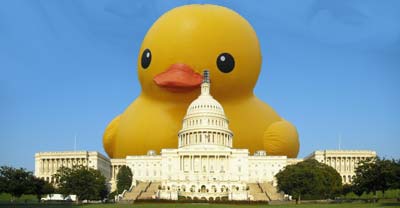
‘Lame duck’ needs finer point . . . perhaps

Lame-Duck-Congress-a

An acquaintance of mine asked an interesting question regarding President Obama’s upcoming battle over how he intends to fill a key vacancy on the U.S. Supreme Court.

He wondered how one should define the term “lame duck”?

His understanding of the term meant that an officeholder became a lame duck when his or her successor in office had been determined.

Here’s how the American Heritage Dictionary defines the term: “An elected officeholder continuing in office during the period between and election and inauguration of a successor.”

My reaction was that the definition of the term has become a bit more “fluid” these days.

Senate Republicans say they don’t want Obama to fill the vacancy created by the death of Supreme Court Justice Antonin Scalia because he’s a “lame duck” president. They want the next president to make the call.

I tend to have a broader view of the term “lame duck.” I suppose one could argue that any president who wins a second term becomes a lame duck the moment the election returns are finalized. The Constitution prohibits the president from running again, so the clock begins ticking on the president’s term. If that reasoning holds up, then the American Heritage dictionary definition could be interpreted as being germane.

Whatever the case, or however one defines the term, there remains an indisputable truth. The president is in office until the very moment the successor takes the oath of office.

Therefore, the president is entitled — lame duck or not — to all the perks, privileges and power that the office commands.

President Obama is entitled to appoint someone to fill the late Justice Scalia’s seat on the Supreme Court. The Senate, thus, is entitled — and obligated, in my view — to consider that appointment in a timely manner and then vote on whether to approve it.

The president’s lame-duck status should not be an issue.

But it has become one, thanks to the obstructionists who are now in charge of the U.S. Senate.


Likability vs. irascibility

hillaryclintonselfie_021416getty

The Hill is reporting a story that seems to define — for me, at least — just how confusing and confounding this election cycle has become.

Hillary Rodham Clinton is trying to enhance her likability. She’s taking selfies with voters and celebrities. Remember when Sen. Barack Obama told her during a 2008 campaign debate that “You’re likable enough, Hillary”? Apparently not this time around.

She’s fighting image woes that seem to suggest she isn’t authentic, let alone likable.

Do her Democratic primary voters want her to become warm and fuzzy? Do they insist that she show her grandmotherly side more often? I have no clue.

Read the link.

Now, for the Republicans.

Likability isn’t part of the formula that’s propelled Donald J. Trump to the top of the GOP presidential candidate heap.

He’s not likable. Frankly, for my taste, he’s not a lot of things: He’s not presidential; he’s not sophisticated; he’s not grounded in a philosophy other than, say, narcissism.

But there he is. He’s leading South Carolina’s GOP primary polls after threatening to sue Ted Cruz over whether he’s qualified to run for office; after saying President Bush “lied” to get us into the Iraq War; after insulting candidates, a bona fide war hero, disabled people, voters, media types . . . anyone within earshot.

I’m not sure what this might say about any possible differences between Democratic and Republican “base” voters. I hope it doesn’t reveal that Democrats inherently are softer and that Republicans just as inherently love nastiness.

But now I’m beginning to wonder.


State ed board: Now there’s a rancorous bunch

texas_board_of_education_messes_with_history-460x307

You want rancor? Anger? Tumult? Turmoil?

Here’s a place where it shouldn’t exist, but it does. It’s contained among the members of the Texas Board of Education.

The Texas Tribune reports that this year’s election cycle could reintroduce some of the bad feelings that erupted on the board in recent years.

The state education board is empowered to set public education policy for Texas’ 6 million students. But here’s the deal: It comprises politicians who run for the 15 seats on the board. The SBOE comprises essentially three wings: social conservatives, mainstream conservatives and, well, others who are neither of the first two stripes.

They have fought many times over curriculum. Social conservatives have sought to approve textbooks that place greater emphasis on issues that are friendlier to their beliefs. Some years ago, the SBOE sought to downplay the historical significance of certain individuals whose agendas didn’t comport with certain board members’ political leanings.

There has been plenty of debate over whether to teach the Biblical account of the creation of the universe alongside evolutionary theory.

Well, the election this year could bring a return of some of the acrimony that at times has taken center stage at SBOE meetings.

There once was a time — and it was a fairly brief time — when the SBOE was an appointed body. Texans decided to return to an elected board, which returned policymaking to politicians who run for the office.

I prefer to put public education policy decisions in the hands of academicians. Today, the board comprises a whole array of laypeople with varying political leanings and interests.

The Panhandle’s representative on the SBOE is Marty Rowley, an Amarillo lawyer and a former clergyman. He is among the social conservatives serving on the state board; Rowley doesn’t have any opposition this election year, according to the Texas Tribune.

This is a contentious election cycle, starting with all the insults and vivid name-calling we hear from the candidates for president of the United States.

So, I guess the Texas State Board of Education’s election cycle just might fit in nicely with what’s happening all around us.

Let’s hope the state’s public school students don’t suffer as a result.


Obama, GOP both spoiling for a fight to the finish

founders

Here’s where we appear to be standing with regard to that vacancy on the U.S. Supreme Court.

President Obama said today he intends to select an “indisputably qualified” person to fill the seat vacated by the sudden death of Justice Antonin Scalia.

U.S. Senate Republicans say they intend to block anyone the president nominates.

Who’s on the right side? In my view, it’s not even close.

The president is right. GOP senators are wrong.

Indeed, it’s looking now as though that no matter who gets the call from the president that he or she is going to face a serious fight.

My hunch now is that Barack Obama welcomes the fight. Why? He will wage it from a position of strength.

He’s got the Constitution on his side.

This appointment could change the makeup of the court, which has a slim conservative majority among its members.

Right there is the crux of Republican obstructionism.

Justice Scalia was the shining light among the conservatives serving on the court. He led what’s been called a “conservative renaissance.” His brilliance was beyond question. So was his commitment to conservative principles.

President Obama has another year left in his term. Some have suggested that if Republicans were to get their way, they effectively would eliminate the fourth year of the president’s term. They oppose — on some made-up principle — the idea of a lame-duck president making an appointment to the Supreme Court. They want the next president to make the call.

Well, as Obama said today, those who claim to adhere to strict constitutional principles are creating them out of thin air. The Constitution says the president should nominate people to the federal bench and that the Senate should vote up or down on those nominations.

Both sides are spoiling for a fight. So, let’s have at it.

Barack Obama is set to throw the first punch when he nominates someone to the highest court in the land.

Go for it, Mr. President.


It’s wrong now … and was wrong then

Sen. Chuck Schumer, D-N.Y., expresses his dismay at Russian Vladimir Putin leader granting asylum to American secrets leaker Edward Snowden, at a news conference at the Capitol in Washington, Thursday, Aug. 1, 2013. Defying the United States, Russia granted Edward Snowden temporary asylum on Thursday, allowing the National Security Agency leaker to slip out of the Moscow airport where he has been holed up for weeks in hopes of evading espionage charges back home. (AP Photo/J. Scott Applewhite)

I believe it was that great fictional Native American sidekick — Tonto — who said to the Lone Ranger, “Two wrongs don’t make a right.”

Thus, it amuses me when I hear critics of this blog and others take note of Democratic U.S. Sen. Chuck Schumer’s declaration in 2007 that the Senate shouldn’t approve any of President Bush’s Supreme Court appointments.

They bring that up to — more or less — justify a statement by Republican U.S. Sen. Mitch McConnell to do the same thing regarding the vacancy on the U.S. Supreme Court.

If Schumer can make a wrongheaded declaration then it’s OK for our guy to do it, they seem to suggest.

Schumer was wrong then and McConnell is wrong now.

Neither man has distinguished himself on this matter of constitutional authority and presidential prerogative.

So, Schumer’s assertion in 2007 got past me. He absolutely was wrong to say what he said. The U.S. Constitution gives presidents the authority to make appointments to the federal bench and I’ve long given deference to the presidents’ prerogative on these issues. If the president nominates a qualified individual to these posts, then the Senate should grant the appointee a fair hearing — and then vote.

George W. Bush was re-elected in 2004 with voters knowing he would appoint conservative judges to the federal courts. His final Supreme Court appointment came in 2006 when he selected Samuel Alito. Thus, Schumer’s ill-advised admonition a year later became a moot point.

It doesn’t give Senate Majority Leader McConnell any license to erect barriers to the current president doing what he was re-elected to do.


Mitch McConnell: chief obstructionist

Supreme-Court-blue-sky

Mitch McConnell declared out loud and in public shortly after Barack Obama became president that his top priority would be to make Obama a “one-term president.”

His wish went unfulfilled when the president won re-election in November 2012.

Now that McConnell is the Senate majority leader, he’s made another pledge. He is going to oppose the president’s next appointment to the U.S. Supreme Court.

Does he know who the president will nominate? No. Does he have any inside information on Obama’s short list? Again, no.

But without the faintest idea who the president will select, the Senate’s leading Republican is going to obstruct the president. He vows to prevent the president from doing what the Constitution empowers him to do. For that matter, he and other Republicans are going to prevent the Senate from doing what the Constitution requires of that body.

Obama is going to nominate someone to replace the late Antonin Scalia on the U.S. Supreme Court. He’s entitled to put someone forward. The Senate also has the power to consent to the nomination.

There’s much that boggles the mind about the eruption that has occurred since Scalia’s untimely death. I cannot quite rank them in order, but McConnell’s declaration that he intends to block any nomination to be considered must rank near the top.

Yes, the stakes are huge. The president is a liberal/progressive politician who likely will select someone who is a good bit to the left of the man who led the Supreme Court’s conservative movement. Thus, Senate conservatives are vowing to protect their court majority — as best they can — by seeking to hold up this confirmation until after the November election. Their hope is that a Republican will win the presidency.

We have a president with one year left in his term. As they say, elections have consequences. A majority of Americans re-elected President Obama understanding full well how he would fill a vacancy on the highest court in the land if he was given the chance to do so.

He now has that chance.

Meanwhile, the nine-member high court has been reduced to eight members. The even split among the justices could produce some tie votes on key cases yet to be argued before the court.

This is not good governance.


Election-year vacancies . . . all the rage

ap_mitch-mcconnell_ap-photo9-wi-640x427

As long as we’re talking about filling a Supreme Court vacancy during an election year . . .

Republican senators don’t want to consider a potential nominee who’ll be offered by President Obama. They want the next president to send someone for their consideration. Barack Obama is a “lame duck,” they say.

The last lame-duck president to send a nominee to the Senate was Ronald Reagan. The Senate confirmed Anthony Kennedy to the Supreme Court in 1988.

So, you might be asking: Is it a common occurrence for the president to send a Supreme Court nominee to the Senate during an election year, lame-duck status or not?

I looked it up. Here’s what I found.

Franklin Delano Roosevelt nominated Frank Murphy, who was confirmed in 1940.

Dwight Eisenhower recommended William Brennan; the Senate confirmed him in 1956.

Richard Nixon sent two nominees to the Senate during an election cycle: Lewis Powell and William Rehnquist; the Senate confirmed them in 1972.

Let’s go back a bit farther. William Howard Taft nominated Mahlon Pitney, who was confirmed in 1912. Woodrow Wilson nominated Louis Brandeis and John Clarke, both of whom were confirmed in 1916.

This election-year moratorium nonsense being promoted by the likes of Senate Mitch McConnell and other Republicans should be revealed for what it is: a cheap political ploy to deny a Democratic president the opportunity to fulfill his constitutional duty.

Granted, all the examples I cited here — except for President Reagan’s nomination of Justice Kennedy — do not involve “lame duck” presidents.

The phoniness of McConnell’s desire to block any attempt by Obama to fill a vacancy created by Justice Antonin Scalia’s tragic death is transparent and obvious, given what has transpired in the past 100 years.

How about allowing President Obama to do the job to which he was elected twice to perform?


Who’s ‘lawless’ now?

donald

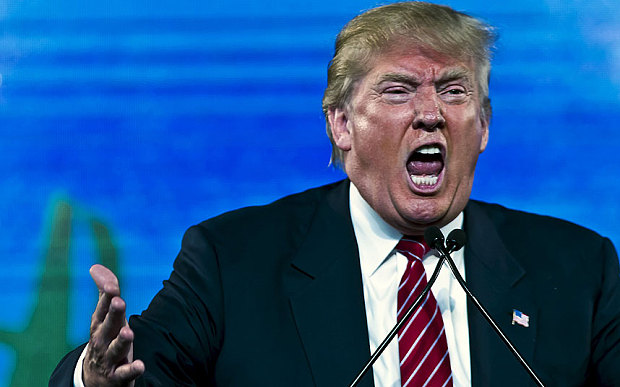
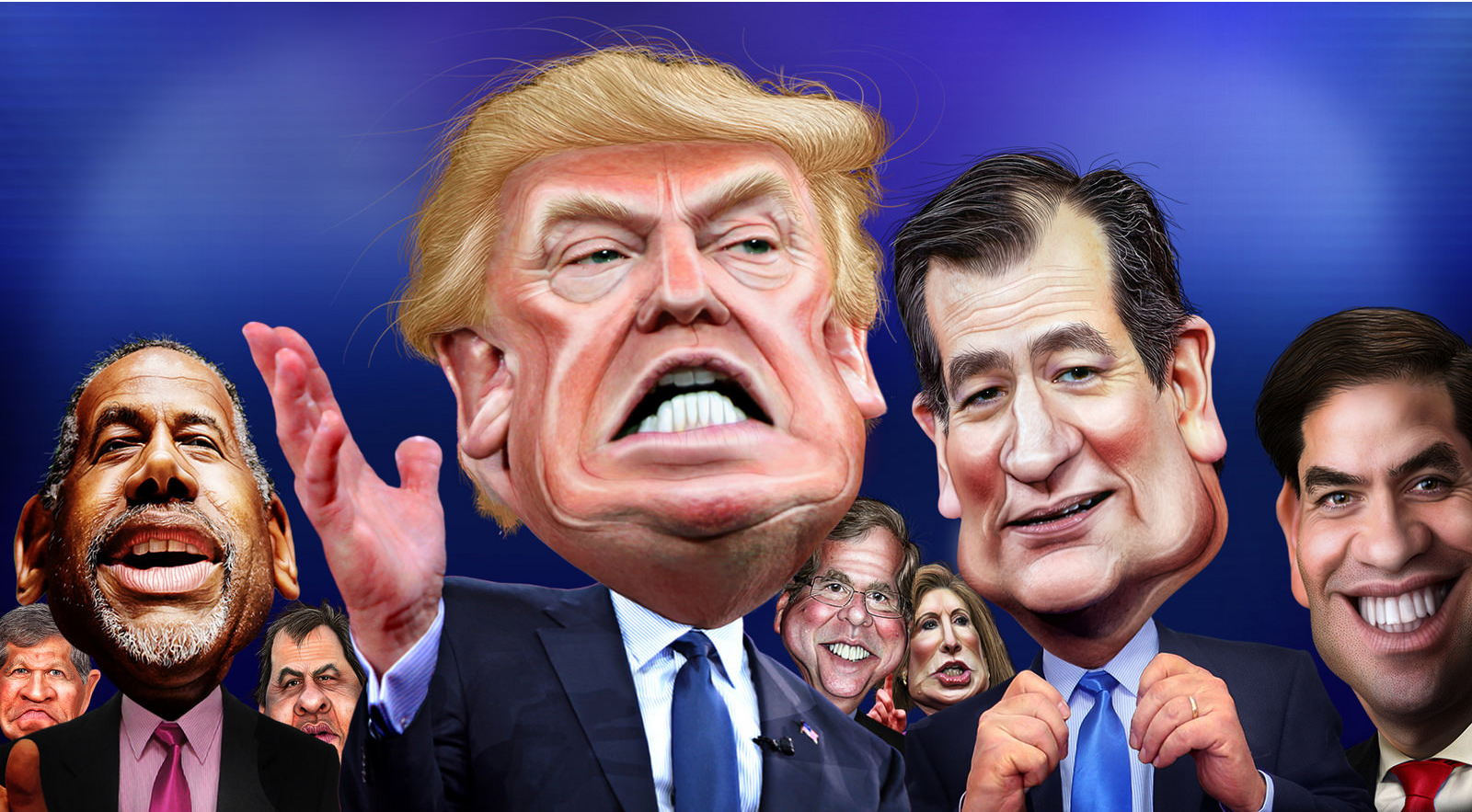
Donald J. Trump went on one of his stream-of-consciousness riffs today at a press conference in South Carolina.

In the midst of his 45-minute press conference, the Republican presidential primary frontrunner answered a hypothetical question about what he would do as a governor regarding immigrants.

He wouldn’t let them into his state, Trump said, ignoring the concern from many experts who say that immigration is a federal issue and that governors don’t have the authority to deny someone from entering their state.

Then he said, “I don’t care what the rules and regulations say.”

He would work around them as a governor to make it so difficult for immigrants seeking to enter his state that they would want to go somewhere else.

There you have it.

He doesn’t care about the law. He’ll do what he wants.

I believe that’s the definition of “lawlessness.”


Take a bow, Sen. Marzian

marzian-800x430

Mary Lou Marzian is my newest political hero.

She is a Kentucky state senator who’s seeking to make a point about male legislators getting into women’s private lives.

Marzian, a Louisville Democrat, has introduced legislation in Frankfort that would require men seeking to have notes from their wives if they want to obtain prescriptions for medication to correct erectile dysfunction.

Can there be a stronger statement than that?

Marzian’s legislation likely won’t ever see the light of day. I do admire her guts, though, in making a statement on behalf of women who believe the government should not dictate to them on one of the most deeply personal issues possible: whether to take a pregnancy to full term.

In so many cases we have men making these decisions. Sen. Marzian’s bill makes a significant statement on behalf of women who have grown weary of men deciding how women should control their bodies.