Category Archives: political news

A vote is not an ‘endorsement’ … Hmmm

004_Flores_jpg_800x1000_q100

Can we split this hair any more finely than this?

Put this another way: How can a vote for a candidate be seen anything other than endorsement?

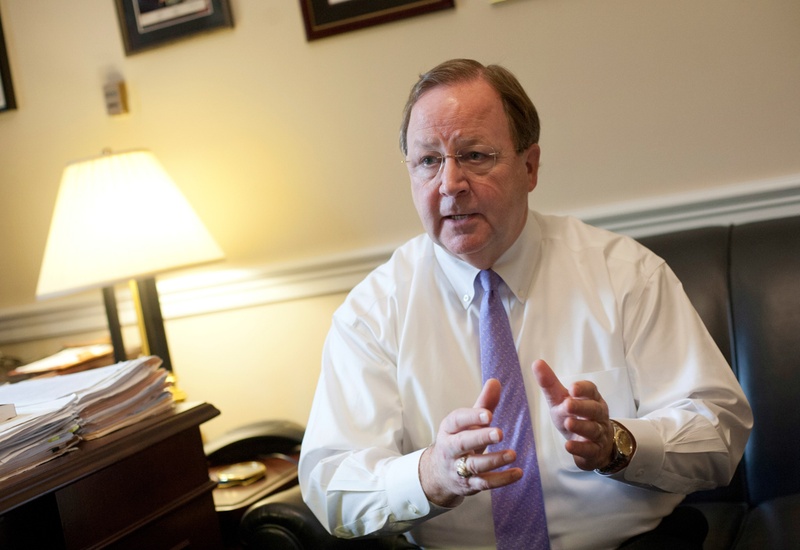
U.S. Rep. Bill Flores is a Republican from Bryan, Texas, who says he’s going to vote for Donald J. Trump for president of the United States … but he isn’t going to “endorse” him.

While I scratch my head over that one, I’ll just ask out loud: Didn’t he just endorse the Republican Party’s presumptive presidential nominee?

Flores is angry at Trump over the candidate’s suggestion that U.S. District Judge Gonzalo Curiel cannot preside over a case involving Trump University because of his Mexican heritage.

As the Texas Tribune reported: “I was incredibly angry to see Mr. Trump question a judge’s motives because of his ethnicity,” (Flores) added. “Like tens of millions of Americans, I will not vote for Hillary Clinton and desire to vote for a bold, conservative leader. Mr. Trump can be that leader, and we are ready to help him when he focuses on vision instead of inappropriate attacks.”

But … no endorsement, right?

https://www.texastribune.org/2016/06/08/texas-republican-congressman-refuses-endorse-donal/

The Republican Party political class is facing this difficulty across the nation. A lot of pols seem willing to acknowledge they’ll vote for Trump, but they won’t endorse him.

I guess that means they won’t stand on a campaign stage and hoist their presidential nominee’s hand in the air. They won’t introduce him to crowds with glowing praise.

Is it interesting to anyone — other than yours truly — that the Democrats don’t appear to have this problem with their presumed presidential nominee, Hillary Rodham Clinton? Are we hearing Democratic politicians say things that Rep. Flores is saying, that they’ll vote for Clinton but won’t endorse her?

Yes, I’ve seen the polls that suggest a lot of Democrats who currently support Bernie Sanders will defect to Trump if Clinton gets the party nomination.

We’ll see, though, whether that defection rate holds up as the general election campaign moves forward.

Meantime, I’ll be watching other Republican political leaders try to explain how a commitment to vote for Donald Trump isn’t an endorsement of his presidential candidacy.

Yep, here comes the negativity

clinton trump

NBC News anchor Lester Holt asked a straightforward question.

“Are you going to campaign insult for insult against Donald Trump?” Holt asked presumptive Democratic Party presidential nominee Hillary Rodham Clinton.”

“No,” she answered, “He can run a campaign on insults. We’re going to campaign on the issues.”

What, pretell, are those issues? She said she’s going to keep reminding voters that Trump is “temperamentally unfit to be commander in chief.”

Sigh.

There you have it. Clinton said she’s going to campaign “on the issues,” and then spoke candidly about her presumptive Republican opponent’s temperament.

Is that an “issue”? Yes.

The question now facing the Republican Party brass that is gritting its teeth over whether Trump is capable of keeping his cool is: How is he going to respond?

They fear — with good reason — that Trump is fully capable of flying off the rails. He’s shown that propensity all along the campaign trail so far.

Here’s a scenario that could repeat itself. Longtime observers of Texas politics will remember when this happened.

The year was 1990. Democratic gubernatorial nominee Ann Richards was campaigning against Republican nominee Clayton Williams.

The two of them shared a dais at an event late in the campaign. They each spoke to the crowd. Then as the event drew to a close, Richards walked over to Williams and extended her hand.

Williams refused to shake it. He called Richards a “liar.”

News photographers and TV cameras picked up the snub and reported all over Texas. How did the optics play? Not well … at all!

Williams’s refusal to “shake the hand of a lady” insulted a lot of Texans vicariously.

Richards defeated Williams to become the state’s governor.

Something tells me — if Clinton keeps talking “issues” relating to Trump’s temperamental fitness — that Donald Trump is fully capable of repeating Claytie’s mistake.

Bernie wins while losing

sandersclinton_040116getty

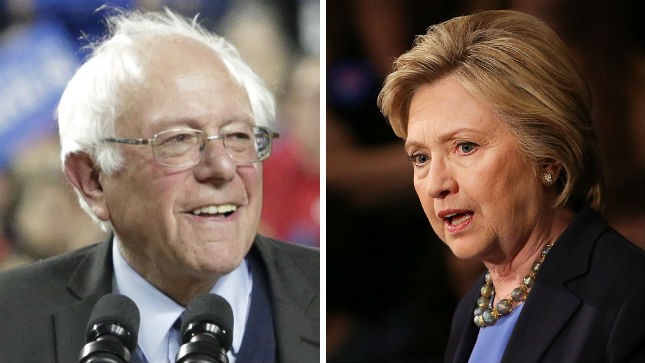
U.S. Sen. Bernie Sanders has lost the race for the Democratic presidential nomination.

However, he’s also won the argument within the Democratic Party.

How? By pulling presumptive nominee Hillary Rodham Clinton closer to his end of the political spectrum than she was at the beginning of this campaign.

Sanders is expected eventually to end his campaign. He’ll throw his support behind Clinton. He’ll join President Obama and other party dignitaries in campaigning hard for Clinton against Republican nominee Donald J. Trump.

Sure, he still says he’ll fight “all the way to the convention” in Philadelphia. That’s what they all say. Ted Cruz said it the day before he dropped out of the GOP race. So did John Kasich. It’s just brave talk.

Sen. Sanders will take away from this campaign the satisfaction that he’s not got Clinton talking about income inequality, corruption on Wall Street and stricter international trade policies.

Do not expect Clinton to declare herself a “democratic socialist,” which Sanders proclaimed throughout his campaign with great pride

What the defeated Democratic presidential candidate cannot determine, though, is whether a President Clinton would carry that message forward once she takes the oath in January.

As of today, though, he’s changed the dialogue within the Democratic Party.

That, folks, is no small victory.


What they didn’t say is most instructive

Horserace

I wish I could take credit for making this observation, but I cannot.

I’ll give credit to Chuck Todd, moderator of “Meet the Press” and NBC News’s chief political correspondent.

Last night, after their big victories in their respective presidential primaries, Donald Trump and Hillary Clinton spoke to their faithful followers.

Todd noted a great unspoken from both of them: They didn’t “congratulate each other” for becoming their parties’ presumptive presidential nominees.

Todd noted that going back to the 2000 election season, candidates have reached across to offer a word of thanks to their opponents for reaching an important and hard-fought milestone.

Al Gore congratulated George W. Bush in 2000; President Bush did the same in 2004 when John Kerry crossed the “presumptive” threshold; John McCain offered kudos to Barack Obama in 2008; and President Obama did the same when Mitt Romney became his party’s presumptive nominee in 2012.

This year? Nothing. Not a word of congratulations from either Trump the Republican or Clinton the Democrat.

Surprised at that? Me, neither.

Trump has labeled Clinton as “Crooked Hillary”; Clinton has said that Trump is “temperamentally unfit to be commander in chief.”

Todd has reason to worry now about what lies ahead as Clinton and Trump battle each other for the presidency.

If the absence of anything approaching a kind word about the opposition in their moments of triumph is any indication, we’re in for an extremely rough and uncivil campaign.

Clinton makes history; but U.S. has some catching up to do

AAgMv5O

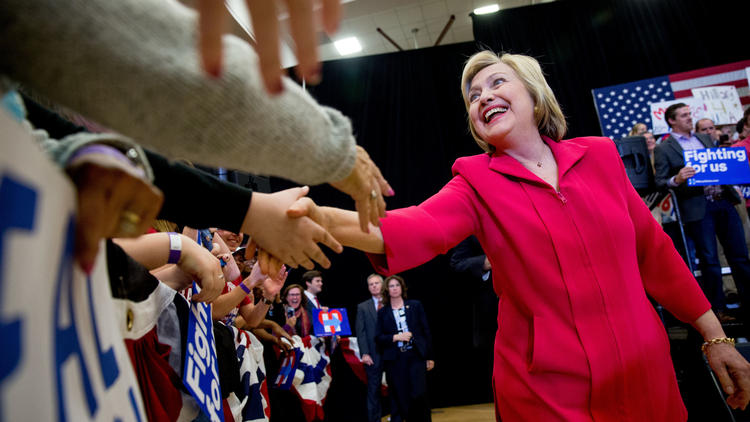
Hillary Rodham Clinton stood before the cheering throng tonight at the Brooklyn Navy Yard and declared victory in a history-making sort of way.

She becomes the first female major-party presumptive nominee for president of the United States.

The crowd cheered. Clinton nodded her approval. Yes, it’s a big deal.

However …

Let’s put this in a little different context. The United States is a good bit behind the curve when it comes to shattering gender-based glass ceilings in public life.

For crying out loud, the nation was created in 1789, but didn’t give women the right to vote until 1920. The founding fathers did a great job creating a government framework — but they didn’t do a perfect job.

Behind the curve?

Indira Gandhi became prime minister of India in 1966. After that, we’ve seen Golda Meir become prime minister of Israel. Margaret Thatcher was elected PM in Great Britain. The Philippines elected Corazon Aquino president. Taiwan has just elected its first female president, Tsai Ing-wen. Angela Merkel is the chancellor of Germany. Benazir Bhutto once was prime minister of Pakistan. Kim Campbell was Canada’s prime minister.

Good grief. I’ve just given you the names I can think of immediately.

Here’s a list of all of them:

https://en.wikipedia.org/wiki/List_of_elected_or_appointed_female_heads_of_government

Yes, we’ve made history tonight with Hillary Clinton about to become the nation’s first major-party presidential nominee.

We haven’t crossed the threshold of an even greater historical event … just yet.


Might the impossible happen … again?

donald-trump

U.S. Sen. Lindsey Graham has issued an extraordinary statement.

The one-time Republican Party presidential candidate is urging Republican officeholders who have endorsed the party’s presumptive nominee, Donald J. Trump, to take back their endorsement.

Then what do you suppose happened? Fellow GOP Sen. Mark Kirk did exactly that. He said he cannot vote for someone who has made blatantly racist comments, which some have said Trump has made regarding a federal judge.

Trump said Gonzalo Curiel cannot judge a case involving Trump University fairly because he’s “a Mexican.” Well, Judge Curiel is an American. Sure, he is of Mexican heritage but the man was born in Indiana and has served as a federal prosecutor in California.

Trump seems to believe that because of Curiel’s heritage, he “hates” the candidate because of a proposal to build a wall from one end of the U.S. border with Mexico to the other.

The furor won’t die down.

Graham’s call for other Republicans to pull back their endorsement might not take hold across the nation. Then again, it might. I cannot predict how it would go.

However, we are starting to hear some chatter among political observers that Trump’s “presumed” nomination might not be so “presumptive” after all.

House Speaker Paul Ryan, who’s endorsed Trump, has labeled his anti-Curiel statement to be racist in nature. Republican Party Chairman Reince Priebus has condemned the statement as well. Other Republican leaders have chimed in with similar statements of disgust and disdain.

So, here’s what a few of the talking heads are saying out loud: They are suggesting that Trump’s nomination could be taken away at the convention. How that might happen is anyone’s guess. It’s virtually unprecedented.

No one is suggesting it will happen, only that they wouldn’t be surprised if it does.

Therefore, one seemingly impossible scenario — the notion of someone so totally unfit to become president actually being nominated by a major political party — is being replaced by another even more impossible outcome.

The party could snatch the nomination away from the candidate.

It cannot happen? Well, who would have thought that Donald Trump — of all people — would be on the verge of being nominated to run for the presidency of the United States?

Trump winnows the judicial field

checks balance

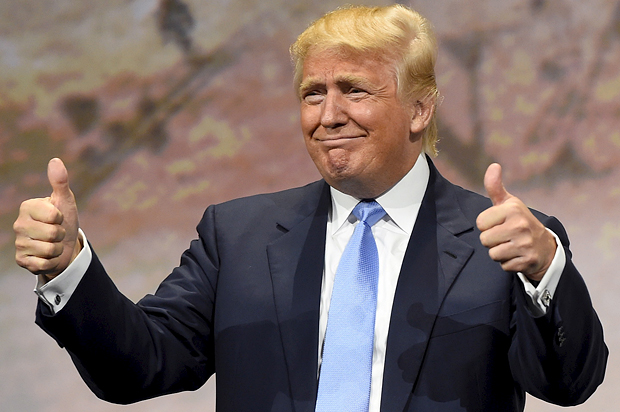
This business of Donald J. Trump’s comments on a judge’s racial heritage is getting a little out of hand.

The presumptive Republican presidential nominee remains in some seriously hot water over comments he made about a judge who’s presiding over litigation involving the defunct Trump University. U.S. District Judge Gonzalo Curiel is an American-born jurist whose parents are Mexican immigrants.

Trump railed against the judge, saying he’s “a Mexican” who has been “very unfair to me” because of Trump’s proposal to “build a wall” across the southern border with Mexico.

Thus, Judge Curiel is disqualified, according to Trump.

Then he told CBS News’s John Dickerson that he might want Muslims disqualified from hearing any cases involving Trump because of his proposal to ban Muslims from entering the United States.

Now, get a load of this one.

A Trump spokeswoman said female judges might have to be disqualified because of Trump’s statements denigrating women.

Hmmm. Let’s play this out.

Who else might be unable to serve on the bench to litigate a case involving Trump?

A judge with a physical disability is one. Trump once mocked a disabled New York Times reporter.

A former prisoner of war. Trump once said that U.S. Sen. John McCain is a “war hero” only because he was shot down, captured and held captive for five-plus years. “I like people who weren’t captured, OK?” Trump said.

A judge who’s been married only one time. Trump is on his third marriage and has boasted openly about the affairs he’s had with women other than those to whom he was married.

http://www.huffingtonpost.com/entry/donald-trump-judge-attacks_us_57560111e4b0b60682deb6e3

Is it reasonable to assume that in Trump’s mind the only people who could judge a case involving him fairly and without bias are people who are just like him?

If so, then the pool of potential judges appears to have been narrowed considerably.


Here’s a ‘Dave’-like solution to picking nominees

National%20Party%20Convention

In the film “Dave,” Kevin Klein portrays the owner of an employment agency who bears this startling resemblance to the president of the United States.

Fate thrusts Dave into the role of filling in for the incapacitated president.

During a Cabinet meeting, the “president” — Dave — must find ways to cut the federal budget sufficiently to pay for some needed programs. He whips out a pencil and tablet and goes through the budget department by department and — presto! — finds the money.

Cabinet officials are stunned.

How might such a seemingly simple approach to problem-solving work in the real world of rough-and-tumble politics?

News organizations Monday night tallied up the delegates that Hillary Rodham Clinton has amassed and declared her to be the presumptive Democratic nominee for president of the United States. She joins Donald J. Trump, who already had become the Republicans’ presumed nominee.

Here, though, is the rub. Sen. Bernie Sanders isn’t going quietly into the night. He vows to continue fighting Clinton for delegates all the way to the party nominating convention.

Why? He doesn’t like the “super delegate” system used by the Democratic Party. The supers are those party big wheels — elected officials, mostly — who get to vote for whomever they wish. Sanders, who only recently joined the party after serving in the Senate as an independent, thinks it’s unfair to count those super delegates prior to the convention. They can change their minds and he intends to persuade enough of them to do exactly that.

The Republicans don’t have that problem. They don’t have super delegates. Frankly, I prefer the GOP method.

What might Dave do?

Let’s try this out.

Call a meeting of the two major political parties’ top brass, GOP boss Reince Priebus and Democratic chair Debbie Wasserman Schultz. Put them in a room along with their parties’ lawyers and pose the question, “How about making this process a bit more uniform?”

Priebus and Schultz aren’t close. Imagine that, right? They have serious disagreements.

It seems totally within reason, though, for the parties to adopt more uniform delegate-selection processes. To be frank, the super delegate system used by the Democrats seems a bit weird. Sanders is hoping to change enough minds between now and the convention that he could “steal” the nomination from Clinton. I think that, by itself, is unfair and underhanded.

If both parties’ leaders believe in developing fair and even-handed methods of choosing their nominees, is it too much to ask them to hammer out an agreement that works for both sides?

I get that none of this nominating process is prescribed in the U.S. Constitution. It’s strictly a party matter. Heck, the Constitution doesn’t even mention political parties.

I’d even prefer to see the national parties lay down rules simplifying the method of apportioning delegates. Do they prefer to award them on the basis of the candidates’ share of the popular vote? How about winner take all? It makes no never mind to me. Just make it uniform.

The hodge-podge we have now makes me crazy.

Politics need not be this complicated, man.

Here come the conspiracy theories

GTY_hillary_clinton_donald_trump_split_jt_150912_16x9_992

Hillary Rodham Clinton has been deemed the “presumptive presidential nominee” for the Democratic Party.

Wait for it. Here come the conspiracy theories from the supporters of Bernie Sanders, who are saying that the media should have waited to report the news.

Sure thing. I believe that’s one definition of “prior restraint.”

I do not think that’s doable in a society that supposedly prides itself in a media that isn’t controlled, manipulated or coerced into hiding news as it happens.

The Associated Press has tabulated the pledged delegates and the so-called “super delegates” that the Democratic Party uses to nominate its presidential candidates. AP has determined that, yep, Clinton has put the nomination out of reach.

Sen. Sanders has been pledging to take this fight all the way to the party nominating convention this summer in Philadelphia. Fine. That’s his right.

Sanders and his supporters have said the “mainstream media” are in cahoots with the party brass in wanting Clinton nominated.

I’m not crazy about this super delegate business. I’d prefer that Democrats followed the Republican model in apportioning convention delegates. The “supers” comprise elected officials or other power party bigwigs who are free to vote for whomever they want. Given that the U.S. Constitution makes no mention of political parties, this process is done strictly at the party level; it’s not written in law anywhere.

This, though, is how the Democrats do it. It’s worked so far.

So now we have a presumptive Democratic nominee to join the presumptive Republican nominee. It’s likely “game over” for Sanders, just as it’s over for all of the 16 Republicans who ran against Donald J. Trump for that party’s nomination.

Let’s dispense with the conspiracy theories.

Now we get to witness Clinton vs. Trump.

Oh, boy! Now, if only we could hope for a dignified and high-minded contest for the presidency of the United States of America.

If only …


Three words launched campaign to save the world

Eisenhower_d-day

“OK. We’ll go.”

Right then and right there, with those words, the order went out from the supreme commander of Allied forces in Europe.

The invasion of Europe was on.

General of the U.S. Army Dwight D. Eisenhower faced a terrible dilemma. The weather over the English Channel had been horrible. The invasion of France had been delayed once already. Hundreds of thousands of men had assembled and prepared in Great Britain for Operation Overlord.

Ike then caught a bit of a break. The weather was going to cooperate — more or less — on June 6, 1944. That’s when he decided to issue the order.

The men set out in ships. They boarded landing craft and hit the French coastline along five beachheads. American and British soldiers stormed four of them; Canadians stormed the fifth one.

Eisenhower had drafted two statements in preparation for that event, one to proclaim victory on the beach, the other to take full responsibility in case it went badly. He didn’t have to deliver the latter statement.

It has become fashionable in the present day to invoke Ike’s memory as we discuss the merits of the individuals seeking the U.S. presidency. Those who defend the current Republican presumptive nominee’s lack of government experience often cite Eisenhower’s own lack of such qualifications when he ran for president in 1952.

No, he didn’t have that kind of experience. All he did, though, was save the world from tyranny.

Eight years after saying simply, “OK. We’ll go,” the presidency became his for the taking.

So it was on this day 72 years ago that thousands upon thousands of young men followed their commander’s order.

May God bless them all.