Category Archives: military news

Has the dictator gone MAD?

Kim Jong Un certainly must know why they called it “mutually assured destruction” back during the Cold War.

Surely he understands that MAD means what it assures, that anyone who launches a nuclear missile at a nuclear power is going to get wiped off the face of the planet.

The MAD policy prevented a nuclear holocaust when the world comprised just two superpowers. U.S. presidents and Soviet dictators knew the consequences of such foolishness.

But … here we are. The North Korean dictator/fruitcake/goofball keeps making some, oh, so very provocative statements about how he would respond to U.S. attempts to prevent him from developing a nuclear-strike capability.

Kim Jong Un said he would launch a missile at the USS Carl Vinson carrier battle group that is steaming (finally!) toward the Korean Peninsula. He keeps arguing that his nukes are for “defensive purposes only,” meant to deter some perceived aggression from South Korea.

It’s all just so much MADness coming out of the mouth of the son and grandson of two prior North Korean dictators.

This brings me to my point. All the bluster and bravado that pours out of Kim Jong Un’s pie hole cannot actually mean he would he do what he says he would do. Or can it?

Military rivalries are nothing to trifle with. I recall vividly a statement I received from a Taiwanese government official with whom I was discussing the tense standoff that exists between Taiwan and the People’s Republic of China.

The PRC has long threatened to use military force to “take back” the island nation formed in 1949 at the end of a bloody civil war on the Chinese mainland. Would the PRC actually risk nuclear confrontation with the United States, which has a mutual defense treaty with Taiwan?

The Taiwanese official said his government takes any threat from China “very seriously” and was prepared to respond accordingly.

So should the United States be prepared to respond to the rantings of the North Korean MADman.

They call it “MAD” for a damn good reason, Mr. Dictator.

‘Congratulations’ to Purple Heart recipient?

This video offers something instructive about the president of the United States.

Critics of this blog will see this as a nitpicking, trivial observation. Perhaps it is — at some level. At another level, it illustrates to me that the president doesn’t quite grasp the notion of “service to one’s country.” At least not yet.

He pinned a Purple Heart medal on U.S. Army Sergeant First Class Alvaro Barrientos. Donald Trump said that when he heard about the award ceremony, he wanted to “do it myself.” I give the president high marks for wanting to honor the young man who lost part of a leg while fighting for his country in Afghanistan.

But then he said something I find weird. He offered SFC Barrientos “congratulations” for receiving the medal.

Congratulations?

To be fair, I don’t know what the president said to the young soldier privately when he whispered to him. Nor do I know what he said to his wife, who stood nearby while the president pinned the medal on SFC Barrientos’s shirt.

But the public offering of “congratulations” to someone who lost part of his body on a far-away battlefield is inappropriate.

I don’t need to remind the president that the soldier didn’t compete for the medal. He didn’t want to be maimed. He served heroically. He deserves a nation’s thanks and gratitude … not its congratulations.

My hope is that the president learns the ins and outs of these public ceremonial events. No, they don’t shape public policy or have tangible impact on the lives of anyone other than those who are taking part directly in them.

The optics, though, matter … a lot!

Sergeant First Class Barrientos? Thank you for your heroic service to our nation.

USS Carl Vinson isn’t MIA, however …

Where, oh where, is the USS Carl Vinson, a Nimitz-class nuclear-powered aircraft carrier thought to be heading toward the Korean Peninsula?

Not so fast, mates. The massive ship and the warships comprising its battle group aren’t exactly en route to the trouble spot.

This brings to mind yet another question about the commander in chief: Does the president know about which he speaks when it concerns the most powerful military apparatus the world has known?

Donald J. Trump told Fox News business correspondent Maria Bartiromo that the Vinson group, which he described as a “great armada,” was on its way to the region in a massive show of force against North Korean communist dictator/madman/goofball Kim Jong Un.

Except that it wasn’t.

The USS Carl Vinson was headed toward the Indian Ocean to perform military exercises with the Australian navy.

The U.S. Navy doesn’t comment on the precise location of its warships, so don’t expect the Pentagon to blow the Carl Vinson’s cover. This does illustrate nevertheless that the president once again has blabbed before knowing the facts.

You want unpredictability? This is it.

Trump has said he is determined to be as “unpredictable” as possible as it regards our adversaries. He doesn’t want to telegraph his next move, particularly when it regards potential military action.

The president says every option “is on the table” regarding Kim Jong Un. Fine. I get it.

Unpredictability, though, shouldn’t include hearing the president declare that a heavily armed naval strike force is steaming toward harm’s way when it in fact is moving in the opposite direction.

Or, has the president offered the world yet another definition of the word “is”?

https://highplainsblogger.com/2017/04/enter-the-uss-carl-vinson/


‘I know more than generals about ISIS, believe me’

Strange things occur to individuals who campaign for the presidency and then actually become president.

They boast about how smart and savvy they are on matters about which they have no experience. Then they learn that — by golly — they aren’t as smart as they proclaim themselves to be.

Donald J. Trump once boasted, “I know more the generals about ISIS, believe me.” Sure thing, candidate Trump, who had zero military experience — let alone political experience — prior to running for president.

Then he wins the election. He gets a few briefings and finds out the truth, which is that he doesn’t know squat about the Islamic State, its tactics and strategy or the best way to fight and “destroy” the terrorist organization.

The military then deployed its largest non-nuclear explosive device on an ISIS compound in Afghanistan, killing dozens of terrorists and destroying many tons of valuable equipment.

Now the president says he relied on “my military” to take care of things, that he trusts the brass implicitly to know how to fight the Islamic State.

It is baffling to me in the extreme as I try to understand how this guy got elected president after saying the things he did about the greatest military force in world history.

At least, though, he is acknowledging what he should have acknowledged all along.  Which is that he doesn’t know “more about ISIS” than the career military personnel upon whom he will depend if he has a prayer of keeping his pledge to “destroy” the Islamic State.

MOAB does what it’s supposed to do

It’s called the MOAB.

The acronym actually stands for Massive Ordnance Air Blast Bomb. Its colloquial meaning is Mother of All Bombs.

The military dropped one of these devices on an Islamic State operation in Afghanistan. And, sure, there’s debate on why the military chose to use the device.

I support its use. Donald J. Trump promised during the campaign that he would “bomb the s*** out of ISIS.” Well, there you go. The MOAB does do that.

It’s the largest conventional explosive device in the U.S. arsenal. It weighs about 25,000 pounds. It does significant damage.

ISIS has earned this kind of response

Let’s not get too namby-pamby about this device. The Islamic State has performed some heinous actions against innocent victims. It has performed hideous acts with regard to prisoners it has taken — and executed.

I get that the debate about the MOAB is important in one respect: The bomb is so powerful that the military must be certain to avoid civilian casualties, given that the United States as a matter of military policy doesn’t kill civilians knowingly.

Trump — who used to criticize the military as feckless and weak — now proclaims great faith in its ability to carry out missions such as the one involving the MOAB. His criticism while campaigning for the presidency was misplaced; the president’s endorsement of the U.S. military’s extraordinary capability now is quite appropriate.

Thus, the MOAB has been introduced into this fight.

My own view is that the military should use this devastating weapon whenever feasible against a ghastly enemy that has earned the civilized world’s rage.

Mr. President, we already are in Syria

Donald J. Trump said the other day that the missile strike on a Syrian air force airfield doesn’t mean we are “going into Syria.”

Hold on, Mr. President!

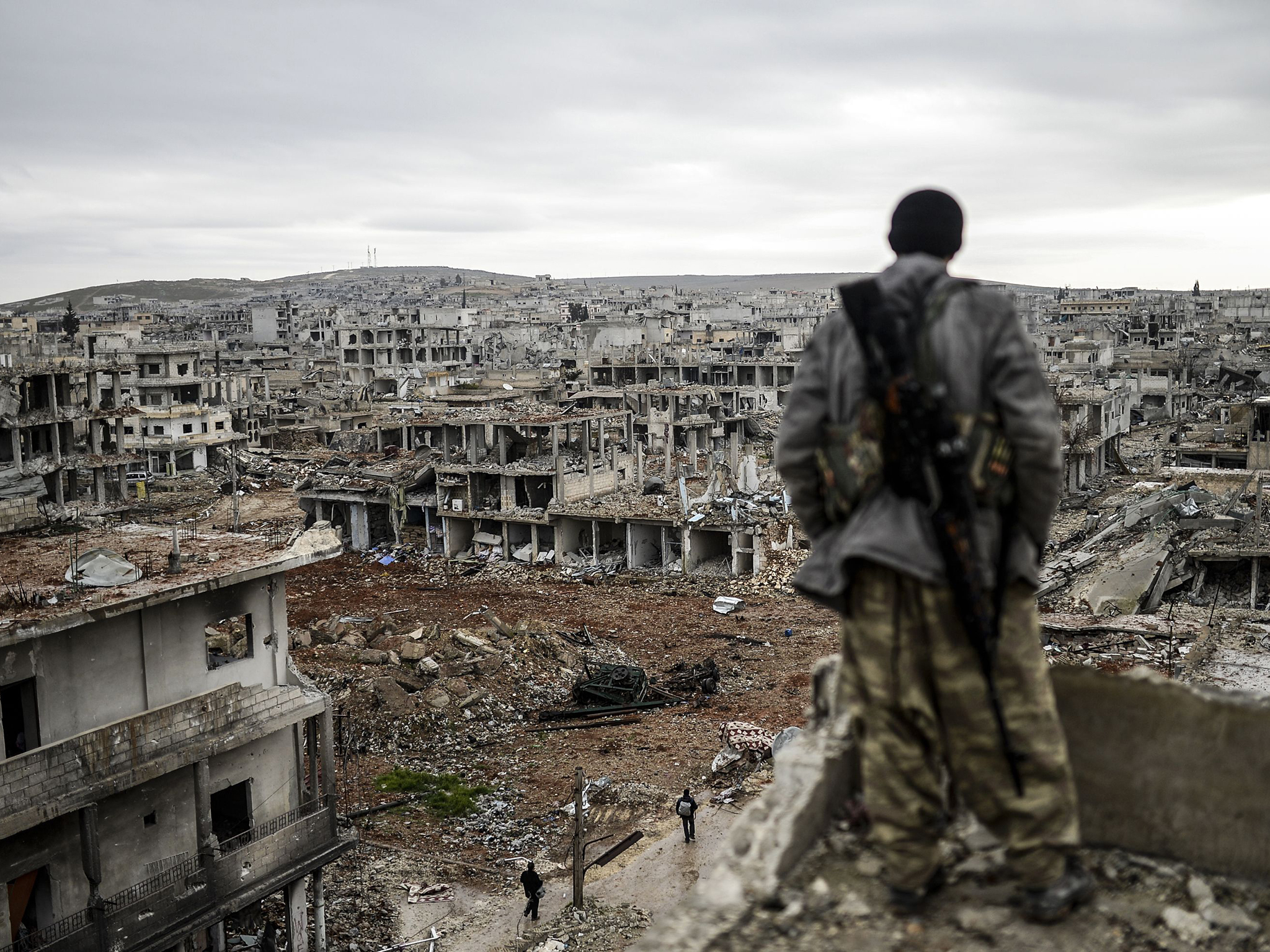
We already are in Syria, sir. President Barack Obama ordered several hundred special forces troops onto that battlefield to assist and train and coordinate attacks launched by “free Syrian” rebels fighting the Russian-backed government of dictator Bashar al Assad.

I also would add that the missiles launched from ships off the Syrian coast suggest that a more serious involvement by the United States in that conflict.

Times and circumstances do change, Mr. President, as you now are learning. Someone will need to remind the president that he used to believe that we should leave the fighting to the rebels. He also used to suggest that Assad’s forces — along with the Russians — could be capable of taking out the Islamic State terrorists.

Let the Russians deal with ISIS, he said. Sure thing, Mr. President. That will work out just fine.

My point, though, is that we already are engaged in Syria. Our special forces put their lives on the line every moment of every day they are deployed there.

The bigger, more important, question is whether we’re going to commit thousands of troops to fight ISIS head to head.

I’m now concerned that the president hasn’t given that option the careful, thoughtful and prayerful consideration it deserves.

NATO never has been ‘obsolete,’ Mr. President

The North Atlantic Treaty Organization once was “obsolete.”

Now it’s relevant.

That’s the former and current view of the president of the United States. What changed? What did NATO do to regain its status as a dependable and valuable defense treaty?

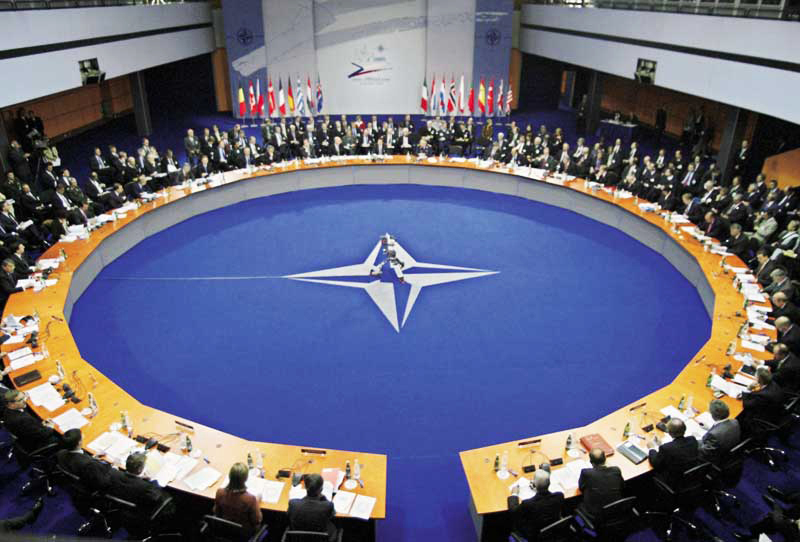
Donald John Trump met today with NATO Secretary General Jens Stoltenberg. The two men had a cordial and constructive meeting at the White House.

So here we are. The president who campaigned for office in 2016 while griping repeatedly about NATO’s obsolescence now says the organization is a partner in the fight against terrorism.

Will we learn from the president what changed his mind on this matter? Hardly. My guess is that even he doesn’t know, except that the secretary general told him that NATO matters.

Well, it does. It matters a lot.

The NATO alliance sits just west of its big and fearsome neighbor. I refer to Russia, which is governed by Vladimir Putin who — until just recently — seemed to be bound at the hip to Donald Trump. The bromance is fading quickly as the Trump administration starts turning the screws on Russia over its complicity in the Syrian civil war; oh, and Congress is starting to fire up the jets under Putin over his government’s role in seeking to “rig” the 2016 presidential election in Trump’s favor.

NATO matters

Yes, NATO came into being after World War II to deter potential aggression by the former Soviet Union. But in 1991, the Evil Empire disappeared, only to be replaced by another sinister governmental being. Russia has shown its aggressive self already, threatening Ukraine, retaking Crimea and blustering about re-conquering the Baltic States of Lithuania, Latvia and Estonia.

NATO now comprises 28 nations. Its relevance is quite vital to the stability of Europe, which remains crucial to the national security interests of the United States of America.

If only we could get the president to stop yammering about how NATO must pay its “fair share” or else. It’s the “or else” that some of us find most troubling.

My curiosity persists, though. What did NATO do to regain its status as a partner in the struggle to maintain international equilibrium?

What about the ‘barrel bombs’?

Donald J. Trump unleashed 59 Tomahawk missiles against Syrian jet fighters and support facilities because of chemical weapons were used against Syrian civilians.

That is a horrific act, to be sure, and the president was right to take action against Syrian dictator Bashar al Assad.

Here, though, is the question: What about the barrel bombs that Syrian military forces are dropping on civilian victims?

It is agreed around the world that chemical weapons use must be stopped. The images we see of children writhing in agony are heartbreaking in the extreme.

However, the Syrian government has killed many thousands more innocent victims using barrel bombs, which are devices filled with shrapnel. The bombs explode and the shrapnel flies out, shredding whatever — and whoever — is in its path.

Death by barrel bomb might not be as agonizing — and horrifying to watch — as death by chemical weapon, but Assad’s use of the hideous ordnance needs a stern world response as well.

What is the strategy to deal with this hideous monster? Finally, what are we going to do about the Russian role — the Russians’ complicity — in the use of barrel bombs and chemical weapons?

McMaster earns his, um, stripes as security adviser

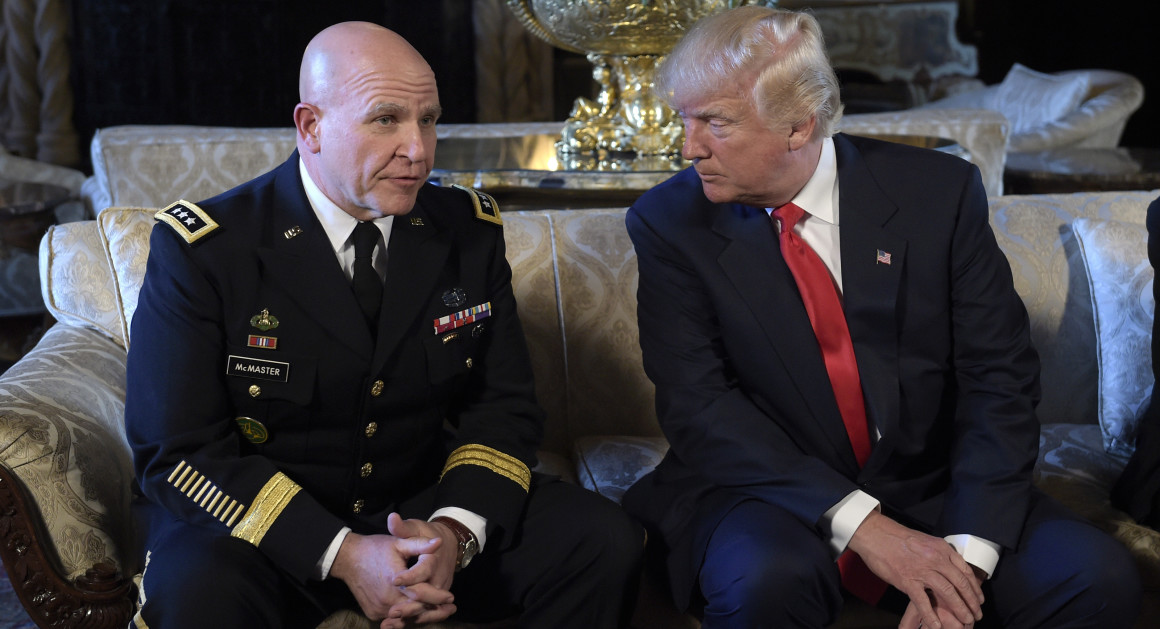
H.R. McMaster wears three stars on his epaulets as a U.S. Army lieutenant general.

But he has earned some additional stripes as Donald Trump’s national security adviser in the wake of the Tomahawk missile strike ordered against Syrian military targets.

That’s the word from those who know these things.

I have to concur that after an initial major misstep in selecting another Army three-star — Michael Flynn — as national security adviser, the president has aligned himself with a serious pro in H.R. McMaster.

McMaster shows his clout

Gen. McMaster reportedly conducted serious meetings with senior National Security Council staff and lined up all the players on what should occur with regard to the strike.

I get that the results of the strike are being debate in its aftermath. It was seen as a “pin prick” against the Syrian military force. Its aim was to disable the base from which Syrians launched that terrible chemical weapon attack against civilians; the strike apparently didn’t do the job.

Still, one has to think the president chose well by securing McMaster as the man who provides critical national security advice to the commander in chief.

McMaster must face a daunting challenge, though, as he provides the president the advice he needs. He must be able to persuade the Big Man to think strategically, to ponder the consequences of his actions and to develop a thorough and comprehensive long-term plan to assert U.S. power when it’s deemed necessary.

Have at it, Gen. McMaster.

Enter the USS Carl Vinson

I heard the news of a Navy carrier battle group heading toward the Korean Peninsula and took special note of the aircraft carrier leading the group.

It’s the USS Carl Vinson, a Nimitz-class nuclear-powered beast with which I have some limited familiarity.

I don’t know, of course, what all this means overall. North Korean madman/dictator Kim Jong Un is rattling his sabre yet again. He’s launching missiles into the Sea of Japan and threatening war against South Korea, Japan and maybe even the United States.

So the Carl Vinson battle group is heading toward the peninsula in a show of strength.

I received a marvelous assignment in 1993 at the invitation of the late U.S. Rep. Charles Wilson, an East Texas Democrat who was a huge supporter of military affairs. I was editorial page editor of the Beaumont Enterprise at the time and our paper circulated deeply into Wilson’s 2nd Congressional District.

He invited me to join him on a tour of the Carl Vinson, which at the time was home-ported at San Diego, Calif. The ship was at sea at the time of Wilson’s invitation. I asked my editor if I could go; he said “yes.” The paper purchased my plane ticket and I flew to San Diego to meet with Wilson and his congressional party.

We landed on the Carl Vinson and spent three days and nights aboard ship. Rep. Wilson spent time talking to pilots, deck crew members, machinists, cooks. He told all of them how much he appreciated the work they did and the service they performed in defense of the nation.

By the way, you have not lived until you’ve been through a tailhook landing and a catapult launch off the deck of an aircraft carrier. Believe me, there is nothing in this entire world quite like either experience.

During a tour of the flight deck, the skipper of the ship at the time, Capt. John Payne, told us of the immense firepower contained on the ships comprising the battle group.

He then said something quite astonishing. He said the group — which comprised several warships, including cruisers, destroyers and frigates as well as support craft along with this monstrous carrier — contained more explosive firepower than all the ordnance dropped during World War II.

Of course, that prompted the question from yours truly: “Skipper, does that mean this ship is carrying nukes?” Capt. Payne looked me in the eye and said, “Now you know I can’t answer that question.”

OK. Got it.

Twenty-four years later, the USS Carl Vinson is still on active duty. It’s now heading for a potentially very dangerous zone. I do believe the ship and its massive crew will be ready for whatever occurs.