Category Archives: military news

What do we call those who enlist in the ‘Space Force’?

Space Force? Is that a new military branch?

It’s no longer sufficient that our Army, Navy, Marine Corps, Air Force and Coast Guard comprise the finest and most sophisticated military force the world has ever seen.

The Trump administration is taking the first steps toward establishing a new military branch with its theater of operations to be in outer space. Beyond our atmosphere. Somewhere in the great beyond.

Call me skeptical, but I don’t get it.

I have to concur with the skepticism expressed this past June by U.S. Sen. Jim Inhofe, R-Okla., who said, “That’s a serious subject. It’s one that I would have a hard time supporting. All of our branches have the space element and it’s working. If it ain’t broke, don’t fix it.”

What’s more, what do we call the enlistees? Astro-soldiers, extraterrestrial sailors or Marines, spacemen and women?

There once was a time in this country where we were concerned about the “militarization” of space. We were once locked in a Cold War with the communists in the Soviet Union and the People’s Republic of China. Yes, we wanted to protect ourselves against attack from those two powers. President Reagan initiated a Strategic Defense Initiative, aka Star Wars, which established an anti-missile defense system.

Now, though, the Trump administration wants to create a whole new military service. They call it the Space Force.

I recall back in the 1960s, when NASA was considering who should be the first astronaut to set foot on the moon. NASA had been spooked a bit by the Soviets’ concern over reported U.S. plans to militarize the lunar surface. Its astronaut corps was full of active-duty military personnel.

NASA instead chose a civilian astronaut, Neil Armstrong, to take that “giant leap for mankind” as a symbolic gesture that sends the message that the United States had no intention of militarizing the moon.

Now we want to create a Space Force?

As Sen. Inhofe noted, our existing armed forces all have space elements that are working quite well.

Finally, can we really and truly afford the cost of creating this military branch?

Going to thank World War II veterans

I have made another command decision, which I can do now that I no longer work for anyone else.

From this day forward I intend to thank every World War II veteran I see. The only way to know you’ve seen a WWII vet is when you see someone wearing a gimme cap or a t-shirt identifying a member of The Greatest Generation.

I saw a gentleman this afternoon in front of a fast-food joint in Allen, Texas. He was wearing one of those caps. I extended a hand to him and said, “Thank you for saving the world.”

If you do a bit of simple math, you learn about the ruthless march of time. In 1945, the last year of World War II, the youngest enlistees were 17 years of age, meaning they were born in 1928.

That makes ’em 90 years of age today. If they’re still among us.

During the length of World War II, the United States put roughly 16 million men and women into uniform. Many of them were thrown into harm’s way.

Their numbers are diminishing every hour of every day. They need a thank you from their descendants. I plan to offer them whenever I see a veteran from that great conflict.

I have been unable since September 1980 to thank my favorite World War II. My father — who died 38 years ago — enlisted in the Navy in February 1942; he was 20 years old at the time. He wanted to get into the fight. Oh, brother, did he ever … get into it.

The thing is, Dad enlisted and pledged to fight “for the duration” of the war, not knowing when — let alone if — he would be returning home. That, I submit, is a far more difficult concept to embrace than what those of us who served in Vietnam faced when we were called to duty. We knew when we were coming home.

The Greatest Generation’s task was to save the world from tyranny. They succeeded. They came home, returned to their former lives and for the most part didn’t talk much about the hell they endured.

These men and women have earned a heartfelt thank you from those of us who came into this world upon their return.

I intend to give it to them.

Yes, we’ve seen ‘fire and fury,’ Mr. President

You no doubt remember when Donald John Trump threatened North Korean dictator Kim Jong Un earlier this year with “fire and fury the likes of which the world has never seen.”

Kim had issued some threats to the United States. The president was having none of it. Well, the president isn’t exactly a student of history, as we know.

Seventy-three years ago today, one of Trump’s predecessors, President Harry Truman, issued the order to release a new kind of “fire and fury” on a nation with which we were at war.

A U.S. Army Air Force B-29 bomber took off on Aug. 6, 1945, from Tinian Island and headed for Hiroshima, Japan. It dropped a single bomb on Hiroshima. It killed tens of thousands of Japanese citizens in an instant. It was the first time the world saw a nuclear weapon deployed in a hostile act. It wouldn’t be the final time.

Three days later, another bomber flew over Nagasaki, Japan, and repeated the destruction.

The Japanese surrendered five days later, ending the world’s greatest, bloodiest and costliest conflict.

President Truman took office in April 1945 upon the death of President Franklin Roosevelt. The new president knew only a tiny bit of information about the Manhattan Project, where scientists were working on this terrible new weapon way out yonder in Los Alamos, N.M.

President Truman was briefed fully not long after he took office. The military brass told him, in effect, “Mr. President, we have this weapon under development that we believe will bring a quick end to the war.” The president agreed.

He would say many years later that he harbored no regret over using the atomic bomb. I have saluted President Truman many times over the years for the decision he made, based on the evidence he had at the time — and the lives he saved by persuading the enemy to surrender and allowing us to forgo an invasion of Japan by sea, air and land forces.

Fire and fury? There it was.

Remains come home; now comes the task of ID’ing them

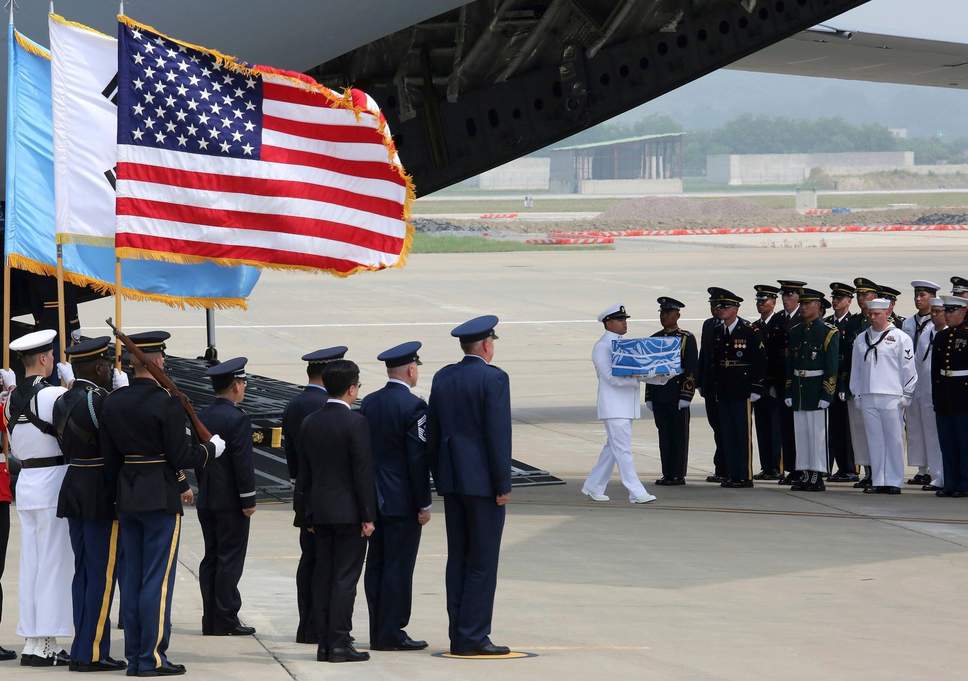
Vice President Mike Pence flew to Hawaii and welcomed the delivery of remains that U.S. officials hope — and believe — are those of Korean War veterans who were lost in that bloody conflict nearly 70 years ago.

We all join in the hope that the families of the men who were lost can obtain some closure — finally — to the grievous loss they suffered in the early 1950s.

“Some have called the Korean War the forgotten war but today we prove these heroes were never forgotten. Today, our boys are coming home,” Pence said at the ceremony where officials received the remains.

Read The Hill’s account here.

Yes, North Korean dictator Kim Jong Un delivered on at least this one pledge he made when he met with Donald Trump in Singapore in June.

There now lies ahead the painstaking task of conducting forensic testing to determine the identities of the remains that have been delivered. U.S. officials today received 55 caskets. Each of the remains will be identified in due course.

Allow me a moment to put some of this tragic issue into some perspective. U.S. families and officials are rightly concerned about the loss of those who perished in wars abroad. They often pale in comparison to the agony that those on the other side also endure.

In 1989, I had the pleasure of touring Vietnam with other journalists. We traveled from Hanoi to Saigon, meeting with officials, many of whom were in office during the Vietnam War that claimed more than 50,000 American lives. It also has produced a missing in action list of some 2,000 or so Americans whose fate have not yet been determined.

We brought that issue up with a Vietnamese official, who then scolded us — politely, I must add. Vietnam needs no lecture from Americans on accounting for those who are MIA, he told us, adding that Vietnam (in 1989) had about 300,000 men missing from what the Vietnamese call “the American war.” I don’t know how many of those missing Vietnamese fighting men have been recovered and identified.

The point is that no matter how much anxiety we feel on our side of these conflicts, we also ought to extend a bit of empathy to those on the other side who, as fellow human beings, are enduring the same agony.

Only their numbers far exceed ours.

Still, I welcome Vice President’s pledge to ensure the return of these missing warriors. As the vice president noted, “Our work will not be completed until all our fallen heroes are accounted for and home.”

Military taking a big bite out of its own hand

Donald Trump must really mean it when he implies that America should become an immigrant-unfriendly place.

The New York Times has published a story that tells of how the U.S. Army is ordering an increasing number of legal immigrants out of the military service. Why? According to one of them — an immigrant from China, with a business degree, a wife and a small child — they are deemed “unsuitable.”

As the Times noted in its story, the Army is booting out an increasing number of immigrants even though it cannot meet its recruitment goals for 2018.

The program, adopted during the Bush 43 administration, is designed to allow legal immigrants a fast track to citizenship. The Trump administration seems to see little value in the program.

What a disgraceful display of un-American treatment of men and women who come here to this country on their volition and want to serve in our military.

The irony is so rich you can taste it, given that the commander in chief sought to avoid military service during the Vietnam War by obtaining a series of student and medical deferments.

Take a look at the NY Times story here.

I am reminded of a time when this country granted automatic citizenship to immigrants who enlisted in the armed forces. How do I know that? My own grandfather, George Filipu, became an instantaneous American by enlisting in the Army in 1918. He wanted to fight in World War I. But then the war ended in November of that year. He didn’t get into the fight — but he retained his U.S. citizenship.

That’s what service and commitment to our country is all about.

The young man who might now be deported to China — after swearing an oath to “protect and defend the U.S. Constitution — now might be punished in his home country simply by enlisting in a foreign military organization.

That’s how you “put America first”? I don’t think so.

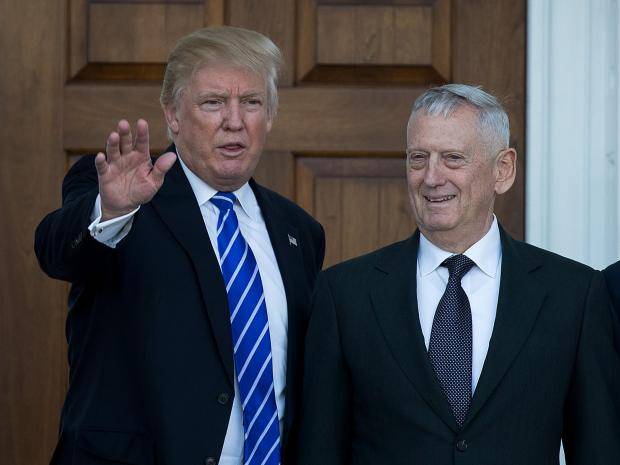
Don’t push ‘Mad Dog’ out the door

There’s been some reporting over the past 24 hours about Defense Secretary James “Mad Dog” Mattis and whether the president is looking past the serious grownup he has among his closest Cabinet officials.

Donald Trump announced the ending of “war games” with South Korean armed forces; he declared the United States was nixing the Iran nuclear deal; the president also announced his desire to form a sixth military branch, which he has called a “space force.”

These initiatives all have something in common. The president announced all of them without consulting Secretary Mattis.

Is this the beginning of the end of Mad Dog’s tenure as head of the Pentagon? Oh, man, I hope it ain’t so.

Of all the individuals Trump has selected for the Cabinet, Mattis is the one who — in my mind — has acted like the grownup. He is a serious-minded retired four-star U.S. Marine Corps general. His combat experience makes him a level-headed deterrent to the chicken hawks — such as national security adviser John Bolton — who seem all too eager to send U.S. forces into harm’s way.

When the president tweeted his decision to ban transgender Americans from enlisting in the armed forces, Mattis held the line, saying that he wouldn’t do a thing to change military policy without it going through the proper administrative channels.

Salon.com reports: The president often leaves Mattis “out of the loop” and “doesn’t listen to him,” according to NBC News, undermining this vital role in national security. Trump allegedly believes that Mattis “looks down on him” and “slow walks his policy directives,” sources told the outlet.

Mattis might “look down” on Trump? Really? So what if he does?

I can understand why Mattis, who has served his country with honor and distinction, might take a dim view of Donald Trump’s world view and his utter lack of understanding of what public service is supposed to mean.

For someone who supposedly has a soft spot in his heart for the generals with whom he has surrounded himself, Trump well might be doing all he can to get his premier Cabinet appointment to hit the road.

If that happens, the nation will be the poorer for it.

Trump tosses truth into the crapper

Donald John “Liar in Chief” Trump’s disdain for the truth has taken an amazing new turn — if that is possible.

He came out of his summit with North Korean dictator/despot Kim Jong Un and declared how “thousands” of parents of missing Korean War veterans begged him to get their remains returned to the United States for proper burial.

The president then said it again today in an extraordinary — and bizarre — media “availability” at the White House.

Let’s back it up a bit, shall we?

The Korean War ceasefire took effect in 1953. That was 65 years ago. A warrior who was lost at the very end of the Korean War might be, oh, 83 to 85 years of age today, if not older. His parents? Let’s see, they would be at minimum 100 years of age, presuming Mom gave birth to her son when she was around 18 years old.

The likelihood is that these parents of missing Korean War vets who begged Donald Trump to do something about their sons’  remains would be much older. Maybe about 120 years of age.

Thus, for the president to say that “thousands” of these parents came to the presidential candidate — who then became president — to seek the return of their remains is an … outright, bald-faced lie.

He is lying in a manner few of us have ever seen in a public official, let alone in the president of the United States.

I gave up a while ago griping about Donald Trump’s penchant for tweeting policy statements. I cannot let pass this individual’s continuing to lie directly to the people he was elected to serve.

Saluting is back in the news

Whether to salute is back in the news.

Donald Trump was recorded saluting a North Korean general in what appears to be an awkward, unscripted moment. The president extended his hand, the general saluted him, the president then returned the salute.

It looked clumsy.

This mini-kerfuffle does bring to mind a discussion that emerges from time to time: Does a president return salutes from military personnel? Should he do so?

Recent presidents have done so. It’s appropriate, given their role as commander in chief. Presidents Obama, Bush (43) and Clinton all did it; so did President Reagan. Bill Clinton, as I recall, needed some schooling on how to salute, given that his initial efforts looked a bit, well, clumsy as well. Active-duty military personnel and veterans picked up on it right away.

Donald Trump’s return of these salutes look just fine to me. He snaps it properly. Perhaps he learned how to salute during his years in military school prior to heading off to college.

I like watching presidents return these salutes, as long as they know what they’re doing when they snap them back at military personnel who initiate them.

As for the current president’s clumsy moment in Singapore, it’s no big deal.

Americans, Canadians: comrades in arms

I stumbled across an article that, given the current state of trade tensions between the United States and Canada, piqued my interest more than it would have normally.

Moreover, the article speaks quite cogently to a point that Canadian Prime Minister Justin Trudeau has made about how Canadians and Americans have died on battlefields together while fighting a common enemy; thus, the “national security threat” accusation leveled by Donald J. Trump seems all the more preposterous.

The article appears in “Vietnam,” a magazine I’ve been reading for the past few years. It’s titled “Oh, Canadians,” is written by Canadian historian Bob Gordon and it tells the story of how Canadians came to the United States to join the fight against the communists during the Vietnam War. Yes, it recalls how thousands of Americans fled to Canada to avoid being inducted into the armed forces during that terrible time of division, but it speaks as well to the sacrifice that many Canadians made because they wanted to get into the fight.

One of them, U.S. Army Sgt. Peter Lemon, in 1970 earned the Medal of Honor for his heroic service in defense of the United States of America.

The Canadian government remained officially neutral during the war. Many of its citizens were not nearly so reticent. They felt called to duty to aid their comrades in arms across the common border the nations share.

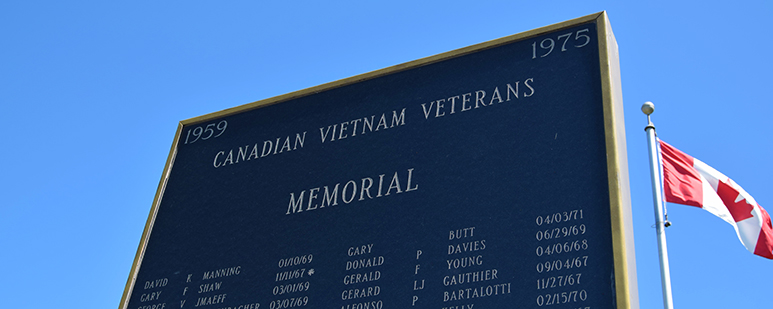
They have erected a memorial in Windsor, Ontario — The North Wall — to honor the Canadians who were killed or who are missing in action from the Vietnam War.

I mention this article today because of the stupidity of the notion expressed by Donald Trump that Canada represents a threat to our national security over their trade practices. He has imposed stiff tariffs on Canadian steel and aluminum, a decision that has alarmed and outraged not just our Canadian allies, but also our trading partners in Europe and Mexico.

Justin Trudeau finds that assertion “insulting” to the memory of those who have paid the ultimate price in defense of the United States of America.

Those who died in Vietnam on behalf of their American neighbors are among those to whom Prime Minister Trudeau is referring.

God bless them all.

74 years later, D-Day still stands alone

The Greatest Generation generally is defined as millions of American men and women who stood firm against tyranny during an intense, bloody and desperate global conflict.

Meaning no disrespect to those Americans who answered the call for freedom, let me suggest that the Greatest Generation comprised men and women from around the globe.

Seventy-four years ago today, American soldiers — along with Canadian and British comrades in arms — splashed ashore at Normandy, France. They had just completed a harrowing journey across the English Channel to pierce Adolf Hitler’s Fortress Europa.

These brave men endured unspeakable horror. They faced a determined enemy intent on keeping the land they had conquered four years earlier.

The D-Day invasion today stands as the greatest amphibious assault in the history of warfare. Five thousand ships supported the attack. Hundreds of airplanes flew sorties over the Nazi defenses.

What often gets short shrift, though, is the composition of the entire attack force. It was made up of French fighters and Poles. They formed gallant military units after their own countries fell to the Nazi juggernaut. Other nations took part: Denmark, Greece, The Netherlands, Australia, New Zealand all participated in this mammoth endeavor.

What’s more, French, Dutch, Belgian and Norwegian resistance fighters never stopped battling the occupiers in the years preceding the launching of Operation Overlord.

It was an international event of the first order.

And I cannot dismiss the bloody fight that was occurring along the Eastern Front as the Red Army marched from the Soviet Union, into Poland, Czechoslovakia and Germany as it sought to rid the world of the tyrant Hitler and his minions.

One final note I want to make: Supreme Allied Commander U.S. Army Gen. Dwight D. Eisenhower was prepared for the worst on D-Day. He drafted an announcement that he never had to make. He would take full responsibility for the failure of the invasion had the international force been unable to secure the beachhead at Normandy.

That, dear reader, is true leadership.

The Greatest Generation, comprising fighters from many nations, ensured success in the weeks and months that followed the titanic assault against the forces of evil.

We owe all of them an eternal debt of thanks.