Category Archives: medical news

AEDC steps up … big time

If Amarillo manages to reel in a project being pitched by Texas Tech University, it can possibly look at its economic development arm as a big reason for the success that will follow.

Texas Tech wants to build a school of veterinary medicine in Amarillo; it would be the second such school in all of Texas, the other one being run by Texas A&M University.

The Amarillo Economic Development Corporation has ponied up $69 million to incentivize Tech even further to build the vet school in Amarillo. Moreover, a significant land donation made possible by the family of Mary Emeny has sweetened the pot even more for Texas Tech.

This is precisely the kind of project that AEDC has helped bring to Amarillo since its creation in 1989. Voters then approved creation of AEDC, which collects a half-cent of sales tax revenue generated in Amarillo and uses it for job-creation projects.

Without question, AEDC’s biggest success to date is the Bell/Textron aircraft assembly project next to Rick Husband Amarillo International Airport. In the late 1990s, AEDC came up with a $45 million inducement that lured Bell/Textron from Fort Worth to Amarillo and … the rest is history.

The Texas Tech vet school is aimed at educating Panhandle residents to learn a profession of untold value to communities throughout the region. Veterinarians could remain in the Panhandle to care for the livestock that populate our region’s ranches and which fuel the agricultural economy.

AEDC has stepped up in a major way once again for the city and the region. Its contribution will be augmented by private donations that local business, civic and political leaders are gathering.

And just as the Texas Tech School of Pharmacy has borne plenty of economic efruit for the region, so would the school of veterinary medicine, which has gone from “possibly,” to “probably” and is on its way to “likely” coming to Amarillo.

Yep, Amarillo is ready to welcome a vet school

Mary Emeny is a friend of mine with a particular interest in a plot of land that she hopes will become home to a new school of veterinary medicine.

She chairs a trust that donated the property to Texas Tech University, which is considering whether to build a vet school in Amarillo.

I, of course, have no such vested interest. I merely want to endorse my friend’s column that appeared in the Amarillo Globe-News that pitches hard for the vet school.

Read the full column here.

Texas Tech University regents have declared their intention to build a vet school. Tech is getting a lot of push back from Texas A&M University, which at the moment has the only veterinary medicine school in Texas. A&M Chancellor John Sharp wants to keep it that way, or so it appears.

My own view is that Texas is a large enough state to accommodate more than one university’s desire to educate veterinarians. We comprise 28 million residents, spread across nearly 270,000 square miles. Tech regents — and Chancellor Bob Duncan — want to establish a veterinary medicine campus in Amarillo that could help train and retain vets who come from the Texas Panhandle and who might want to stay here after they earn their DVM degrees.

As Emeny writes in the Globe-News: Even as we urbanize, our base is still ranching, and more recently dairy and hogs, with farming that supports them all. The veterinary school will bring much needed assistance to overworked veterinarians, especially those that tend to large animals in the region. Moreover, it will do so in a wonderfully elegant way. By assigning students to practicing veterinarians in the area, the vets become the mentors and the students assist the vets. Such a model bypasses the need for a separate teaching hospital, significantly reducing student tuition while giving local vets a platform for interaction and ready access to the latest knowledge and technologies.

Does any of this diminish A&M’s role in training veterinarians? Of course not! It does add to the pool of aspiring veterinarians to a community — such as the Panhandle — that can serve a region with a compelling need for them.

Well stated, Mary.

Did the doc cross a serious ethical line?

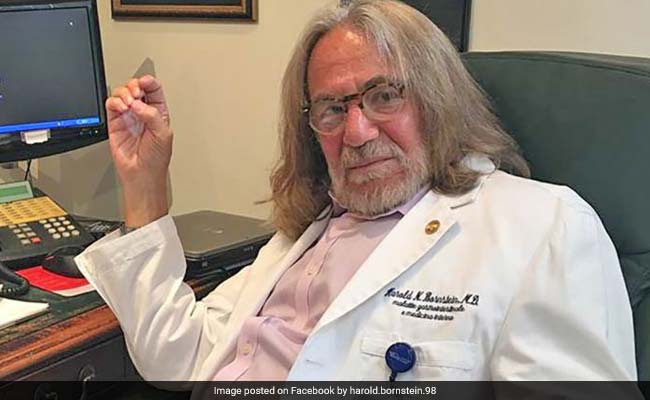
Dr. Harold Bornstein might be in some serious trouble.

I mean, he could lose his medical license over something he has acknowledged he did.

Bornstein is the personal physician to the president of the United States. This week he has revealed that Donald J. Trump, the president, dictated a letter that went public over the doctor’s signature. The letter declared that Trump, upon being examined by the doc, would be the “healthiest president in the history of the United States.”

The White House has pushed back on the doctor’s assertion.

If it’s true — and to be candid, I have every reason to believe it is — we are witnessing the ongoing fantasy where Donald Trump exists. That this individual can actually dictate a doctor’s ostensibly official report on his patient’s physical condition illustrates a reservoir of gall that Americans arguably have never witnessed in their president.

And to think that he might jeopardize his physician’s standing within the medical community.

At the very minimum Dr. Bornstein allowing his patient to dictate such a communication would be unethical on its face. Although the diagnosis the patient allegedly wrote for himself hasn’t been deemed false — it’s not hiding some deadly disease — the idea that a doctor would allow a patient to do such a thing raises serious questions about his competence.

Trump’s myriad other weird incidents appear to lend credibility to Bornstein’s assertion that the letter was all Trump.

The president, by what we’ve seen already in his pre-political life and even since he was elected to the highest office in the land, appears capable of damn near anything to boost his own self-esteem.

This matter, if it’s true, has put a doctor in serious jeopardy. I have to ask: Does the president even care — just a little bit — that he might have contributed to a doctor’s downfall?

Texas Tech, Texas A&M battle over veterinary medicine

Texas A&M University System Chancellor John Sharp came to the Panhandle the other day to announce plans to enhance West Texas A&M’s veterinary medicine education program.

Sharp wants to maintain A&M’s monopoly on veterinary medicine throughout the state. I cannot blame him for looking out for the university system he administers.

Oh, but wait. His plan for WT have the appearance of a sort of pre-emptive strike to prevent Texas Tech University from building a school of veterinary medicine in Amarillo, which is a live option on the table for the community … and for Tech Chancellor Bob Duncan.

Duncan and Sharp have distinct differences of opinion on whether Texas Tech should proceed with construction of a veterinary college in Amarillo. Duncan came to town not long ago to pitch the case to community leaders, suggesting that Tech’s board of regents are committed to establishing a vet school next to Tech’s existing Health Sciences Center in Amarillo.

Sharp, meanwhile, is pulling out many stops to prevent Tech from proceeding. The top Aggie is a savvy enough politician to understand what the announcement that boosts WT’s role in veterinary medicine means to any potential competition. Then again, Duncan has been around the Texas political pea patch a time or two himself, so he must be acutely aware of what Sharp might be trying to accomplish.

I happen to believe that Texas — with 268,000 square miles and 27 million residents — is big enough to accommodate two schools of veterinary medicine. Duncan has high praise for the veterinary education that A&M provides. He also believes Texas Tech can provide a top-drawer education for veterinary medicine students who want to be educated here at home and who might want to remain in the Panhandle after they receive their DVM degrees from Texas Tech.

I happen to agree with Duncan.

I also believe the A&M initiative is good for West Texas A&M, it’s good for the community … but it shouldn’t forestall Texas Tech’s efforts to establish a veterinary medicine presence in Amarillo.

Mental health exams for presidents? Absolutely!

Set aside for a moment the questions that have arisen about the current president of the United States, about whether he still possesses all his marbles.

The White House doctor says he does. That’s good enough for me.

CNN polled Americans and learned that 80 percent of us favor regular mental acuity examinations for presidents. Count me as strongly in favor of that idea.

The exams could help determine whether a president is showing signs of dementia, loss of mental snap, whether he is less alert. I’m all for it!

When is it too early? I don’t think you should set a minimum age for such exams. Donald J. Trump is 71 years of age. He clearly falls into the category of Americans susceptible to loss of cognitive skill.

I’ll pass along this personal tidbit.

My dear mother died in September 1984 — at age 61 — of complications from Alzheimer’s disease. She had become a mere shell of the woman she once was. She didn’t recognize anyone. She couldn’t speak. She couldn’t feed herself, bathe or dress herself. Eventually, she developed pneumonia after her brain ceased telling her lungs to breathe.

Mom was officially diagnosed with Alzheimer’s disease in the spring of 1980, when she was not quite 57 years of age. In truth, she had been showing some serious sign of personality disorder and loss of cognition at least three, maybe four years earlier. That meant she might have been showing early onset symptoms at the age of, oh, 53 or 54.

Most of us are still in the prime of life at that age. Not everyone is dealt that kind of good fortune. Mom clearly was dealt an extremely bad hand.

Thus, when the president of the United States is handed the nuclear launch codes and is put in command of the world’s most formidable military machine, I want to know whether he is up to the job.

By all means, we need to look inside their noggins regularly.

Tech chancellor pushes another ‘big idea’

Bob Duncan is on a mission. It’s simple and complicated at the same time.

The Texas Tech University System chancellor believes Texas is too big a state to have just a single college of veterinary medicine. He wants to establish a second vet school and he wants it to be in Amarillo.

So, here’s the simplicity and complexity of the notion he is proposing.

The Texas Panhandle is at the epicenter of large animal care, given the region’s plethora of livestock in the form of cattle and horses. “The feedlots and dairies are clustered in West Texas, not on the Brazos (River),” he said, alluding to Texas A&M University’s dominance of veterinary medicine education. A&M has the sole such college in Texas, and Duncan wants to rid the Aggies of their vet school monopoly.

In a presentation today to the Rotary Club of Amarillo, Duncan made several key points. He pointed out that Texas Tech was created in 1923 as the result of a “big idea.” He believes the school of veterinary medicine is the university’s next major step forward.

Duncan said Texas has a shortage of veterinarians, 40 percent of whom are educated out of state.

The chancellor said Texas Tech has been consulting with veterinary medicine programs at Kansas State, Oklahoma State, Colorado State and University of California-Davis. He also noted that Amarillo is closer to the vet school campuses in Kansas, Oklahoma and Colorado than it is to College Station, home of Texas A&M University’s flagship campus.

But it gets complicated.

Duncan and his Tech team have been getting serious resistance from A&M, which is led by Chancellor John Sharp, who Duncan describes as a “fine chancellor” who’s also a friend. “We just disagree on this issue,” Duncan said of Sharp.

Sharp has been resisting Tech’s push for a school of veterinary medicine because he apparently believes there’s no need for a second such school in Texas, a state comprising 268,000 square miles and 28 million inhabitants. Indeed, Texas is the second-largest state geographically and second-most populous state in the nation. And we have just a single school of veterinary medicine?

I believe Chancellor Sharp has been bitten by the protectionist bug.

Duncan said he has no desire or intention to denigrate Texas A&M or its school of veterinary medicine. “A&M is considered one of the top 10 vet schools in the nation,” Duncan said, “but A&M cannot accept all the qualified applicants who want to be veterinarians.” He noted that most of the qualified Texas vet school applicants have to go out of state to obtain their doctorate in veterinary medicine.

Texas Tech has received $4.1 million from the Texas Legislature to develop a plan for a vet school in Amarillo, Duncan said, adding that Tech plans to present that plan to the 2019 Legislature, which convenes next January.

Tech plans to locate the campus next to it existing Texas Tech Health Sciences Center and School of Pharmacy campuses in west Amarillo.

But there’s a lot more money to raise, Duncan said, citing a $90 million goal from private, public and foundation sources. He said the Amarillo Economic Development Corporation has set aside $15 million in grant funds to assist in that fundraising effort.

“It’s a natural fit,” Duncan said of the vet school plan for the Texas Panhandle.

How confident is the chancellor of success? He didn’t specify.

I’ll just add that Duncan moved into the chancellor’s chair after a highly successful career in the Texas Senate. Many of his former Senate colleagues are still serving there, along with a smattering of those with whom he served in the Texas House. Moreover, Duncan also believes the Panhandle delegation — Sen. Kel Seliger, and Reps. John Smithee, Four Price and Ken King — all are lending their considerable influence to push the vet school over the finish line.

Duncan developed a high degree of respect as a legislator. I believe that respect transfers to the Texas Tech chancellor as he seeks legislative support for what he calls Tech’s next “big idea.”
Trump is overweight … enough said

I am not going to get involved in a discussion about whether Donald John Trump is merely overweight, obese, or whether the doctor who examined him is telling us the whole truth about his patient’s medical condition.

I make this declaration as someone who could stand lose a few pounds as well. So I won’t be overly judgmental, except to say that I do wonder if the president actually weighs a “mere” 239 pounds.

Dr. Ronny Jackson, the rear admiral who examined Trump, said the president is in “excellent health.” He attributes “good genes” to a diagnosis offered on someone — the president — who eats fast food, guzzles Diet Cokes and gets no exercise.

Fine, doc.

I’ll just offer this long-distance observation.

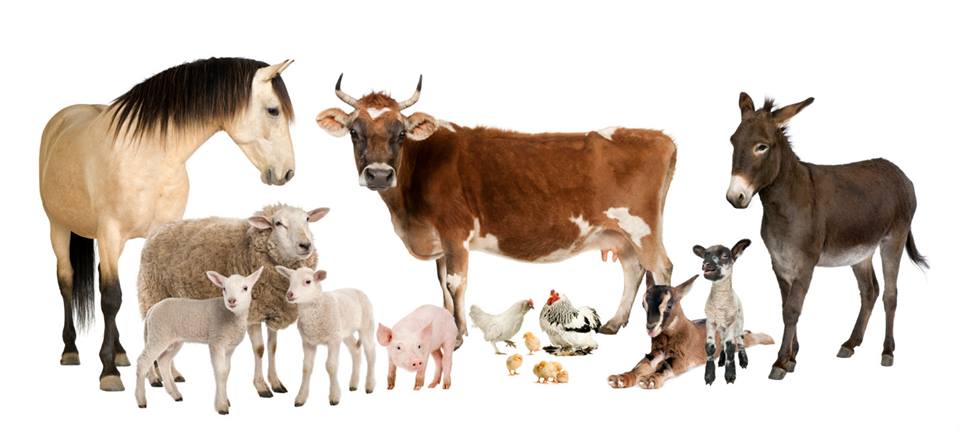
The president is overweight. He needs to lose a good bit of weight. I’ve seen the pictures of him in his golf attire. The man has a pot belly and an overly ample caboose.

He’s not an Adonis … even though he might think of himself as one.

I am in no position to determine whether he has heart disease, as CNN’s resident medical expert, Dr. Sanjay Gupta, has asserted. I’ll leave that analysis to the medical community. Nor will I determine whether he has lost his marbles. If Dr. Jackson says he retains his full mental acuity, I’ll accept that, too.

However, there is zero doubt in my own mind that the president needs to take better care of himself.

I say this as one of the president’s 300 million-plus employers. He works for us.

Lose some weight, Mr. President. Do as you’re told.

‘Girther’ movement, anyone?

I have followed a longstanding policy to avoid making fun of people’s names or their appearance.

Then along came Donald John Trump, who ran for president of the United States and, yes, along the way made an annoying habit of needling his political foes over their appearance.

Sen. Rand Paul of Kentucky? Some of the women who accused him of sexual impropriety? Carly Fiorina?

Trump said some hideous things about them.

So, the president is now fair game to those of us who, um, feel compelled to comment on some aspects of his physical appearance.

I’m howling at the idea of a new movement that’s springing up around the country. It’s called the “Girther Movement,” which is meant to call attention to the president’s ample waistline. Oh, yeah, it also reminds us all of the “birther movement” that Trump used to call attention to the lies about President Obama’s place of birth.

The White House physician, Ronny Jackson, says the president weighs in at 239 pounds; he stands 6 foot 3 inches tall and he is close to being declared “obese,” according to Dr. Jackson.

Some folks are questioning whether Trump really and truly weighs a mere 239 pounds, suggesting that he is, um, a good bit heftier.

Trump may be the smartest, richest, least racist person any of us have ever seen.

But … he is far from the fittest. He loves his cheeseburgers, Diet Cokes and doesn’t exercise a lick — or so we’re led to believe.

Girther movement? Sure. Sign me up.

Settled: POTUS isn’t losing his mind


I am willing to accept the words of a medical professional who has examined presidents dating back to 2013.

Donald John Trump Sr.’s mental acuity is intact. He’s not losing his mind. His butter hasn’t slipped off his noodle.

The president went through a routine physical examination. Then, at his request, he went through a cognitive examination by Navy Rear Admiral Ronny L. Jackson, the doctor who’s been the White House’s lead MD for the past five years.

He ran Trump through his paces and determined that the president is (a) overweight and needs some regular exercise and (b) doesn’t suffer from any loss of cognition.

That’s how we’re supposed to determine these matters, not with long-distance analyses offered by individuals who have either zero qualifications to make them or haven’t examined the president up close.

“I find no reason whatsoever to think the president has any issues whatsoever with his thought process,” Jackson said.

I am not about to give Trump a pass on the weird statements he continues to make via Twitter or verbally. I will continue to call his statements into question and will continue to criticize him when I feel it is appropriate. I also will offer a good word when it is appropriate as well.

The examination comes at an appropriate time. The president has been, um, somewhat wild in his responses to issues of the day. He blurted out that infamous “sh**hole” comment regarding immigration, then felt he had to declare that “I am the least racist person you’ve ever interviewed.”

Dr. Jackson’s assessment, though, that Trump is in complete control of his faculties is good enough for me.

The doctor cannot explain why his patient keeps yapping uncontrollably and nonsensically. It must be the Trumpian way.

Believe this. The doctor’s diagnosis doesn’t make me feel one damn bit better about the president of the United States.

No armchair diagnoses, please

You may count me as one who takes a dim view of those who think they can diagnose medical matters from a distance.

There’s a good bit of that going around these days as it relates to the behavior of the president of the United States, one Donald John Trump Sr.

Yes, he’s acting squirrely. And yes, he tweets messages that sound as if they come from a junior high schooler. He goads a dictator with nuclear bombs. He insults media representatives, politicians and a particular book author … not to mention at least one key former White House aide.

Does any of this mean the man is certifiably crazy? Is he nuts? Is he unfit mentally to be commander in chief?

I am not qualified to answer any of that. Neither are the “experts” who keep insisting the president needs to be kicked out of office on the basis of someone’s long-distance assessment of Trump’s mental fitness.

They don’t know of which they speak.

More than 50 years ago the nation had this same discussion about the late Republican U.S. Sen. Barry Goldwater, who ran for president in 1964 against President Johnson. Goldwater was deemed to be nuttier than a fruitcake because he talked openly about going to war with the Soviet Union, the world’s other great nuclear power at the time.

Someone wrote a book about Sen. Goldwater and put in writing what many were saying out loud. Goldwater sued the author for libel and won. Then came something called the “Goldwater Rule,” which disallows people from issuing medical diagnoses without examining the person about whom they are talking.

I believe we should keep that in mind as we discuss Donald Trump’s conduct of the high office he occupies.

There might be political reasons to remove this guy. They haven’t emerged; perhaps they never will emerge. Medical assessments are best left to those who get close enough to the subject to offer them.

The rest of us are just firing pot shots from the peanut gallery.